

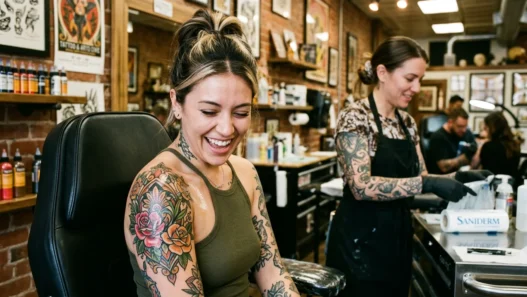


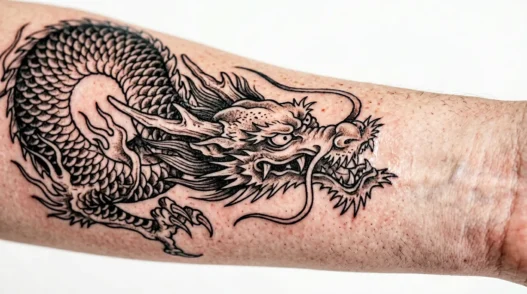
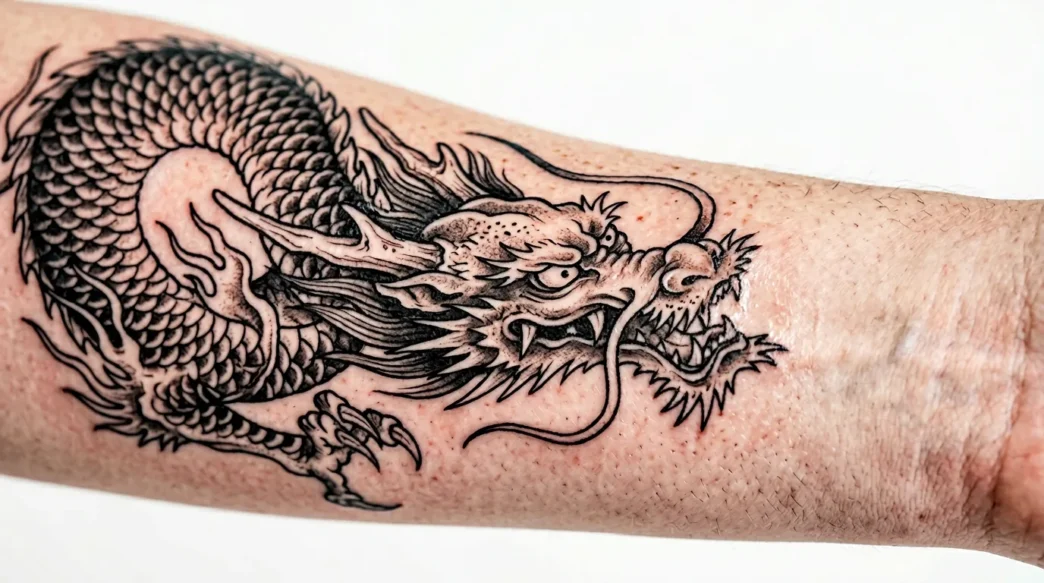
I’ve been obsessed with dragon tattoos for years, and honestly? The style you choose changes everything. I’ve seen the same dragon concept executed in traditional, neo-traditional, Japanese, fine line, watercolor, and blackwork — and they’re basically different creatures entirely. Let me break down what works, what doesn’t, and which style will give you the dragon of your dreams.
1. Traditional — Best For: Bold Statement Makers
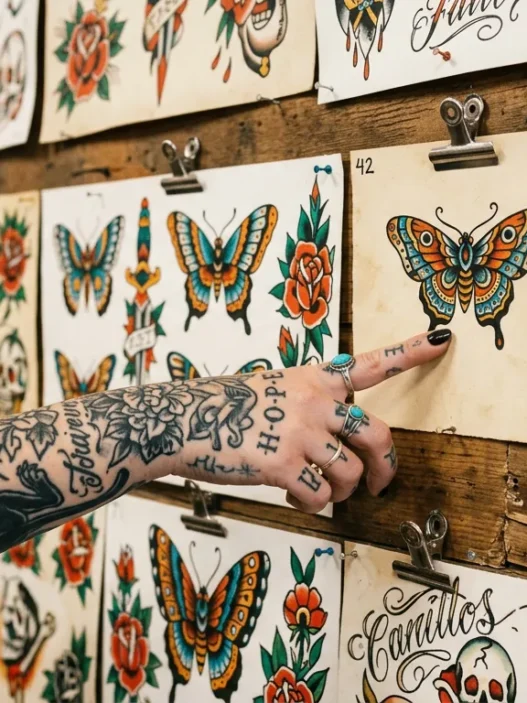
Traditional dragon tattoos are workhorses. Thick black outlines, solid color fills, limited palette — usually reds, greens, and yellows. The dragon looks fierce but simplified, almost cartoon-like in the best way.
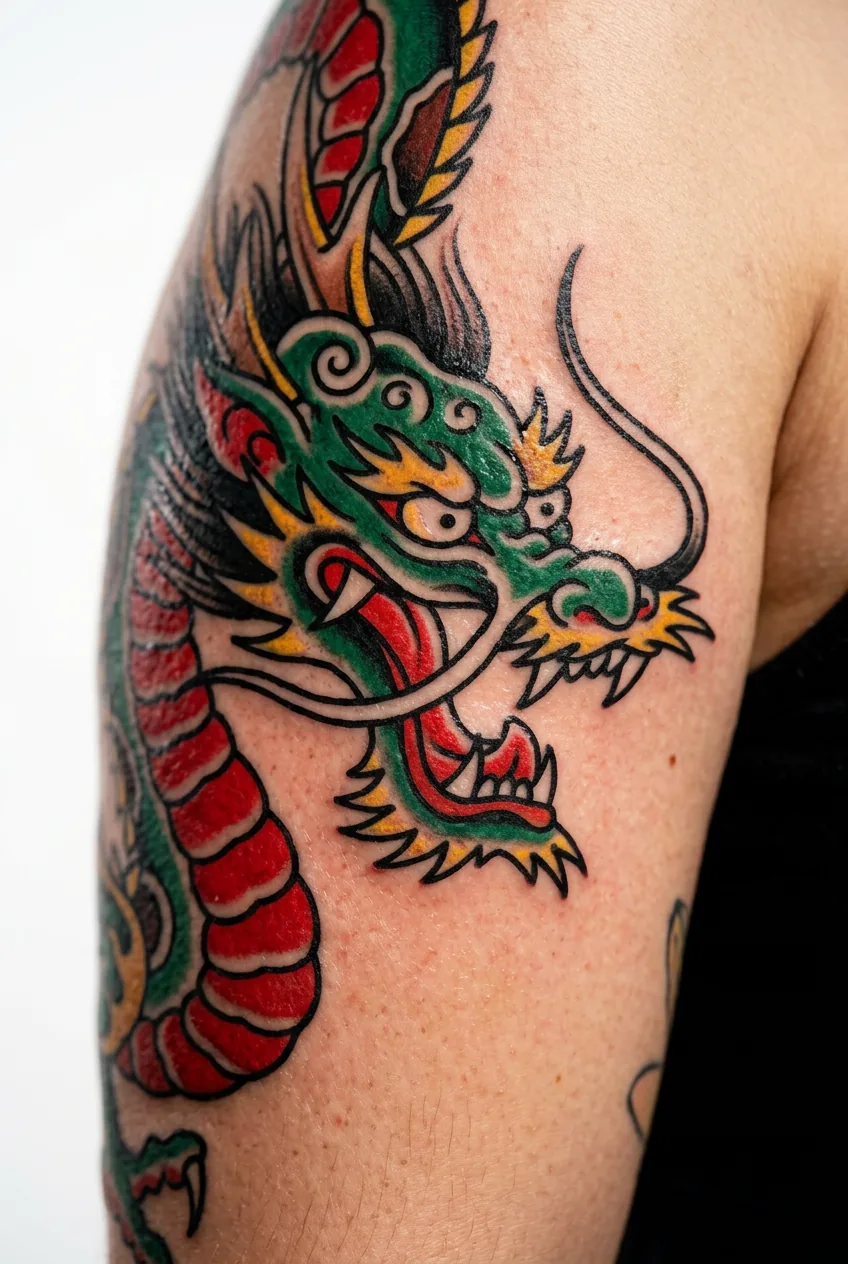
The aging on these is spectacular. I’ve seen 20-year-old traditional dragons that still look crisp because those bold lines hold up. The solid color blocks might fade slightly, but they maintain their punch. Cost-wise, you’re looking at $150-300 per hour depending on your area.
Best placements? Anywhere with good real estate — upper arms, thighs, back. The style needs room to breathe. Traditional dragons suit women who want something undeniably badass without overthinking it. If you love vintage flash art and want a tattoo that’ll look good forever, this is your dragon.
2. Neo-Traditional — Best For: Detail Lovers
Neo-traditional takes everything I love about traditional and cranks up the detail. Thicker lines than fine line work, but with dimensional shading, more color options, and intricate scales that actually look like scales.
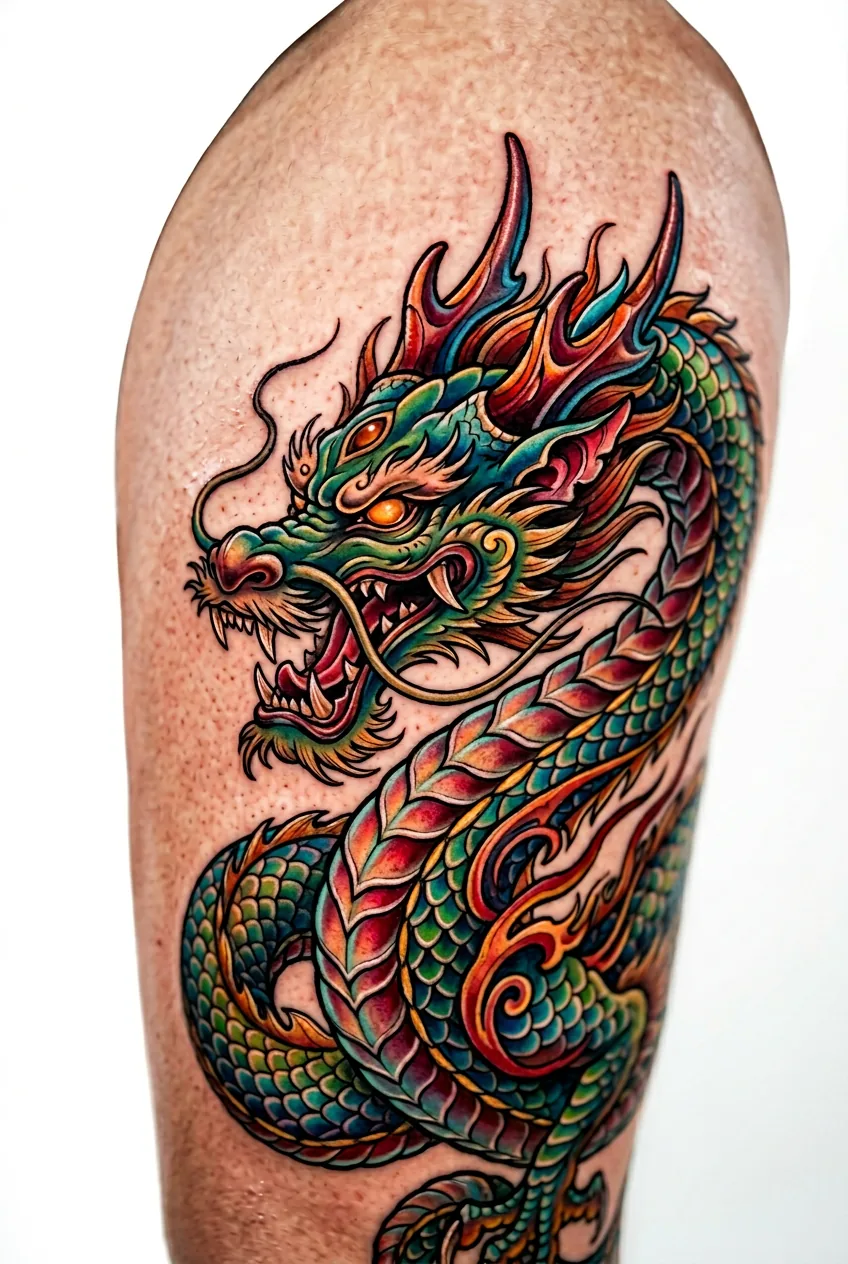
The dragons feel more realistic while keeping that tattoo-y boldness. I’m talking jewel-toned scales, dramatic smoke effects, flowers woven through the composition. It’s mythology tattoos at their finest — fantasy made tangible.
Aging prediction: excellent, but not quite as bulletproof as traditional. The finer details might soften after 15 years, but the overall impact stays strong. Expect $200-400 per hour. These dragons need skilled artists who understand color theory and dimensional work.
Perfect for women who want something eye-catching but sophisticated. The style works beautifully as a half-sleeve or thigh piece where you have canvas for all those gorgeous details.
3. Japanese — Best For: Cultural Appreciators
Japanese dragon tattoos — or ryu — are in a league of their own. Long, serpentine bodies, detailed scales, surrounded by clouds, waves, or cherry blossoms. The dragons are wise rather than fierce, often clutching pearls or emerging from water.
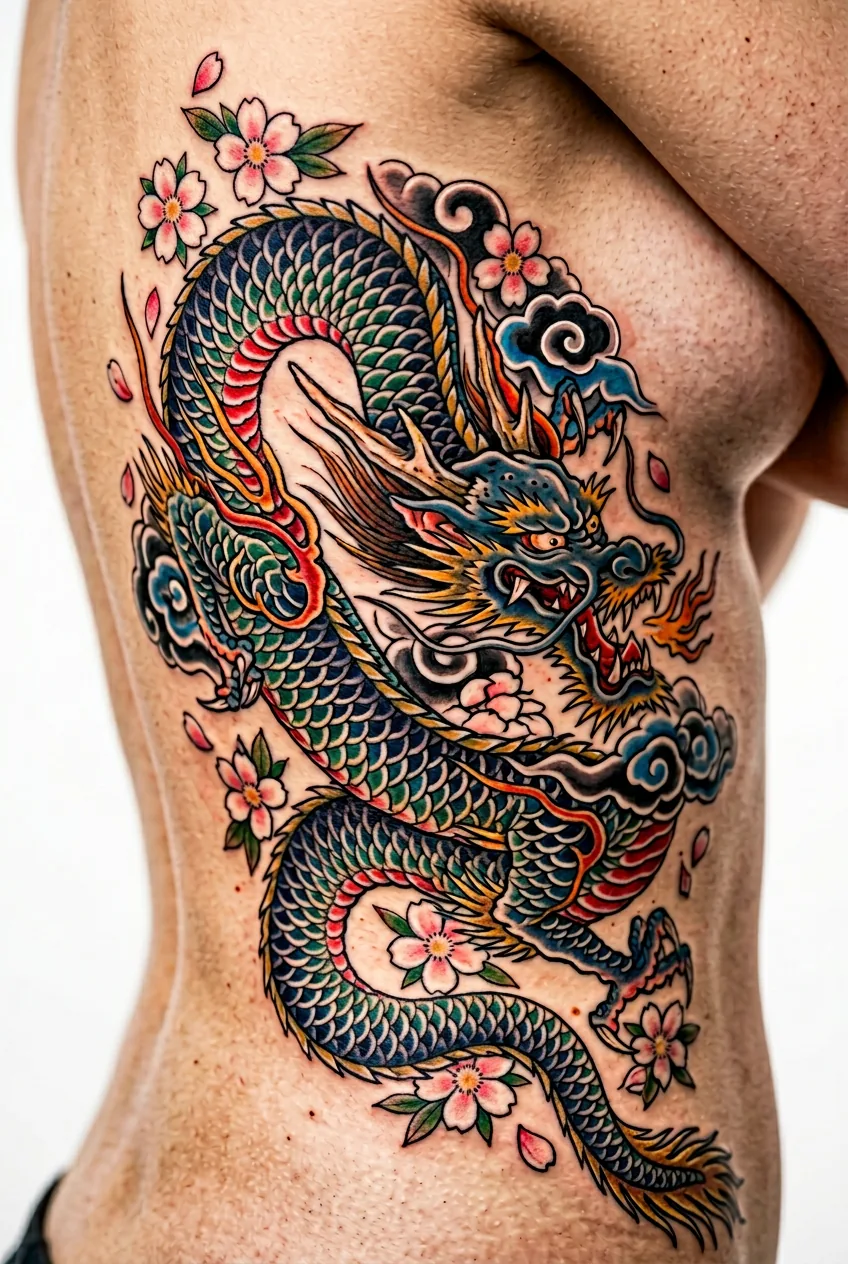
My personal pick: Japanese style for anyone wanting a dragon with deeper meaning. These aren’t just cool mythical creatures — they represent wisdom, strength, and good fortune in Japanese culture. Plus, they age like fine wine.
The traditional Japanese palette — blacks, reds, some yellow and green — means excellent longevity. I’ve seen 30-year-old Japanese dragons that still look incredible. The style is built for aging. Traditional meanings add layers of significance beyond just looking cool.
Cost range: $250-500 per hour because authentic Japanese work requires serious skill. Best placement? These dragons flow beautifully as full sleeves, back pieces, or wrapping around the ribcage. The style suits women who appreciate cultural artistry and want something with spiritual weight.
See the Traditional Technique Live
4. Fine Line — Best For: Minimalist Aesthetics
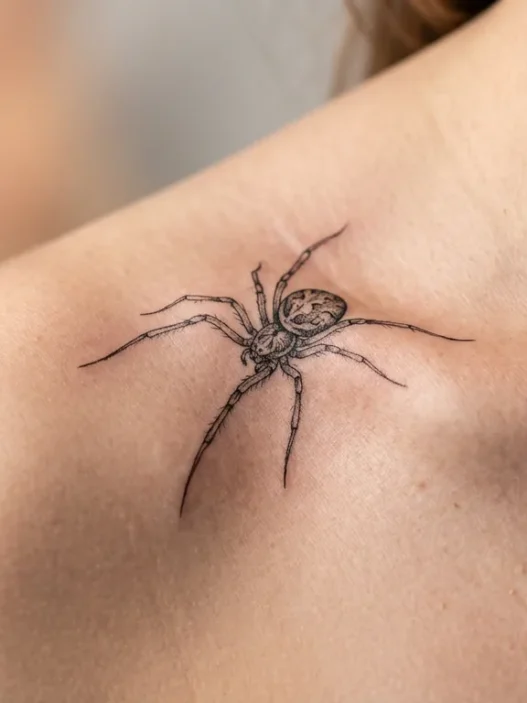
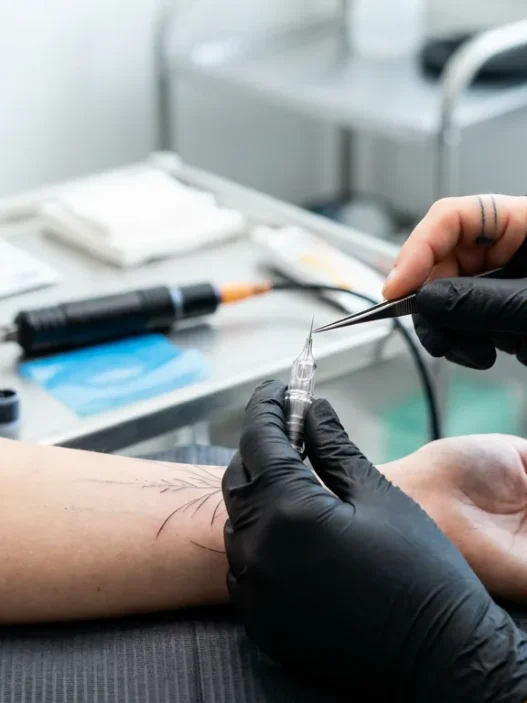
Fine line dragons are delicate, almost sketch-like. Single needle work creates these ethereal creatures that feel more like jewelry than traditional tattoos. The dragons are often simplified — flowing lines suggesting wings, minimal detail work, sometimes just outlines.
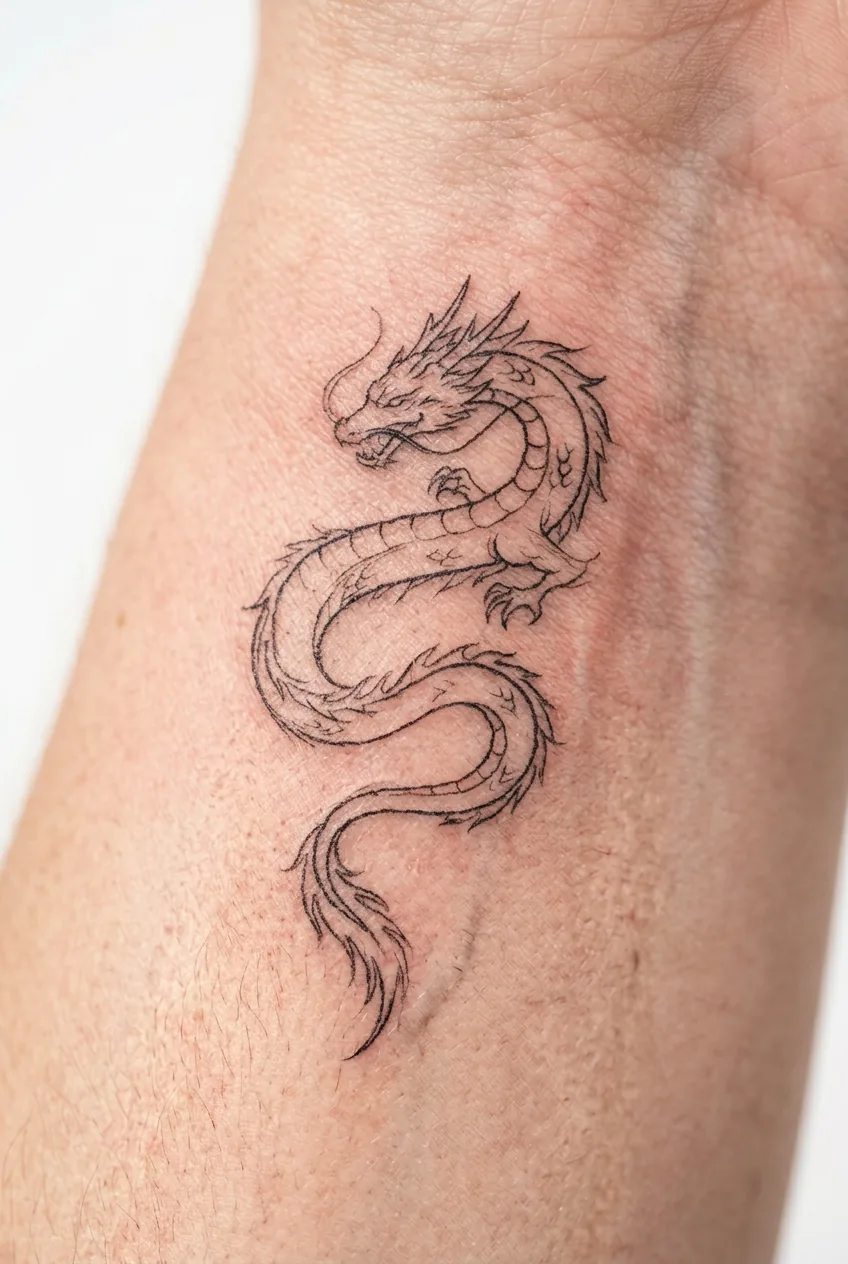
Here’s the truth about aging: fine line work is gorgeous now but won’t hold up like bolder styles. Those delicate lines will blur and fade within 10-15 years. Not terrible, just softer. If you’re okay with touch-ups, go for it.
Perfect for smaller placements — behind the ear, inner wrist, ankle, ribcage. Cost varies wildly ($100-300 per hour) depending on the artist’s Instagram following, honestly. Fine line dragons suit women who want something subtle and feminine. These work especially well as smaller designs that don’t demand attention.
The style fits perfectly with current trending tattoos — minimalist, Instagram-friendly, delicate. Just know what you’re getting into aging-wise.
5. Watercolor — Best For: Artistic Expression
Watercolor dragons look like they flew off a fantasy painting. Splashes of color, gradients, sometimes no black outline at all. The effect is stunning — dragons surrounded by purple and blue washes, fiery oranges and reds bleeding into the background.
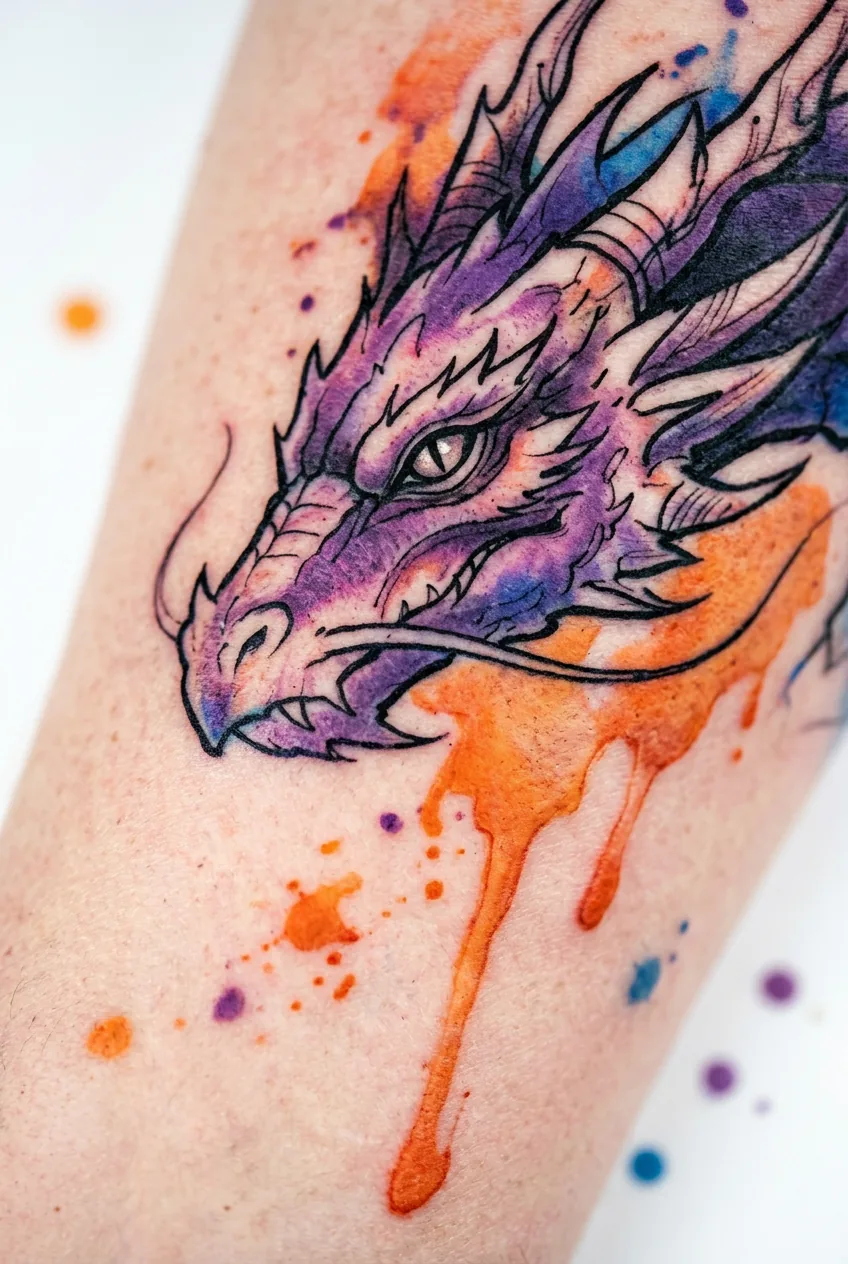
The aging situation is… complicated. Pure watercolor (no black outline) will fade significantly. Those gorgeous color washes become muddy after 5-10 years. However, watercolor with black linework as a base holds up much better. Proper aftercare can extend the life, but expect touch-ups.
Cost runs $200-400 per hour for artists who really know color blending. Best placements are areas with less sun exposure — upper arm, back, thigh. The style suits artistic women who prioritize visual impact over longevity. It’s about having a living painting on your skin, even if it’s temporary art.
6. Blackwork — Best For: Dramatic Impact
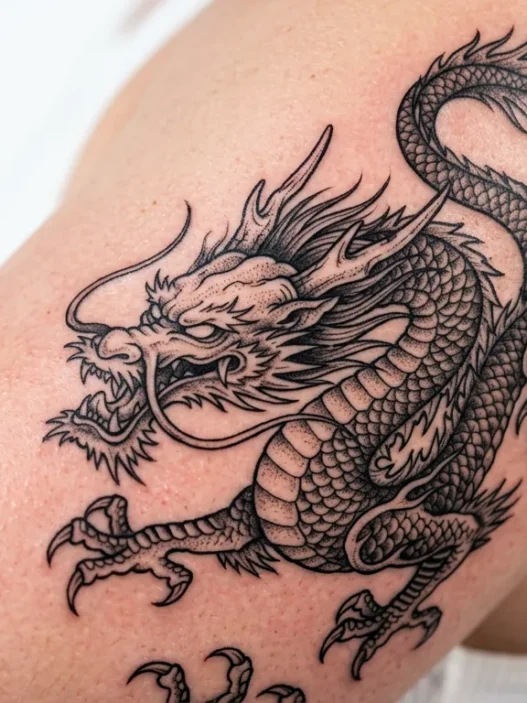
Blackwork dragons are pure drama. Solid black fills, negative space for detail, geometric patterns, dotwork elements. These dragons feel ancient and powerful — like something carved into stone rather than drawn on skin.
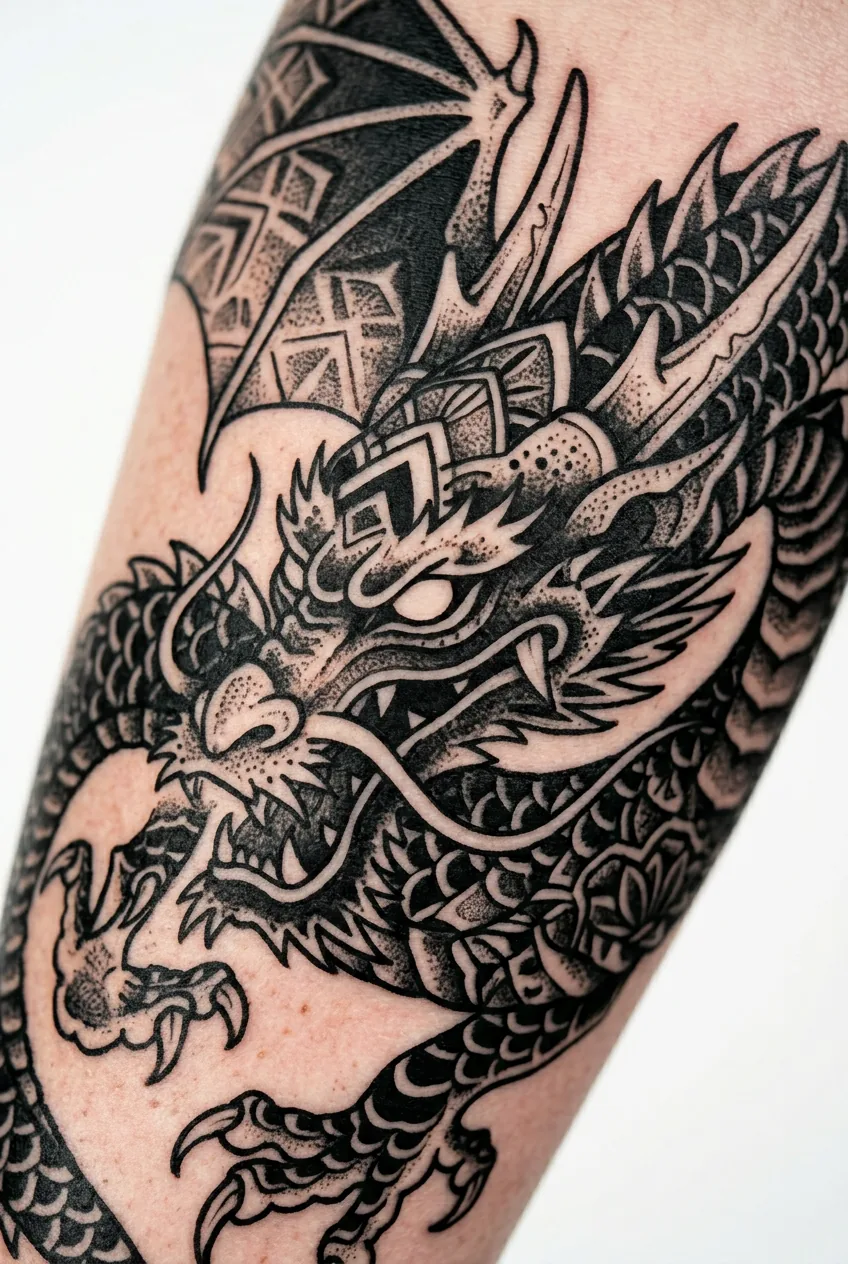
Aging? Phenomenal. Black ink holds its intensity longer than any other color. A blackwork dragon will look almost identical in 20 years. The bold contrasts and solid fills are bulletproof. Plus, if you ever want to add color later, black provides the perfect foundation.
Cost typically runs $150-350 per hour. The style works beautifully on any body part with good contrast — pale skin especially. Blackwork dragons suit women who want maximum visual impact with minimal long-term worry. It’s perfect for anyone drawn to mandala tattoos or geometric work — the aesthetic overlaps beautifully.
So which dragon style calls to you? If you want something that’ll look incredible forever and you love bold statements, go traditional or blackwork. For detail lovers who don’t mind eventual touch-ups, neo-traditional is gorgeous. Cultural appreciation points to Japanese. Minimalist aesthetics lean fine line. And if you want a living painting, watercolor awaits.
The dragon chooses the warrior, as they say. Or in this case, the style chooses the woman ready to wear her power on her skin.
Questions I Get About Dragon Tattoos
Do dragon tattoos have to be huge?
Not at all! While traditional and Japanese styles work best with more space, fine line and minimalist dragons can be gorgeous at 3-4 inches. The key is choosing a style that works at your desired size.
Which style hurts the least?
Fine line work generally hurts less because there’s less needle time per area. Solid black fills (blackwork, traditional) involve more time in one spot, which can be more intense. But honestly, placement matters more than style for pain levels.
Can I mix dragon styles?
I wouldn’t recommend it for a single dragon — each style has its own aesthetic rules. But if you’re planning multiple dragon tattoos, mixing styles across different pieces can create a really interesting collection.
How do I find an artist for each style?
Look at portfolios obsessively. Traditional and blackwork artists are everywhere, but authentic Japanese work requires specific training. For fine line and watercolor, check Instagram for recent work — these styles are very technique-dependent.