


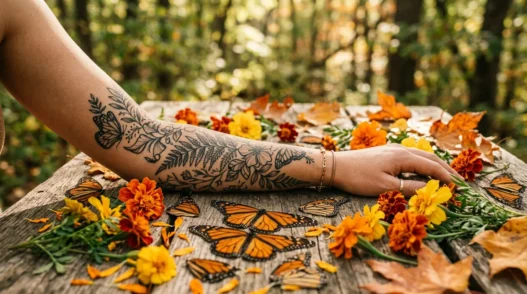
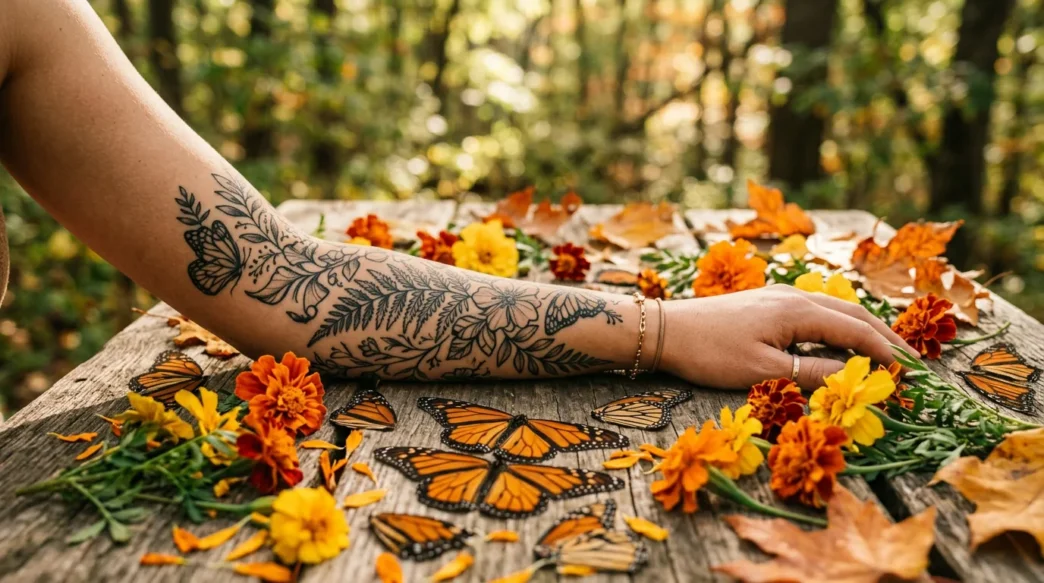
I have a confession: for years I dismissed butterfly tattoos as “starter ink” — the kind of design you get at eighteen and grow out of. Then I started actually talking to women about their pieces, asking what their butterfly meant, and I was completely humbled. Grief. Survival. A year spent in a psychiatric ward and coming out the other side. Migration from a country they’d never return to. These weren’t decorative choices. They were declarations. So I put together this guide to decode what’s actually behind twelve of the most meaningful butterfly tattoo symbols — because the insect carries more weight than most people ever stop to notice.
Navigate the Symbols
- The Classic Monarch — Freedom, Migration, and Letting Go
- The Blue Morpho — Illusion, Beauty, and the Unseen Self
- The Death’s Head Hawkmoth — Darkness, Duality, and Reclaiming Fear
- The Swallowtail — Grace Under Pressure
- The Emperor Butterfly — Royalty, Ambition, and Quiet Confidence
- The Ghost Butterfly — Grief, Memory, and Invisible Bonds
- The Luna Moth (Honorary Butterfly) — Intuition and Nocturnal Wisdom
- The Geometric Butterfly — Structure Inside Chaos
- The Broken Wing Butterfly — Survival, Scars, and Honest Beauty
- The Chrysalis — The In-Between, Becoming, and Suspended Time
- The Mandala Butterfly — Spiritual Wholeness and Cultural Roots
- The Watercolor Butterfly — Emotion, Impermanence, and Artistic Soul
1. The Classic Monarch — Freedom, Migration, and Letting Go
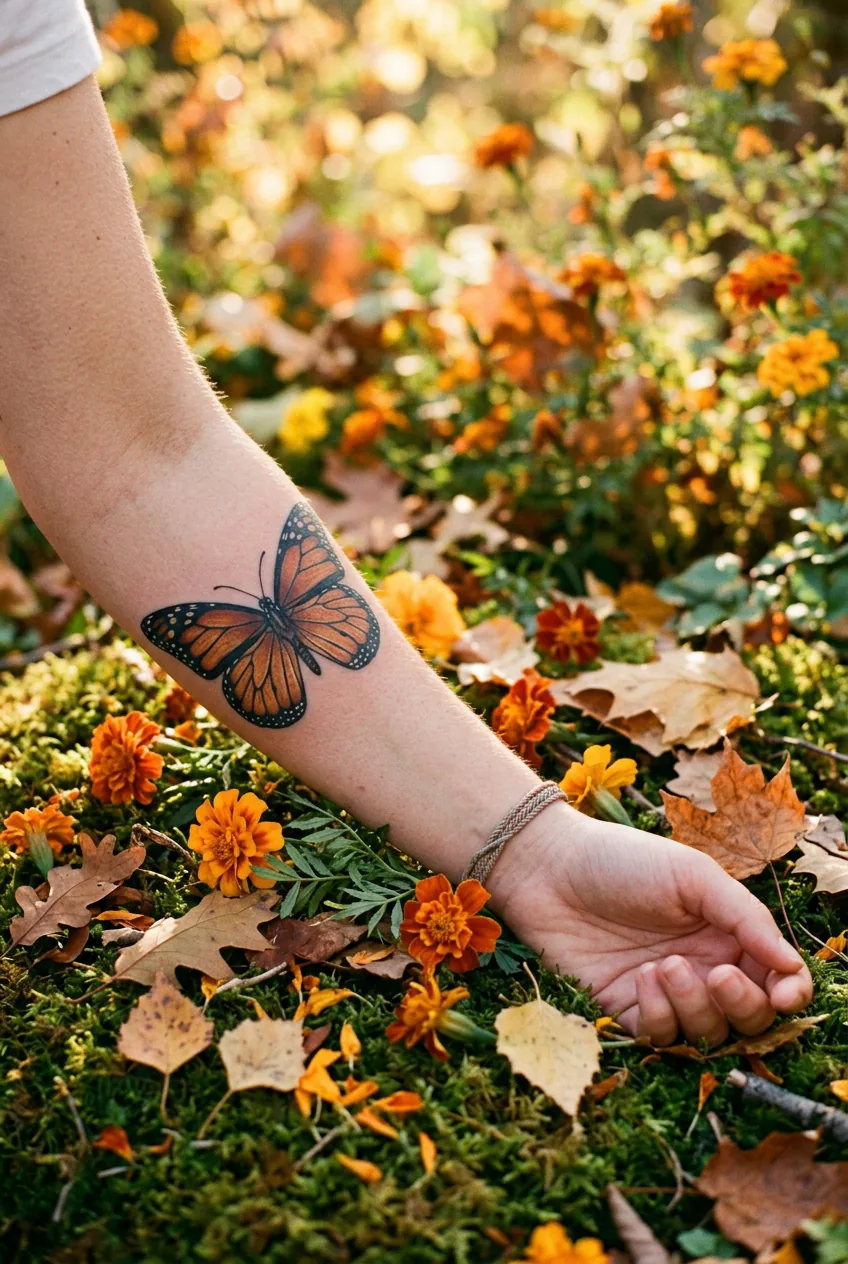
The Monarch is the one most people picture when they hear “butterfly tattoo” — the warm amber and black stained-glass wings, iconic and immediately recognizable. But the symbolism underneath is richer than the visual. Monarch butterflies migrate thousands of miles, navigating by the sun and Earth’s magnetic field, and they do it alone. No flock. No map. Just instinct and movement.
Women who choose the Monarch often tell me they’re marking a departure — a divorce, an emigration, leaving a job that was slowly suffocating them. In Mexican culture, Monarchs hold specific spiritual weight: they arrive each year around Día de los Muertos and are believed to carry the souls of the deceased. If you’re getting this tattoo with that cultural layer in mind, lean into that history consciously and respectfully — it deepens the piece enormously.
Artists typically render Monarchs in either lush neo-traditional color (lots of amber, deep black outlines, occasionally a touch of white highlight) or as delicate fine-line work with the wing cells traced in careful detail. Both are beautiful. You don’t owe anyone an explanation for which version you choose.
2. The Blue Morpho — Illusion, Beauty, and the Unseen Self
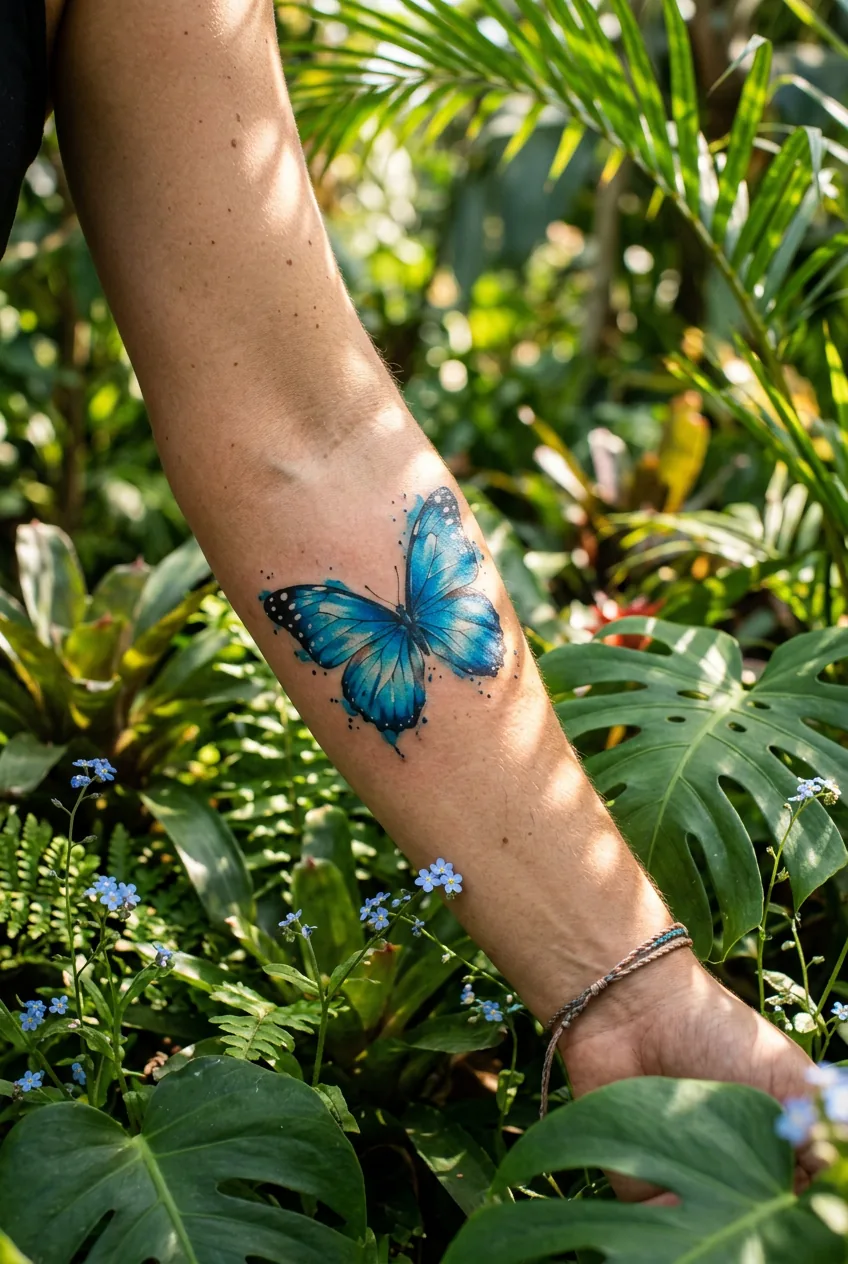
Here’s something wild: the Blue Morpho’s wings aren’t actually blue. There’s no blue pigment. The color is structural — microscopic scales reflect light in a way that produces that electric, almost supernatural iridescence. The wings are, in the most literal sense, an illusion.
That fact alone makes this one of the most philosophically interesting butterfly tattoos you can get. Women drawn to the Blue Morpho tend to resonate with ideas about perceived identity versus true self — the face we show the world versus what’s actually underneath. There’s something beautifully subversive about wearing a symbol that is, scientifically, not what it appears to be.
Rendering this in tattoo form is genuinely challenging. Watercolor styles capture the shimmer best, though some realism artists use negative space and subtle shading to mimic that structural iridescence. In the image below, you can see how she’s placed hers on the inner forearm — when her arm rotates, the light hits those blue tones differently and the illusion shifts. That placement choice wasn’t accidental.
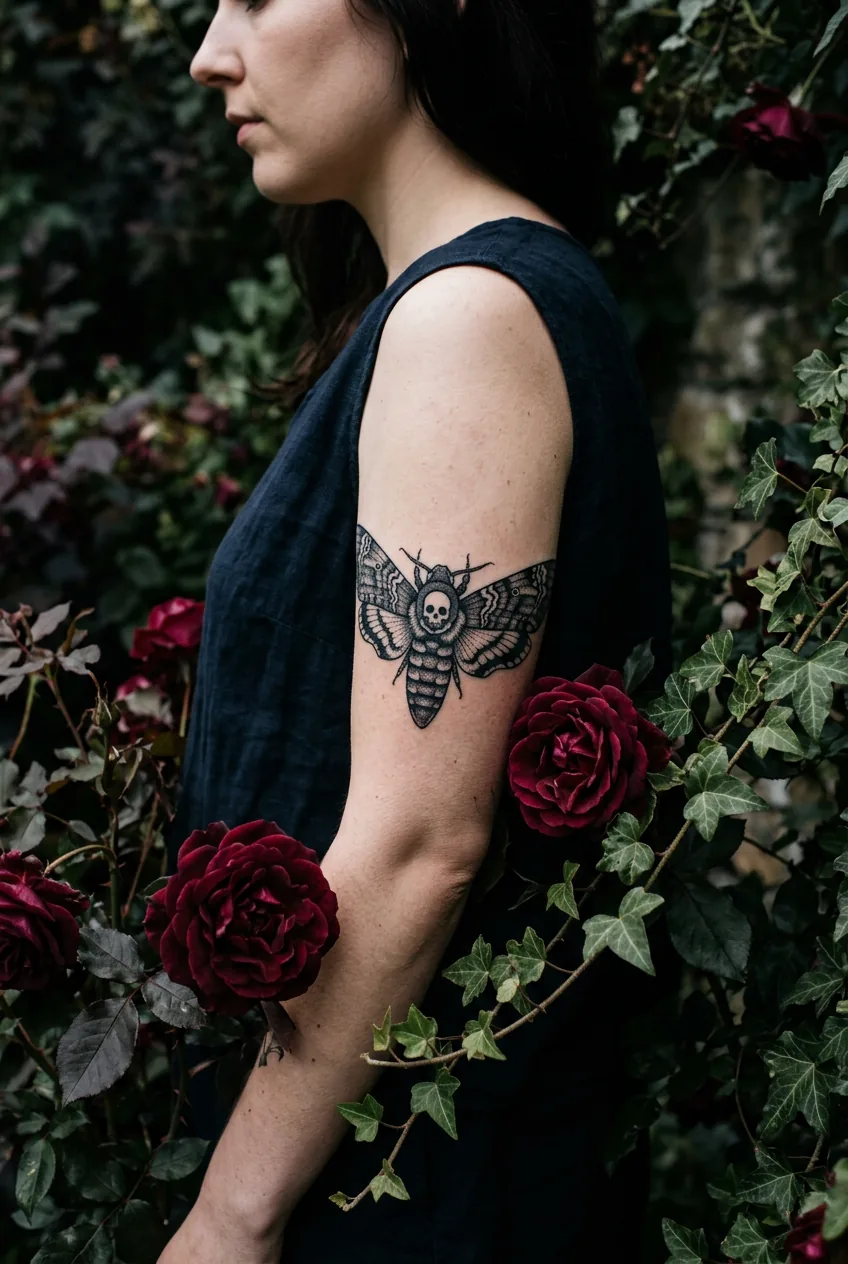
3. The Death’s Head Hawkmoth — Darkness, Duality, and Reclaiming Fear
Technically a moth, technically not a butterfly — but it belongs here because it’s so frequently chosen as part of the broader butterfly tattoo conversation, and because its symbolism is extraordinary. The skull-shaped marking on the thorax made this creature a symbol of death and bad omens for centuries across European folklore. It squeaks when disturbed. It invades beehives to steal honey. It is, by any measure, a strange and unsettling animal.
And that’s exactly why so many women love it. Getting a Death’s Head Hawkmoth tattooed is an act of reclamation. You’re taking something that was supposed to frighten you and making it yours. I’ve seen these done in stunning blackwork with hyper-detailed dotwork shading, and in classic American traditional style with muted golds and deep blacks. Both read completely differently. Both are powerful. This is a symbol that suits someone who’s looked at the scary thing and decided to carry it rather than run from it.
4. The Swallowtail — Grace Under Pressure
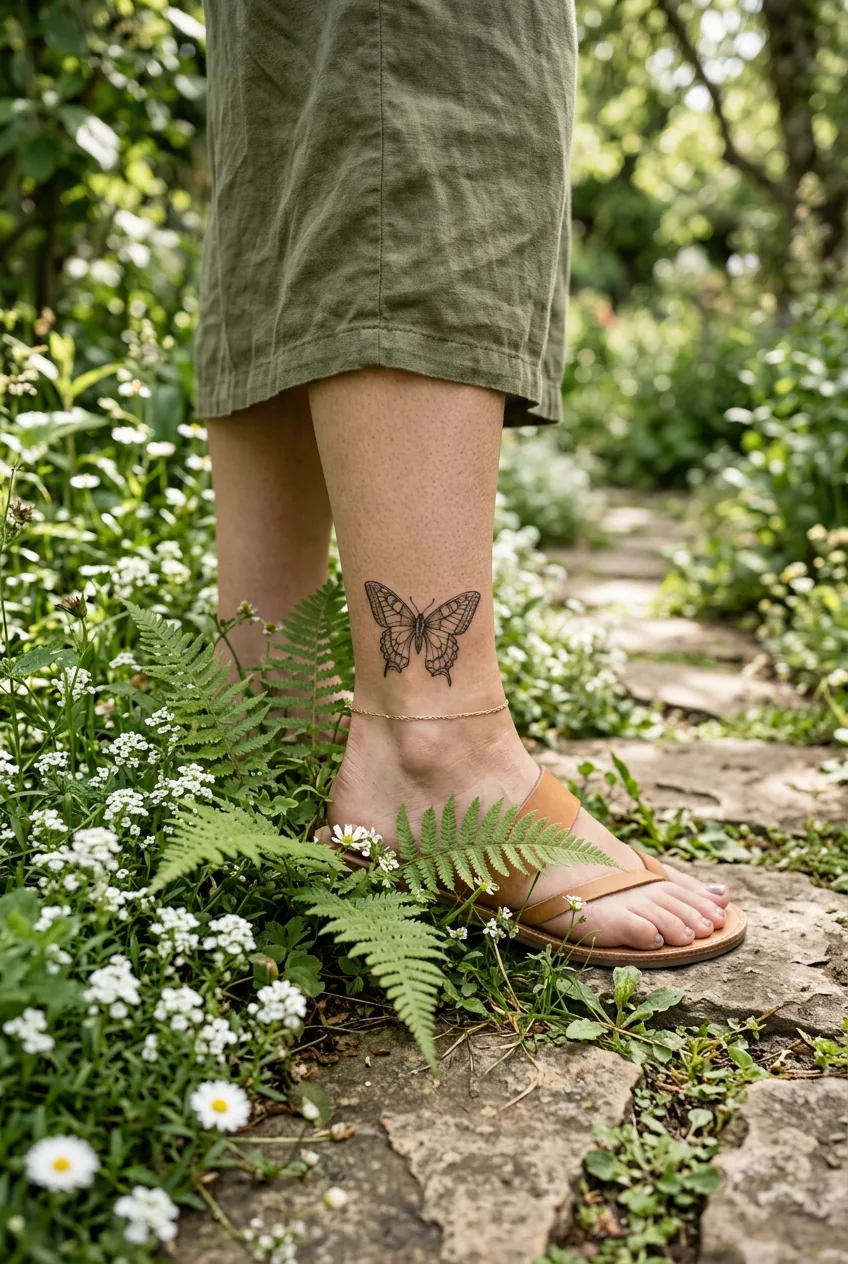
Those elongated lower wing tips — elegant, architectural, a little dramatic. The Swallowtail has a silhouette unlike any other butterfly, and it lends itself beautifully to placement on the ankle or shoulder blade where those trailing points can follow the natural lines of the body.
Symbolically, Swallowtails are associated with grace and resilience in Japanese culture — ageha (the Swallowtail) appears in family crests (kamon) and was historically linked to samurai families. For contemporary wearers, it often represents the ability to remain poised during difficulty. The wings look effortless, but the creature itself is actually a remarkably strong flier. That contrast — appearing gentle, being tough — resonates with a lot of women. For more symbolic tattoos like this one, the visual and the meaning tend to work in elegant tandem.
5. The Emperor Butterfly — Royalty, Ambition, and Quiet Confidence
The Purple Emperor is one of the rarest butterflies in Europe — genuinely difficult to spot, preferring high tree canopies to ground level, and shimmering with a purple iridescence that’s made it a collector’s obsession for centuries. There’s a reason it was named after royalty.
Women who choose this specific species tend to be making a quiet, confident statement. Not loud. Not demanding recognition. Just knowing. Artists typically render it in deep violets with blackwork detailing on the wing veins, and it photographs beautifully on darker skin tones where that purple pops against warm undertones. If you want a butterfly tattoo that most people won’t immediately recognize — one that rewards the curious — this is it.
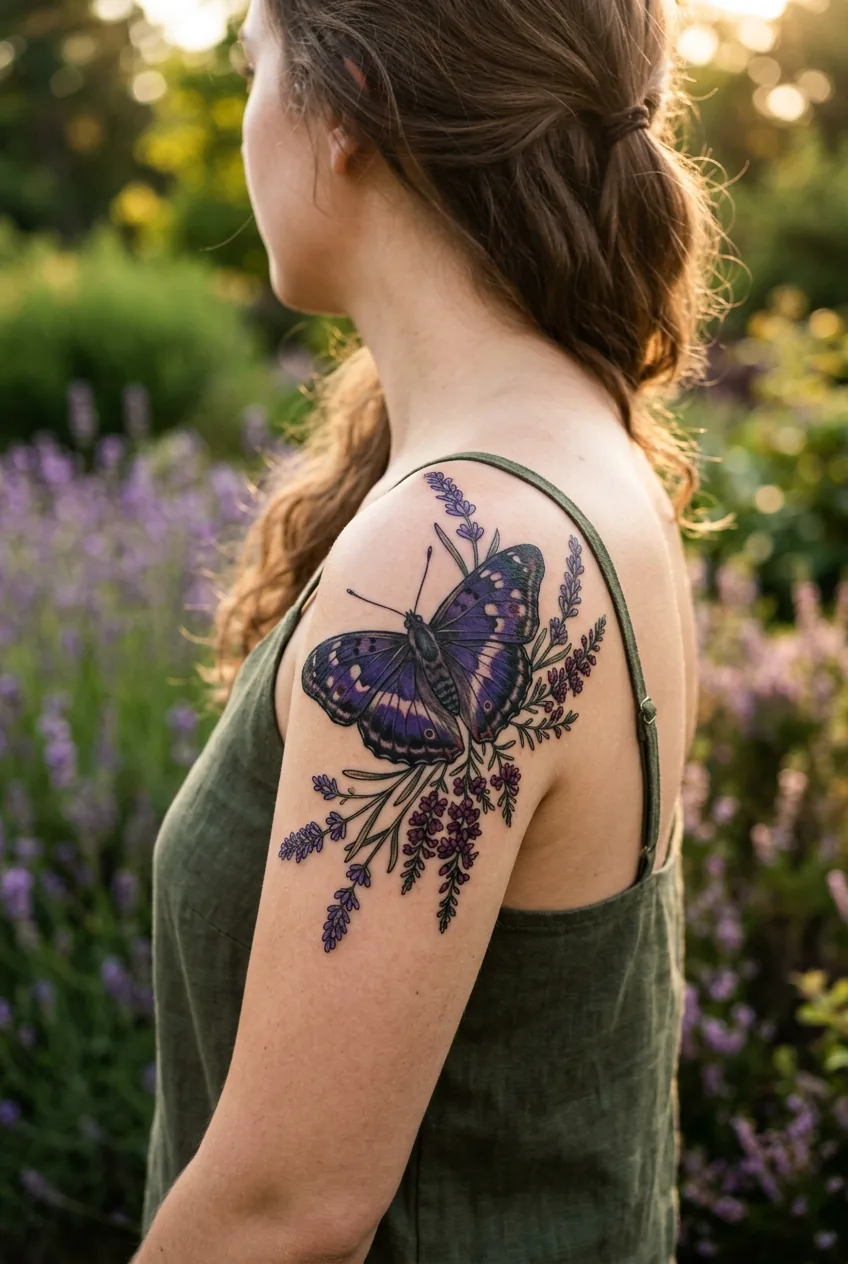
Personal pick: If I were getting a butterfly tattoo tomorrow, it would be the Purple Emperor on my inner wrist — small, precise fine-line work, just the wings and that characteristic purple sheen suggested through shading. Something private. Something that’s mine before it’s anyone else’s to look at.
6. The Ghost Butterfly — Grief, Memory, and Invisible Bonds
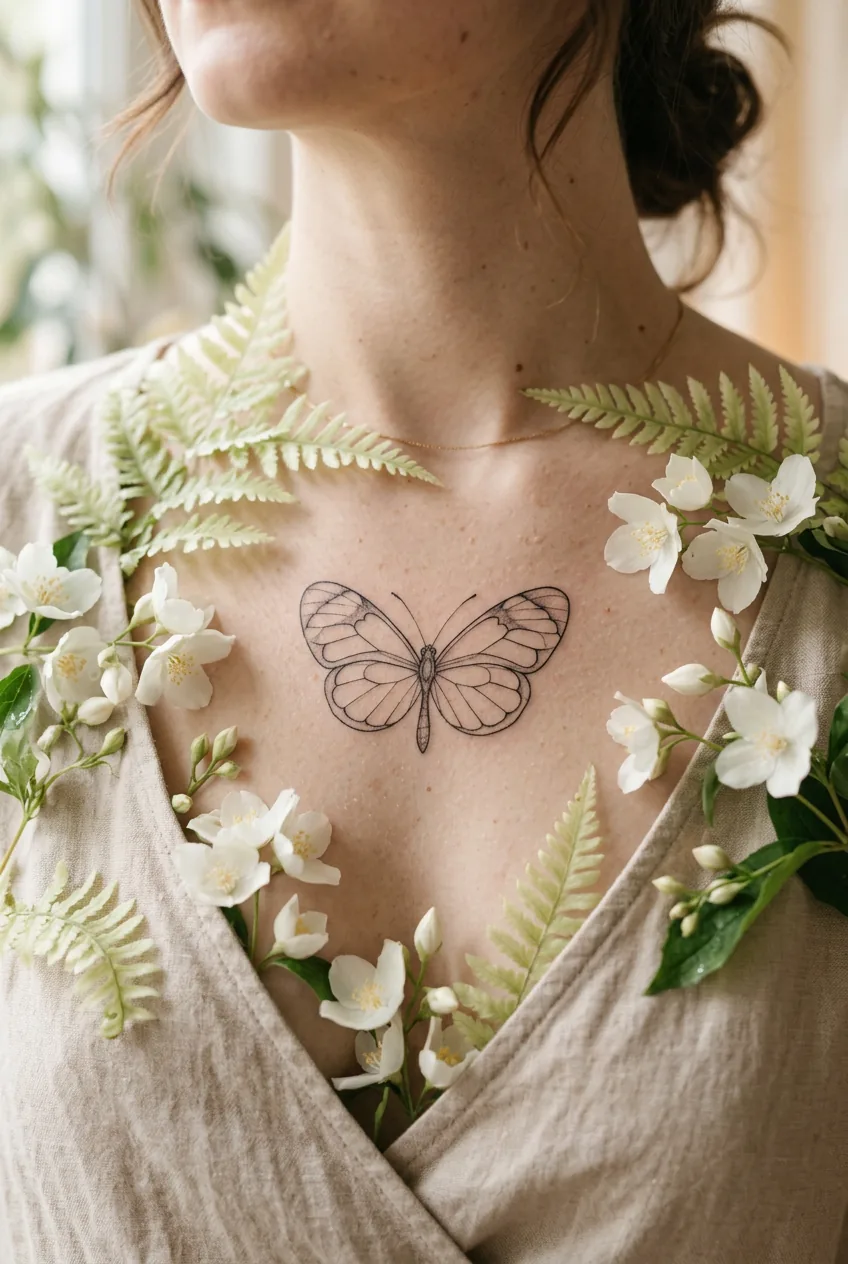
The Glasswing butterfly — sometimes called the Ghost butterfly — has wings that are almost entirely transparent. You can see straight through them to whatever is behind. It’s one of the most otherworldly creatures on Earth, and tattooing it requires a particular kind of artistic skill: how do you render transparency in permanent ink?
The answer, usually, involves very delicate negative space work and fine-line outlines that suggest the wing structure without filling it in. The skin itself becomes part of the design. That’s poetic in the context of grief, which is what this butterfly is most often chosen to represent. Loss that’s always present but sometimes see-through. The person who isn’t there anymore but who you carry anyway, visible through everything.
I’ve seen these placed over the sternum more than anywhere else — close to the heart, literally. If you’re considering this piece, look for an artist who specializes in fine-line and negative space work. The execution is everything here.
7. The Luna Moth (Honorary Butterfly) — Intuition and Nocturnal Wisdom
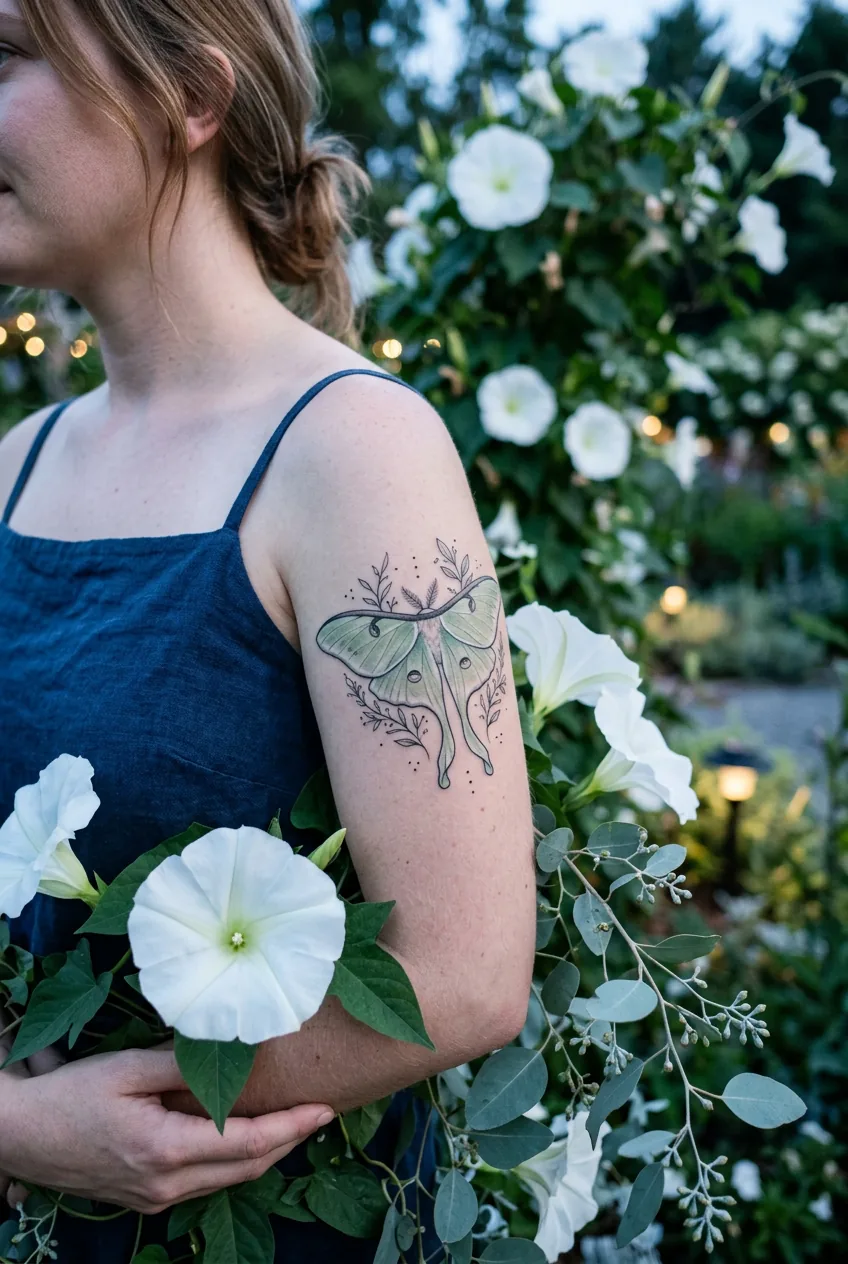
Yes, another moth. I included it anyway because the Luna Moth appears constantly in conversations about butterfly tattoos, and because its symbolism is too good to skip. Pale celadon green, long graceful tails, attracted to moonlight. It lives as an adult for only about a week — no mouth, no ability to eat, existing purely to reproduce and then disappear. That brevity is the whole point.
Luna Moths symbolize intuition, the unconscious mind, and the kind of wisdom that comes not from logic but from feeling your way through darkness. Women drawn to this symbol often describe themselves as highly intuitive, drawn to lunar cycles, interested in spirituality without necessarily belonging to a formal tradition. What the luna moth represents in various cultures consistently ties back to the feminine divine, which adds another layer for those who want it.
In soft sage greens and whites, this tattoo is genuinely breathtaking. It suits the upper arm, the calf, or the shoulder blade — anywhere with enough real estate to let those long tails breathe.
8. The Geometric Butterfly — Structure Inside Chaos
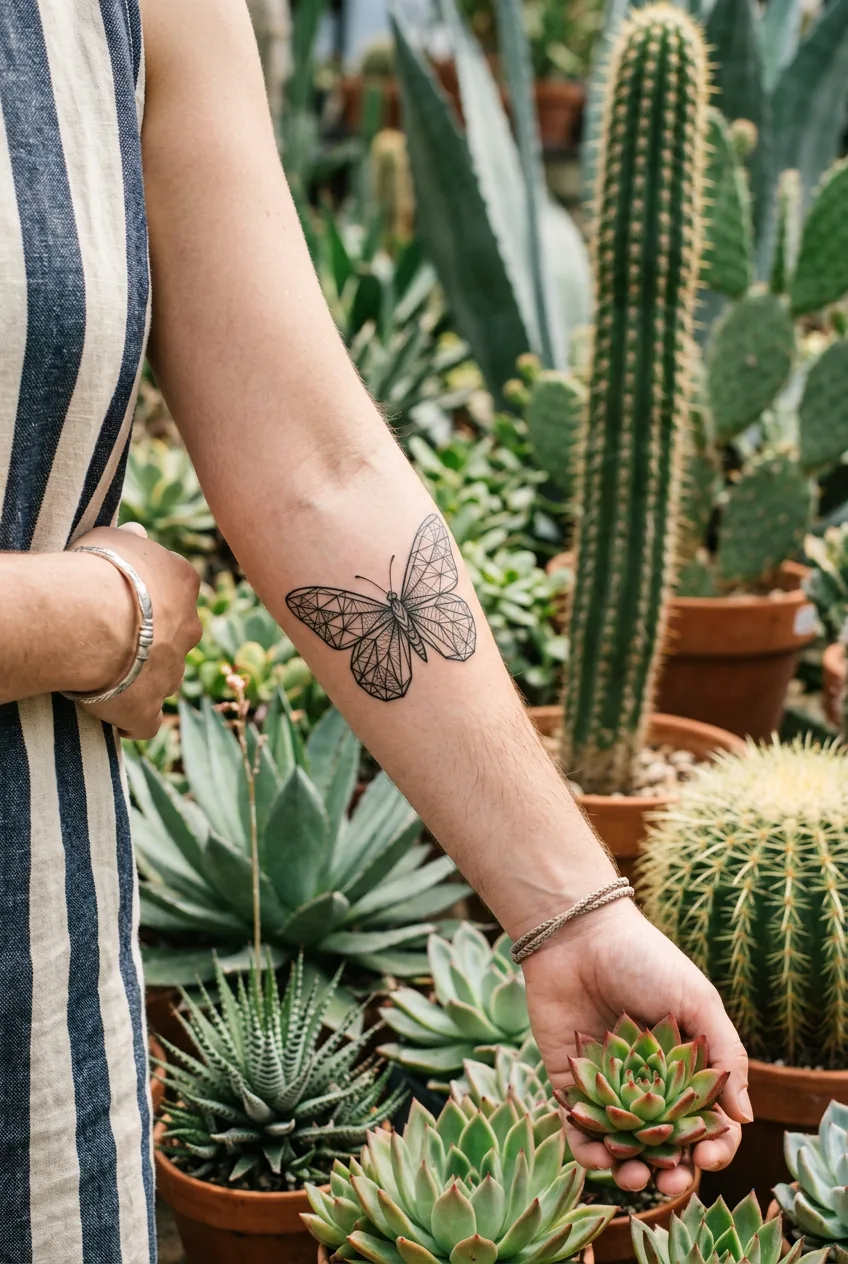
This is less about a specific species and more about a design philosophy. The geometric butterfly takes the organic shape of wings and rebuilds it from lines, triangles, sacred geometry, and precision. Half organic, half architectural. The contrast is the whole statement.
People who choose this style often talk about finding order in their lives after a period of chaos — anxiety, addiction recovery, a relationship that unraveled. The geometry represents the scaffolding they built underneath themselves. It’s also just visually striking in a way that photographs well and ages better than heavily detailed realism. Look at how she’s wearing hers on the forearm in the photo — the geometric grid of the inner wing catches your eye first, then you realize the outer wing is softly organic. That tension is exactly what I mean about the symbol working on two levels simultaneously.
9. The Broken Wing Butterfly — Survival, Scars, and Honest Beauty
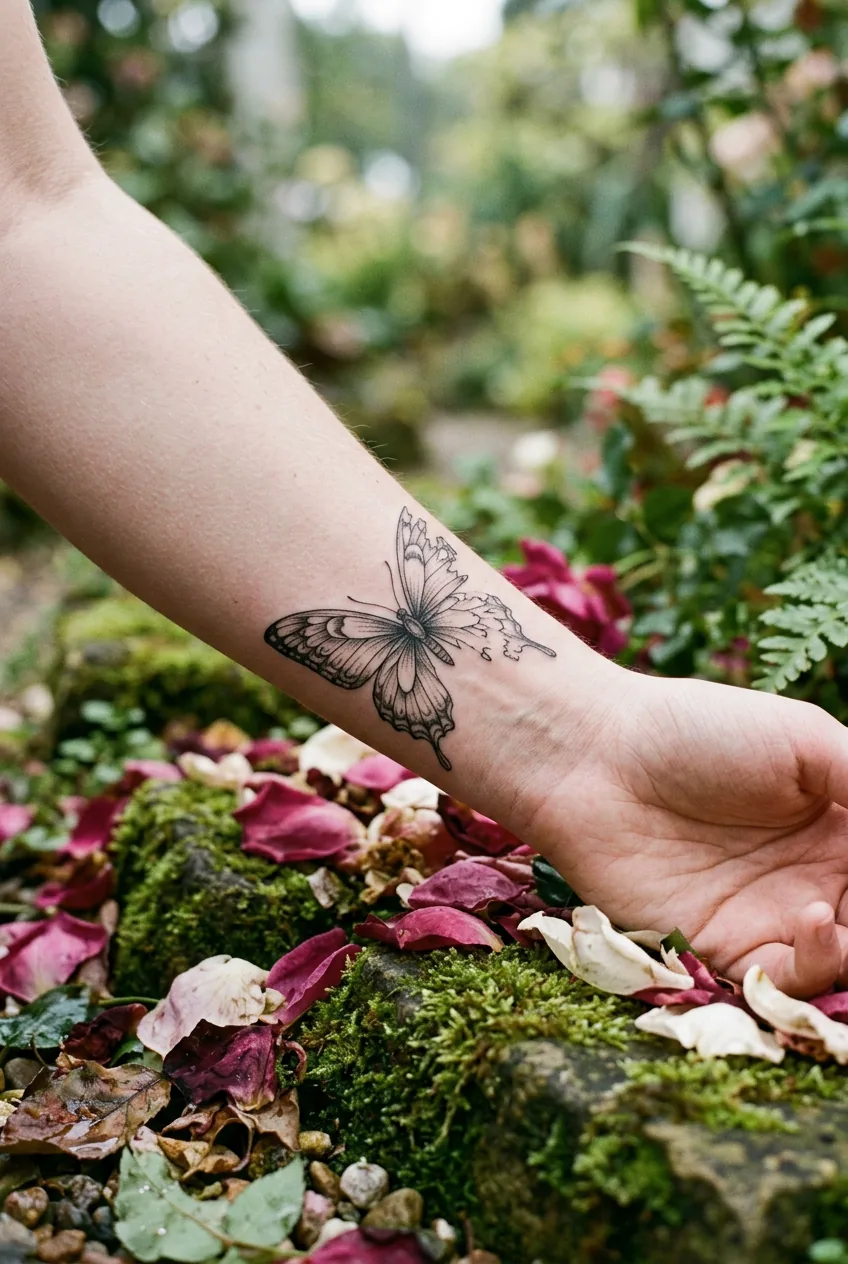
This one requires a skilled artist and a lot of trust. A butterfly with one damaged or torn wing — still whole, still present, but visibly marked by something. It’s a symbol that refuses to pretend. It says: I went through something, and I’m not hiding it.
I’ve seen it chosen by survivors of domestic violence, illness, accidents, and simply — life. The broken wing doesn’t mean broken beyond repair. The butterfly in these designs is always still recognizable as itself, often mid-flight. The damage is part of the composition, not a mistake to be corrected.
Placement matters here more than almost anywhere else on this list. Many women place it where a scar already exists, making the tattoo literally emerge from something the body has already been through. If you’re considering that, find an artist with experience tattooing over scar tissue — it’s a different technical challenge than regular skin. Tattooing over scars requires patience, specific needles, and sometimes multiple sessions.
10. The Chrysalis — The In-Between, Becoming, and Suspended Time
Not the butterfly. Not the caterpillar. The chrysalis itself — that suspended, transformative middle state that most people rush past to get to the beautiful ending. This is genuinely underused as a tattoo subject, which is part of why I love it so much.
The chrysalis represents being mid-process. Not done yet. Still becoming. Women going through long periods of transition — education, recovery, rebuilding after loss — sometimes choose this specifically because they don’t want a symbol of the finished transformation. They want to honor the process while they’re still inside it. That takes real self-awareness and courage.
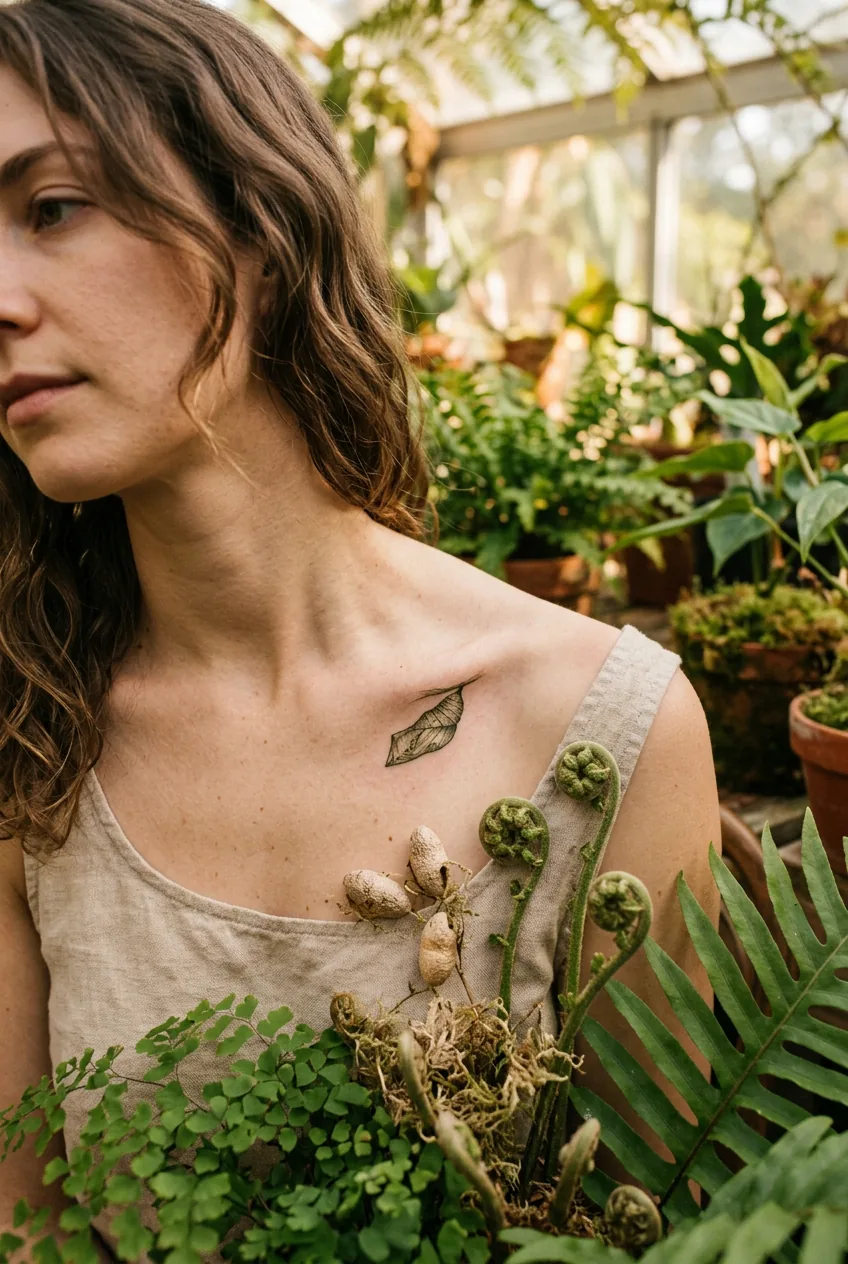
Artistically, these are rendered in everything from hyper-realistic botanical illustration style (think the kind of detail you’d find in an Audubon print) to abstract forms that suggest the shape without defining it fully. The latter especially suits micro tattoos — a tiny chrysalis on the collarbone or behind the ear reads as deeply personal and entirely original.
11. The Mandala Butterfly — Spiritual Wholeness and Cultural Roots
I need to be honest here, because this design is enormously popular and that popularity has come with some real tensions worth acknowledging. The mandala is a sacred form in both Hindu and Buddhist traditions — it represents the universe, spiritual wholeness, the self in relation to the infinite. Combining it with butterfly wings creates a visually stunning piece, but if you’re drawn to this design, please sit with the cultural weight of the mandala element before you commit.
This doesn’t mean you can’t get it. Many tattoo artists from Hindu and Buddhist backgrounds create and celebrate these designs. It means: know what you’re wearing. If the spiritual meaning resonates genuinely with your beliefs and you approach it with respect rather than aesthetic appropriation, that changes the conversation. For a deeper understanding of the symbolism involved, exploring mandala tattoos as a design tradition will give you important context before your consultation.
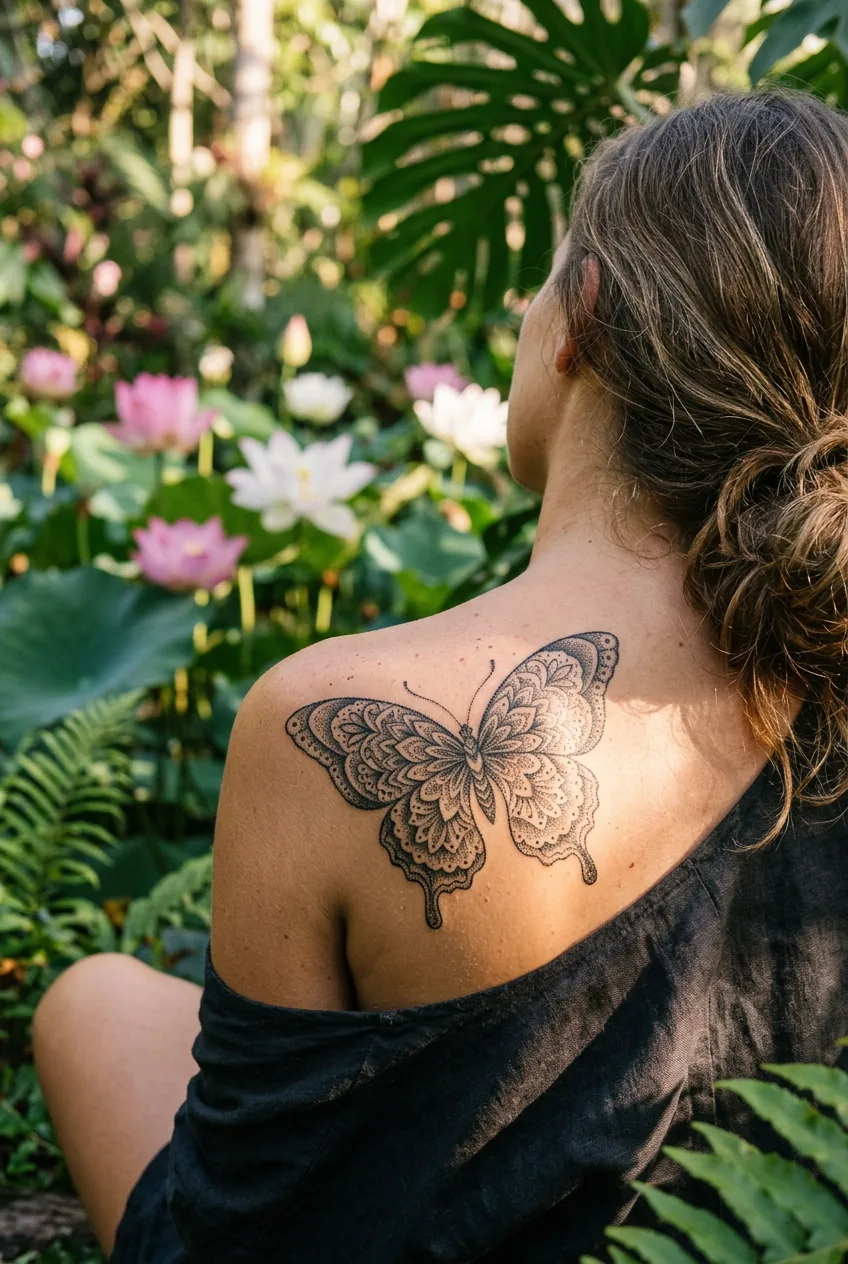
When done with intention, these pieces are extraordinary. The wings become the outer geometry of the mandala, extending its sacred circular pattern into something that moves. In dotwork especially, the density of pattern creates something that looks almost woven rather than inked.
12. The Watercolor Butterfly — Emotion, Impermanence, and Artistic Soul
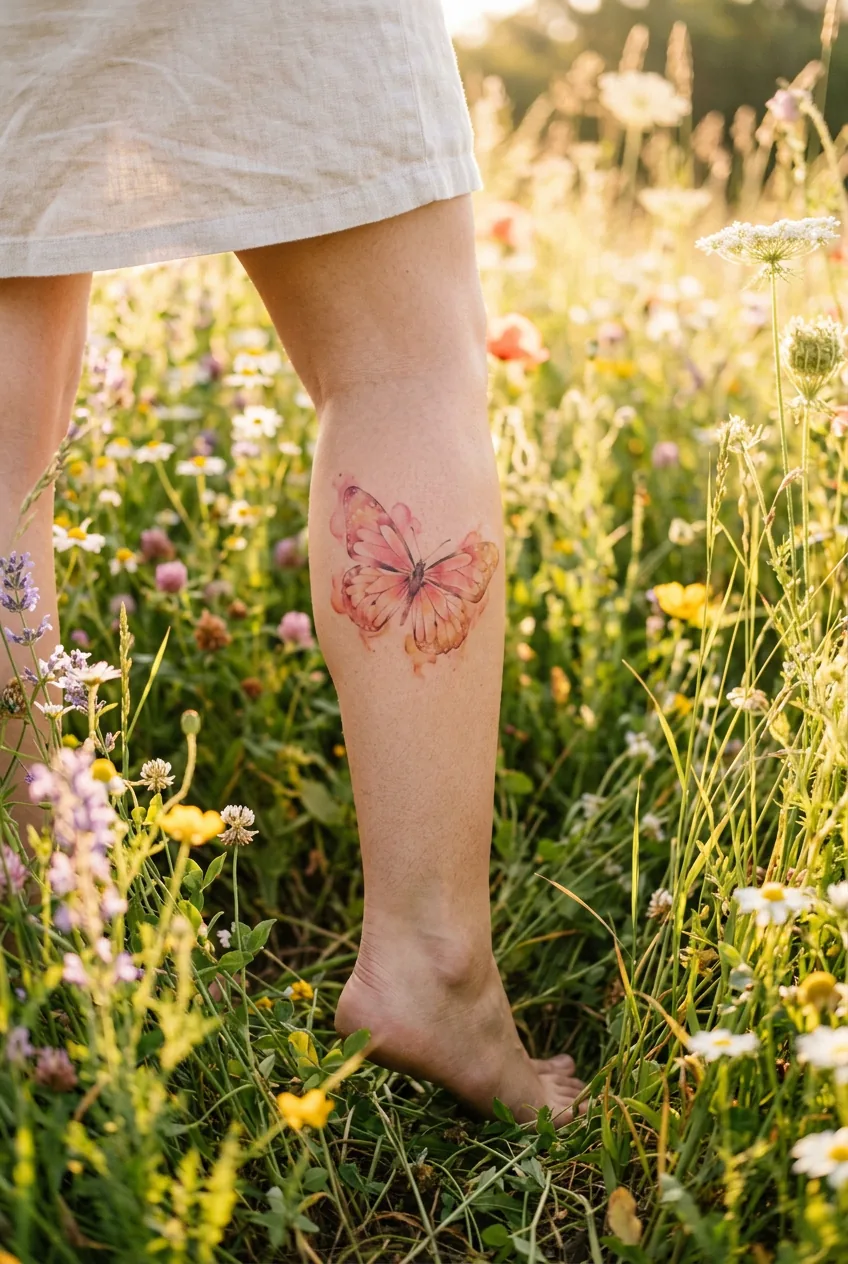
The most debated butterfly tattoo style in terms of longevity — and honestly, one of the most beautiful. Watercolor butterflies use bleeds, blooms, and soft washes of color that mimic actual watercolor painting, sometimes with no visible outlines at all. They look like someone pressed a wet painting against your skin.
The honest truth about watercolor tattoos: they do fade faster than traditional or fine-line work, particularly without bold outlines to anchor them. But there’s a meaningful counter-argument that some wearers make deliberately — impermanence is the point. A symbol that softens and shifts over time echoes the message of transformation rather than contradicting it. If the idea of your tattoo evolving with you feels right rather than worrying, watercolor might be exactly correct for this subject. Watercolor tattoo aftercare matters more with this style than almost any other, so do your research before and after.
Emotionally, women who choose watercolor butterfly designs tend to be expressive, creatively oriented, and comfortable with flux. The combination of butterfly imagery and watercolor technique doubles down on a core theme: things change, and that’s okay. Pair this with some of the gorgeous floral tattoos that artists often incorporate into the background wash, and you get something that looks genuinely painterly and alive on the skin.
See the Watercolor Technique on Real Skin
Questions I Get About This
Does a butterfly tattoo have to mean transformation?
Not at all — and I actually find it more interesting when it doesn’t. The transformation narrative is the most common, but as this guide shows, butterfly symbols carry grief, ambition, spiritual meaning, illusion, and survival just as powerfully. Choose the meaning that’s yours, not the one you’re expected to have.
Is it considered cultural appropriation to get a mandala butterfly tattoo?
It depends on your approach. The mandala is sacred in Hindu and Buddhist traditions, and wearing it purely as decoration without any awareness of that context is where the tension arises. Go in informed, have a real conversation with your artist about the design’s roots, and let that knowledge shape how you wear it. Intention and awareness matter.
Where do butterfly tattoos age best on the body?
Areas with less sun exposure and less friction age best — the upper arm, shoulder blade, inner wrist, and sternum all hold detail well over time. Hands and fingers fade fastest. Ankle and calf placements are middle ground — beautiful, but they get more sun exposure, so sunscreen becomes your long-term maintenance strategy.
Can I combine butterfly imagery with other symbols without the design getting cluttered?
Yes, but the key is working with an artist who understands negative space and visual hierarchy. Butterfly wings with quote script inside them, or florals woven through, can look absolutely cohesive — but it requires planning. Bring reference images and be specific about which element is the focal point. If you love literary references, pairing wings with quote tattoos inside or around them is a design direction worth exploring with your artist.
Twelve symbols, and honestly I could have kept going. The point I keep coming back to is this: the butterfly tattoo has been underestimated precisely because it’s been so popular, and popularity has a way of making people dismiss something before they look at it properly. Don’t do that. Whatever species, style, or meaning draws you in — follow it to the bottom. Find out why it won’t leave your mind. That’s usually where the real tattoo lives. And whatever you decide, wear it without apology.