


When I got my first heart tattoo at 24, I thought I was just being romantic. Six years later, I realize it’s one of the most complex symbols in tattoo art — way more layered than the simple love hearts we doodled in high school. Every woman I know with a heart tattoo has a story that goes deeper than “I just liked how it looked.”
Heart tattoos carry centuries of meaning across cultures. From the sacred to the broken, from anatomical to mystical, each variation speaks to something different in our souls. Let me walk you through the most meaningful heart tattoo designs and what they really represent.
What Your Heart Tattoo Really Means
- The Sacred Heart: Divine Love and Devotion
- The Broken Heart: Healing Through Pain
- The Anatomical Heart: Raw Life Force
- The Winged Heart: Freedom and Love Combined
- The Locked Heart: Protection and Mystery
- The Heart with Arrow: Cupid’s Eternal Mark
- The Heart with Roses: Beauty and Thorns
- The Celtic Heart: Unbreakable Bonds
- The Mandala Heart: Balance and Wholeness
1. The Sacred Heart: Divine Love and Devotion
The Sacred Heart isn’t just Catholic imagery — it’s become a powerful symbol of unconditional love and sacrifice. I see more women choosing this design when they want to honor someone who showed them selfless love, whether that’s a parent, child, or spiritual connection.
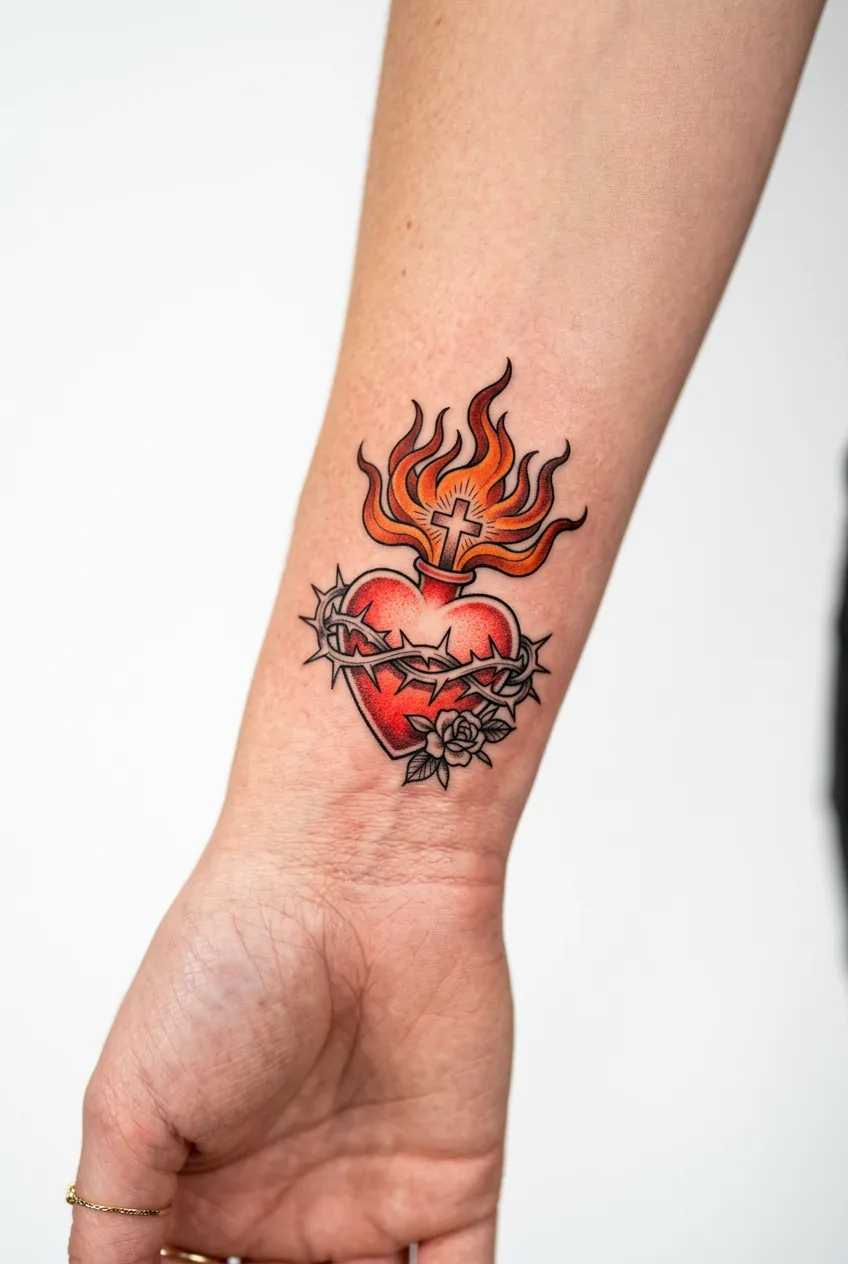
Traditional Sacred Hearts feature flames rising from the top, thorns wrapped around the heart, and sometimes a cross. The flames represent purification and divine love, while the thorns symbolize the pain that often comes with deep devotion. It’s beautiful and intense.
Modern interpretations soften the religious elements while keeping the emotional power. I love how contemporary artists are reimagining this classic symbol with watercolor techniques or geometric frameworks. The meaning stays the same: love that transcends the ordinary.
2. The Broken Heart: Healing Through Pain
Here’s what surprised me about broken heart tattoos — they’re rarely about staying broken. Every woman I’ve met with one talks about it as a marker of survival, not defeat.
The crack down the middle represents a moment when everything changed. But notice how most broken heart tattoos include elements of mending — stitches, bandages, or even golden kintsugi-style repairs. It’s the Japanese philosophy that broken things become more beautiful when repaired.
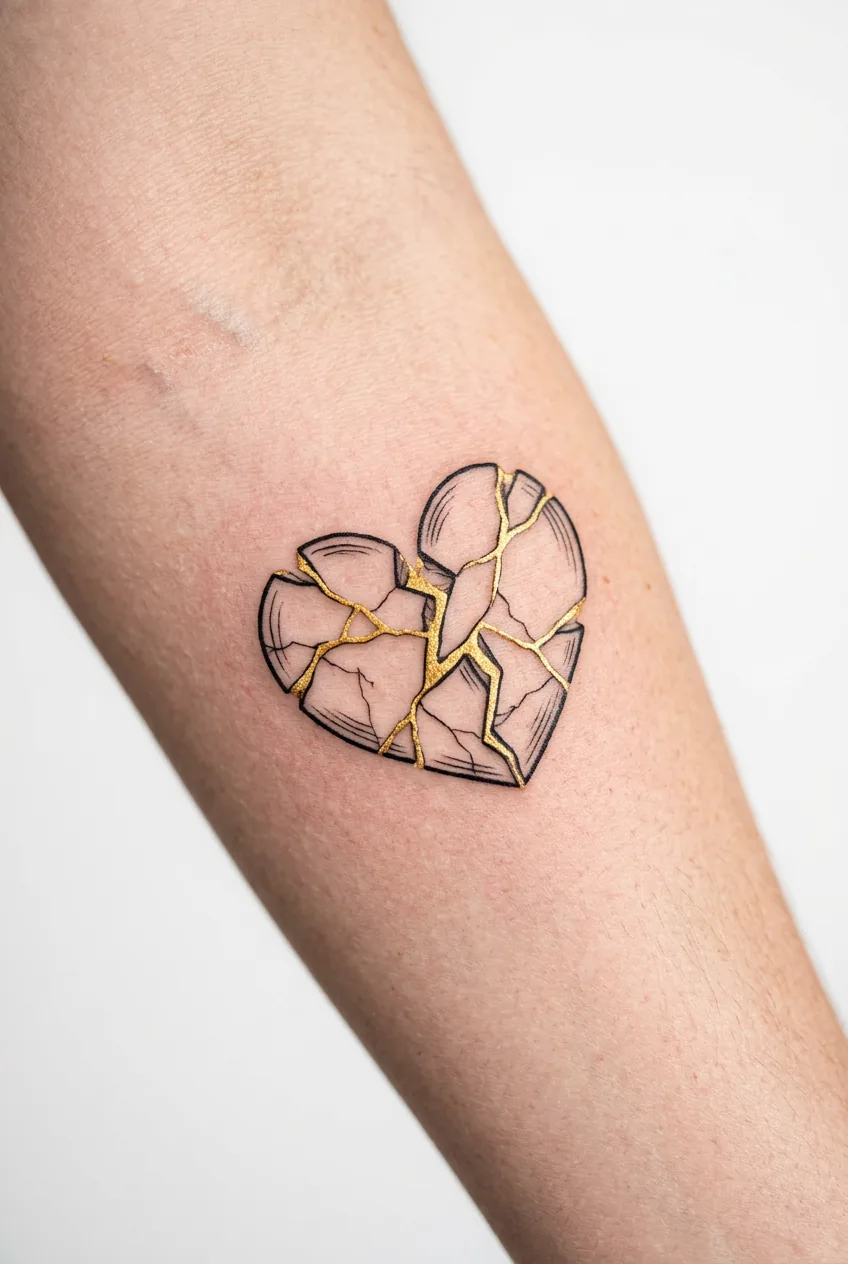
Some women add dates inside the broken sections, marking both the heartbreak and the healing. Others incorporate flowers growing from the crack, showing how new life emerges from difficult places. The placement matters too — I’ve seen them on wrists (visible reminders of strength) and over the actual heart (reclaiming that space).
3. The Anatomical Heart: Raw Life Force
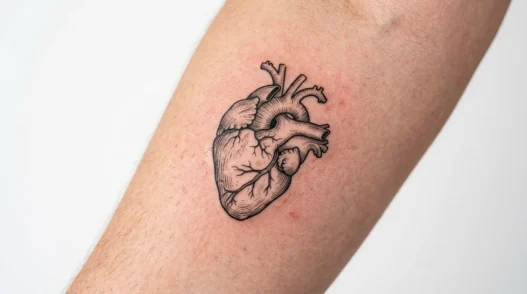
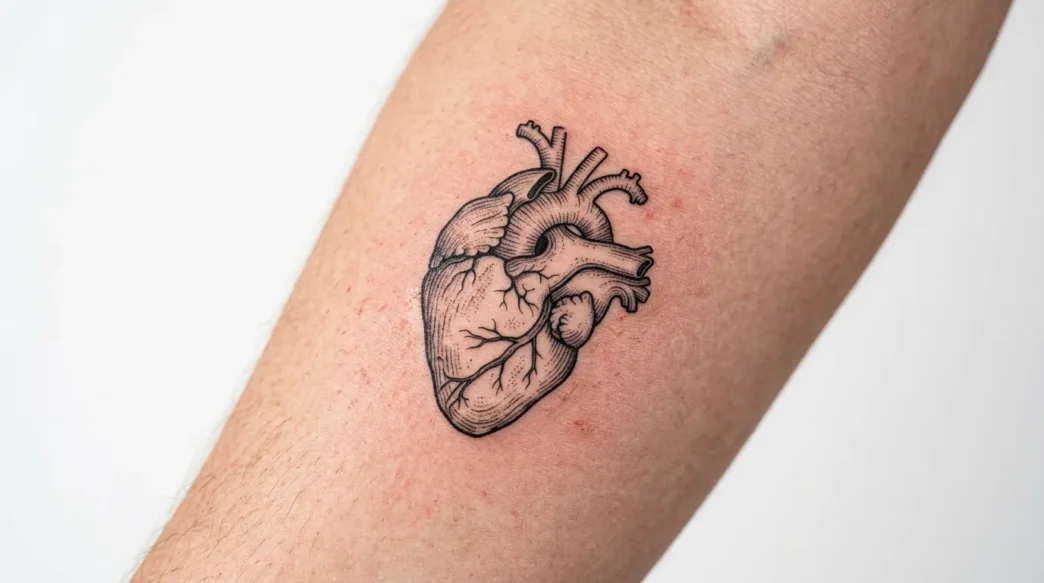
Forget everything pink and pretty. Anatomical hearts are for women who want to celebrate the literal engine of life. These tattoos show the heart as it actually is — chambers, arteries, ventricles — in all its complex glory.
I’m fascinated by how different artists handle the realism. Some go full medical textbook with every detail rendered in black and grey. Others add bursts of color where the blood flows, or incorporate floral elements growing from the major arteries. The contrast between the clinical and the beautiful is stunning.
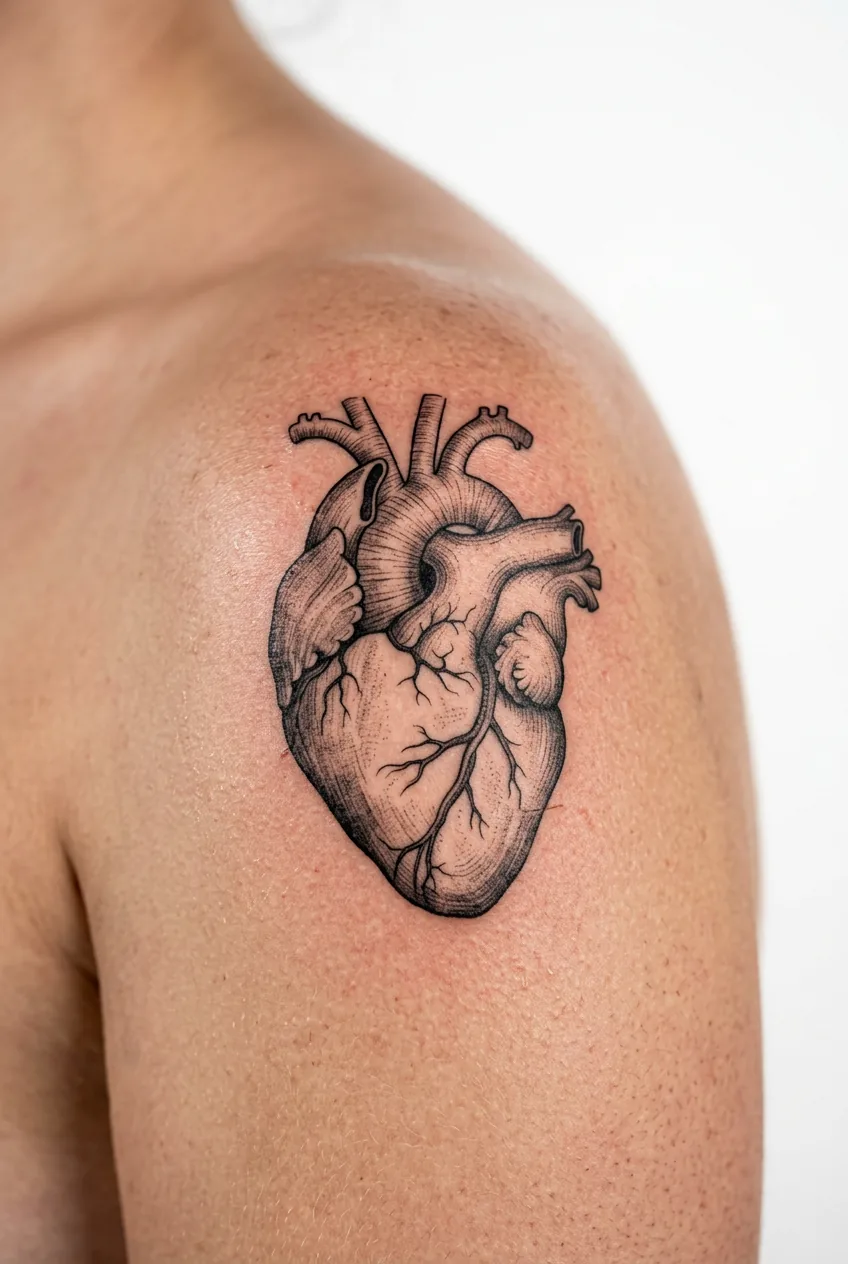
My personal favorite anatomical heart tattoo belonged to a cardiac surgeon I met at a coffee shop. She had hers placed on her forearm — visible while she worked — with tiny script that read “every beat matters.” That’s the kind of intentional symbolism that gives me chills.
Women in healthcare gravitate toward this design, but so do those who’ve survived heart conditions or want to honor the simple miracle of being alive. It’s primal and powerful in a way that decorative hearts can never be.
Watch This Anatomical Heart Come to Life
4. The Winged Heart: Freedom and Love Combined
Winged hearts represent the paradox every woman knows — how love can simultaneously ground you and set you free. The wings suggest movement, possibility, and the kind of love that doesn’t cage you in.
I’ve noticed two main approaches to wing design. Angel wings create a more spiritual feeling, often chosen by women who see love as a divine gift. Bird wings — whether delicate sparrow or bold eagle — emphasize the freedom aspect. The style you choose changes the entire message.
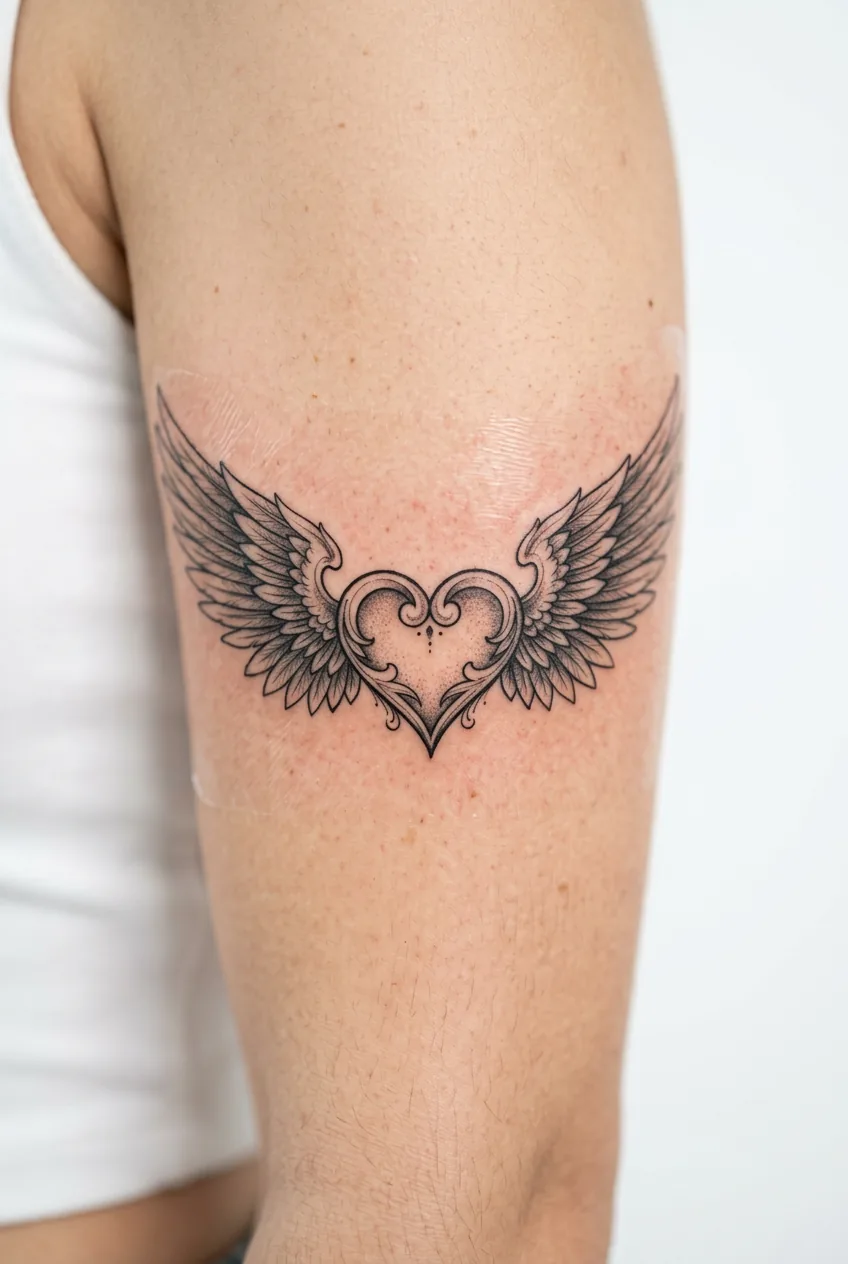
Placement is crucial with winged hearts. Between the shoulder blades, they feel like part of your actual wings. On the wrist, they’re a daily reminder that love should lift you up, not weigh you down. I love seeing them on women who’ve left relationships that tried to clip their wings.
5. The Locked Heart: Protection and Mystery
A locked heart doesn’t always mean closed off — sometimes it means selective about who gets access. The key becomes the most important part of the design. Do you hold it? Does someone else? Is it lost, or just waiting for the right moment?
Traditional locked hearts look Victorian, with ornate padlocks and elaborate keys. Modern versions play with the concept more abstractly — hearts behind geometric bars, or combination locks with significant numbers. The vintage skeleton key style remains popular because it suggests old secrets and deep mysteries.
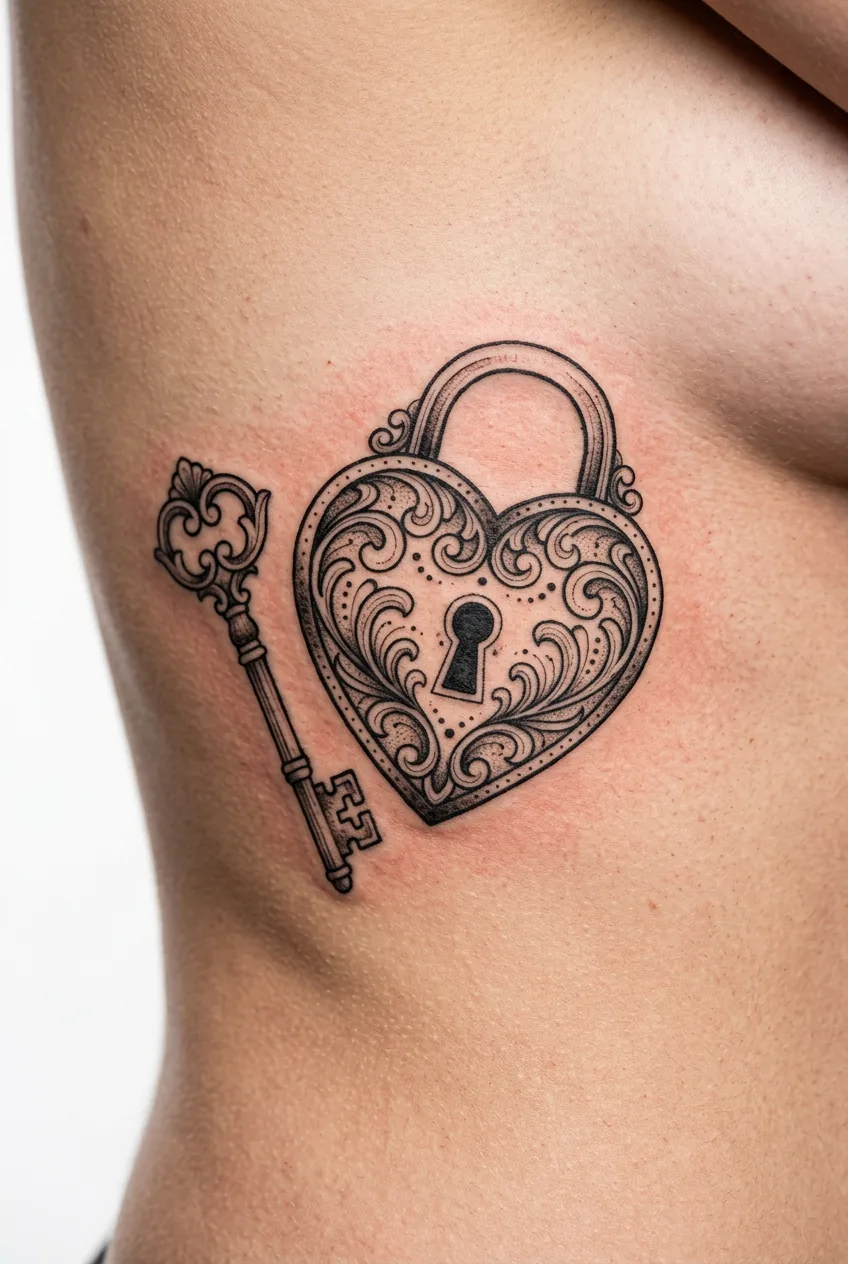
I find these tattoos incredibly personal. The story is always about boundaries — what you protect, how you protect it, and who earns the right to see inside. Some women add their children’s initials as the key, making family the only thing that unlocks their heart completely.
6. The Heart with Arrow: Cupid’s Eternal Mark
Classic for a reason, the arrow-pierced heart captures that moment when love hits you unexpectedly. But the direction of the arrow tells different stories. Straight through suggests being struck by love. An arrow pointing up feels hopeful, while one angled down can represent love that brought you low.
What I love about traditional tattoo styles is how they handle this motif. Bold outlines, solid colors, and that unmistakable old-school aesthetic make the heart-and-arrow timeless. Neo-traditional versions add dimension and realistic shading while keeping the classic composition.
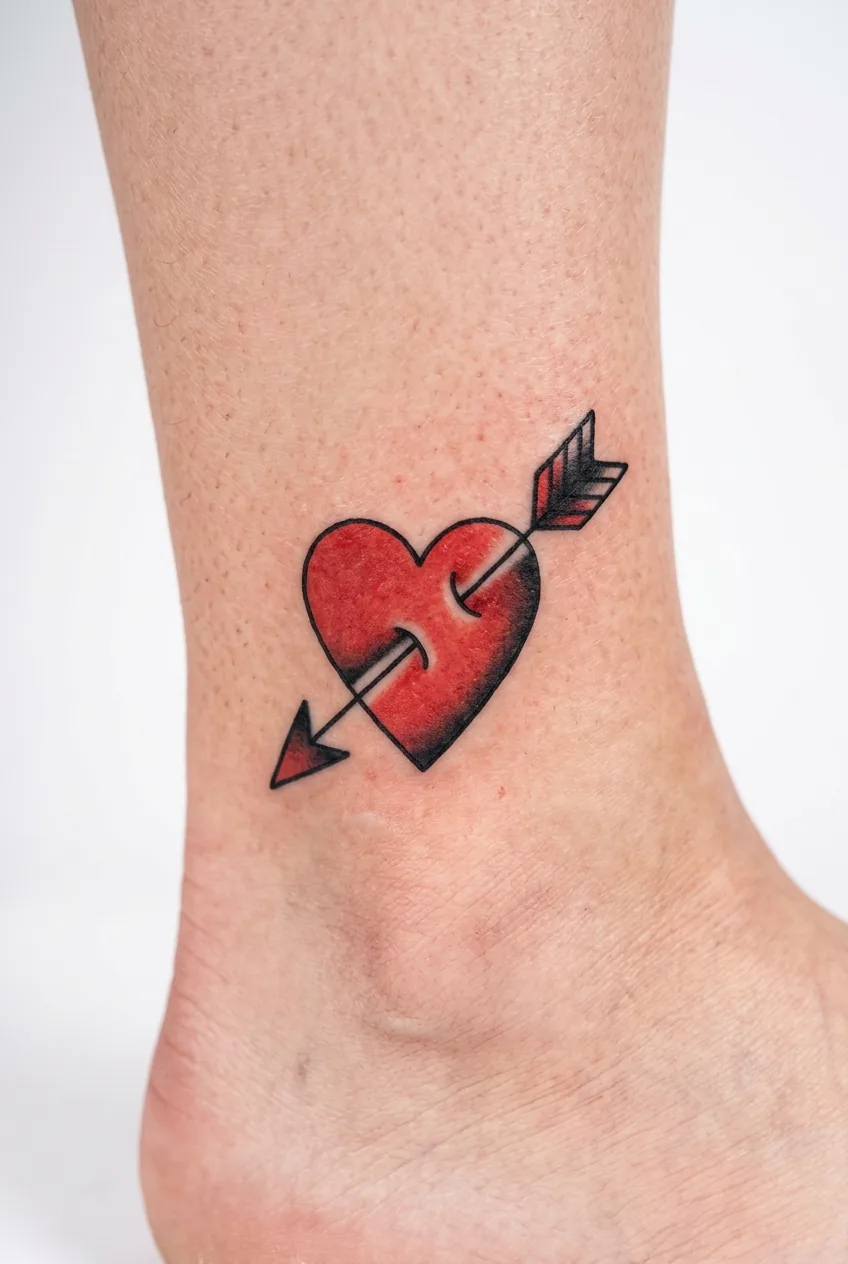
Some women personalize the arrow with specific fletching colors or arrowhead designs. Native American-inspired arrows honor indigenous symbolism, while simple modern arrows keep the focus on the heart itself. The beauty is in the simplicity — everyone understands this symbol instantly.
7. The Heart with Roses: Beauty and Thorns
Roses and hearts together create the ultimate feminine tattoo — if you’re into that. But don’t let the prettiness fool you. This combination speaks to love’s dual nature: the beauty that draws you in and the thorns that can wound you.
Color choices transform the meaning entirely. Red roses scream passion and romance. White roses suggest pure love or new beginnings. Black roses can represent lost love or gothic beauty. Pink roses feel young and optimistic, while deep burgundy roses suggest mature, complex emotions.
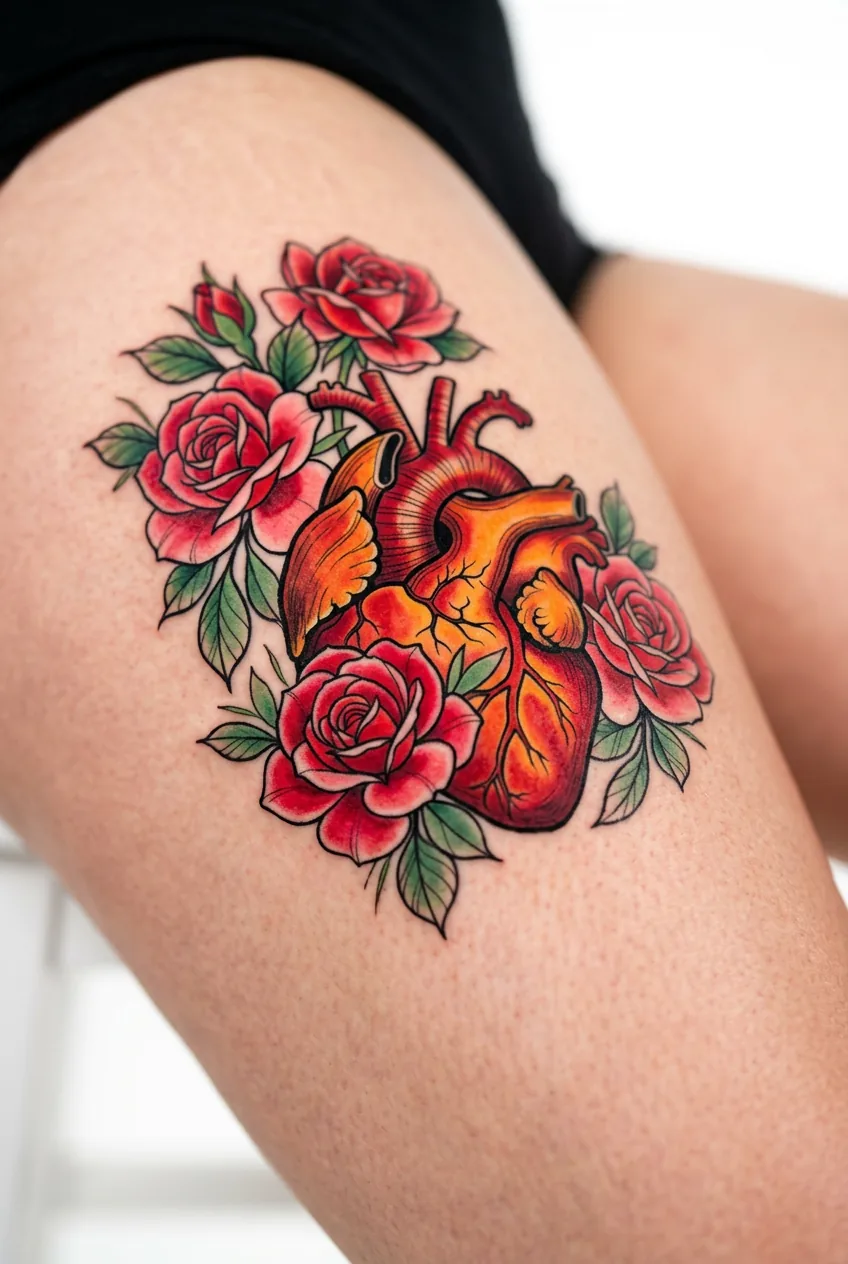
The arrangement matters too. Roses growing from the heart suggest love blooming from within. Roses wrapping around the heart like a protective barrier change the symbolism completely. Thorny stems entering the heart? That’s love that hurts, but you choose it anyway.
I’m drawn to versions where the roses look slightly wilted or overgrown. They feel more honest about love’s imperfections than perfect, fresh blooms. Symbolic meanings vary across cultures, adding layers to an already complex design.
8. The Celtic Heart: Unbreakable Bonds
Celtic hearts feature that distinctive knotwork that has no beginning or end — perfect for representing eternal love or family bonds. The Claddagh heart is probably the most recognized version, with its crown (loyalty), hands (friendship), and heart (love).
But Celtic heart tattoos go far beyond the Claddagh. Trinity knots woven into heart shapes honor the sacred number three — mind, body, spirit, or maiden, mother, crone. Spiral hearts reference ancient Celtic beliefs about life’s continuous cycle. The complexity of the knotwork can be adjusted to fit any size placement.
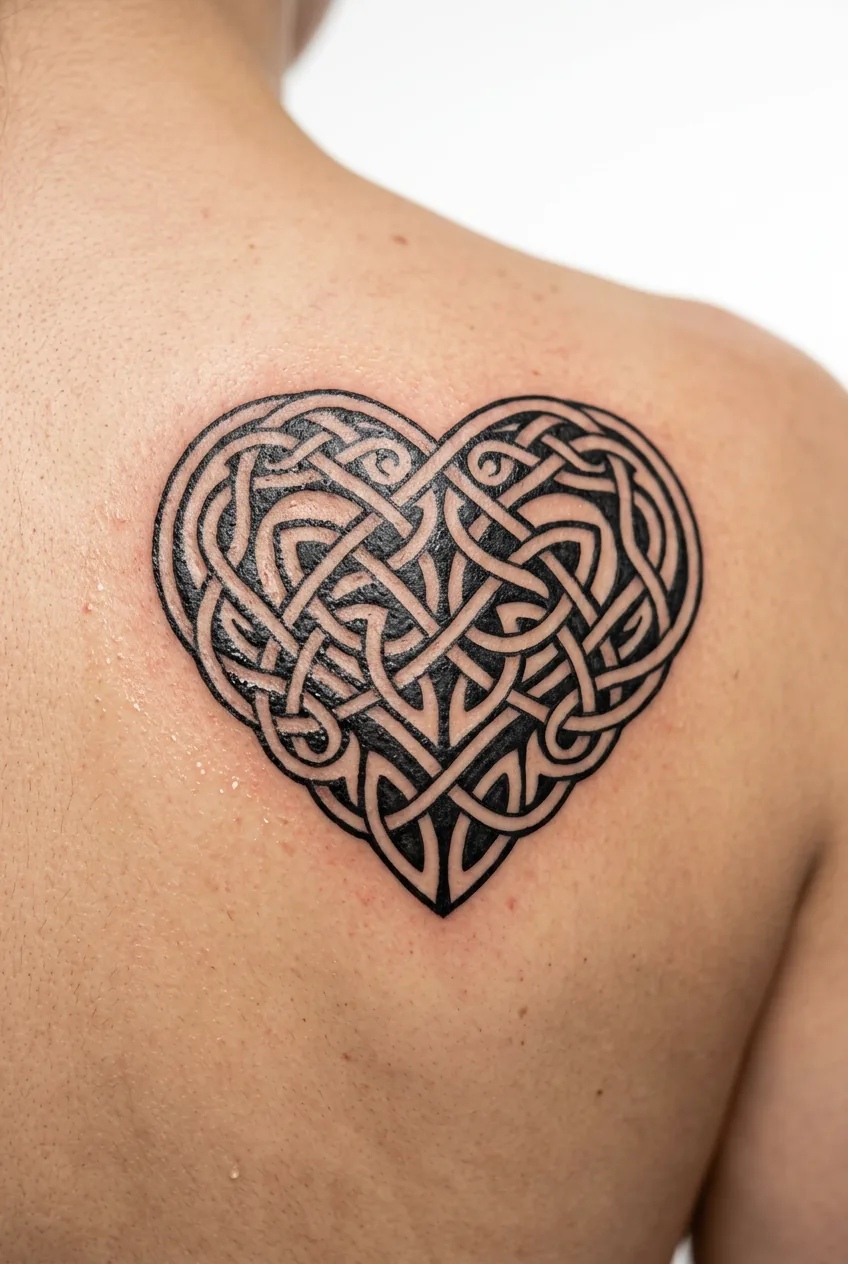
These tattoos often commemorate heritage or family connections. I’ve seen beautiful pieces where each loop in the knotwork represents a family member, creating a visual family tree in heart form. The unbroken lines suggest bonds that death can’t sever.
Modern Celtic hearts sometimes incorporate birthstones or initials into the design. The ancient symbolism remains, but personal touches make each tattoo unique to its wearer’s story.
9. The Mandala Heart: Balance and Wholeness
Mandala hearts bring Eastern spiritual concepts to Western heart symbolism. The intricate geometric patterns radiating from the heart center represent the journey toward emotional balance and spiritual wholeness.
Creating these designs requires serious skill. Each layer of the mandala should flow naturally from the heart’s curves, with symmetrical patterns that feel both structured and organic. The best mandala hearts use the heart shape as the foundation, then build outward with increasingly complex geometric elements.
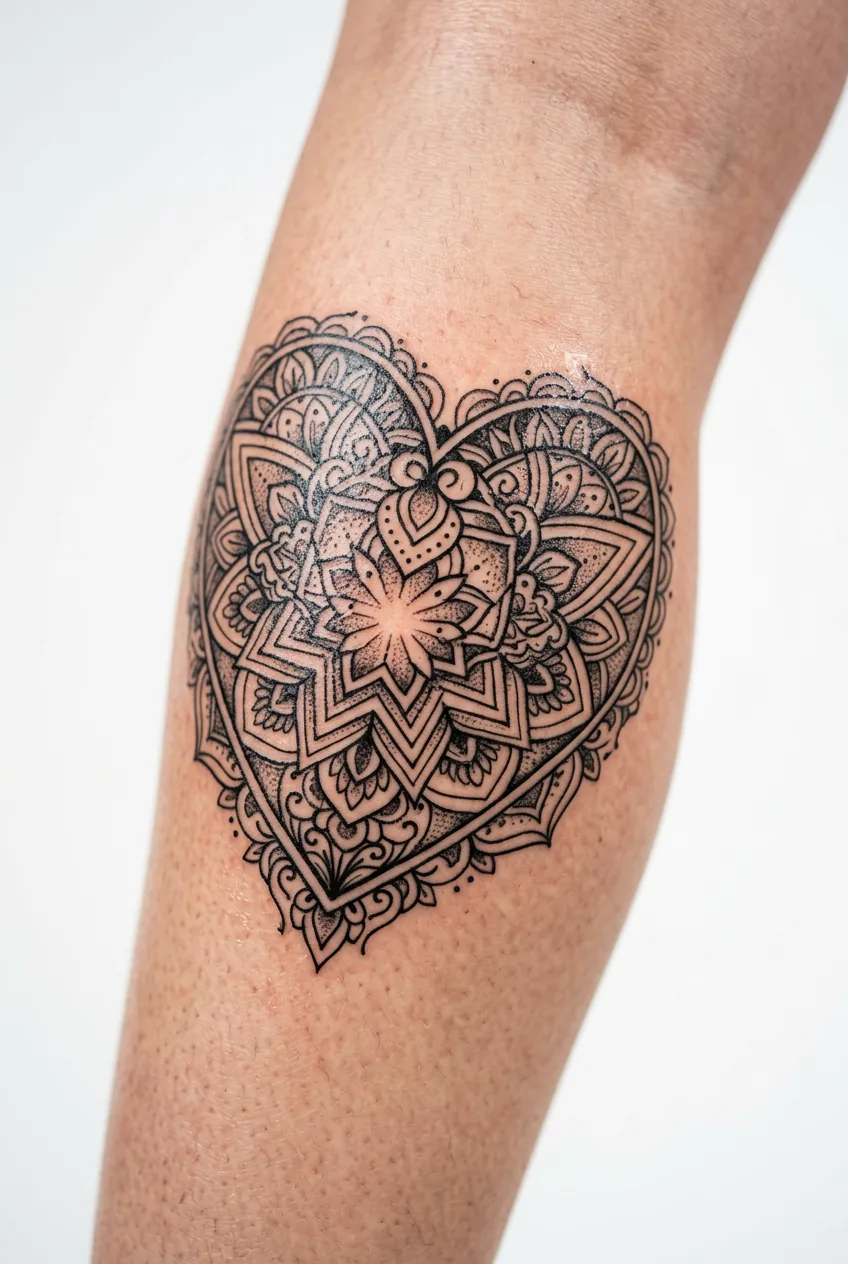
The spiritual significance runs deep. In Buddhist and Hindu traditions, mandalas represent the cosmos and the path to enlightenment. Combined with the heart symbol, they suggest that love — self-love, universal love, romantic love — is central to spiritual growth.
Women choose mandala hearts when they’re working on personal growth or healing. The meditative quality of the design appeals to those who see their tattoos as spiritual tools, not just decoration. Some add meaningful symbols or Sanskrit text within the patterns, creating deeply personal spiritual maps.
Questions I Get About Heart Tattoos
Do heart tattoos always have to be about romantic love?
Not at all. Heart tattoos can represent self-love, family bonds, loss and healing, spiritual devotion, or simply celebrating life itself. The meaning depends entirely on your personal story and intention.
Where do heart tattoos look best on women?
Popular placements include the wrist (visible daily reminder), behind the ear (delicate and private), over the actual heart (symbolic placement), and the ankle (subtle but meaningful). Consider your lifestyle and how visible you want the tattoo to be.
How do I choose between realistic and stylized heart designs?
Think about your message. Anatomical hearts emphasize life force and medical connections. Traditional decorative hearts focus on emotion and symbolism. Your choice should reflect whether you want literal or metaphorical representation.
Can I add elements to my existing heart tattoo later?
Usually yes, depending on the current design’s placement and style. Wings, flowers, text, or additional decorative elements can often be incorporated. Consult with an experienced artist about your specific tattoo and vision.
Whatever heart design calls to you, make sure it tells your story. The best heart tattoos aren’t just beautiful — they’re deeply personal symbols that grow more meaningful over time. Trust your instincts, find an artist who understands your vision, and let your heart guide the way.