







I spent three years researching dragon tattoos before I finally got mine. Not because I was indecisive, but because every artist I talked to gave me completely different advice about symbolism, placement, and cultural significance. The deeper I dug, the more I realized how much misinformation floats around about dragon tattoos — especially for women who want something meaningful, not just “cool.”

The Ancient Symbol Most People Misunderstand
Here’s what shocked me during my research: dragons in Asian cultures aren’t the fire-breathing villains we see in Western fairy tales. They’re water deities. Bringers of rain, controllers of rivers, symbols of wisdom and benevolence. When I learned this, I realized why so many Western dragon tattoos feel somehow… off.
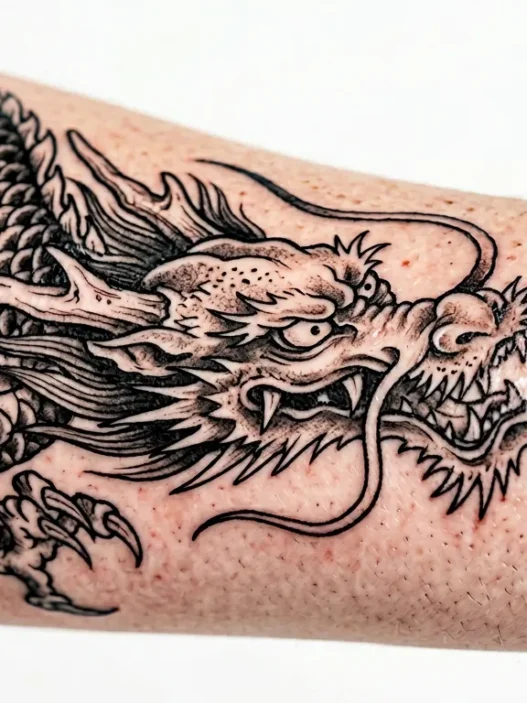
Traditional Chinese dragons have specific anatomical features that carry meaning. The five claws represent imperial power (though most tattoos use four-clawed dragons to avoid claiming royal status). The pearl they often chase? That’s the pearl of wisdom, not some random decorative element. The flowing, serpentine body represents the movement of water and energy through life.
I spent hours studying classical dragon artwork in museum collections, and what struck me was how different the energy felt compared to the typical “fierce dragon breathing fire” tattoos I’d been seeing on social media. These traditional dragons looked… peaceful. Powerful, yes, but in the way a river is powerful — life-giving rather than destructive.
The Japanese interpretation adds another layer. Their dragons (called “ryū”) often lack wings but possess incredible wisdom and longevity. They’re associated with rainfall and agriculture — basically, they’re the reason your crops grow. Not exactly the “badass rebel” vibe that most dragon tattoo inspiration boards go for, right?
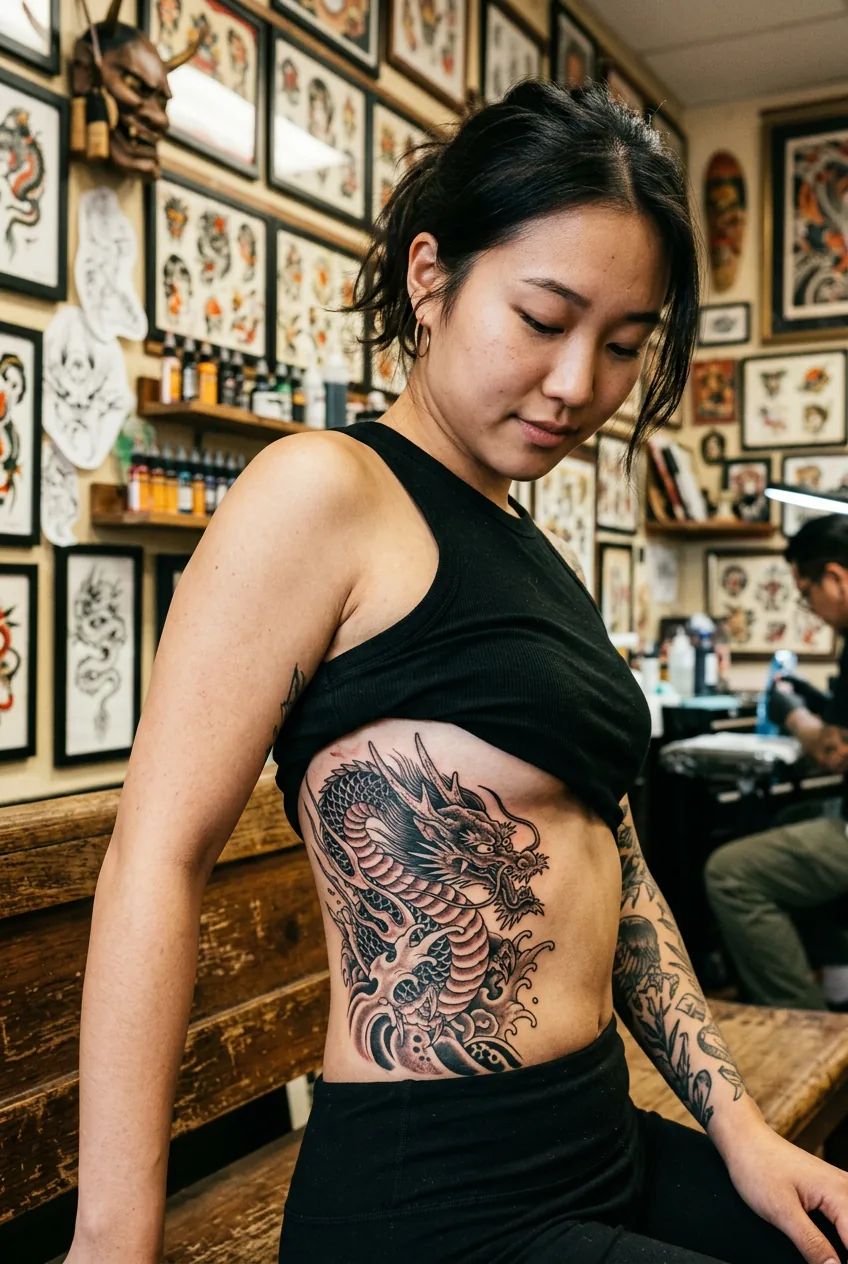
But here’s where it gets interesting for women specifically. In many Asian cultures, dragons represent yang energy — active, masculine force. However, when paired with feminine elements like flowing water, clouds, or cherry blossoms, the design creates balance. That’s why I ultimately chose a dragon emerging from stylized waves for my ribcage piece.
Why Western Dragon Tattoos Miss the Point
I’ll be honest — most Western-style dragon tattoos I see completely miss what makes dragons compelling as symbolic creatures. They focus on aggression, fire, and dominance. These designs lean heavily into medieval European dragon mythology, where dragons were literally evil creatures to be slain by heroes.
The problem isn’t that Western dragons are “wrong” — they’re just telling a completely different story. European dragons represent chaos that needs to be conquered, primal forces that threaten civilization. If that resonates with your personal narrative, great. But most women I talk to want their dragon tattoo to represent personal power, wisdom, or transformation. European dragon symbolism doesn’t really support those meanings.
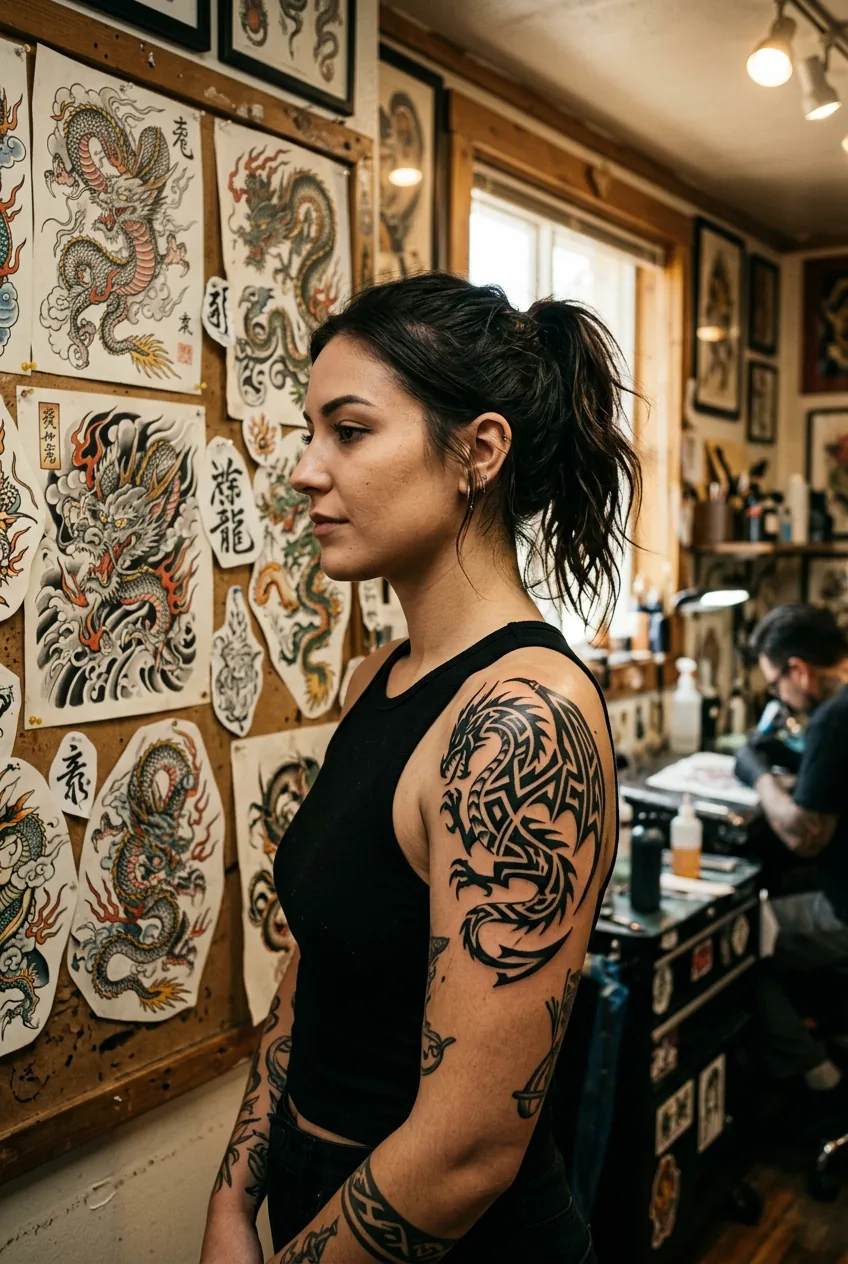
What really bugs me is how tattoo flash sheets often mix symbolic elements randomly. I’ve seen designs with Chinese dragon heads attached to bat wings, surrounded by Celtic knotwork and Viking runes. It’s like someone threw a mythology textbook in a blender. Each culture’s dragon imagery evolved over thousands of years to convey specific meanings — when you mash them together, you lose all that significance.
The Western tattoo industry also tends to make dragons generically “tribal” or “gothic.” These styles prioritize bold lines and dramatic shading over the flowing, organic movement that makes traditional dragon artwork so captivating. I spent months looking at tribal dragon designs before I realized they all looked basically the same — angry, geometric, and oddly static for creatures that are supposed to represent dynamic natural forces.
That said, I’ve seen some gorgeous neo-traditional interpretations that blend Western tattooing techniques with respectful nods to Eastern dragon symbolism. The key is finding an artist who understands the difference between “inspired by” and “copying without understanding.”
The Artist Selection Process Nobody Explains
Choosing the right artist for a dragon tattoo is nothing like choosing someone for basic script work or simple florals. You need someone who either specializes in Asian traditional work or deeply understands the symbolic weight of what they’re putting on your body. But here’s what nobody tells you about that process.
First, look at their portfolio for dragons specifically — not just “Asian-inspired” work. Can you see the difference between their Chinese-style and Japanese-style dragons? Do their dragons have consistent anatomical features, or does every piece look like they’re making it up? I visited twelve different shops before I found an artist who could explain why he positioned the dragon’s claws the way he did.
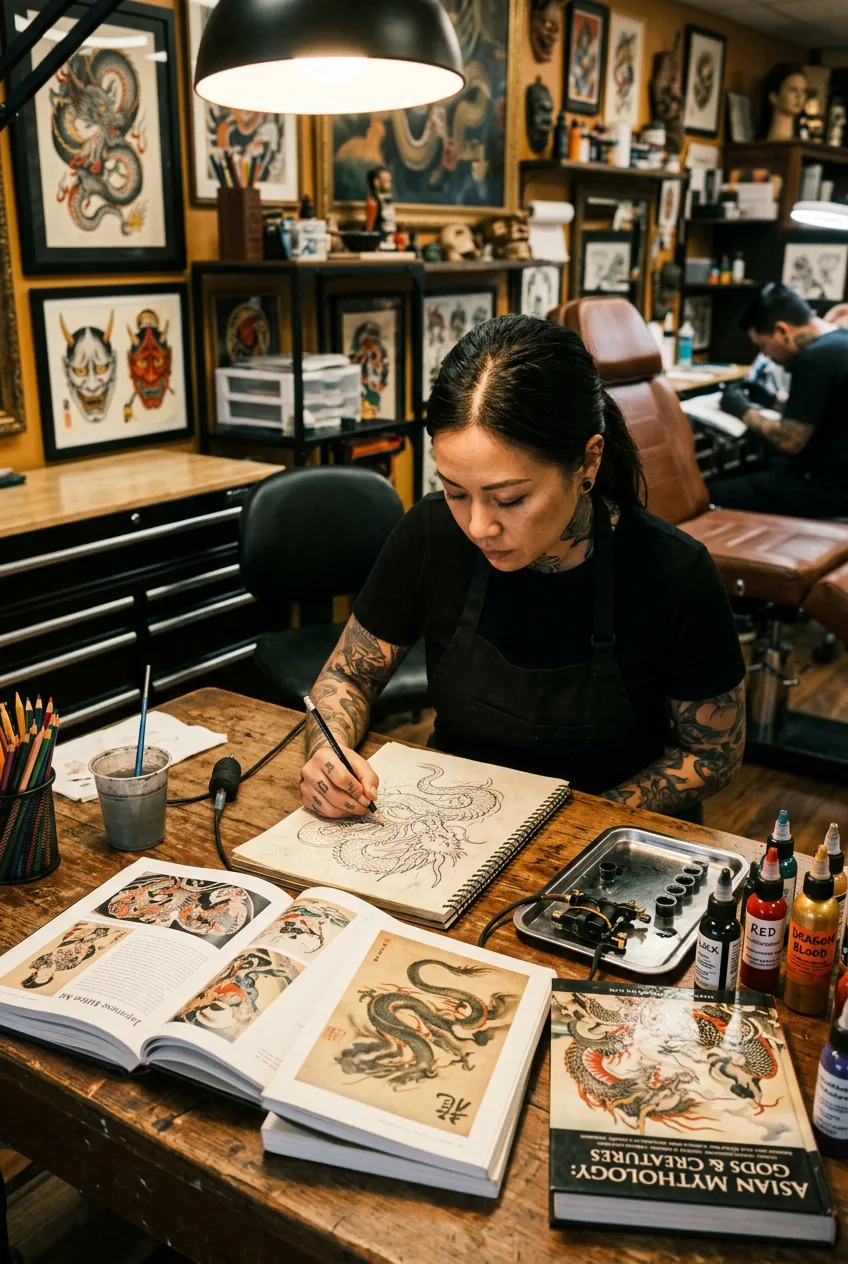
Ask about their reference materials. Any serious traditional tattoo artist should have multiple books on Asian art and mythology, not just Pinterest boards. My artist showed me his collection of classical woodblock prints and explained how different artistic periods influenced dragon depictions. That conversation lasted two hours and convinced me he was the right person for the job.
Here’s the controversial part: I think you should avoid artists who specialize in “American traditional” for dragon work, even if their other pieces are beautiful. American traditional style — bold outlines, limited color palette, simplified forms — fundamentally conflicts with the flowing, detailed nature of traditional dragon artwork. It’s like asking a jazz musician to play a Bach fugue. Technically possible, but missing the point.
Also, be prepared for the cultural conversation. A good artist will ask about your connection to Asian cultures and discuss the appropriation concerns around dragon imagery. If they don’t bring this up, that’s actually a red flag. They should care about the cultural significance of what they’re creating.
Finally, expect to pay more. Traditional Asian dragon tattoos require more skill, more time, and more cultural knowledge than most Western designs. Artists who can do this work properly charge accordingly. When someone quoted me 40% less than other artists, I knew something was off about their approach.
Placement Psychology That Actually Matters
Dragon tattoo placement isn’t just about aesthetics — it’s about how the design interacts with your body’s natural movement and energy. I learned this the hard way after seeing several gorgeous dragon designs that looked completely static because they were placed wrong.
Think about how dragons move in traditional art. They flow like water, coil like smoke, undulate like wind. This means your dragon should follow the natural curves and lines of your body. A straight-lined dragon fighting against your body’s geometry will always look awkward, no matter how well it’s executed.
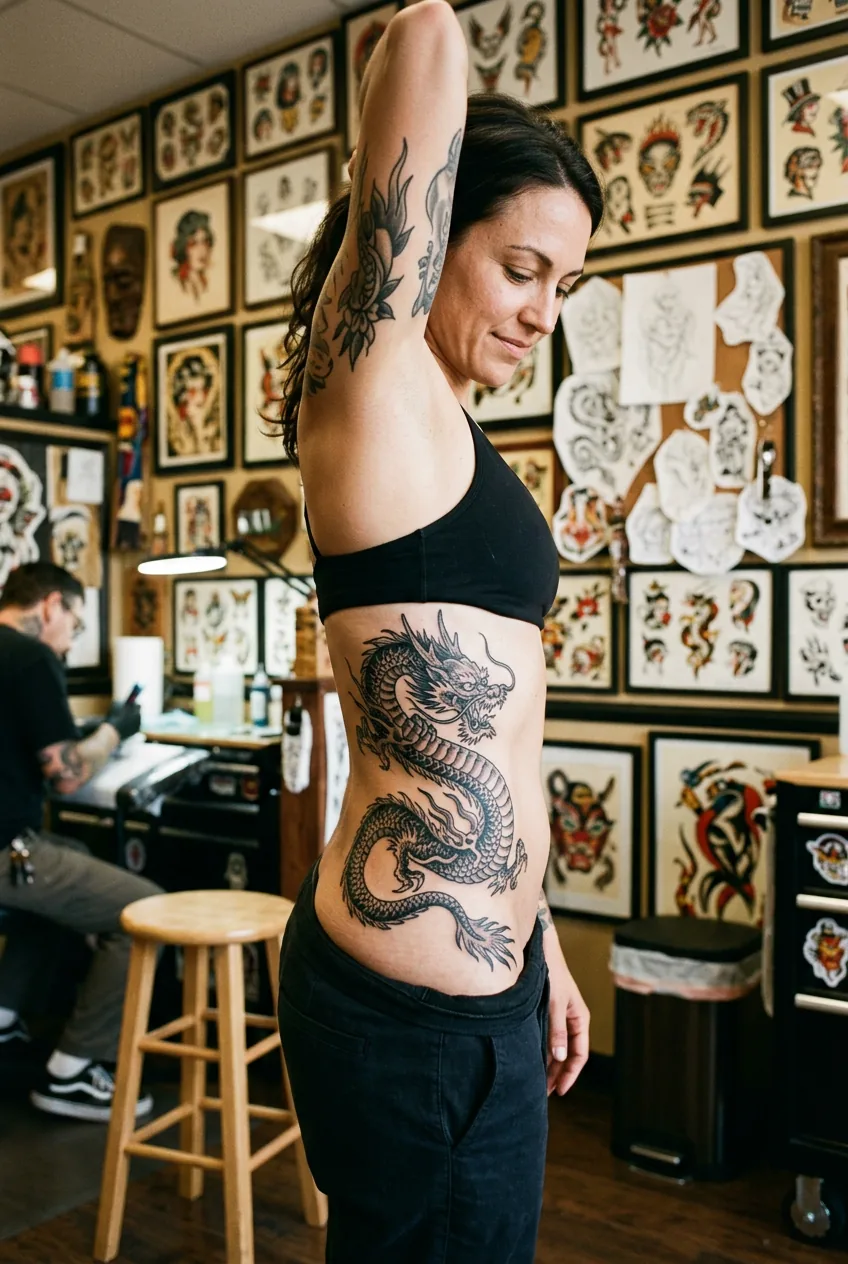
For women, I’ve found certain placements work exceptionally well. Ribcage dragons can follow the curve from your sternum down to your hip, creating this beautiful sense of movement every time you breathe. The dragon literally comes alive with your body’s rhythm. Back tattoo placement allows for larger, more complex compositions where the dragon can interact with your shoulder blades and spine.
But here’s what I wish someone had told me: dragons look different on different body types, and that’s not something most artists discuss during consultations. A dragon design that looks incredible on a tall, thin frame might appear compressed and uncomfortable on a shorter, curvier body. The same design might need completely different proportions to maintain its visual impact.
I also learned about the psychological aspects of placement. Dragons positioned to face forward represent looking toward the future and embracing challenges. Dragons facing backward can symbolize honoring the past or protecting what’s behind you. My dragon faces toward my heart, which felt right for representing my personal growth journey.
One placement I’d personally avoid? Wrapped around the arm or leg like a bracelet or anklet. Dragons aren’t decorative bands — they’re dynamic creatures that need space to express their energy. When you compress them into circular patterns, they lose that sense of movement that makes them visually compelling.
The Cultural Appropriation Conversation
Let’s address the elephant in the room. Getting a dragon tattoo as someone outside of Asian cultures raises legitimate questions about cultural appropriation. I spent months researching this aspect because I wanted to approach it thoughtfully, not defensively.
Here’s what I learned: the line between appreciation and appropriation often comes down to intention, education, and respect. Are you getting a dragon tattoo because you think it looks cool, or because you’ve studied the symbolism and it genuinely resonates with your life philosophy? Have you taken time to understand what dragons mean in their original cultural context?
I consulted with several Asian tattoo artists during my research process, and their perspectives varied widely. Some appreciated when non-Asian clients took time to understand the cultural significance. Others felt that certain dragon imagery should remain within Asian communities. There’s no universal consensus, which makes this decision more complex.

What helped me was focusing on universal aspects of dragon symbolism — wisdom, transformation, personal power — rather than specifically Chinese imperial imagery or Japanese religious symbols. My dragon incorporates water elements and flowing design principles without copying traditional religious artwork or claiming cultural identity that isn’t mine.
I also made sure to work with an artist who had deep knowledge of Asian tattoo traditions, rather than someone who was just borrowing surface-level aesthetic elements. This felt like the difference between learning from a culture versus taking from it.
The most important thing? If you’re uncertain about the cultural implications, have those conversations before you get the tattoo. Talk to Asian friends, consult with knowledgeable artists, do the research. Don’t let anyone shame you out of meaningful imagery, but also don’t ignore valid concerns about cultural sensitivity.
Living With Your Dragon (The Real Talk)
Two years after getting my dragon tattoo, here’s what I wish I’d known about the daily reality of living with this particular design choice. Dragons are not subtle tattoos. People notice them, comment on them, and have opinions about them — whether you asked or not.
The most common reaction I get is “wow, that must have hurt.” (It did, especially along the ribs.) But the second most common is people wanting to touch it or asking detailed questions about the symbolism. If you’re not comfortable being a walking conversation starter about Asian mythology, maybe reconsider dragon imagery.
Professional considerations are real, depending on your field. My dragon is easily concealed with clothing, which was intentional. But I’ve met women whose dragon tattoos extend to their hands or necks, and they’ve had to navigate workplace policies and client reactions. The “tattoos are totally mainstream now” narrative isn’t universal across all industries or regions.

Here’s something positive I didn’t expect: my dragon tattoo connected me with other women who have meaningful symbolic tattoos. There’s a recognition that happens when someone sees artwork that clearly took thought and research, not just impulse. I’ve had amazing conversations with strangers about mythology, symbolism, and personal transformation stories.
The aging question comes up a lot. How will your dragon look in 20 years? Honestly, I think about this less than other people seem to. My dragon represents a specific period of growth and change in my life. Even if the lines blur or the colors fade, that meaning doesn’t diminish. Traditional tattoo styles actually tend to age more gracefully than highly detailed photorealistic work.
One practical note: dragon tattoos often involve a lot of black ink and bold shading. They heat up noticeably in direct sunlight, more so than smaller, simpler tattoos. I learned to plan my summer wardrobe accordingly, not because I want to hide the tattoo, but because sitting in the sun all day with a black dragon on my ribs gets genuinely uncomfortable.
Would I choose a dragon tattoo again? Absolutely. But I’m glad I took the time to research the symbolism, find the right artist, and think through the cultural implications. This isn’t artwork you want to approach casually. When done thoughtfully, though, a dragon tattoo becomes this incredible daily reminder of your own capacity for transformation and strength.
Questions I Get About Dragon Tattoos
Do dragon tattoos have to be large to look good?
Not necessarily, but dragons do need enough space to show their characteristic flowing movement. I’d avoid anything smaller than palm-sized, as the detail and energy get lost when compressed too much.
How long does a traditional dragon tattoo take?
Mine took three sessions totaling about 12 hours for a ribcage piece. Complex traditional dragons with proper shading and detail work typically require multiple sessions, especially for larger placements.
Can you mix dragon styles in one tattoo?
I wouldn’t recommend it. Mixing Chinese, Japanese, and Western dragon elements usually results in muddled symbolism and inconsistent artistic style. Pick one cultural tradition and honor it properly.
Are there colors that work better for dragon tattoos?
Traditional colors have meaning — gold for imperial power, blue/green for water dragons, red for luck and celebration. Black and grey work beautifully too, especially if you want something more subtle. Avoid neon colors that have no cultural basis.