




I spent three months agonizing over where to place my back tattoo. The design was perfect — a delicate botanical piece with flowing vines. But every consultation left me more confused about placement. Upper back? Lower back? Centered on the spine or off to one side? I wish someone had given me the framework I’m about to share with you.

Understanding Your Back’s Canvas
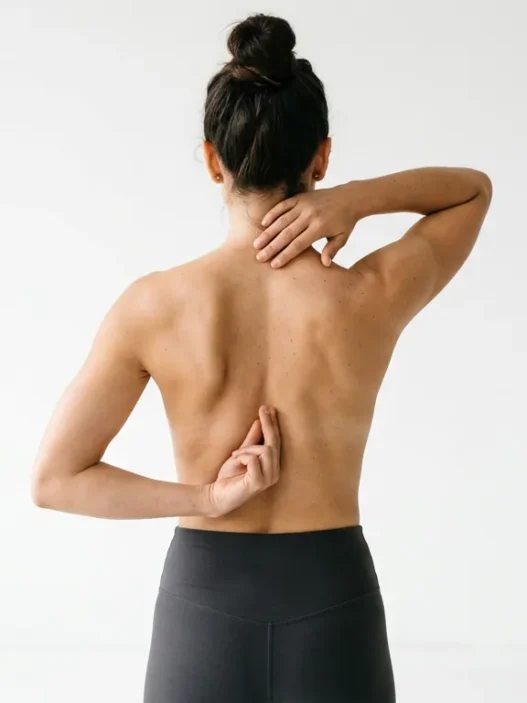
Your back isn’t one flat surface — it’s a landscape of curves, angles, and natural flow lines. I learned this the hard way when I initially wanted my design centered perfectly on my spine.
The spine creates a natural vertical line that draws the eye, but it’s also the most painful area. Your shoulder blades create two prominent “hills” that can either complement a design or break it up awkwardly. The lower back has that lovely curve where it meets your hips — gorgeous for flowing designs but tricky if you wear low-rise anything.
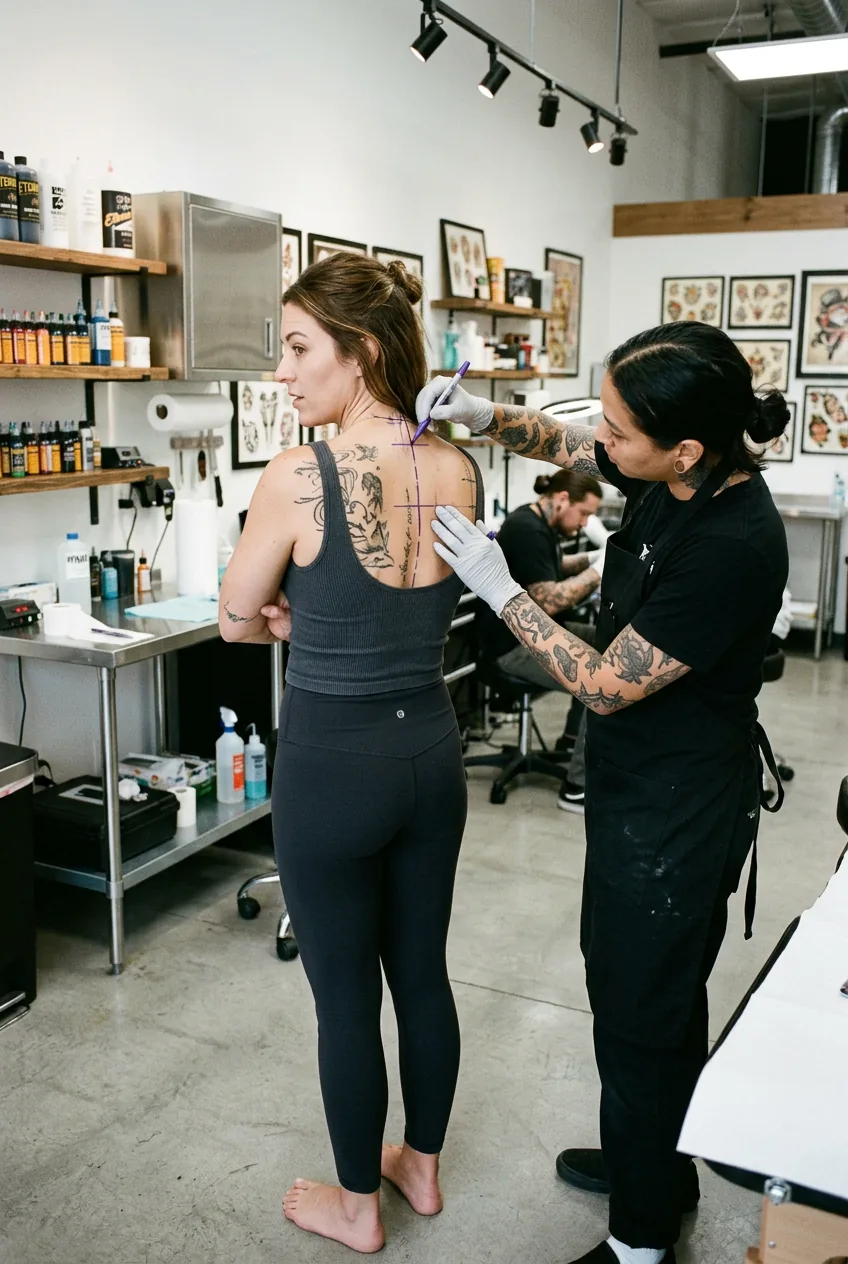
Think about how your back moves. When you bend forward, reach up, or twist to the side, different areas stretch and compress. A design that looks perfect when you’re standing straight might distort when you’re in motion. I always tell people to do some stretches in the mirror before finalizing placement.
How the Design Dictates Placement
This is where most people get it backwards. They pick a spot first, then try to make their design fit. But the design should choose its own home.
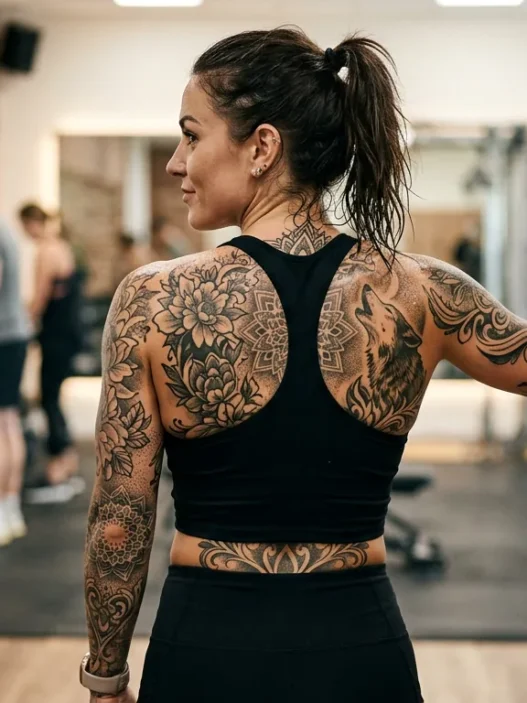
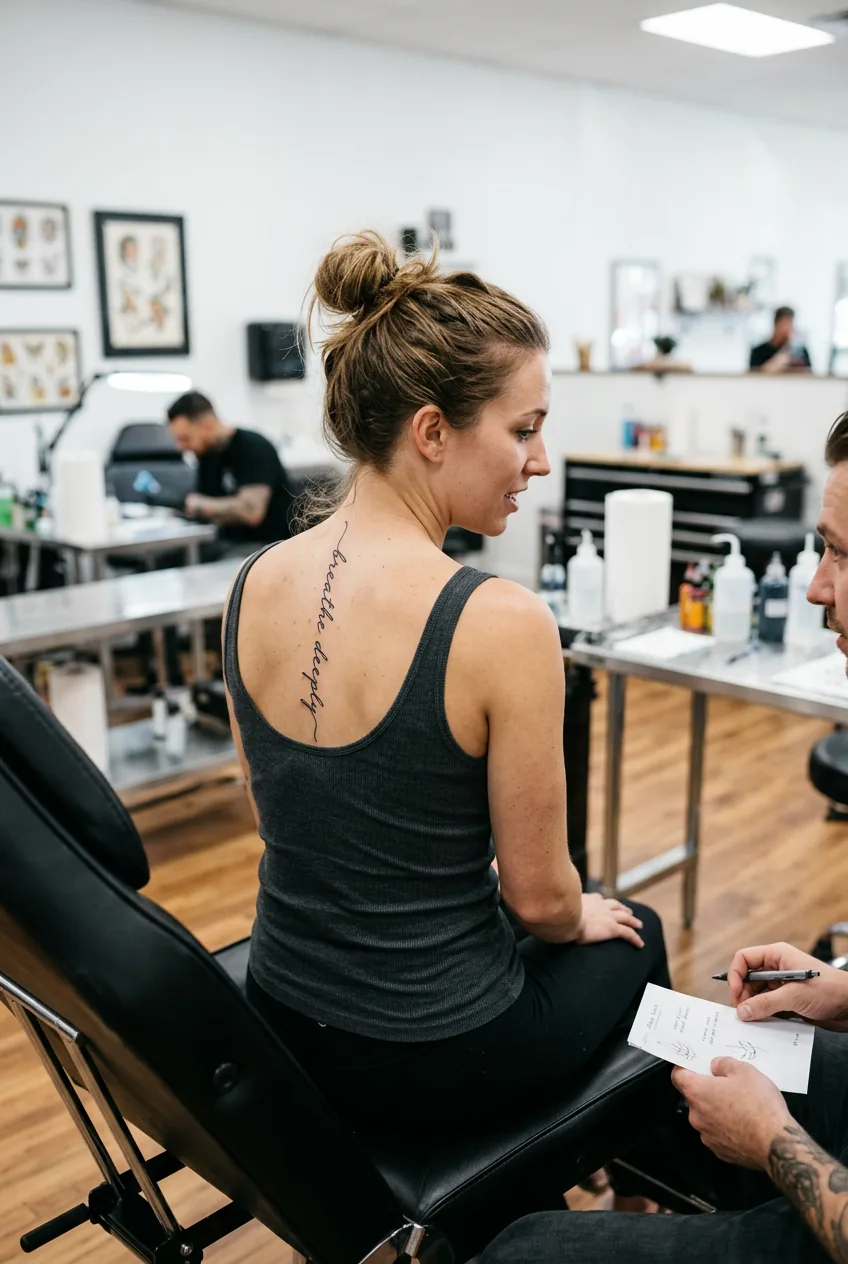
Vertical designs — think scripts, long flowing elements, or anything with strong upward movement — naturally want to follow your spine or the line of your shoulder blade. Horizontal designs work beautifully across the upper back, following your shoulder line. Circular or mandala-style pieces often find their sweet spot between the shoulder blades.
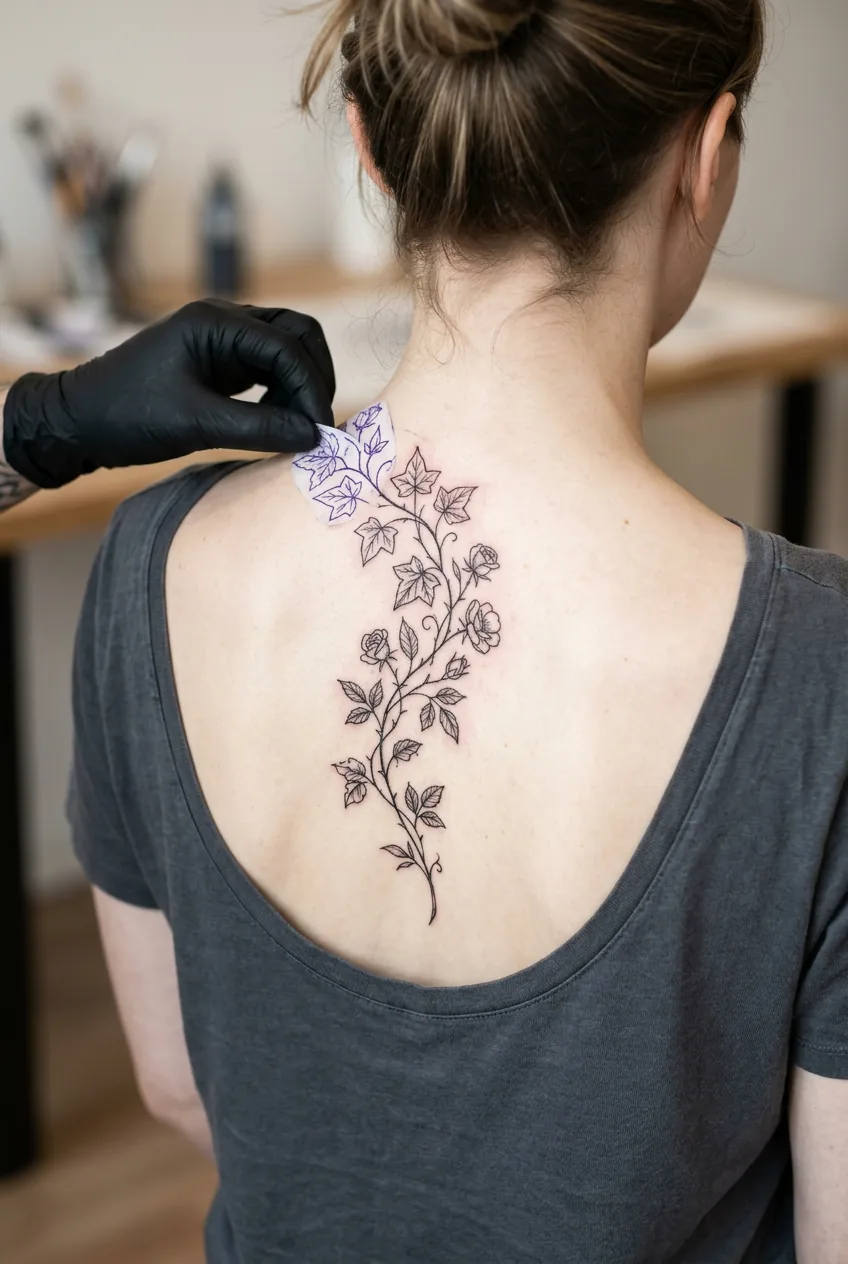
I’ve seen too many beautiful designs cramped into spaces that don’t suit them. A delicate vine design that wants to flow down your spine but gets squeezed into a small upper back space loses all its elegance. Different tattoo styles have their own spatial needs.
I made the mistake of trying to fit a large mandala design into the space between my shoulder blades. It looked cramped and lost all its meditative flow. Moving it slightly lower and giving it breathing room made all the difference.
See the Design Process in Action
The Pain vs Visibility Tradeoff
Here’s the truth nobody warns you about: the most visible spots on your back are often the most painful, and the least painful spots might be hidden by everything you wear.
The spine is brutal. Every buzz of the needle reverberates through bone. But it’s also the most dramatic placement — visible in backless tops, swimwear, and anything with a scoop back. The shoulder blade area has more muscle cushioning, making it more tolerable, but it might be covered by bra straps or standard shirt necklines.
Lower back placements are generally less painful but come with their own visibility challenges. They’re perfect if you want something private, but they won’t show in most clothing unless you’re intentionally showing them off.
Consider your pain tolerance honestly. If you’re sensitive to pain, starting with a shoulder blade placement might be smarter than jumping straight to spine work. Pain management techniques can help, but placement choice is your first line of defense.
How Placement Affects Aging
This is the conversation most artists skip, but it’s crucial for back tattoos. Your back ages differently depending on the location, and some placements hold up much better than others.
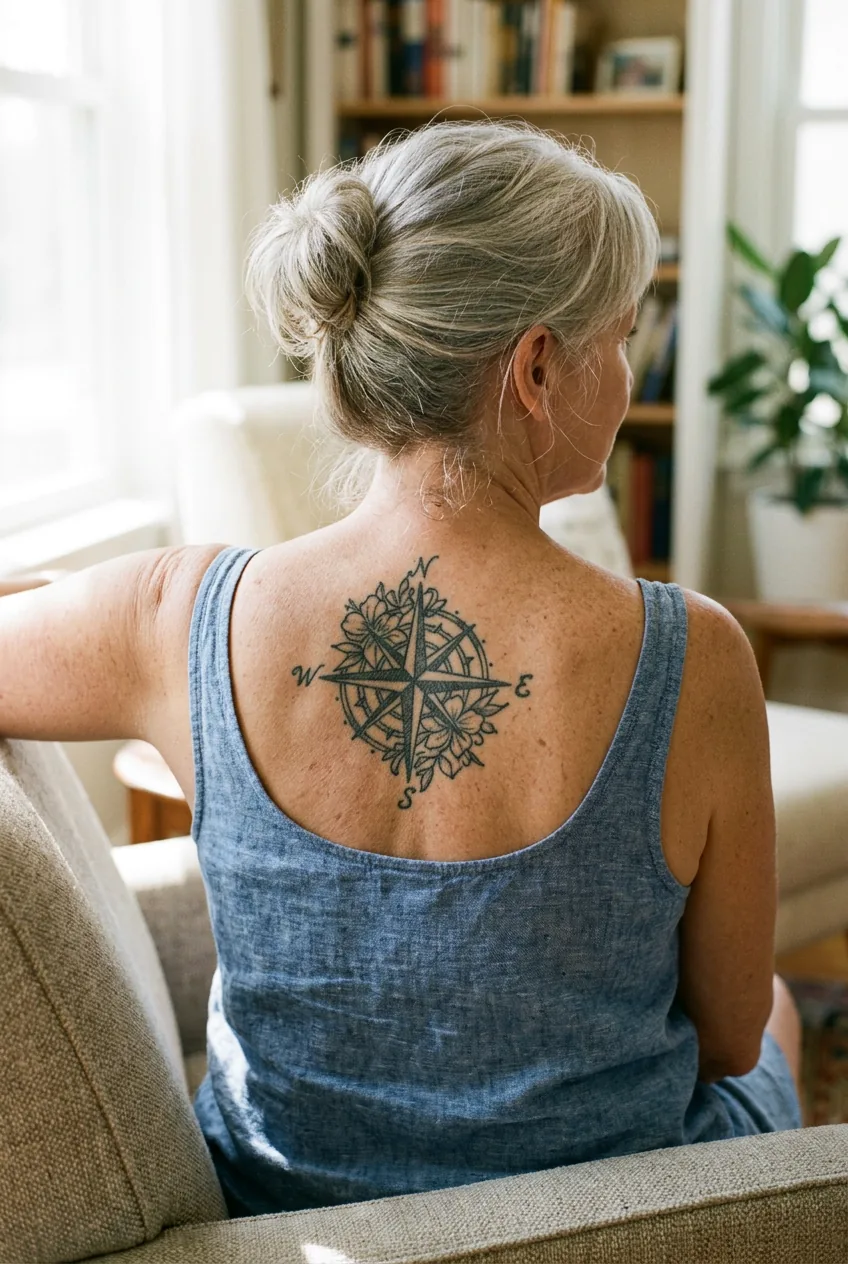
The upper back, particularly between the shoulder blades, ages beautifully. The skin stays relatively tight, and there’s good muscle support underneath. Spine placements also age well because the skin doesn’t stretch much vertically along that line.
Lower back is trickier. Weight fluctuations affect this area more dramatically, and pregnancy can cause significant stretching. I’m not saying avoid it entirely, but be realistic about how your body might change over decades.
Fine line work requires extra consideration. Delicate details need stable skin to stay crisp. Bolder designs with thicker lines are more forgiving of minor skin changes over time.
What Clothing and Career Require
Your wardrobe and professional life should absolutely influence your placement decision. I know it feels like giving in to societal expectations, but being practical isn’t selling out — it’s smart planning.
Think about your daily uniform. If you wear business attire, consider how high necklines sit on your back. If you’re in healthcare or food service, scrubs might dictate what’s visible. Even casual wear varies — some people live in crew necks while others prefer scoop backs and tank tops.

Formal events matter too. Will you want to show your tattoo at weddings, work parties, or family gatherings? Upper back placements give you the most flexibility — easily hidden with conventional clothing but gorgeous when you choose to reveal them.
Don’t forget about swimwear and workout clothes. If you’re a yoga enthusiast or swimmer, think about how sports bras and swimsuit cuts will interact with your tattoo placement.
Mapping Your Personal Boundaries
Before you book anything, spend time mapping your comfort zones. This goes beyond pain tolerance — it’s about emotional and practical boundaries.
Stand in front of a mirror and have someone outline potential placement areas with washable marker. Live with these outlines for a few days. Notice how they make you feel in different clothes, different situations, different moods.
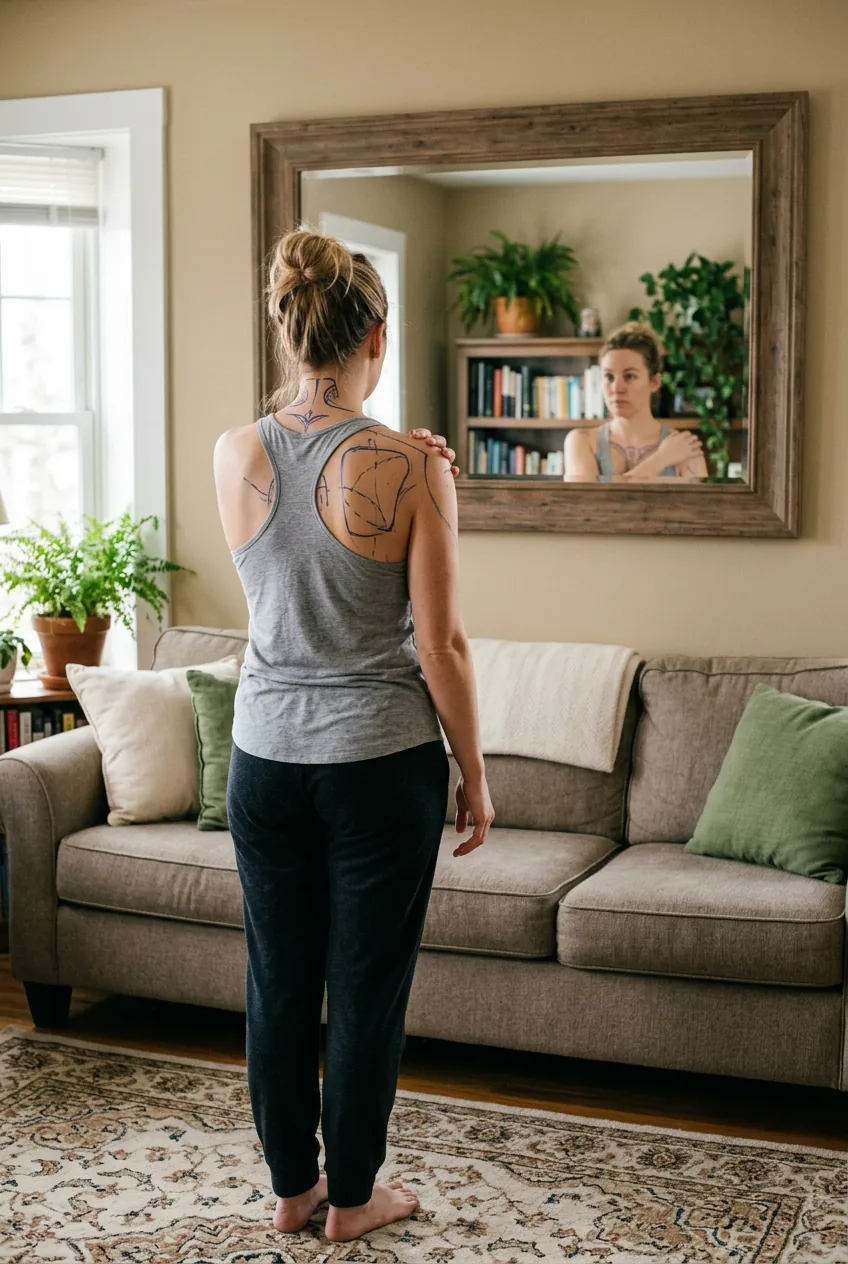
Consider your relationship with visibility. Do you want a secret tattoo that’s just for you, or do you want something that peeks out strategically? There’s no wrong answer, but knowing your preference helps narrow down locations significantly.
Think about touch, too. The back is an intimate area, and different placements will be touched or seen by different people in your life. Some locations feel more private than others, even on the same body.
Making the Final Decision
After working through all these considerations, the decision usually becomes clear. For my botanical piece, the upper back between my shoulder blades emerged as the perfect spot. It complemented the design’s natural flow, offered reasonable pain levels, ages well, and stays hidden under work clothes but shows beautifully in evening wear.
Don’t rush this decision. Good tattoo placement ideas marinate in your mind for weeks or months. Sketch your design on paper, hold it up to different areas of your back in the mirror. See how it feels.
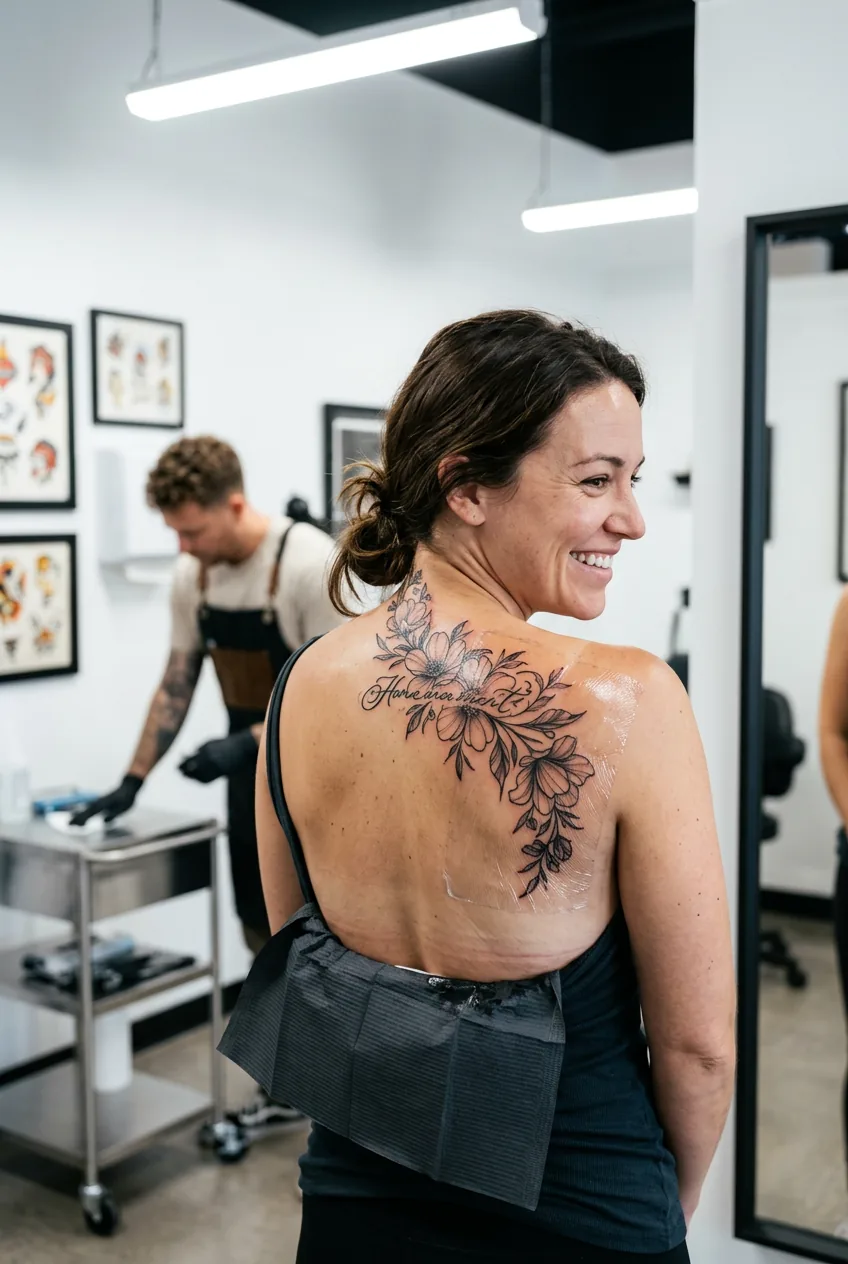
When you do decide, trust your instincts. If a placement feels right when you consider design flow, pain tolerance, aging, and lifestyle factors, you’ve probably found your spot.
The most important thing? Choose placement that makes you excited about your tattoo, not anxious about it. This art will be with you for decades — it should feel like home on your body from day one.
Questions I Get About Back Placement
Can I get multiple tattoos on my back later?
Absolutely, but plan for it now. If you think you might want to expand your back tattoo or add complementary pieces later, choose initial placement that leaves room for growth. I always recommend discussing future plans with your artist during the first consultation.
How do I care for a back tattoo when I can’t reach it?
This is definitely a consideration for placement. Upper back tattoos are harder to reach for aftercare, so you’ll need help applying ointment and washing gently. Lower back placements are much easier to manage solo. Factor this into your decision, especially if you live alone.
Do back tattoos hurt more than other locations?
It depends entirely on placement. Spine work is notoriously painful because you’re tattooing close to bone. Shoulder blade areas have more muscle cushioning and are generally more tolerable. The fleshy areas of the upper and mid-back are often described as moderate pain levels.
Should I lose weight before getting a back tattoo?
If you’re planning significant weight changes, it’s worth waiting until you’re at a stable weight. However, minor fluctuations won’t dramatically affect most back placements. Upper back is least affected by weight changes, while lower back can be more sensitive to body composition shifts.
My back tattoo placement journey taught me that the “perfect” spot isn’t about following rules — it’s about understanding how all these factors work together for your specific design, body, and life. Take your time with this decision. Your future self will thank you for the thoughtfulness.