



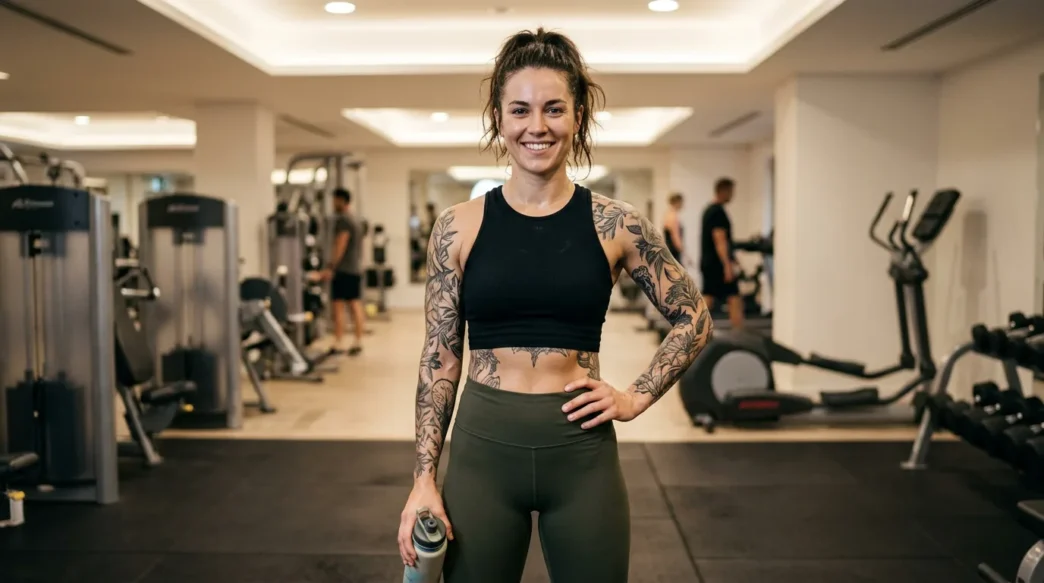
I still remember the first time I saw a spine tattoo on Instagram — this gorgeous delicate script running down a woman’s back, looking ethereal and barely-there painful. Three years later, after getting my own spine piece and watching countless friends go through the process, I can tell you that social media version is complete fantasy.
The reality of spine tattoos hits different. And I mean that in every possible way.

The Real Pain Level Nobody Talks About
Let’s get this out of the way first — spine tattoos hurt like hell. Not “oh that was uncomfortable” hurt. More like “I questioned every life choice that led me here” hurt.
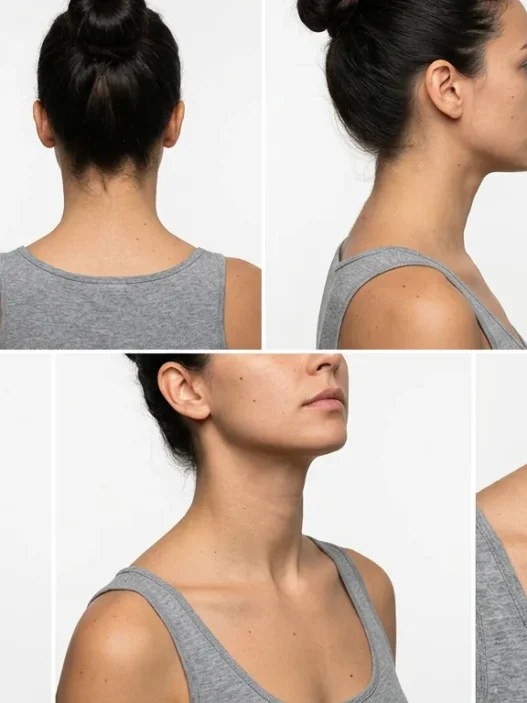
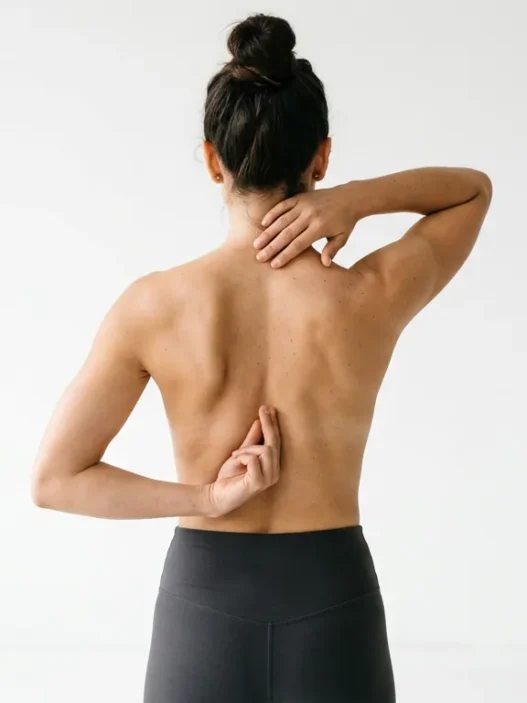
The spine is basically a highway of nerve endings covered by the thinnest possible layer of skin and muscle. When that needle hits certain vertebrae, especially around C7 and L1, it feels like someone’s running electricity through your entire nervous system. I’ve had ribs done, I’ve had my sternum tattooed, and nothing prepared me for that specific spine sensation.
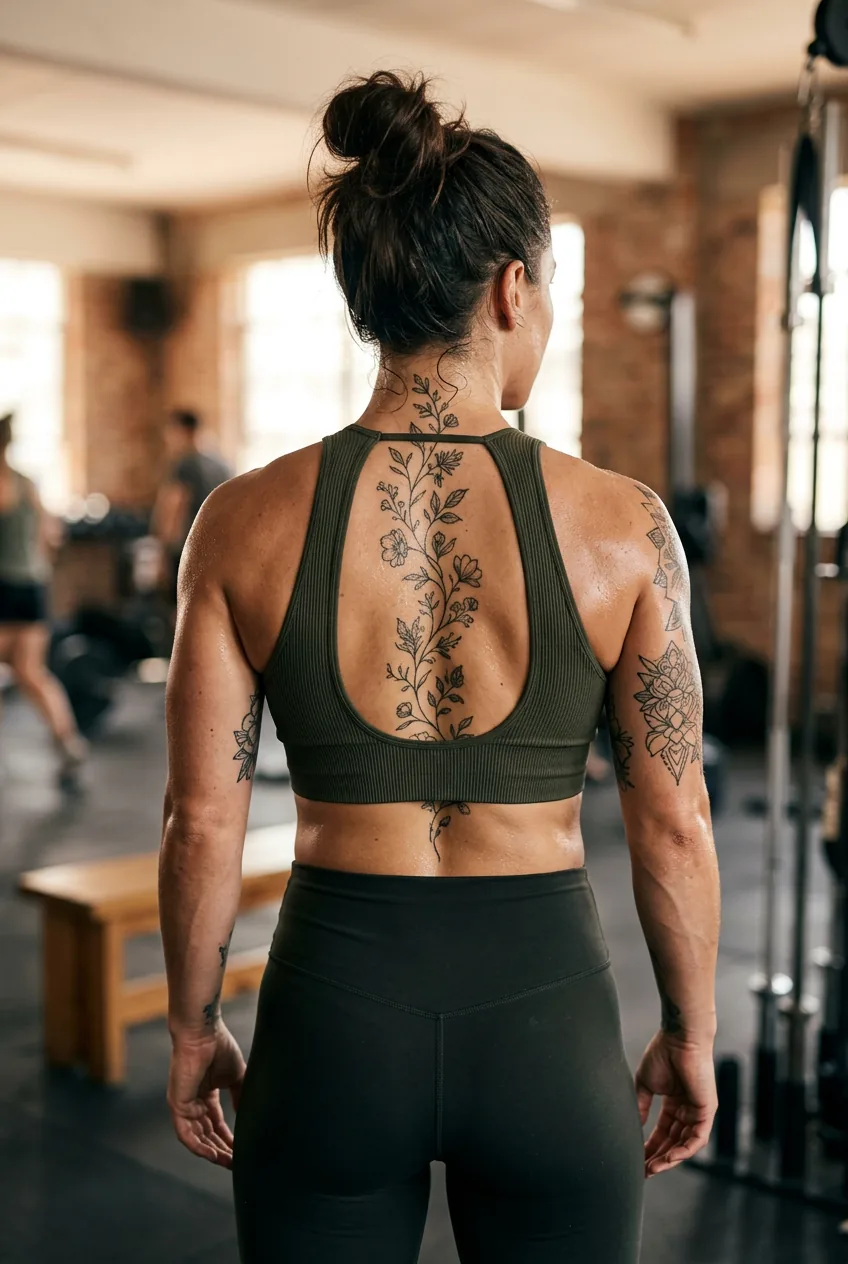
What really gets me is how the tattoo community downplays this. Everyone wants to seem tough, so we all just nod and say “yeah it’s not that bad” while internally screaming. But here’s what actually helped me: knowing that the pain comes in waves. The worst spots are maybe 20% of the entire tattoo. The rest is totally manageable.
I also learned that your pain tolerance changes throughout the session. Hour one feels completely different from hour three. My artist actually scheduled my spine piece across two sessions because she knows how brutal that specific placement can be. Best decision ever.
The other thing nobody mentions? The vibration. It’s not just the needle — it’s this weird buzzing that seems to echo through your entire skeletal system. Some women describe it as almost nauseating. I found focusing on my breathing and having a really good playlist helped more than any numbing cream ever could.
Why Your Artist Choice Makes or Breaks Everything
This is where I get a little controversial, but I think the tattoo industry has done women a disservice when it comes to spine work. Too many artists treat it like any other placement, when it’s absolutely not.
The spine moves. It curves. It flexes. And if your artist doesn’t understand body mechanics, you’re going to end up with a tattoo that looks wonky when you’re doing literally anything other than lying perfectly flat. I see women posting photos of their fresh spine tattoos looking amazing, then six months later the proportions look completely off because the design wasn’t planned for a three-dimensional, moving body.
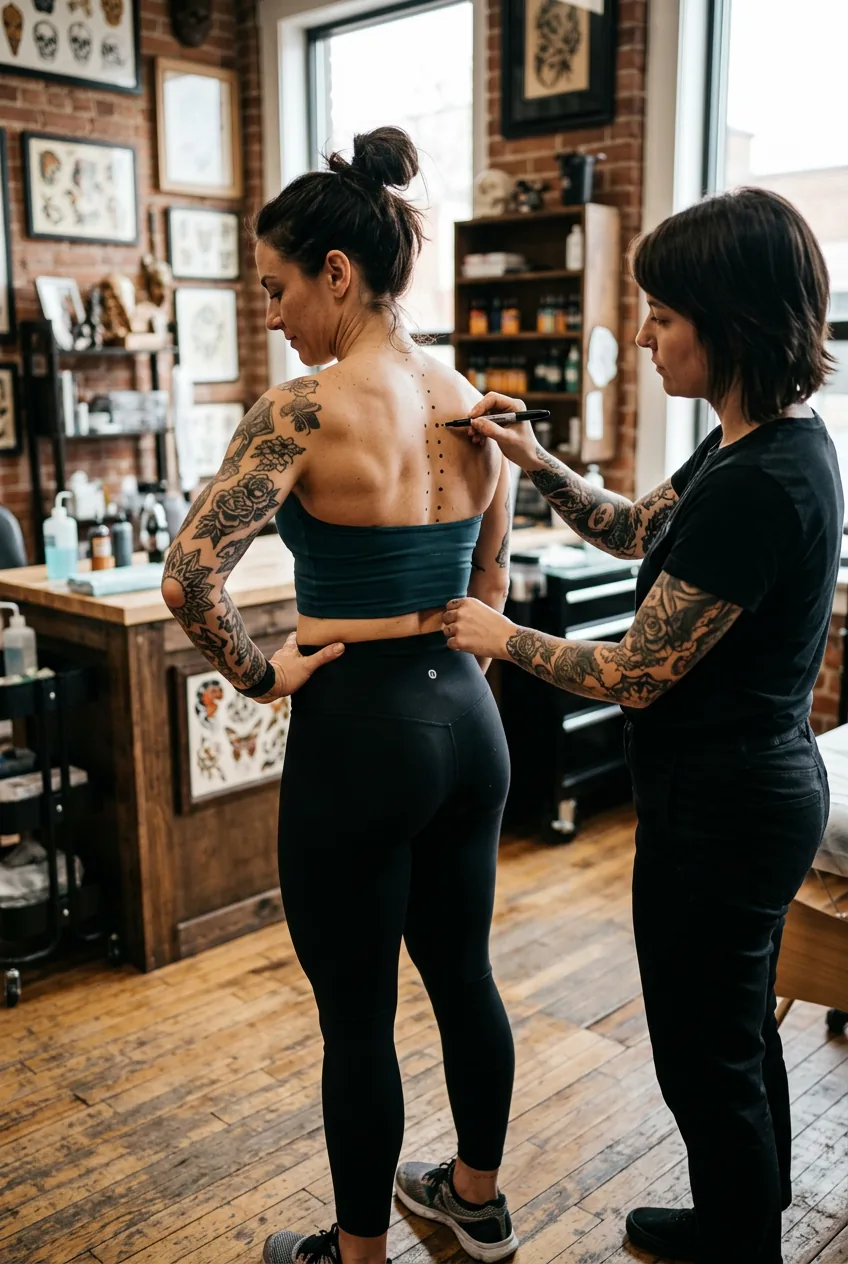
My artist specializes in anatomical placements, and she spent twenty minutes just having me move around in different positions before we even talked design. She marked reference points, had me bend forward, arch back, twist side to side. Most artists skip this entirely.
The other thing that matters more for spine tattoos than anywhere else? Hand weight. Some artists have heavy hands — they press harder, work slower, really dig into the skin. On most placements, that’s just personal preference. On the spine, it’s the difference between a tolerable session and absolute torture.
I always tell friends to ask specifically about spine experience during consultations. How many have they done? Can they show you healed photos, not just fresh work? Do they understand the biomechanics involved? These questions can save you from a lot of regret later.
Watch This Artist’s Spine Technique
Placement Psychology and What It Actually Means
Here’s something I wish someone had told me before I got my spine piece: people are going to read meaning into it whether you want them to or not. And the meanings they assign might not match what you intended at all.
In tattoo psychology, the spine represents your core strength, your backbone (literally and figuratively). It’s associated with resilience, standing up for yourself, having a strong foundation. That all sounds beautiful and empowering, right?
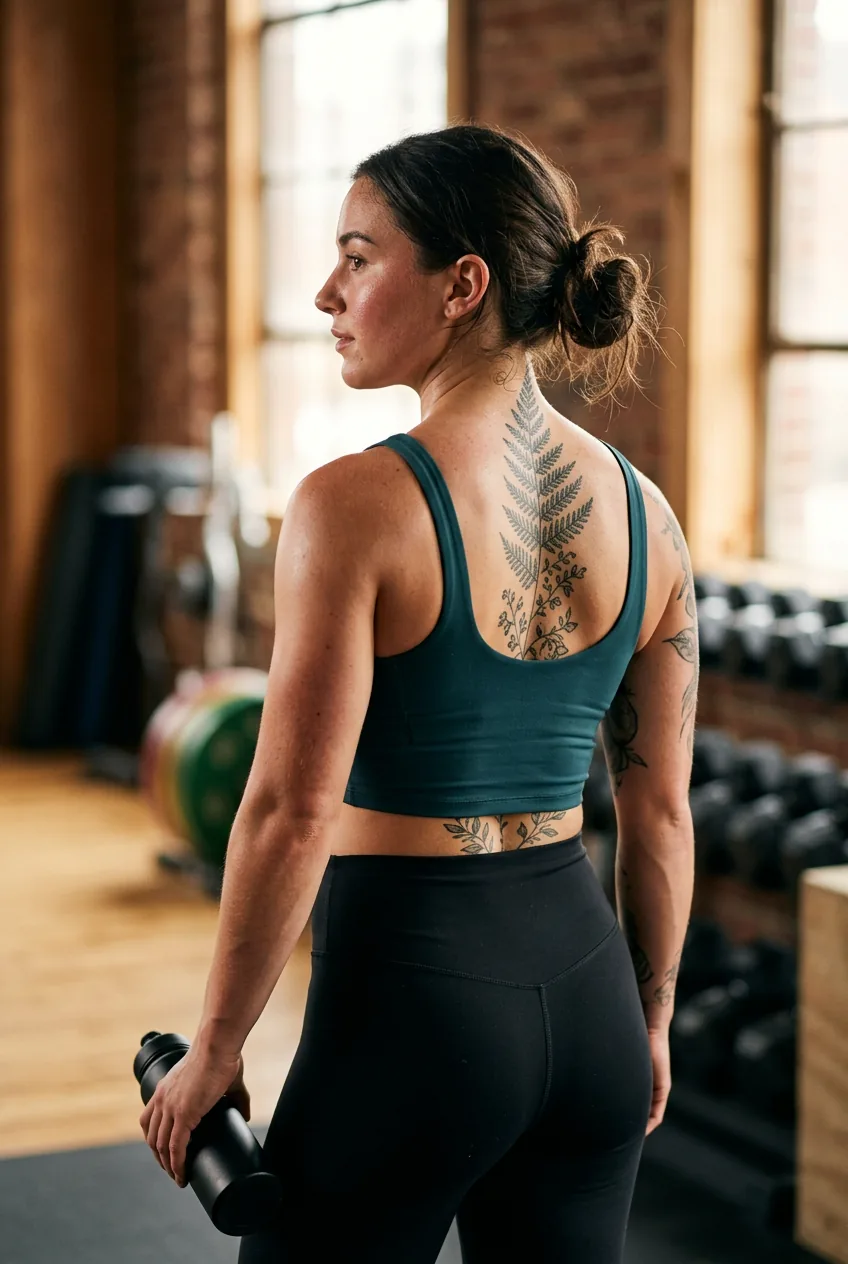
But I’ve also had people assume it means I’m “trying to prove something” or that I “need attention.” The spine is such a statement placement that it invites commentary in ways that arm or leg tattoos just don’t. Some of that commentary is positive, some of it… less so.
The weird part is how differently people react depending on what the tattoo actually depicts. My piece is botanical — a climbing vine with small flowers. People generally read it as feminine and artistic. But I’ve seen friends with geometric spine work or text get completely different reactions, even from the same people.
What I learned is that spine tattoos carry more psychological weight than almost any other placement. People see them as deeply personal, which they often are. But they also assume they know your story based on what runs down your back. It’s something to consider if you’re sensitive to others’ opinions or work in a conservative environment.
That said, there’s something incredibly empowering about having art along your spine. It feels like armor, honestly. Like you’re carrying something beautiful and strong with you wherever you go.
The Healing Reality That Shocked Me
Nobody prepared me for how weird spine tattoo healing would be. And I mean weird in very specific ways that don’t happen with other placements.
First, sleeping becomes this whole production. You can’t sleep on your back for at least a week, which sounds simple until you realize how often you naturally roll onto your back during the night. I ended up building a pillow fort situation that kept me locked on my side. Ridiculous, but necessary.
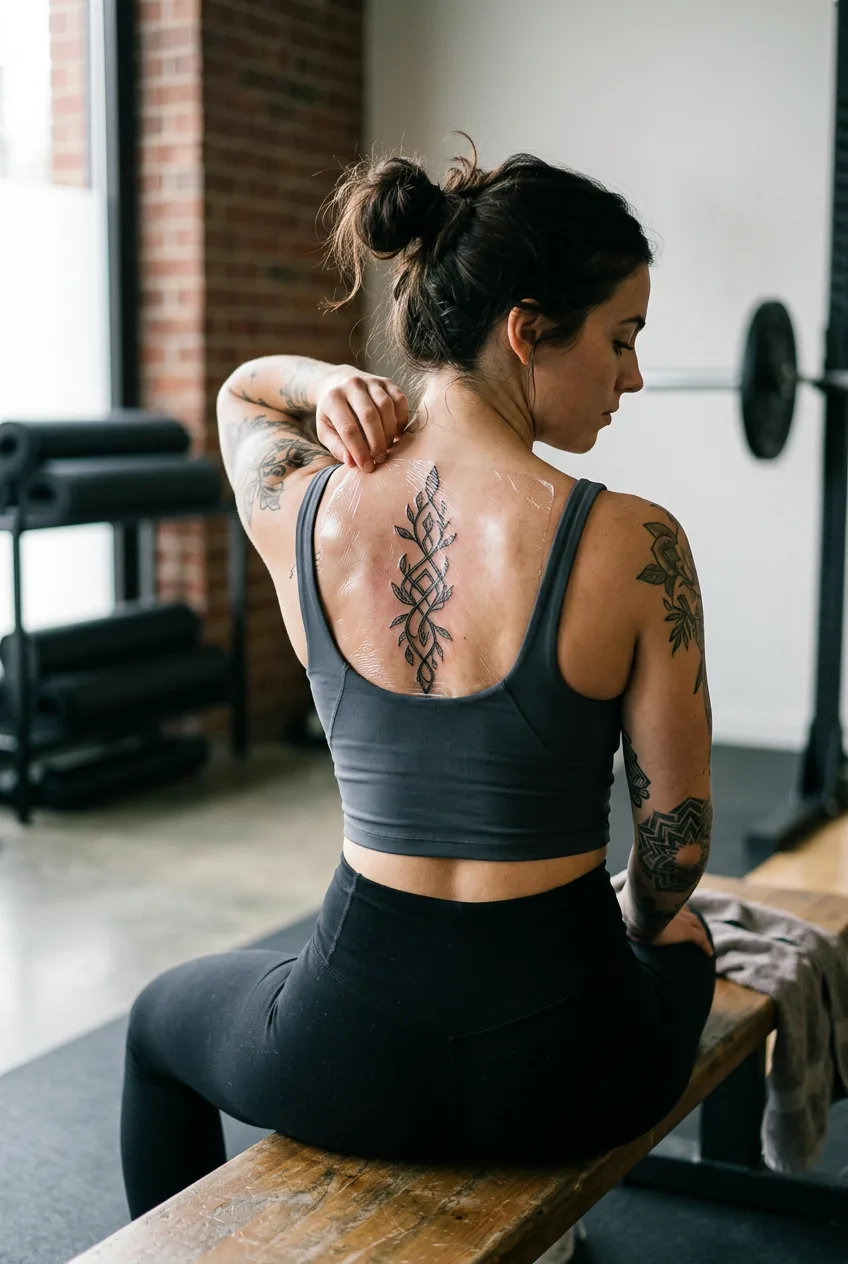
Then there’s the clothing situation. Everything touches your spine. Bras, shirts, jackets, car seats, chairs — everything. And for the first few days, even soft cotton feels like sandpaper against healing tattoo skin. I lived in loose, front-opening shirts and went braless for longer than I care to admit.
But the really weird part? How the healing affects your posture. I found myself unconsciously hunching forward to protect the tattoo, which created this whole chain reaction of neck and shoulder tension. My massage therapist actually commented on it before I realized what I was doing.
The itching phase was particularly brutal because the spine is the one place you absolutely cannot reach to scratch. I became very creative with back scratchers and had to ask my partner for help more than I wanted to. It’s humbling, honestly.
What actually helped the most was staying super hydrated and doing gentle stretching once the initial healing phase was over. The skin along your spine moves so much that keeping it flexible during healing made a huge difference in the final result.
Design Styles That Actually Work Long-Term
After three years and watching dozens of spine tattoos age, I have some strong opinions about what works and what doesn’t. The Instagram-famous delicate line work? It fades. Those tiny, intricate mandalas? They blur together.
The spine is a high-movement area with relatively thin skin. Designs need to be substantial enough to hold up over time. My botanical piece has lines that are probably twice as thick as what you see in most spine tattoo inspiration photos, and I’m so glad my artist talked me into that.
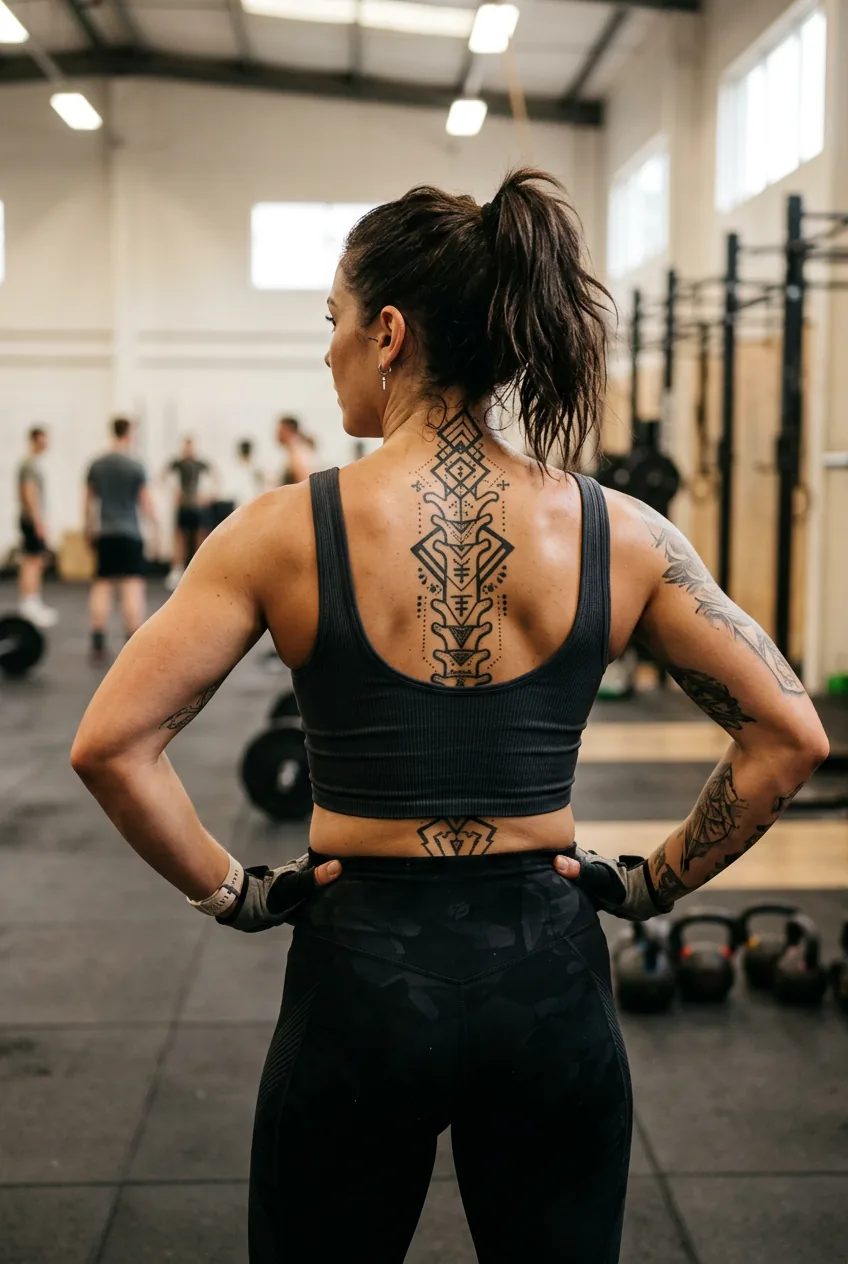
Vertical designs work better than horizontal ones, obviously, but within that constraint, there’s still a lot of variety. What I’ve seen age well: flowing botanical designs, geometric patterns with substantial line weight, script with proper spacing, and illustrative pieces that follow the natural curve of the spine.
What ages poorly: tiny details, very thin lines, watercolor effects, and anything that relies on precise symmetry. The spine just moves too much for perfect symmetry to last.
Color is interesting on the spine. It can look absolutely stunning when fresh, but it tends to fade faster than on other body parts because of the constant movement and the way clothing rubs against it. If you’re set on color, go bold or go home. Subtle color gradients will disappear within a few years.
The other thing that works really well is embracing the natural asymmetry of your spine. Most people’s spines aren’t perfectly straight, and fighting that with a rigid, symmetrical design often looks unnatural. Better to work with your body’s natural lines.
The Cultural Context Everyone Ignores
What frustrates me about most spine tattoo content is how it completely ignores the cultural and historical significance of back tattooing. It’s not just a pretty Instagram trend — it has deep roots in multiple cultures that deserve respect and understanding.
In traditional Japanese tattooing, the back represents one of the most sacred canvases. Full back pieces tell complete stories and are considered the pinnacle of the art form. Even smaller spine pieces carry echoes of that tradition. When we reduce spine tattoos to aesthetic choices without acknowledging that history, we miss something important.
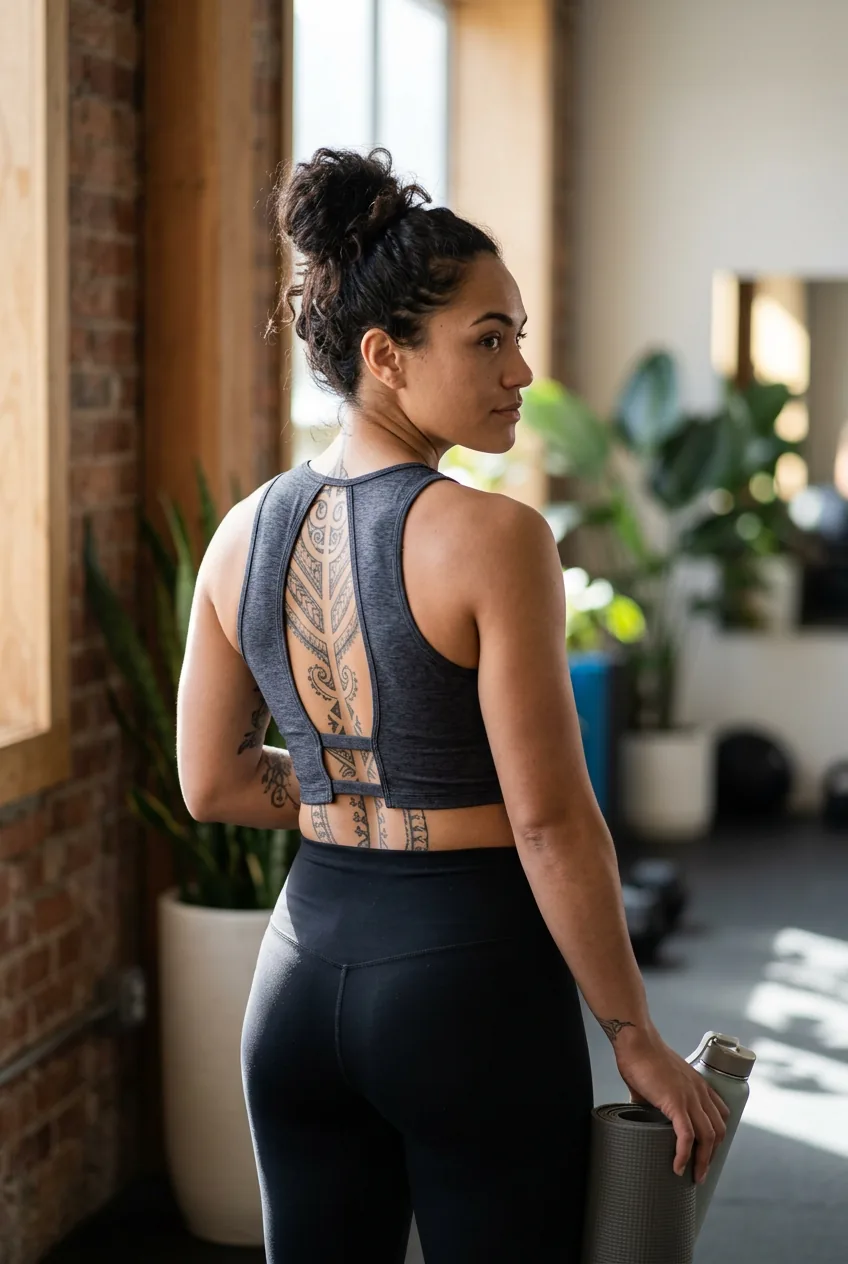
Similarly, many indigenous cultures have used back tattooing for spiritual and ceremonial purposes. The spine, being the center of the body’s energy system, holds special significance in various healing traditions. I’m not saying every spine tattoo needs to be deeply spiritual, but there’s value in understanding the broader context.
What this means practically is being thoughtful about your design choices. Are you appropriating symbols or styles from cultures you don’t belong to? Are you working with an artist who understands the cultural weight of the placement? These aren’t fun questions, but they’re important ones.
I also think it’s worth considering how spine tattoos fit into the broader conversation about women’s body autonomy. There’s something powerful about claiming such a central part of your body for your own artistic expression. But there’s also the reality that spine tattoos on women get sexualized in ways that the same tattoos on men don’t.
Understanding cultural sensitivity in tattoo design has become more important as the art form grows globally.
The spine remains one of the most dramatic and impactful tattoo placements available. When done thoughtfully, with the right artist and realistic expectations, it can be absolutely transformative. Just don’t let Instagram fool you into thinking it’s going to be easy or painless.
Questions I Get About Spine Tattoos
How long does a spine tattoo take to heal completely?
Initial healing takes about 2-3 weeks, but complete healing where you can sleep normally and wear whatever you want takes closer to 6-8 weeks. The spine moves so much that it takes longer than most placements.
Can you get an epidural if you have a spine tattoo?
Yes, absolutely. This is a persistent myth that needs to die. As long as your tattoo is fully healed, there are no medical complications with epidurals or spinal taps through tattooed skin.
Do spine tattoos affect your flexibility?
Not permanently, but you’ll need to be careful during healing. Once fully healed, a spine tattoo won’t limit your movement at all. I do yoga regularly and have never had any issues.
What’s the average cost for a spine tattoo?
This varies wildly by location and artist, but expect to pay more than you would for the same design elsewhere. Spine work is technically challenging and takes longer due to positioning. I paid about 30% more than I would have for an equivalent arm piece.
Getting a spine tattoo changed how I see my own body and strength. Three years later, I still catch glimpses of it in mirrors and feel this little surge of pride. Just make sure you’re ready for everything that comes with it — not just the beauty, but the reality too.