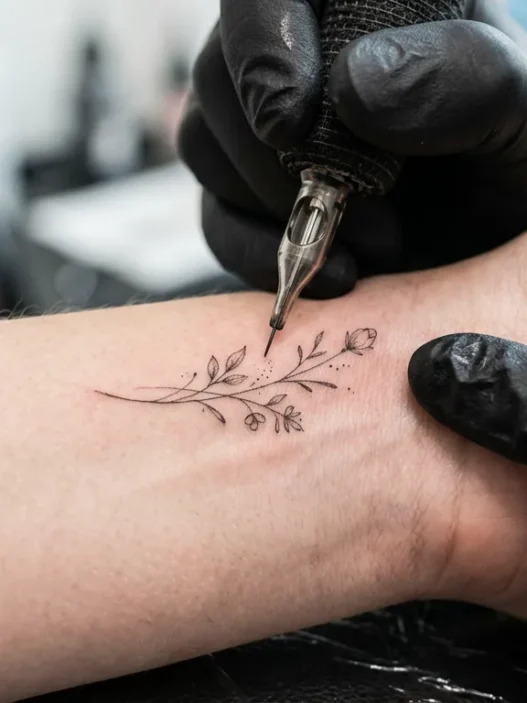






I wish someone had told me about neck tattoo placement before I walked into my first appointment. I was so focused on the design itself that I barely considered where exactly it would go — and honestly, that nearly cost me. The artist started sketching it way too high on my neck, which would have been a career disaster. That’s when I realized placement isn’t an afterthought. It’s everything.

What You’ll Need
Before we dive into placement strategy, gather these tools for your decision-making process:
- A hand mirror and full-length mirror
- Washable markers or eyeliner pencils
- Your design printed at actual size
- Photos of your usual hairstyles
- A few different neckline clothing pieces
- Someone you trust to give honest feedback
Step 1: Understanding Your Neck’s Canvas
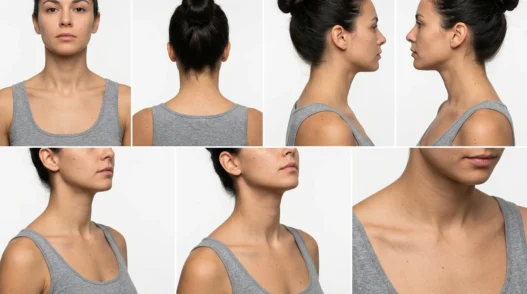
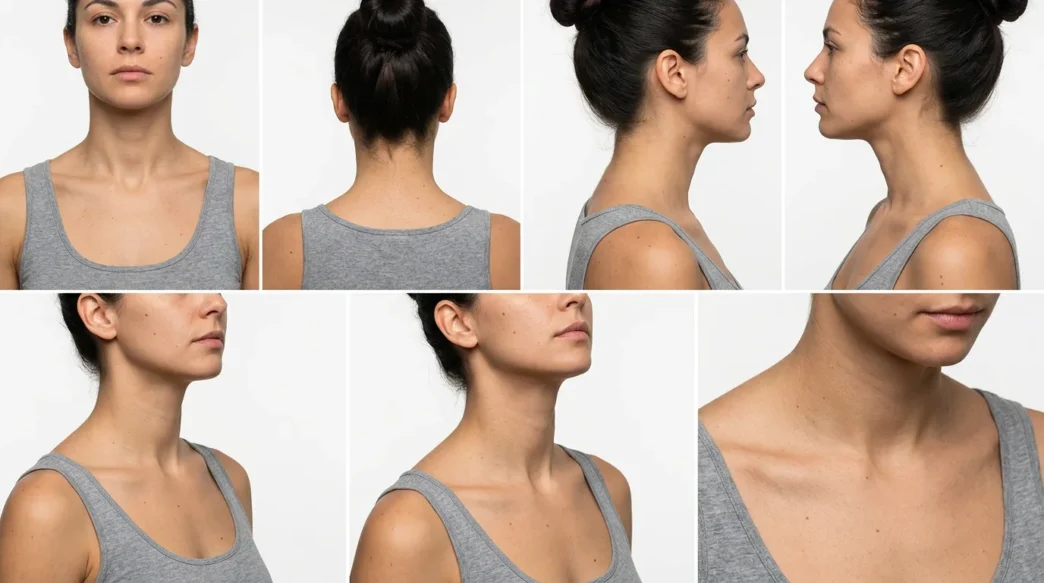
Your neck isn’t just one flat surface — it has distinct zones that behave completely differently. I learned this the hard way when I saw how my friend’s delicate script looked amazing from the front but completely disappeared when she turned her head.
The front of your neck is prime real estate, but it’s also the most exposed. This area stretches and moves constantly when you talk, swallow, or turn your head. The sides of your neck — what tattoo artists call the “lateral neck” — offer more stability but can be partially hidden by hair.

Then there’s the back of your neck, which is probably the most forgiving placement. It’s protected from sun damage, doesn’t stretch as much, and gives you the option to cover it completely with hair when needed.
Stand in front of your mirror and really study your neck’s natural lines. Where does it curve? How does the skin behave when you move? These observations will guide every placement decision you make.
Step 2: How the Design Dictates Placement
Your design’s proportions and style will literally tell you where it belongs — if you know how to listen. A horizontal design like script or a banner needs different real estate than a vertical piece like a rose stem.
Fine line designs with intricate details need stable skin that won’t stretch much. That rules out the front throat area for anything delicate. Bold, simple designs can handle more movement and distortion.
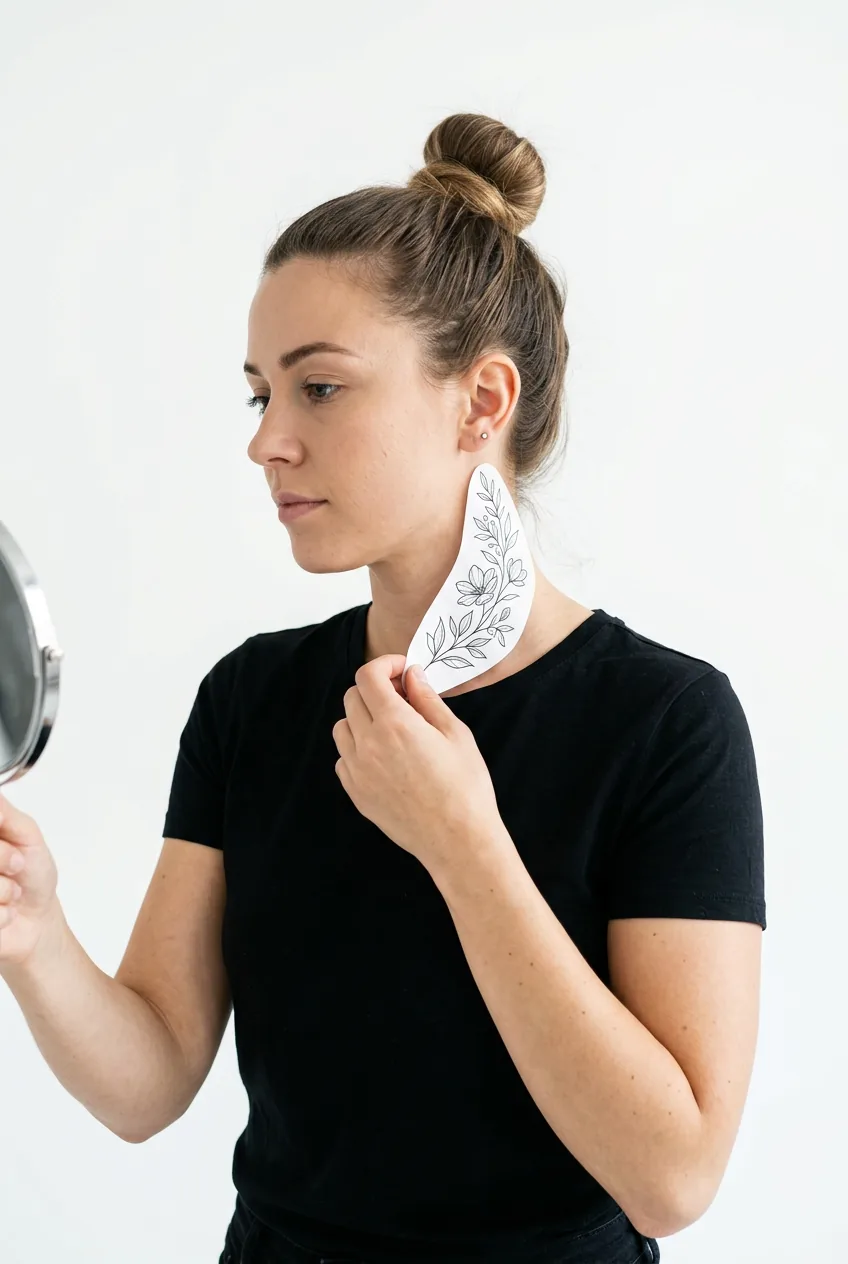
I’ve seen too many beautiful mandala designs get squeezed into spaces that are too small, making them look cramped and losing all their breathing room. Your design needs space to exist properly. Print it out at actual size and hold it against different areas of your neck. Does it look natural, or are you forcing it to fit?
Symmetrical designs work beautifully centered on the back of the neck, while asymmetrical pieces often look more dynamic placed slightly off-center on the side. Trust your eye — if it looks off when you hold the design up, it’ll look off permanently.
Step 3: The Pain vs Visibility Tradeoff
Let’s be real about pain levels. The front and sides of your neck are going to hurt more than the back. There’s less muscle padding and more nerve endings. But here’s what most people don’t consider — the most painful spots are often the most visible ones.
The back of your neck, below the hairline, is typically the least painful option. It’s also the most concealable, which might be exactly what you want. The sides hurt more but offer a nice middle ground for visibility.
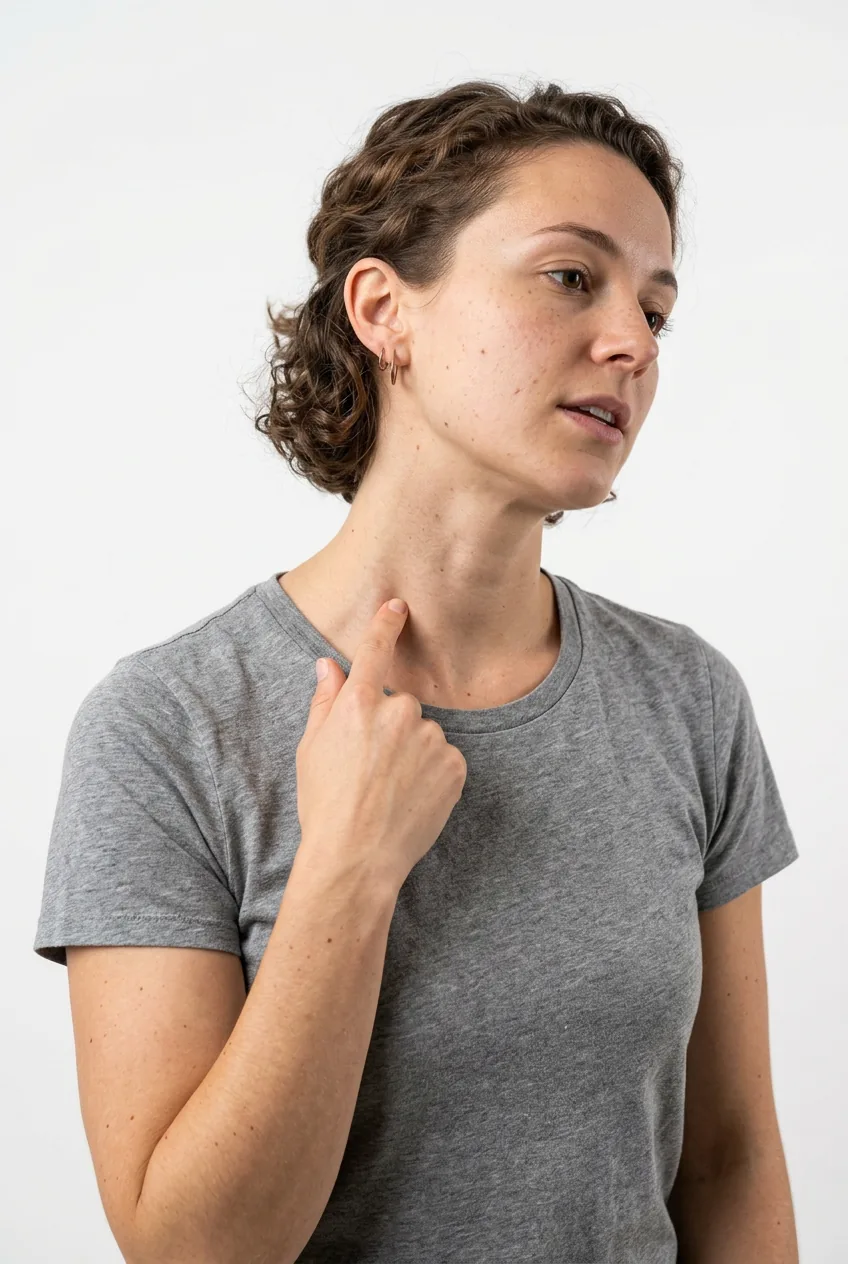
The front throat area? That’s expert level pain, and it’s also the most “in your face” placement. I’m not trying to scare you off, but you need to be honest about your pain tolerance and your lifestyle needs.
I made the mistake of choosing placement based purely on pain avoidance for my first neck piece. Went for the easiest spot behind my ear, but the design looked cramped and awkward there. Sometimes you have to embrace a little discomfort for the right result.
Consider this: would you rather have a perfectly placed tattoo that hurt more during the session, or a poorly placed one that bugs you every time you look in the mirror? The pain is temporary; the placement is forever.
Step 4: What Clothing and Career Require
This step saved my career. Literally. I work in a conservative office environment, and while attitudes are changing, neck tattoos still raise eyebrows in many professional settings. You need to map out exactly what your daily wardrobe reveals and conceals.
Try on your usual work clothes and take photos. Where does your collar sit? What about when you’re wearing a blazer versus a casual shirt? Even if you work somewhere tattoo-friendly now, careers change. Companies change. You want options.

The back of the neck below the hairline is your safest bet for concealment. You can cover it completely with hair down, or with most collared shirts. Side neck pieces are trickier — they peek out with many hairstyles and clothing choices.
But here’s something I learned from experience: don’t live your entire tattoo life based on hypothetical future restrictions. If you love the side placement and can handle any potential career limitations, go for it. Just make sure you’re making an informed choice, not an impulsive one.
Current workplace policies have evolved significantly, but it’s still worth researching your specific industry before committing to highly visible placement.
Step 5: How Placement Affects Aging
Nobody talks about this enough, but your neck ages differently than other parts of your body. The skin is thinner, and it shows signs of aging faster. This matters hugely for tattoo longevity.
The front of your neck gets the most sun exposure and experiences the most stretching from daily movements. Fine lines and small text placed there might not age as gracefully as you’d hope. The back of the neck, protected by hair and clothing most of the time, tends to hold up better long-term.

I’ve learned that bold, simple designs age better on the neck than intricate, detailed work. Think about how your design will look in 10, 20 years. Will the details still be clear? Will the proportions still work as your skin changes?
This doesn’t mean you should only get basic designs. But it does mean you should choose placement that gives your tattoo the best chance to age well. The side of the neck often offers a good compromise — less sun exposure than the front, but still stable enough for moderate detail work.
Consider the natural direction of skin movement too. Horizontal lines might blur over time on the front of the neck, while vertical designs often hold their shape better.
Step 6: Testing Your Design Before Committing
This is the step that prevents regrets. Use washable markers or eyeliner to sketch your design in different positions. Live with it for a few days. See how it feels when you’re getting dressed, going to work, sleeping.
Take photos from multiple angles. Ask people whose opinions you trust. How does it photograph? Does it complement your natural features or compete with them? Does it work with your personal style?
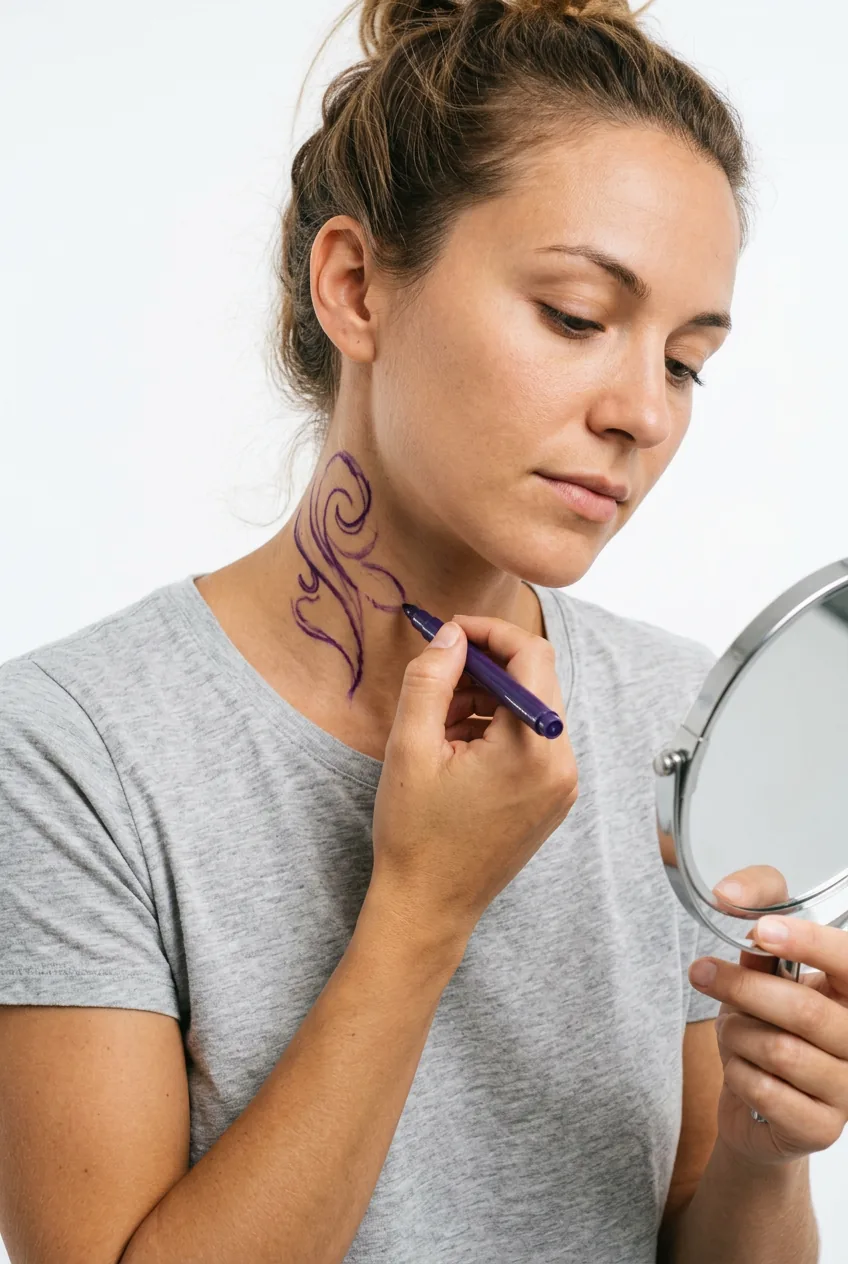
Pay attention to how the placement makes you feel emotionally. Some spots feel empowering and confident, while others might make you feel exposed or self-conscious. Your gut reaction matters.
I also recommend testing different sizes. What looks perfect in your head might be too big or too small in reality. The neck is a smaller canvas than you think, and proportion is everything.
For ideas and inspiration, check out these small tattoos that work beautifully on the neck area. Sometimes seeing how others have handled similar placement challenges can spark the perfect solution for your design.
See This Placement Method in Action
What People Usually Ask
Do neck tattoos hurt more than other areas?
Yes, generally they do. The neck has thinner skin and more nerve endings than areas like your arm or thigh. The front and sides tend to be more painful than the back of the neck. But pain tolerance is very individual — what’s unbearable for one person might be totally manageable for another.
Can I hide a neck tattoo for job interviews?
It depends entirely on the placement. Back-of-neck tattoos below the hairline are usually concealable with hair down and a collared shirt. Side and front neck pieces are much harder to hide completely. Consider your career goals before choosing a highly visible spot.
How do I know if my design is the right size for my neck?
Print your design at actual size and test it with temporary placement. Your neck is a smaller canvas than you might think. Most successful neck tattoos are either quite small and delicate, or they’re designed specifically to wrap around the neck’s natural curves.
Will my neck tattoo stretch or distort over time?
The front of the neck experiences the most movement and stretching, so fine details there might soften over time. The back and sides are more stable. Choose bold, simple designs for high-movement areas, and save intricate details for more stable spots.
Finding the right neck tattoo placement changed everything for me. What started as an impulsive design idea became a carefully planned piece that I absolutely love — and more importantly, one that works with my life, not against it. The extra time spent on placement decisions was worth every minute.