




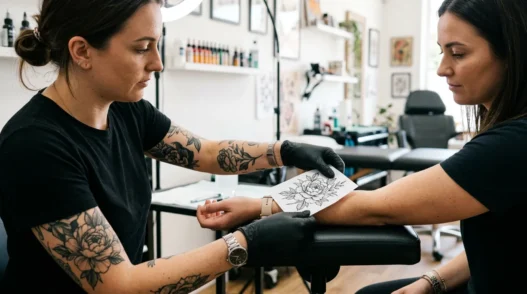
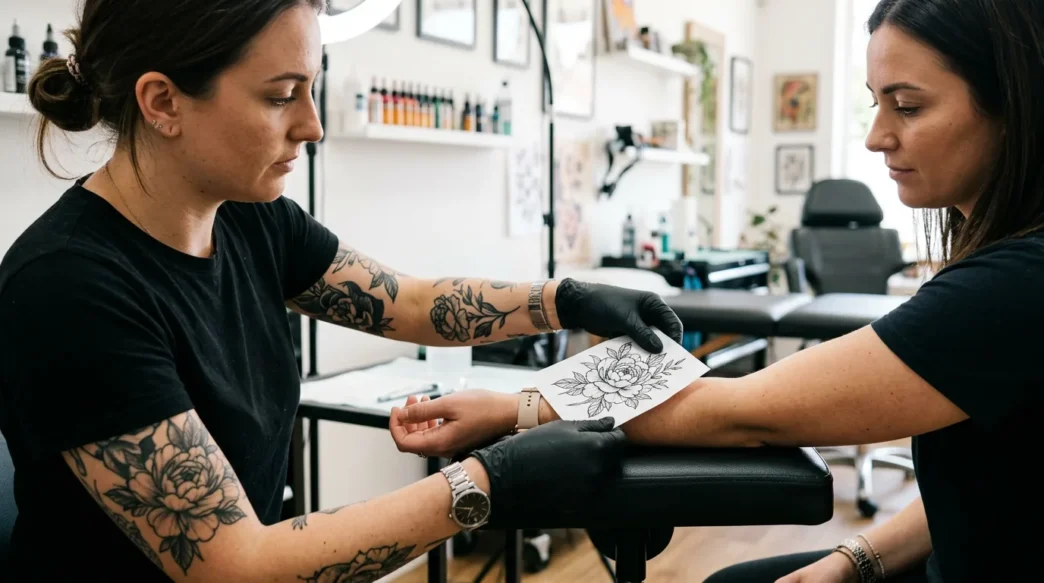
I wish someone had given me this placement guide before I booked my first flower hand tattoo consultation. I walked in with a gorgeous rose design and absolutely no clue where it should actually go on my hand. My artist was patient, but I could tell she was mentally redesigning my piece based on terrible placement choices I kept suggesting. Three consultations later, I finally understood why placement isn’t just about “what looks pretty” — it’s about how your hand moves, ages, and fits into your actual life.
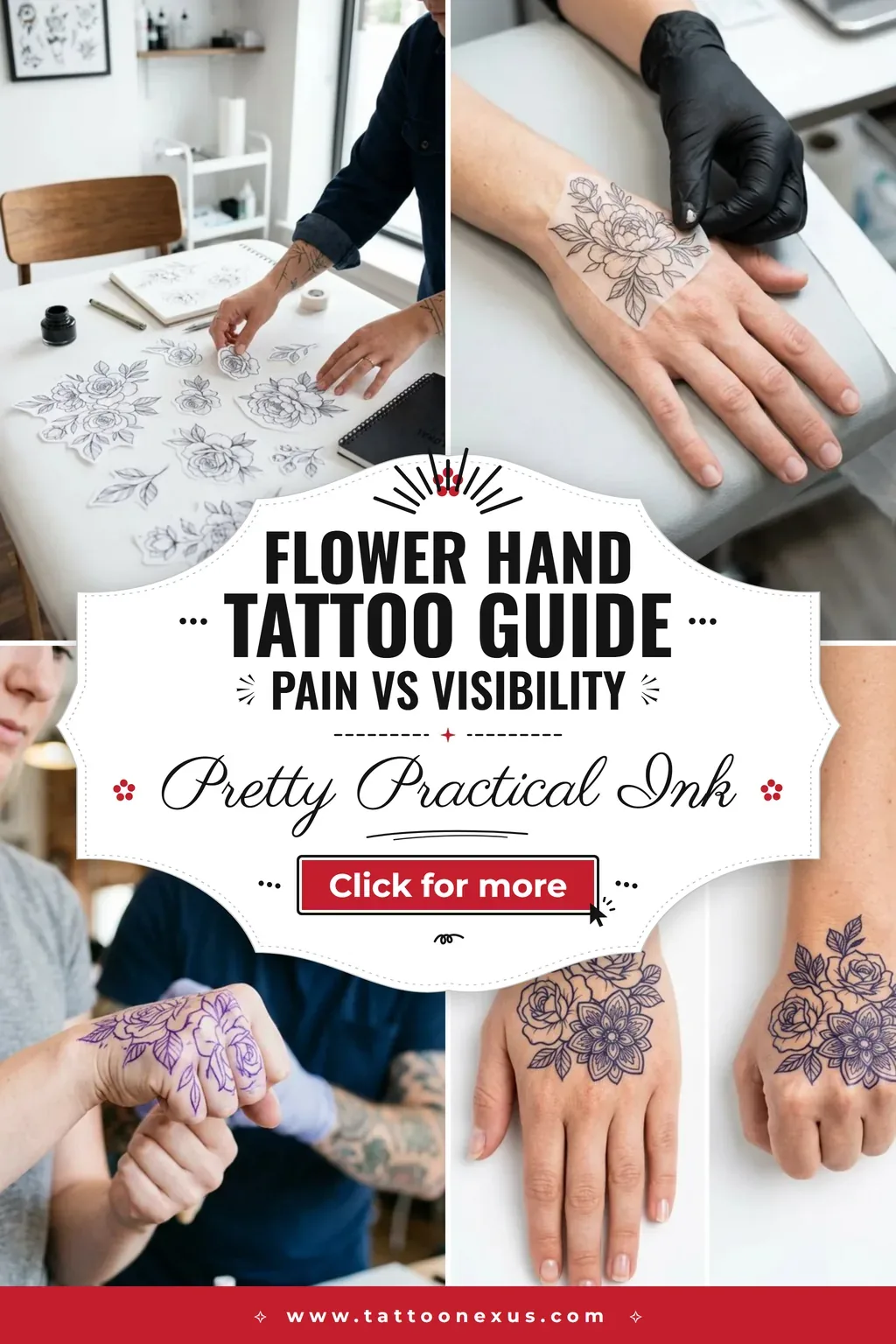
What You’ll Need to Consider First
Before we dive into specific spots, you need to honestly assess your lifestyle. I made the mistake of falling in love with a knuckle placement without thinking about my job requirements. Here’s what I wish I’d considered from day one:
- Your daily hand use patterns (typing, manual work, sports)
- Professional requirements and dress codes
- How often you want the tattoo visible vs hidden
- Your pain tolerance and healing capacity
- The specific flower design’s proportions and flow
- Whether this is your first hand tattoo or part of a collection
- Your budget for potential touch-ups over time
I also recommend taking photos of your hands in different positions — making a fist, typing, gesturing. You’ll be shocked how much the skin stretches and compresses in ways you never notice.
How the Design Dictates Placement
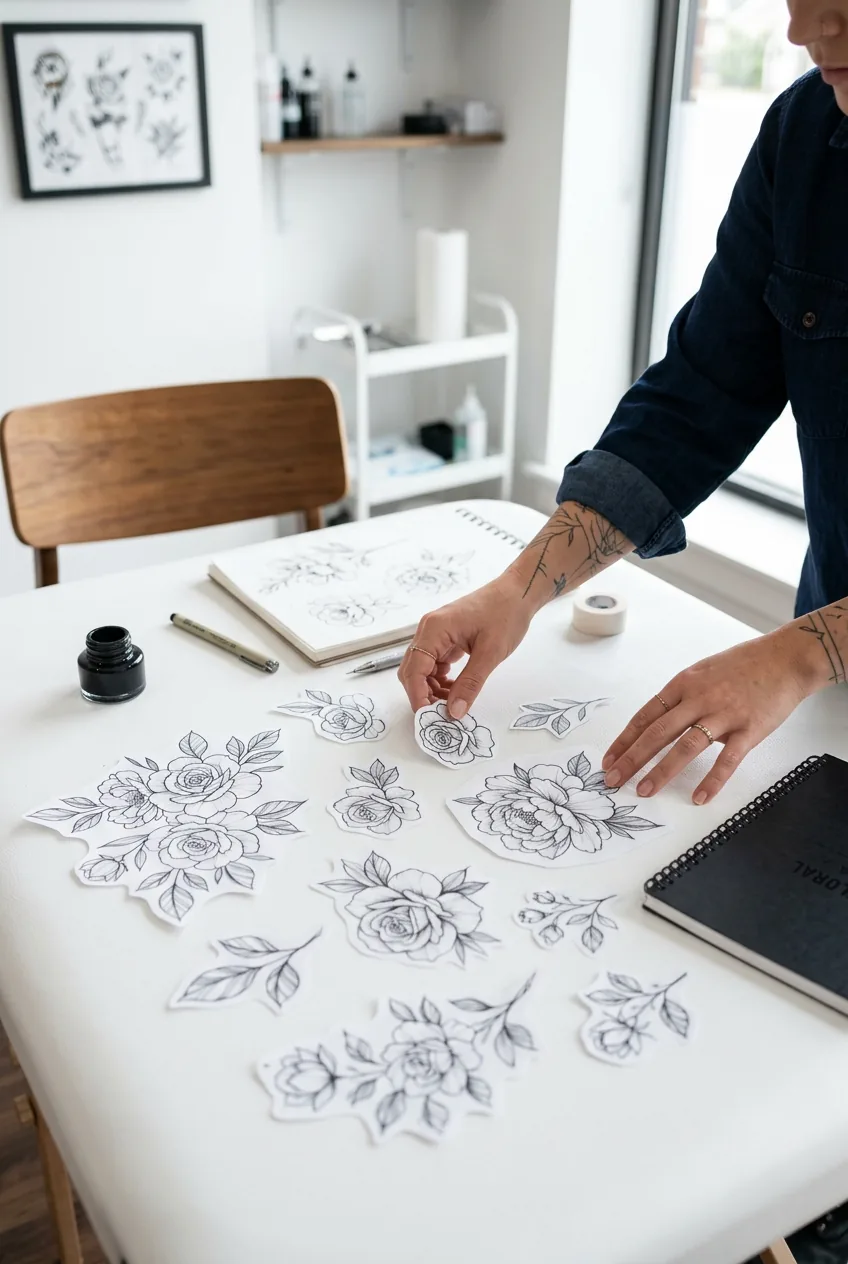
Your flower design isn’t just art — it’s architecture that needs to work with your hand’s natural structure. I learned this the hard way when I tried to force a vertical rose onto the side of my hand. The proportions looked completely wrong.
Delicate, fine-line flowers with lots of detail work best on flatter surfaces like the back of your hand or the outer edge. These areas provide stable canvas space without major skin fold interference. But bold, geometric florals? They can actually look stunning wrapped around knuckles or following the natural curves between your thumb and index finger.
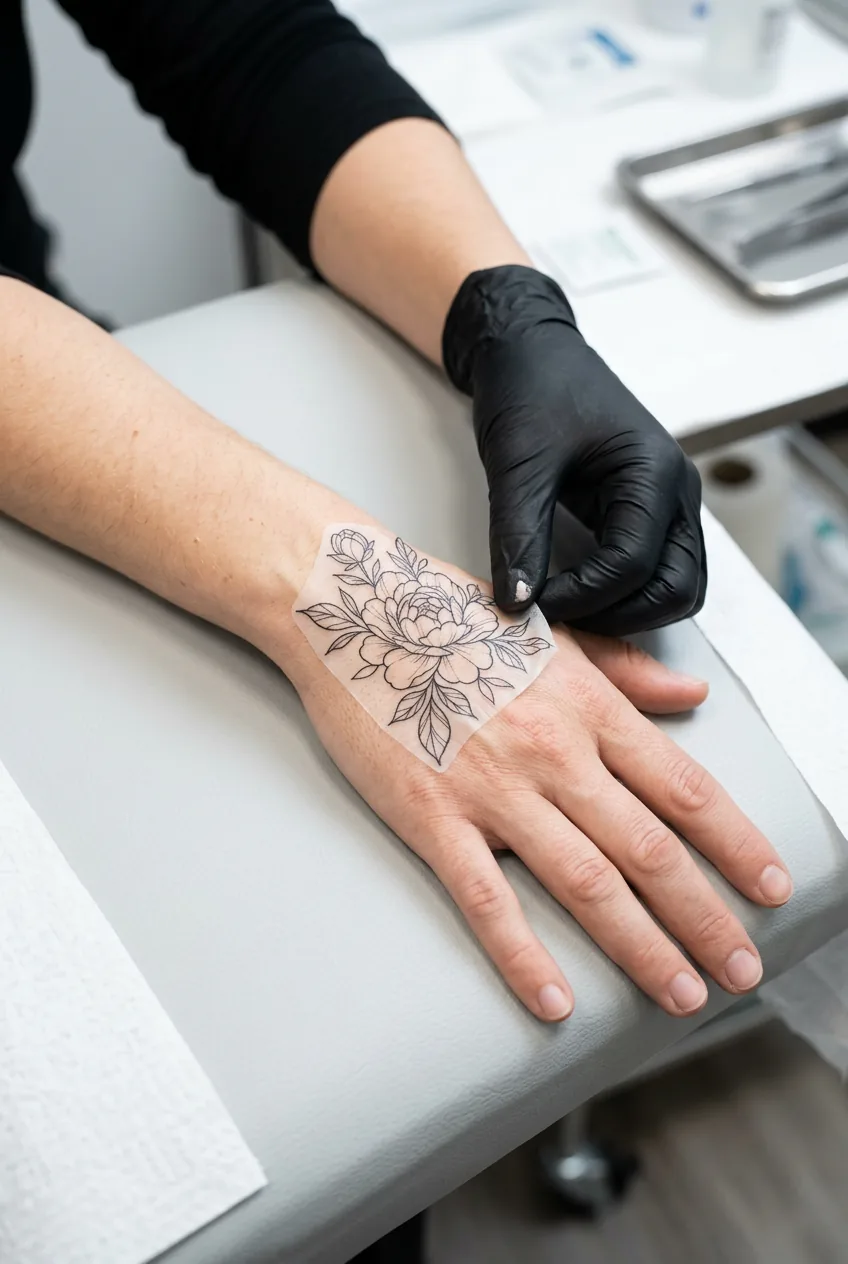
Single stem designs flow beautifully along your fingers or the side edge of your hand. Multi-bloom arrangements need broader real estate — think back of hand or the space between your thumb and wrist. And here’s something most people don’t consider: flowers with stems and leaves need room to “breathe” visually, or they’ll look cramped and busy.
I tried to cram a full bouquet design onto my ring finger because I thought it would be “dainty.” My artist had to completely redesign it into a single bloom with minimal leaves just to make it readable. Sometimes less really is more.
The Pain vs Visibility Tradeoff
Let me be brutally honest about pain levels, because your tattoo artist probably won’t volunteer this information upfront. Knuckles are absolute murder — the skin is thin, there’s bone right underneath, and the needle feels like it’s scraping directly on your skeleton. But knuckles are also prime real estate for visibility.
The back of your hand is moderate pain with maximum visibility. It’s my sweet spot for first-time hand tattoos because you get that bold statement without wanting to tap out halfway through. The space between your thumb and index finger? Surprisingly manageable pain-wise, and it’s visible when you gesture or hold things.
Here’s what nobody tells you: finger tattoos hurt more during healing than during the actual session. Your fingers are constantly moving, constantly touching things, constantly getting bumped. I spent two weeks trying to type with my ring finger held at weird angles to avoid hitting the fresh ink.
If you want a visible flower but you’re worried about pain, consider the outer edge of your hand (the “karate chop” side). It’s visible when you gesture, moderate pain during tattooing, and heals relatively well because it doesn’t get constant friction.
How Movement Affects Your Design
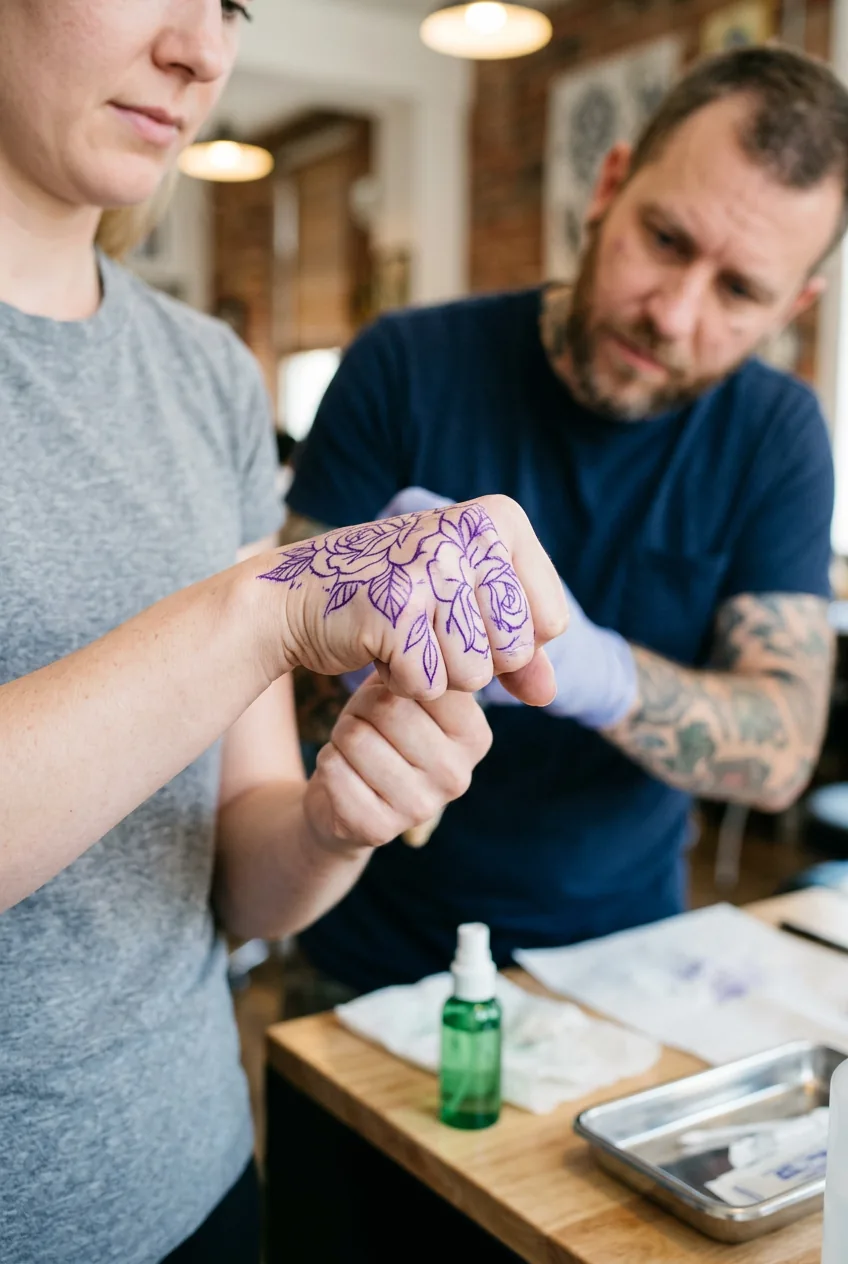
This is the part that blew my mind during my consultation. Your artist should ask you to make a fist, spread your fingers wide, and flex your hand in different directions while holding the stencil in place. Watch what happens to your beautiful flower design — it stretches, compresses, and sometimes completely distorts.
Designs that cross major flex points (like knuckles or the space where your fingers meet your palm) will experience the most dramatic changes. A rose that looks perfect when your hand is flat might look wonky when you make a fist. This isn’t necessarily bad — some designs are meant to transform with movement — but you need to see it beforehand.
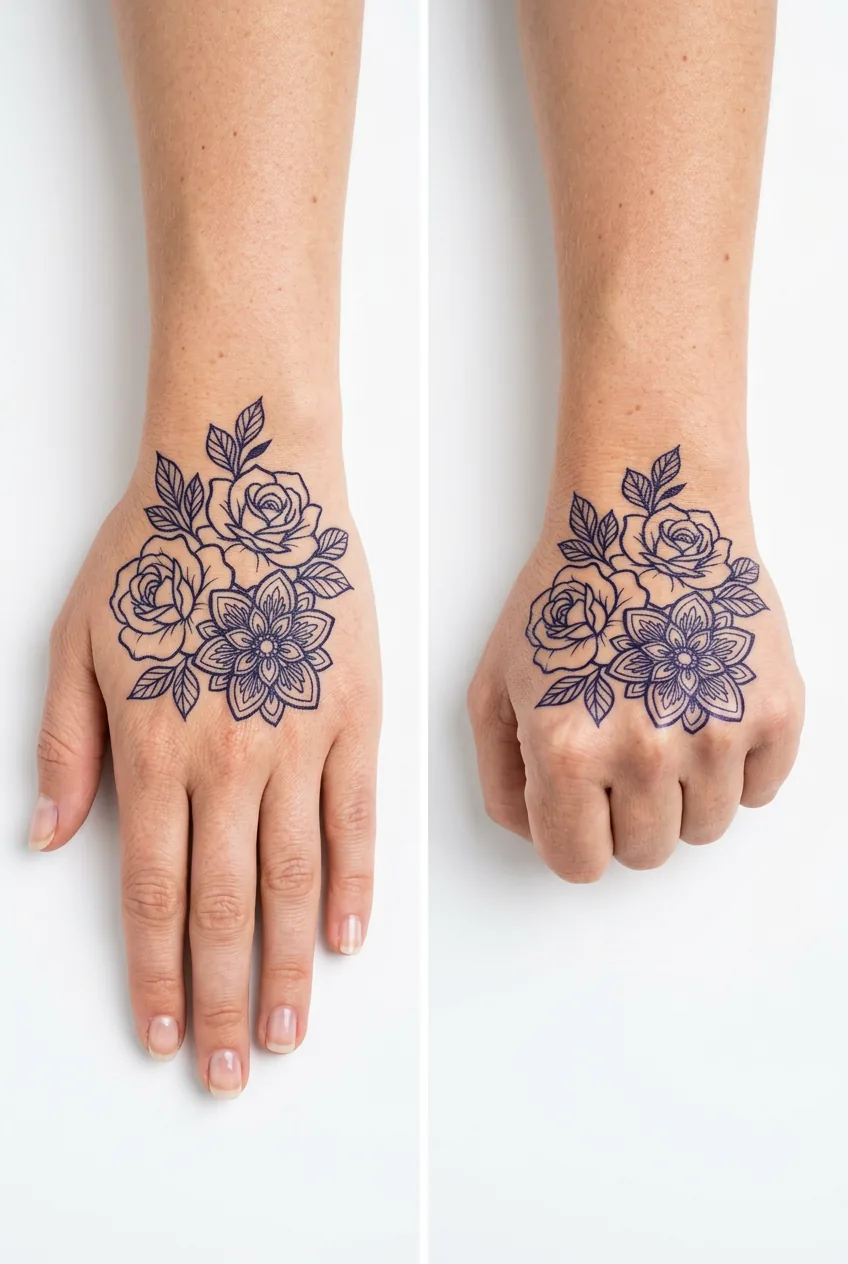
I love how placement considerations work differently for every body part, but hands are especially tricky because they’re never static. If you’re choosing a realistic flower, the petals might separate weirdly when you flex. If you’re going geometric or minimalist, the clean lines might bend in unflattering ways.
Pro tip: ask your artist to show you how the design looks both relaxed and in motion. Some placements that seem awkward when your hand is flat actually look amazing when you’re gesturing naturally.
See the Movement Effect in Real Time
What Clothing and Career Require
I cannot stress this enough — think about your Monday morning reality, not your weekend dreams. If you work in a conservative field, a back-of-hand flower tattoo might torpedo your next promotion. It sounds unfair (and it is), but workplace tattoo policies are still very real in 2026.
Consider placements that work with your wardrobe. Finger tattoos peek out from under rings and gloves. Side-of-hand designs show when you gesture but disappear when your hands are at your sides. The space between thumb and index finger is visible during handshakes — which could be good or bad depending on your profession.

If you need hiding options, inner wrist flowers can disappear under long sleeves or watches. But completely hidden hand tattoos defeat the purpose for most people — hands are meant to be seen and admired.
Think seasonally too. Winter gloves will cover most hand tattoos for months. Summer means constant sun exposure, which affects both healing and long-term color retention. I wish I’d gotten my hand piece in fall instead of spring — I spent the whole summer being paranoid about sun damage.
How Placement Affects Aging
Here’s the conversation every good tattoo artist should have with you, but many skip: how your flower hand tattoo will look in 10, 20, 30 years. Hands age faster and more visibly than almost any other body part. The skin gets thinner, veins become more prominent, and sun damage accumulates.
Knuckle tattoos fade the fastest because that skin sees the most wear and friction. Finger tattoos often need touch-ups within 2-3 years. But back-of-hand pieces? They can stay vibrant for decades with proper care.
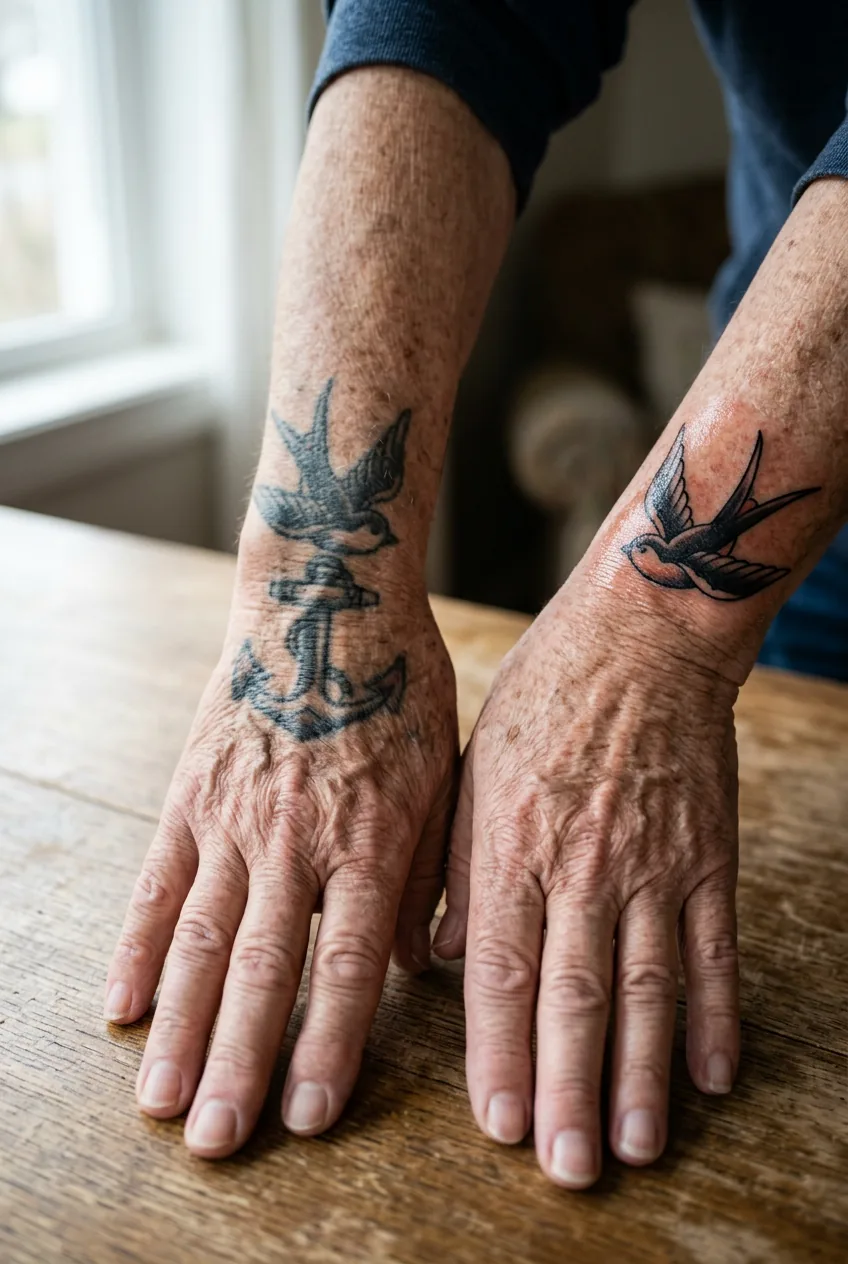
Fine-line flower tattoos are gorgeous when fresh but can become muddy or blurred as skin changes over time. Bold, simple designs with good contrast hold up much better. I’ve seen 20-year-old hand tattoos that still look crisp, and they’re always the ones with strong, clean lines and solid color blocks.
Placement-wise, areas with more stable skin structure age better. The back of your hand between the knuckles and wrist typically holds up well. Areas that stretch constantly (around knuckles, between fingers) show aging effects sooner.
My friend got a delicate cherry blossom on her knuckle five years ago. It was stunning then, but now it looks like a pink smudge. She’s saving up for a cover-up because touch-ups haven’t helped.
The Size-to-Spot Sweet Spot
Size and placement are inseparable when it comes to hand tattoos. I see people trying to squeeze massive designs onto tiny finger spaces, or placing tiny delicate flowers on the broad back of their hand where they look lost and insignificant.
For finger tattoos, think small and simple — a single bloom, a minimalist stem, maybe three tiny clustered flowers max. Anything more detailed will blur together as the tattoo settles. Ring finger florals should be delicate enough that they don’t overwhelm your actual rings.
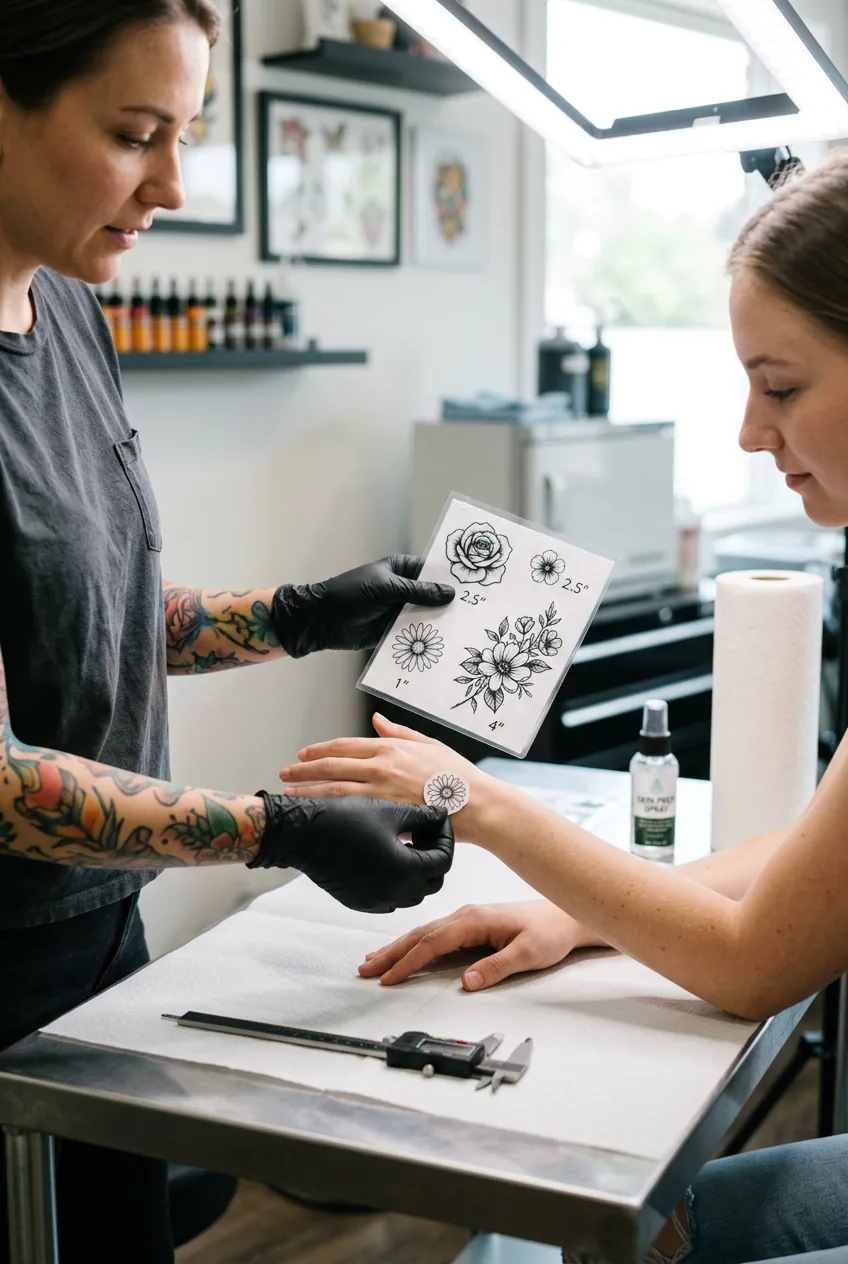
Back of hand placements can handle much larger, more detailed flower arrangements. This is where you can go for that Instagram-worthy bouquet or climbing vine design. The skin surface is stable, the canvas is broad, and larger tattoos actually look more proportional on this area.
Side of hand tattoos work best as medium-sized vertical designs. Think single long-stemmed flowers or small clusters that follow your hand’s natural edge. Too big and they’ll wrap awkwardly around onto your palm or back of hand.
Here’s a sizing trick my artist taught me: hold your hands at arm’s length and look at the space you’re considering. If you can’t clearly see the area from that distance, your tattoo design is probably too detailed for that spot.
Aftercare Considerations by Location
Different hand placements require completely different aftercare approaches, and honestly, this should factor into your placement decision. Knuckle tattoos are aftercare nightmares — they crack when you bend your fingers, get knocked into things constantly, and are almost impossible to keep consistently moisturized.
Finger tattoos need the most babying during healing. You’ll need to modify how you type, write, cook, and basically use your hands for 2-3 weeks. I temporarily switched to voice-to-text for everything because typing was pulling at my healing finger ink.
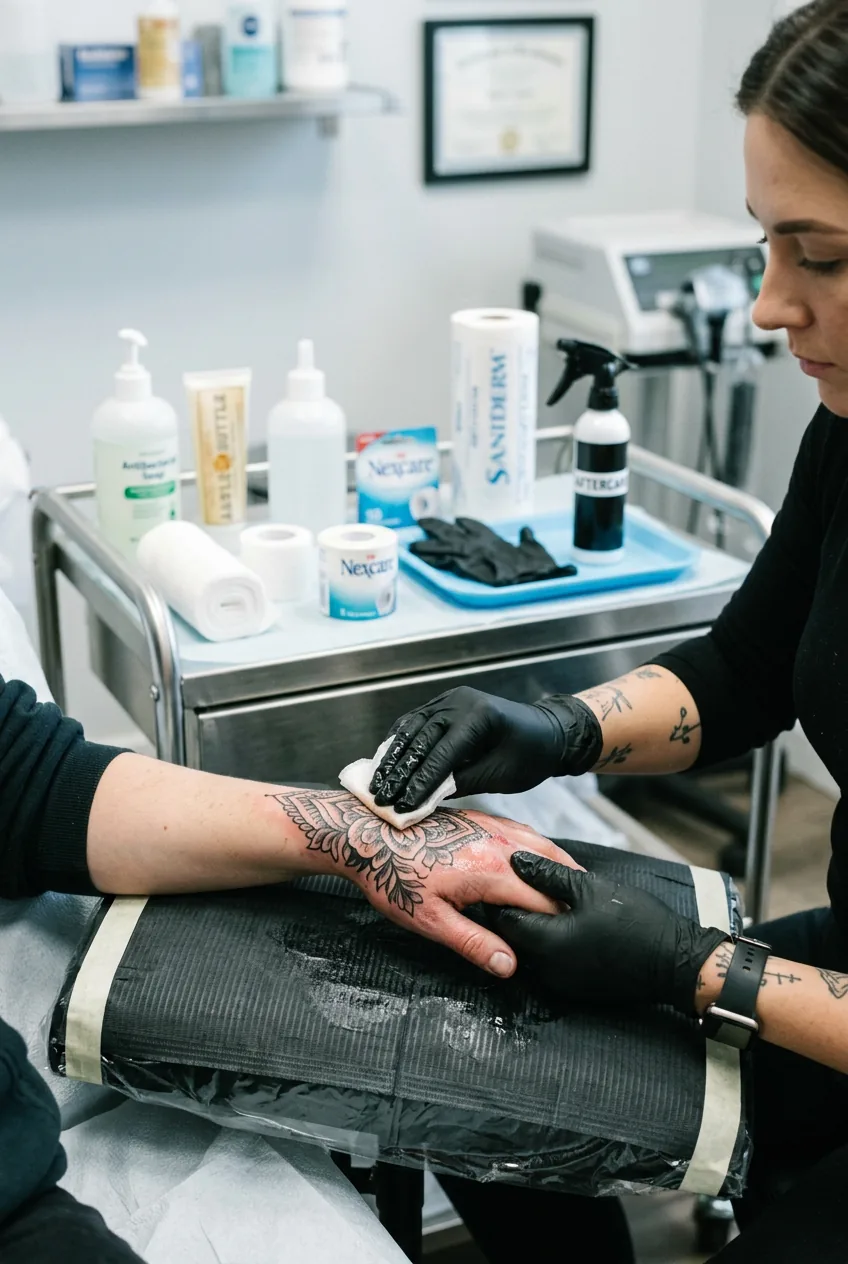
Back of hand tattoos are the most manageable for aftercare. The skin is relatively stable, you can easily apply healing products, and it’s easier to protect from accidental bumps and scratches. But they’re also the most exposed to sun damage, so you’ll need to be religious about sunscreen for life.
Palm-side or inner wrist flower tattoos heal well because they’re naturally protected, but they fade faster from constant use and washing. The skin on your palms sheds and regenerates quickly, which works against tattoo longevity.
Consider your lifestyle during healing too. If you work with your hands, some placements will be constantly irritated. If you’re a gym regular, gripping weights and equipment will affect different areas differently. Plan your tattoo timing around your life schedule, not just your artistic inspiration.
After going through this whole process myself, I ended up with a medium-sized peony on the back of my left hand. It’s visible when I want it to be, manageable for my career, aged beautifully over the past three years, and was surprisingly comfortable during both tattooing and healing. The placement choice made all the difference between loving my tattoo and regretting it.
Quick Answers for Hand Tattoo Placement
Do hand tattoos really fade faster than other placements?
Yes, especially on knuckles and fingers. Constant use, friction, and sun exposure break down the ink faster. Back of hand tattoos hold up better, but all hand tattoos need more maintenance than arm or torso pieces.
Which hand should I get tattooed if I only want one?
Consider your dominant hand for maximum visibility, or your non-dominant hand for easier aftercare and healing. I chose my non-dominant hand because I could still function normally during the healing process.
Can I get a flower hand tattoo if I’ve never had any tattoos before?
Technically yes, but I’d recommend getting a tattoo somewhere less visible first to understand your pain tolerance and healing process. Hand tattoos are high-commitment pieces that you can’t easily hide if you don’t love the result.
How long do I need to take off work for a hand tattoo?
Depends on your job and placement. Desk jobs might only need 1-2 days for initial healing, but manual labor jobs could require a full week off. The biggest issue is keeping the tattoo clean and protected during the vulnerable first few days.