





I spent three months going back and forth between fine line and bold traditional styles for my Medusa tattoo. Every artist I consulted had a different opinion, and Pinterest showed me gorgeous examples of both. But I needed a way to actually decide — not just admire pretty pictures forever.
After getting my Medusa done (spoiler: I went bold traditional and couldn’t be happier), I realized the choice isn’t about what looks cooler online. It’s about matching the style to your specific situation — your skin, your pain tolerance, your artist’s strengths, and honestly, your personality.
What you’ll need for this decision:
- Reference images of both styles you love
- Honest assessment of your skin type and tone
- Clear idea of your preferred tattoo size and placement
- Research on artists in your area who specialize in each style
- Budget range (fine line and bold work differently price-wise)
- Pain tolerance reality check
Which Style Captures Your Vision
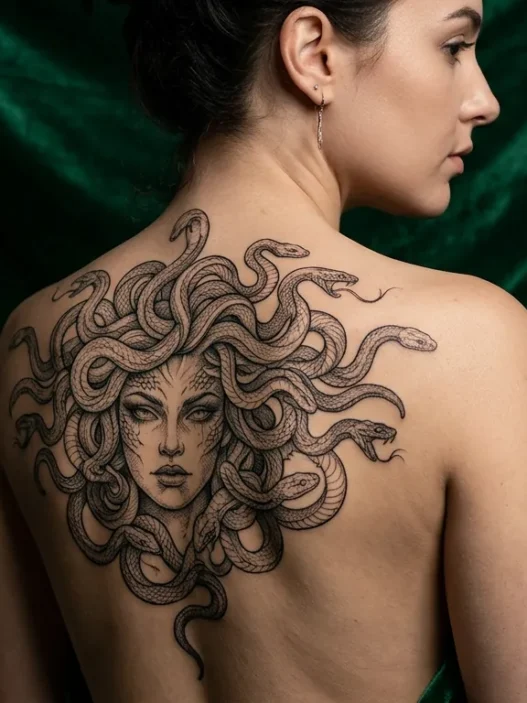
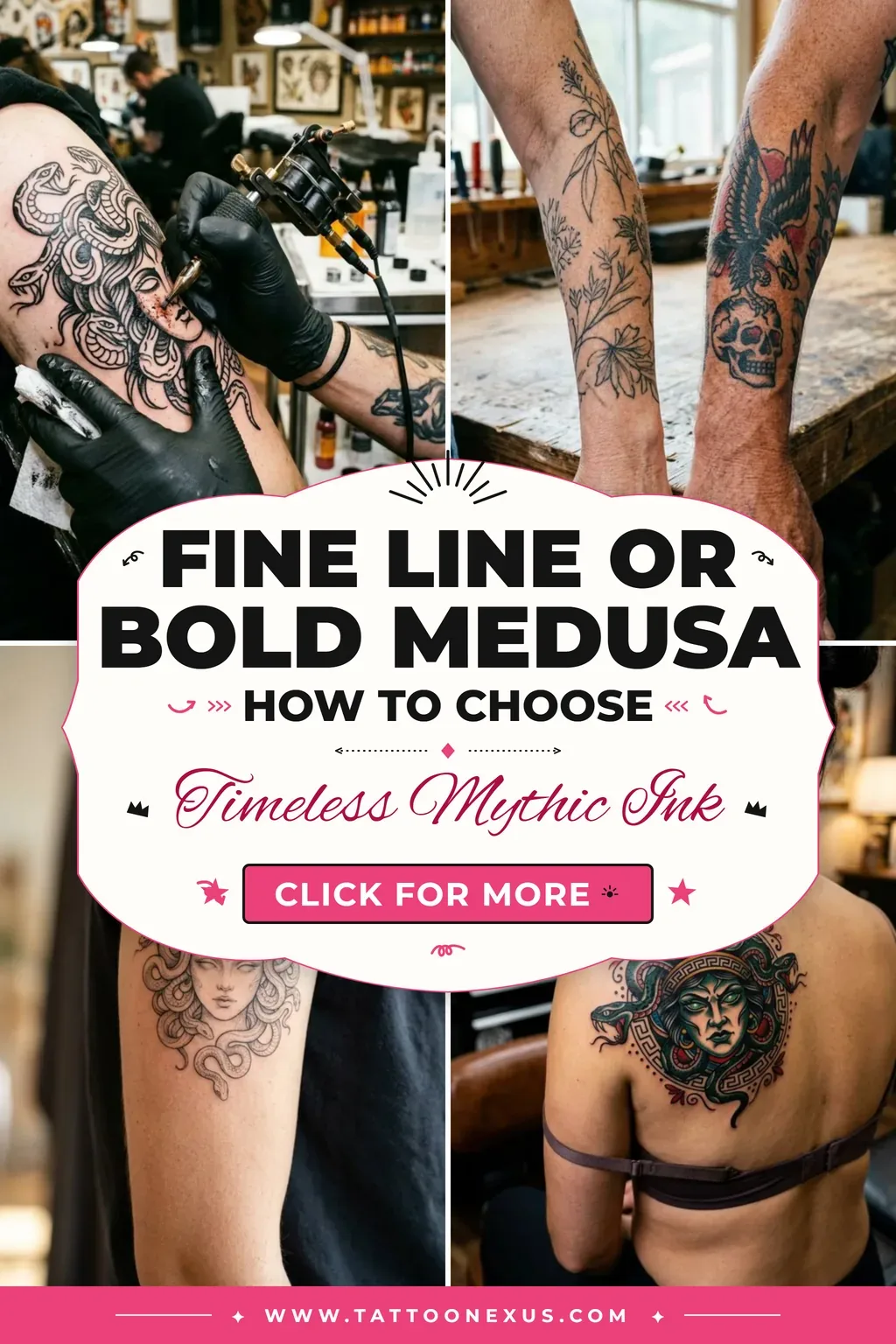
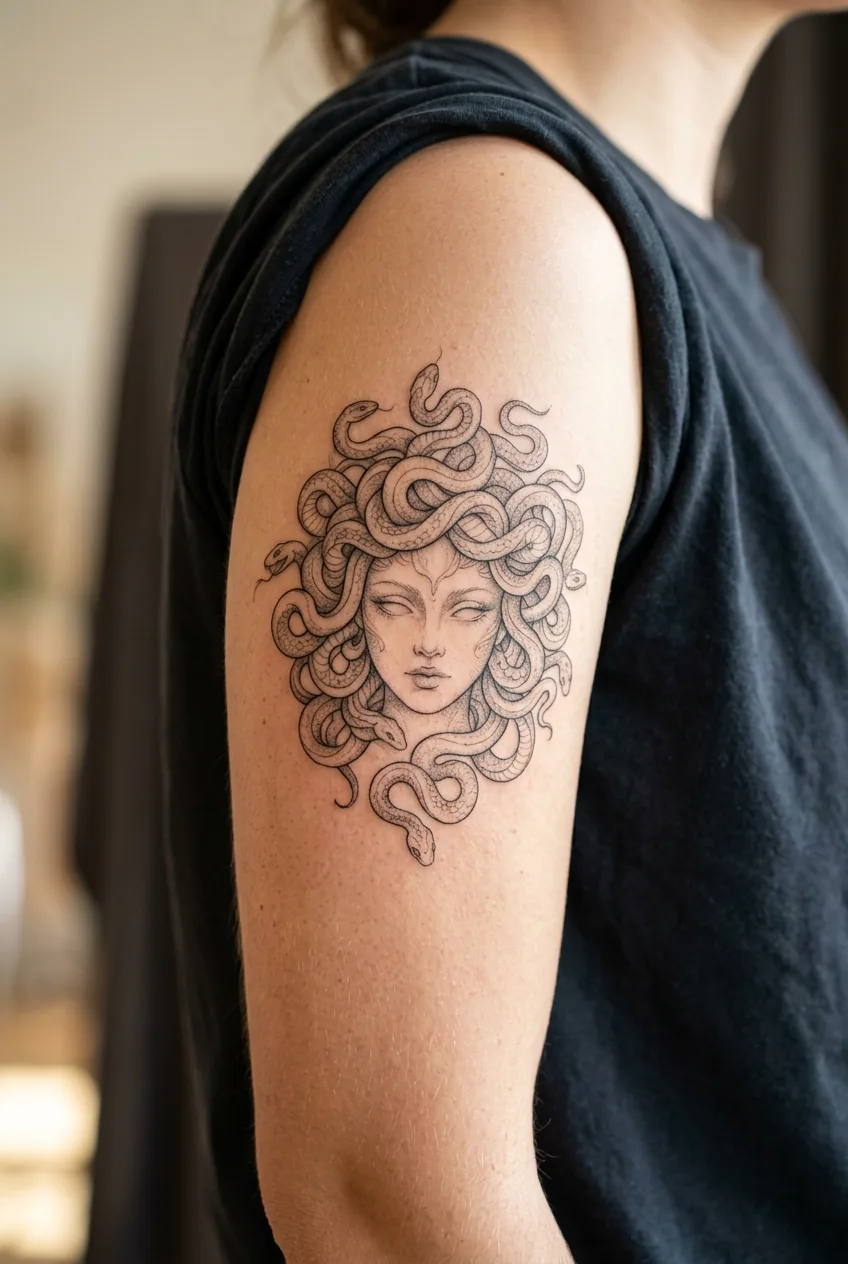
Fine line Medusa tattoos excel at ethereal, haunting beauty. Think delicate snake details, subtle shading in the face, and an almost whisper-like quality. If your Medusa vision leans toward mysterious femininity or Greek statue elegance, fine line might be calling you.
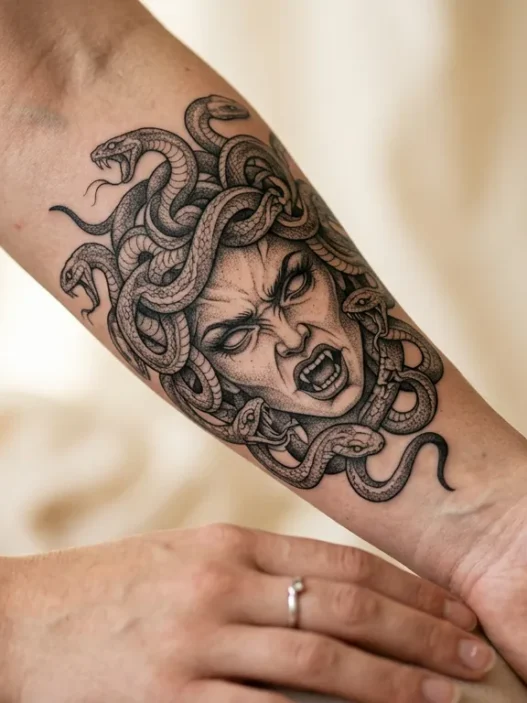
Bold traditional Medusas pack serious visual punch. Heavy black outlines, saturated colors, dramatic contrast. This style screams power and isn’t apologetic about taking up space on your skin. My bold Medusa definitely commands attention — which was exactly what I wanted.
But here’s what nobody tells you: fine line Medusas can look almost abstract from a distance, while bold ones read clearly as “snake-haired goddess” even from across a room. Consider where you’ll be showing this tattoo and how recognizable you want the imagery to be.
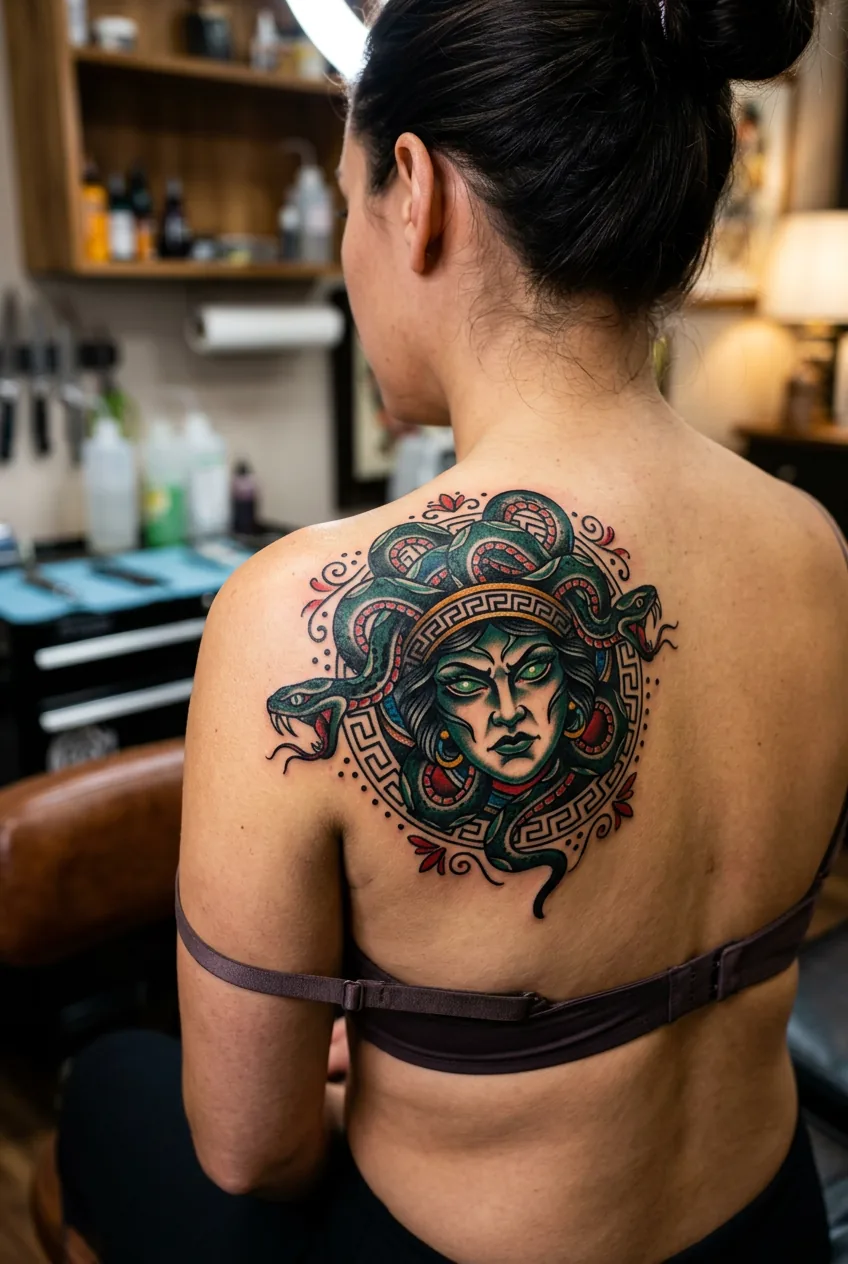
I originally wanted fine line because I thought it looked “classier.” Then I realized I actually wanted people to immediately recognize my Medusa — not squint to figure out what it was. Sometimes we talk ourselves out of what we really want.
Which Style Ages Better on Your Skin Type
Your skin type isn’t just about aging — it affects how different tattoo styles hold up from day one. Fine lines on oily skin tend to spread and blur faster than on dry skin. I learned this the hard way watching my friend’s delicate snake scales turn muddy after just two years.
If you have naturally oily skin or tend to tan frequently, bold traditional lines maintain their crisp edges much longer. The thicker lines have room to spread slightly without losing definition. Skin type research backs this up — bold work simply holds better on most skin types over time.
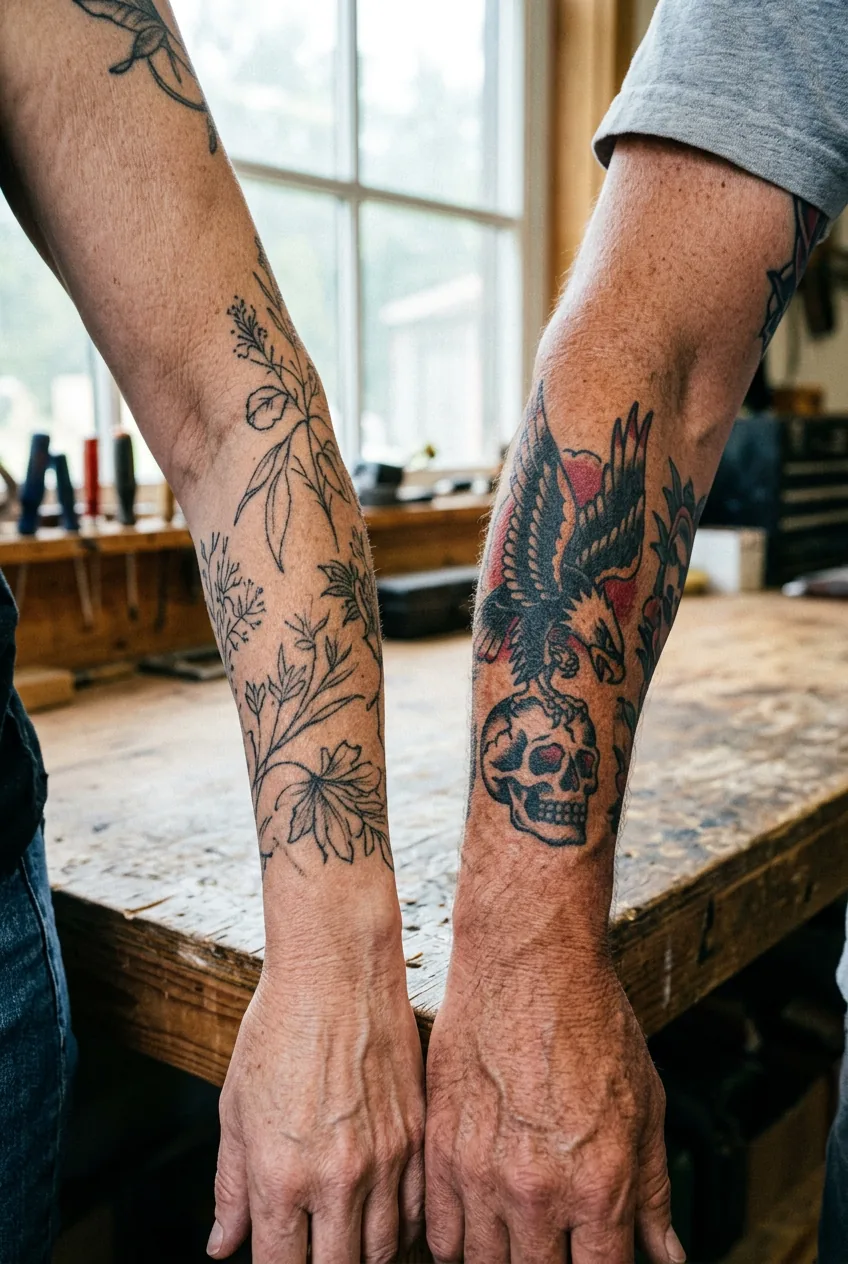
Darker skin tones often showcase bold traditional work beautifully, especially with the right color choices. Fine line work can sometimes lack the contrast needed to pop on deeper skin tones, though a skilled artist can absolutely make it work.
Don’t forget sun exposure in your decision. If your Medusa is going on frequently exposed skin (like your forearm), bold work will maintain its impact longer under UV rays.
Which Works for Your Pain Threshold
Fine line work uses smaller needles and generally involves less time under the machine, but don’t assume it hurts less. Those tiny needles can feel incredibly sharp and precise — some people find this more uncomfortable than broader strokes.
Bold traditional work involves more skin coverage and longer sessions, but the broader needle groupings distribute sensation differently. Plus, you’re done faster — my bold Medusa took one four-hour session versus what would have been multiple sessions for comparable fine line detail.
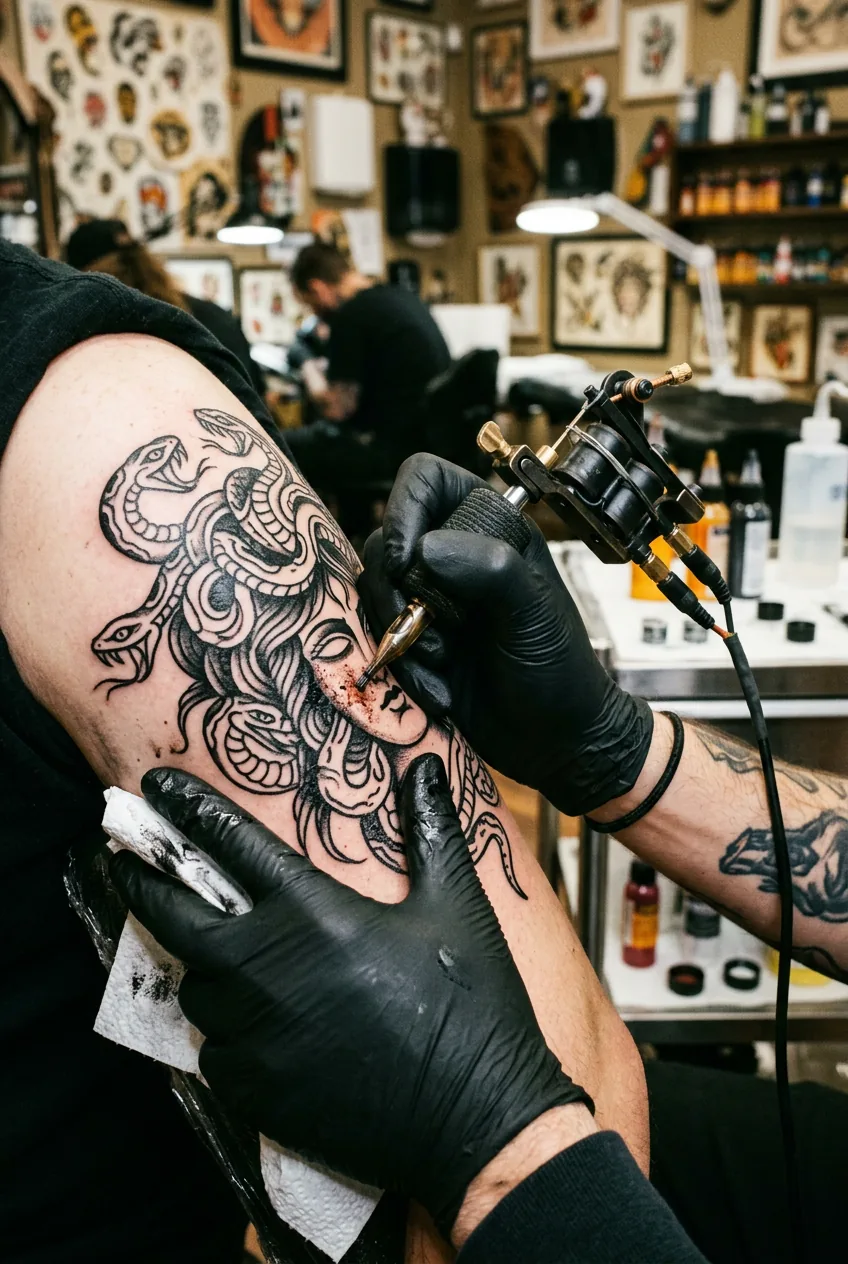
Consider your placement too. Fine line work on bony areas like ribs or ankles can be brutal because every precise needle hit feels amplified. Bold work on the same areas might actually be more manageable.
If you’re needle-shy, bold traditional might be your friend. Get in, get the impact you want, get out. Fine line perfectionism can mean lots of going over the same spots multiple times.
Which Requires a Specialist Artist
Fine line Medusa tattoos demand artists with incredibly steady hands and experience with delicate detail work. Not every talented tattoo artist excels at fine line — it’s genuinely a specialized skill. You’ll probably pay more and wait longer for the right artist.
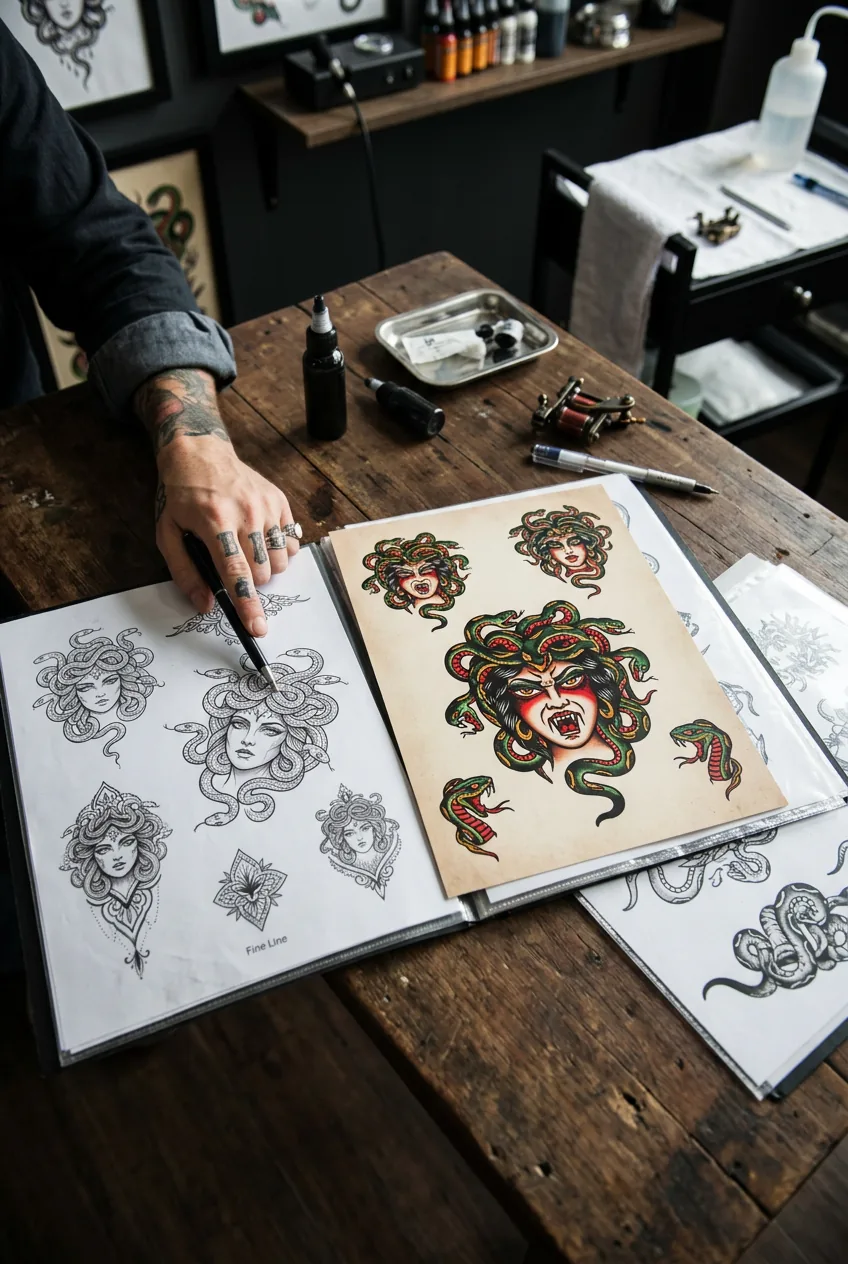
Bold traditional work has more room for slight imperfections, but finding an artist who really understands traditional composition and color theory makes a huge difference. Bad traditional work looks amateur fast, while good traditional work looks timeless.
Check portfolios ruthlessly. Look specifically for healed photos of work similar to your vision. Fine line artists should show you healed work that’s at least 2-3 years old. If they can’t, that’s a red flag.
Geographic location matters more than you think. Fine line specialists tend to cluster in major cities, while solid traditional artists are more evenly distributed. Don’t compromise on artist quality to save travel time — tattoo artists who specialize in your chosen style are worth the trip.
Watch This Artist Explain the Difference
Which Size Works Best for Your Placement
Fine line Medusas can work beautifully small, but there’s a minimum size where the detail becomes illegible. Those intricate snake scales and facial features need adequate space to read properly. I’ve seen too many fine line pieces that looked amazing in the portfolio but cramped on actual skin.
Bold traditional demands more real estate but rewards you with impact at any viewing distance. My shoulder-blade Medusa is about 6 inches tall, and every element still reads clearly. A fine line version would need to be larger to achieve the same visual clarity.
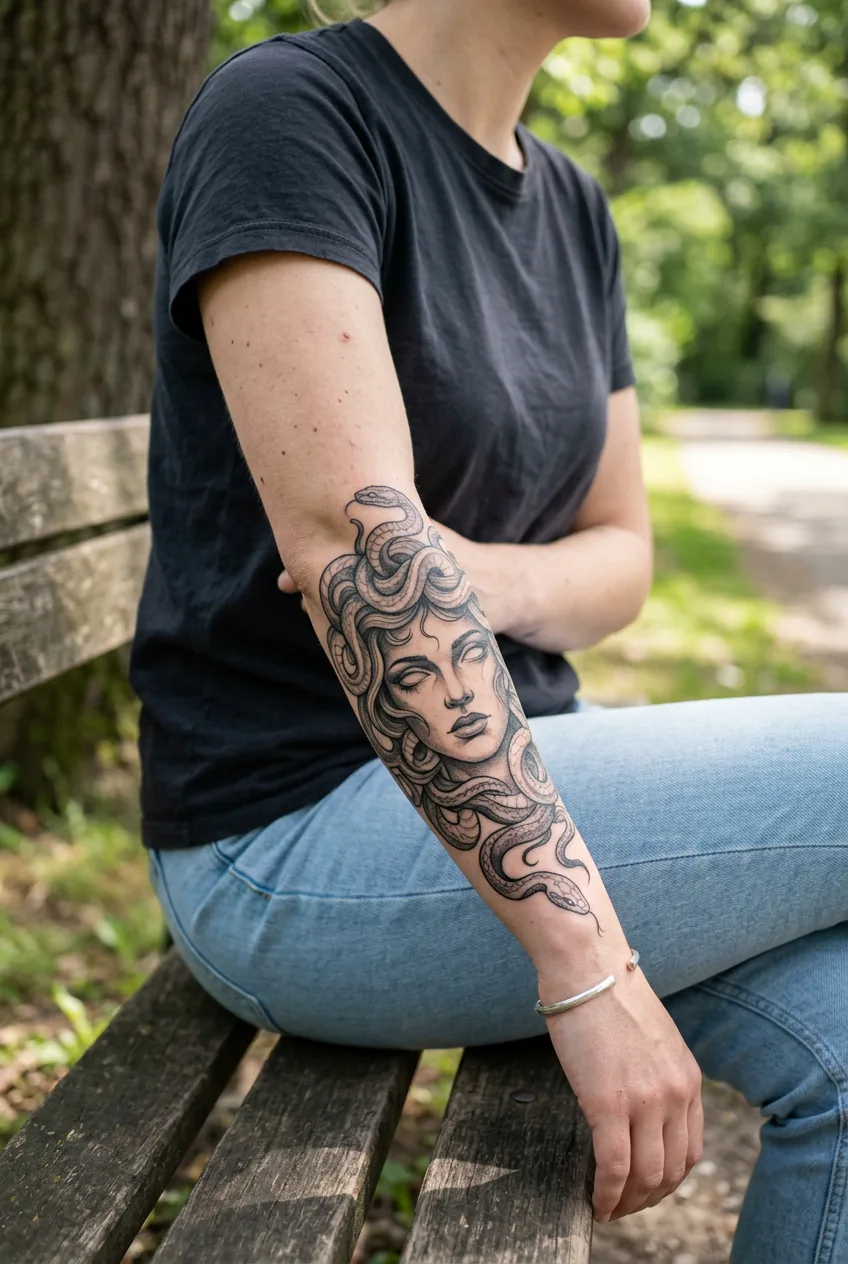
Think about your canvas realistically. Got a narrow forearm? Bold traditional might overwhelm the space. Planning a large back piece? Fine line details might get lost in the expanse unless you go bigger than expected.
Consider how the style interacts with your body’s natural curves and movement. Bold lines follow body contours more forgivingly, while fine line work can look broken or disconnected if placed poorly across muscle groups.
Which One Will You Still Love in 20 Years
This is the question that sealed my decision. Fine line trends come and go — remember when everyone wanted watercolor tattoos? Bold traditional has staying power because it’s rooted in decades of proven tattoo technique.
But personal style matters more than trends. If you gravitate toward minimalist tattoo designs in all areas of your life, fine line probably aligns with your aesthetic long-term. If you love vintage fashion, bold jewelry, and dramatic makeup, traditional bold work will likely age well with your evolving style.
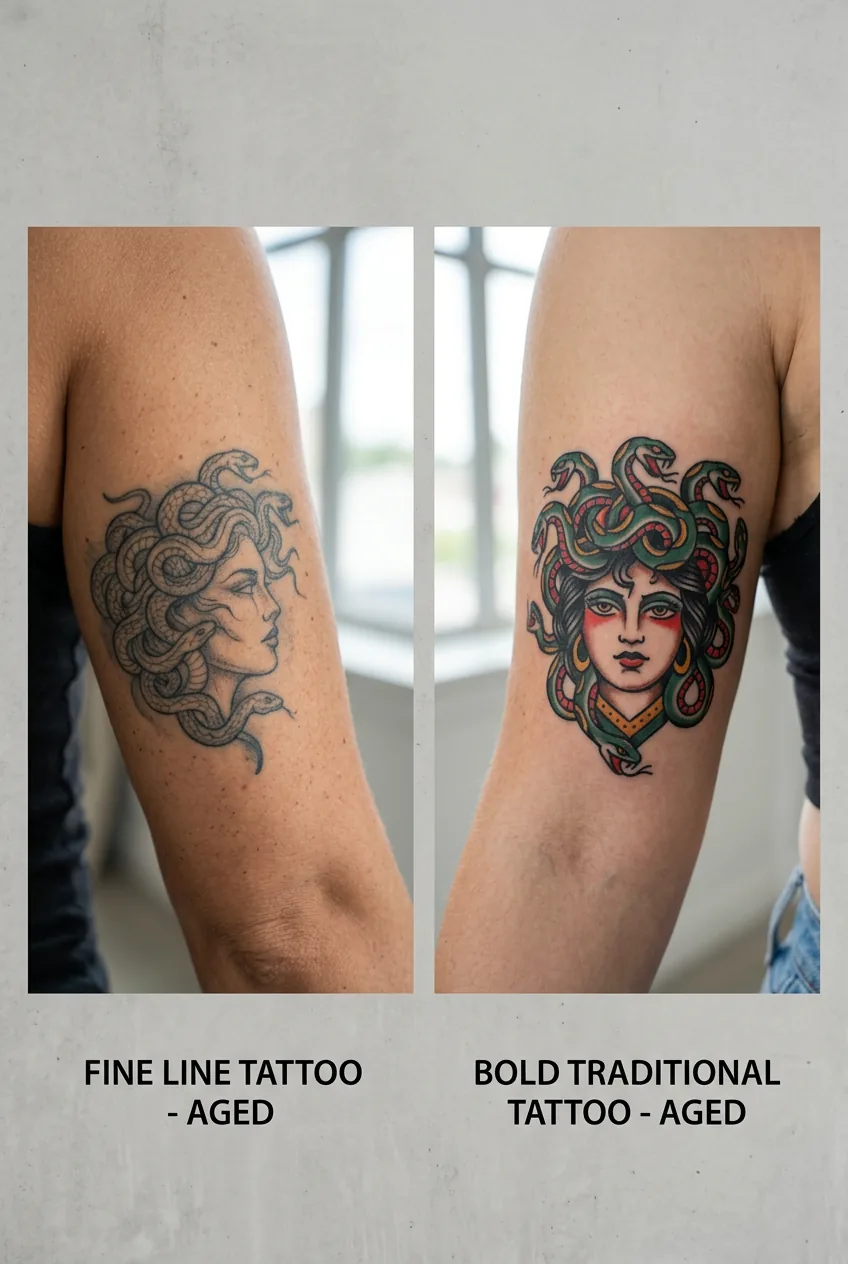
Consider your lifestyle trajectory too. Fine line work often requires more careful aftercare and touch-ups over time. Bold work is generally more low-maintenance as it ages, which appealed to my practical side.
Ask yourself: do you want a tattoo that whispers or one that declares? Neither is wrong, but knowing your answer makes the style choice obvious.
My bold Medusa still gives me that little thrill of satisfaction every time I catch it in a mirror. She’s powerful, clear, and exactly the energy I wanted to carry with me. The decision framework helped me stop second-guessing and commit to what felt authentically me.