



I spent six months researching spine tattoos before I even walked into my first consultation. Six months of scrolling through Instagram, reading forums, and talking to anyone who’d listen about their experience. But here’s what bothers me — nobody talks about the real stuff. The uncomfortable truths that make the difference between loving your tattoo and regretting it.
The Pain Reality Nobody Mentions
Let’s start with what everyone wants to know but is afraid to ask. Yes, spine tattoos hurt. But it’s not the sharp, stabbing pain you might expect. It’s this deep, resonant ache that seems to vibrate through your entire torso.
I’ve talked to dozens of women about their spine tattoo experience, and here’s what they all agreed on: the pain comes in waves. You’ll have moments where you think “this isn’t so bad” followed immediately by sections that make you question your life choices. The spots right over your vertebrae? Those are the killers.
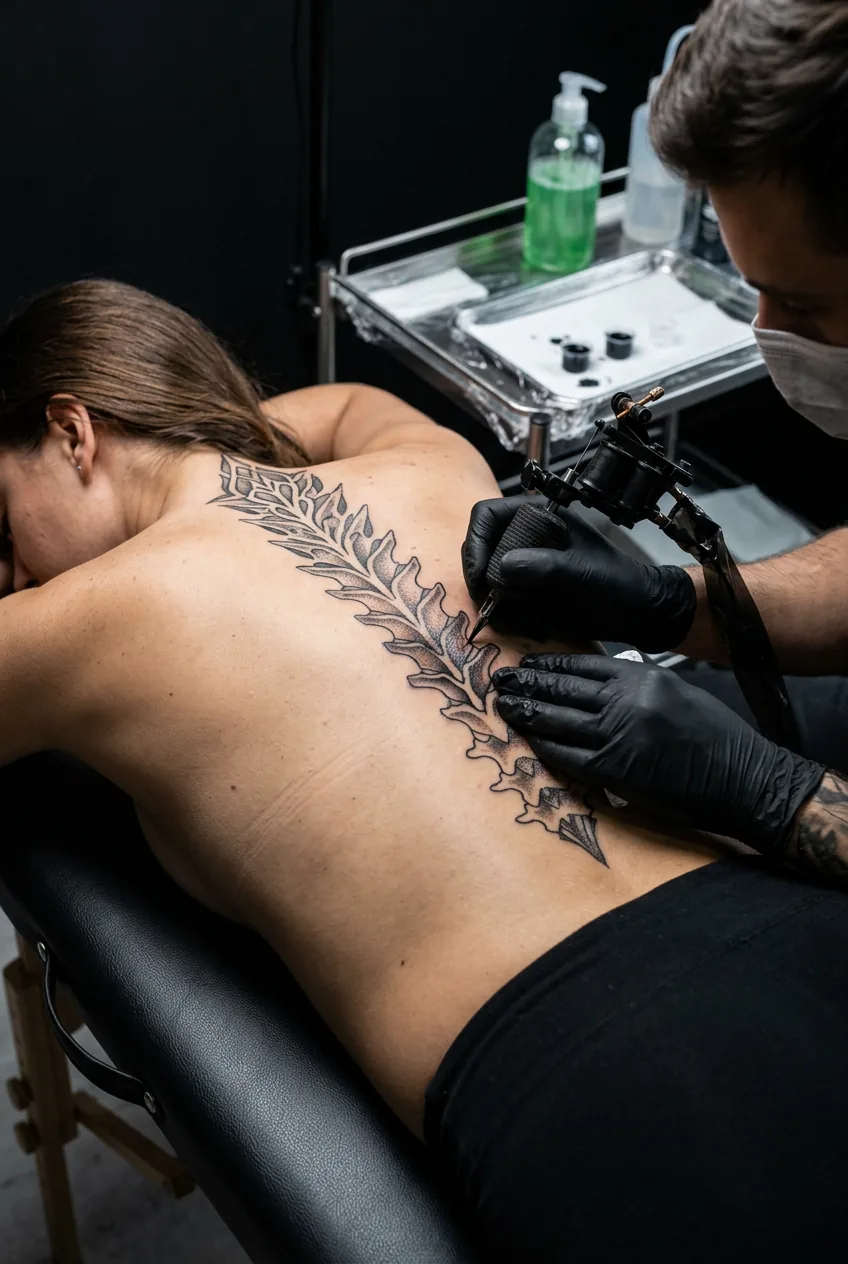
But here’s the part nobody warns you about — your body position during the session matters more than anything else. Most artists will have you lying on your stomach for hours. Your neck gets cramped, your arms fall asleep, and by hour three, the discomfort from your position might be worse than the actual tattooing.
I learned this the hard way during my consultation when the artist had me lie down “just to see how the design looked.” After fifteen minutes, I was already uncomfortable. That’s when I knew I needed to find someone with a table that could adjust, and I needed to plan for frequent position breaks.
The other thing about spine tattoo pain? It’s cumulative. Hour one feels manageable. Hour four feels like your nervous system is staging a revolt. Plan accordingly.
Why Most Artists Won’t Tell You the Truth
This is going to sound harsh, but most tattoo artists won’t give you the full reality check about spine tattoos. And I get it — they’re running a business. But after interviewing more than twenty artists about spine work, I’ve noticed some patterns in what they don’t say upfront.
First, many artists actually don’t love doing spine tattoos. The positioning is awkward for them too. They’re hunched over at weird angles for hours, and the spine’s natural curves make it challenging to get clean, consistent lines. But they’re not going to turn down a several-hundred-dollar job.
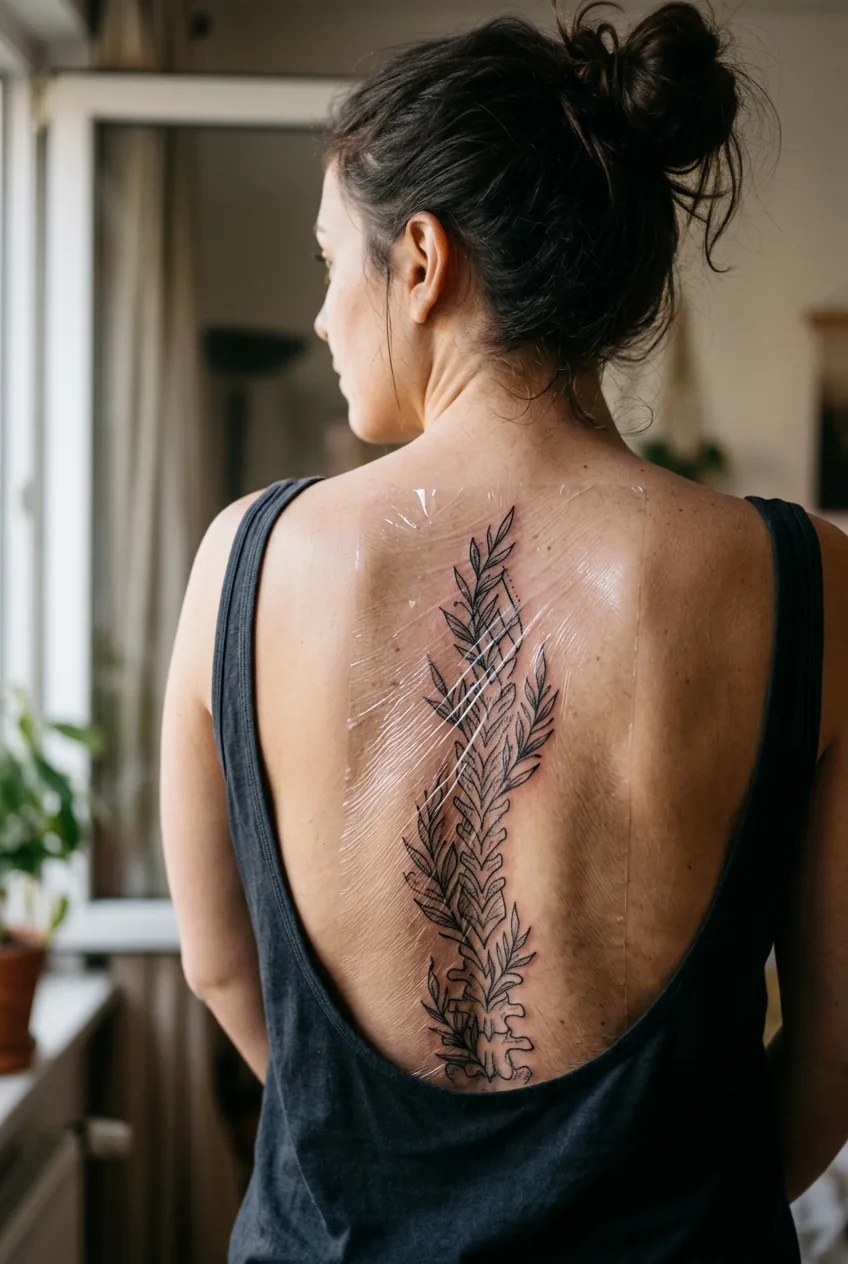
Second, spine tattoos are notorious for healing unevenly. The skin moves differently along your spine — some areas stretch when you bend, others compress. This can lead to patchy healing or lines that look slightly off once everything settles. A good artist knows this and will plan for it. A mediocre artist just hopes for the best.
Here’s my controversial opinion: if an artist doesn’t ask you detailed questions about your lifestyle, how much you move during the day, whether you do yoga or heavy lifting, they’re not taking your spine tattoo seriously. Proper aftercare is crucial, and it needs to be personalized to how your body actually functions.
The artists who do amazing spine work? They’ll spend twenty minutes just talking through positioning options, discuss break schedules, and show you healed photos of similar designs on other clients. They’re not trying to scare you off — they want you to love the finished product.
The Healing Process Is Different Down There
Nobody prepared me for how weird spine tattoo healing would be. Your back moves constantly — when you sit up, lie down, reach for something, even when you breathe deeply. All of that movement affects how the tattoo heals.
The first few days were the strangest. I couldn’t lean back in chairs normally. Sleeping became this strategic game of finding positions that didn’t pull at the fresh ink. And don’t get me started on trying to wash my hair without water running down my spine.
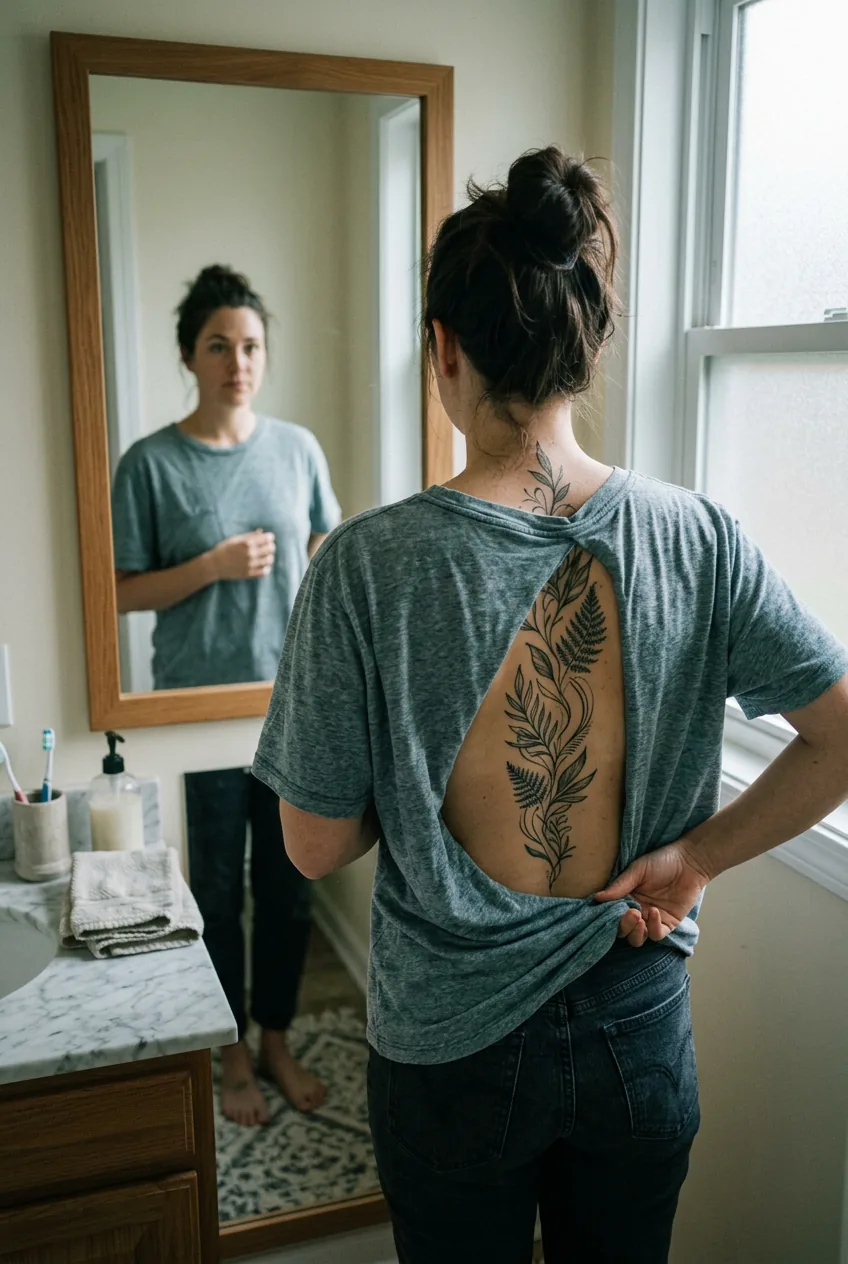
But here’s what really surprised me — the healing timeline is longer than other tattoo locations. While my arm tattoos were pretty much healed in two weeks, my spine piece took almost a month to stop feeling tender. The skin along your spine is different. It’s thinner in some spots, thicker in others, and it’s constantly moving.
I also discovered that clothing choices during healing are crucial. Tight bras were out. Anything with a scratchy tag was torture. I basically lived in soft, loose cotton shirts for three weeks. If you’re planning a spine tattoo, stock up on comfortable clothing beforehand.
The peeling phase was particularly dramatic too. When spine tattoos peel, they really peel. Like, chunks of skin that look alarming but are totally normal. I wish someone had warned me about that part.
Design Choices That Actually Matter
Not all designs work well on spines. This seems obvious, but you’d be amazed how many people try to force designs that just won’t translate well to that long, narrow canvas.
Vertical designs are the obvious choice, but they come with their own challenges. Your spine isn’t perfectly straight. It curves. A design that looks perfect on paper can look wonky once it follows your natural spinal curve. Good artists know how to adjust for this. Average artists… don’t.
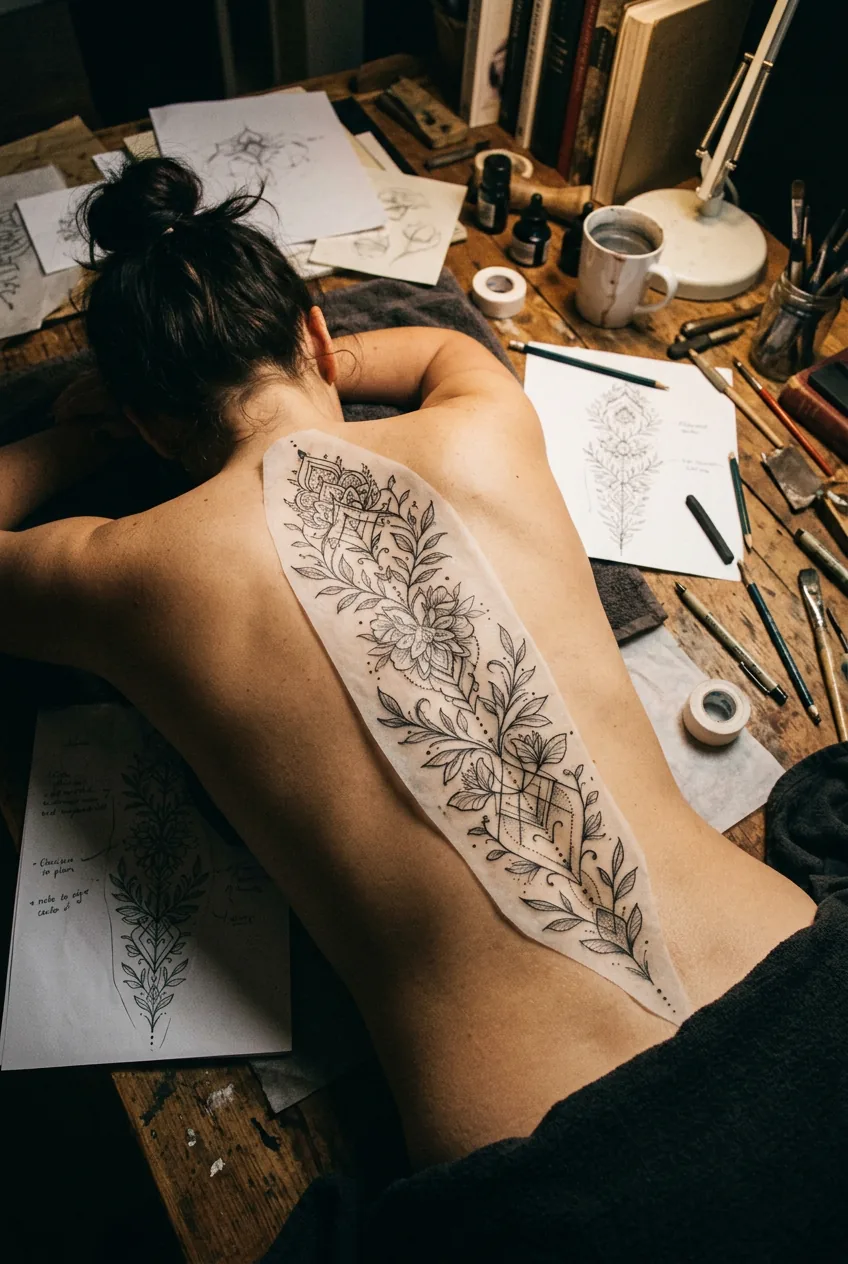
I’m personally obsessed with designs that incorporate the spine’s natural segmentation. Pieces that flow with your vertebrae rather than fighting against them. Think botanical designs where stems can follow your spine’s curve, or geometric patterns that use the vertebrae as natural breaking points.
Script along the spine looks elegant in photos but can be problematic in reality. Letters need to be large enough to remain readable as they follow the spine’s curve. I’ve seen too many spine tattoos where beautiful calligraphy turned into an unreadable mess because the artist didn’t account for the curvature.
And here’s something I learned from talking to women with dragon tattoos — designs with a lot of fine detail can get muddy on the spine over time. The skin movement I mentioned earlier? It gradually affects how crisp those tiny details stay. Bold, well-spaced design elements age much better.
Color choices matter too. The spine doesn’t hold certain colors as well as other body parts. Pastels and light colors often look washed out against spine skin, while deeper, more saturated colors tend to pop better and age more gracefully.
Watch This Artist Explain Design Flow
Finding an Artist Who Gets It
This is where I’m going to get really specific, because finding the right artist for spine work is different from finding someone for arm or leg tattoos. You need someone who truly understands the unique challenges of this placement.
When I was researching artists, I created a list of questions that helped me separate the spine specialists from the generalists. First question: “Can you show me healed photos of spine tattoos you’ve done?” Not fresh photos — healed photos. If they can’t or won’t show you healed work, that’s a red flag.
Second question: “How do you adjust your technique for spine work?” The right answer involves discussion of needle depth, machine settings, and positioning strategies. If they shrug and say “it’s the same as anywhere else,” keep looking.
I also asked about their setup. Do they have an adjustable table? Can they work from different angles? How do they handle long sessions? The best spine tattoo artists I spoke with had clearly thought through the logistics.
Here’s something I noticed — the artists who really excelled at spine work often specialized in larger pieces or had backgrounds in places where precision matters. Female artists often had particularly good insights about the unique considerations for women getting spine tattoos.
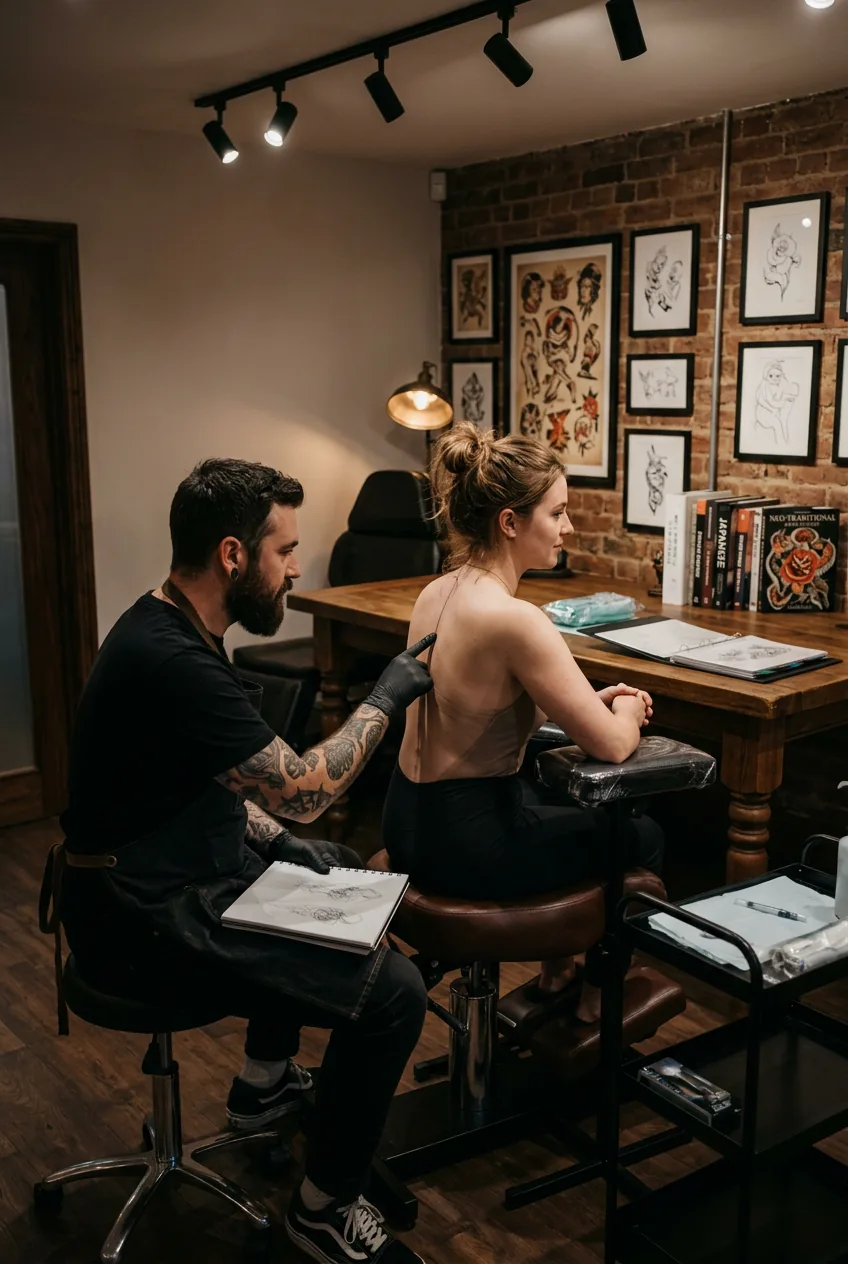
Don’t be afraid to ask for a brief consultation session where you just lie in position for fifteen minutes. Any artist confident in their spine work will be happy to do this. It helps you both — you get a feel for the positioning, and they can assess how your specific body shape will affect the design placement.
Long-Term Reality Check
Let’s talk about living with a spine tattoo beyond the first few months. Because this is where the Instagram fantasy meets real-life practicality, and nobody really discusses it honestly.
First, the visibility factor. Spine tattoos are simultaneously the most private and most revealing tattoos you can get. Most of the time, nobody sees them. But when they’re visible — low-back shirts, swimwear, formal dresses — they make a statement. You need to be comfortable with that duality.

I learned this during my first summer with my healed spine piece. Certain tops that I’d worn for years suddenly felt different. Not bad different, just… intentional different. You become more conscious of your back, which isn’t necessarily a negative thing, but it’s something to consider.
The aging reality is also something worth discussing. Spine tattoos generally age well because that area doesn’t see much sun exposure, and the skin doesn’t stretch as dramatically as other body parts. But they do change. Fine lines soften, colors settle, and the overall look becomes more integrated with your skin over time.
Maintenance is easier than you might expect. Touch-ups are less common with spine pieces compared to hand or finger tattoos. But when you do need maintenance, finding someone who can match the original work perfectly becomes important. This is another reason why choosing your original artist carefully matters so much.
And here’s my most honest take — spine tattoos require a different kind of confidence than other tattoo placements. They’re not casual. They’re not something you can easily cover or forget about. When people see your spine tattoo, it’s often in intimate or vulnerable moments. You’re literally showing your backbone, which feels symbolic in a way that my arm tattoos never have.
But for the right person, with the right design, done by the right artist? Spine tattoos can be absolutely transformative. They’re powerful, elegant, and deeply personal in ways that other placements just aren’t.
Just go in with your eyes wide open. Do your research. Ask the hard questions. And don’t let anyone — artist or friend — rush you into a decision this permanent and this personal.