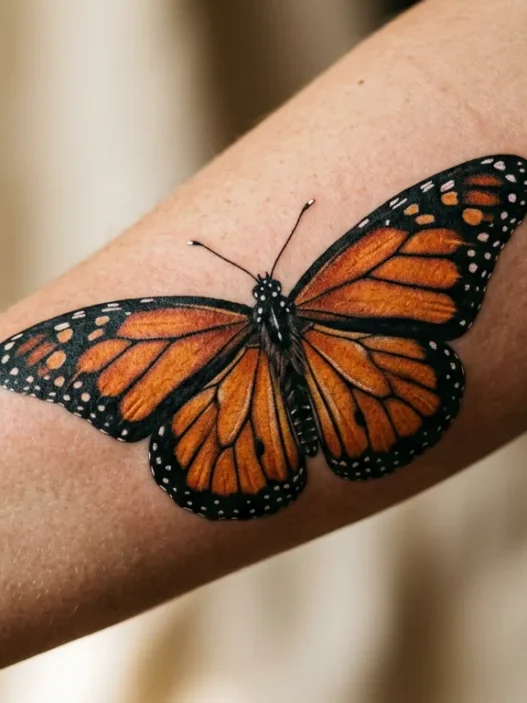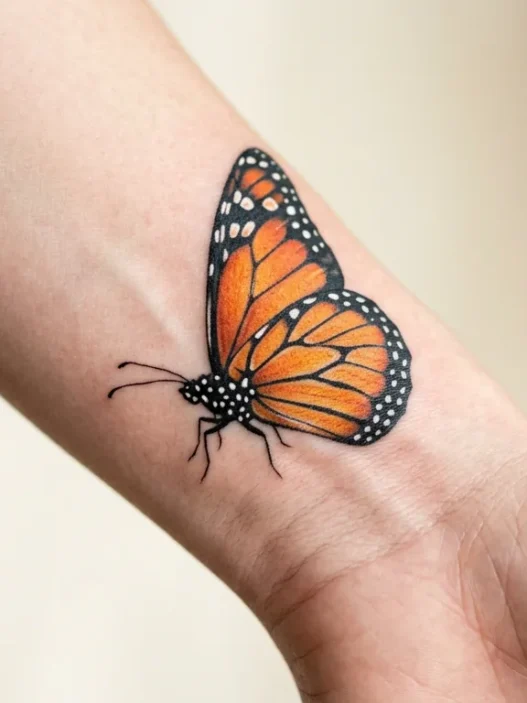




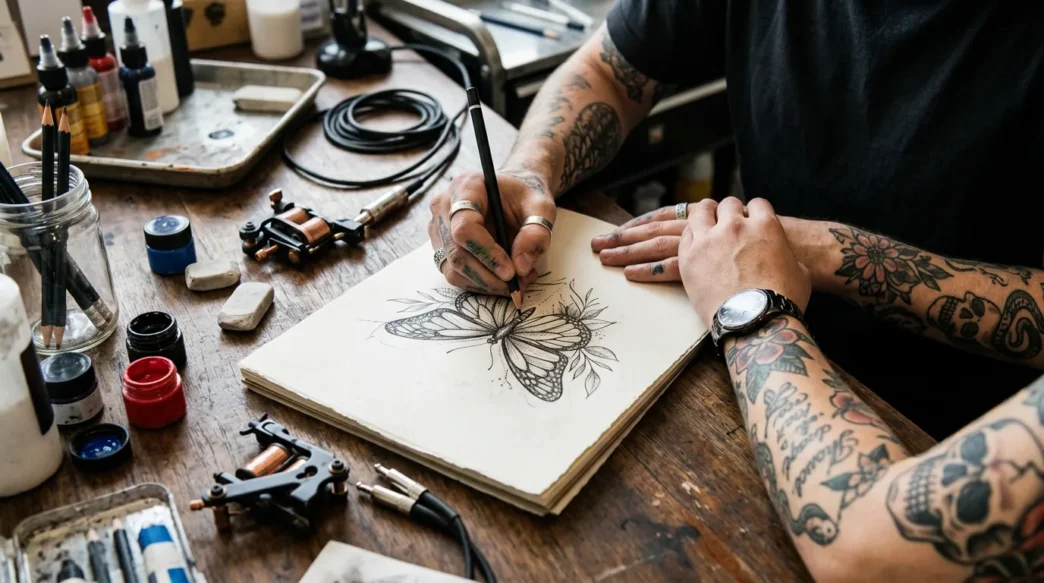
I’d been collecting butterfly images for three years before I finally got my tattoo. Three years of screenshots, Pinterest boards, and that one photo I kept coming back to. But it wasn’t until I understood what I was actually looking for that everything clicked into place.

The Collection That Started Everything
My butterfly obsession started innocently enough. A friend showed me her delicate monarch on her shoulder blade, and something just clicked. But I didn’t want to copy her exactly — I wanted something that felt completely mine.
I started saving everything. Realistic monarchs, geometric interpretations, watercolor styles, tiny minimalist tattoo ideas that barely looked like butterflies at all. My phone gallery became this weird collection of wings and colors and completely different artistic approaches.
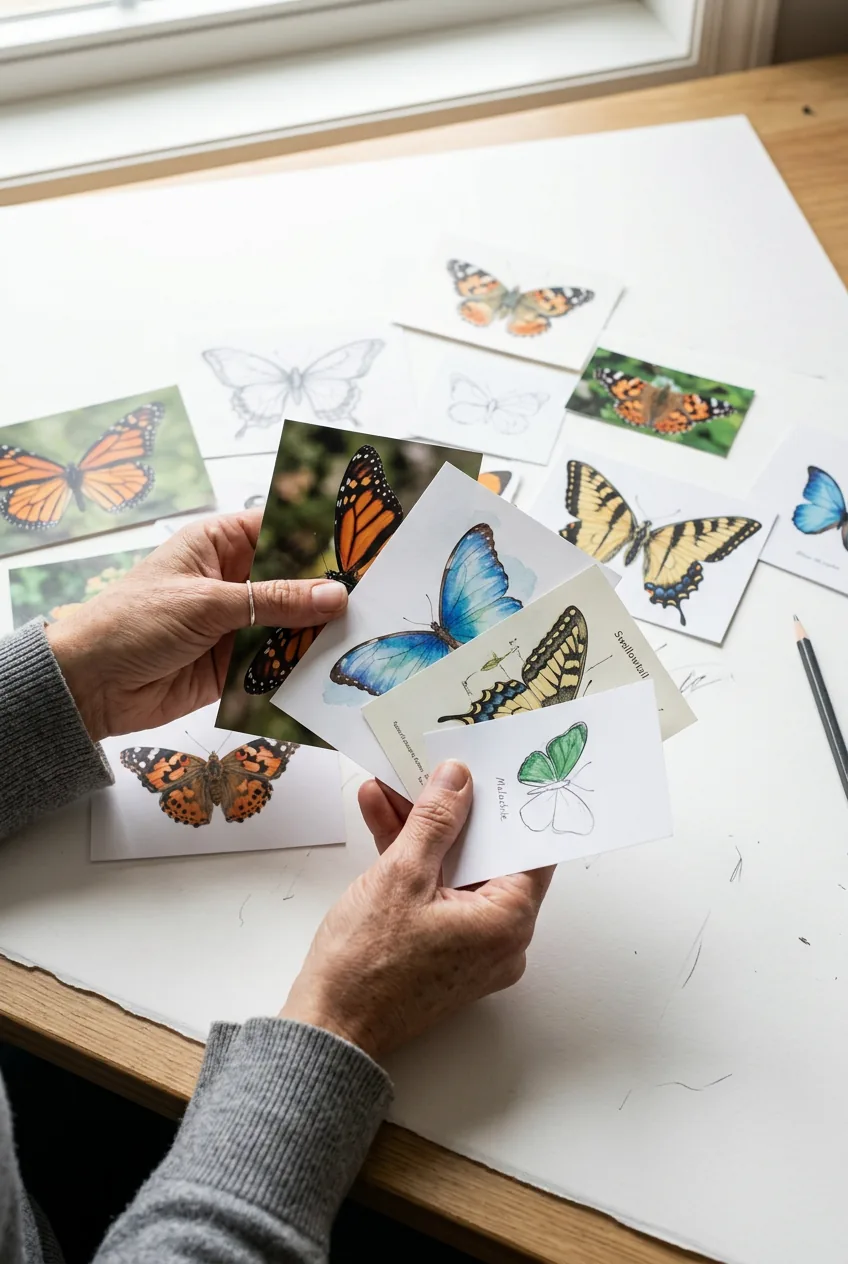
The problem with collecting so many references? I got completely overwhelmed. Every style looked beautiful on someone else, but I couldn’t picture any of them on me. I needed to get clearer about what I actually wanted before I could move forward.
What helped me narrow it down was thinking about why I wanted a butterfly in the first place. For me, it wasn’t about transformation or rebirth — all those deep meanings people talk about. I just loved how they moved. That lightness. The way they land somewhere for a second and then disappear.
Finding an Artist Who Actually Gets Butterflies
This part took forever. I looked at probably fifty different artists’ portfolios before I found Maya. Most tattoo artists are amazing at what they do, but not everyone understands how to make a butterfly feel alive on skin.
The thing about butterflies is they’re not supposed to look heavy or static. Too much black outline and they look like stickers. Too little definition and they look like blobs. Maya’s portfolio showed butterflies that actually looked like they might fly away.
When I finally messaged her, I sent about ten of my favorite references and asked if she could do something in that general direction. Her response changed everything: “I love doing butterflies because every person wants theirs to feel different. Can we set up a consultation to talk about what yours should feel like?”
The biggest mistake I made was waiting so long to actually talk to an artist. I spent months overthinking online portfolios when a 20-minute conversation told me everything I needed to know about whether we’d work well together.
During our consultation, Maya asked questions I hadn’t thought about. Did I want it to look like it was landing or taking off? What time of day did I picture it? Summer or spring butterfly? These weren’t just artistic choices — they were about capturing a specific feeling.
The Placement That Changed My Mind
I walked into that consultation convinced I wanted it on my shoulder blade. Classic spot, right? But Maya had me stand in front of her mirror and actually look at how my shoulder moved when I reached for things or turned around.
“The butterfly’s going to stretch and compress every time you move your arm,” she said. “That might be exactly what you want — like it’s really alive. Or it might drive you crazy.”
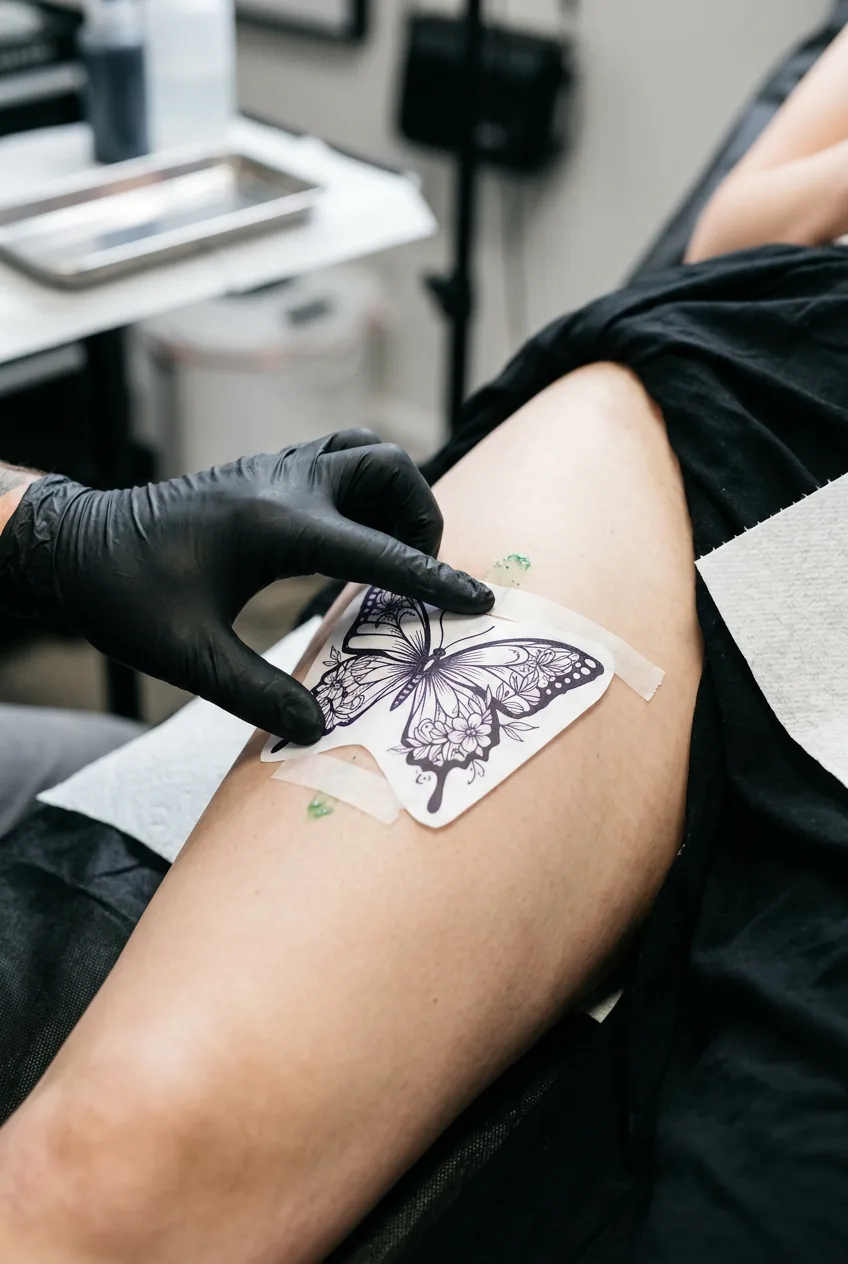
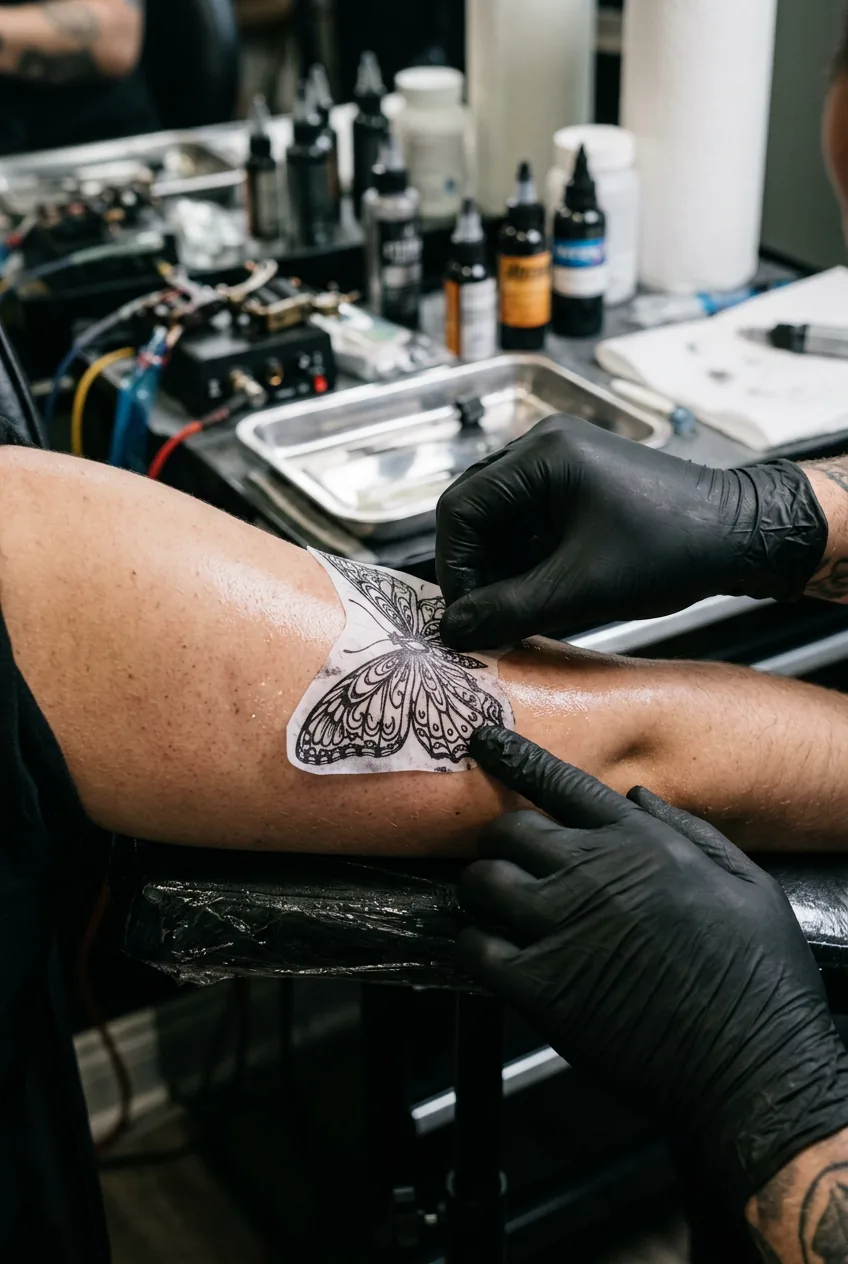
We tried a few different placements using temporary transfer paper. The shoulder blade looked beautiful when I was standing still, but Maya was right — it distorted with movement. The spot that surprised me was my outer thigh. Perfect placement for a back tattoo involves similar considerations about how the body moves and changes.
On my thigh, the butterfly looked like it had just landed. It stayed proportional when I walked, but there was this subtle shift in how the wings caught light when I moved. Maya called it “the most natural butterfly placement” she’d ever done, and I could see what she meant.
The Reference Session I Almost Skipped
Maya wanted to schedule a separate session just to finalize the design. Honestly, I almost said no — it felt like overkill when we’d already talked through everything. But she insisted, and I’m so glad I listened.
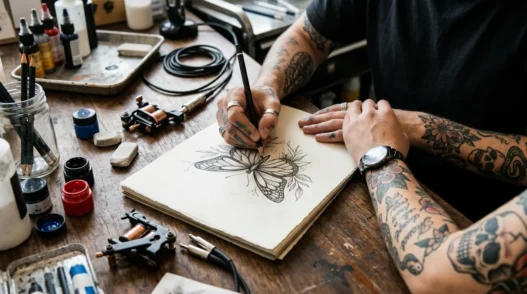
She had me bring in all my reference photos again, but this time we spread them out and she started sketching live while we talked. Not the final design — just quick studies of different wing shapes, different ways the body could curve, different levels of detail in the markings.
What I realized during that session is that I’d been thinking about my tattoo as choosing from existing options. But Maya was showing me how to create something completely new that captured exactly what I loved about all those reference images.
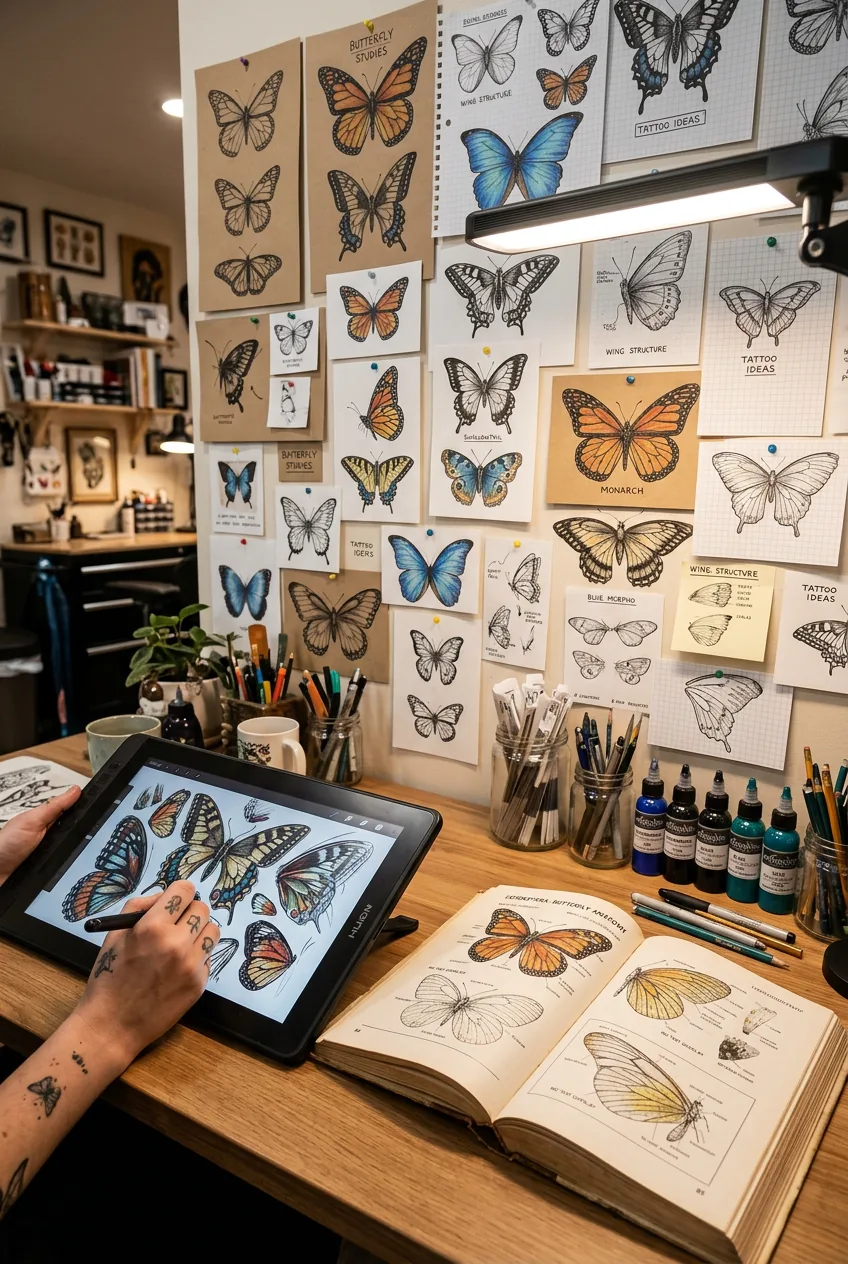
The breakthrough moment was when she sketched a wing that was part monarch, part swallowtail. It shouldn’t have worked, but it looked more “butterfly” to me than any pure species I’d seen. Wing anatomy references helped her get the proportions exactly right.
By the end of that session, we had a design that felt like it had always existed in my head, even though I’d never seen anything like it before. That’s when I knew we were ready for the real thing.
The Day Everything Came Together
I showed up to my appointment with a folder of references, but Maya barely looked at them. She had our custom design printed and ready to transfer, and seeing it on transfer paper for the first time made my stomach flip in the best way.
The positioning took forever, and I loved that Maya was just as picky about it as I was. We adjusted the angle three different times until the butterfly looked like it was naturally resting on my thigh, not just stuck there.
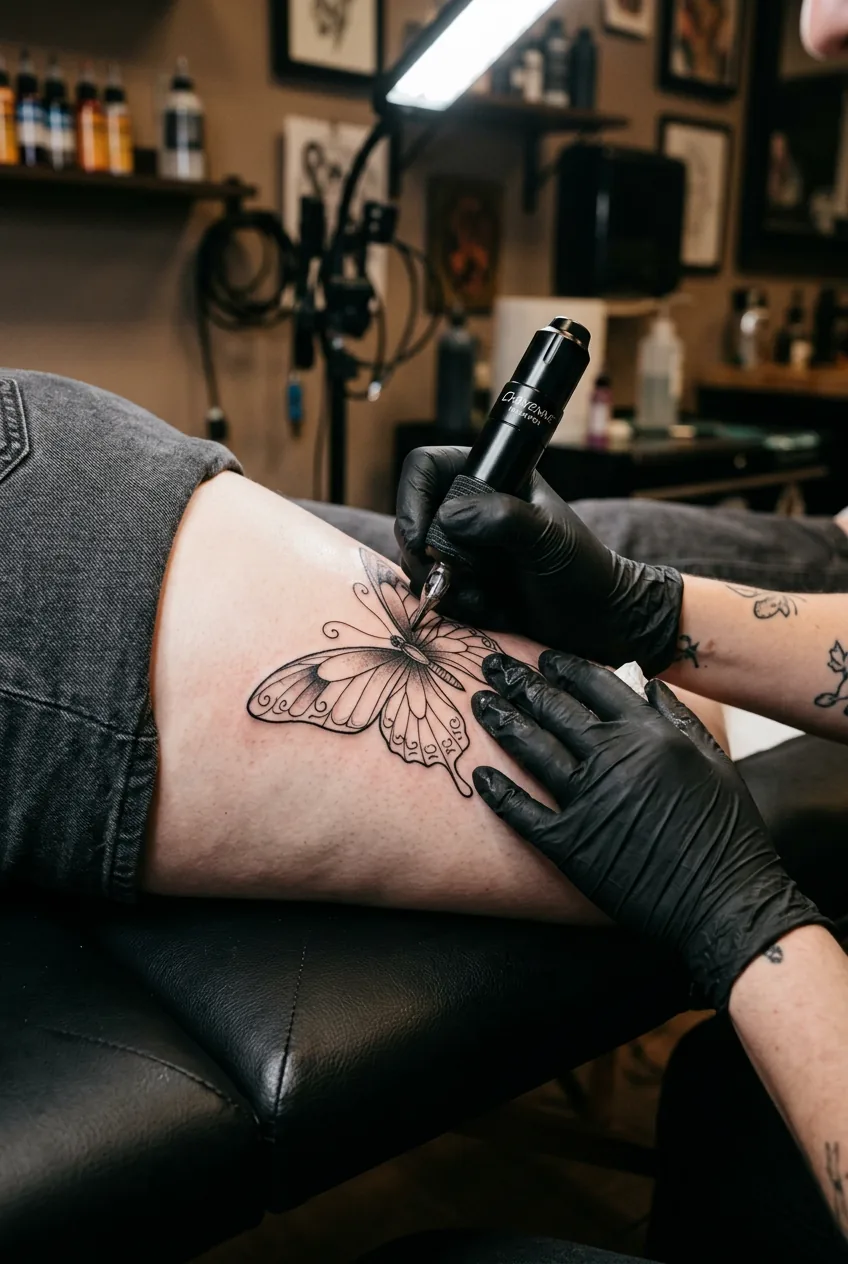
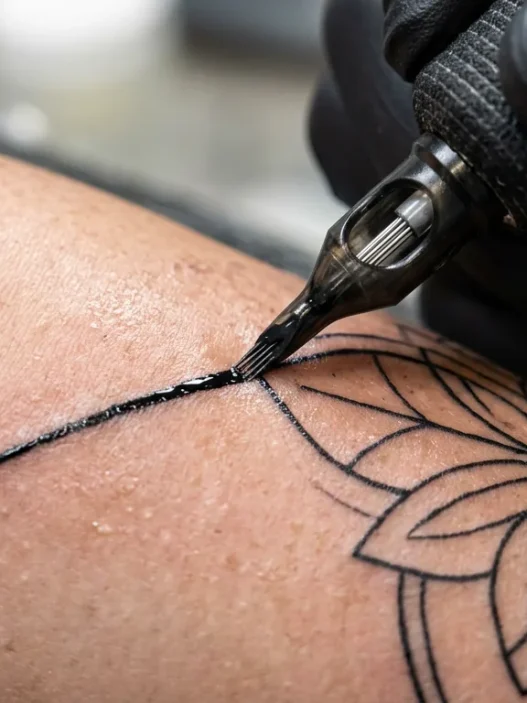
The actual tattooing was nothing like I expected. Maya worked in sections — outline first, then filled in the body, then each wing separately. I could watch the butterfly come alive piece by piece. The moment she added the tiny details to the wing patterns was when it went from “drawing on my leg” to “actual butterfly.”
What surprised me most was how different it looked at each stage. The outline looked bold and graphic. The filled body made it look more realistic. But when she added the subtle shading to the wings — that’s when the magic happened.
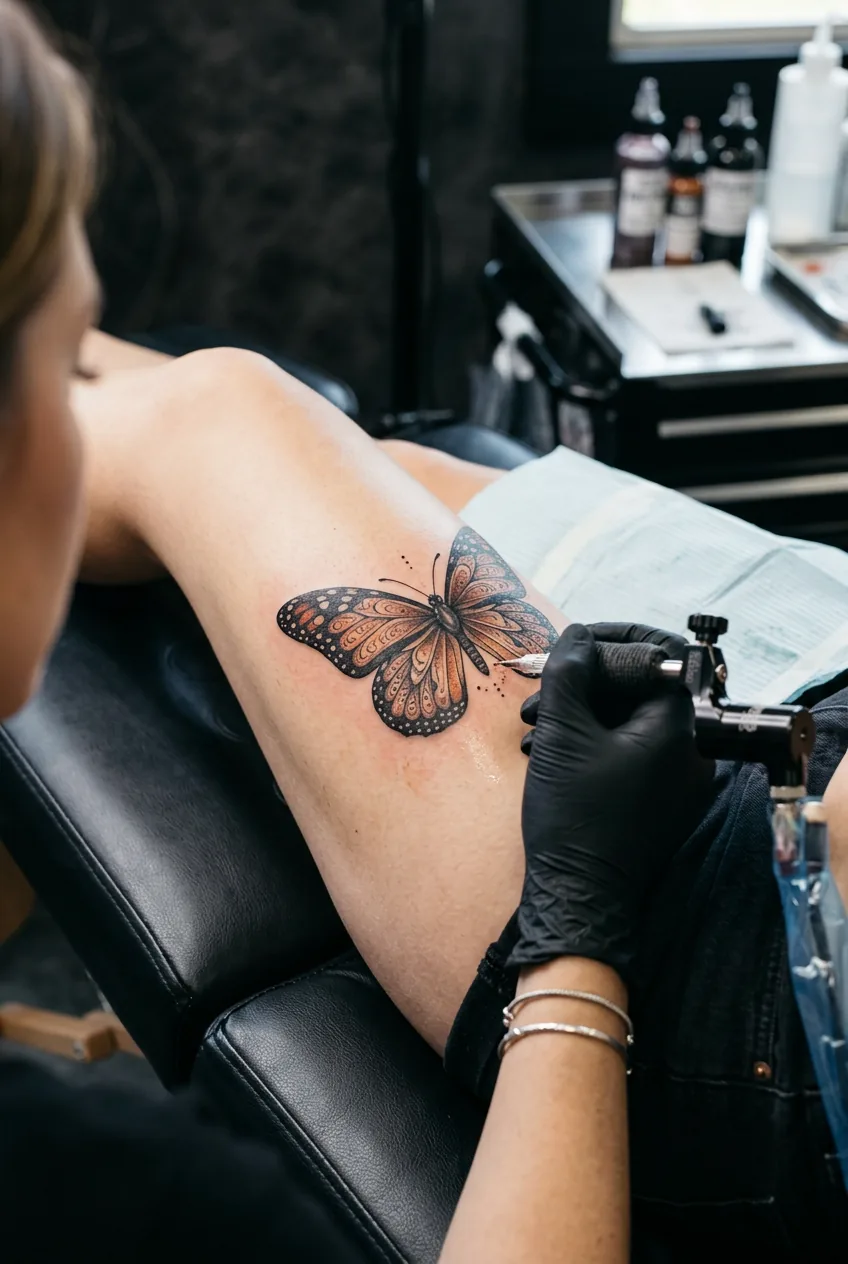
Maya kept checking in about the pain level, but honestly, I was too fascinated watching her work to pay much attention to discomfort. She had this way of rotating the needle that made the wing markings look like they had actual texture.
Watch the Magic Happen
What I Wish I’d Known About Healing
The healing process was way more interesting than I expected, and there were a few things that caught me completely off guard. The butterfly looked different every single day for about two weeks.
Day one, it looked bold and slightly raised. Day three, it started peeling and looked terrible — I panicked and texted Maya, who reminded me that was totally normal. By week two, when the peeling was done, the colors had settled into exactly what we’d planned.
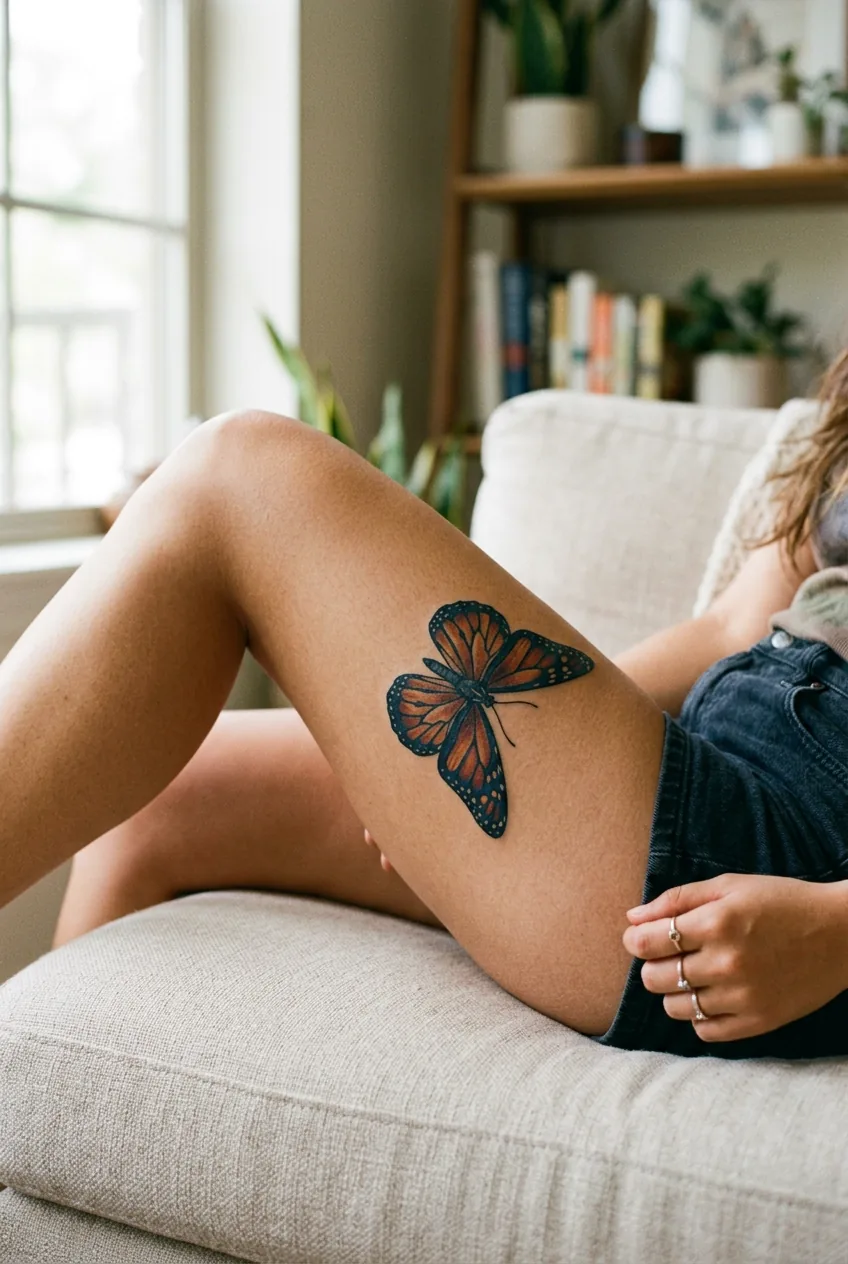
The thing nobody tells you is how the colors deepen as it heals. My butterfly’s wings went from looking flat to having this subtle dimension that I couldn’t see right after getting it done. Proper healing techniques made all the difference in how the final colors turned out.
Six months later, I still catch myself looking down and being surprised it’s there. Not because I forgot about it, but because it looks so natural that my brain processes it as just part of me now.
The best part? Every time I wear shorts or a dress, someone asks about it, and I get to tell them about Maya and her incredible eye for making butterflies that look alive. That three-year collection phase was worth every Pinterest save.
Questions I Get About This
How long did the whole process take from consultation to healed tattoo?
About six weeks total. Two weeks between consultation and design session, another two weeks to schedule the actual appointment, then two weeks for healing. Maya doesn’t rush anything, which I appreciated.
Did the thigh placement hurt more than you expected?
Actually less than I expected. The outer thigh has good muscle padding, so it was more like a persistent scratching feeling than sharp pain. The most tender spot was right where the wing tip curves near my hip bone.
Would you change anything about the design now?
Honestly, no. Having that reference session where we created something completely custom means it still feels exactly right. I see other beautiful butterfly tattoos and appreciate them, but mine feels like it was always supposed to be there.
How do you handle touch-ups or maintenance?
Maya offers free touch-ups for the first year, but I haven’t needed any yet. I use SPF religiously when it’s exposed to sun, and the colors are holding perfectly. The fine line work still looks as crisp as day one.