




I almost booked the wrong artist for my forearm dotwork piece. The portfolio looked incredible — stunning geometric mandalas, perfect gradients, crisp dot clusters. But something my friend said stopped me: “Did you see any healed shots?” I hadn’t even thought to look. That one question sent me down a rabbit hole of research that completely changed how I evaluate tattoo artists, and honestly, I think every woman considering a dotwork tattoo needs to know this process before they ever hit the DM button.
Healed Photos First (Always)
Fresh tattoos are liars. I mean that in the kindest possible way — they’re literally swollen, the ink is sitting high in the skin, the contrast is at its absolute peak. A mediocre artist can produce a fresh tattoo photo that looks magazine-worthy. The real question is: what does that work look like six months later?
For dotwork specifically, healed photos are non-negotiable. The entire technique relies on thousands of individual dots holding their shape and spacing over time. Dots spread. They blur into each other. Gradients that looked ethereal when fresh can turn muddy and grey-green within a year. If an artist’s portfolio has zero healed shots — or worse, only one or two that suspiciously always look like the same piece — that’s your first warning sign.
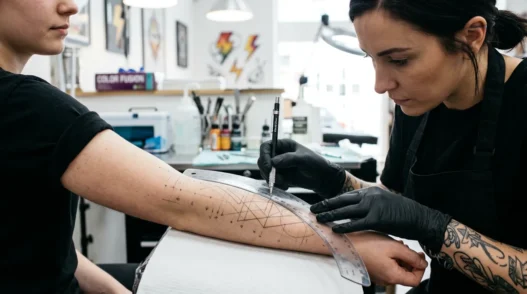
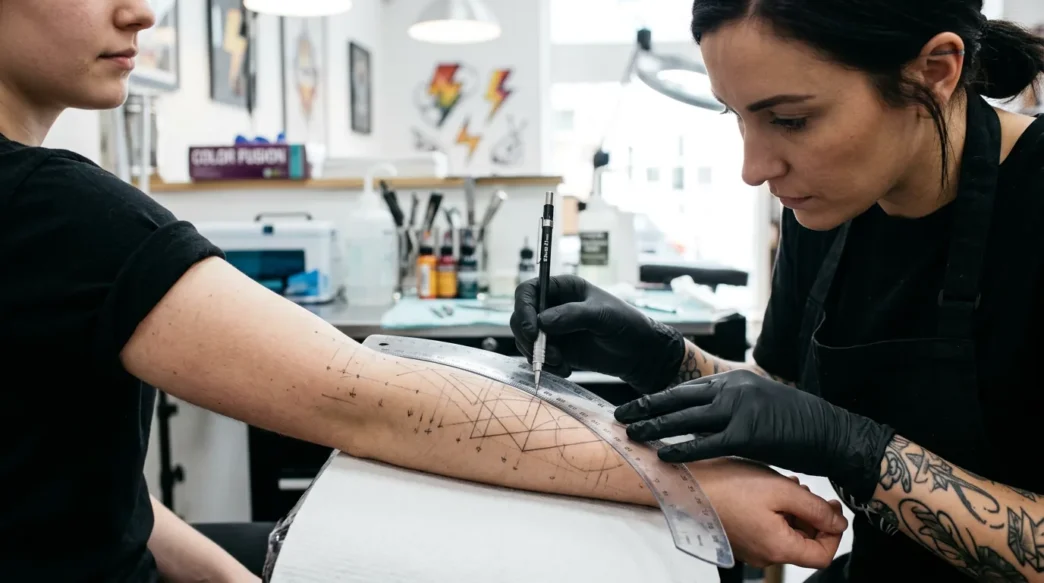
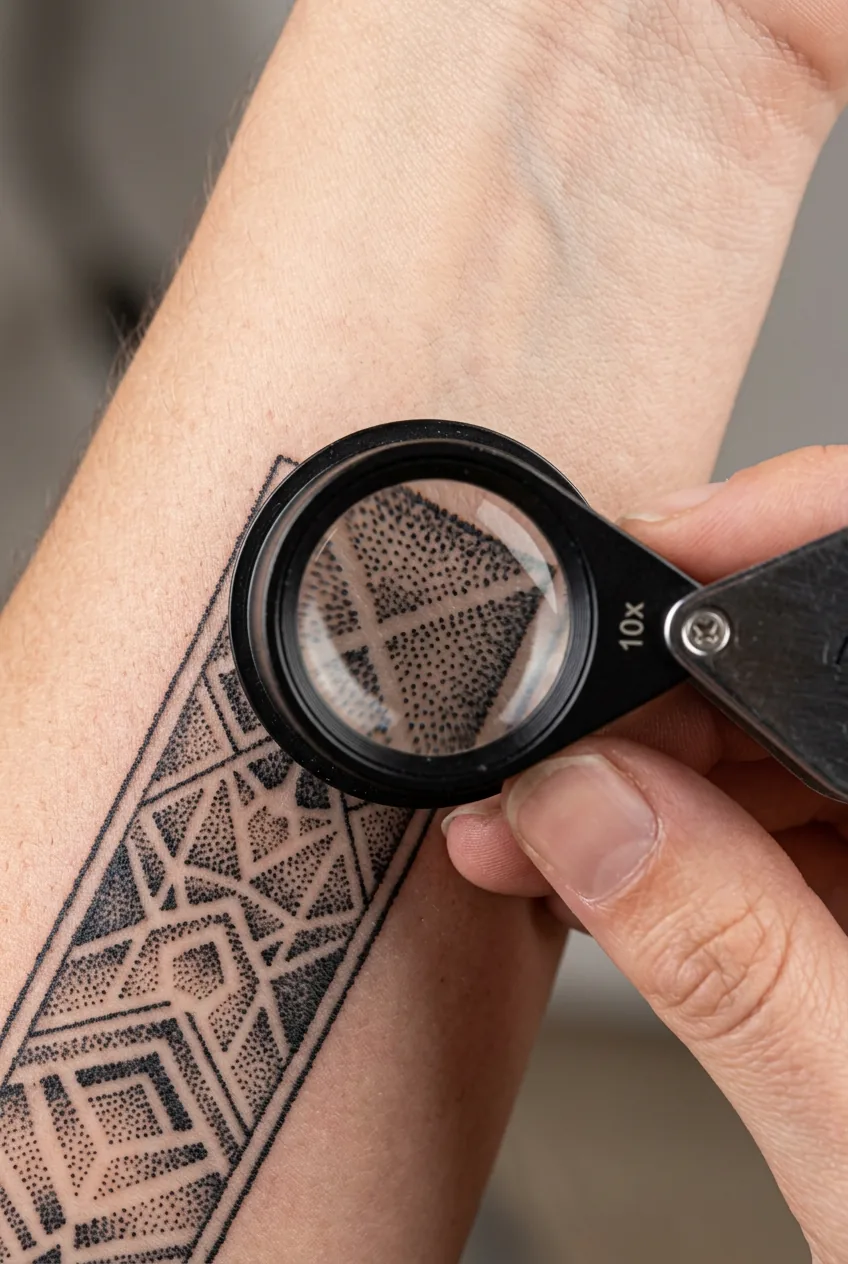
When I’m scrolling an artist’s Instagram or website, I’m actively searching for the word “healed” in captions. I also look for slightly desaturated photos with that real-world, not-in-a-studio-light quality. Those are often the honest ones. Look at that forearm piece in the photo below — see how the artist has measurement marks still visible from the planning stage? That level of precision in planning is exactly what separates artists whose work holds up over time from those who wing it.

Consistency Across Different Skin Tones
This one is huge and it’s so rarely talked about. Dotwork reads completely differently depending on skin tone, and an artist who only photographs work on one type of skin is either catering to a very narrow client base or hiding something.
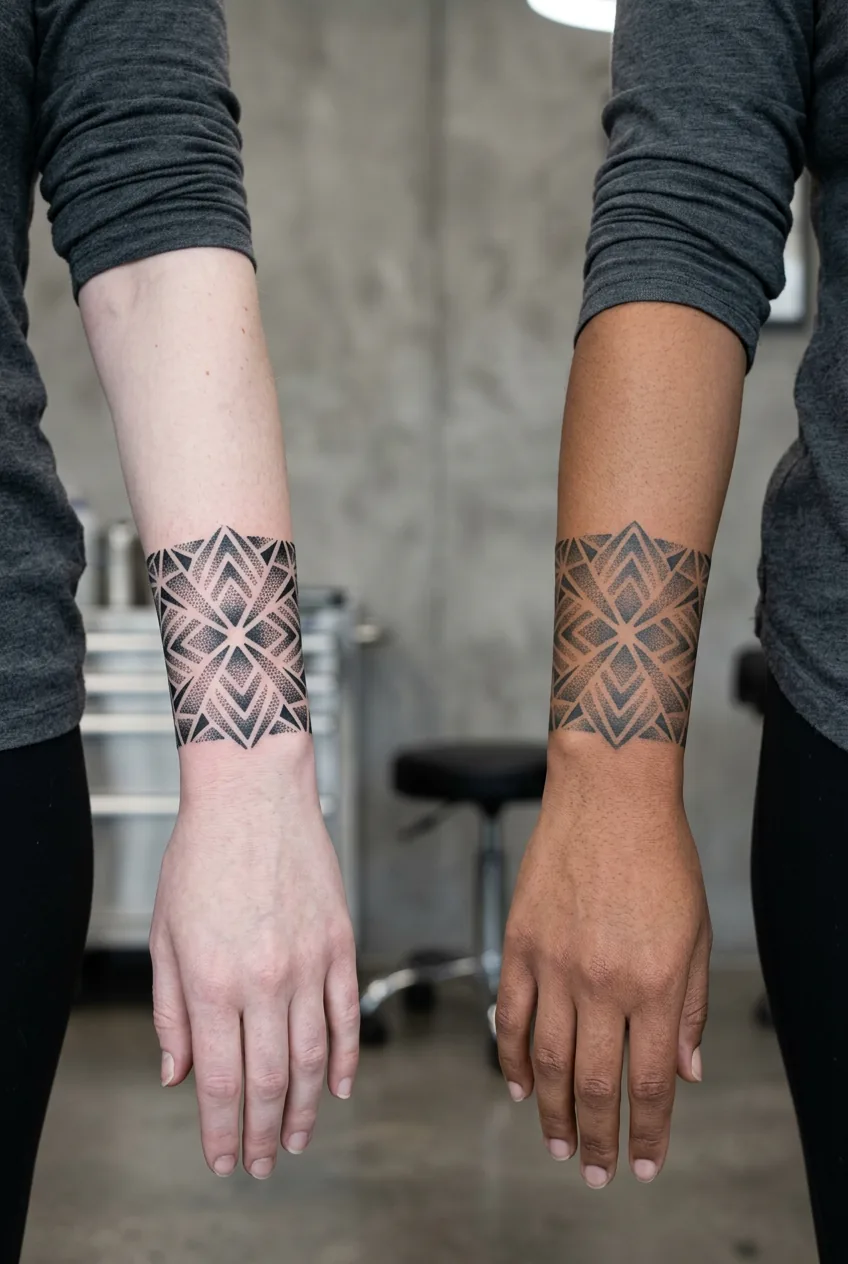
Dot gradients on deeper skin tones require a totally different approach — more density, different needle pressure, adjusted spacing. An artist who hasn’t practiced this will produce work that looks flat or disappears entirely on medium-to-deep skin. If you have a deeper complexion and an artist’s entire portfolio is on very fair skin, that’s not necessarily a dealbreaker, but it IS a conversation you need to have before booking.
I personally ask artists directly: “Do you have healed photos of dotwork on skin similar to mine?” A good artist won’t be offended. They’ll either show you the work or be honest that they have limited experience with your skin tone. That honesty matters more than any portfolio photo ever could. You can also how dotwork heals on darker skin before your consultation so you walk in informed.
Line Quality Across Years
Dotwork that incorporates geometric lines — and most of it does, especially the mandala-adjacent and sacred geometry styles popular right now — lives and dies by line quality. And line quality changes as an artist grows. That’s actually a good thing to track.
Scroll back as far as their portfolio goes. What did their work look like two or three years ago? Are the lines getting cleaner? More confident? Are the geometric structures more precisely planned? Improvement over time tells you you’re working with someone who takes craft seriously. If the work looks basically the same across five years, that’s either a ceiling or a lack of ambition — neither is great.
The geometric tattoos category on this blog has some excellent examples of what truly precise linework looks like — I’d spend some time in geometric tattoos to calibrate your eye before you start evaluating portfolios. Once you’ve seen what sharp geometry actually looks like, you can’t unsee the wobbly version.
My mistake: I got so distracted by the beauty of the overall design in one artist’s portfolio that I completely ignored the line edges. When I zoomed in — really zoomed in on photos — I could see the geometric frames were slightly uneven. Not dramatically, but enough. I didn’t book them. Always zoom in. Always.
Dot Density and Gradient Control
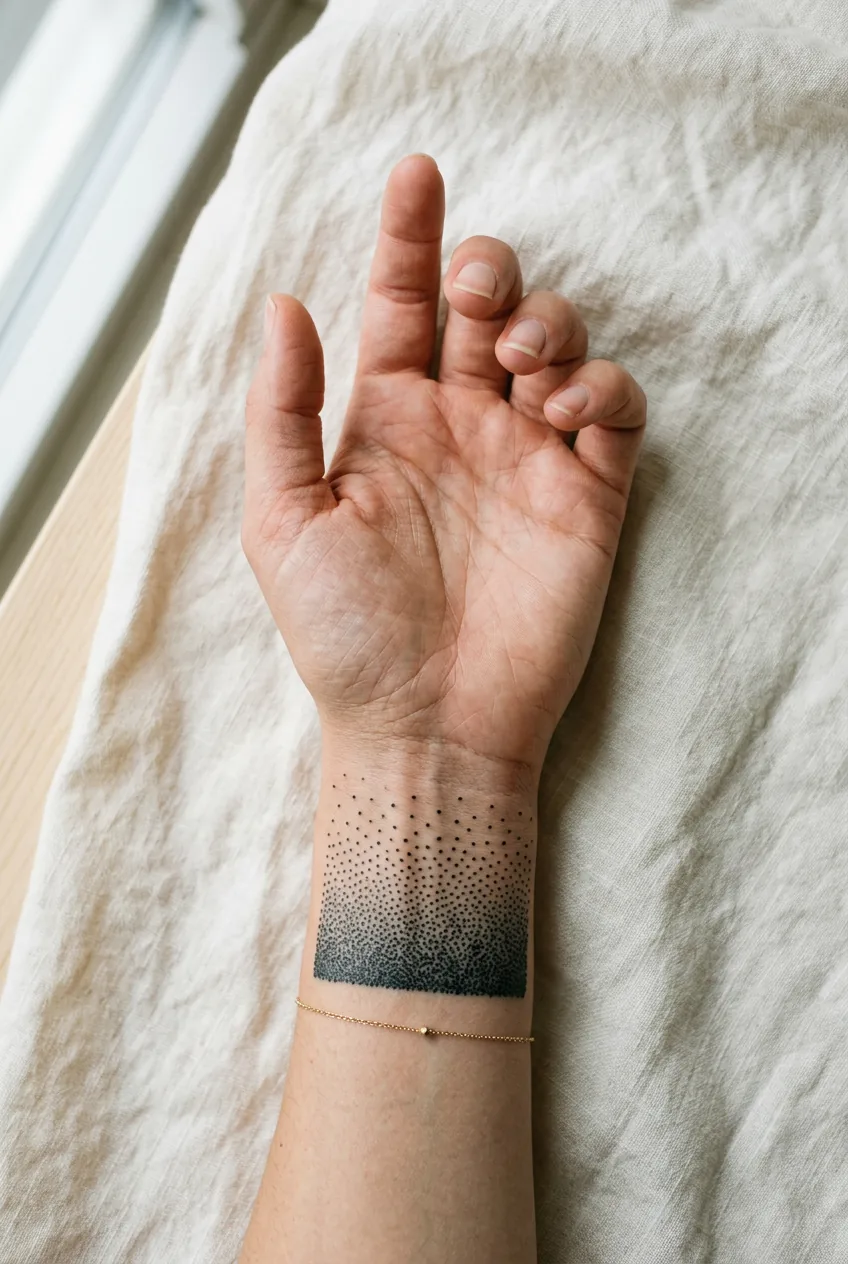
This is the technical heart of dotwork and the thing that separates a competent tattooer from a true dotwork specialist. Gradient control — moving from dense dot clusters through progressively spaced dots into open skin — is genuinely hard. It requires planning, consistency of hand pressure, and an almost meditative patience.
What you’re looking for in portfolio photos: smooth transitions. The gradient should move like a fade, not jump in steps. Look at the lightest areas of the design — the dots there should be individually visible, evenly spaced, and not blown out into blobs. Blown dots in light areas mean the artist was either going too deep, using too much pressure, or both. And blown dots spread even further as the tattoo heals.
Dense areas are also telling. A truly skilled artist creates deep black sections through layered dot work — not by just hammering a solid fill. If the darkest areas of their work look identical to solid blackwork, they may be cutting corners on technique. Check out some examples in the blackwork tattoos section to understand the difference between intentional solid fills and dotwork that’s been overworked into something unrecognizable.
See How the Gradient Is Actually Built
Work That’s At Least One Year Old
I mentioned this briefly earlier but it deserves its own section because it’s that important. One year is the minimum threshold for evaluating how a dotwork tattoo actually ages. In that first year, dots settle into the skin, excess ink disperses, and the true quality of the artist’s depth control becomes apparent.
Ask the artist directly: “Can you show me some work that’s at least a year healed?” Most artists with solid technical foundations are proud of aged work — they’ll pull it up without hesitation. If they get evasive, only show you fresh pieces, or say “all my healed work looks the same as fresh,” that last one is statistically impossible and a massive red flag.
Particularly for styles that sit close to fine line tattoos — where dotwork shading meets delicate linework — the aging question is even more critical. Fine details are the first casualties of poor technique. If those elements are holding up at the one-year mark, you’ve found an artist worth trusting.
What Their Followers Don’t Tell You
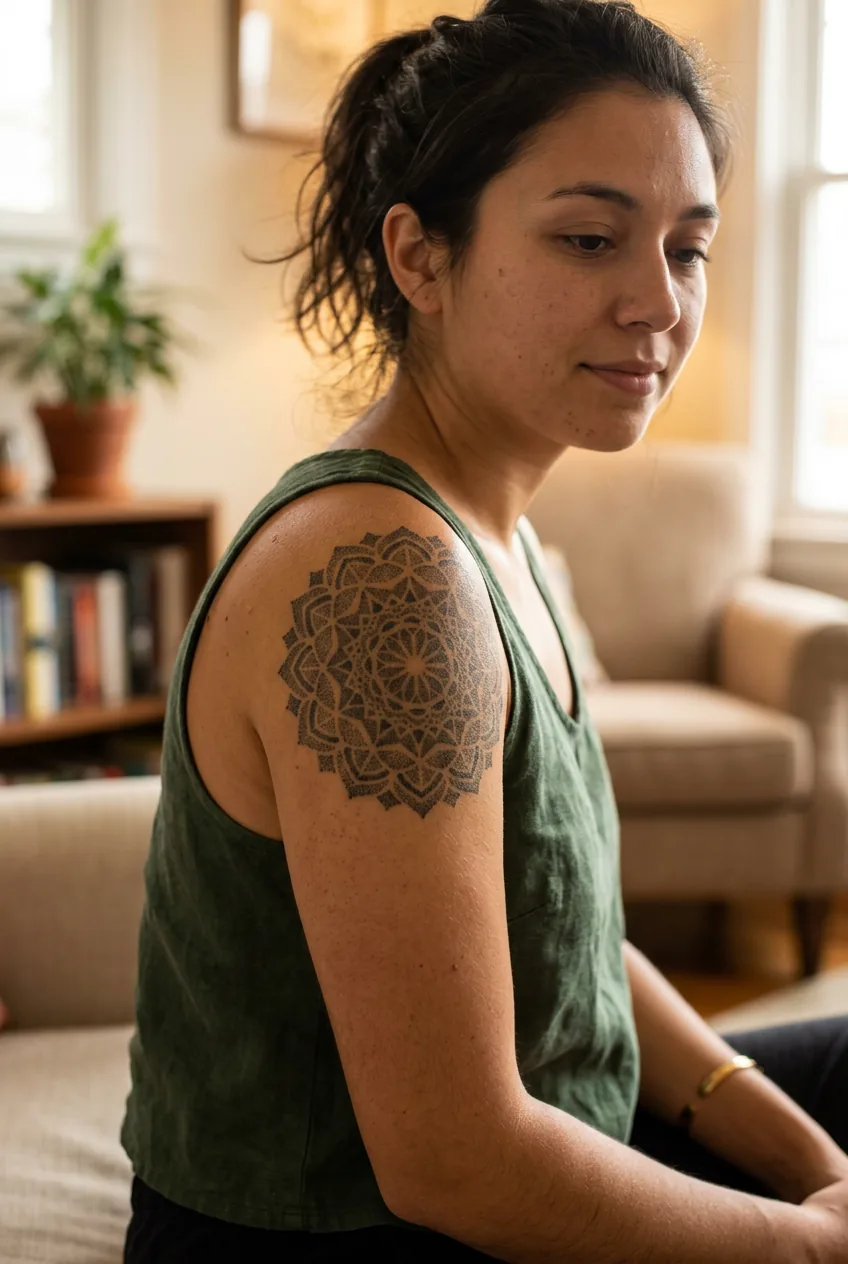
Social media followings are genuinely misleading indicators of tattoo quality. I’ve seen artists with 400k followers whose dotwork I wouldn’t let near my skin, and artists with 8k followers doing the most breathtaking mandala work I’ve ever seen. Follower counts are a marketing metric, not a quality metric.
What followers CAN tell you: look at the comments on healed photos specifically. Are clients coming back to tag their healed results? Are people posting “six-month update” comments? Those unsolicited updates are gold — real clients showing real results with zero incentive to lie. An artist whose clients enthusiastically return to document healing is an artist whose clients are happy with what they got.
Also worth noting: if an artist’s feed is suspiciously similar to another well-known dotwork artist’s aesthetic — same compositions, same placement choices, eerily similar design motifs — do a little research. The dotwork and mandala tattoos community is small enough that copying gets noticed and talked about. identifying tattoo design originality is a legitimate research step before you commit to someone.

Red Flags Worth Walking Away From
I want to be direct here because I think people are often too nervous to trust their instincts when they’re excited about a design. There are concrete red flags in a dotwork portfolio that should make you pause or walk away entirely.
A portfolio with exclusively fresh tattoos — no healed shots, no aged work, nothing older than a few weeks — is a problem. So is a portfolio where every single client appears to have the same skin tone. If the artist gets defensive when you ask reasonable questions about healing or aging, that’s a problem. And if their geometric structures, when zoomed in, have clearly uneven spacing or lines that drift — that’s technique you cannot fix later.
Also: an artist who talks disparagingly about a client’s healing process in public posts (“not my fault they didn’t moisturize”) is showing you exactly how they’ll handle it if your tattoo doesn’t heal perfectly. You want an artist who takes healing outcomes seriously and personally. The styles adjacent to dotwork — minimalist tattoos especially — are unforgiving of imprecision too, so look for artists who understand that the simpler the design, the more technical perfection matters.
One final thing worth checking: ask in local tattoo Facebook groups or Reddit communities whether anyone has experience with this specific artist. Real community feedback, especially about how the artist handles touch-ups or healing concerns, is invaluable. Vetting a tattoo artist is a step most people skip because they’re already excited. Don’t skip it.
Questions I Get About This
How many healed photos should an artist’s portfolio have before I trust them?
I’d want to see at least five to eight healed examples, and ideally across different body placements and skin tones. One or two could be flukes. Five or more starts to show a pattern of consistent results. If they’re newer to dotwork specifically, three good healed shots plus a willingness to have an honest conversation about their experience is workable.
Is it okay to ask an artist for references from past clients?
Absolutely yes — and a confident artist will either connect you directly or point you to client reviews and tagged posts. It’s a completely normal professional request, the same as asking for references before hiring anyone for important work. If an artist acts like this is an insult, that tells you something.
Can I get a dotwork tattoo from an artist who mostly does other styles?
It’s risky. Dotwork is a specialist technique — the hand control, pressure consistency, and planning required are genuinely different from other styles. An artist who primarily does illustrative or traditional work and “also does dotwork” may not have the depth of practice the technique demands. I’d want to see at least ten dotwork-specific pieces in their portfolio before booking, not just a couple they tried once.
Does placement affect how I should evaluate portfolio photos?
Yes, and this is underrated. Dotwork on a forearm heals very differently than dotwork on a ribcage or foot. If your heart is set on a specific placement, try to find healed photos from that artist in the same or similar placement. Skin thickness, movement, and sun exposure all affect how dots hold up, and an experienced artist will know this and plan accordingly.
After going through this whole vetting process, I ended up booking an artist two cities away from me — not the most convenient choice, but absolutely the right one. Her healed portfolio was honest, her gradients held beautifully at the one-year mark in photos her clients had tagged, and when I asked about aging on my skin tone she immediately showed me three relevant examples without hesitation. My forearm piece is healing right now and every time I look at it I feel that specific satisfaction of knowing I made a well-researched decision. That feeling is worth every hour of portfolio-scrolling.