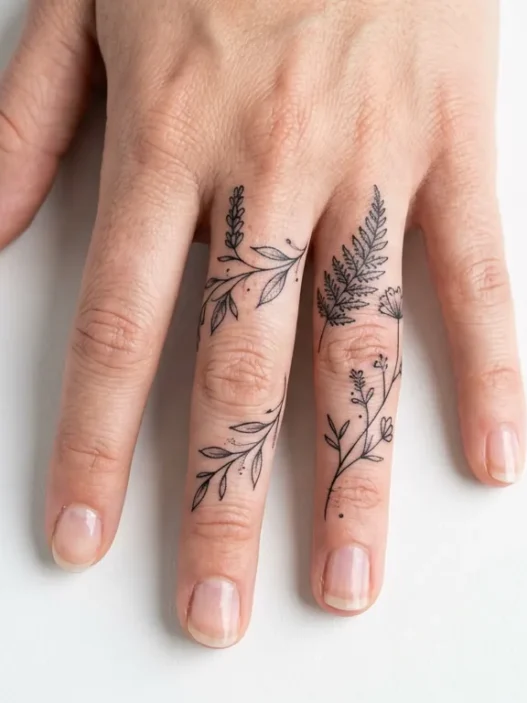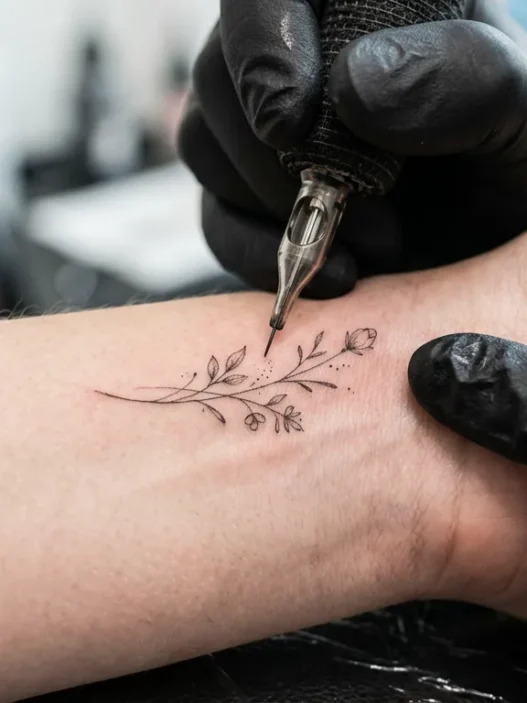







I wake up every morning and catch my reflection reaching for the light switch. There they are — the delicate lines and bold shapes that have become as much a part of me as my freckles or the scar on my knee from childhood. My hand tattoos aren’t just art anymore. They’re compass points that guide how I move through the world, from boardroom presentations to coffee dates with my grandmother.
Morning — First Light on Inked Skin
The first thing I see isn’t my bedhead or yesterday’s mascara. It’s the vine that wraps around my right wrist, slightly faded from sleep creases but still there, still mine. My morning routine has evolved around these tattoos in ways I never anticipated.
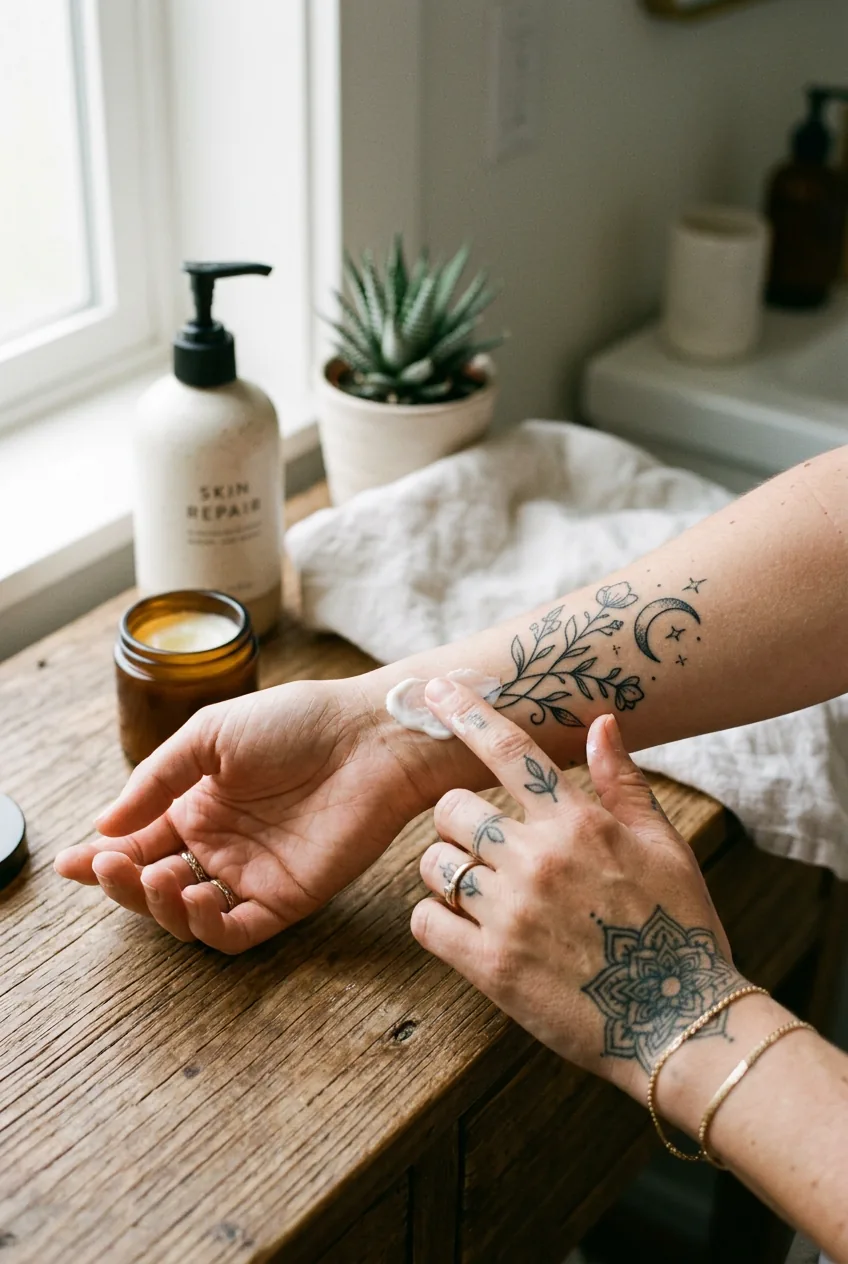
The moisturizer step is non-negotiable now. Not the quick slap-on-some-lotion routine I used to have, but a proper two-minute massage with unscented cream. Hand tattoos demand this attention — they fade faster than any other placement, and I learned that lesson the hard way when my first knuckle piece started looking dusty after six months of neglect.
Getting dressed takes longer too. Not because the tattoos limit my wardrobe (though my corporate blazers definitely get paired with longer sleeves more often), but because I catch myself pausing in the mirror. Some mornings I trace the lines with my opposite hand, remembering why I chose each design. Other mornings I practice how I’ll position my hands during today’s client presentation.
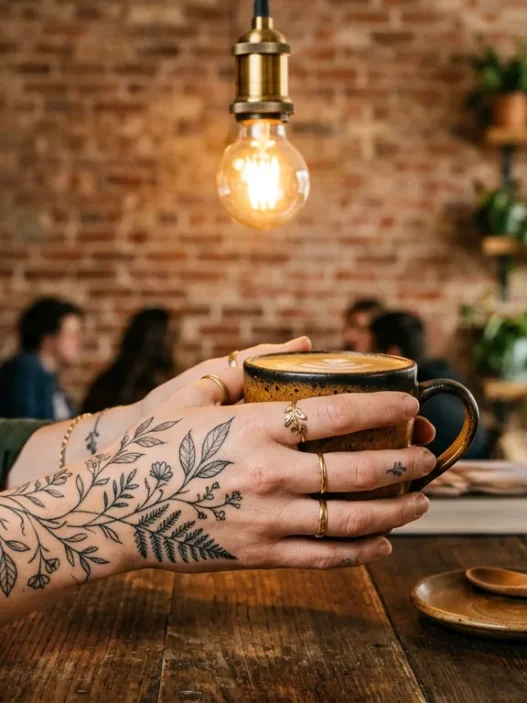
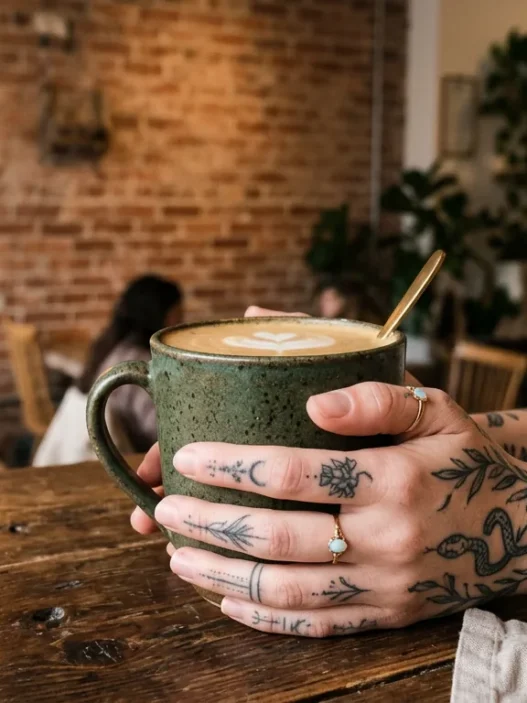
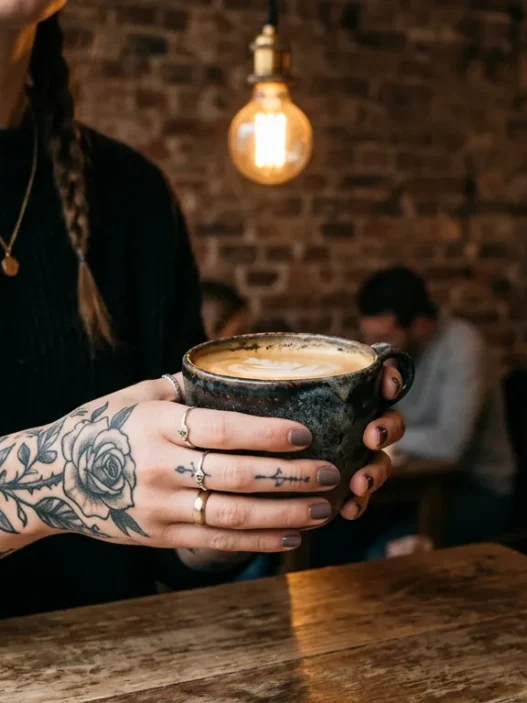
The coffee ritual reveals everything. When I wrap both hands around my mug, the full story spreads across my knuckles and fingers. The geometric patterns on my left hand balance the script on my right. It’s the first moment each day where I see the complete composition, and honestly? It never gets old.
At Work — The Professional Dance
Here’s what no one tells you about finger tattoos in professional settings: it’s not the dramatic confrontation you imagine. It’s subtler. It’s the way conversations pause for half a second when I reach across the conference table. The slight double-take from new clients who were expecting someone different based on my voice over the phone.
I’ve developed what I call the “strategic gesture vocabulary.” Palms-down when presenting serious budget numbers. Fingers interlaced when listening to concerns. Hands behind my back when I need to project authority without distraction. It sounds calculated, and maybe it is, but it works.

My favorite colleague reaction came from Janet in accounting, who spent three months sneaking glances at my hands before finally asking, “Do those hurt to get touched up?” She’d been assuming they were temporary this whole time. When I explained the maintenance routine, she surprised me by rolling up her sleeve to show a small butterfly behind her wrist that she’d been hiding for two years.
The generational divide is real, though. Older clients sometimes struggle to make eye contact initially, and I’ve learned to lead with my credentials before my handshake. But younger clients? They light up. Last month, a 28-year-old startup founder spent the first ten minutes of our meeting asking about my artist’s technique instead of discussing his marketing budget.
What surprised me most is how the tattoos have become conversation starters rather than barriers. Proper aftercare becomes a natural bridge to discussing attention to detail in other areas of life. Clients see someone who commits to long-term decisions and follows through with maintenance.
Watch How She Navigates Professional Settings
Running Errands — Public Commentary
Grocery stores are sociology experiments when you have hand tattoos. The checkout process has become theater. Some cashiers pointedly avoid looking at my hands while processing my payment. Others can’t look away, craning their necks to read the script while counting my change.
Children are the most honest audience. A five-year-old at Target once tugged his mother’s sleeve and asked, “Why did that lady draw on herself with permanent marker?” His mom’s mortified apology was sweet, but I appreciated his directness. I knelt down and showed him how the lines followed the natural curves of my hand, explaining that some grown-ups choose to decorate their bodies like art galleries.

The pharmacy is where generational attitudes crystallize most clearly. Older customers sometimes shuffle away when I’m in line behind them, as if my wrist tattoos indicate poor decision-making in all areas of life. Meanwhile, the twenty-something pharmacy tech always compliments my latest touch-up and asks about healing progress.
Gas stations bring out the boldest commentary. A middle-aged man in a pickup truck once rolled down his window at a red light to shout, “What’s your mother think about those?” I rolled down mine and replied, “She helped me choose the font.” True story, by the way. My mom has excellent taste in typography.
The gym is surprisingly accepting. Something about the shared vulnerability of sweating in public creates an unspoken camaraderie. Workout-friendly aftercare becomes essential during summer months, and I’ve had some great conversations with other tattooed members about maintaining ink while staying active.
Evening Out — Date Night Dynamics
Dating with hand tattoos is like wearing your personality on your sleeve — literally. First dates become efficient screening processes. The reaction to my inked knuckles tells me more about compatibility than three hours of dinner conversation ever could.
I remember one particularly disastrous coffee date where the guy spent twenty minutes explaining how hand tattoos would “limit my career prospects” and suggesting I consider laser removal. I thanked him for his concern, paid for my own latte, and left. His loss — my tattoos have never cost me a job, but his attitude would have cost me my self-respect.

The best dates are with people who ask about the stories behind each piece. My current partner traced the lines on our third date, asking about the inspiration for the geometric pattern that flows from my thumb to my wrist. That gentle curiosity, the way he listened to the meaning behind each choice — that’s when I knew this one was different.
Restaurant interactions reveal interesting social dynamics too. Upscale establishments sometimes seat us in corners, as if my arm tattoos might offend other diners. Casual places embrace us completely. The best servers comment on the artwork and share their own tattoo stories between courses.
Meeting my partner’s family brought the most anxiety. His grandmother, born in 1935, took one look at my hands and asked, “Are those real?” When I nodded, she surprised everyone by rolling up her own sleeve to reveal a small rose tattoo from her Navy days in the 1950s. “Mine’s older than your mother,” she winked. Sometimes the people who surprise you most are the ones you least expect.
Before Bed — The Mark That’s Become Mine
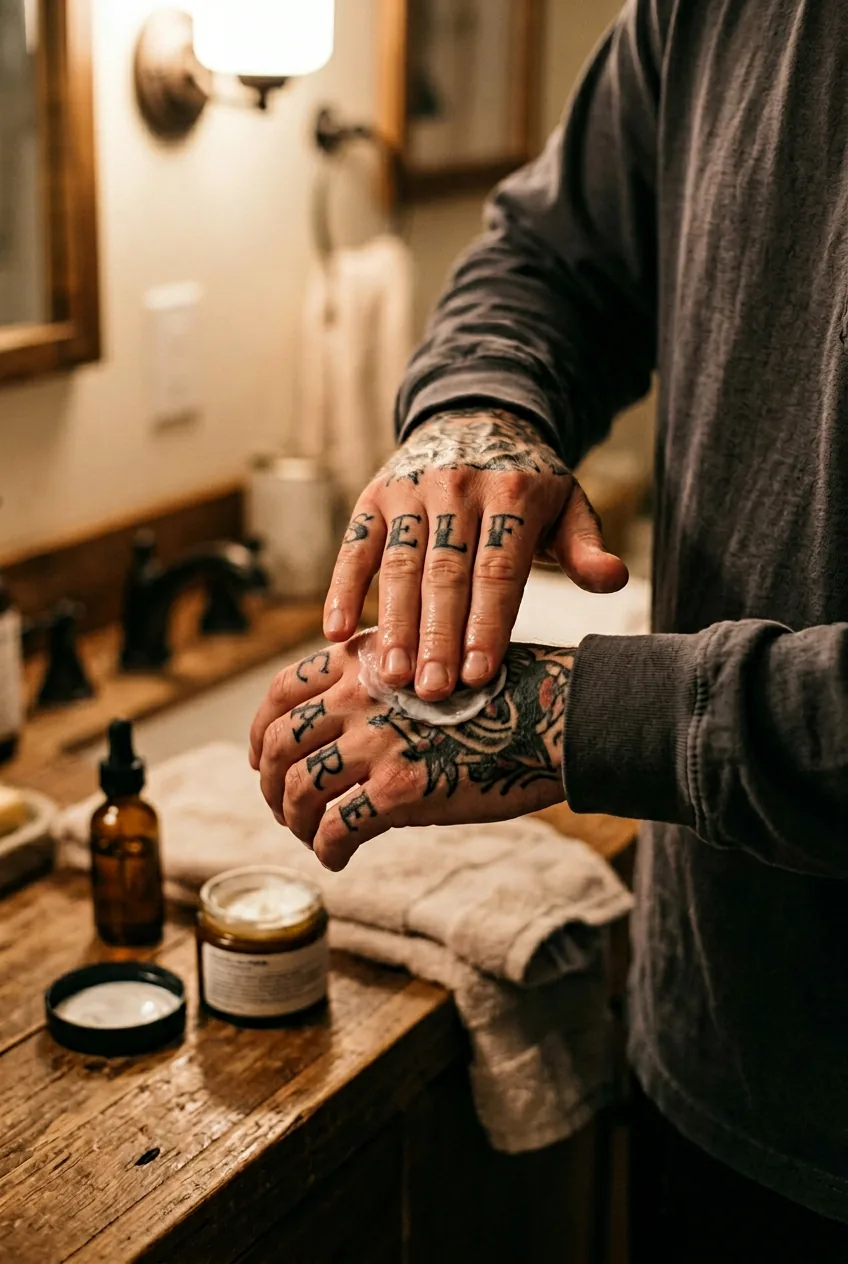
The end-of-day routine is when my hand tattoos feel most like home. After washing my face and brushing my teeth, I apply one final layer of moisturizer to the inked areas. It’s become as automatic as setting my alarm — this gentle attention to something I chose to make permanent.
Some nights I catch myself staring at my hands in the bathroom light, marveling at how these designs have integrated into my identity. The script on my right knuckles looks different depending on how I hold my fingers. The geometric pattern on my left hand creates new shadows as I move through my bedtime routine.
This is the honest moment when I reflect on the daily experience of living with visible tattoos. It’s not the rebellious statement I thought it would be in my twenties. It’s quieter than that. More personal. These marks have become punctuation in my daily story — pause points that make me more intentional about how I move through the world.
The maintenance routine proper tattoo maintenance has taught me patience with other commitments too. Relationships, career goals, even my houseplants benefit from the same consistent attention I give my ink. There’s something profound about choosing to care for something every single day, watching it age gracefully with deliberate effort.
Before I turn off the bedside lamp, I often trace the lines one more time. Not out of vanity, but out of gratitude. These small tattoos have given me confidence I didn’t know I was missing. They’ve connected me with strangers who share similar stories and helped me filter out people whose judgments would have limited my growth anyway.
Living with hand tattoos isn’t the dramatic lifestyle change I anticipated. It’s subtler, richer, more nuanced than I expected. Some days they’re conversation starters. Other days they’re private reminders of choices I’m proud to have made. Most days, they’re just part of me — like freckles that I chose, stories written in ink across the hands that write my actual story every day.