





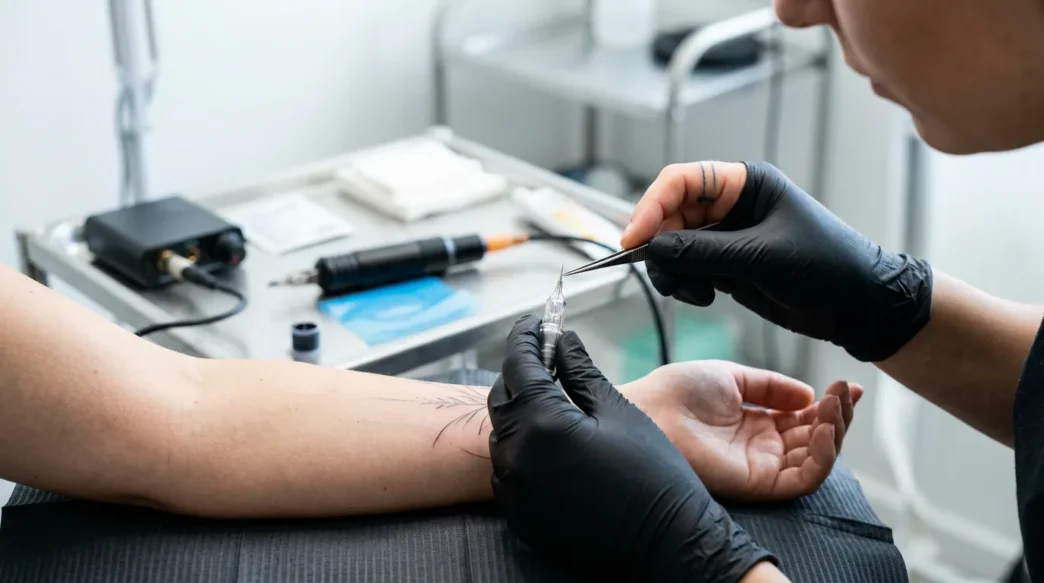
I got my first detailed snake tattoo on my forearm and walked into that appointment knowing absolutely nothing about what was actually happening beneath the surface. I just wanted the scales to look real. My artist, who is endlessly patient, spent about ten minutes explaining ink particle size and immune response before she even picked up the machine — and I stood there nodding like I understood. I did not understand. So I went home and read everything I could find, and what I discovered genuinely changed how I think about tattoos as a medium. This is the condensed version of what I wish I’d known before I sat down.
What’s Actually Happening at the Needle Tip
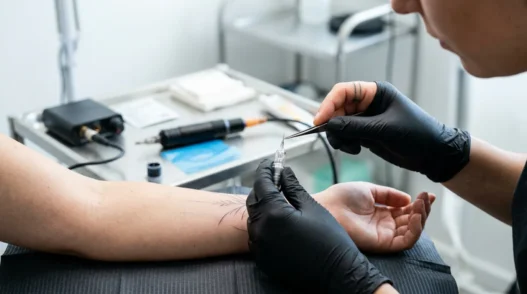
Here’s the thing nobody tells you at the consultation: the tattoo needle doesn’t inject ink the way a syringe does. It punctures. Rapidly. Somewhere between 50 and 3,000 times per minute depending on the machine setting, the needle tip pierces through the epidermis — the outermost skin layer — and deposits microscopic ink droplets into the upper dermis, roughly 1 to 2 millimetres below the surface. That dermis layer is the target. Too shallow and the ink sits in the epidermis, which sheds constantly, and the design fades within weeks. Too deep and it spreads into fat tissue, causing blowouts — that blurry halo effect you see on older tattoos where the edges have bloomed outward.
For a detailed snake tattoo specifically, precision matters more than in almost any other design. Think about what makes a snake look like a snake: the articulation of individual scales, the transition between belly plates and dorsal scales, the way light catches a keeled ridge differently from a smooth iridescent belly. All of that lives in sub-millimetre line work. A single needle — the kind fine-line artists use — has a tip diameter of around 0.3 to 0.35 mm. That’s thinner than a human hair. The margin for error is genuinely tiny.
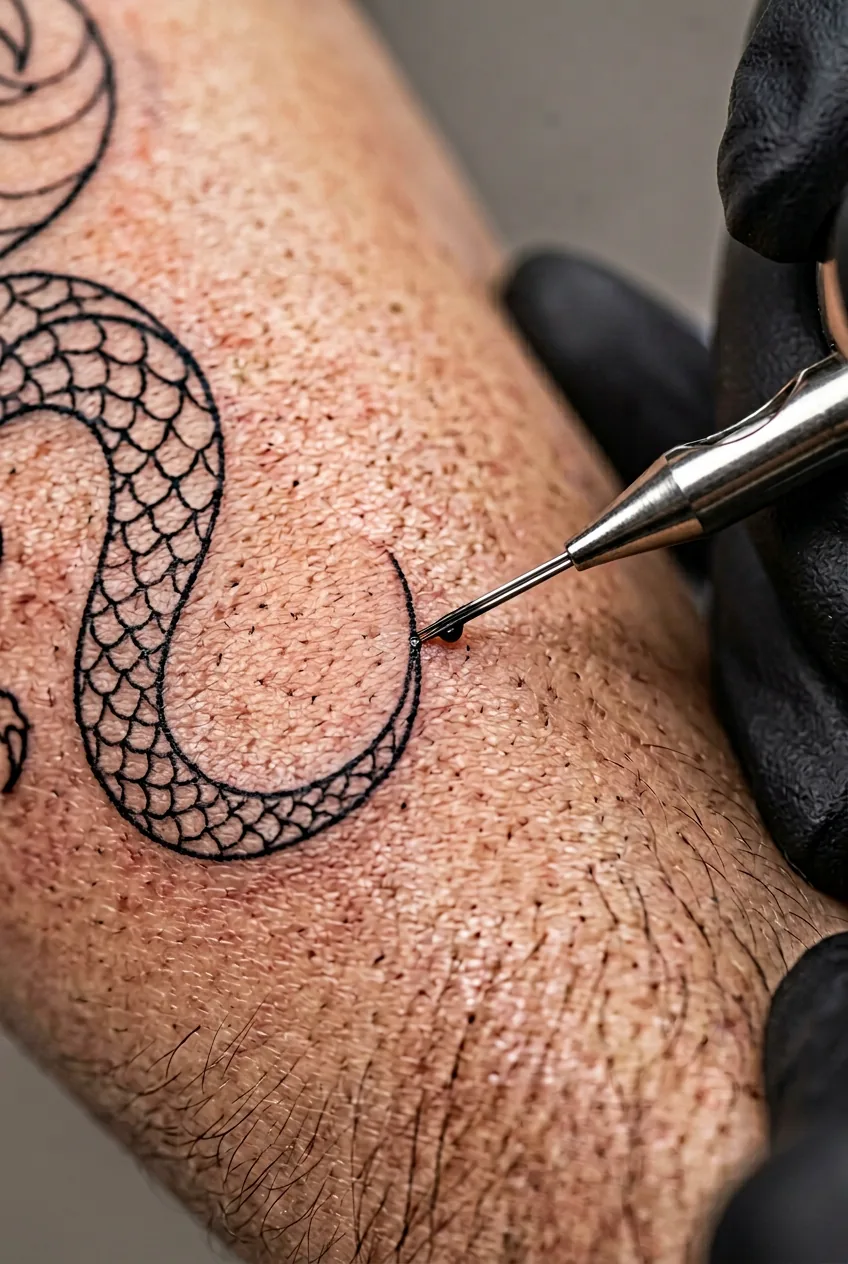
The ink itself is a suspension. Solid pigment particles — organic dyes, carbon black, metal-based compounds depending on the colour — are suspended in a carrier solution, usually a mix of water, alcohol, and glycerin. The carrier helps the pigment flow evenly off the needle tip and into the puncture channel. Once deposited, the carrier disperses and the pigment particles are left stranded in the dermis. What happens next is where biology gets fascinating.
Why Some Pigments Fade Faster
Not all ink colours are created equal — and this is something I genuinely didn’t understand until it affected my own tattoo. The black linework on my snake still looks crisp. The subtle green-grey shading I asked for in the scales? Already softer than I’d like, and the piece is only a year old.
Black tattoo ink is almost always carbon-based — carbon black or iron oxide — and these particles are physically large and chemically stable. They scatter light in a way that reads as deep, consistent darkness, and they resist photodegradation (UV breakdown) remarkably well. This is why blackwork and fine-line pieces in pure black tend to age better than coloured work.
Colour pigments are a different story. Many rely on organic dye compounds — azo dyes for reds and oranges, phthalocyanines for blues and greens — and these molecules have chromophore groups that absorb specific wavelengths of light. That absorption is what creates colour. But it also makes them vulnerable to UV radiation, which breaks chemical bonds and literally decolorises the pigment over time. Sun exposure is the single biggest accelerant of colour tattoo fading, which is why placement on chronically sun-exposed skin (hands, wrists, collarbones) matters so much.
Particle size also plays a role. Ink particle retention in skin is a topic that’s getting more research attention. Smaller particles are more easily engulfed and transported by immune cells, which means they migrate away from the original deposit site faster. Some high-pigment-load inks use larger particle sizes precisely to improve longevity. It’s worth asking your artist what ink brand they use and why — a good artist will have an opinion on this.
Mistake I made: I didn’t realise that the subtle green-grey shading my artist used for the scales required significantly more aftercare diligence than the black linework. I was religious about SPF on the outline areas but forgot that the shaded regions were, chemically speaking, far more vulnerable. Lesson learned the hard way — treat the whole piece with the same sun protection intensity, not just the parts you’re most proud of.
How Your Immune System Responds
Your body sees tattoo ink as a foreign invader. Full stop. The moment those pigment particles land in the dermis, your immune system mobilises. Macrophages — large immune cells whose job is literally to eat foreign material — rush to the site and begin engulfing ink particles. This is why fresh tattoos swell, feel warm, and weep plasma. That’s not damage. That’s your immune system doing exactly what it evolved to do.
Here’s the beautiful, strange part: many of those macrophages don’t fully break down the pigment. They hold it. And when a macrophage eventually dies, the pigment particles are released — only to be engulfed by a new macrophage in approximately the same location. This cycle of engulfment and release is part of why tattoos are permanent. The ink isn’t locked into collagen fibres the way most people assume. It’s in a kind of ongoing cellular custody, passed from macrophage to macrophage across decades.
This also explains why tattoo removal is so difficult. Laser removal works by shattering pigment particles into smaller fragments that the lymphatic system can then carry away. But the process is iterative and imperfect — and some colours respond to specific laser wavelengths much better than others. Green, for instance, is notoriously stubborn. For anyone considering a detailed snake tattoo with a lot of green or teal in the scales, it’s worth knowing that commitment upfront is very real.
If you’re curious about the deeper science of how bodies and tattoos coexist over time, I’ve found this breakdown of tattoo biology genuinely illuminating. The relationship between long-term ink stability and macrophage behaviour is still an active area of research, which I find oddly exciting.
For those of us who love snake imagery specifically — and I’ve written a whole piece about why snake tattoos have always felt timeless to me — understanding the immune response also matters practically. Placement on areas with high lymph node density (inner arm, groin, neck) means higher macrophage traffic, which can mean slightly faster migration of fine particles. Not a dealbreaker, but worth factoring in.
What Snake Anatomy Means for Detail Work
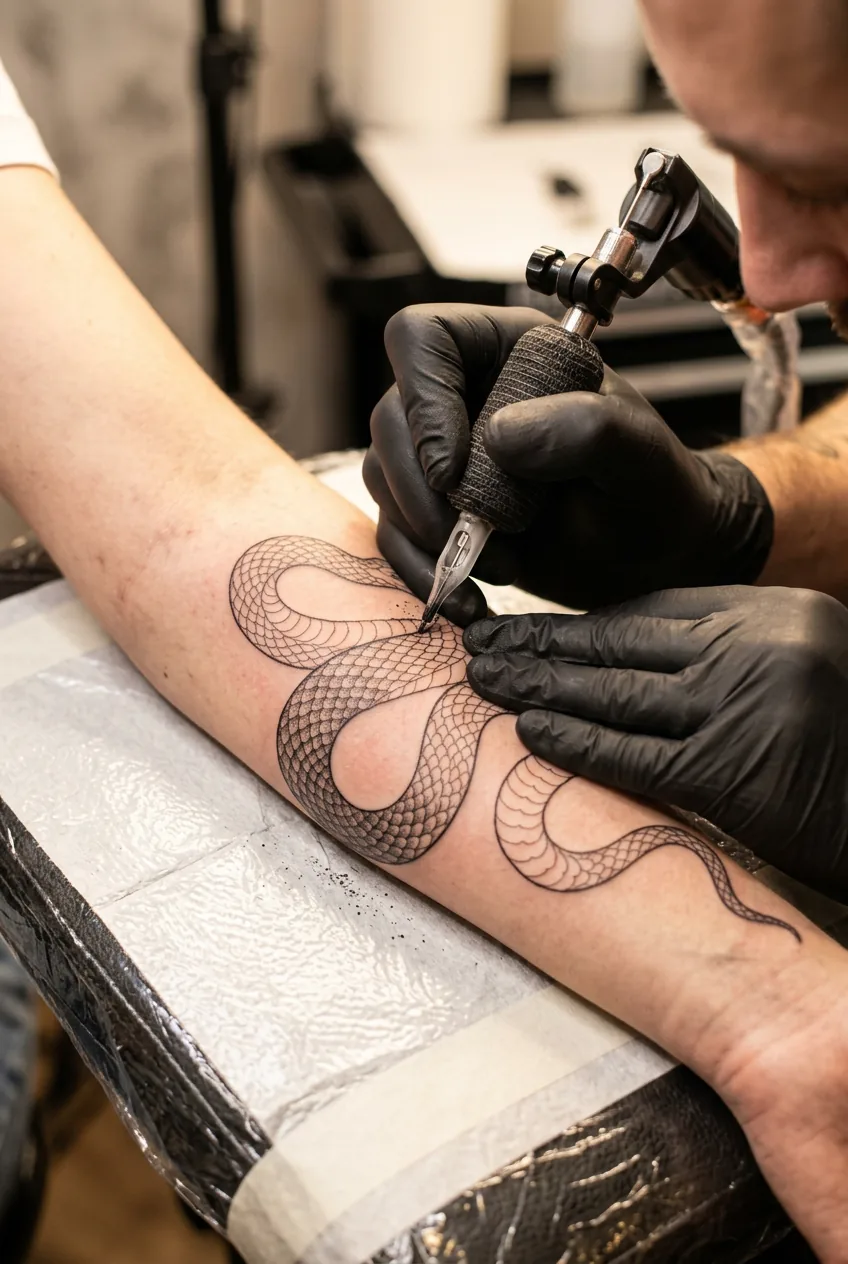
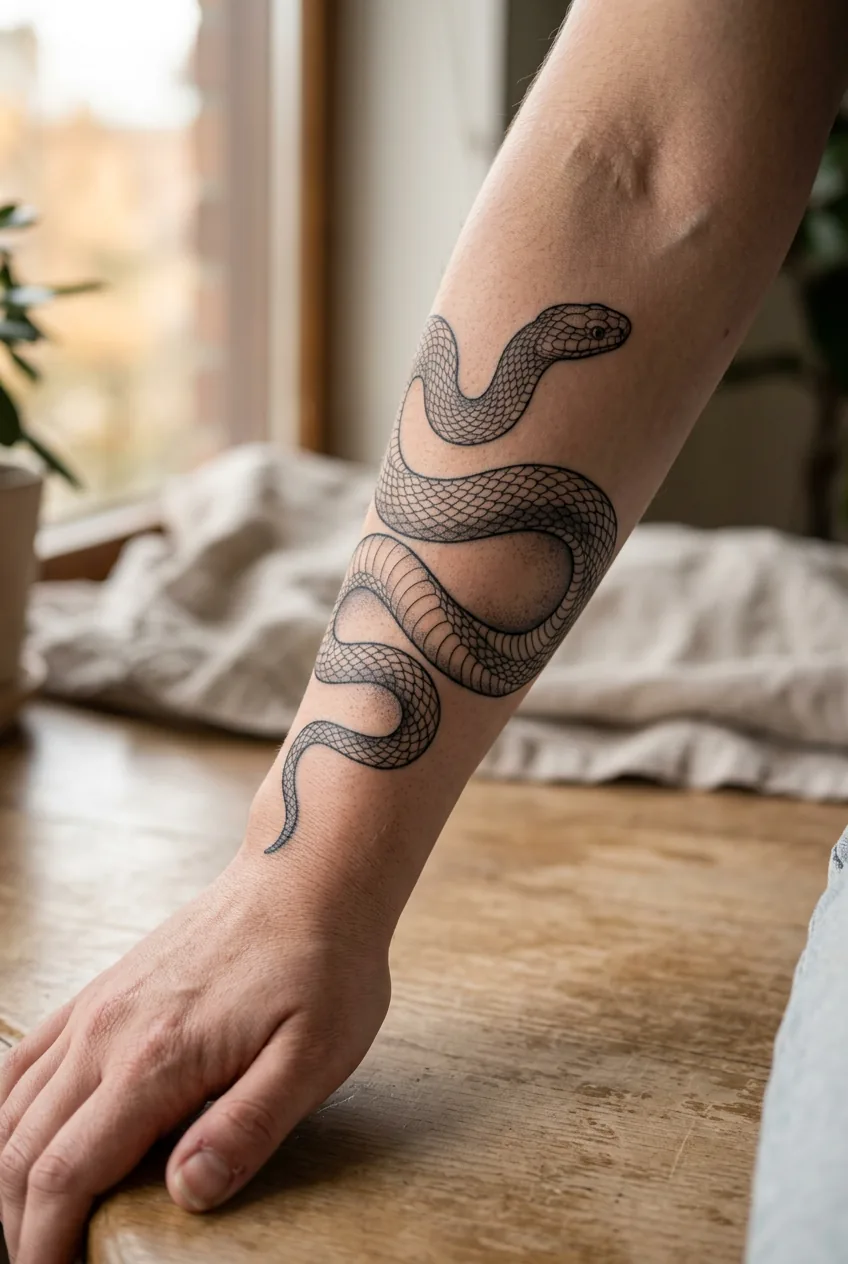
A snake is one of the most technically demanding subjects in tattoo design. I don’t say that to be dramatic — I say it because understanding why it’s demanding helps you make better decisions as a client. A serpent body is essentially a study in repeating geometric pattern (scales), organic curvature (the body’s S-curves and coils), tonal shift (the way light rolls across a three-dimensional cylinder), and texture contrast (the belly versus the dorsal). All of that needs to coexist in a design that will live on a three-dimensional, moving human body.
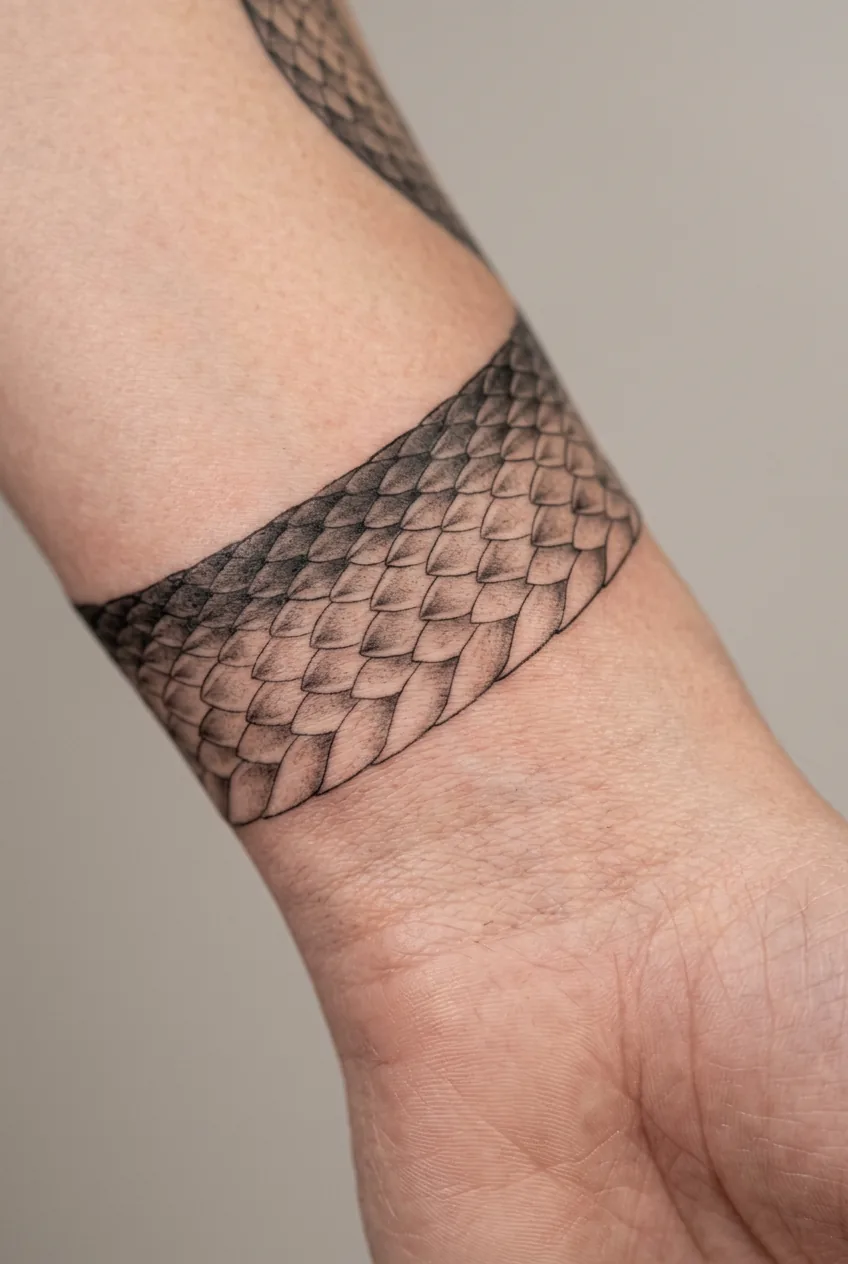
Fine-line single-needle work is currently the most popular approach for detailed snake tattoos in 2026, and honestly, the science supports it. Single needle deposits ink in a much narrower channel, which means less trauma to the surrounding tissue, faster healing, and crisper lines — at least initially. The trade-off is that fine lines require more precision in ink depth, and lines that are deposited too shallow will partially shed with the epidermis during the first healing cycle. An experienced fine-line artist compensates for this by making deliberate, consistent passes rather than relying on pressure alone.
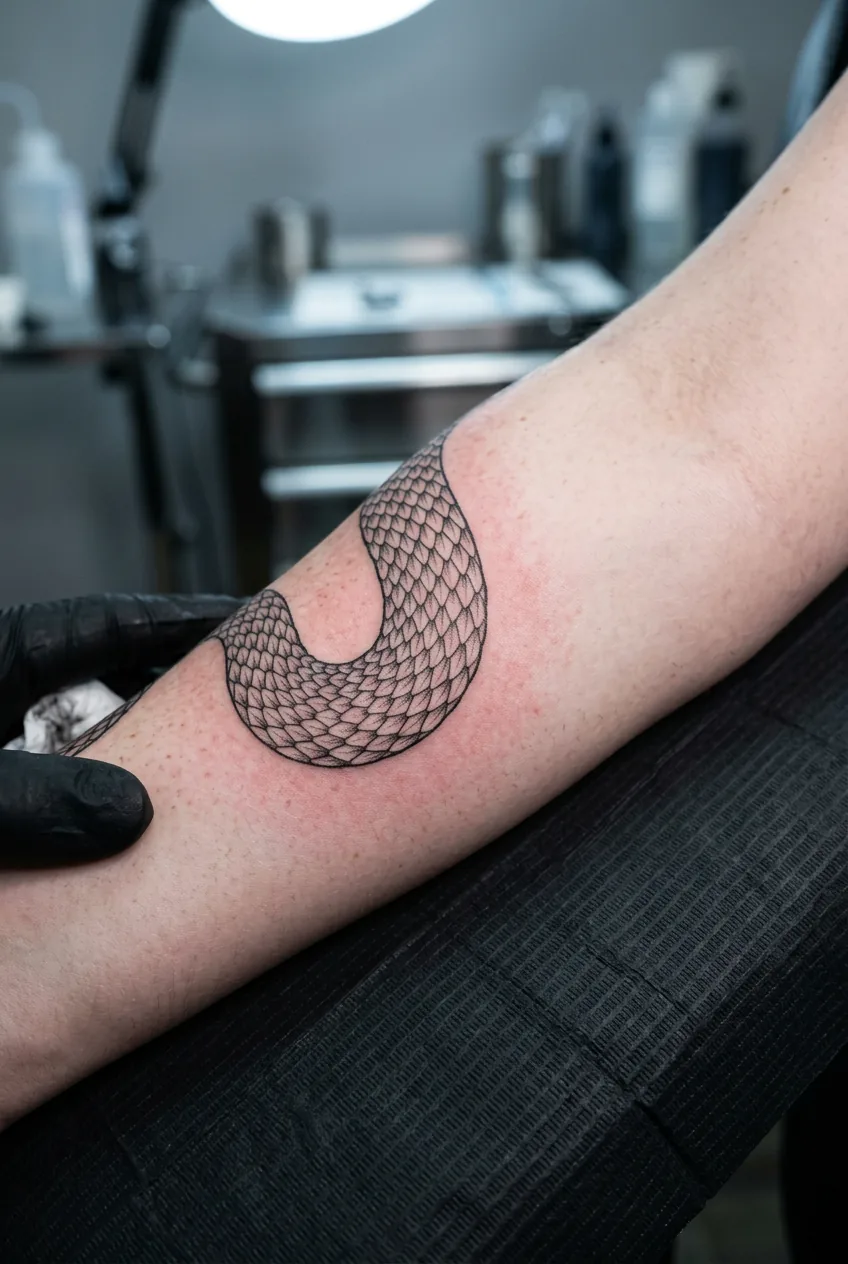
Scale patterns are where the needle-tip chemistry becomes very visible. Each scale typically requires a curved stroke that tapers at both ends — a shape that demands the artist control both pressure and speed simultaneously to achieve even ink saturation. Too much pressure and the line blows out. Too little and the line heals patchy. Look at the photo below and notice how the scale outlines on her forearm maintain a consistent weight even in the tight curved sections — that’s what controlled needle depth looks like as a result.

If you’re still deciding between fine-line and a bolder approach for your snake piece, it’s genuinely worth reading about how to choose between fine line and bold styles — because the considerations there map almost perfectly onto snake tattoos too. Bold linework sits deeper, holds longer, and reads from a distance. Fine line is intimate and technical. Neither is objectively better. They’re just chemically and visually different commitments.
For placement specifically, forearm and thigh are the most forgiving for detailed scale work. The skin is relatively flat, has consistent thickness, and doesn’t experience the same extreme stretching that areas like the elbow ditch or knee do. I’ve also seen absolutely stunning detailed snake tattoos wrapping up the calf — the curvature of the muscle actually complements the coiling body shape beautifully. You can find more general inspiration in the animal tattoos archive if you’re still narrowing down your concept.
Putting the Science to Work
So what does all of this actually mean when you’re sitting in a consultation chair? A few things, practically.
First: ink brand matters more than most clients realise. Ask your artist whether they’re using an ink formulated for fine-line detail work specifically. Some inks are designed with smaller particle sizes for smooth flow through single-needle configurations. Others are formulated for traditional packing, where saturation is the goal. Using a packing ink through a single needle setup can cause inconsistent saturation and a rougher healing process.
Second: your skin’s hydration state on the day of your appointment actually affects how ink deposits. Well-hydrated dermis has a slightly different texture and elasticity than dehydrated skin — and dehydrated skin tends to tear slightly more easily under the needle, which can blur fine details. Drink water for two days before your appointment. It sounds absurdly simple and it genuinely helps.
Third: the healing window is a chemical event, not just a cosmetic one. During the first two weeks, the upper layers of skin are regenerating, which means the epidermis is actively shedding dead cells over the tattooed area. This is normal and necessary. What you see underneath — that milky, slightly dull phase — is the new epidermis forming. The tattoo will look brighter once that layer is fully transparent again, usually by week three or four. Don’t panic during the milky phase, and don’t pick. Don’t moisturise so aggressively that you’re creating a humid environment that slows the skin barrier from re-forming.
And SPF. I cannot say this enough. SPF protection for tattoos is something that should genuinely be part of every post-tattoo routine, not just a summer consideration. UV degradation of pigment is cumulative. Every unprotected sun exposure session is a small erosion of the detail work you paid for and sat through.
If your snake design incorporates symbolic or mythological elements — a lot of my favourite detailed snake pieces do, they’re just richer that way — it’s also worth thinking about what design elements will age well chemically. Black outlines will outlast colour fills by years. Negative space reads well even when surrounding detail softens. And if you’re working with an artist who specialises in figurative detailed work, the consultation conversation about what artists actually wish their clients understood is one I’d recommend reading before you go in. The principles apply directly to complex snake designs too.
One last thing: touch-ups are not a failure. They’re a feature of the medium. Fine-line work, by its chemical nature, will soften slightly over the first year as macrophages redistribute some of the pigment and the skin fully settles. A good artist will offer a touch-up session at the six-to-twelve month mark. Take it. The difference between a touched-up fine-line snake and one that hasn’t been refreshed is visible, and it costs a fraction of the original session.
Questions I Get About This
Will a detailed snake tattoo blur over time?
All tattoos soften with time — it’s inherent to how ink behaves in skin. But a detailed snake tattoo done in quality black ink by an experienced fine-line artist, placed on a stable skin site like the forearm or thigh, will hold its detail remarkably well for a decade-plus with proper aftercare and SPF. The lines won’t vanish; they’ll settle. A touch-up around year one helps enormously.
Why does fine-line detail work sometimes look patchy after healing?
Patchiness after healing usually means the ink was deposited at an inconsistent depth — some areas hit the dermis cleanly, others sat too shallow in the epidermis and partially shed. It can also happen if you over-moisturised during healing, which can lift fresh scabs and pull ink with them. Most patchiness resolves with a touch-up session once the skin is fully healed at the 6–8 week mark.
Is colour or black-and-grey better for scale detail on a snake tattoo?
From a longevity standpoint, black and grey wins every time — the pigments are more chemically stable and hold fine detail longer. But colour can create a dimension of realism (iridescent greens, copper bronzes) that grey washes simply can’t replicate. The compromise a lot of artists use is a predominantly black-grey palette with one or two accent colours for eye detail or scale highlights, keeping the colour use strategic rather than structural.
How do I know if my artist has the skill for this level of detail?
Ask to see healed photos, not just fresh work. Fresh tattoos always look sharper than the healed reality. An artist who is genuinely confident in their fine-line detail work will have healed examples readily available — and the lines will still be crisp, not blown out or faded to grey. Also look at how they handle scale patterns specifically: consistent taper, even weight, no wobble in curved strokes.
My forearm snake is, a year later, still one of my favourite things I own. The scales have settled into the skin in a way that looks almost organic — less like a drawing on me and more like something that belongs there. Understanding the chemistry didn’t make the experience less magical. It actually made it more so. Knowing that the ink is in an ongoing cellular conversation with my immune system, that the colour I chose will respond to light differently in ten years than it does today — that’s not clinical. That’s just a different kind of intimacy with the work. I hope this helps you go into your own consultation with better questions and a deeper appreciation for what your artist is actually doing.