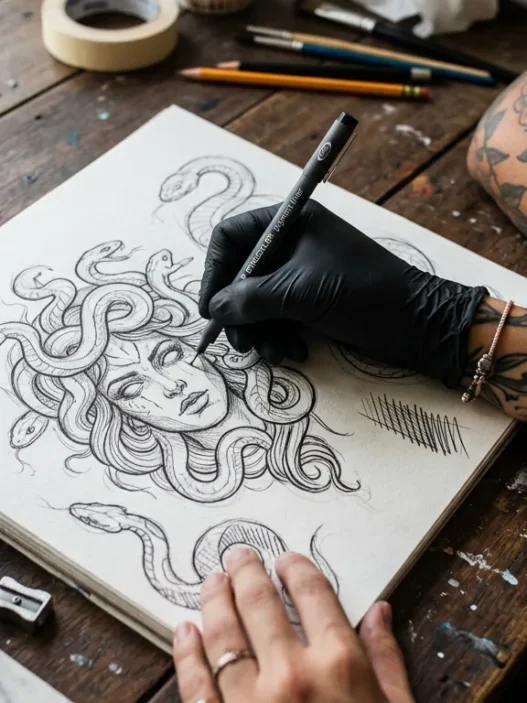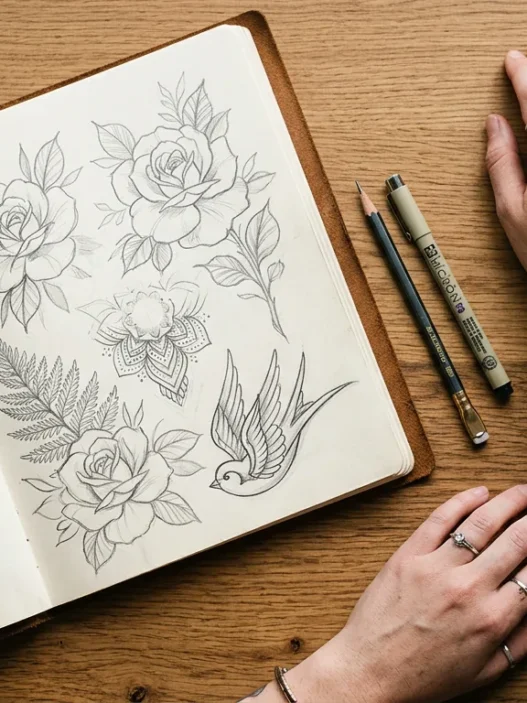






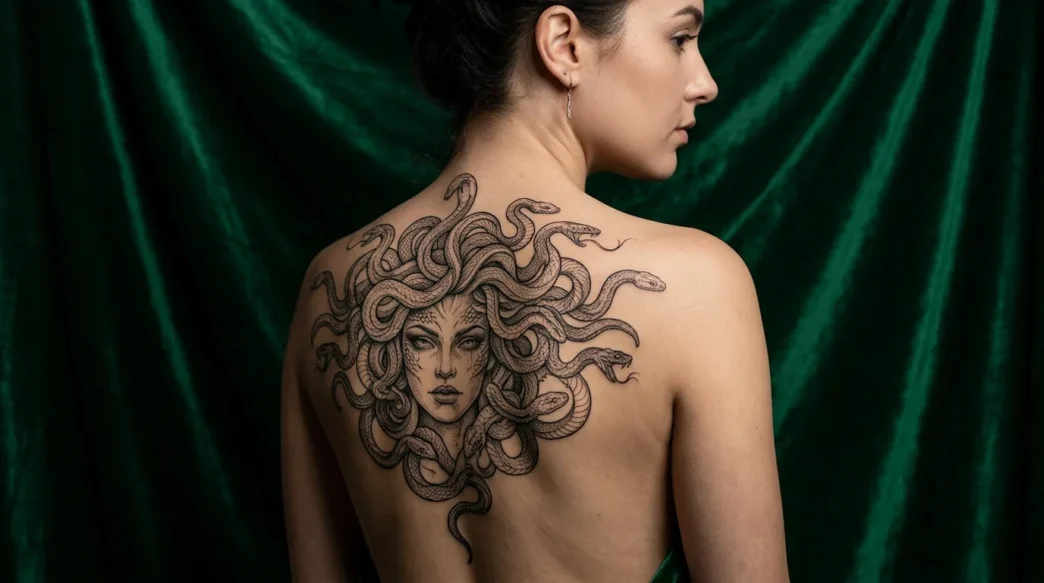
I have been genuinely obsessed with Medusa tattoos for years — and I mean obsessed in the way where I save approximately forty reference photos and then can’t sleep because I keep rearranging them in my head. There’s something about her that refuses to be one thing. She’s a monster, a survivor, a goddess, a warning, a symbol of reclaimed power. She’s all of it at once. And that’s exactly why I think she’s one of the most personal tattoos a woman can choose — because which version of Medusa you’re drawn to says a lot about who you are. So instead of throwing fifty ideas at you without context, I sorted them. These are Medusa tattoo ideas grouped by aesthetic tribe, from the quiet minimalists to the full-send maximalists — and if you want to go deeper on the symbolism first, I genuinely recommend reading about the hot take on Medusa tattoos before you book your appointment.
Navigate Your Medusa Vibe
- For the Quiet Minimalist
- For the Dark Romantic
- For the Cottagecore Witch
- For the Bold Maximalist
- For the Art History Nerd
- For the Soft Goth
- For the Celestial Dreamer
- For the Modern Feminist
- For the Neo-Traditional Collector
- For the Surrealist
- Still Not Sure Which Tribe You Are?
- Questions I Get About Medusa Tattoos
1. For the Quiet Minimalist
You own maybe twelve things, all of them intentional. Your jewelry is gold and delicate, your wardrobe is essentially a capsule, and you want your tattoos to feel like whispered secrets rather than announcements. You’re drawn to Medusa for her meaning, not her drama.
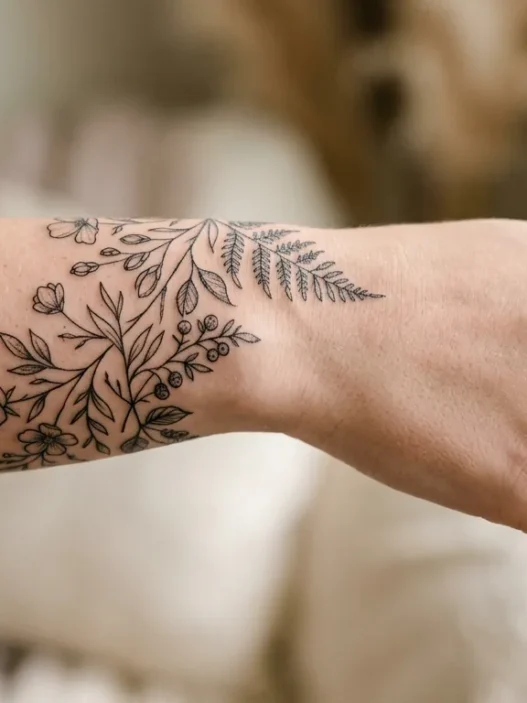
Fine line portrait, inner wrist or inner arm. A single-needle, barely-there rendering of Medusa’s face — no shading, no fill, just the clean outline of her features and the suggestion of snakes woven through her hair. The woman in the photo I keep coming back to has hers on her inner forearm, and the restraint of it is honestly stunning. Look at how the snakes read almost like hair until you look closely — that’s the kind of detail that rewards people who earn it.
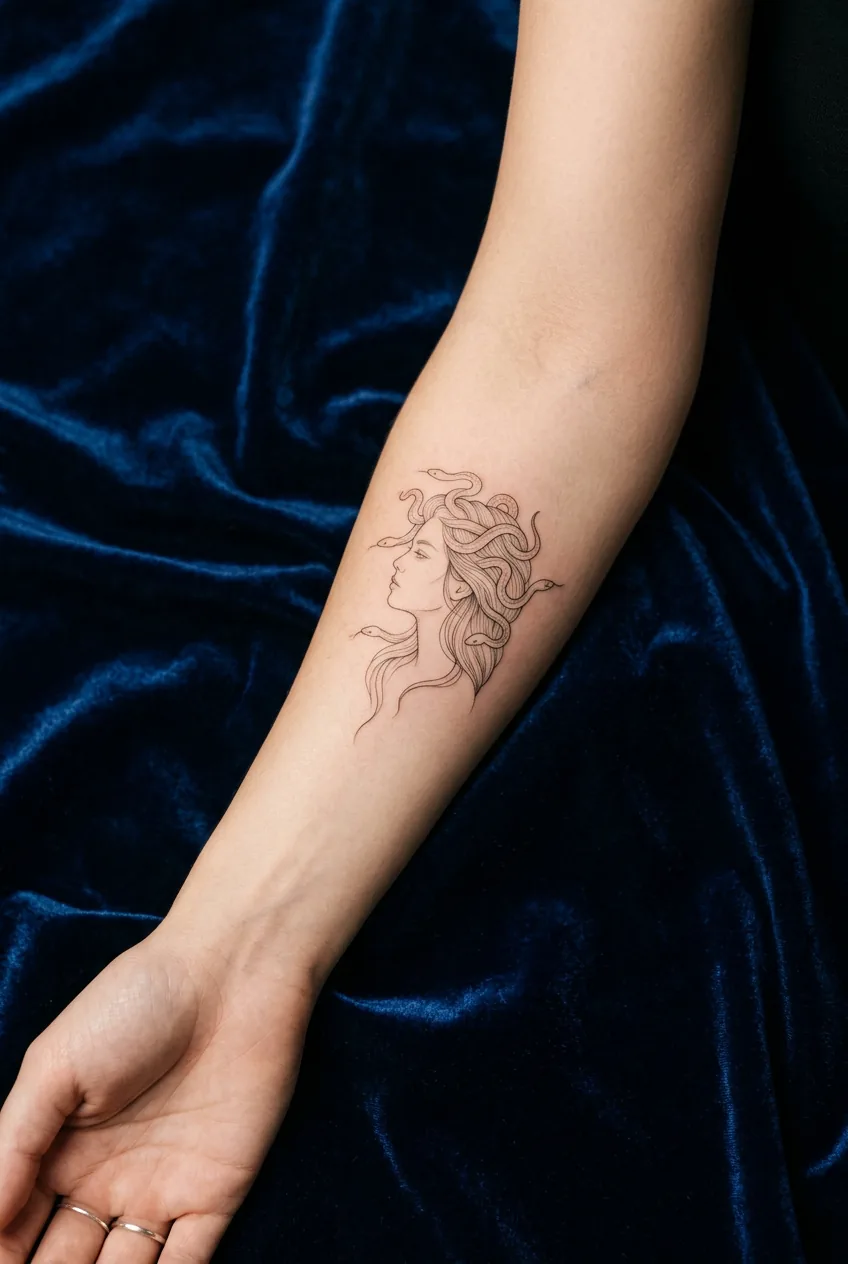
Medusa cameo silhouette. A classic profile rendered as a pure silhouette — black ink only, small enough to fit on the side of your wrist or behind your ear. It’s essentially a wearable locket portrait. Elegant, understated, and completely unmistakable to people who know mythology.
Single snake with a tiny Medusa face. Just one snake, coiled, with the suggestion of a face in the center of the coil. Micro-scale, forearm or ankle. If you love the idea of Medusa but want something that doesn’t read as a full portrait to the uninitiated — this is your move.
2. For the Dark Romantic
You re-read Wuthering Heights every autumn. Your apartment has velvet curtains and at least one candelabra you actually use. You find beauty in melancholy and you want your tattoo to feel like it belongs in a Victorian portrait gallery — lush, emotional, slightly haunted.
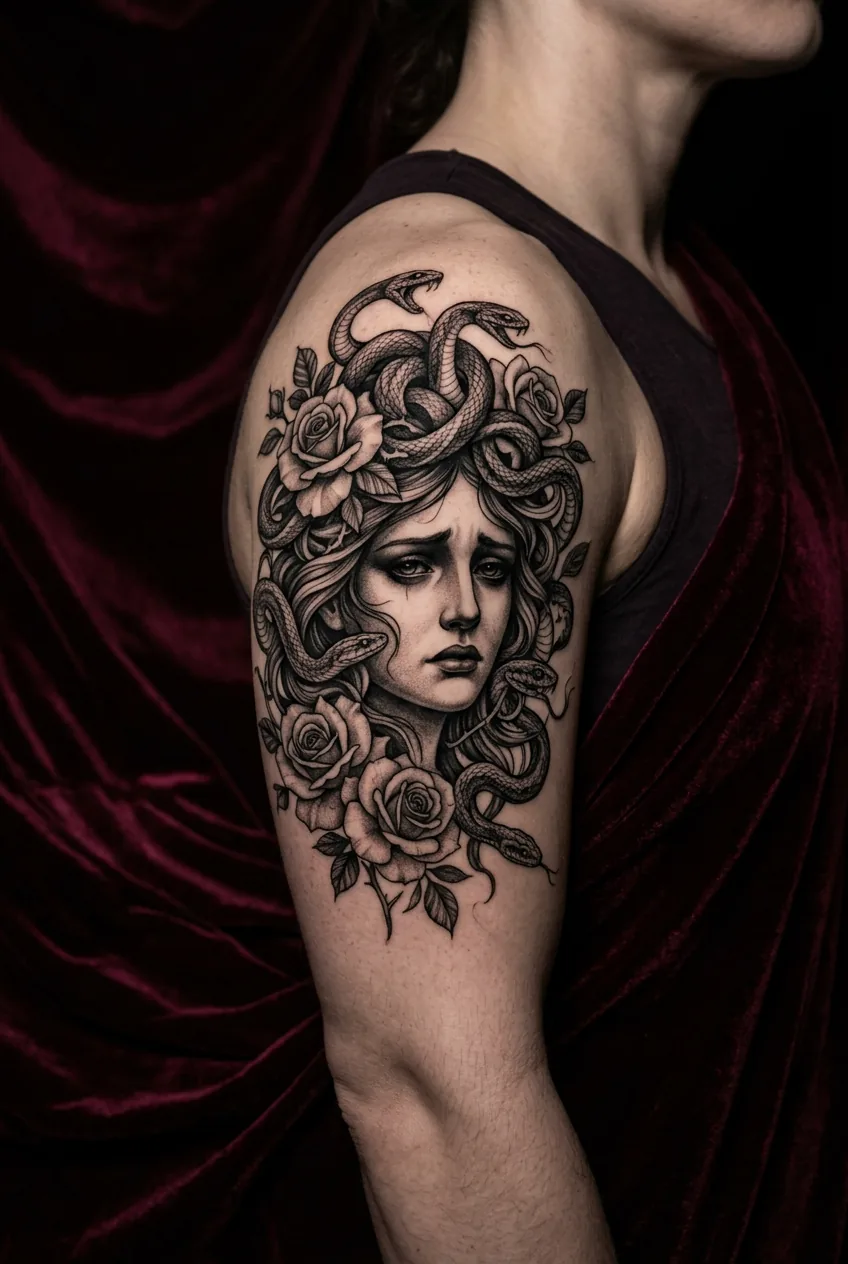
Black and grey realism portrait with roses. A full Medusa face in soft black and grey realism — think deep shadow under her eyes, an almost sorrowful expression — with roses and snakes tangled together through her hair. The snakes aren’t menacing here; they’re part of the floral composition. She looks like a Pre-Raphaelite painting. This is a forearm or upper arm piece, and it needs a tattoo artist with serious portrait skills. I’ve seen this done beautifully when the artist uses the snakes to frame the face the way a Renaissance painter would use drapery.
Medusa behind cracked stone or a broken mirror. This is a concept I absolutely love — Medusa’s face partially visible through shattered stone or a fractured mirror, as if she’s trapped inside. It’s a nod to the myth in such a clever way. The cracked edges add a natural dark texture that suits the aesthetic perfectly. This one works beautifully on the ribcage.
For anyone trying to decide between a fine line approach versus something more heavily rendered, the guide on how to choose the right style for your Medusa tattoo is genuinely helpful — it breaks down exactly which techniques suit which placements.
3. For the Cottagecore Witch
You grow herbs on your windowsill, you have opinions about mushroom foraging, and your aesthetic exists somewhere between a fairy tale cottage and a low-key apothecary. You love the natural world with a slightly witchy edge, and Medusa as a nature deity — a woman made partly of living creatures — speaks to you deeply.
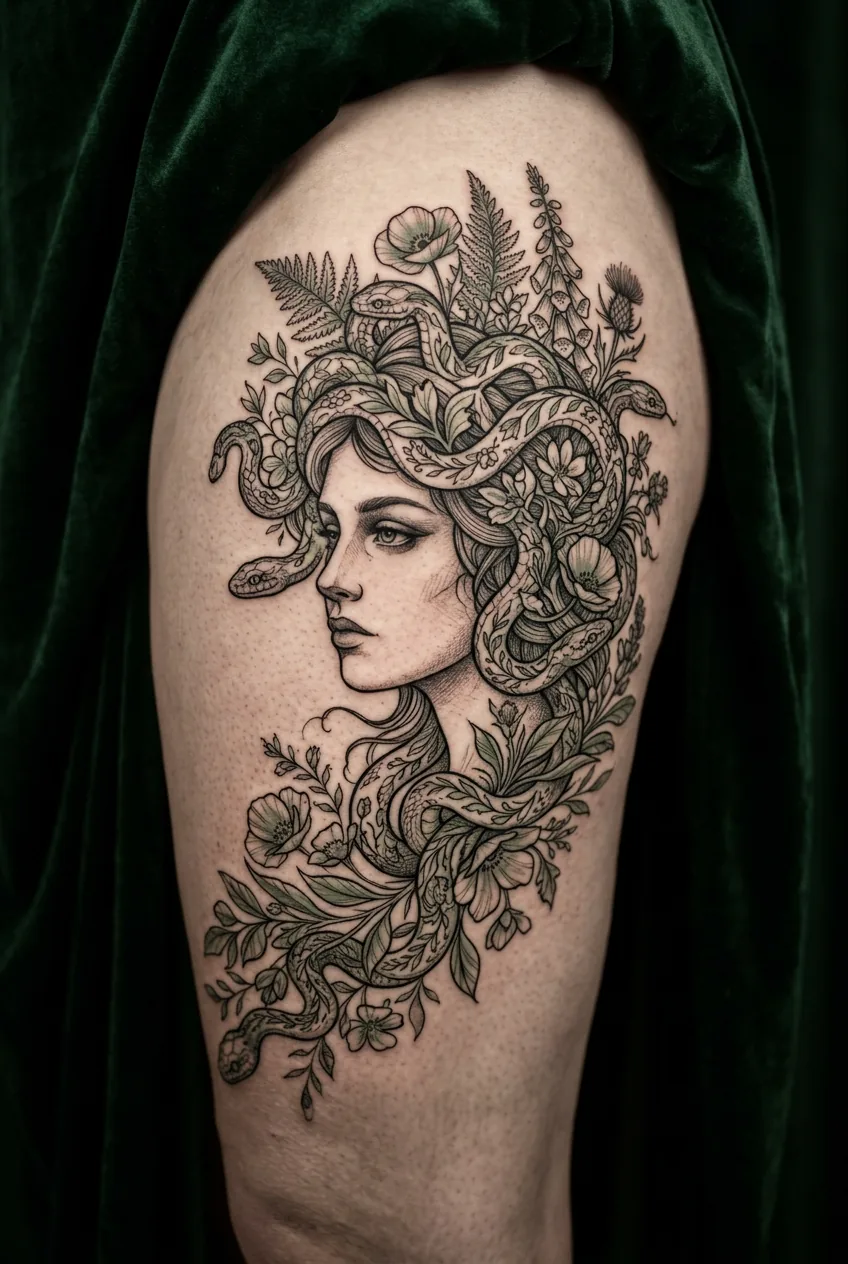
Medusa with wildflowers and botanical snakes. Instead of serpents, her hair is woven with botanical illustrations — think the kind of thing you’d find in a Victorian field guide — and the snakes are almost hidden among the florals, coiling around poppies and ferns. Illustrative style, not realism. Soft black linework with maybe a wash of sage green or muted terracotta. This is a thigh or upper arm piece where you have room to let the botanicals breathe.
Medusa as a forest deity — mossy, earthy, textured. Her face is serene, almost like a Green Man motif but feminine — leaves and vines growing through her hair, snakes resting rather than striking. Done in an illustrative woodcut style, this feels ancient and folkloric rather than Greek mythology. I love this for a shoulder or upper back placement where the organic shapes can spread naturally.
4. For the Bold Maximalist
More is more. Always has been. You wear statement earrings with a statement necklace and somehow it works completely. You want your tattoo to stop people in their tracks — a full commitment, zero apology.
Full sleeve or half-sleeve Medusa with Greek temple architecture. Medusa as the centerpiece of a full arm piece, surrounded by Doric columns, laurel wreaths, Greek key borders, and additional mythological figures from mythology tattoos lore — maybe Perseus, maybe the Gorgon sisters. Bold black lines, heavy shading, real visual weight. This is a commitment that takes multiple sessions and an artist who specializes in large-scale illustrative or neo-traditional work. But when it’s done? It’s a museum piece on your arm.
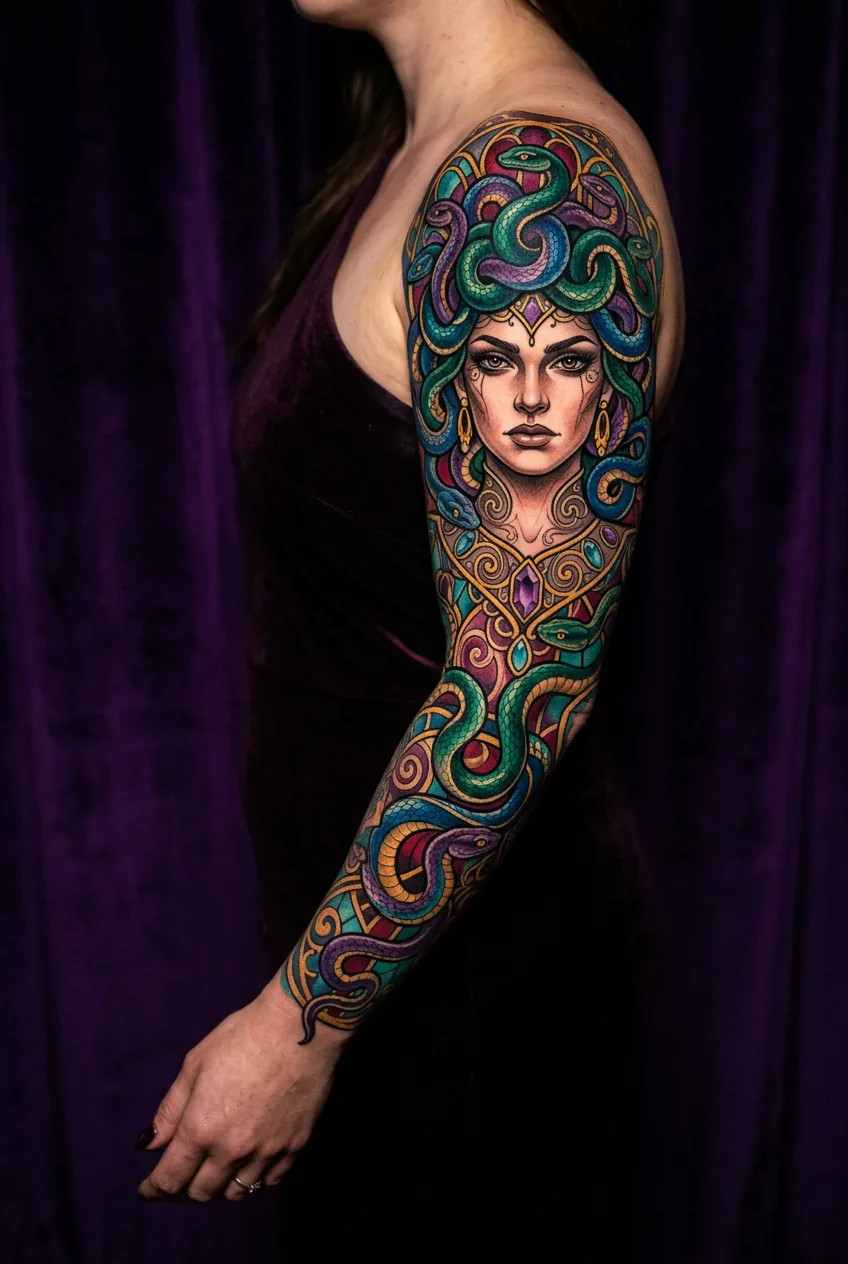
Full color Medusa with jewel-toned snakes. Her hair is a cascade of snakes in deep jewel tones — emerald, sapphire, amethyst — and her face is rendered with full color realism. This is the tattoo version of a Klimt painting. The woman whose tattoo inspired this description has it running from her shoulder to her elbow, and honestly, it’s breathtaking. The colors against her skin look like stained glass in the right light.
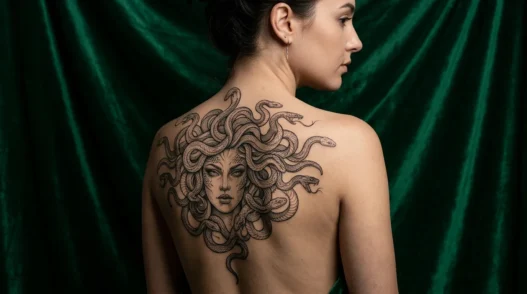
Back piece Medusa. The whole back as a canvas. Her face centered between the shoulder blades, snakes radiating outward in every direction, reaching toward the shoulder caps and down the spine. This is a multi-year project. But it is also one of the most dramatic things a woman can wear — permanently.
5. For the Art History Nerd
You have a favorite museum and it’s not the one most people name, and you know who Caravaggio is and you have feelings about his Medusa painting specifically. You want your tattoo to feel like it belongs in the canon — a reference that serious people will recognize.
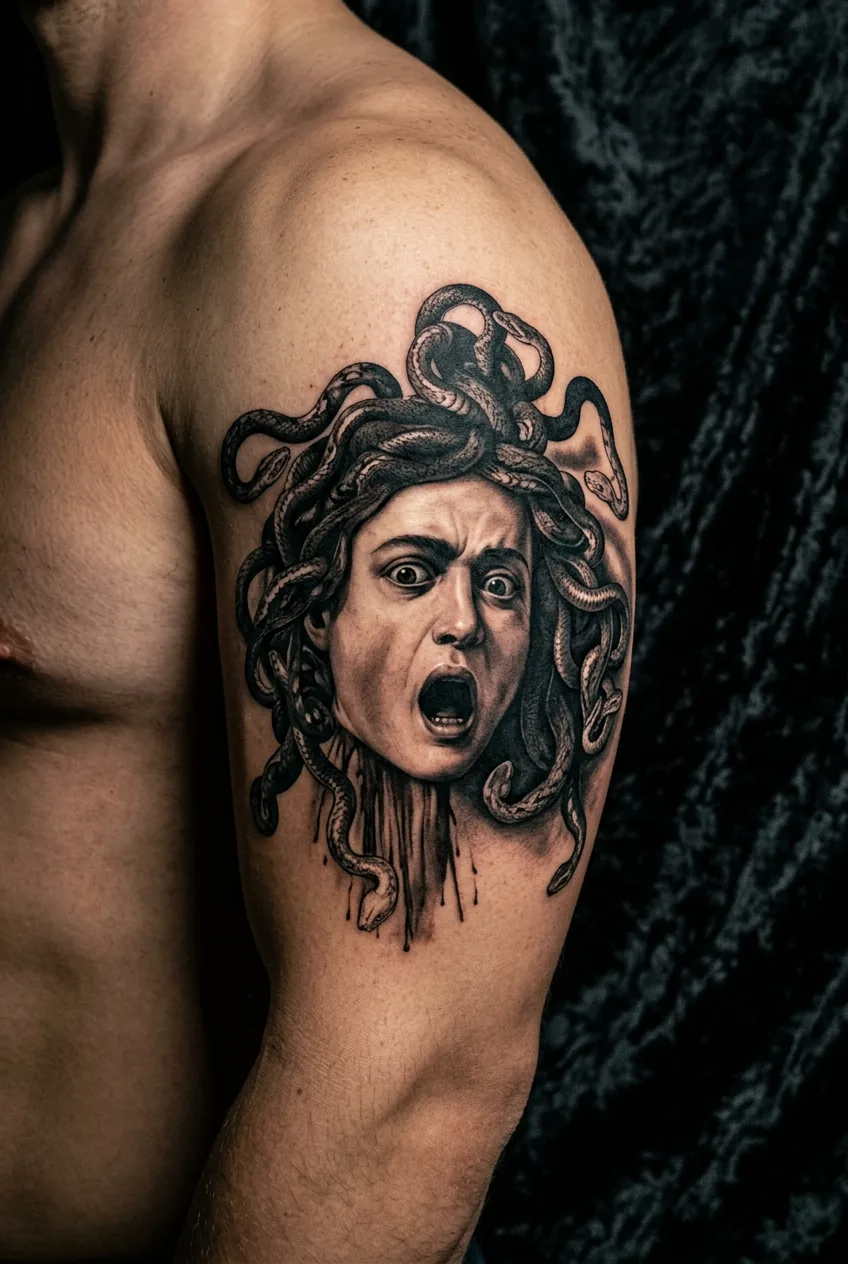
Personal pick: the Caravaggio-inspired Medusa is my absolute favorite in this entire list. There’s something about rendering that painting — her expression of shock and horror at her own reflection — as a tattoo that feels genuinely layered. She’s both the monster and the victim, which is the whole point. I’ve seen it done in black and grey on the upper arm, and it stops me every time.
Caravaggio’s Medusa — the severed head moment. The famous Caravaggio painting rendered as a tattoo: Medusa at the moment of her death, her expression one of horrified surprise, the snakes still writhing. It’s a confrontational, deeply complex image, and done in black and grey realism it is absolutely haunting. This is not for the faint of heart, but if you want a piece with genuine art historical weight, nothing beats it.
Benvenuto Cellini’s bronze Perseus — but make it hers. Flip the narrative entirely: instead of Perseus holding Medusa’s head, get Medusa holding Perseus’s shield — the one that saved him, the one she was inadvertently weaponized through. It’s a revisionist art historical reference that requires a bit of explanation but is deeply satisfying if you love the myth.
the full mythological backstory is worth reading before you finalize any concept that plays with the narrative — knowing the source material makes the revisionism land better.
6. For the Soft Goth
You love black but you also love blush pink. Your aesthetic is dark but not aggressive — more candlelit library than horror movie. You’d describe yourself as spooky-cute. Medusa in this context becomes something almost tender.
Medusa with moon phases and fine line detail. A fine line Medusa portrait surrounded by crescent moons in different phases, rendered in soft black ink with maybe the faintest wash of blush or lilac. The snakes are gentle, curled like sleeping kittens rather than striking. There’s a warmth to her expression — protective, not threatening. This works beautifully on the upper thigh or the ribcage, where it feels like a private talisman.
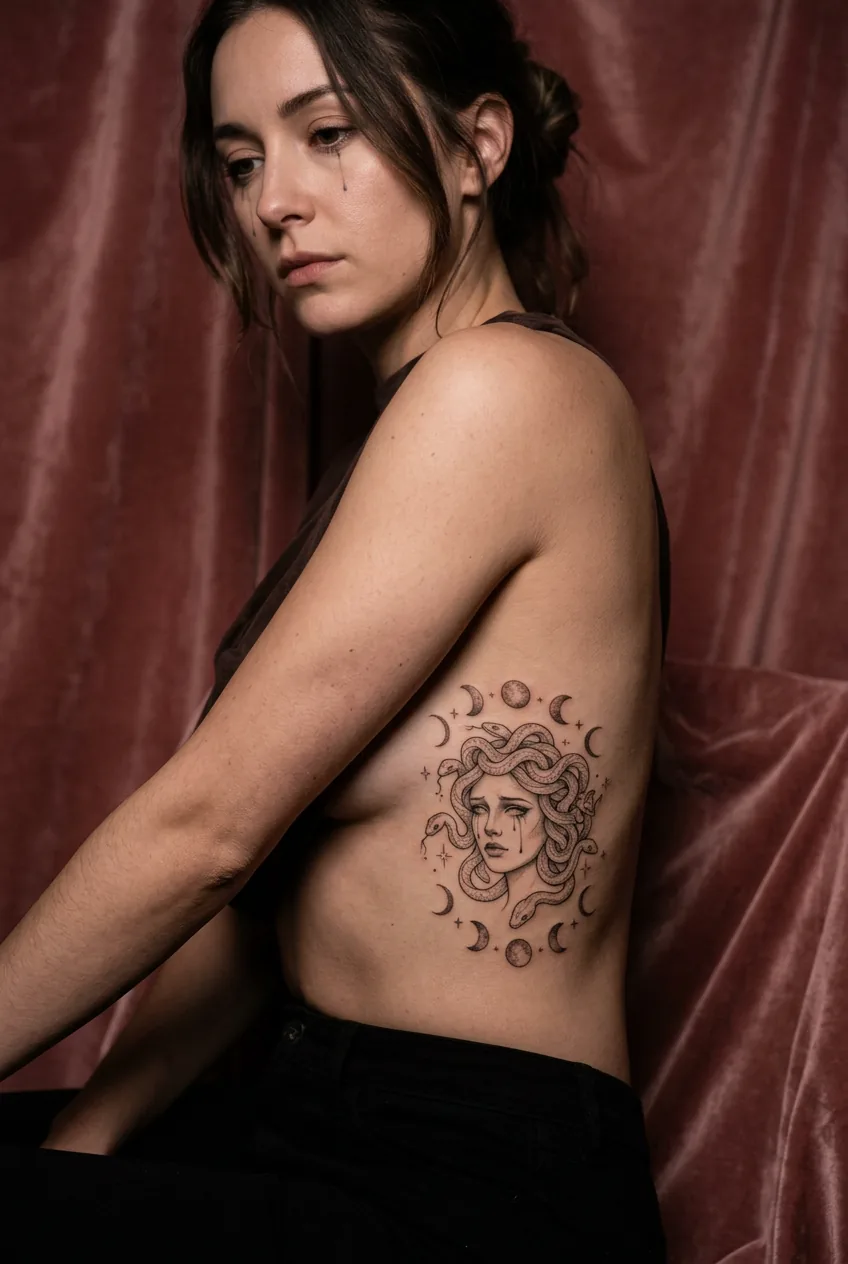
Medusa crying black tears. This sounds darker than it is, I promise. Done right — fine line, soft shading, an expression of quiet sadness rather than rage — it’s actually one of the most emotionally resonant Medusa concepts I’ve come across. The black tears read as symbolic rather than gory. For women who connect with Medusa as a figure of grief and injustice, this is the piece.
7. For the Celestial Dreamer
You check your birth chart regularly and you believe deeply that the universe has a sense of drama. Your aesthetic is cosmic — lots of deep navy, gold, stars, and a general feeling that everything is somehow connected to something bigger. You want Medusa in conversation with the cosmos.
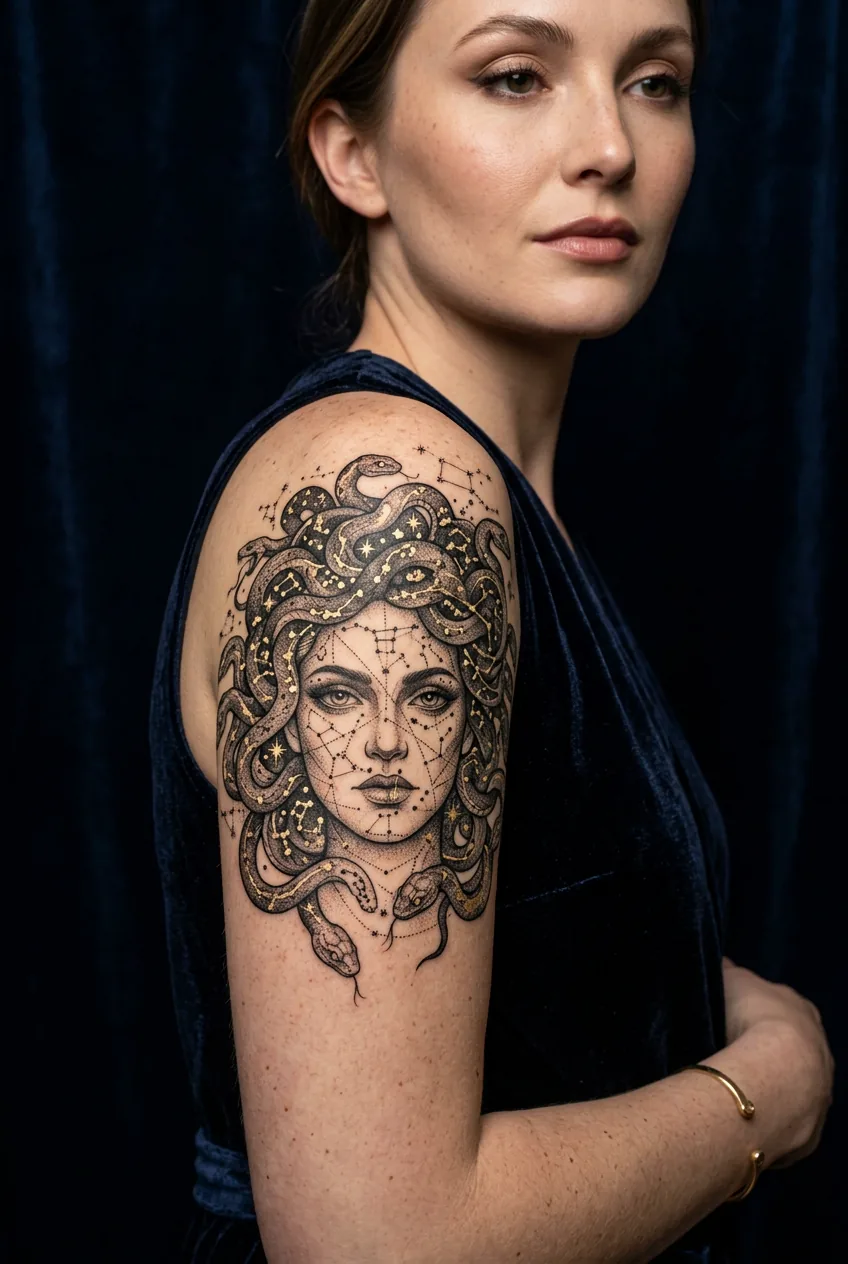
Medusa as a celestial map. Her face rendered in the style of an antique celestial chart — constellations mapped across her cheeks and forehead, snakes forming star clusters, her hair becoming the Milky Way. Executed in fine line blackwork with gold ink accents, this is one of the most inventive Medusa tattoo concepts I’ve seen lately. It requires an artist who can do both portraiture and geometric precision, but the result is extraordinary.
Medusa surrounded by planets and cosmic dust. A more painterly approach — her portrait floating in a dark cosmic field, planets orbiting around her, snakes curling toward celestial objects. This is a piece that suits a larger canvas like the thigh or upper arm, done in a illustrative style with deep blues and purples and a scattering of dotwork stars. She’s not just powerful — she’s elemental.
8. For the Modern Feminist
You know the myth. You know what happened to her before anyone called her a monster. And you’re getting this tattoo specifically because of that — Medusa as a symbol of survival, of dangerous women who refused to be made small, of power that patriarchal structures tried to punish and failed.
Medusa with “they called her a monster” script. A striking Medusa portrait — fierce expression, bold linework — paired with a short text element, either the phrase above or a line from Sylvia Plath or Ovid rendered in elegant script. This is intentionally readable as a statement piece. Done in blackwork on the forearm, it starts conversations. Check out stunning tattoo ideas for women that pack a similar kind of intentional punch — there are some really powerful designs in that roundup.
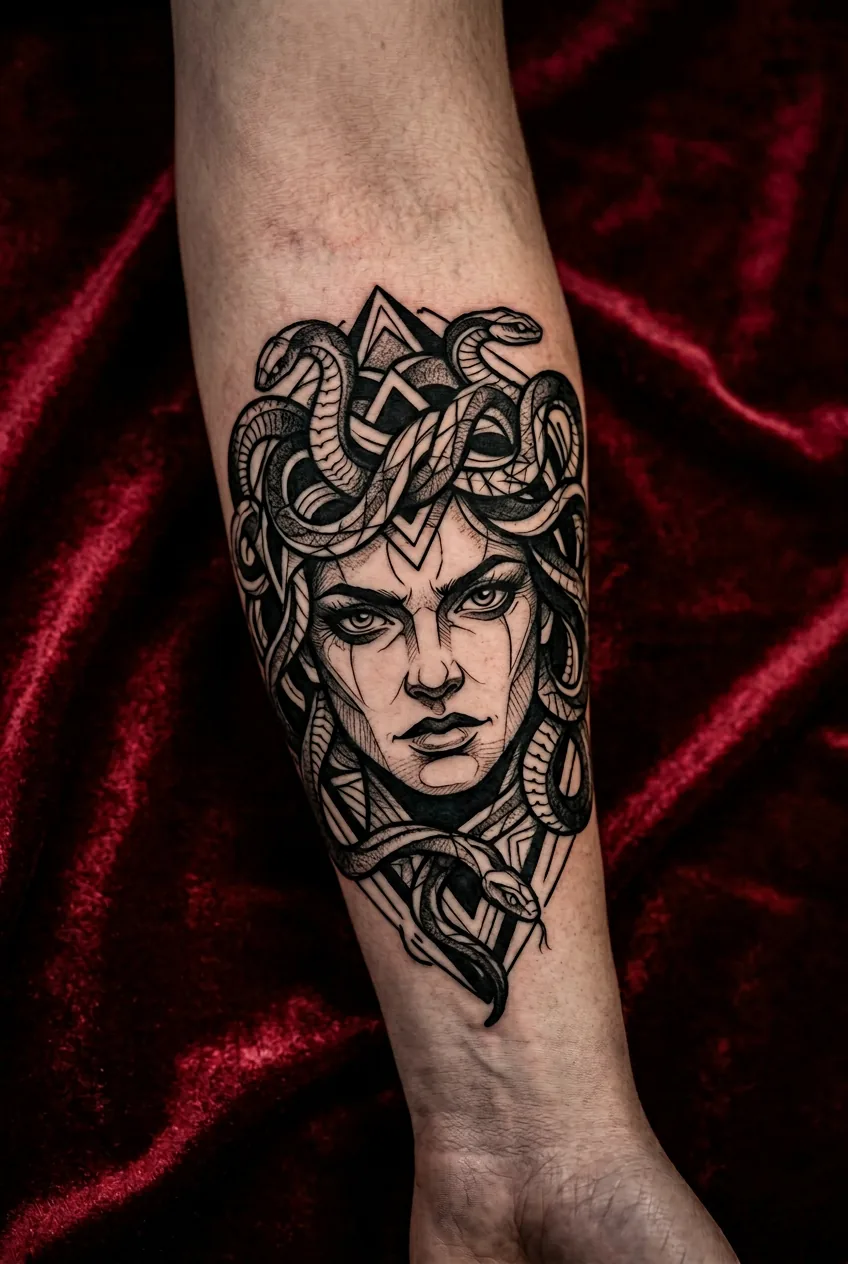
Geometric Medusa with a cracked Gorgoneion shield. The Gorgoneion — the shield bearing Medusa’s face — rendered in geometric blackwork, but fractured or cracked down the center. The idea being that the tool of her oppression is broken. It’s conceptual, it reads as a bold graphic design at first glance, and it has layers of meaning for people who look closer. Sternum or chest placement is powerful here — literally over the heart.
Feminist tattoo symbolism has grown so much as a genre in 2026 — and Medusa sits right at the center of that conversation.
9. For the Neo-Traditional Collector
You have at least one traditional-style tattoo and you’re building a cohesive collection. You love bold outlines, saturated color, a bit of decorative flourish — that sweet spot between old school flash and illustrated storybook. Your tattoos look like they belong together.
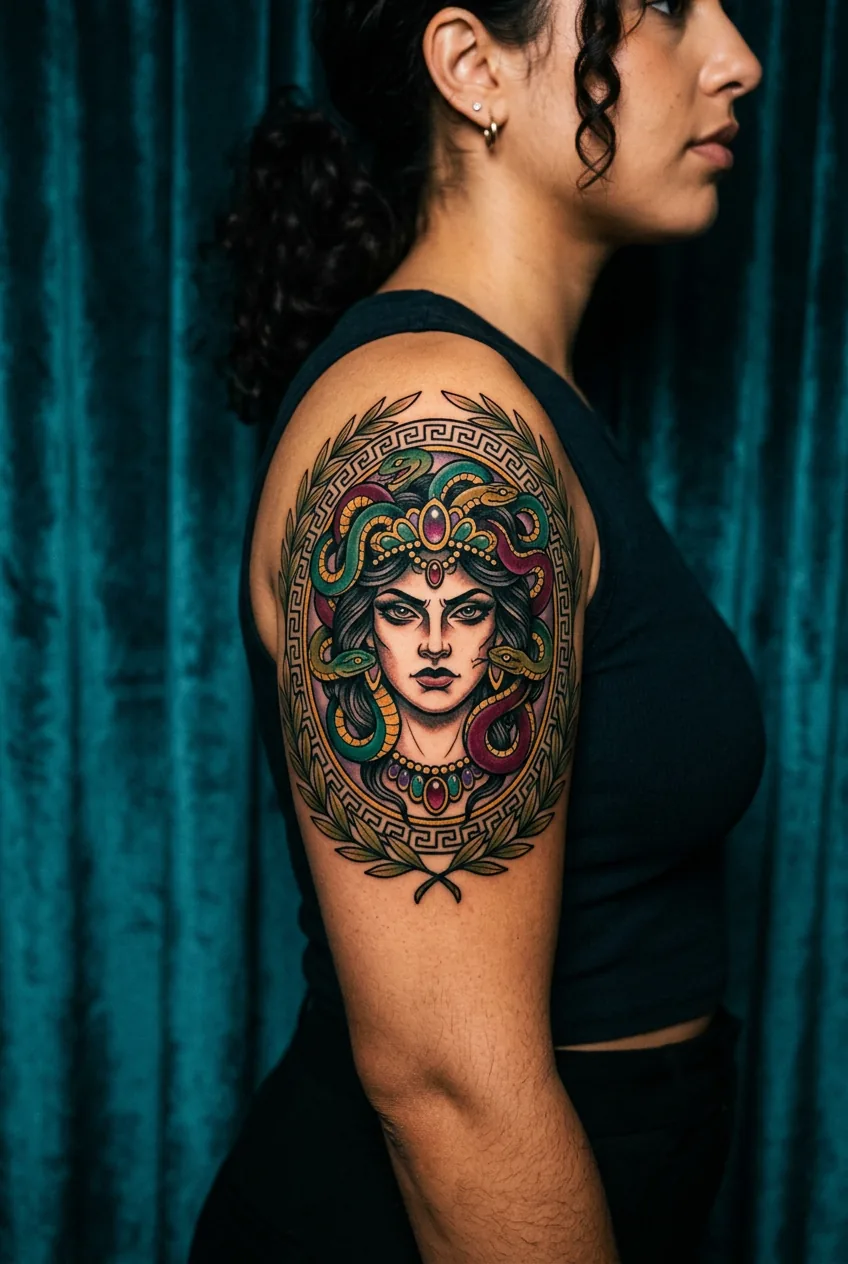
Neo-traditional Medusa portrait with ornamental frame. Medusa’s face rendered with bold black outlines and flat color fills in deep jewel tones — think the style you’d find at a serious tattoo style guide — framed by an ornamental border of laurel leaves, Greek keys, and decorative flourishes that echo traditional tattoo flash aesthetics. She’s iconic rather than realistic. This works on the upper arm as a statement piece within a larger sleeve concept, or as a standalone thigh piece.
Neo-traditional Medusa with a panther or eagle. Medusa paired with another powerful traditional motif — a panther snarling beneath her, or an eagle whose wings frame her face. This leans into the full traditional aesthetic but with the modern linework sensibility that defines neo-traditional. It’s bold, it’s cohesive with a traditional collection, and it looks genuinely timeless.
10. For the Surrealist
You love Dalí and Magritte. You find rules boring. Your tattoo collection doesn’t follow any coherent theme except “things that made me feel something weird and wonderful.” You want your Medusa to bend reality a little.
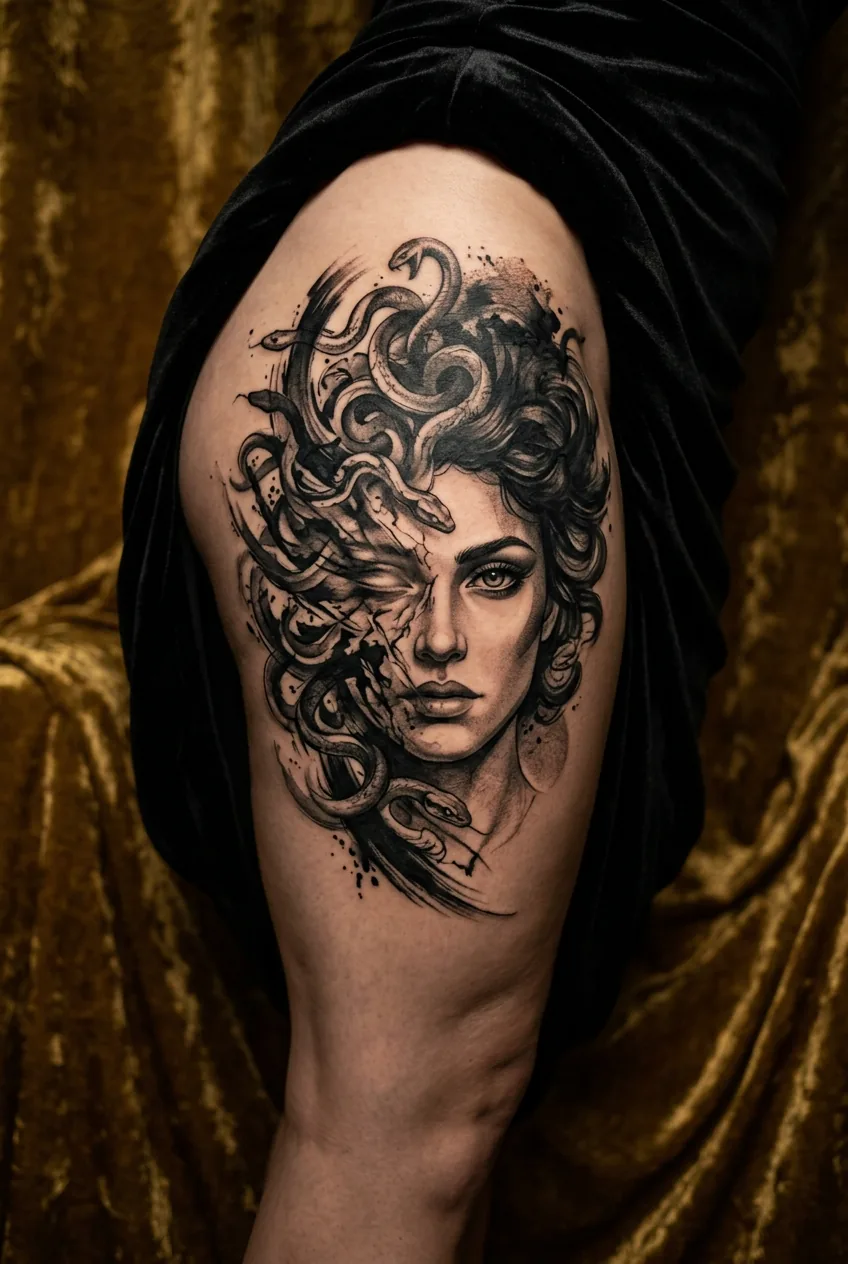
Medusa’s face dissolving into snakes. A portrait where the lower half of her face — or her hair — literally dissolves into snakes that themselves dissolve into abstract brushstroke texture. Half portrait, half abstraction. This requires an artist who works in a painterly, surrealist style and understands how to make the transition between realism and abstraction feel intentional rather than unfinished. The result is genuinely unlike anything else in the genre right now.
Medusa through a melting mirror — Dalí-inspired. Her reflection in a Dalí-style melting clock mirror — the mirror is liquid, her image distorted, the snakes slipping through the frame into a dreamscape below. This is a piece that rewards a long look. It’s the kind of tattoo people photograph at parties. Done on the thigh with room to let the surrealist elements sprawl, it’s genuinely extraordinary.
11. Still Not Sure Which Tribe You Are?
Honestly? Most of us are a blend. I’m somewhere between dark romantic and art history nerd with a soft goth undertone I mostly deny. And that’s fine — the tribes aren’t rules, they’re starting points.
What I’d suggest: instead of picking a category, pick the one image you keep returning to. Save it. Come back to it in three days. If it still feels right, that’s your answer. The tattoo that makes you nervous-excited at 2am is almost always the right one.
If you’re still waffling on the style of execution — fine line versus blackwork versus realism — the guide on choosing the right style for your Medusa tattoo will genuinely sort you out. And if you want to understand why this symbol means what it means before you commit, do read that hot take on Medusa tattoos — it’s the kind of piece that either confirms your instinct or usefully complicates it. Either outcome is useful before you book.
Questions I Get About Medusa Tattoos
What does a Medusa tattoo mean for women specifically?
For a lot of women, Medusa represents surviving something that tried to define you as a monster. The myth, in its original form, involves assault and punishment — and reclaiming that image as a symbol of power rather than shame has become deeply meaningful in contemporary feminist tattoo culture. That said, some women choose her purely for the aesthetic or the mythology, and that’s completely valid too. The meaning is yours to define.
Where is the best placement for a Medusa tattoo?
It really depends on the size and style. A large detailed portrait needs real estate — upper arm, thigh, back, or ribcage. Fine line or minimalist versions work beautifully on the inner forearm, inner wrist, or behind the ear. The sternum is incredible for a medium-sized piece if you want something dramatic but concealable. I tend to think the placement should feel intentional — somewhere you’ll see it regularly, or somewhere that feels personal and private.
How do I find an artist who can do Medusa tattoo portraits well?
Look specifically at an artist’s portrait work — not just their Medusa pieces, but any face they’ve tattooed. Faces are hard. Mythology faces are even harder because there’s no real reference to ground the likeness, so everything depends on the artist’s own skills in proportion, shading, and expression. Ask to see healed photos, not just fresh tattoos. And take your time — choosing a portrait tattoo artist is something people under-research, and it’s genuinely the most important decision in the whole process.
Are Medusa tattoos still trending in 2026?
They exploded in popularity around 2021–2022 and have genuinely maintained staying power, which tells me this isn’t a trend — it’s a motif with real cultural resonance. In 2026 the style has diversified enormously, which is why I wrote this post. You’re not getting the same Medusa everyone had three years ago; you’re choosing from a genuinely rich visual vocabulary now. That feels like a symbol that’s arrived, not one that’s peaked.
Whatever tribe you land in — go get your Medusa. She’s been waiting.