




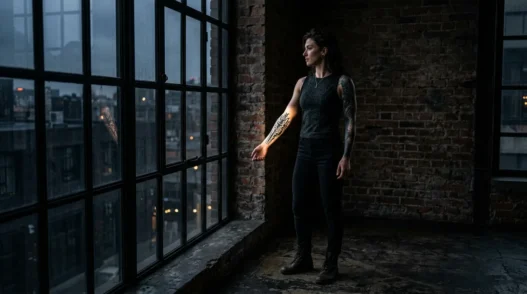

I remember the first time I saw one in real life — not on a screen, not in a saved TikTok folder, but on a woman’s forearm at a coffee shop in East London. It looked like a corrupted circuit board had been translated into something sacred. Like a sigil some ancient machine god had drawn. I genuinely stopped mid-sentence. That was early 2025, and I’ve been paying close attention ever since, because what started as a niche digital-art crossover has become something much bigger and much more intentional than “just a trend.”
How It Started
Cybersigilism didn’t arrive from a single studio or a single artist — it seeped in from the edges of internet culture, which is honestly the only origin story that makes sense for it. The aesthetic pulls from chaos magick sigil traditions (the idea of encoding intention into abstract symbol), mashes it into glitchy, angular linework that feels like it belongs on a corrupted hard drive, and lands somewhere that reads as both deeply occult and aggressively futuristic. It’s been circulating in digital art communities since around 2022, but the tattoo world caught up fast.
The earliest adopters weren’t flash-art collectors or traditional tattoo devotees. They were the people already fluent in internet subculture — the ones whose Pinterest boards looked like a fever dream crossover between Tumblr 2013 and a cyberpunk visual novel. And when that aesthetic hit skin? Something shifted. Because a sigil on a screen is a vibe. A sigil on your body is a commitment.
It’s worth noting that cybersigilism shares significant visual DNA with geometric tattoos — but where geometric work tends toward symmetry and precision, cybersigilism deliberately destabilises that. The lines glitch. The shapes feel corrupted on purpose. That intentional wrongness is the whole point.
Who’s Actually Driving This
Here’s what I find genuinely fascinating: this isn’t being driven by tattoo artists posting their portfolios. It’s being driven by the people getting tattooed. Specifically, women in their mid-twenties to early thirties who came of age during peak internet culture, lived through a pandemic that gave them an enormous amount of time to sit with their own bodies and think about what they wanted on them permanently. That’s not a small thing.
There’s a post-pandemic body autonomy thread running through almost every ink trend that’s hit hard since 2022. People stopped asking “will this look professional?” and started asking “does this feel like me?” Cybersigilism is almost weaponised in that respect — it is deeply, deliberately unreadable to anyone outside the aesthetic. Your boss probably can’t tell if it’s a tribal symbol, a tech logo gone wrong, or something you made up. That ambiguity is protective. And for a generation that grew up being surveilled online constantly, there’s something quietly radical about wearing a symbol that can’t be easily categorised or co-opted.
TikTok accelerated this, obviously. But what’s interesting is that the videos doing numbers aren’t tutorials — they’re reveals. Someone pulling up their sleeve in soft light. The comments section going feral. That’s the cycle that matters here: the tattoo gets seen, it’s immediately legible to the people who get it and completely alien to those who don’t, and that gap is the whole cultural currency.
What the Ink Actually Looks Like
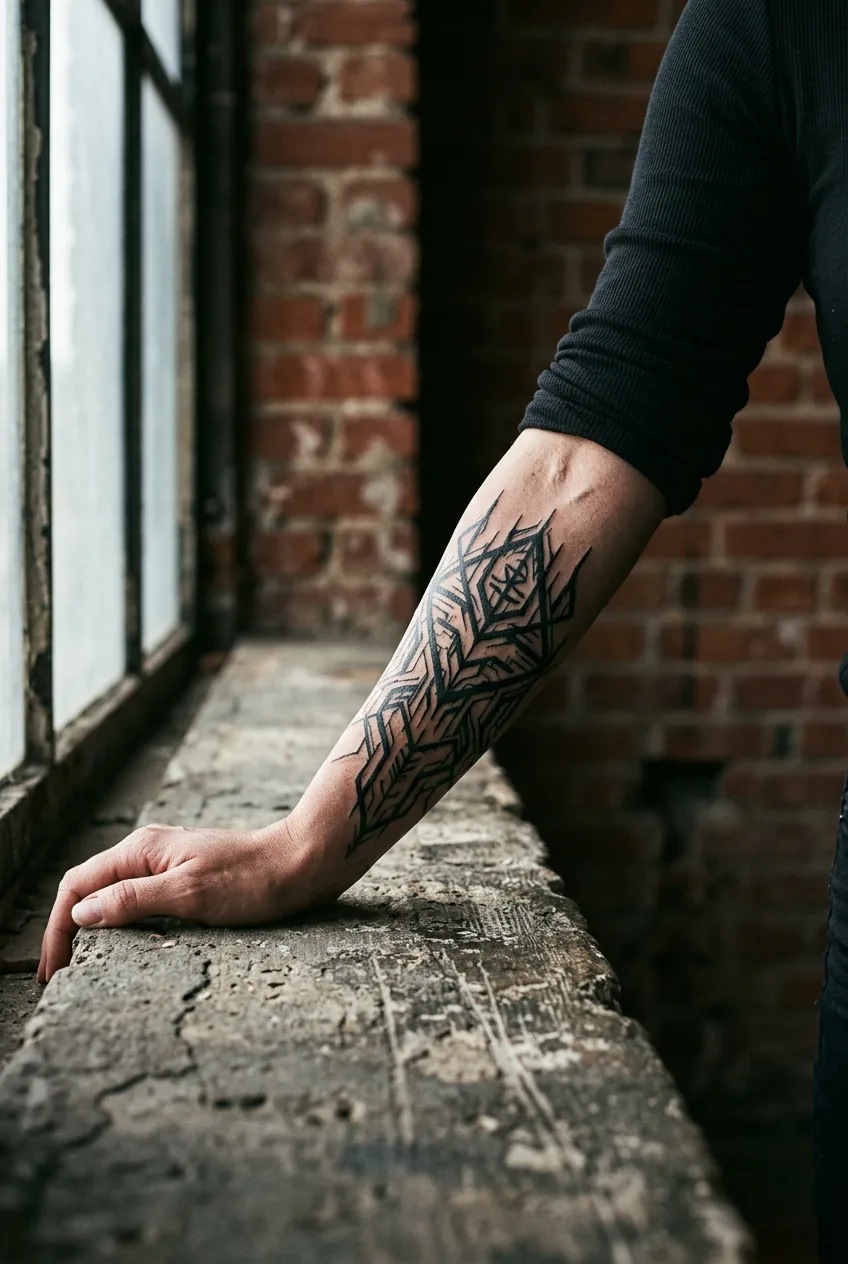
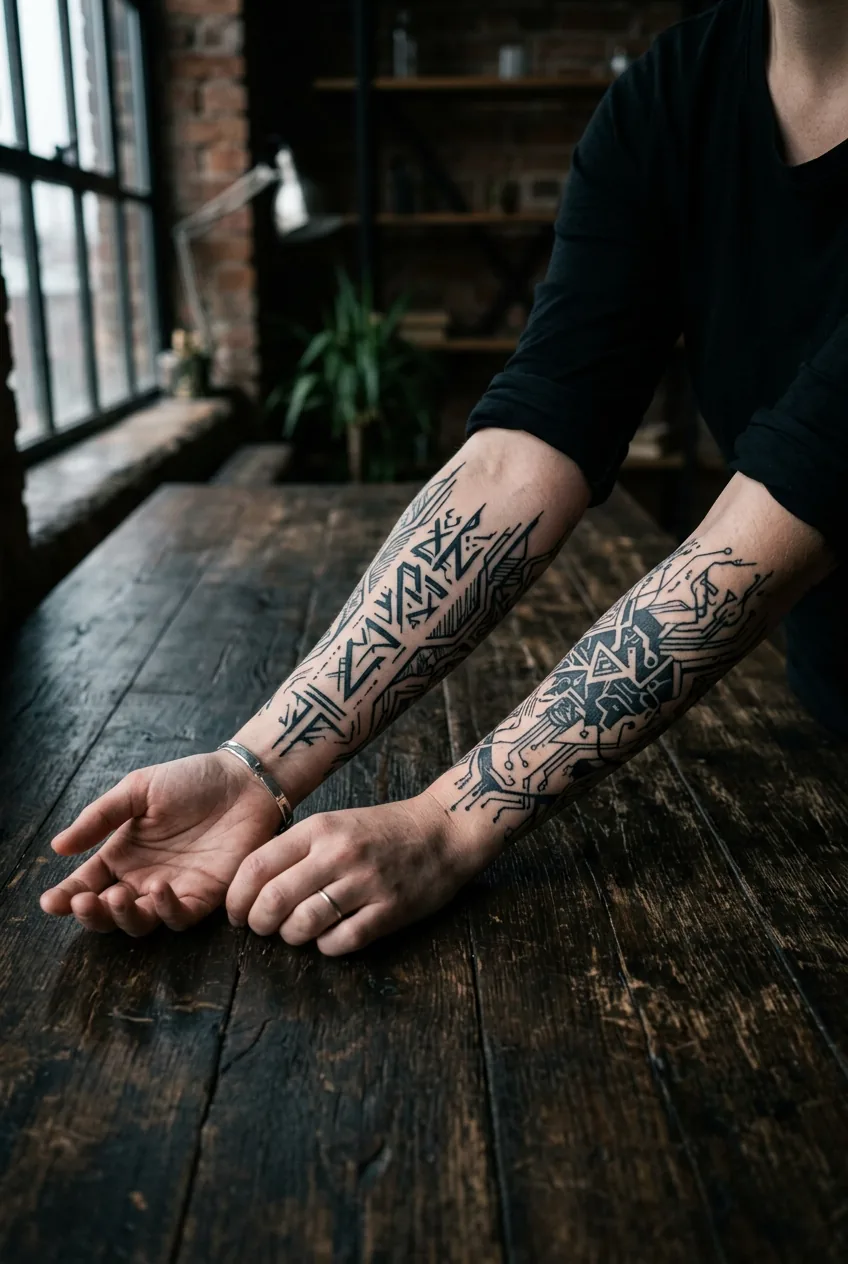
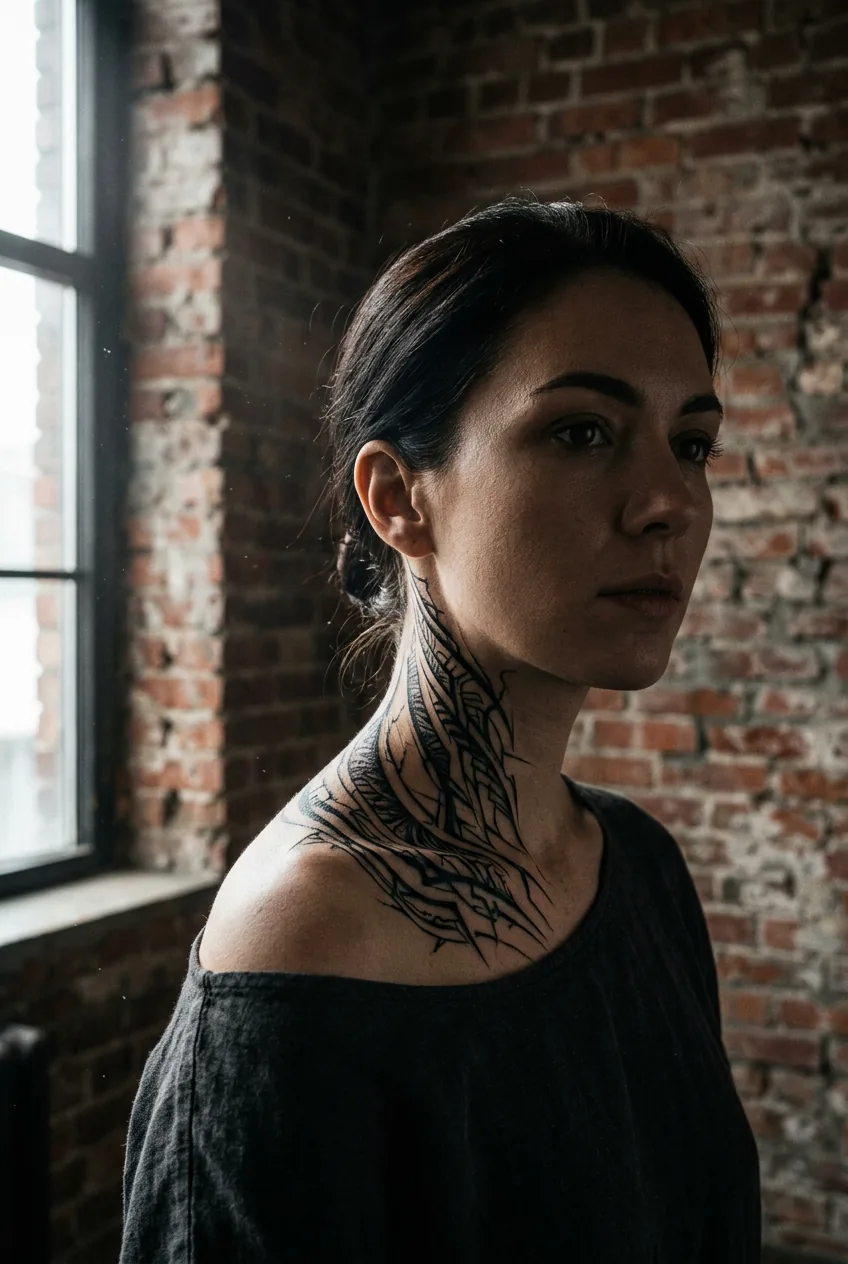
Since I’m always getting asked to describe it to people who haven’t seen it yet — here’s my best attempt. Imagine you took a traditional protective sigil (think occult geometry, interlocking shapes, encoded symbols), ran it through a pixel corruption filter, then handed the sketch to someone who loves both fine line blackwork and circuit board schematics. What comes out the other side is cybersigilism.
Visually, the most common elements include:
- Sharp, angular linework that deliberately breaks or “glitches” mid-stroke
- Stacked geometric shapes that look almost like runes but feel digital
- Negative space used to create depth — the skin itself becomes part of the design
- Asymmetry and disruption as intentional design choices, not mistakes
- Occasional integration of real text fragments in corrupted or mirrored type
- Blackwork almost exclusively — colour versions exist but feel like a different beast
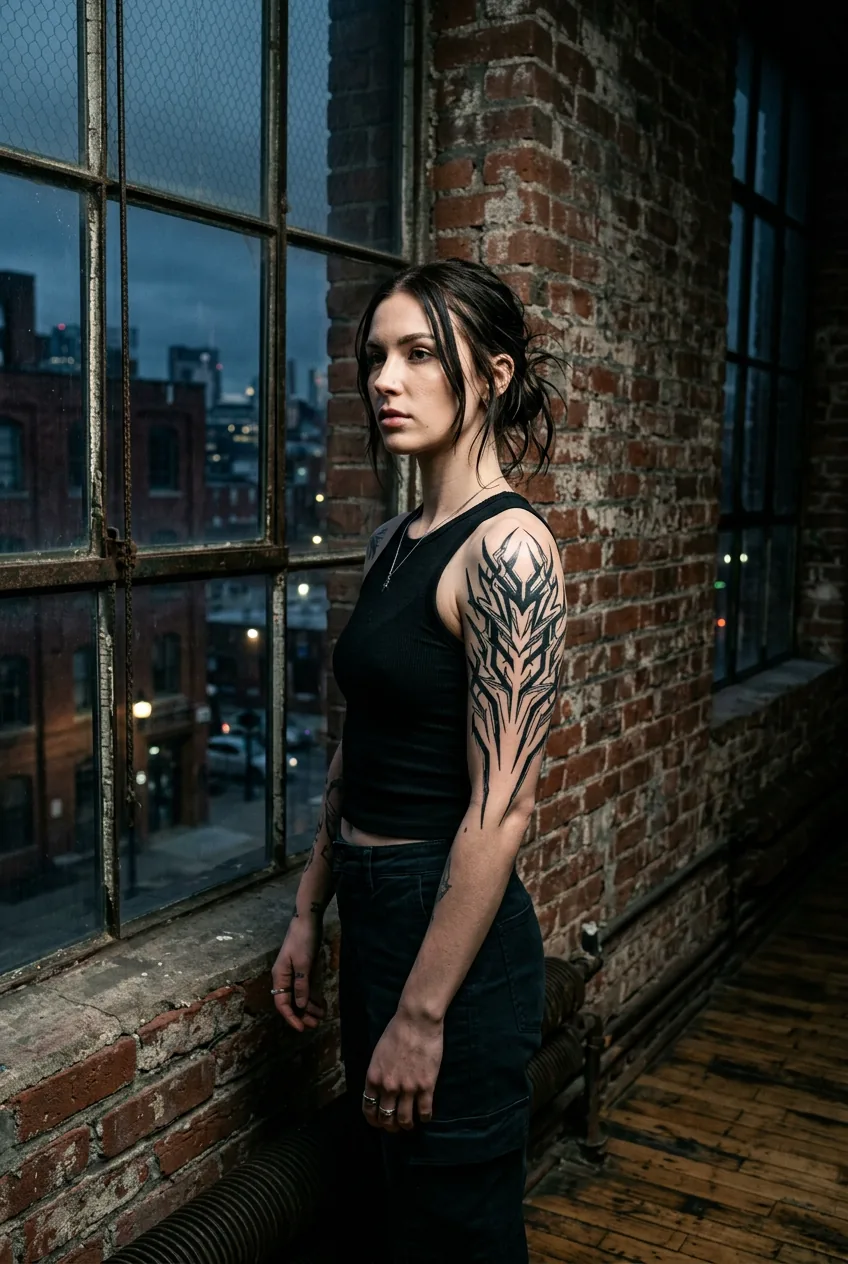
Look at the woman in the photo below — see how the linework seems to almost fracture as it moves up her arm? That deliberate breaking is exactly what separates a trending cybersigilism tattoo from clean geometric blackwork. It’s not a mistake in execution. It’s the entire point.
Before you commit to anything, I’d seriously recommend reading what nobody tells you before getting a cybersigilism tattoo — there are some genuinely important things about finding the right artist and managing your expectations that I wish had been compiled that clearly when I first started researching.
Seeing the Style Come Together in Real Time
What the Industry Says
I’ve been talking to artists — not just following them online, but actually asking the ones I respect what they’re seeing in their booking queues. The consensus is pretty consistent: cybersigilism requests have gone from “occasionally interesting” to “several a week” over the last eighteen months. One artist I spoke to described it as the first style in years where clients come in with detailed, original reference images rather than screenshots of someone else’s tattoo. That’s significant. It suggests people are engaging with the aesthetic intellectually, not just aesthetically.
The challenge for artists, apparently, is that the style looks deceptively simple but requires an extremely controlled hand. The “glitch” has to be precisely imprecise — too deliberate and it looks stiff, too loose and it just looks like a mistake. blackwork linework techniques are the foundation, but the cybersigilism overlay requires artists to almost unlearn their precision instincts. Not every blackwork artist can make the jump, and the good ones will tell you that honestly.
There’s also a broader conversation happening about where this sits stylistically. It overlaps with trending tattoos broadly, but it also pulls from sacred geometry traditions and from the kind of abstract symbolic work that’s always existed outside mainstream tattoo culture. Sacred geometry symbolism gives useful context if you want to understand the deeper lineage. Some artists are billing it as a new style entirely; others see it as a subset of blackwork or abstract. Honestly, the taxonomy debate is less interesting to me than what it represents culturally.

My Honest Take on Whether It Ages Well
Okay, this is where I’ll probably annoy some people, but I think it needs saying: I think cybersigilism ages better than almost any trend tattoo of the last decade. And here’s why — the abstract, symbolic nature of it means it isn’t tethered to a specific cultural moment the way, say, a matching best-friend avocado tattoo is. Twenty years from now, a well-executed cybersigilism piece is going to read as bold, intentional blackwork with symbolic depth. It won’t scream “I got this in 2026.”
That said — and this is important — quality matters enormously here. A poorly executed cybersigilism piece, one where the “deliberate” imprecision just looks like wobbly lines and unclear composition, will age terribly. The difference between a transcendent piece and a regrettable one is almost entirely in the artist’s skill and the client’s preparation. Which is exactly why I keep pointing people toward resources like 2026’s trending cybersigilism tattoo trends and which ones will age well — because not all executions of this style are equal.
I’d also push back on the idea that longevity should be the primary metric. There’s something slightly exhausting about judging every piece of body art by whether your seventy-year-old self will approve. If it means something to you now, if it represents who you are in this specific cultural and personal moment, that’s enough. Not every tattoo needs to be a heirloom.
Whether It Outlives the Algorithm
This is the question I keep coming back to. TikTok made cybersigilism visible to millions of people who wouldn’t have encountered it otherwise — but TikTok also has a well-documented tendency to chew through aesthetics and spit out the bones within eighteen months. So is this different? I think yes, and here’s my honest reasoning.
Most algorithm-driven trends are consumable. You buy the dress, you wear it for a season, you donate it. Tattoos are different. There’s a built-in friction — the permanence of the decision acts as a filter. The people getting cybersigilism aren’t impulse-buying it because they saw it on their For You page on a Tuesday. They’re researching artists, saving reference images, sitting with the idea for months. That process self-selects for genuine commitment rather than trend-chasing.
And beyond the individual decision, the aesthetic itself has roots deep enough to survive the platform cycle. The sigil tradition is ancient. The digital-corruption visual language is tied to how an entire generation understands the world — screens, glitches, data, the slippage between physical and digital identity. That’s not going away. If anything, it gets more relevant as we move deeper into 2026 and whatever comes after it.
It’s also worth drawing a line between cybersigilism and some of the other dark-aesthetic tattoo styles currently circulating. I’ve written before about the spider tattoos the internet loves to hate — and that piece is a good example of how aesthetic controversy and algorithmic visibility aren’t the same thing as cultural staying power. Blackwork versus fine line longevity is a comparison worth reading if you’re trying to make a long-term decision about style.
My honest prediction? Cybersigilism as a named aesthetic might fade from the mainstream conversation within a few years. But the people who got these tattoos won’t regret them. The visual language is too personal, too rooted in a specific generational experience of the internet and the body and the self, to feel like a mistake. That’s what separates a statement from a trend.

Questions I Get About This
How do I find an artist who actually specialises in cybersigilism?
Look for artists whose portfolio shows strong blackwork linework AND abstract or geometric work — not just one or the other. Search specifically for cybersigilism in their tags rather than assuming any blackwork artist can execute it. Ask them directly whether they’ve done the style before and look at their actual cybersigilism pieces, not just their general portfolio.
Does cybersigilism hurt more than other tattoo styles?
Pain is placement-dependent, not really style-dependent. That said, cybersigilism pieces that use lots of fine linework with heavy passes for bold sections can involve longer sessions, which means cumulative discomfort. Placement on bony areas like the forearm inner wrist or chest will always hurt more regardless of style.
Can cybersigilism be custom-designed for personal meaning?
Absolutely — and honestly this is where it gets really interesting. Because the style is rooted in sigil tradition (encoding personal intention into symbol), many clients work with their artist to incorporate specific shapes, letters, or personal symbols into the cybersigilism composition. The result is something that’s visually in the aesthetic but is also uniquely yours in meaning. It’s one of the more personal approaches to body art I’ve encountered in years.
How well does cybersigilism hold up over time as the ink ages?
Fine linework — which is a component of many cybersigilism pieces — does require touch-ups more often than bold traditional linework. The very fine detail lines can soften or spread slightly over years. Going to an experienced artist who knows how to calibrate line weight for longevity makes a real difference here. Sunscreen is non-negotiable.
If you’ve been sitting on a cybersigilism concept for months, unsure whether to commit — I get it. It’s permanent, it’s niche, and it’s not for everyone. But if every time you see one your gut does that thing where you already know the answer? That’s probably your answer. Go find the right artist. Take your time with the design. And wear it like the statement it is.