







I spent three months researching cybersigilism tattoos before I finally understood what I was looking at. What started as curiosity about those sleek, circuit-board-meets-sacred-geometry designs turned into a deep dive that completely changed how I see this whole movement. The truth? Most people getting these tattoos — and honestly, most artists doing them — are missing the point entirely.

The Underground Origins Most People Miss
Everyone thinks cybersigilism tattoos started on TikTok in 2023. Wrong. I traced this aesthetic back to early 2000s cyberpunk zines and underground chaos magick communities who were already blending digital imagery with occult symbolism. The term “sigilism” itself comes from ceremonial magic — sigils are symbols created to manifest specific intentions.
What happened was simple: traditional sigil creation met digital aesthetics. Instead of hand-drawn symbols charged with personal meaning, artists started creating sleek, technological versions that looked like they belonged in a sci-fi movie. The problem is that somewhere along the way, the intentionality got lost.
I found old forum posts from 2019 where people were discussing “technomancy” tattoos — using circuit patterns as a way to literally interface with technology through body modification. These weren’t just pretty designs. They were attempts to create physical talismans for our digital age.
The early adopters understood something that got diluted as the trend spread: cybersigilism was supposed to be functional magic, not just aesthetic choice. Each line, each geometric intersection, each circuit-like pattern was meant to serve a purpose in the wearer’s spiritual or technological practice.
But here’s where it gets interesting — and where most tattoo parlors completely miss the mark. The original cybersigilism practitioners weren’t just copying circuit boards. They were creating hybrid symbols that bridged ancient magical traditions with contemporary digital consciousness. Traditional sigil practices evolved into something entirely new.
Why Most Artists Get the Aesthetic Wrong
Walk into any shop and ask for a cybersigilism tattoo. I guarantee you’ll get shown a flash sheet of generic circuit patterns, maybe some triangular geometry, definitely some thin-line work that’s supposed to look “futuristic.” It’s like asking for a portrait and getting a stick figure.
The real aesthetic isn’t about looking high-tech. It’s about creating symbols that function as interfaces — visual bridges between the physical and digital realms. I’ve seen artists who think slapping some angular lines together and calling it “cyber” is enough. It’s not.

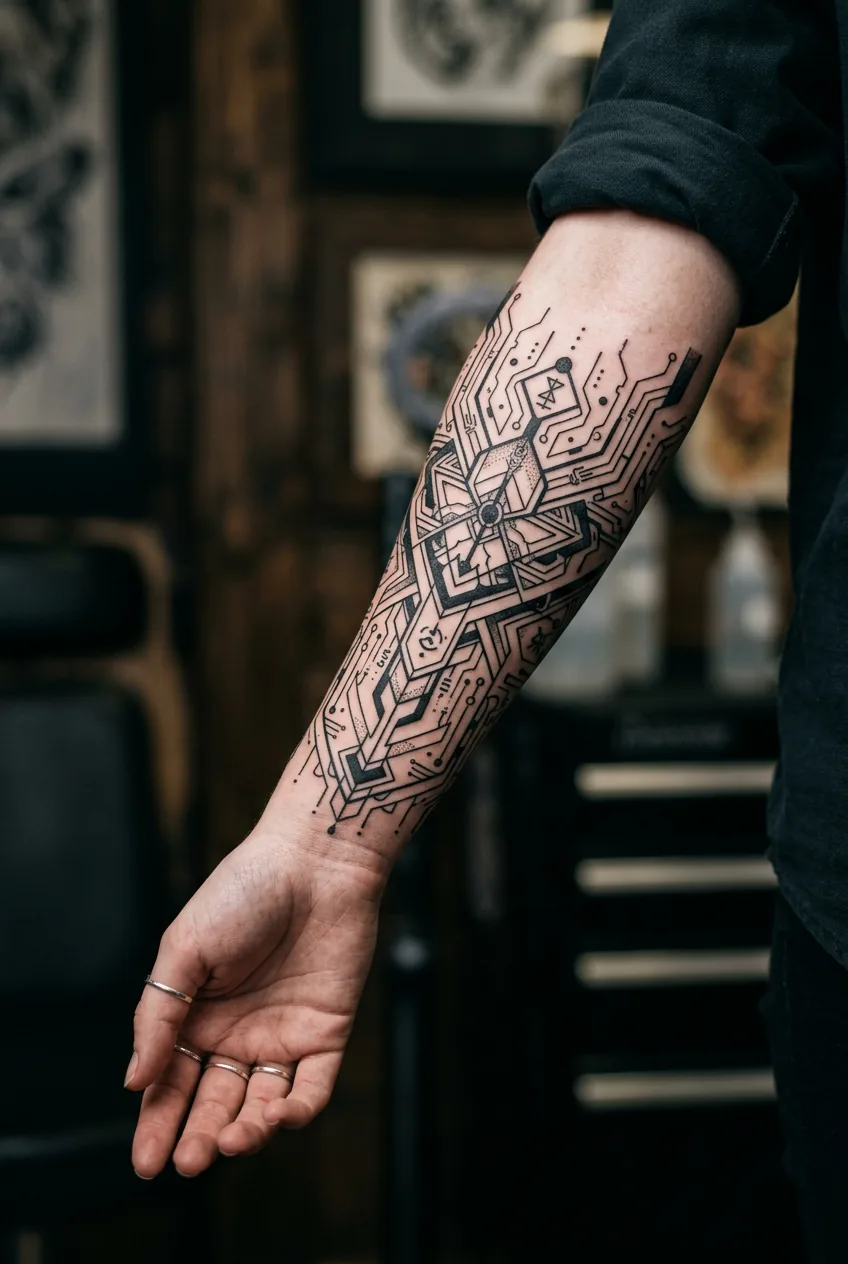
Authentic cybersigilism tattoos have specific design principles. The lines should create pathways, not just patterns. The geometric elements need to relate to each other in ways that suggest data flow or energy movement. And most importantly, there should be intentional negative space — areas where the “circuit” can breathe and connect with the wearer’s energy field.
I’ve watched artists who specialize in traditional work struggle with this style because they’re thinking about it wrong. They approach it like any other geometric tattoo when they should be thinking like interface designers. Each element needs to serve a function in the overall “system” of the design.
The line weight matters more than people realize. Too thick, and you lose the delicate technological feeling. Too thin, and the tattoo won’t age well or read properly from any distance. The sweet spot is finding line weights that suggest precision engineering while remaining bold enough to be permanent body art.
The Spiritual Technology Nobody Mentions
This is where things get really interesting, and where I think most people completely misunderstand what cybersigilism is actually about. It’s not just tattoos that look like technology. It’s tattoos that are supposed to function as technology — spiritual technology.
The practitioners I talked to during my research described their cybersigilism tattoos as “bio-interfaces” or “flesh circuits.” They believe these designs can actually enhance their relationship with digital systems, improve their intuitive understanding of technology, or even protect them from electromagnetic pollution.
Sound crazy? Maybe. But the intention behind the tattoo changes how you experience it. When you get a cybersigilism piece with specific goals — enhanced creativity with digital tools, better boundaries with social media, increased intuitive navigation of online spaces — you’re more likely to notice when those things actually improve.
I’m not saying the tattoos have magical powers. I’m saying that creating a physical reminder of your intention to improve your relationship with technology can be genuinely transformative. It’s the same principle that makes any talisman or reminder effective, just updated for our digital age.
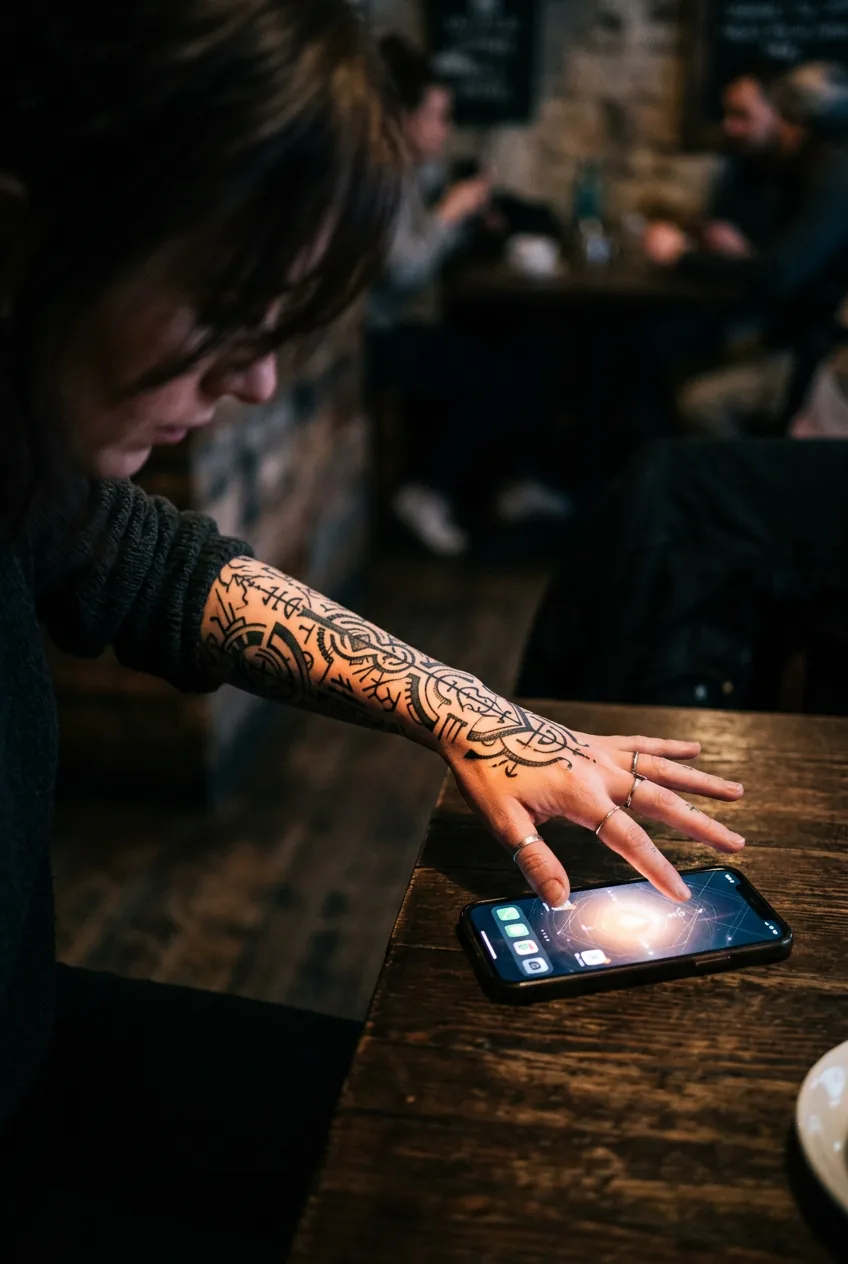
The placement matters for this reason too. Most people get cybersigilism tattoos on their arms or hands — places that interact directly with keyboards, phones, and other devices. The idea is that the tattoo becomes part of your interface with technology, a permanent reminder of your intentions every time you reach for your phone or start typing.
Finding an Artist Who Actually Gets It
After all my research, I realized finding the right artist for a cybersigilism tattoo is completely different from finding someone for any other style. You need someone who understands both the technical aesthetic and the conceptual framework. That’s rarer than you’d think.
I created a list of questions to ask potential artists. Do they know what a sigil is? Can they explain the difference between decorative geometric work and functional symbolic design? Have they studied any circuit design or understand basic principles of interface aesthetics? Most importantly — do they ask about your intentions for the tattoo beyond just how it should look?

The best cybersigilism artists I found came from unexpected backgrounds. Some had graphic design experience with UI/UX work. Others had studied traditional magical practices and understood symbolic creation. A few had electronic engineering backgrounds and could create designs that actually resembled functional circuits.
But here’s what surprised me most: the artists who created the most powerful cybersigilism pieces were the ones who treated each tattoo as a collaborative design process. They wanted to understand what the client hoped to achieve, what their relationship with technology was like, what specific intentions they wanted to embed in the design.
These aren’t artists you find by walking into random shops. They’re usually booking months in advance, often work by referral only, and charge premium rates because they’re creating custom symbolic systems, not just applying flash art to skin. Tattoo ideas for every style are everywhere, but true cybersigilism requires genuine collaboration.
Watch How the Process Actually Works
What the Trend Forecasters Aren’t Seeing
Every trend report I’ve read about cybersigilism gets the timeline completely wrong. They’re treating it like a fashion trend that peaked in 2024 and will fade by 2027. But that’s because they’re only seeing the surface — the Instagram-friendly aesthetic that exploded on social media.
The deeper movement isn’t going anywhere. If anything, it’s evolving. As more people become aware of how technology affects their daily lives, the desire for intentional interfaces with digital systems will only grow. Cybersigilism tattoos are just the beginning of body modification that’s specifically designed for our technological age.
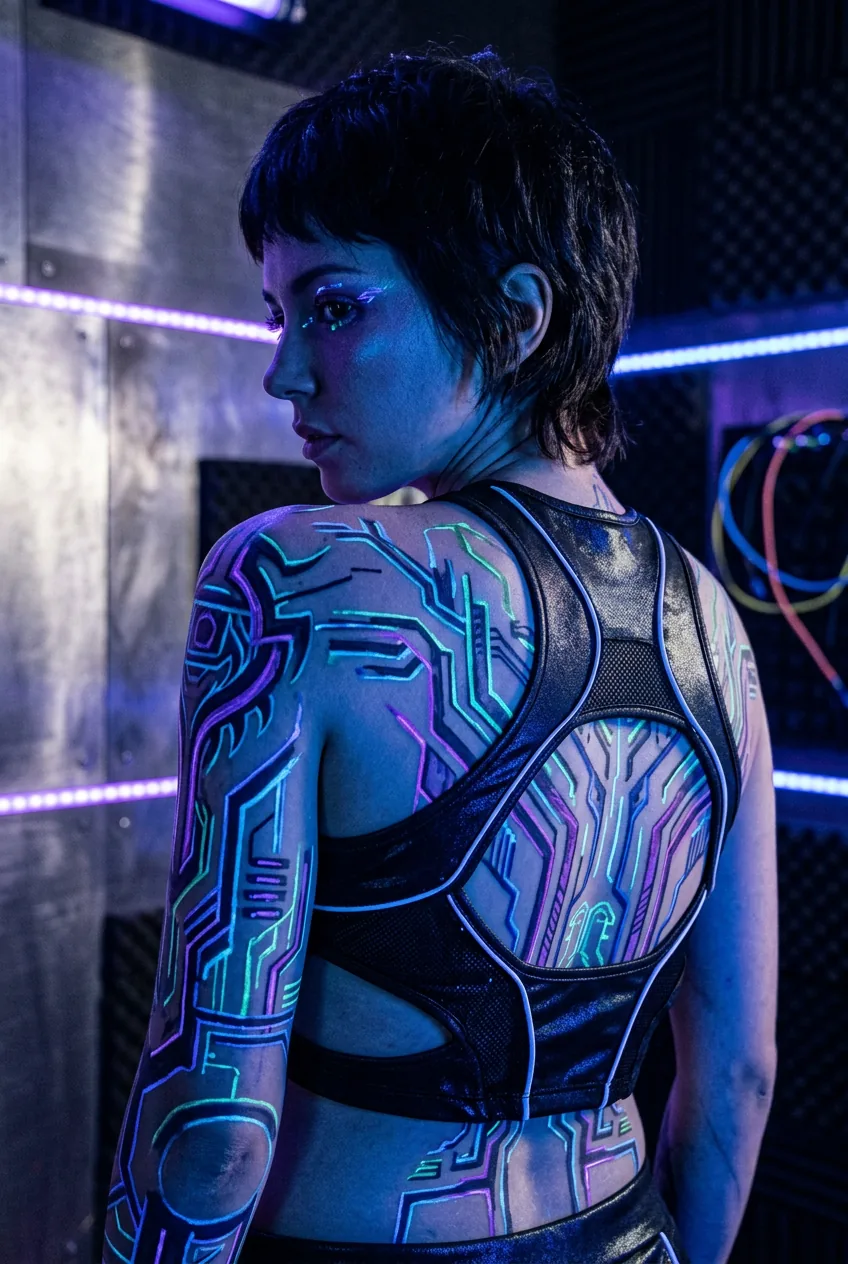
I’m seeing new variations emerging that the trend forecasters haven’t caught yet. Bio-responsive designs that incorporate UV-reactive inks. Tattoos designed to work with augmented reality applications. Pieces that integrate with biometric monitoring systems. The aesthetic is expanding beyond traditional black ink into areas that blur the line between body art and technological enhancement.
What the mainstream adoption missed is that cybersigilism was never really about following a trend. It was about creating personal technological interfaces. As that concept becomes more relevant to more people, the movement will keep evolving rather than disappearing.
The artists who understand this are already experimenting with integration between cybersigilism tattoos and wearable technology, creating designs that can actually interface with apps or devices. We’re moving toward body modification that’s functionally technological, not just aesthetically inspired by technology.
The Cultural Appropriation Conversation
This is the conversation nobody wants to have, but it’s necessary. Cybersigilism draws heavily from various magical and spiritual traditions — not just Western ceremonial magic, but also elements from sacred geometry practices found in many indigenous cultures.
I’ve seen designs that borrow from Metatron’s Cube, traditional Celtic knotwork, Yantra patterns from Hindu and Buddhist traditions, and geometric patterns from various African textiles. The line between “inspiration” and appropriation can get blurry when you’re creating technological versions of sacred symbols.

The responsible approach involves understanding where your design elements come from and whether you have any cultural connection to those traditions. Are you using sacred geometry because it’s pretty, or because you have genuine respect for and understanding of the spiritual principles it represents?
Some of the most thoughtful cybersigilism practitioners I spoke with work exclusively with symbols from their own cultural backgrounds, or create entirely new geometric languages specifically for technological spirituality. Others collaborate with traditional artists to ensure their adaptations are respectful and appropriate.
The key is intentionality and education. If you’re drawn to cybersigilism because you want a meaningful relationship between your spiritual practice and your technological life, that’s different from wanting a cool-looking tattoo that happens to use sacred symbols. Understanding the sources of geometric patterns can help guide more respectful design choices.
This isn’t about gatekeeping the style. It’s about approaching it with the same respect you’d want for your own cultural or spiritual traditions. Tattoo placement ideas should consider not just aesthetics but also the cultural weight of the symbols you’re permanently marking on your body.
Questions I Get About This
Do cybersigilism tattoos actually work as spiritual technology?
The tattoos work as well as any other intentional practice. If you approach them with clear goals and genuine belief in their purpose, they can serve as powerful reminders and focusing tools for your relationship with technology. The physical act of getting the tattoo, combined with the daily visual reminder, can absolutely create measurable changes in behavior and awareness.
How much should I expect to pay for an authentic cybersigilism tattoo?
Genuine custom cybersigilism work starts around $300 for small pieces and can easily run $1000+ for larger, complex designs. The collaborative design process takes significant time, and artists who truly understand the style are still relatively rare. Expect to pay premium rates for authentic work.
Will cybersigilism tattoos look dated in ten years?
Well-designed cybersigilism tattoos should age better than most tech-inspired art because they’re based on timeless geometric principles rather than specific technological trends. The key is choosing designs that focus on functional symbolic elements rather than trying to replicate current technology aesthetics.
Can I get cybersigilism tattoos if I’m not into spiritual practices?
Absolutely. You can appreciate the aesthetic without embracing the spiritual framework. Just be honest with your artist about your intentions so they can create designs that work for your goals, whether those are spiritual, aesthetic, or somewhere in between.
Three months of research taught me that cybersigilism tattoos are way more complex than the trend cycle suggests. They’re not just the latest Instagram aesthetic — they’re an attempt to create meaningful relationships between our bodies, our spiritual lives, and our technological reality. Whether that resonates with you or not, at least now you know what you’re really looking at when you see these designs.