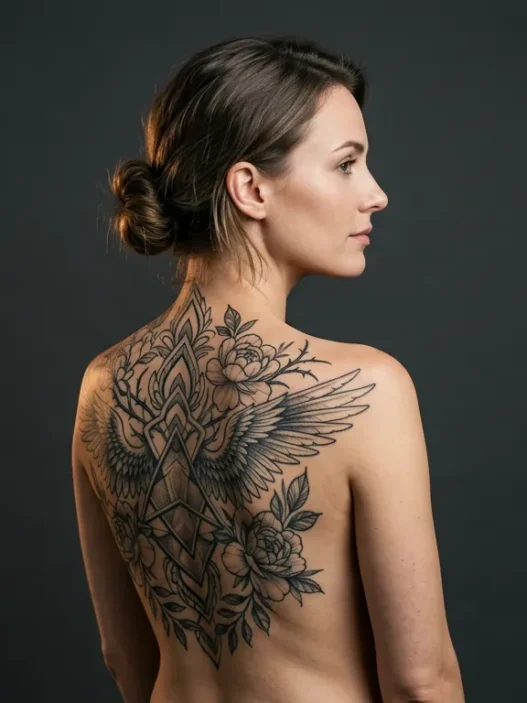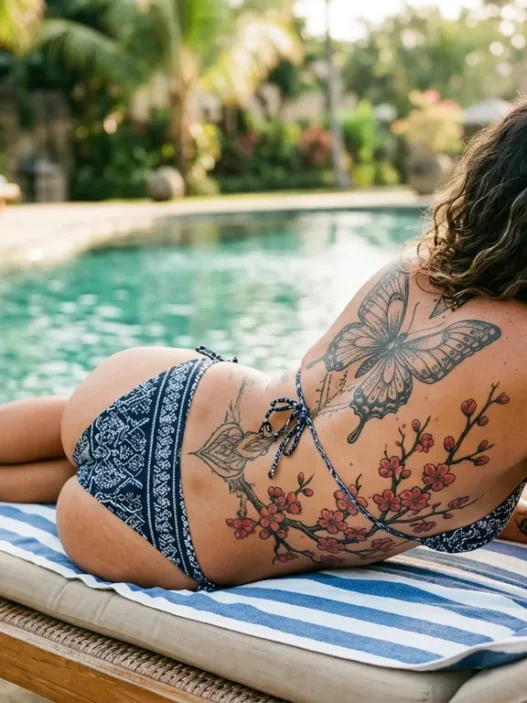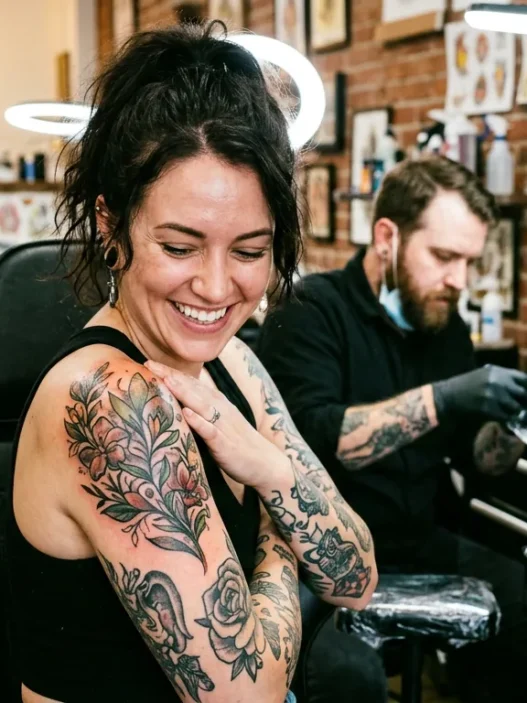




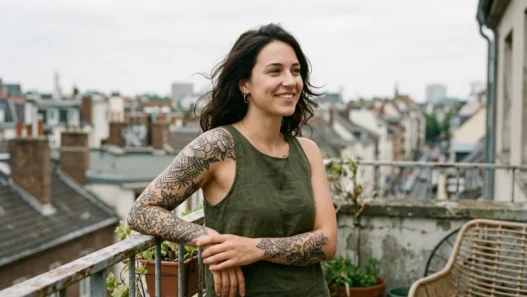


I have a note in my phone from two years ago that just says “spine maybe??” with three question marks and a flower emoji. That’s how it started. Not with a bold declaration or a pinned reference image — just a tiny, uncertain thought at 11pm that I couldn’t shake. By the time I actually sat in the chair, I’d spent fourteen months thinking about it, second-guessing it, nearly canceling, and eventually feeling more sure than I’ve ever felt about anything inked onto my body.
If you’re in the middle of your own spine tattoo deliberation right now, this is for you.
My Decision Journal — What’s Inside
The Initial Itch
There’s a specific kind of tattoo desire that isn’t loud. It doesn’t announce itself. It just shows up quietly — usually when you see someone else’s ink at the right angle, or catch a glimpse of your own back in a dressing room mirror and think, something could live there.
Mine came from a wedding. A friend of mine turned around to hug someone and her dress had this deep open back, and running down the center of her spine was the most delicate botanical line work I’d ever seen in real life. Tiny leaves. A single stem. It looked like it had always been there, like it grew with her.
I thought about it for three weeks before I even Googled anything. That’s actually a habit I’ve developed with tattoos — I let the idea sit before I feed it with images, because I want to know if it’s still there when I haven’t been actively nurturing it. And it was. The spine kept calling.
What I was drawn to wasn’t just aesthetics, though. The placement felt meaningful to me in a way I couldn’t fully articulate yet. The spine is structural. It’s what holds you upright. I wanted something there that reflected that — something with roots, with intention. Not just pretty. Something that meant something.
The Mood Board Phase
Okay, so I went a little feral with the saving. We’re talking three separate Pinterest boards, a folder of screenshots on my phone, and a dedicated Instagram account I made purely to save reference posts without cluttering my personal saved folder. Absolutely unhinged behavior, I know.
But here’s what I learned from those months of collecting: what you keep coming back to tells you something. I’d save fifty images in a week and then, a month later, only ten of them still felt right. The ones that survived that culling process were my actual taste — not what I thought looked cool in the moment, but what resonated at a deeper level over time.
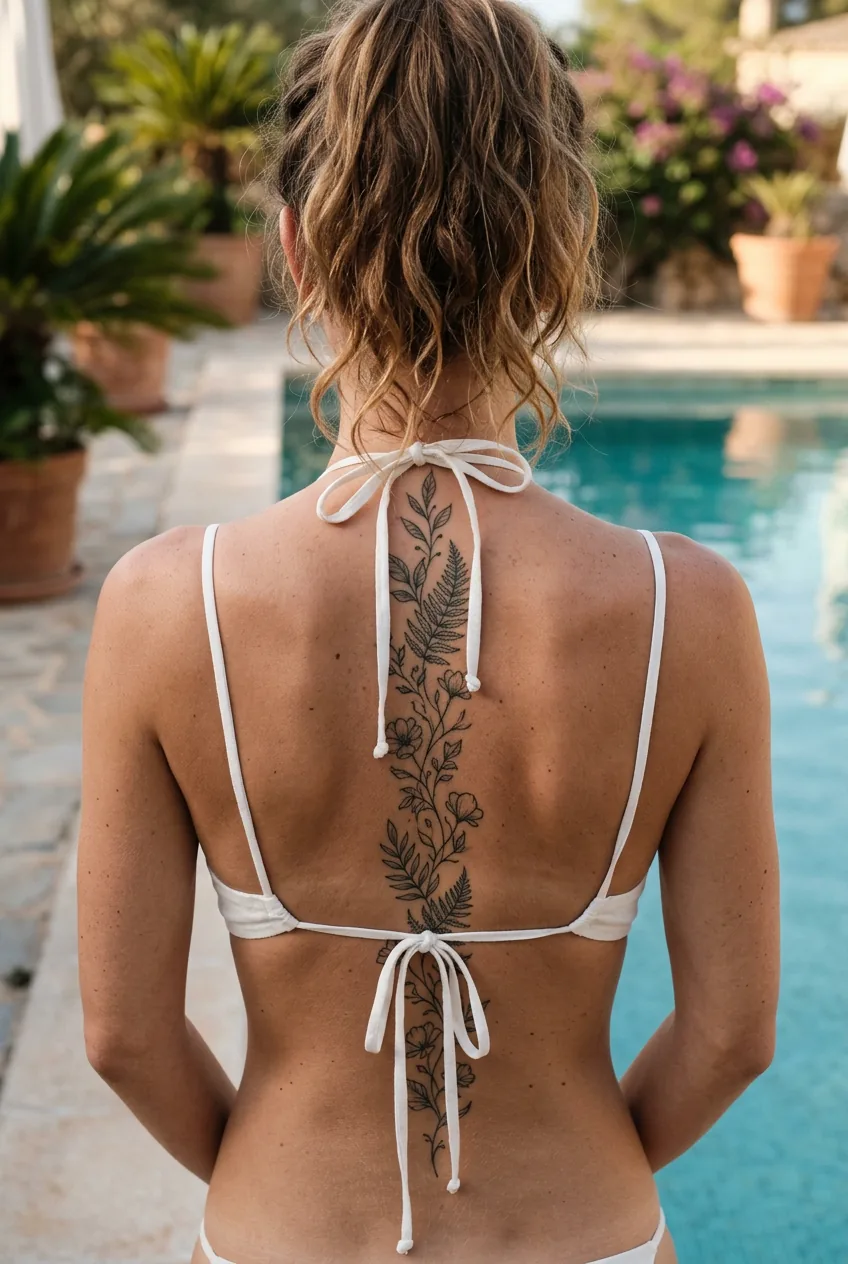
For me, it narrowed to fine line botanical work. No shading, no color fills. Just clean, confident linework with a vertical flow that would follow the natural curve of the spine. I kept gravitating toward pieces with negative space — designs that trusted the skin to be part of the composition.
I also spent a lot of time looking at how different designs interacted with movement and posture. A spine tattoo isn’t static — it curves, it stretches, it compresses when you bend forward. The best designs I found seemed to account for that. They didn’t fight the body’s natural geometry; they worked with it. If you’re deep in your mood board phase right now, I’d genuinely recommend reading up on how to choose the perfect placement for your back tattoo before you fall too hard for a specific design — because placement and design are inseparable for this particular area.
One more thing about the mood board phase: I gave myself full permission to be slow. Tattoos aren’t decisions you should rush for the sake of efficiency. The patience is part of the process. Choosing a tattoo design

The Doubts
Let me be real here, because I don’t think people talk about the doubt phase enough — and it’s the phase where a lot of people either abandon the idea entirely or, worse, rush through it just to silence the anxiety.
My doubts came in a few distinct flavors:
- The pain fear. Everyone told me the spine was brutal. And I won’t lie — I have a pretty low pain threshold, and the idea of lying face-down for two or three hours while someone tattooed directly over my vertebrae was genuinely terrifying. I almost talked myself out of it entirely because of this one.
- The regret spiral. What if I’m thirty years older and I think it looks dated? What if fine line fades badly? What if the botanical trend feels tired to me in five years? I went down this rabbit hole multiple times.
- The visibility question. The spine sits in a weird middle ground — it’s intimate but also very visible in certain clothes. I wasn’t sure how I felt about that. Would I feel exposed? Would it change how I dressed?
- The “is this actually me” doubt. This is the sneaky one. After months of looking at other people’s tattoos, I had to keep checking in with myself: was I still wanting my version of this, or had I slowly started wanting someone else’s tattoo?
Here’s my (slightly controversial) opinion: if you’re not having doubts, you’re probably not taking the decision seriously enough. I’ve seen people sprint from inspiration to appointment in two weeks and then spend years quietly wishing they’d slowed down. The doubt isn’t a red flag — it’s the process working correctly. Sit with it. Answer each fear honestly. If the desire is still there after you’ve interrogated every concern, that’s signal.
The pain thing, by the way? It was significant but completely manageable. Worth mentioning because I spent way too long catastrophizing about it.
The Artist Search
Finding the right artist for a spine tattoo is genuinely different from finding someone for, say, a small wrist piece. The requirements are stricter. You need someone with a proven portfolio of long, vertical, fine line work — specifically on the back — and ideally someone who has done multiple spine pieces so you know they understand the anatomical challenges.
I spent about six weeks just on research. Here’s what I was actually evaluating:
- Line consistency over length. Fine line work can drift or wobble on longer pieces, especially if the artist isn’t used to working on larger canvases. I looked for even, confident linework from top to bottom — not just beautiful at one end.
- Healed photos. Anyone can photograph a fresh tattoo beautifully. Healed photos tell you the real story — how the linework held, whether it blurred, whether the delicate parts faded unevenly.
- How they handle the spine’s natural curve. Some artists design for the flat of the back and just place the design on the spine — it can look strange because the spine actually curves and shifts. The best artists I found had a clear understanding of designing for that movement.
- Communication style. I sent inquiries to four artists. Two replied quickly and professionally, one never replied, and one sent a response that made it very clear they weren’t interested in collaborating on a custom concept. The way an artist communicates before you book tells you a lot about the session itself.
Worth saying: spine tattoos sit within the broader world of back tattoos, and the artist pool that does exceptional back work tends to overlap significantly with who you’d want for a spine piece. Don’t limit your search to people who only advertise spine work — look at their whole back portfolio. If you’re also curious about going bigger eventually, browsing full back tattoos by skilled artists gave me a real sense of what’s possible in that space.
I also looked at artists who did neck tattoos confidently — because the technical demands of tattooing along the cervical spine (the upper vertebrae near the neck) are similar, and proficiency there was a good indicator of overall anatomical awareness.

I ended up booking with an artist who was three hours from where I live. Not ideal, but right. Her portfolio was exactly what I’d been collecting for months, and when I emailed her with my concept she came back with questions — about my lifestyle, how I dressed, whether I had other tattoos nearby — instead of just saying “sounds great, here’s my rate.” That’s the kind of artist you want. Finding a fine line artist.
Booking It
The moment I paid the deposit was quieter than I expected. After fourteen months of deliberation, I thought there’d be some kind of dramatic emotional release — relief, excitement, terror. Instead it was just… calm. Like the decision had already been made a long time ago and the deposit was just paperwork.
That calm, I later realized, was the point. That’s what “knowing” actually feels like. Not a dramatic moment of certainty — just the quiet absence of doubt.
The consultation happened about three weeks before the appointment. My artist and I went through my reference images together and she immediately identified what I actually loved about each one — which wasn’t always what I thought I loved. I kept saying I wanted botanical, and she pointed out that what I was really drawn to was asymmetry. The botanicals were just the vehicle. That observation changed the whole design.
She also walked me through placement considerations specifically for women’s back tattoos — how the design would interact with my natural waist, where the piece would start and end relative to my shoulder blades and tailbone, and how to center it properly accounting for the fact that spines aren’t perfectly straight (mine certainly isn’t). This is the kind of conversation you can only have with an artist who’s done this placement many times. It’s not just artistic judgment — it’s anatomical knowledge.
The day itself? I lay face down for two hours and forty minutes. There was a playlist, a lot of deep breathing, and one particularly sharp moment around the middle of my back that made me grip the table edge. But I also felt completely present the entire time — no dissociation, no wishing it was over. Just aware of something being made.

When I stood up and looked in the mirror — the full-length one they position specifically for this reveal — I didn’t cry or gasp dramatically. I just thought: yes. That’s right. Fourteen months of slow, careful deciding had led to exactly this. And it was worth every single second of the wait.
You’ll know when you know. And when you know, it’ll feel less like a decision and more like a recognition.
Questions I Get About This
How painful is a spine tattoo, really?
Honest answer: it’s one of the more intense placements, especially directly over the vertebrae. I’d describe it as a sharp, buzzy sensation that occasionally spikes — not a dull constant ache. The upper and lower portions were more manageable than the middle for me. If you’ve handled ribs or sternum work, you can handle this. If you haven’t been tattooed before, I’d suggest getting at least one other piece first so you understand your own pain threshold.
Does fine line work on the spine hold up over time?
This depends almost entirely on the artist. Fine line done well, with the right needle depth and technique, holds beautifully — I’ve seen pieces that are five and six years old that still look clean. Fine line done poorly or too shallow can blur or fade significantly within a couple of years. This is exactly why healed photos matter so much during your artist search. Fine line tattoo aftercare
How long does a full spine tattoo take?
It depends on the complexity and length of the design, but you should realistically plan for two to four hours for a full spine piece. Mine was two hours forty minutes for a medium-length botanical design. Some artists prefer to split it across two sessions, especially for longer or more detailed work — and honestly, that’s not a bad idea for your first spine piece.
Can you see your own spine tattoo easily?
Not without a mirror setup, no — which is something I made peace with early on. A spine tattoo is primarily for other people’s view, and for your own rare glimpses in angled mirrors. I actually love this about it. There’s something about wearing something beautiful that you mostly feel rather than see.

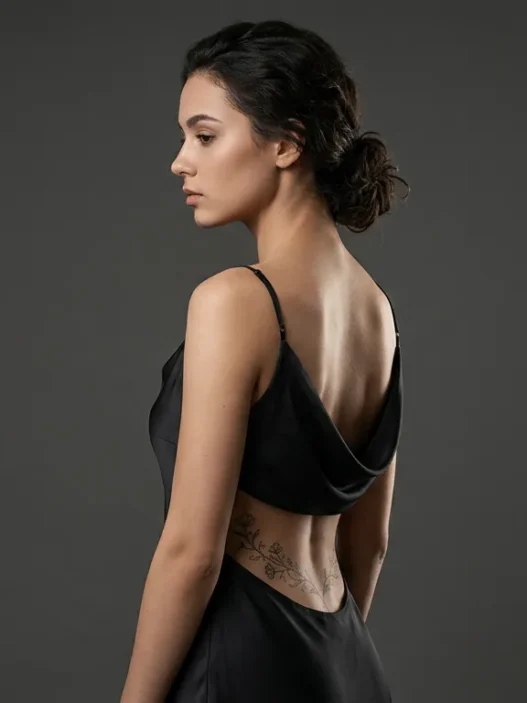
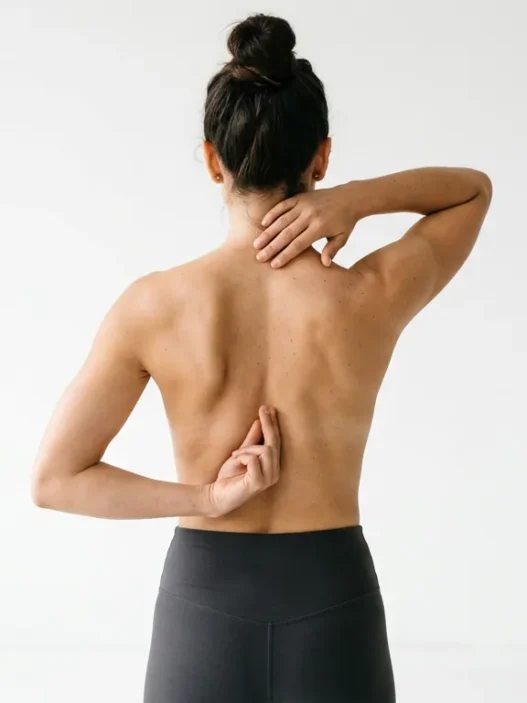
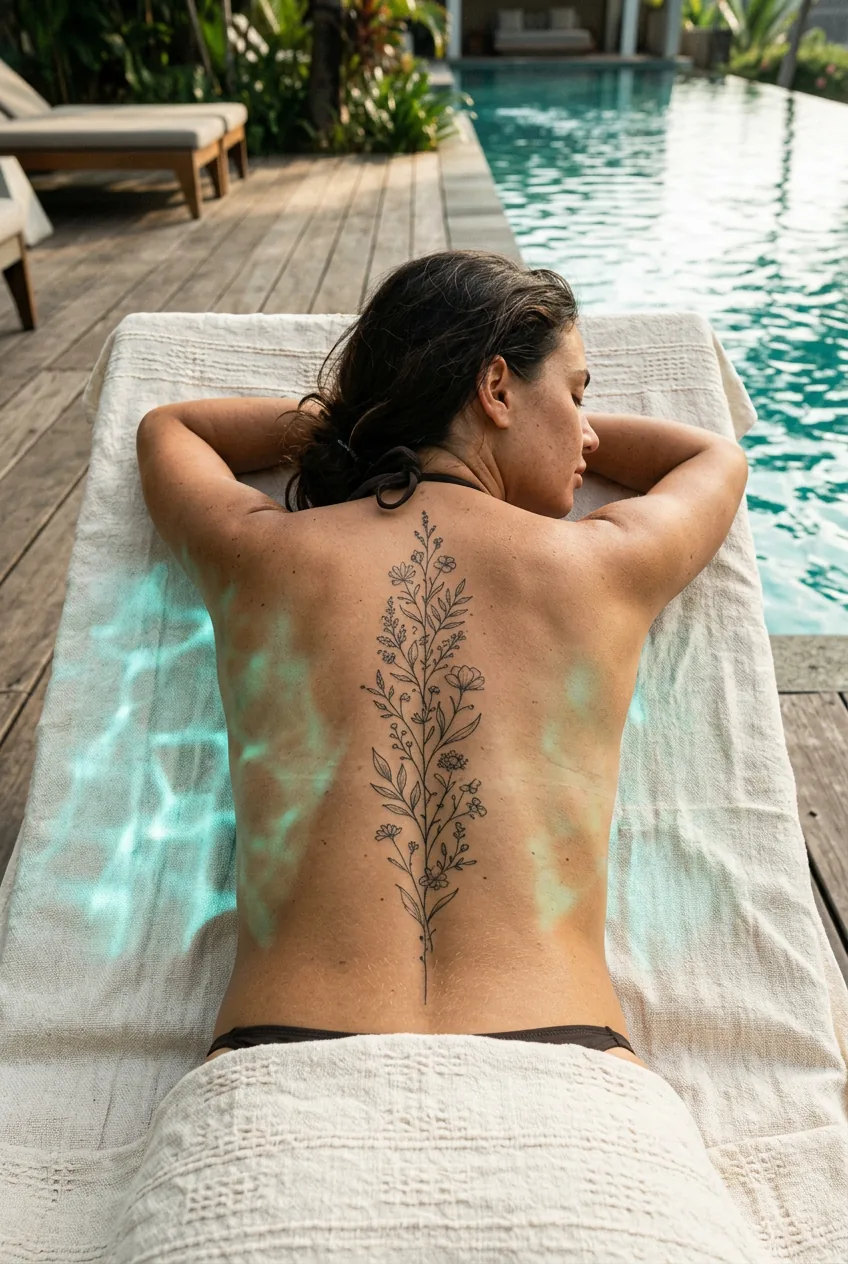
Look at her in this shot — the way the tattoo runs clean and centered down her back, disappearing just at the waistband. That length and placement is exactly what I mean when I talk about designs that work with the body’s natural lines rather than against them.
If you’re still in the early stages of your own spine tattoo journey — still in the “spine maybe??” phase — I want you to know that the slow path is the right path. Let the idea prove itself over time. Build your mood board without urgency. Ask every fear a direct question. And when the doubt fades not because you dismissed it but because you genuinely answered it — that’s when you book. You’ll know. I promise you’ll know.