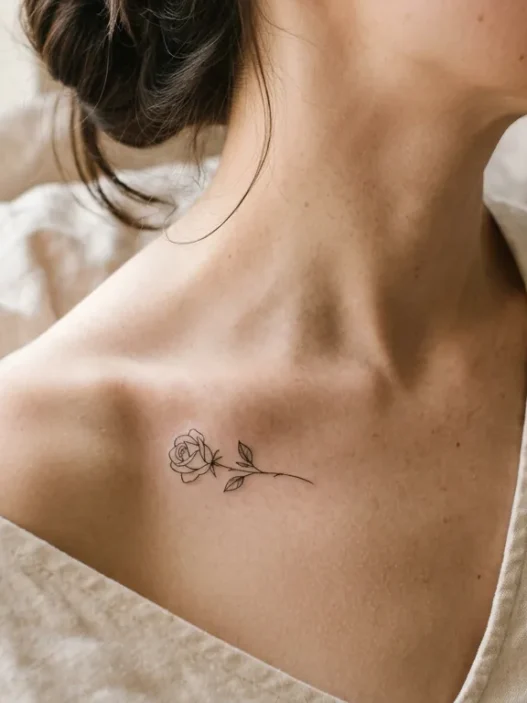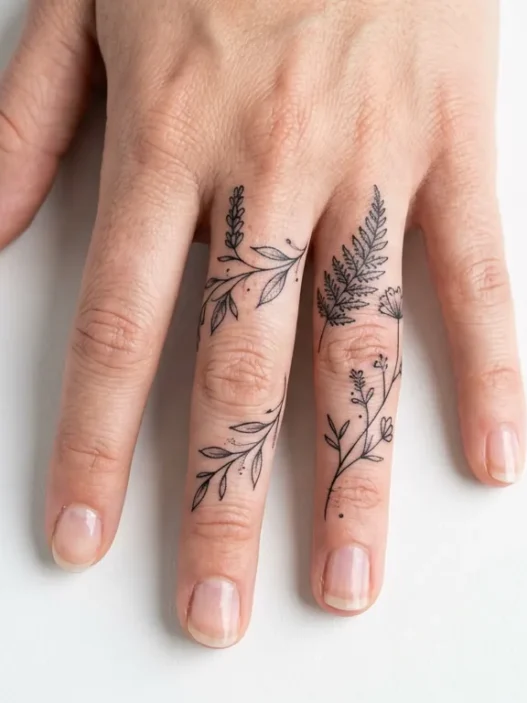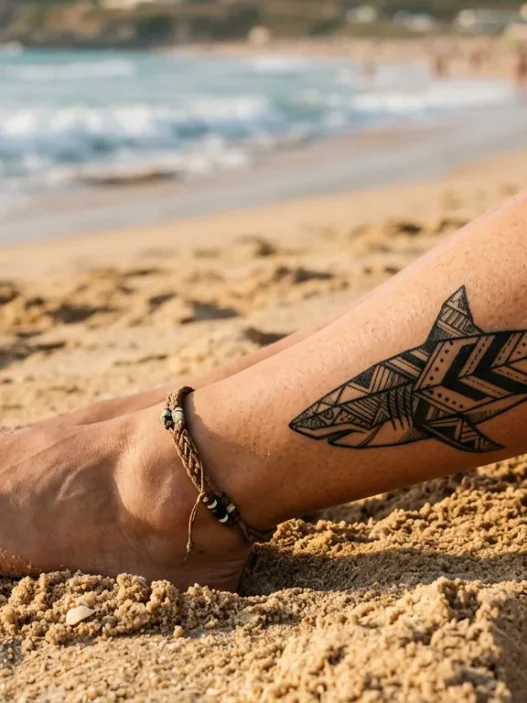





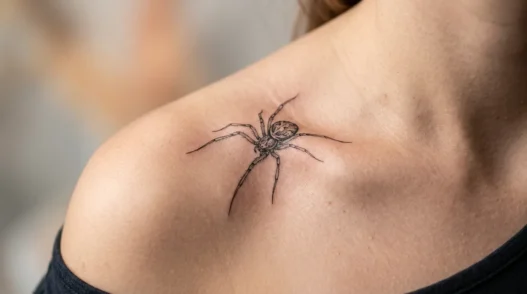
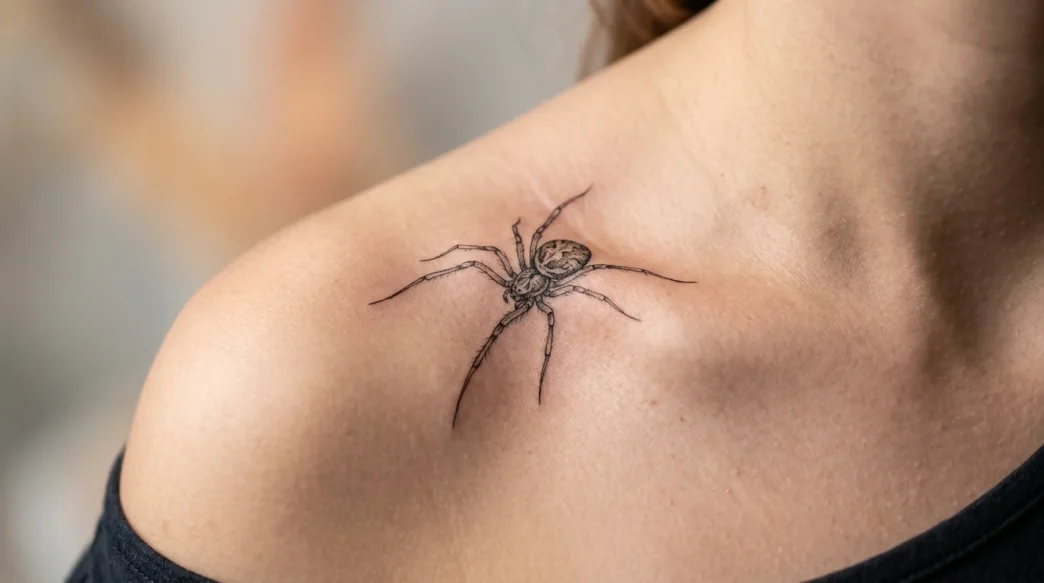
I remember the first time I saw a spider tattoo on a woman’s collarbone and thought — oh, that’s it. That’s the one. It wasn’t scary. It wasn’t edgy for edgy’s sake. It felt earned, deliberate, almost quiet in the way only the most confident choices are. That was maybe three years ago, and I brushed it off as an outlier. Now I’m watching it flood my feed, my local studio’s booking calendar, and honestly, the forearms of half the women at my coffee shop. Something is genuinely happening here, and I don’t think it’s going away anytime soon.
How It Started
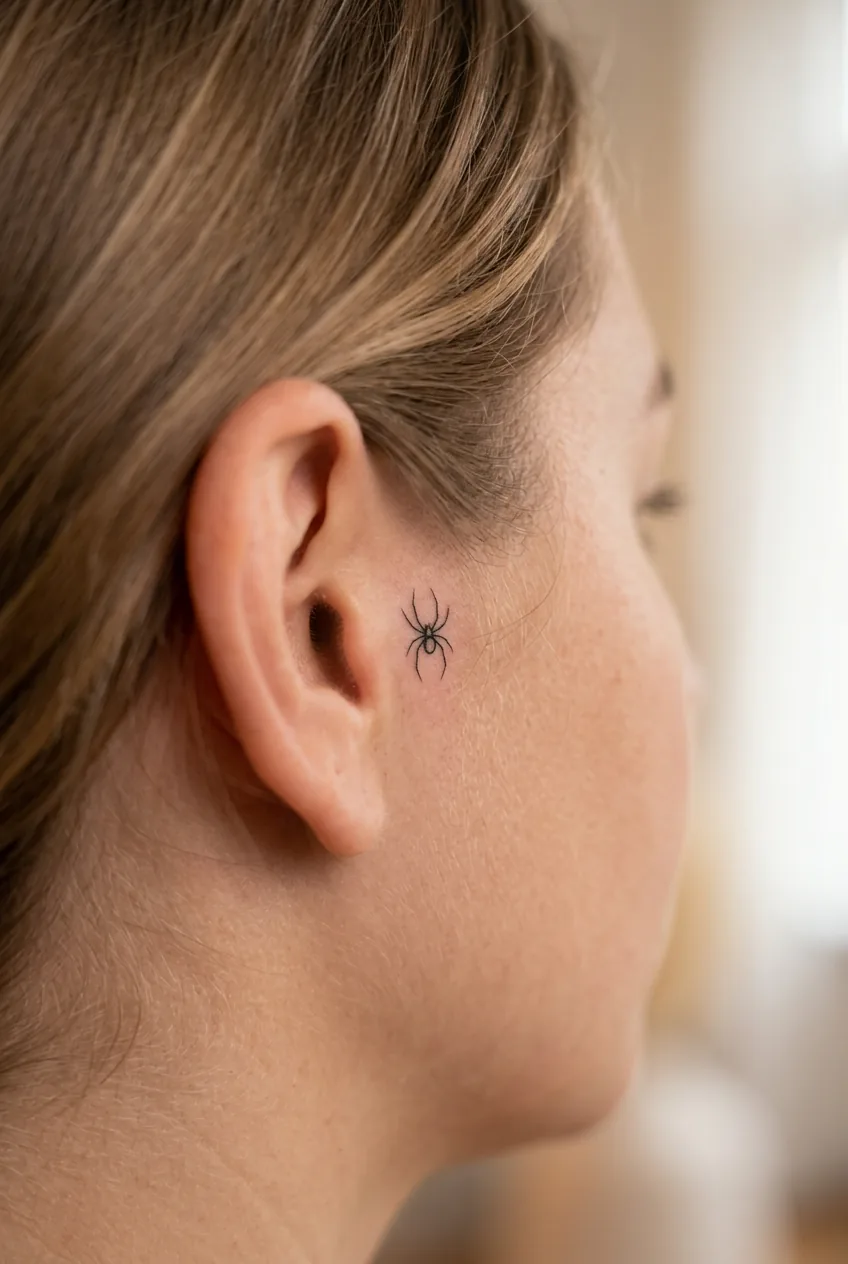
Like most tattoo movements that feel sudden, this one has been building in slow layers. Spider imagery in tattooing isn’t new — it’s been sitting comfortably inside mythology tattoos for decades, rooted in Arachne’s origin story and ancient symbolism from Indigenous, West African, and Japanese traditions. But the version we’re seeing explode right now is different. It’s stripped back. Fine line. Deliberate placement. A tiny spider dangling below the ear. A web fragment curling into the crook of an elbow.
The shift started somewhere between 2022’s dark feminine aesthetic going mainstream and the post-pandemic body-autonomy wave that sent an entire generation to tattoo studios with an urgency I hadn’t seen before. Women were done waiting. Done softening their choices for other people’s comfort. And spiders — creatures that build, trap, create, and are universally feared despite being largely harmless — turned out to be an almost perfect visual metaphor for that energy.
TikTok accelerated the timeline dramatically. Searches for spider web tattoo designs spiked in late 2023 and haven’t dipped since. But what TikTok did wasn’t invent the trend — it just gave an already-simmering aesthetic a megaphone.
Who’s Actually Driving This
Here’s where it gets interesting. The demographic getting spider tattoos right now is not who you’d expect if you were picturing the gothic subculture of the 90s. It’s broadly women in their mid-20s to late 30s. Many of them have florals already. Several have scripts. And then — a spider. Often their most unexpected piece.
I’ve spoken to tattoo artists about this directly, and one recurring thing they mention is that spider tattoo clients tend to be extremely specific about placement in a way that floral or small tattoo clients sometimes aren’t. They’ve thought about it. They know which version of the spider they want — geometric, realistic, minimal — and they’ve usually been sitting with the idea for a long time before committing.
Fashion is partially responsible too. The dark academic and witchy-feminine aesthetics that dominated runway editorials in 2023 and 2024 pushed spider motifs into jewelry, print, and embroidery. Once it’s on a Simone Rocha dress or a Vivienne Westwood archive repost, the visual vocabulary shifts. Women start seeing the spider as elegant rather than creepy. And from there to ink is a very short leap.
What the Industry Says
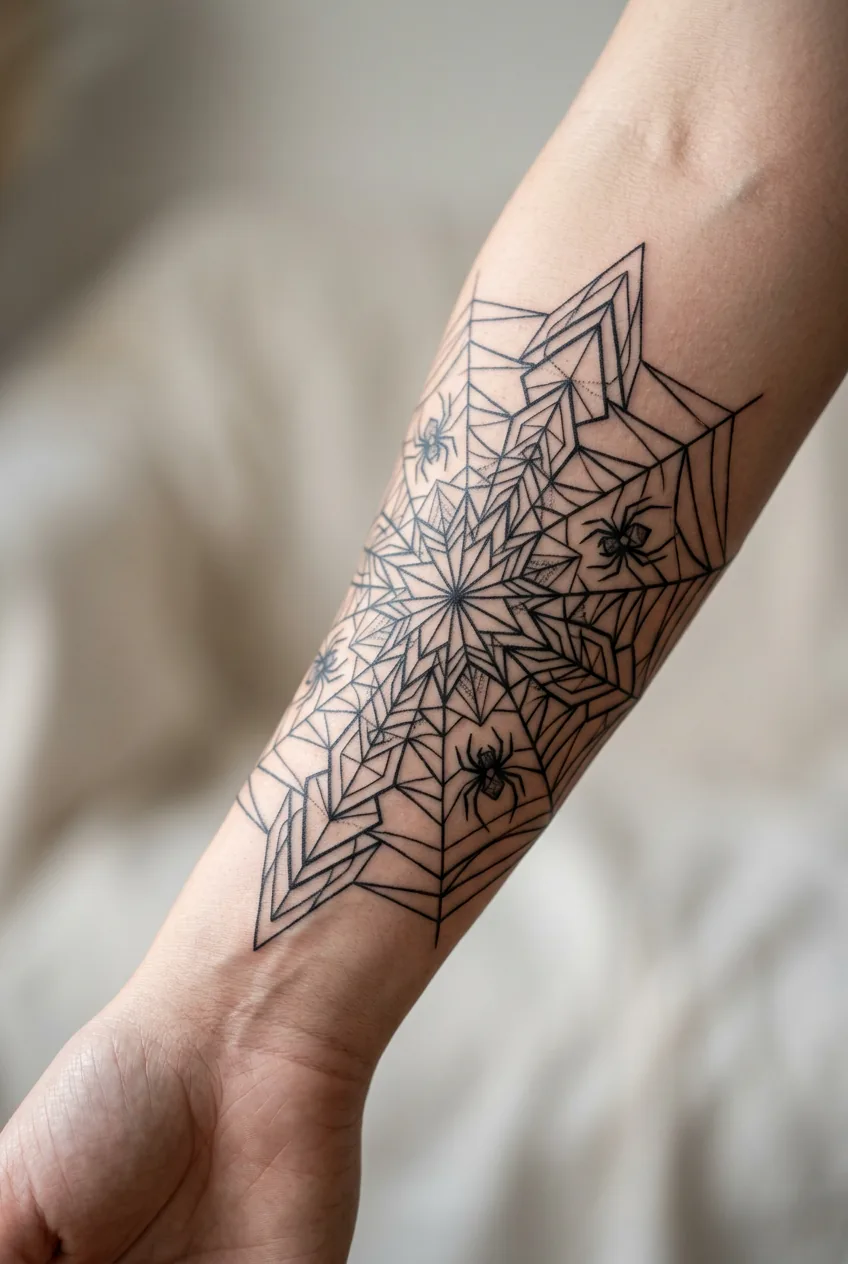
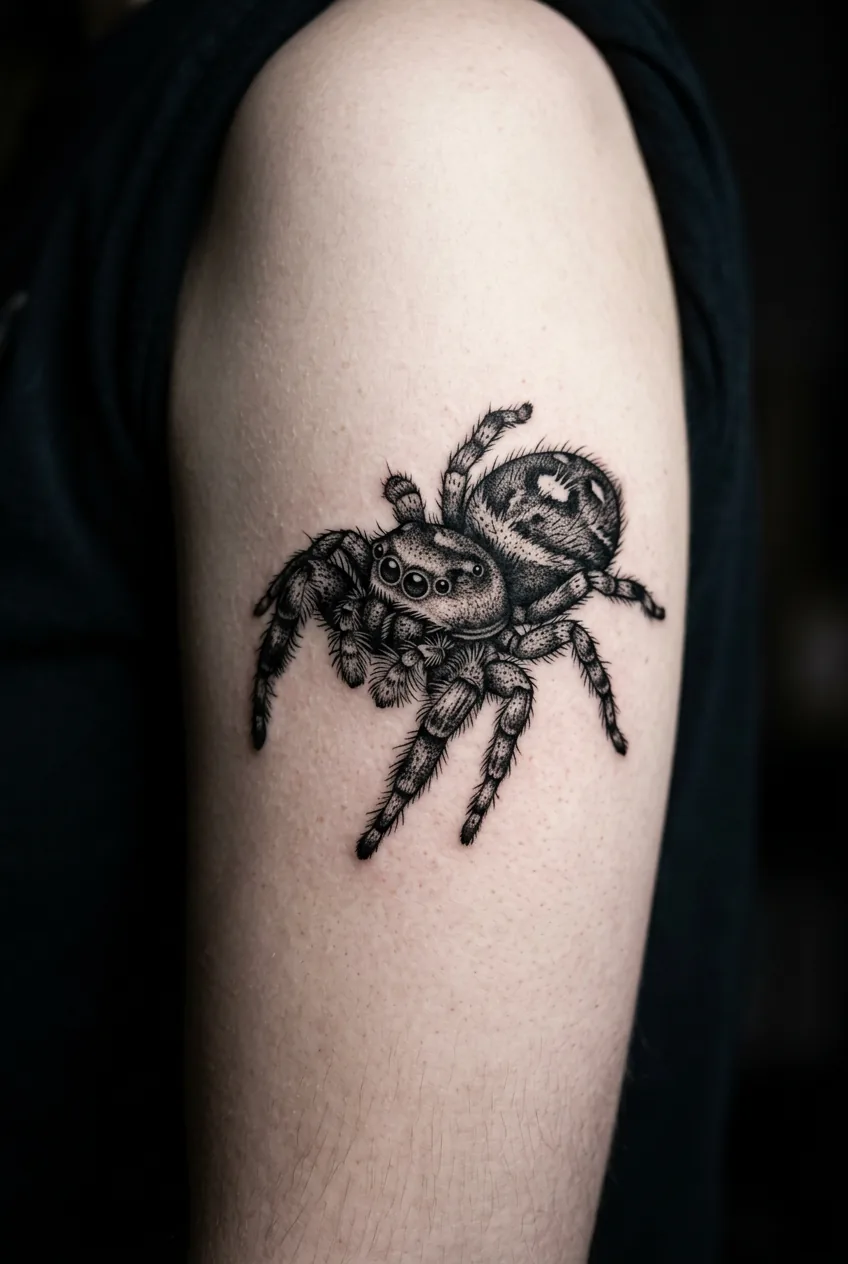
I’ve been following a handful of tattoo artists whose work I genuinely respect, and the consensus from their end is pretty clear: spider designs are booking out. More than that, the requests have evolved. A year ago it was mostly simple silhouettes. Now people are coming in with reference images for hyperrealistic jumping spiders (those big-eyed ones that are somehow adorable), ornate web compositions that wrap around the wrist like lace, and geometric tattoo interpretations with near-mathematical precision.
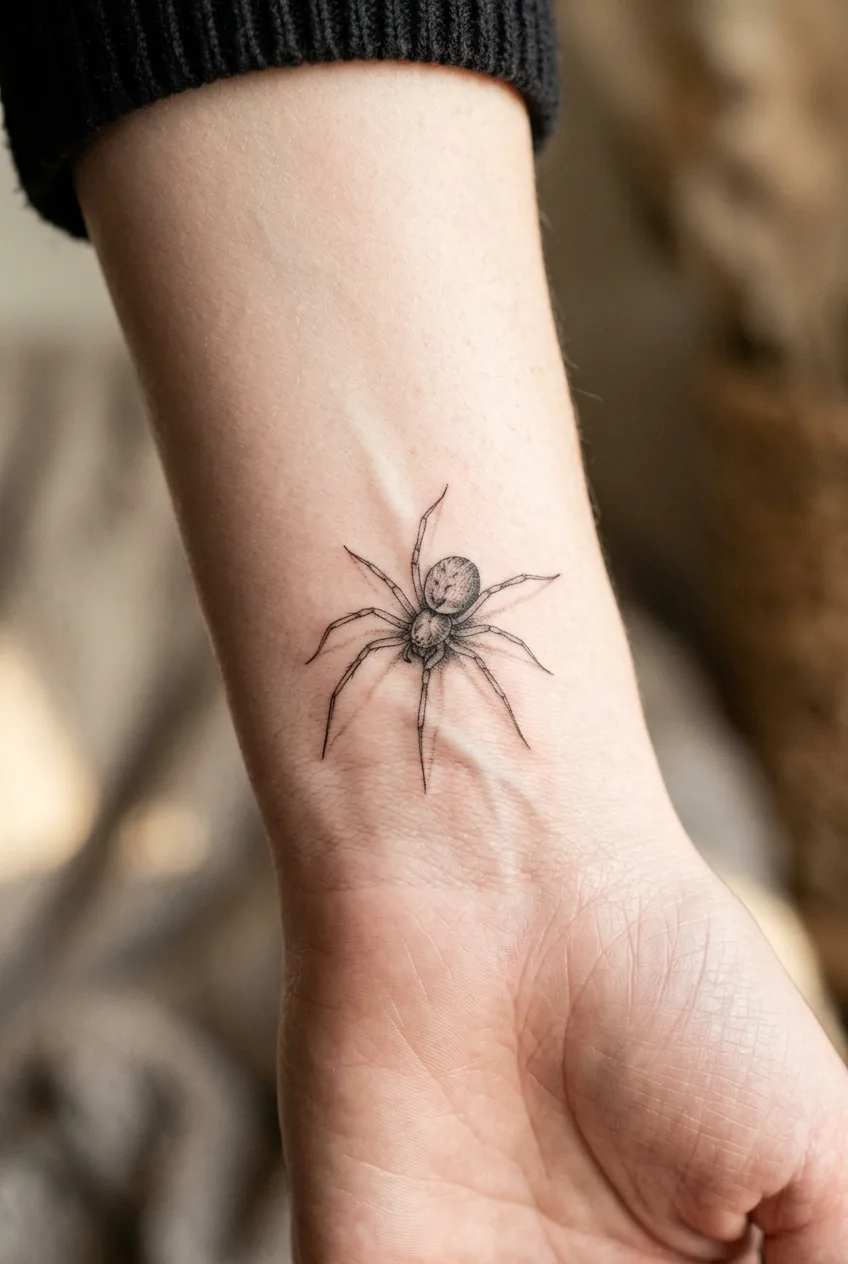
The fine line technique is doing a lot of heavy lifting here. When you render a spider in fine line, something strange and beautiful happens — it loses the menace and gains a kind of fragile, intricate quality. The legs become almost calligraphic. The body reads more like a jewel than a creature. I’ve seen this done on inner wrists, behind ears, and along the sternum, and every single time it works in a way that feels genuinely elevated.
Studios that specialize in animal tattoos are also reporting that spider requests have overtaken snakes as the most-requested creature design in several markets — which, if you know how dominant the snake tattoo has been for the past five years, is a genuinely remarkable data point.
The Symbolism Nobody Talks About
Everyone focuses on the aesthetic. Almost nobody talks about WHY the symbolism is landing so hard right now, and I think that’s the more interesting conversation.
Spiders are creators. They build intricate structures from their own bodies. They’re patient, methodical, often solitary. They’re also wildly misunderstood — feared by people who’ve never actually been threatened by one. If you’re a woman navigating a world that has historically misread your power as danger, that parallel is not subtle. And I don’t think the women getting these tattoos are being overly precious about it — but I do think the resonance is real, even when it’s unconscious.
“She told me she wanted something that looked delicate but wasn’t. A spider was the obvious answer.” — a tattoo artist describing her most memorable spider commission this year
There’s also the web itself as a motif — interconnection, fate, the idea that everything is caught in a larger pattern. You see this thread (no pun intended) running through mandala tattoos too, where the geometry implies a universal order. Spider webs tap into that same visual logic, except they feel more organic, more alive, less controlled.
My slightly controversial take? I think spider tattoos are doing more meaningful symbolic work right now than most floral tattoos. I love a peony tattoo — I have one — but the spider carries weight that a flower rarely does anymore. It’s not pretty for pretty’s sake. It earns its place.
Whether It Outlives the Algorithm
This is the question I keep coming back to. Every trend eventually gets flattened by overexposure. Butterfly tattoos had a massive resurgence, then became shorthand for “first tattoo.” Snake tattoos peaked, got commodified into flash sheets at every street-front studio, and now feel slightly tired in a way they didn’t three years ago. Is the spider heading down the same path?
Honestly — I don’t think so. And here’s my reasoning.
The spider, unlike the butterfly or even the snake, still has a barrier to entry. It’s not universally loved. A meaningful portion of the population is genuinely unsettled by it. That built-in friction is actually protective against mass commodification. The people getting spider tattoos are selecting themselves — they’re specifically unbothered by the discomfort the image creates in others. That’s a different customer than the one chasing a trend, and it means the design retains a self-selecting weight that keeps it from becoming wallpaper.
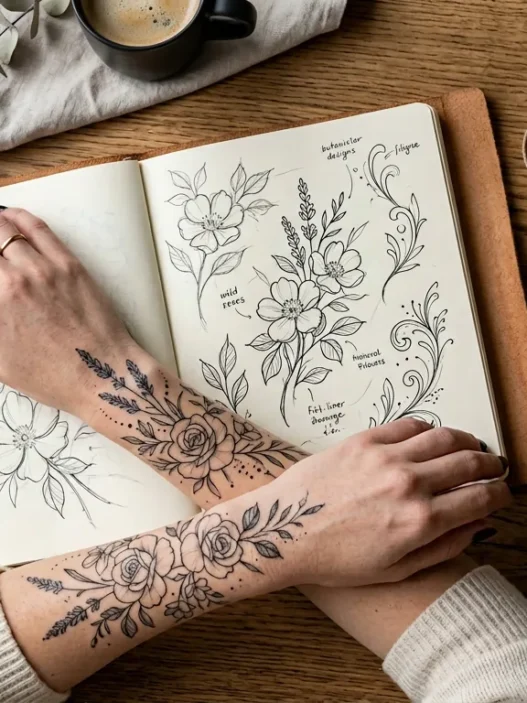
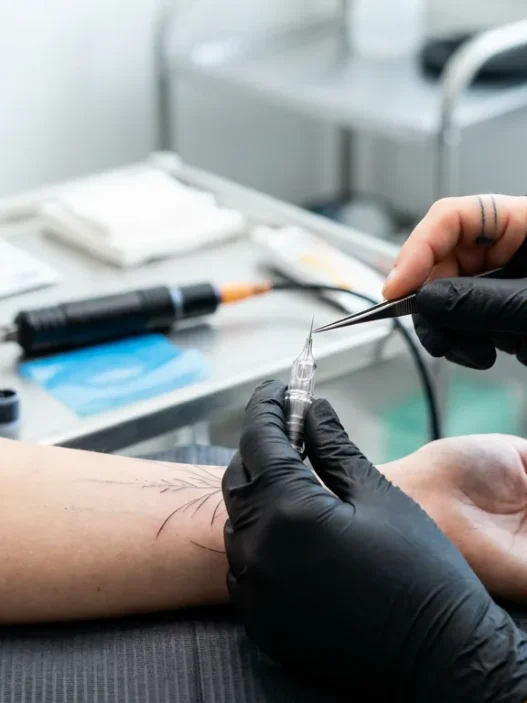
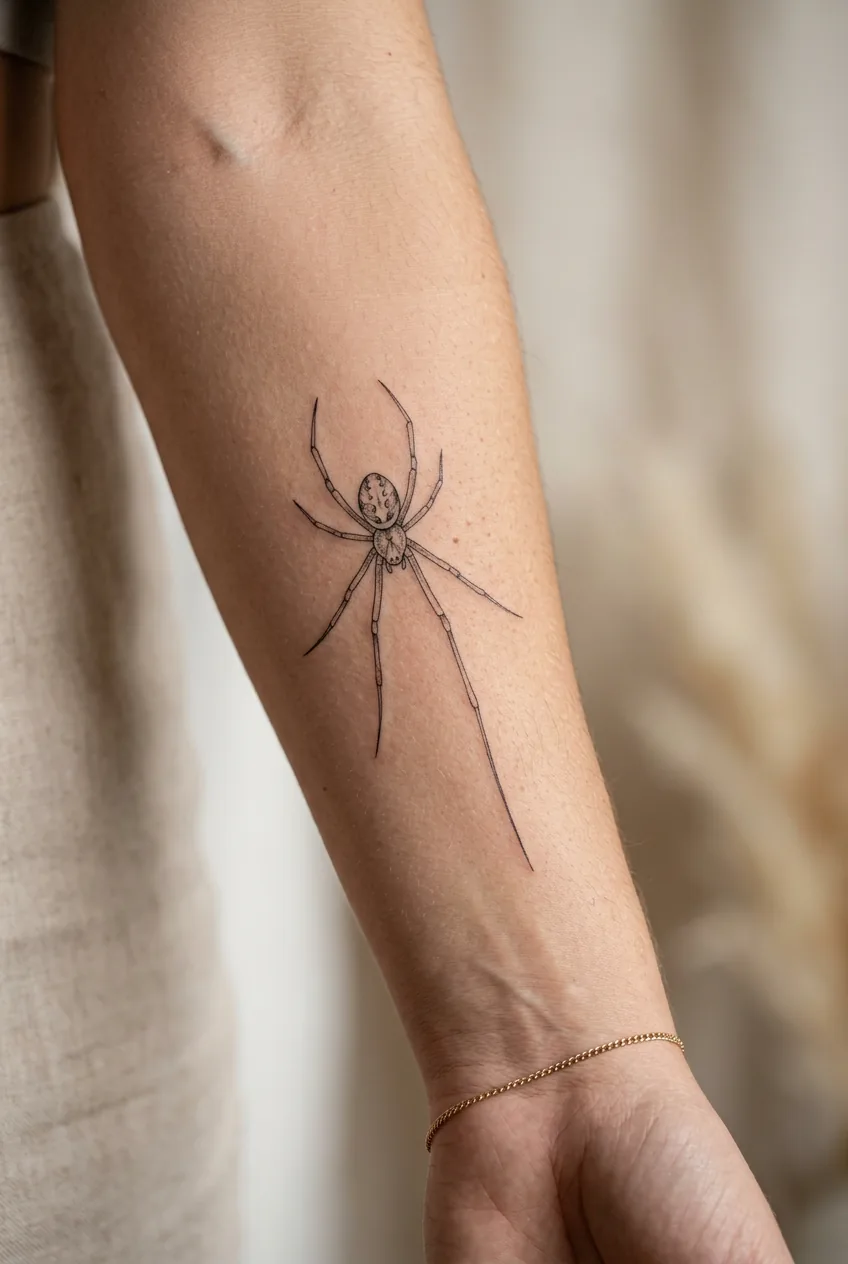
Also, the wrist and forearm placements that spider designs favor aren’t going anywhere. As long as fine line work keeps its dominance — and every indicator in 2026 suggests it will — spiders have a natural home that feels considered rather than impulsive. Look at the detail in this image here: the linework on her forearm has this almost architectural quality, each leg a deliberate stroke. That kind of craft doesn’t fade in trend cycles the way flash-art hearts and arrows do.
My prediction: the spider tattoo doesn’t die — it migrates. The mass-market version might fade. But the fine line, considered, symbolically loaded version? That’s going to be referenced in retrospectives about 2020s tattooing the same way Japanese sleeves and blackwork are discussed now. Choosing the right tattoo style is always personal, but I think the spider sits at an intersection of craft, meaning, and cultural timing that doesn’t come around often.
Quick Answers About Spider Tattoos
Do spider tattoos have a specific meaning or are they just aesthetic?
Both, honestly — and that’s part of their appeal. Historically, spiders represent creativity, patience, fate, and feminine power across many cultures. But plenty of women get them purely because the visual is striking. The meaning you bring to it is yours to define, and I think that openness is actually one of the reasons they’re resonating so widely right now.
What tattoo style works best for a spider design?
Fine line is having the biggest moment with spider designs right now — it transforms the creature from threatening to delicate without losing its character. Blackwork and geometric styles also work beautifully, especially for web compositions. Realism is stunning but requires a highly skilled artist. I’d avoid watercolor for spiders specifically — the soft edges fight against the naturally architectural quality of the design.
Where do spider tattoos look best on women?
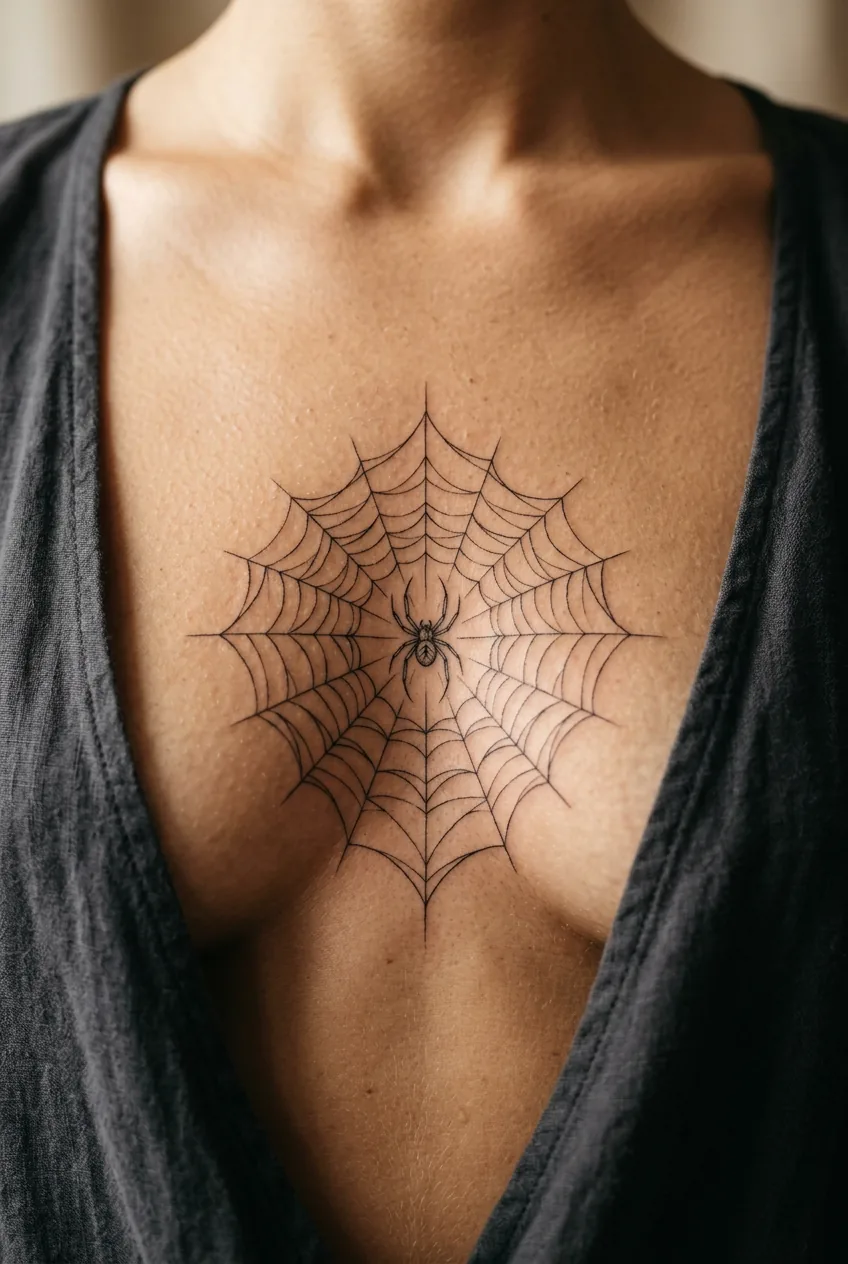
Placement really depends on the scale and style. Tiny spiders behind the ear or on the collarbone read as jewelry-like and intimate. Larger compositions — especially webs — work brilliantly on the forearm, ribcage, or wrapped around the wrist. I keep seeing sternum placements that are genuinely breathtaking, where the web extends outward symmetrically from a central spider.
Will a spider tattoo look dated in a few years?
The flash-art, trend-chasing version might. But a well-executed fine line or geometric spider with real personal meaning? I don’t think so. The symbolism is ancient and the craftsmanship-focused versions have a timeless quality that transcends trend cycles. The key is working with an artist whose portfolio already shows strong spider or arachnid work — the linework complexity rewards specialization.
If you’ve been sitting on a spider tattoo idea for longer than you’d like to admit — I’d say 2026 is the year to stop waiting. Not because it’s trending, but because the artists doing this work right now are producing some of the most technically impressive, symbolically rich pieces I’ve seen in years. Book the consultation. Take your time with the reference images. And trust the creature to do what it does best: make something quietly extraordinary out of its own material.