



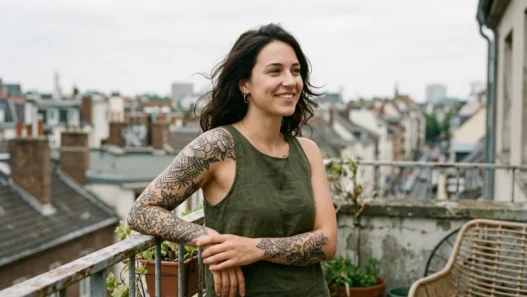
I have a note on my phone titled “tattoos I’ll get one day” and it’s been growing quietly for about three years. Not the loud, dramatic pieces — those have their place — but the small, considered ones that feel like punctuation rather than proclamation. Small elegant tattoos are the ones I keep coming back to. The kind that make you do a double-take on someone’s wrist at a dinner party and think, wait, what is that? This edit is exactly that list, finally written down.
The Romantic
Soft, a little wistful, and completely disarming — this is the tattoo equivalent of a love letter you keep folded in a drawer.
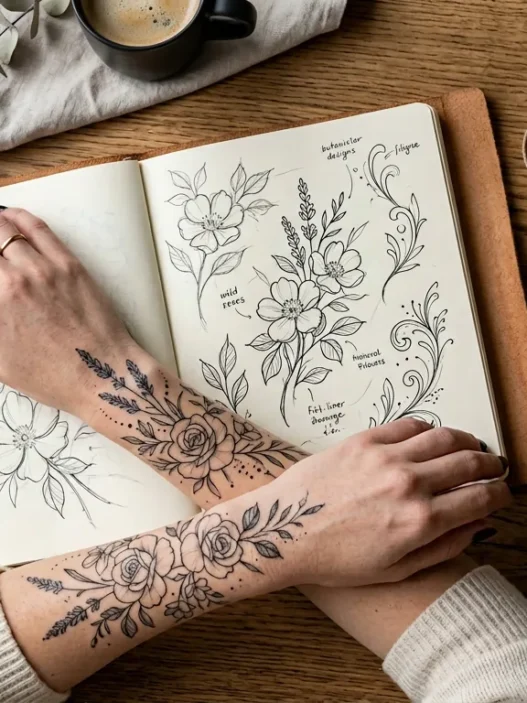
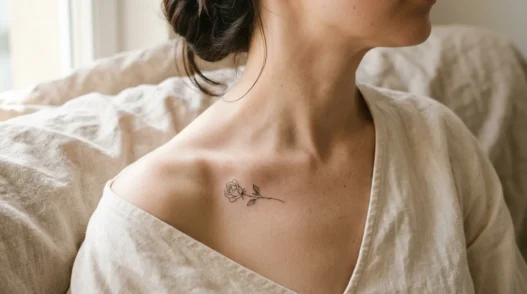
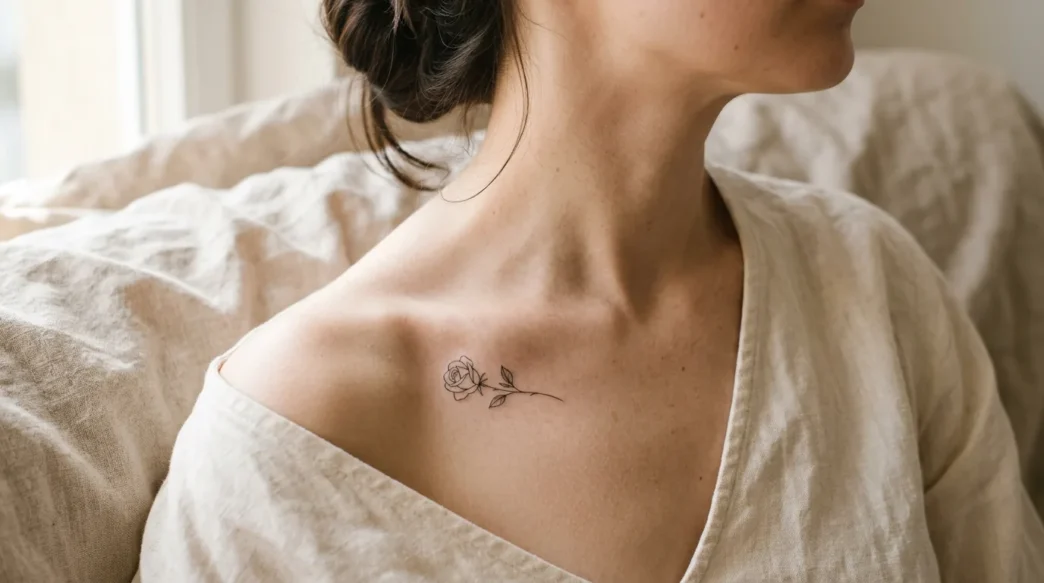
A single open rose bud in fine-line black ink, rendered without fill, just the elegant suggestion of petals curling outward. No thorns, no leaves cluttering the image. The stem ends cleanly, like a stem snipped for a vase. When placed on the inner forearm or just below the collarbone, it reads almost botanical — more illustration than decoration. The linework needs to be genuinely fine here; any weight to the stroke and it tips from romantic into something harder. This is a tattoo for someone who appreciates fine line tattooing and knows the difference a skilled needle makes.
Who this is for: The woman who still presses flowers between book pages.
The Quiet Stunner
Doesn’t announce itself. Rewards the people who get close enough to look.
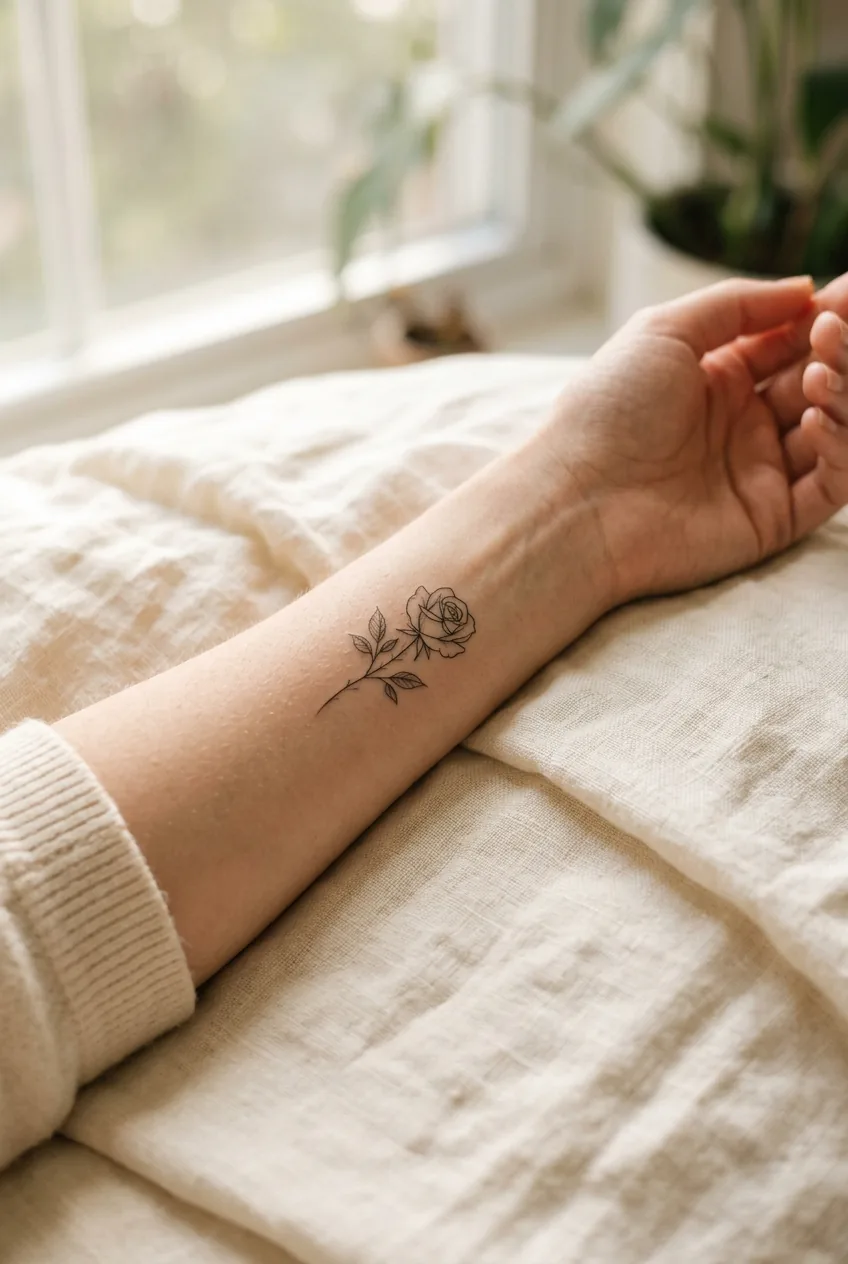
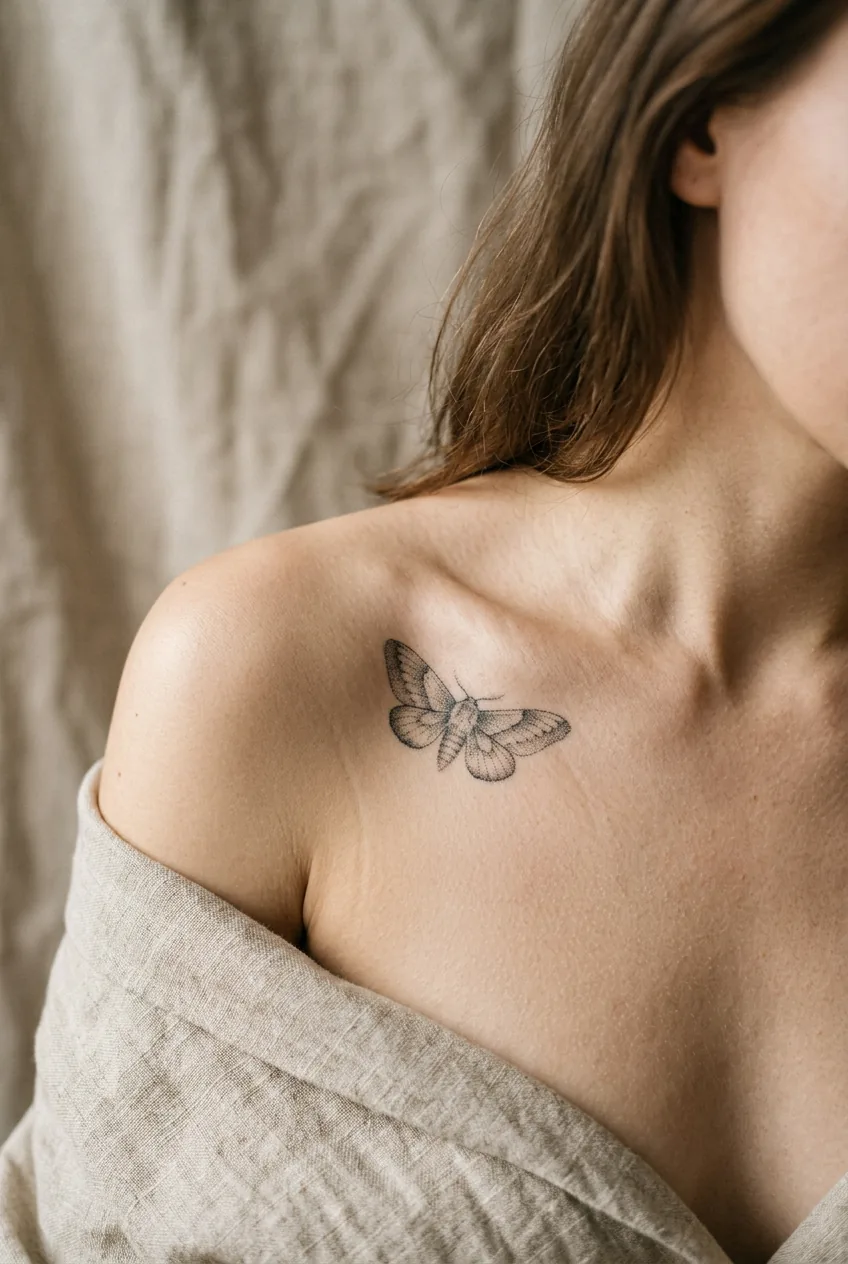
A single moth — wings spread, rendered in the most delicate dotwork imaginable. The shading is built from tiny individual dots rather than solid fills, which gives the wings a dusty, almost powdery quality that suits the creature perfectly. What makes this one extraordinary is scale: when it sits behind the ear or at the nape of the neck, it looks like something that simply landed there. She’s wearing hers just above the collarbone in this photo, and look at the way the dotwork catches the light at that angle — there’s a texture to it you’d only notice up close. That’s exactly the point.
Who this is for: The observer. The one who notices things others miss.
The Heirloom
This one carries weight. Not visually — it’s still small — but in presence.
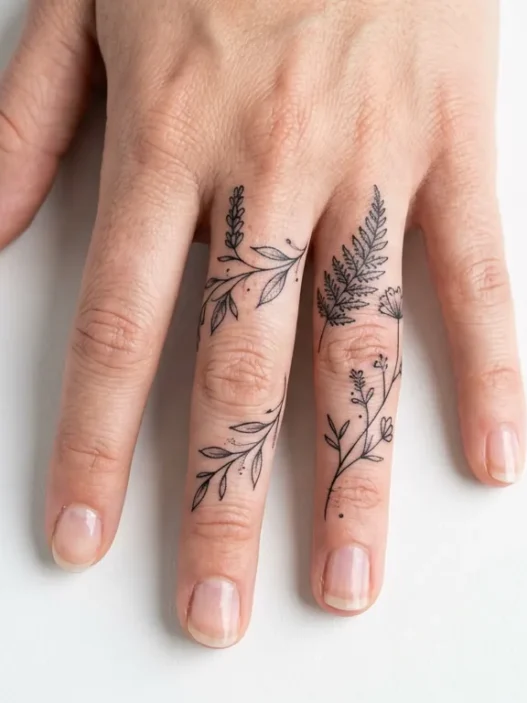
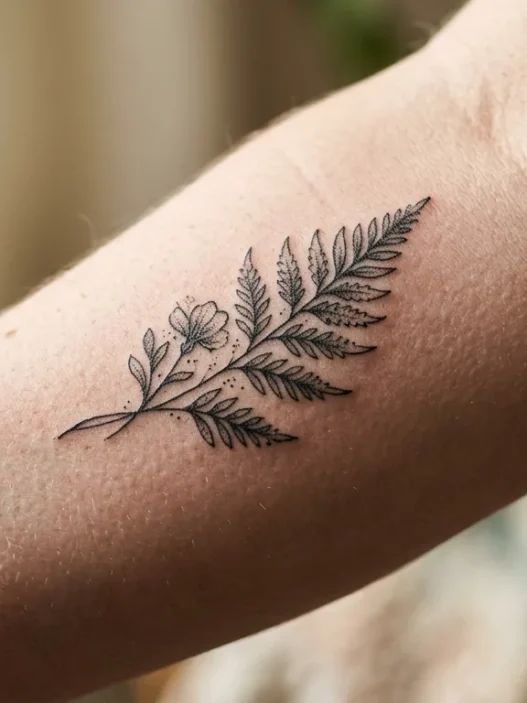
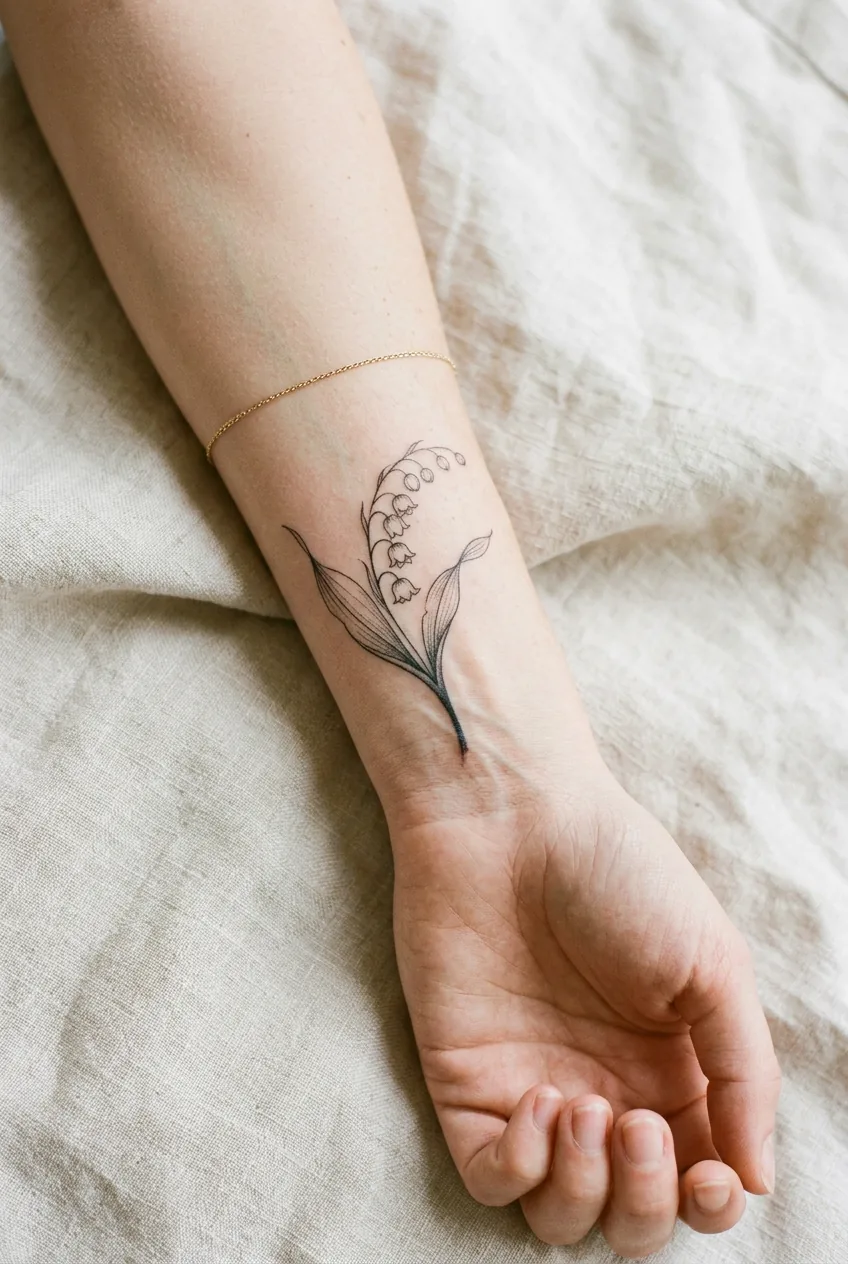
A botanical sprig that echoes something pressed in a grandmother’s journal — lavender, lily of the valley, or a sprig of olive branch. The style sits somewhere between scientific illustration and jewellery engraving. The lines have a slight variation in weight, thicker at the stem base and tapering to almost nothing at the leaf tips, which gives it that antique quality. If you wanted to honour a family connection without a name or a date — which can feel heavy — this is how you do it quietly. It pairs beautifully with other tiny minimalist tattoo ideas if you’re building a considered collection rather than committing to one large piece.
Who this is for: Anyone whose connection to something runs deeper than words.
The Dark Horse
You wouldn’t expect to fall for this one. And then you do.
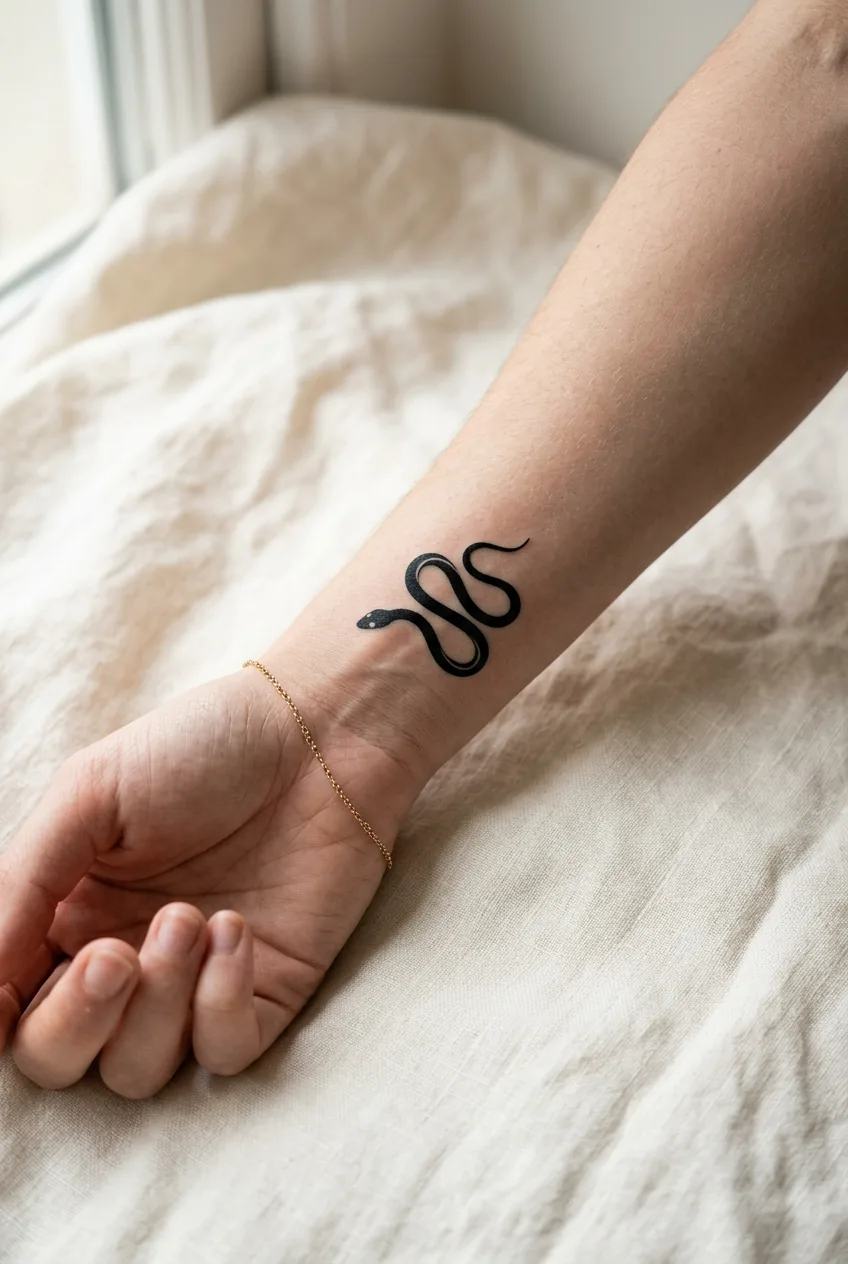
A small snake — coiled loosely, not aggressively — in clean blackwork. No scales rendered in laborious detail, just a smooth, graphic form with a single tiny eye marked by a dot. It’s the design that surprises me most on this list, honestly. On paper it sounds edgy, but in practice, at two inches long on an inner wrist or ankle, it reads as almost sculptural. Minimal and graphic in a way that has more in common with good jewellery design than anything threatening. The trick is finding the right artist — someone who understands that choosing between fine line and bold linework changes the entire personality of a piece like this.
Who this is for: The woman everyone underestimates.
The Minimalist’s Minimalist
One line. Possibly two. Nothing else.
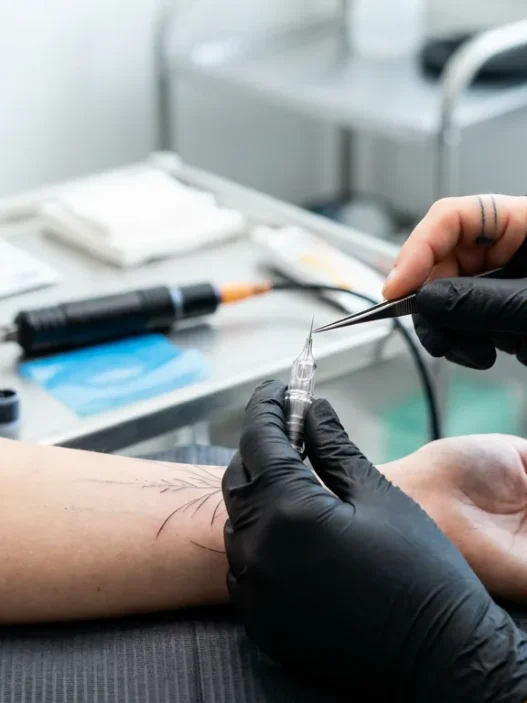
A single continuous line drawing — a face in profile, a cat in repose, a mountain range compressed to three strokes — done in the style where the pen never technically lifts. These are deceptively hard to execute well. The appeal is in the imperfection that reads as intention: a slight wobble in the line that confirms a human hand made this. At small scale, on the inside of a wrist or along the finger, these feel more like signatures than tattoos. I find them genuinely compelling when they’re done right, and genuinely forgettable when they’re not. The difference is always the artist’s draughtsmanship. Worth looking through a proper minimalist tattoo gallery before you commit to a specific style.
Who this is for: The person who considers negative space a design choice.
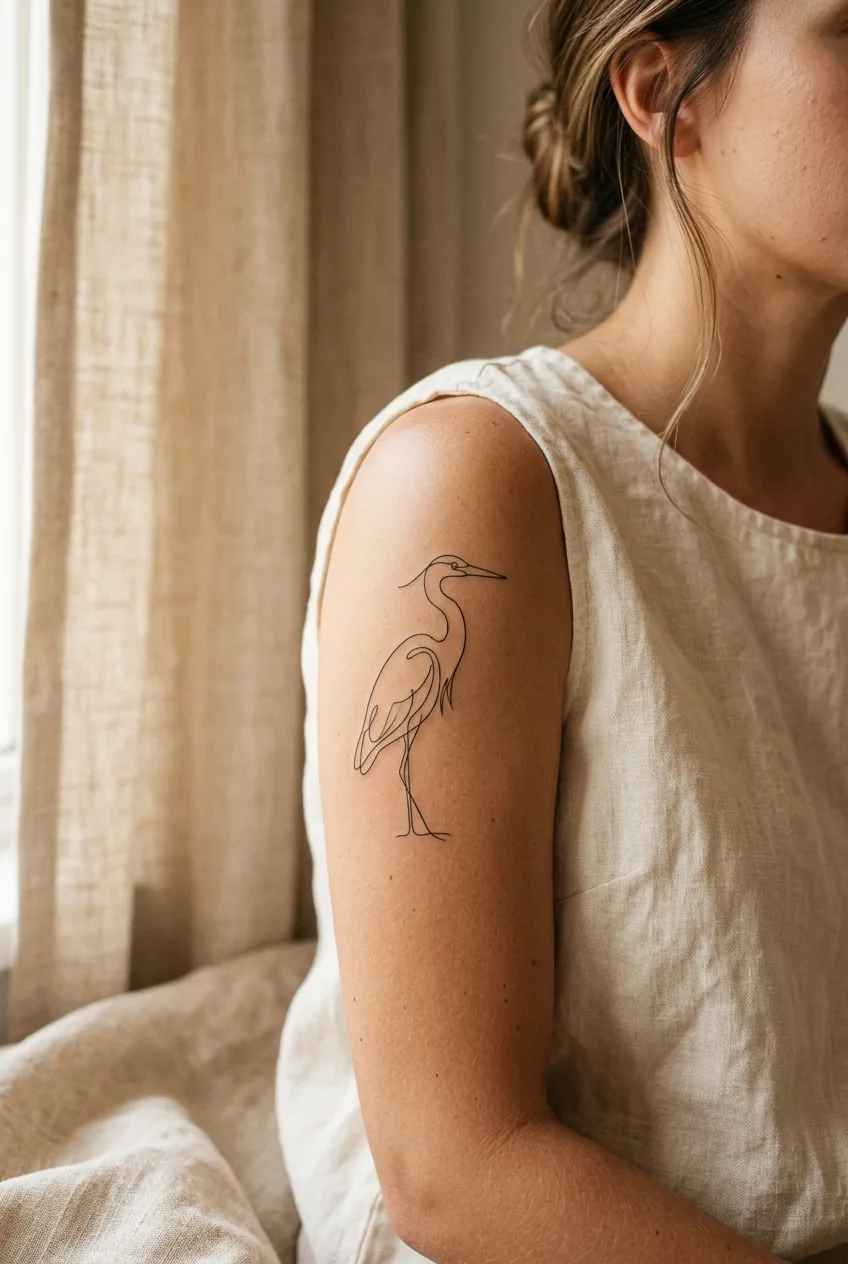
My personal pick is The Minimalist’s Minimalist — specifically a continuous-line silhouette of a heron, which I’ve been carrying around on my phone for two years now. There’s something about the economy of it, the idea that a bird in flight can be suggested with just a few connected strokes. I keep almost booking it and then deciding I want it slightly smaller. Classic indecision. One day.
Seeing a Single-Line Tattoo Made Live
The Wanderer
Nomadic energy. Placed somewhere that moves with the body.
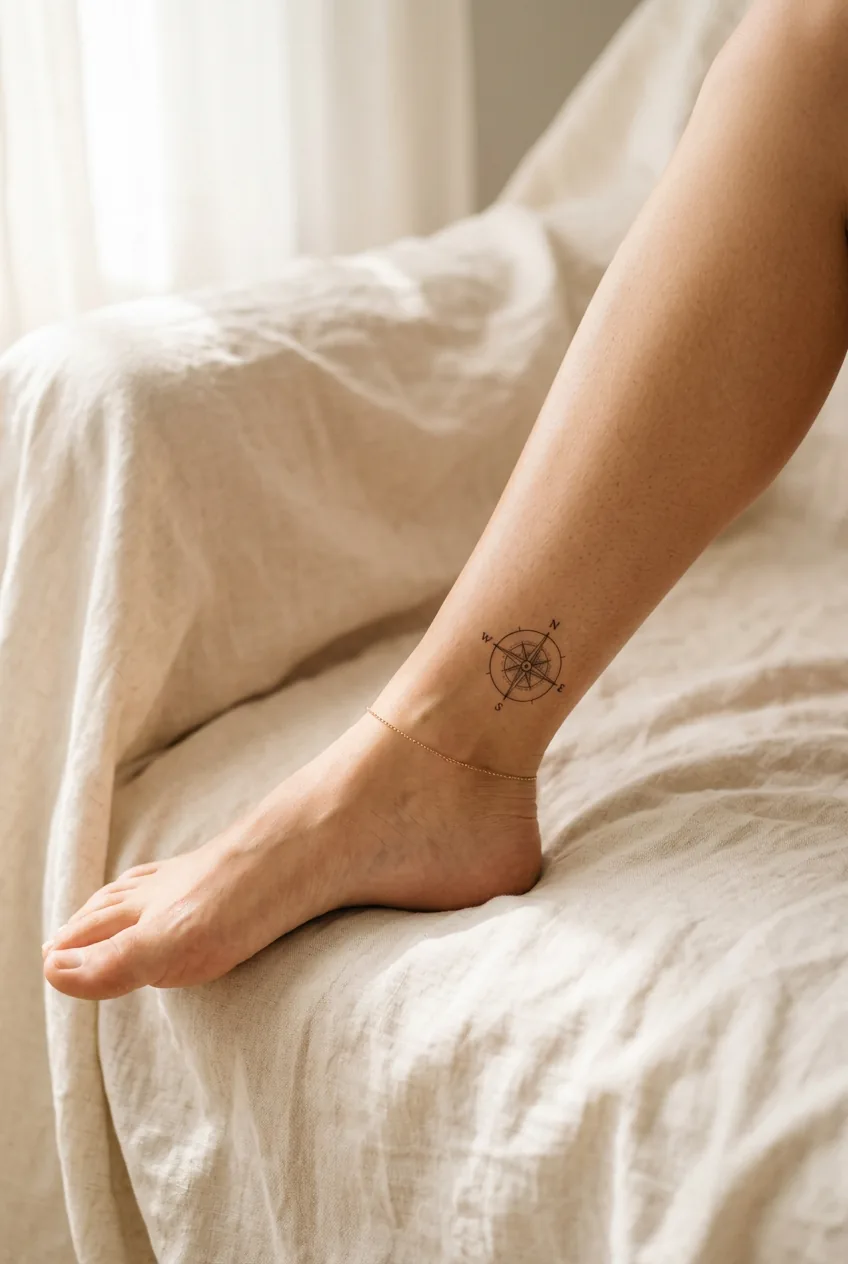
A small compass — not the nautical-chart variety, but stripped to its essential form: a circle, four cardinal points marked by the thinnest possible lines, and a needle. The refinement comes from proportion and placement. On the inner ankle or the side of the foot, it moves when you walk, which feels right. Some versions I’ve seen add the faintest engraving-style linework inside the circle, like the ghost of a rose compass, and that detail is what elevates it from souvenir to something considered. It’s the kind of design that photographs beautifully against a linen background or bare skin, because there’s nothing competing with it.
Who this is for: The perpetual planner of the next trip.
The Crowd Favourite
Popular for a reason. And the reason is that it’s genuinely beautiful.
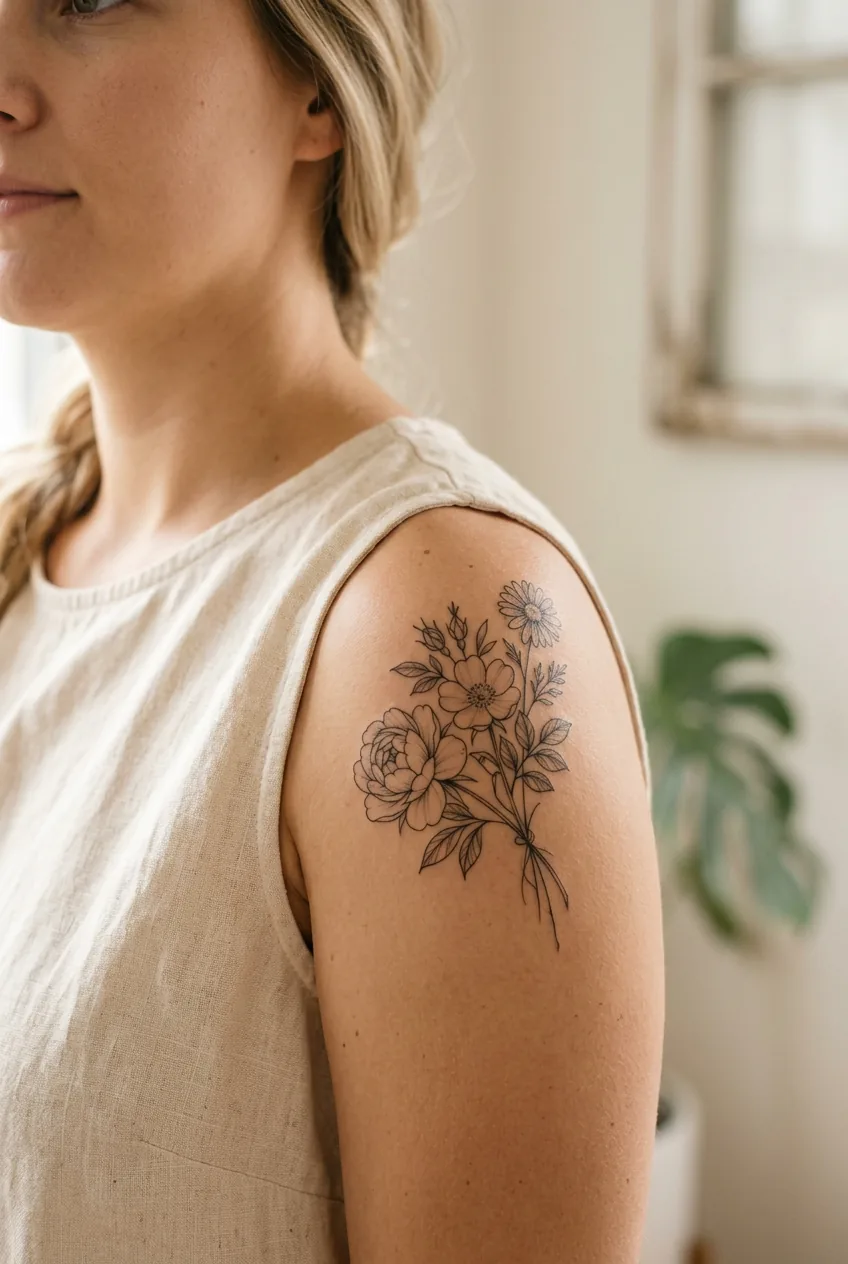
A small floral cluster — three or four different blooms rendered in varying scales, tied loosely with a single stem or left unbound. It’s everywhere right now, yes, but that ubiquity doesn’t diminish how well this design works at small scale. The variation in bloom sizes creates natural visual rhythm; the eye travels through the cluster rather than landing on one point. Placement matters enormously here. On the shoulder, it drapes like something pinned to a jacket. At the sternum, it sits like a brooch. On the outer ankle, it reads more casual. I’ve seen women wearing versions of this that look absolutely remarkable — there’s one in this shot where hers sits just below the shoulder seam and the composition is nearly architectural. This is one of the most reliably satisfying small tattoos available to anyone willing to invest in the right artist.
Who this is for: Everyone. Genuinely. There’s a version of this for every temperament.
The Literary One
Script tattoos are a commitment. This one earns it.
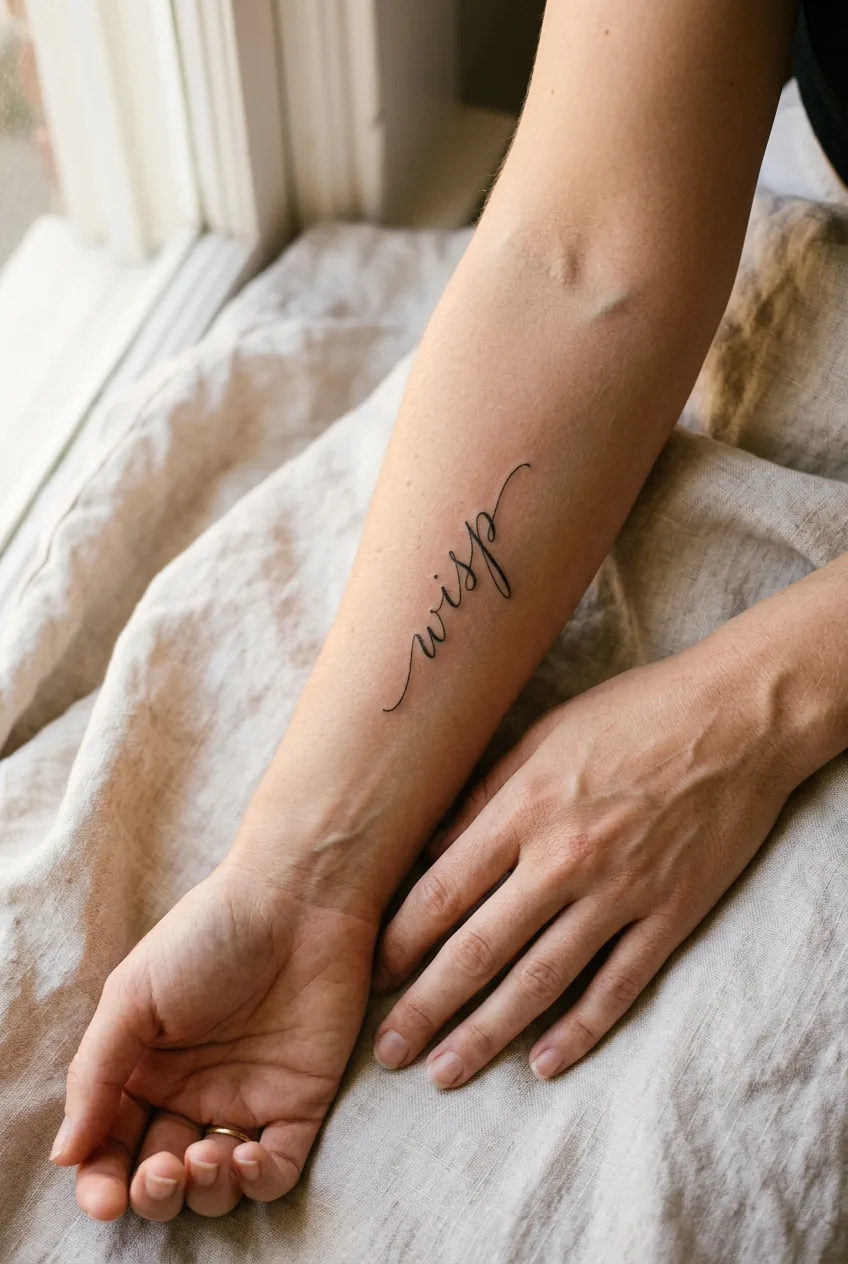
Not a full quote — that era has passed and the proportions rarely work at small scale anyway. Instead: a single word, or at most a short phrase in a truly elegant hand. The font matters more than anything else here. Not a commercially available script face — something the artist developed or adapted, with personality in the letterforms themselves. The word should be in a language that holds something for you, which adds another layer of meaning without needing explanation. Latin, French, a word from a language your grandmother spoke. When this works, it works completely. Choosing the right script font is genuinely worth researching before your consultation, because showing your artist three reference fonts is more useful than a mood board.
Who this is for: The reader. The writer. The person who believes language is physical.
The Celestial Nod
Delicate without being precious. Cosmic without being clichéd — when done right.
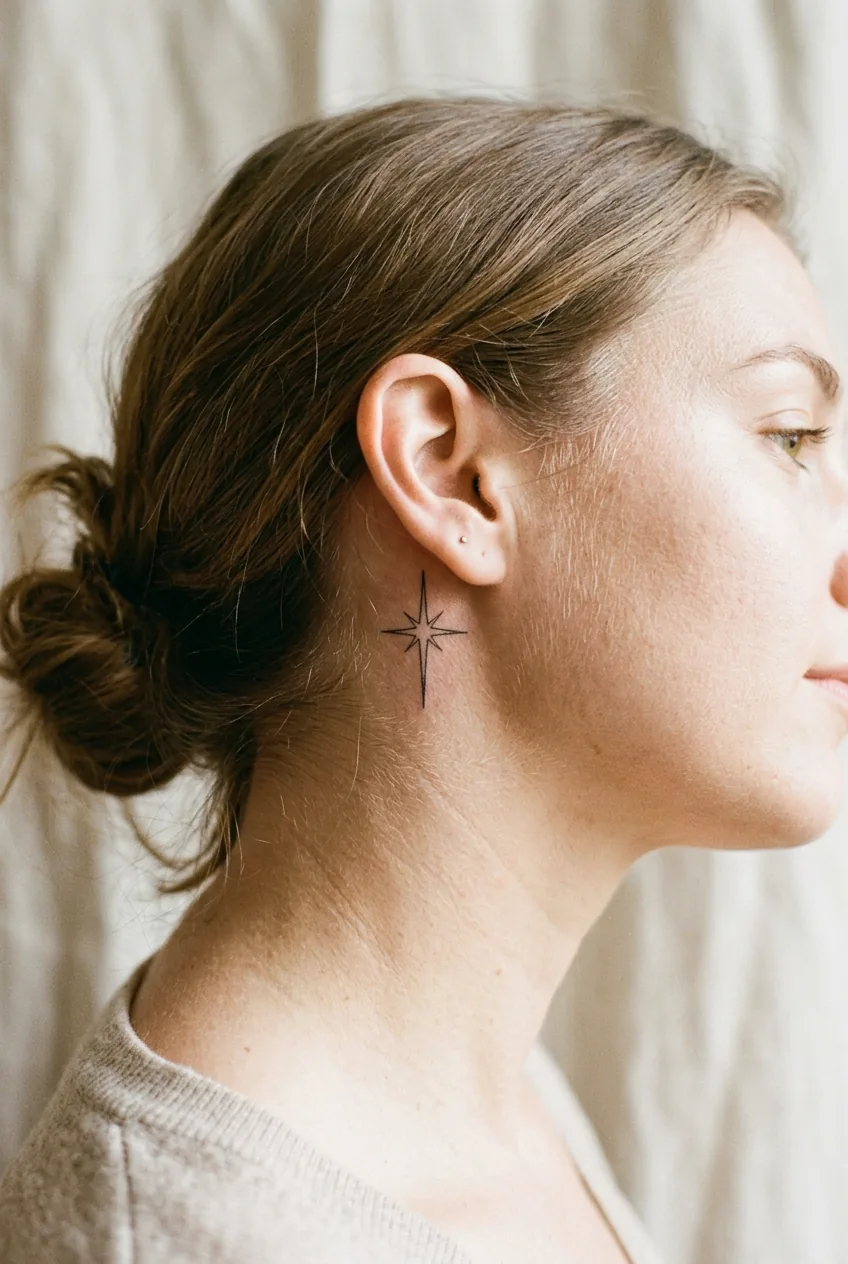
A small crescent moon, rendered not as a cartoon shape but as an astronomical one — showing the actual curvature of the terminator line, the slight texture of the lunar surface suggested by the gentlest shading. Or a single star: not a five-point outline, but a four-pointed star with elongated axes that reads more like light refraction than a symbol. These are the celestial designs that age well because they reference something real rather than a trend. Placed on the back of the neck or behind the ear, they feel like a private note. The key is restraint in execution — tattoo placement guide consistently points to these areas as among the most flattering for small, refined work.
Who this is for: The quiet dreamer with a scientific bent.
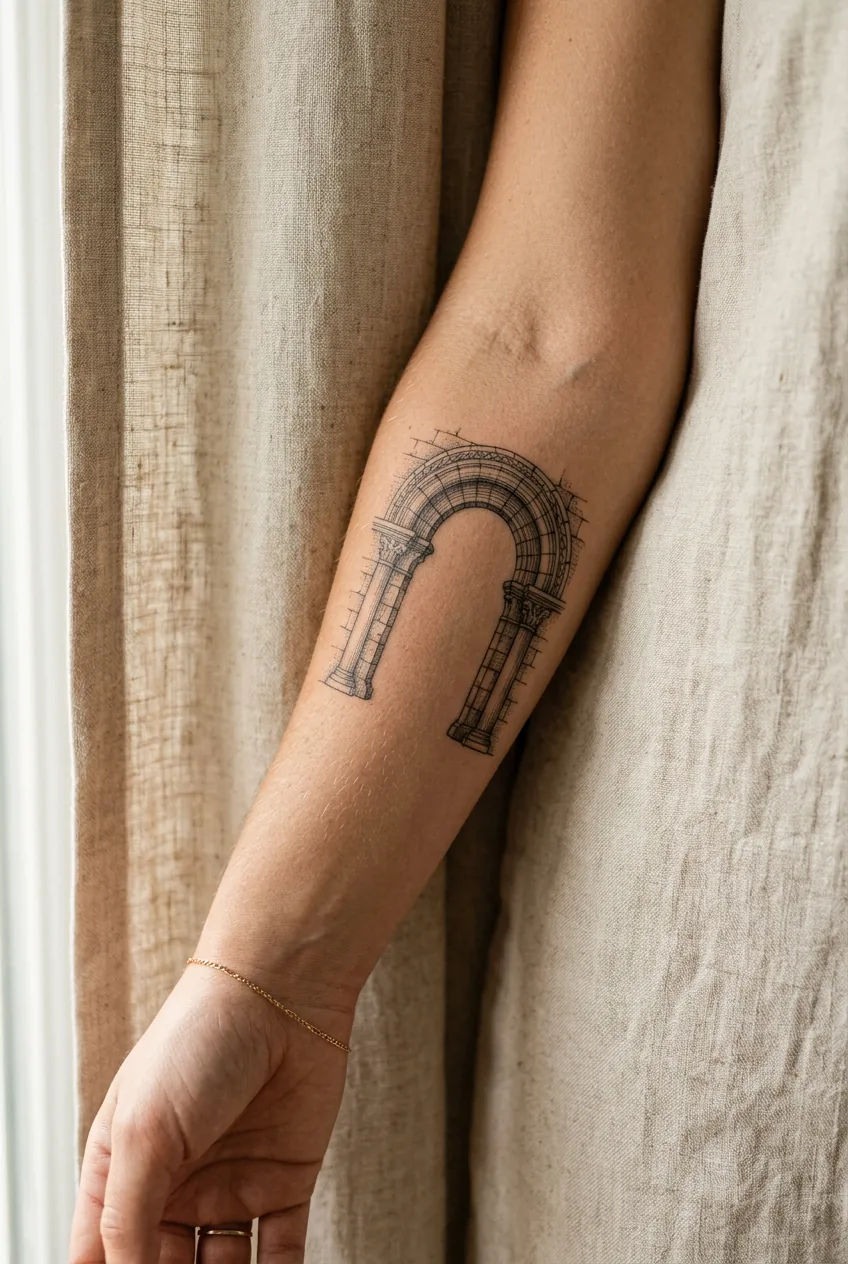
The Closing Statement
The last thing you’d expect from a small elegant tattoo. And also, the first thing people notice.
A small architectural element — an arch, a column capital, the silhouette of a doorway — rendered in the style of an engraving. It’s unusual in the best way. Geometric without being mathematical, structural without being cold. The detail is in the implied texture: the crosshatching that suggests stone, the fine lines that suggest depth. At two inches or under, placed on the outer forearm or upper arm, it reads as almost archaeological. Like you’re carrying a fragment of somewhere that matters to you. I find these more interesting than almost anything else on this list, which is saying something. If you’re exploring tiny small tattoo ideas with real impact, this category is chronically underrepresented and worth bringing to your next artist consultation.
Who this is for: The architecture nerd who travels with a notebook of door photos.
Before You Book — Common Questions
How small is too small for fine-line tattoos?
It depends on the complexity of the design. A single clean line or a simple silhouette can go very small — think fingernail-sized — without degrading. But anything with interior detail, fine shading, or closely spaced linework needs a bit more room to breathe, usually at least an inch across. Ask your artist to show you healed photos of similarly sized pieces; fresh ink always looks crisper than it will after settling.
Will a small elegant tattoo still look good in 10 years?
Genuinely fine linework does soften over time — the lines spread very slightly as the ink settles into the skin. The designs that age best are ones with a little negative space built in, so there’s room for that natural movement. Heavily detailed micro tattoos tend to blur into a smudge faster than simpler designs. Solid blackwork or designs with slightly heavier linework at the outlines hold their shape longest.
What placement heals fastest for small tattoos?
Areas with less friction and movement tend to heal most predictably: the upper arm, collarbone, and upper back are reliable. Hands, fingers, and feet are notoriously tricky — they see constant movement and sun exposure, and touch-ups are often needed. Inner wrists heal well but are sun-exposed, so SPF becomes a long-term habit rather than an afterthought.
How do I find an artist who specialises in this style?
Search specifically for artists whose portfolios show healed work, not just fresh. Anyone can make a fresh fine-line tattoo look stunning; the skill shows in how their work holds up six months to two years later. Look for artists who explicitly call out fine line or single-needle work in their bio, and don’t be shy about asking them for healed examples in your consultation. The right artist will have them ready.
That’s the full edit — ten personalities, ten different reasons to finally book the appointment. If one of them has been living rent-free in your head since you scrolled past it, that’s probably your answer. The note on my phone isn’t getting any shorter, but at least now it’s well-organised. Take your time, find the right artist, and don’t let anyone rush you into a design you’re not completely certain about. The best small elegant tattoos are the ones that feel inevitable once they’re on your skin.