



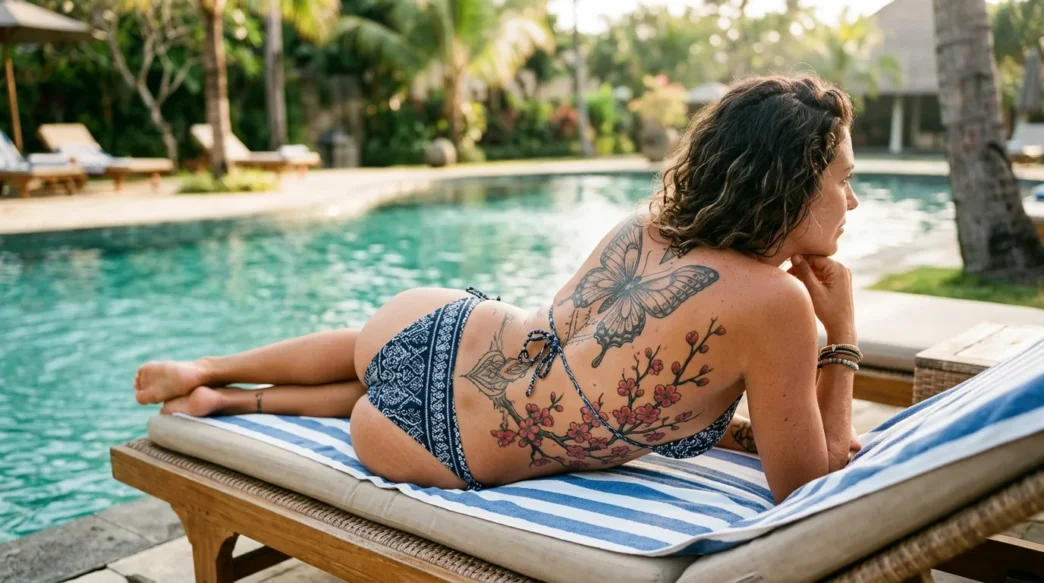
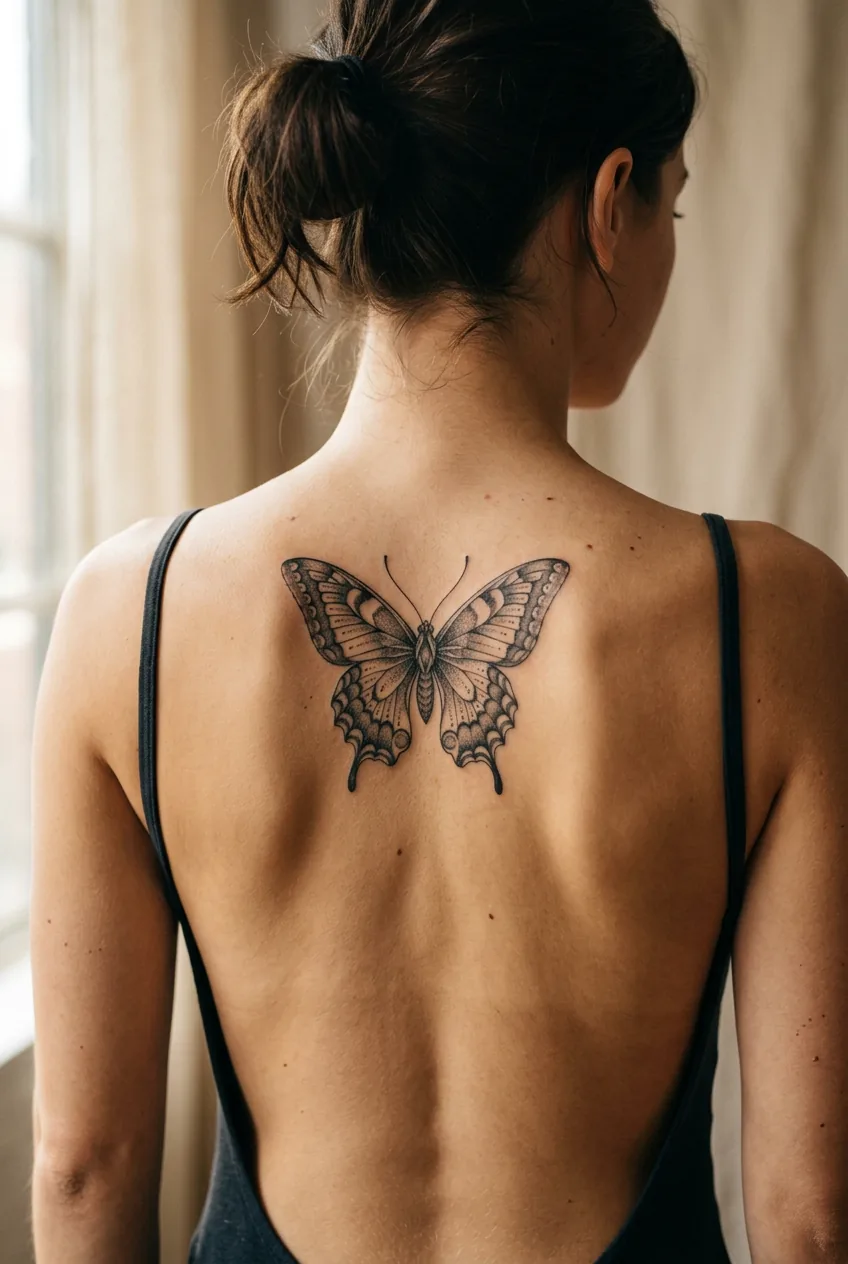
I got my first back tattoo at twenty-two — a delicate butterfly trailing down my spine that made my mother cry and my friends jealous. Back then, I thought I was just getting something pretty. But looking back now, five pieces later, I realize I was writing my autobiography in ink, choosing the most intimate canvas possible.
There’s something deeply personal about back tattoos for women. They’re hidden until we choose to reveal them. Private until we make them public.

What I Was Communicating
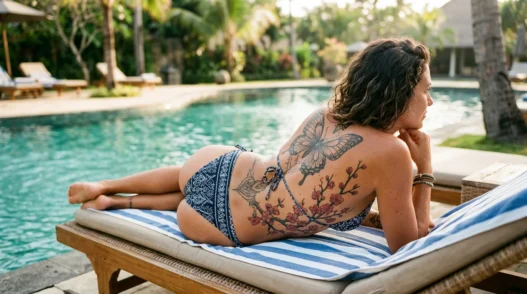
That first butterfly wasn’t random. I’d just gotten out of a relationship that left me feeling small and voiceless. The butterfly represented transformation — emerging from something confining into something free. But I placed it on my spine deliberately. This wasn’t decoration. This was declaration.
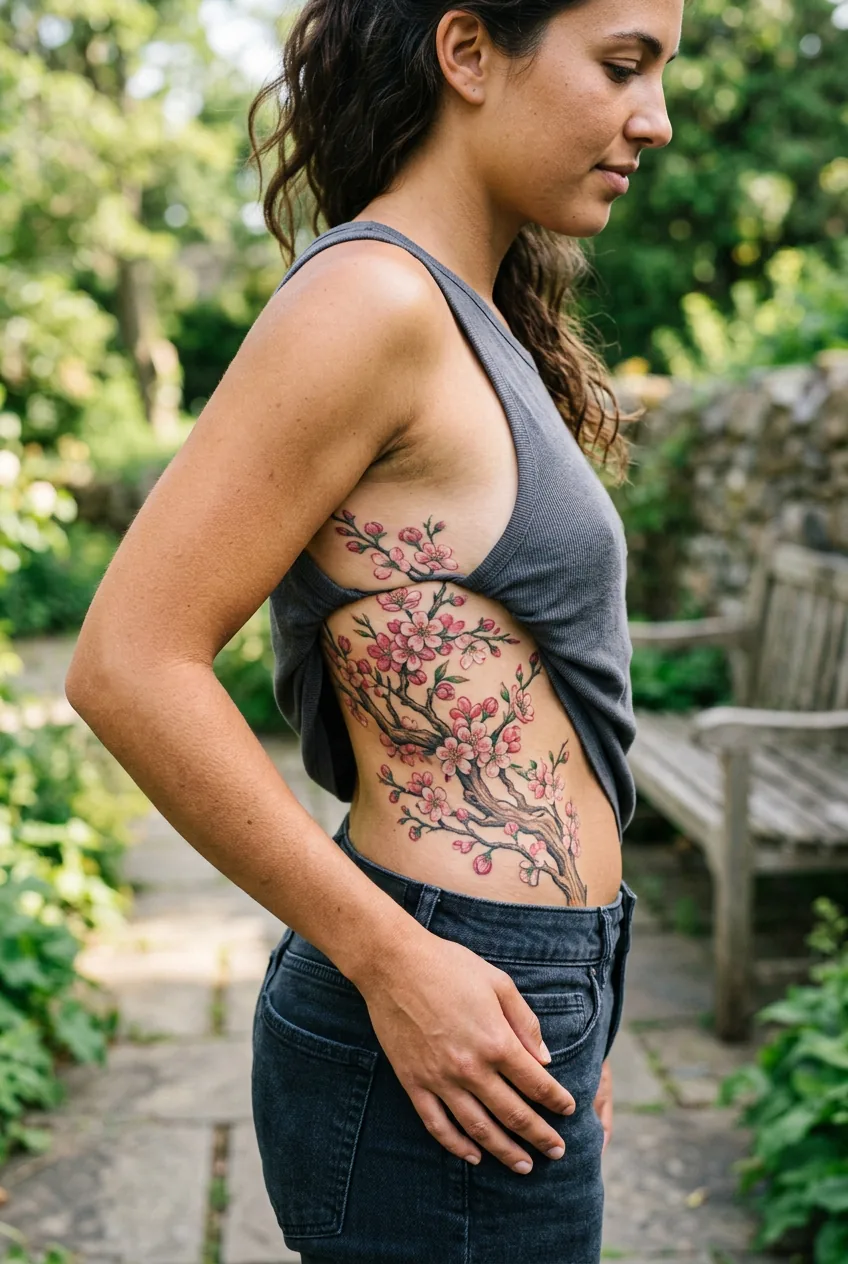
My ribcage piece came next — cherry blossoms that curve around my side, visible only in certain positions, certain clothes. Friends assumed it was just aesthetic, but cherry blossoms bloom for such a short time. They’re about embracing beauty even when it’s fleeting. I got them during my father’s cancer treatment.
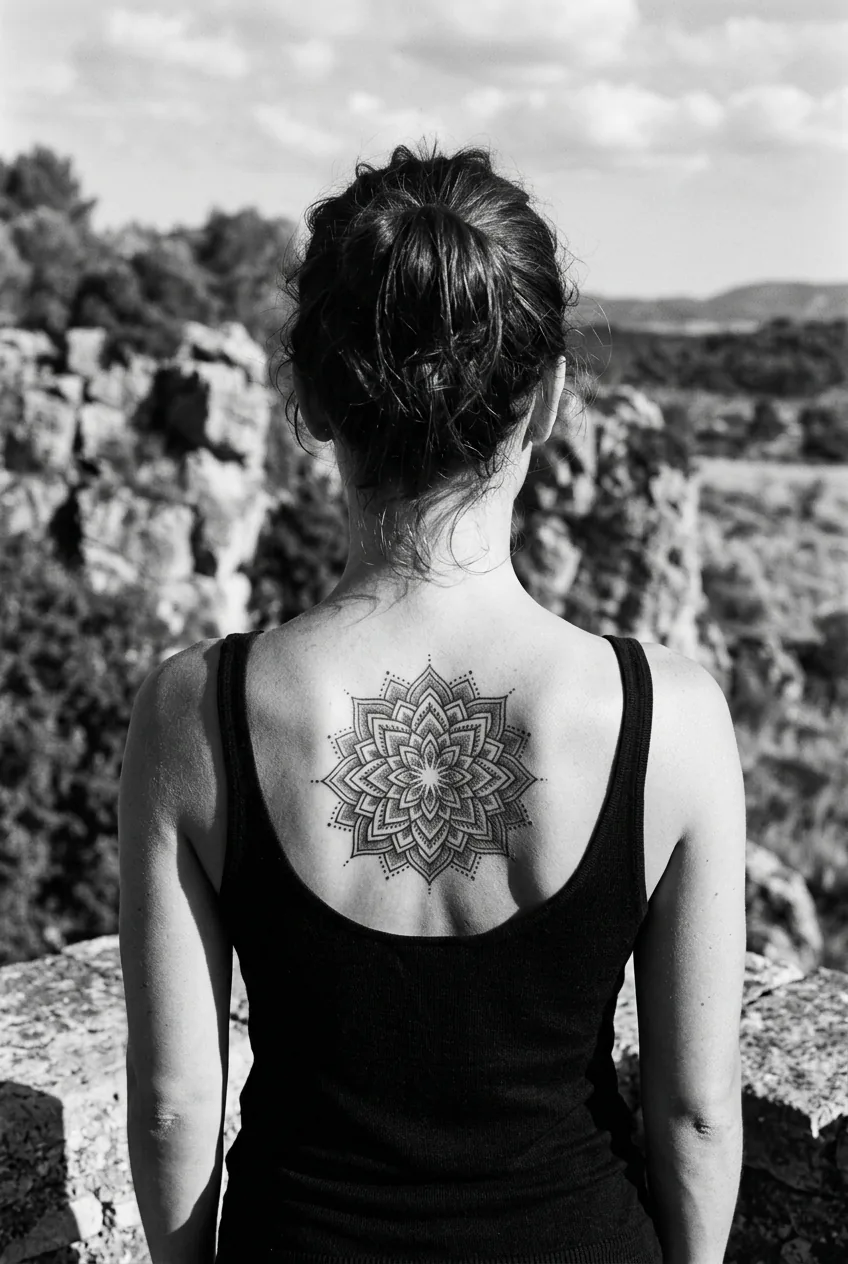
Each subsequent piece told a story I wasn’t ready to speak out loud. The geometric mandala between my shoulder blades during my anxiety peak. The script along my lower back after I finally learned to set boundaries. My back became a library of who I was becoming, written in ink only I could read in the mirror.
How Others Read It Differently
Here’s what I didn’t expect: how differently people interpreted my choices. The butterfly that meant “transformation” to me read as “free spirit” to my yoga instructor. “Rebellious phase” to my aunt. “Attention-seeking” to that one coworker who always had opinions.
But the most interesting reactions came from other tattooed women. They understood the language. The placement. The intention behind choosing your back as canvas. We’d share knowing looks in yoga classes or at the beach. There’s a sisterhood in meaningful back tattoo choices that goes deeper than just shared aesthetic preferences.
Men’s reactions fascinated me most. Some saw it as mysterious — ink they had to “discover.” Others found it intimidating — women who marked their bodies were somehow more complex, harder to categorize. A few understood it was never about them at all.
What It Means to Me Now
Five years and five pieces later, my relationship with my back tattoos has evolved completely. That butterfly that started everything? It’s not about transformation anymore. It’s about consistency. It’s been with me through every major life change since — job transitions, relationship endings, family crises, personal victories.
The cherry blossoms remind me that my father survived. That beauty and grief can coexist. The mandala grounds me when anxiety tries to take over — I can literally feel it between my shoulder blades during meditation, a physical reminder of my own center.
But here’s the thing I never expected: they’ve become less about what they say and more about the simple fact that I chose them. In a world where women’s bodies are constantly scrutinized, commented on, and controlled, my back tattoos represent one thing clearly — autonomy. I decorated myself, for myself, with symbols that speak to me alone.
When I catch glimpses of them in dressing room mirrors, I don’t see rebellion or attention-seeking anymore. I see a woman who has been consistently, quietly choosing herself for years. That’s its own kind of power.
The Ink I Haven’t Got Yet
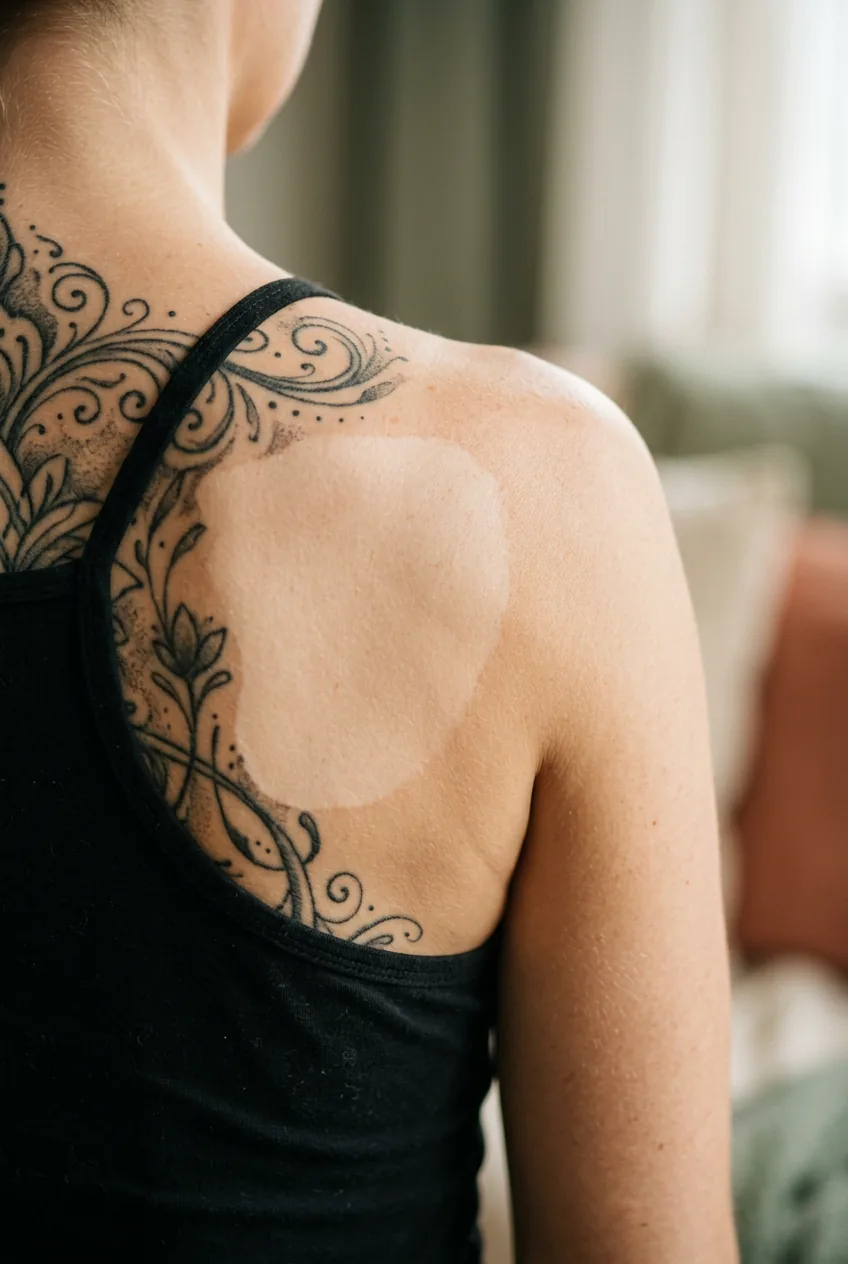
My shoulder blade is still calling for something. I’ve been saving that space for three years now, waiting for the right moment, the right meaning to crystallize. Friends suggest flowers, birds, more geometric work. But I’m learning to listen to the space itself.
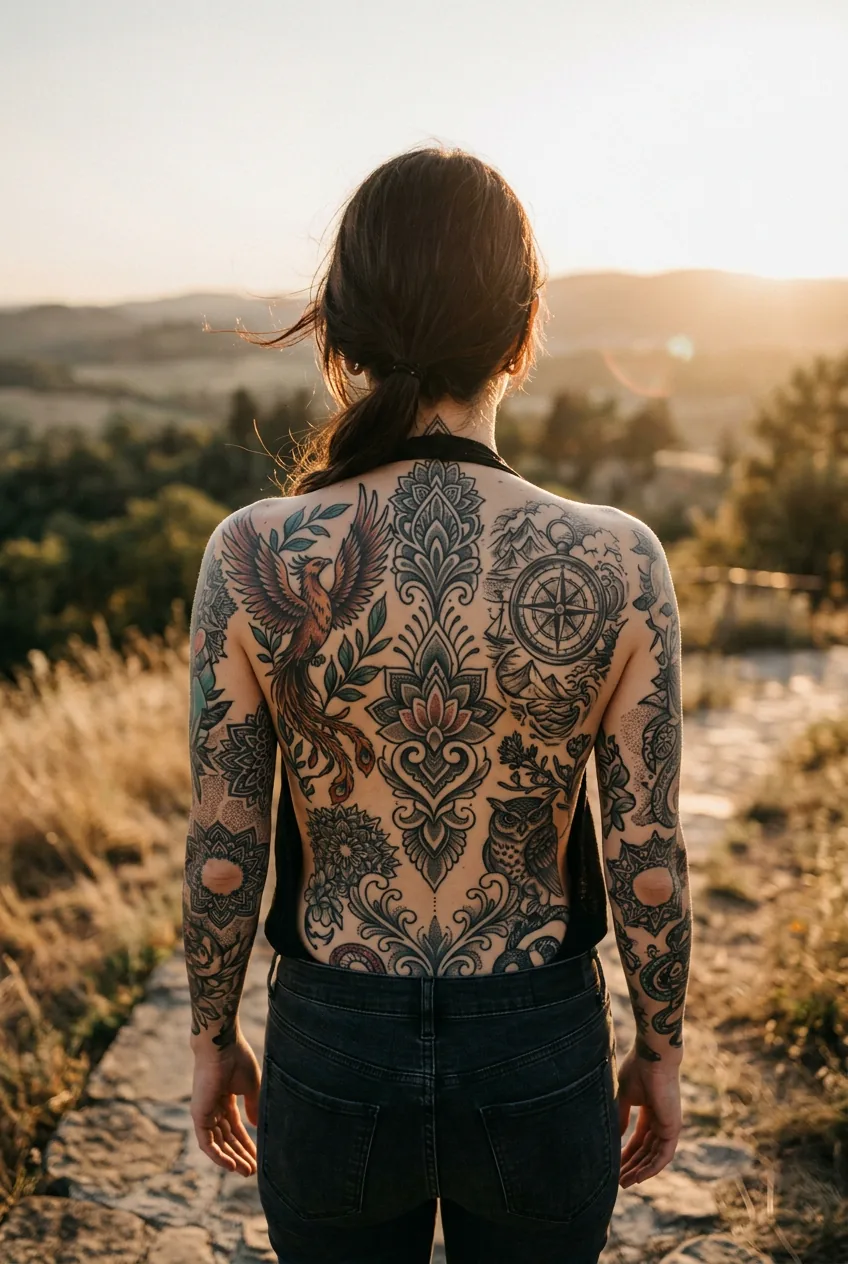
Sometimes I think it will be words — maybe my grandmother’s handwriting, maybe a line of poetry that hasn’t been written yet. Other times I imagine something abstract, something that captures a feeling rather than a symbol. The waiting itself has become part of the process. Not every space needs to be filled immediately.
I’ve noticed how the anticipation changes how I move through the world. That blank shoulder blade is potential energy. It’s a promise I’ve made to my future self — when you’re ready, when you have something worth saying permanently, we’ll say it together.
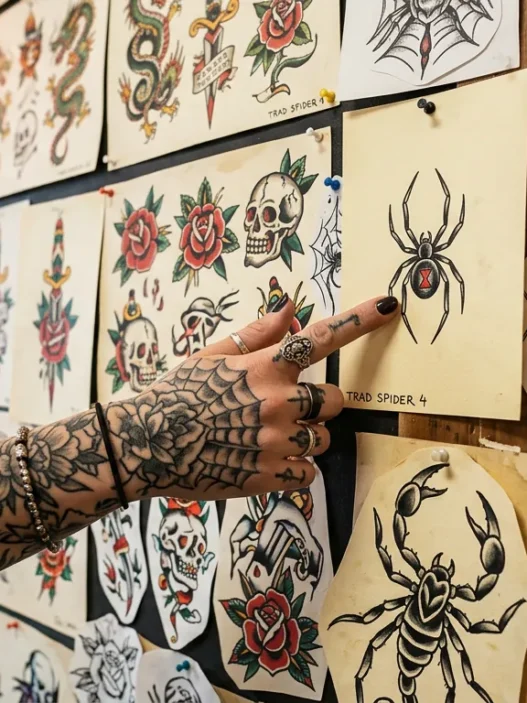
Maybe that’s the most honest thing about traditional vs. modern tattoo approaches — both require you to sit with intention. To choose deliberately. To commit to carrying something forward.
When Canvas Becomes Character
The strangest part of having extensive back work is how it changes your relationship with your own body. I’m more aware of my posture — not because I’m showing off the ink, but because I can feel it. The weight of the stories I carry, literally and figuratively.
Getting dressed becomes different too. Tank tops aren’t just tank tops anymore — they’re choices about visibility. Backless dresses become statements. Even in private moments, brushing my teeth in the morning, I catch sight of familiar lines and colors that ground me in my own narrative.
People often ask if I regret any of them. The honest answer is no, but not because they’re all perfect. Some of the line work has aged. The colors have shifted. One piece represents a version of myself I’ve outgrown. But that’s exactly why they matter. They’re archaeological evidence of who I’ve been, not just who I am now.
I love how living with visible tattoos creates daily conversations about identity and choice. My back pieces do the opposite — they create space for private reflection, for personal meaning that doesn’t need external validation.
See What I Mean About Placement
Why Back Tattoos Hit Different
Here’s my controversial opinion: back tattoos for women are fundamentally different from tattoos anywhere else. They’re not performative. You can’t see them yourself without effort. They exist in the space between private and public, between self and others, between intention and interpretation.
They’re also the most intimate to receive. Hours in a chair, face down, vulnerable, while someone permanently alters your skin. The pain is different too — closer to bone, harder to distract yourself from. You have to be committed in a way that smaller, more visible pieces don’t require.
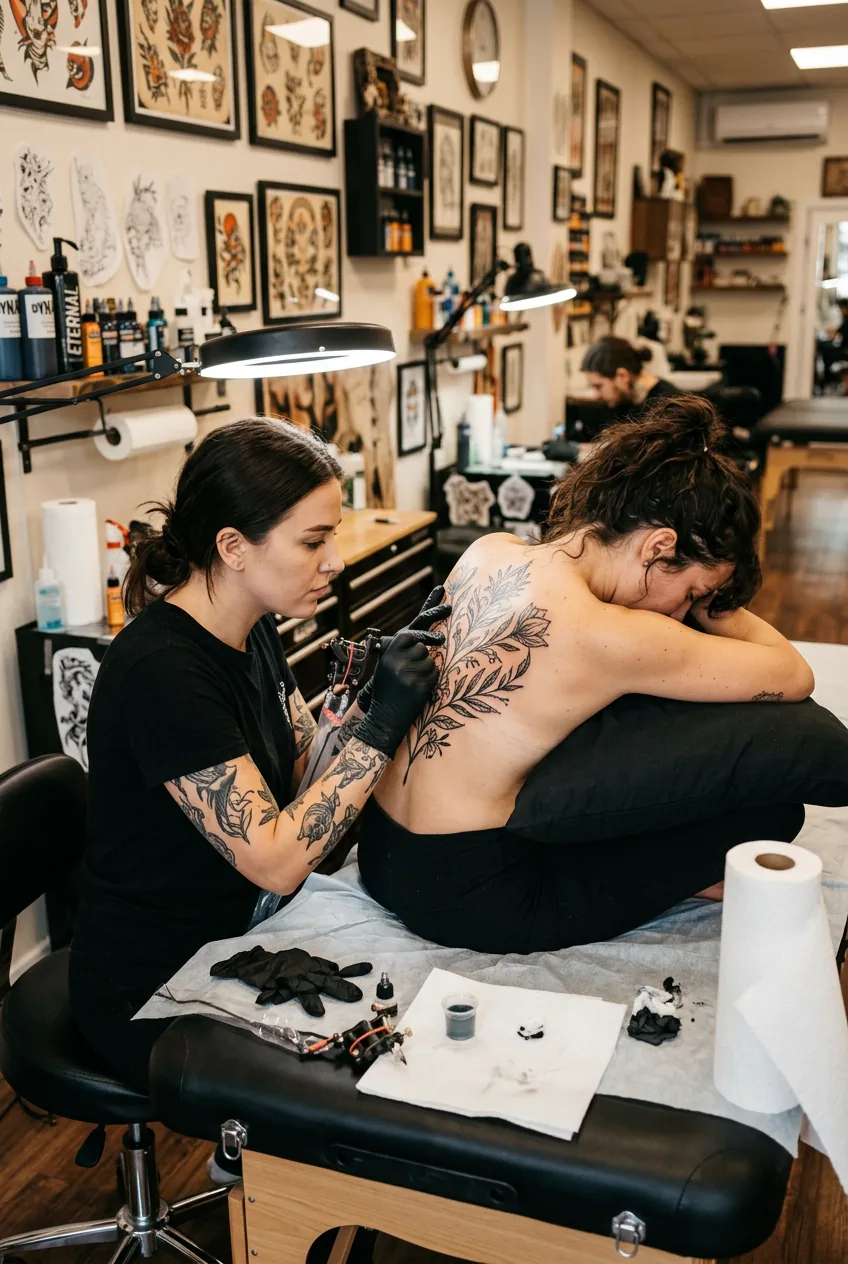
But maybe what makes them special is exactly what makes them challenging — they force you to tattoo for yourself alone. No one else will see them as often as mirrors show them to you. No one else will live with them as intimately. They have to mean something to you, not to your audience.
When people ask about proper back tattoo healing, they’re really asking about commitment. How do you care for art you can’t easily see? How do you live with permanent choices? How do you trust yourself that completely?
The answer is the same way you trust yourself with any major life decision. You research. You wait when you need to. You choose artists who understand not just technique, but the weight of what they’re helping you carry forward. And then you commit fully to the process of becoming who you’re meant to be, one carefully chosen mark at a time.
Questions I Get About This
Do back tattoos hurt more than other placements?
Honestly, yes. The spine especially — you’re tattooing close to bone with minimal muscle cushioning. But the pain becomes part of the ritual. I found the ribcage work more challenging than the spine, and anything near the shoulder blades was surprisingly manageable.
How do you care for a back tattoo during healing?
This is the tricky part — you need help, especially for the first few days. I recruited my sister for washing and moisturizing duties. Sleeping on your stomach gets old fast. Plan for longer healing time since the area moves so much with daily activities.
Do you ever regret not being able to see them easily?
Never. That’s actually my favorite thing about them. They exist for me, not for display. When I do catch them in mirrors or photos, it’s always a pleasant surprise rather than something I’m performing for others.
How do you choose what goes where on your back?
I think about flow and balance, but also about meaning. The spine feels like the most sacred space to me — that’s where transformational pieces go. Shoulder blades hold strength and protection themes. Ribs are for more delicate, personal stories.
My back tattoos aren’t just decoration — they’re autobiography. They’re the stories I tell myself about who I am, who I’ve been, and who I’m becoming. And in a world that constantly tries to define women by external standards, there’s something deeply powerful about writing your own story in ink, in a place where only you can read it daily.