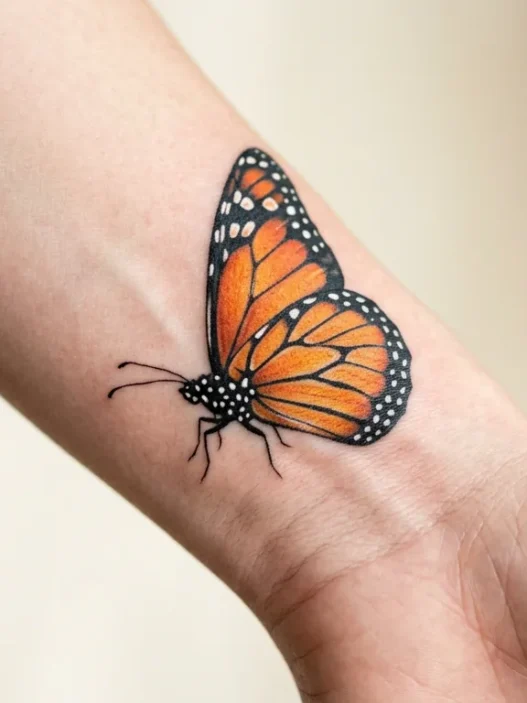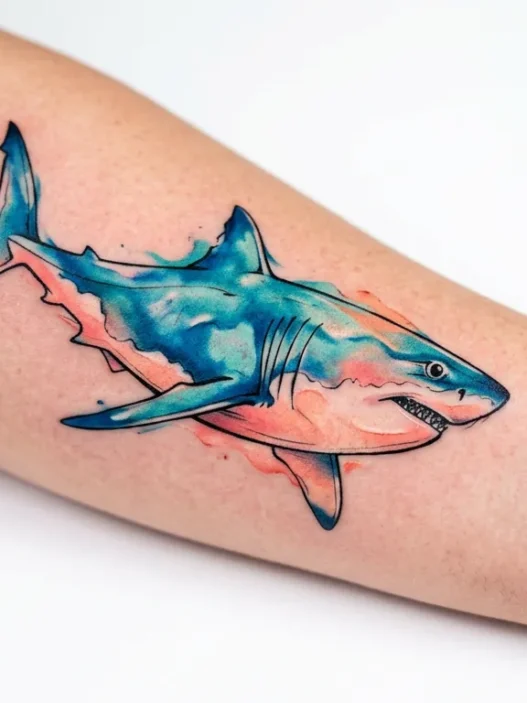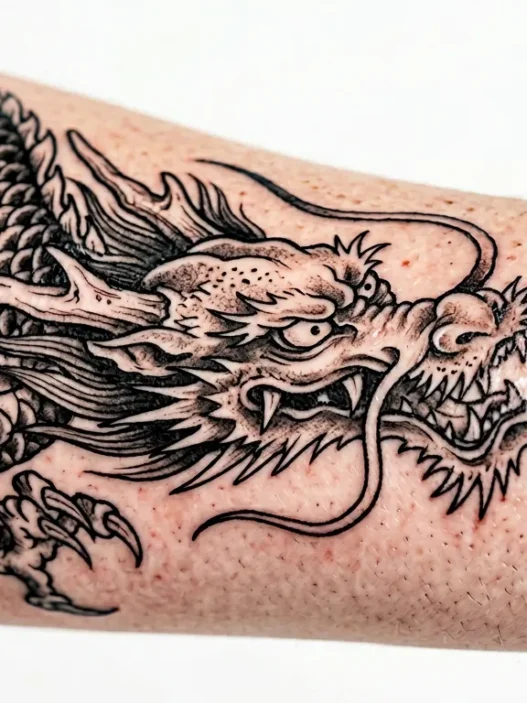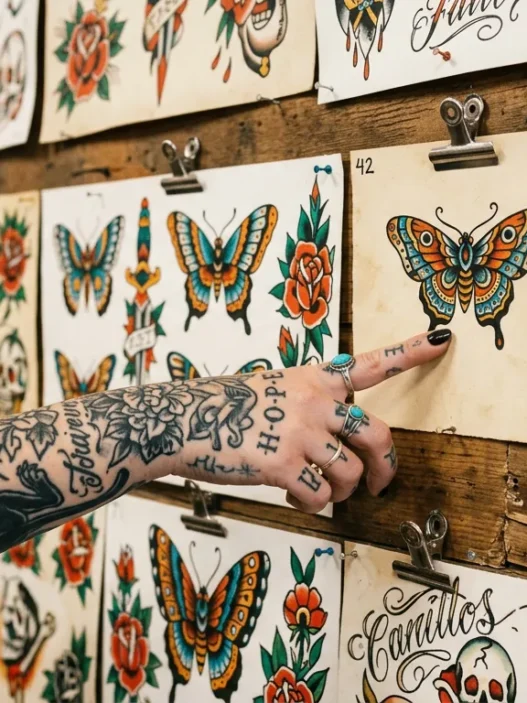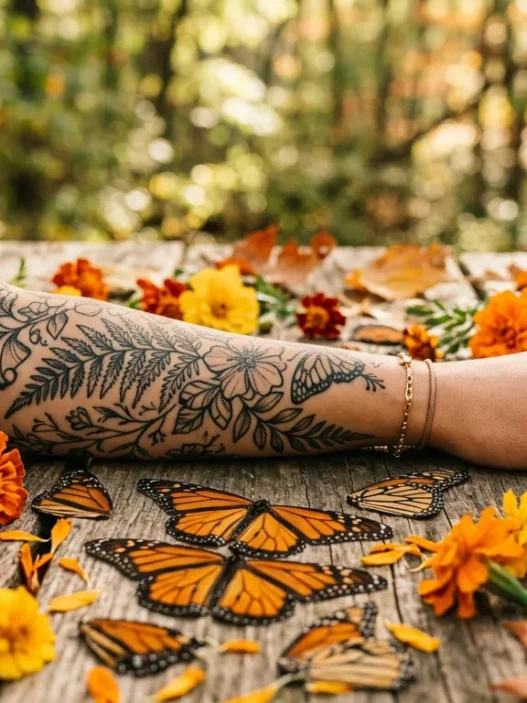



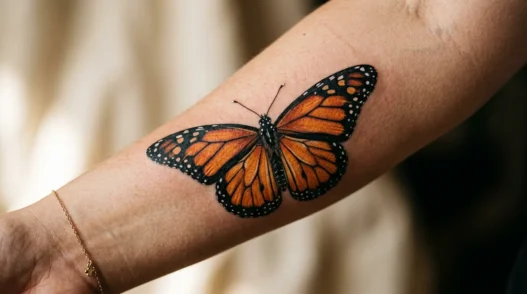
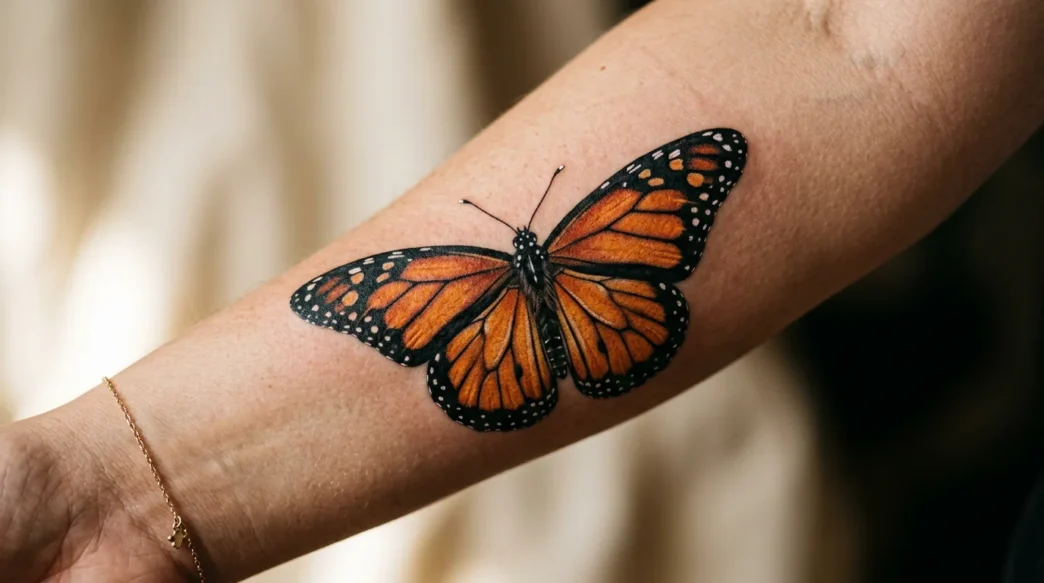
I still remember the exact moment I fell in love with butterfly tattoos. I was eighteen, sitting in a coffee shop, when this woman rolled up her sleeve to reach for sugar. There, dancing across her forearm, was the most delicate monarch — not the cliché cartoon version I’d seen a thousand times, but something that looked like it might actually take flight. The way the light caught the orange and black shading made my chest tight with want.
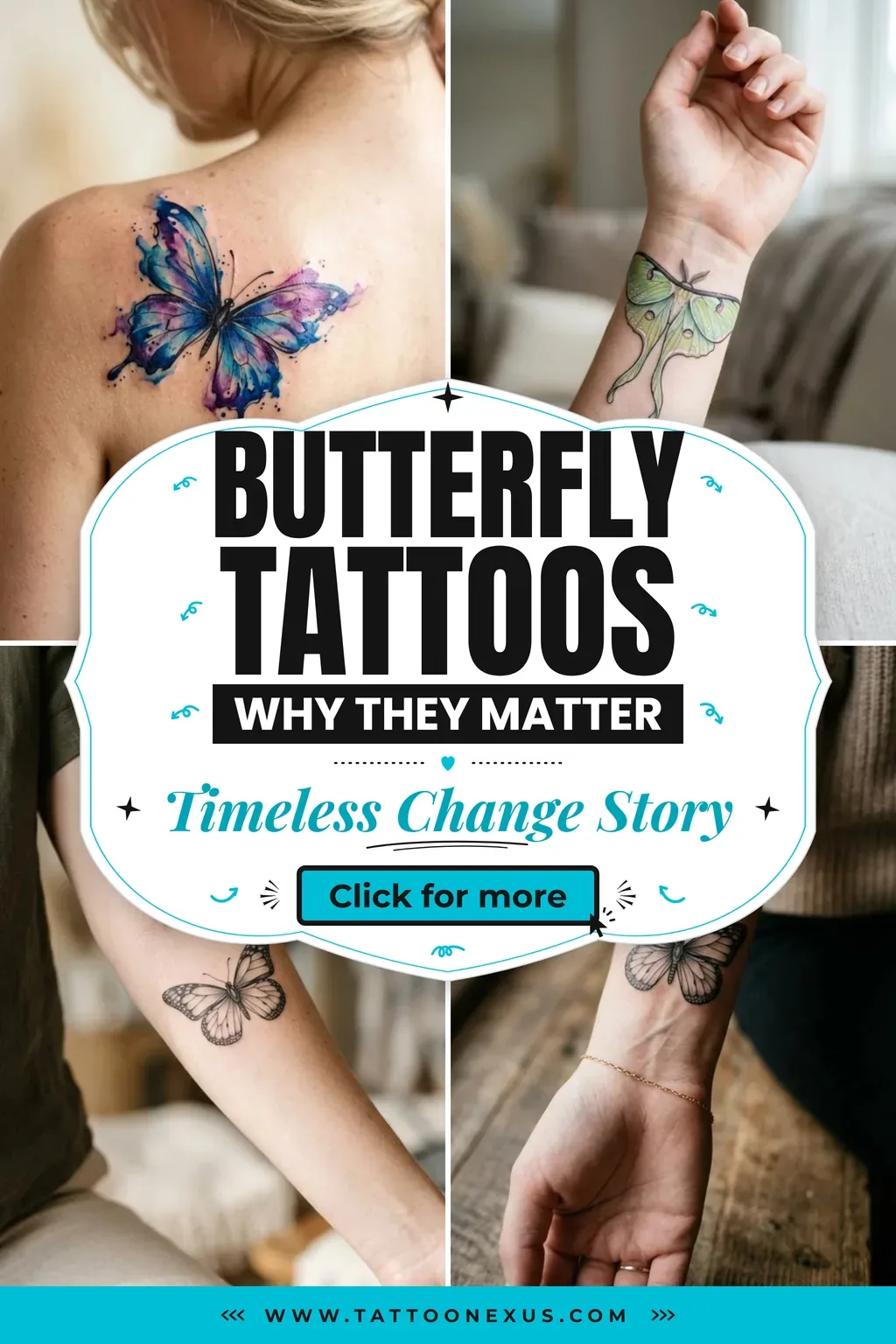
The First Time I Saw One That Mattered
That coffee shop moment wasn’t actually my first encounter with butterfly tattoos. God knows I’d seen plenty of the basic tribal ones in the early 2000s. But this was different. This woman’s tattoo had weight to it — emotional weight that you could feel even from three tables away.
She noticed me staring and smiled. “Got it after my divorce,” she said simply. “Took me forty-three years to grow wings.” That’s when it clicked for me. This wasn’t decoration. This was declaration.
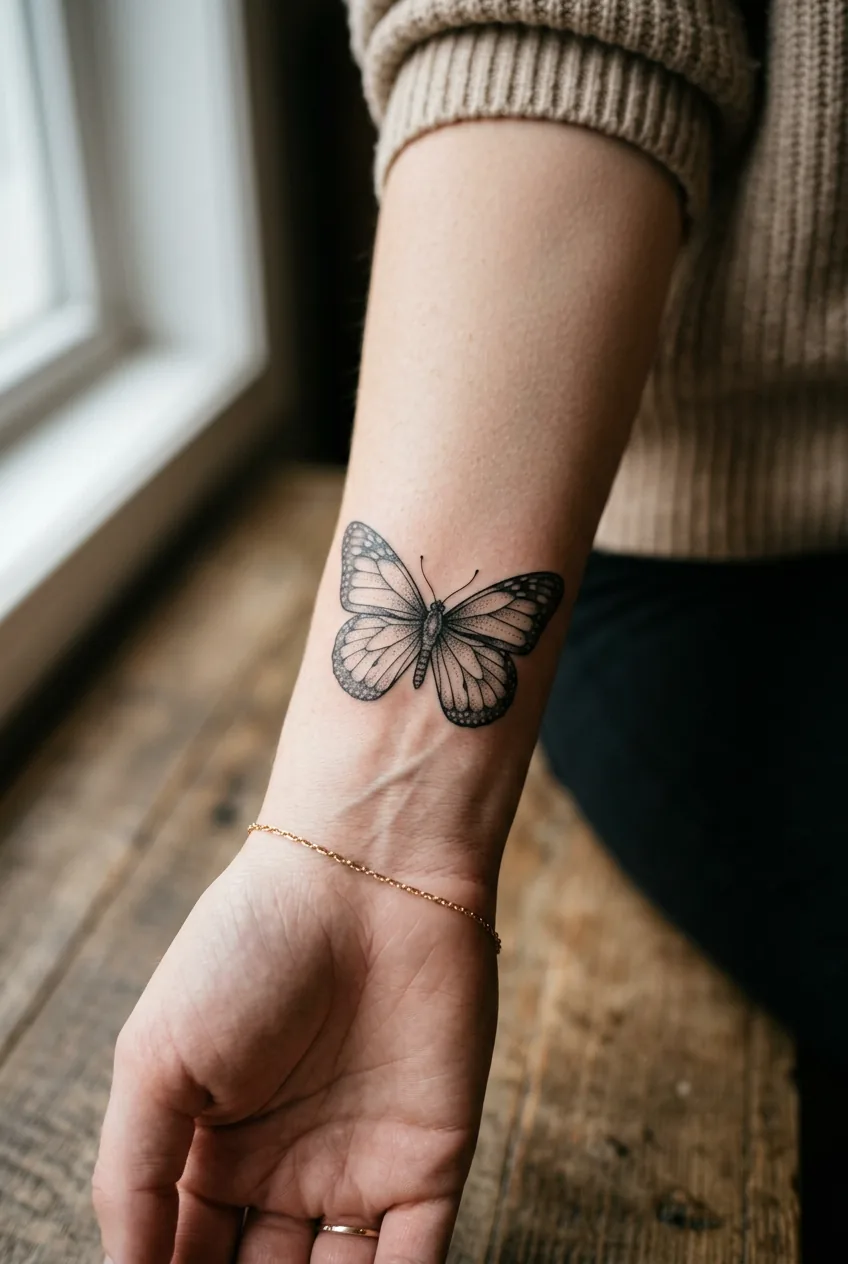
The detail work was incredible — every vein in those wings had been carefully considered. The artist had understood that butterflies aren’t just pretty insects. They’re proof that complete transformation is possible. That you can go into the darkness of your cocoon and emerge as something entirely new.
I started noticing them everywhere after that. Each one told a story. The watercolor butterfly on my yoga instructor’s shoulder blade — she’d gotten it after beating cancer. The tiny monarch behind my coworker’s ear — a memorial for her sister. The bold swallowtail wrapping around another woman’s wrist — celebration of her sobriety milestone.
Why Nothing Else Captures Change Like This
Here’s what gets me about butterfly tattoos that other transformation symbols just don’t nail: they’re not abstract. We all know exactly what metamorphosis looks like. Caterpillar crawls in, butterfly flies out. Simple. Profound. Undeniable.
Phoenix tattoos are beautiful, sure. But unless you’re really into mythology, the symbolism feels distant. Butterflies? Everyone has watched one emerge from a chrysalis, even if it was just in a nature documentary. The visceral understanding is already there.
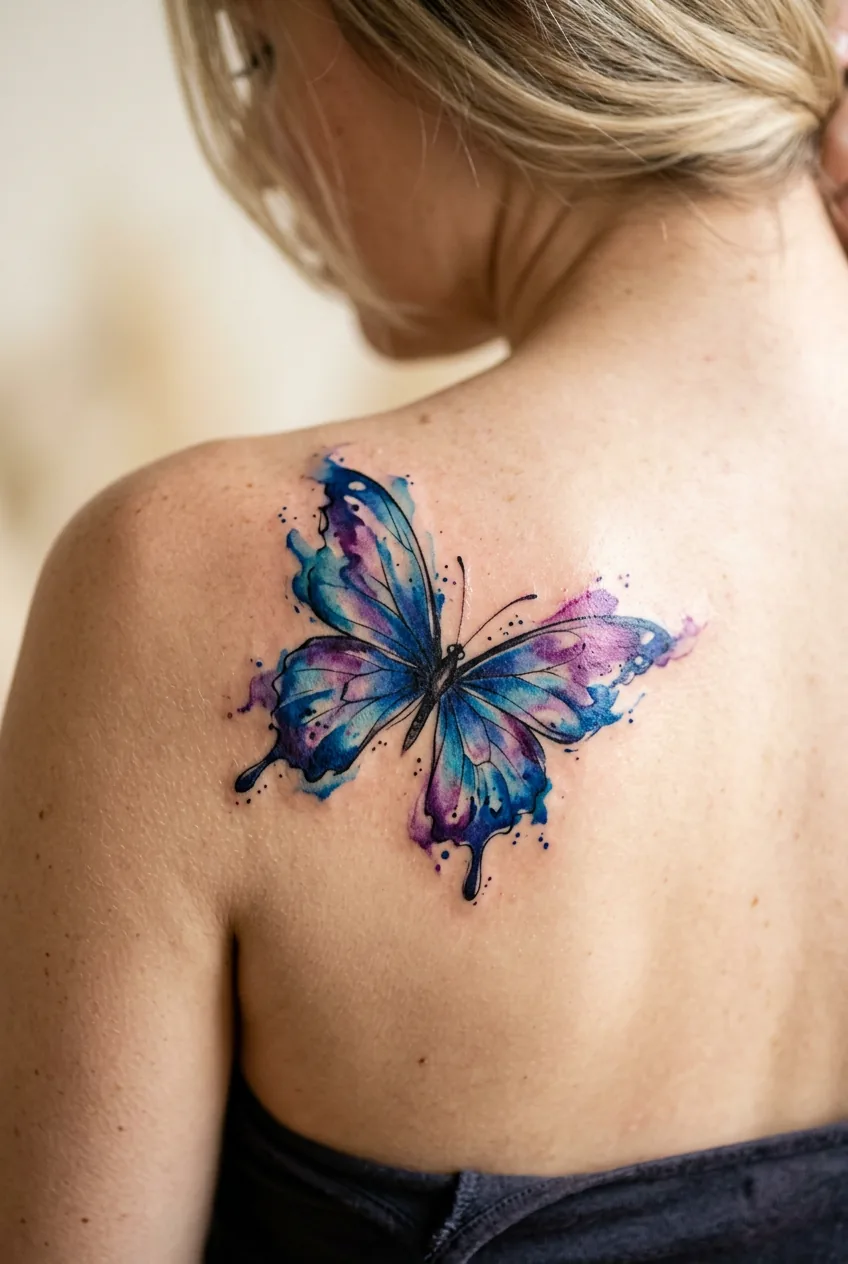
And the visual possibilities are endless. You can go realistic with scientific accuracy — every pattern true to a specific species. You can go abstract with flowing watercolors that suggest movement and change. You can incorporate other elements: flowers they’re landing on, geometric patterns they’re emerging from, mandalas they’re integrated with.
But here’s my controversial take: the best butterfly tattoos are the ones that acknowledge the darkness too. Not just the pretty flying part, but the dissolution that has to happen first. Some of my favorite pieces show the chrysalis cracking, or butterflies with slightly torn wings, or designs that fade from caterpillar to butterfly in stages.
Because real transformation isn’t just about becoming beautiful. It’s about surviving the in-between space where you’re neither who you were nor who you’re becoming.
The Artists Keeping the Magic Alive
The tattoo world has some incredible artists who’ve elevated butterfly work way beyond the flash sheets. They’re the ones who understand that every wing needs to feel like it could catch air, every antenna needs to look sensitive enough to sense the world.
I’m obsessed with artists who study actual entomology for their pieces. Species guides help them nail the proportions and patterns that make each design feel authentic. A monarch butterfly has different wing patterns than a swallowtail, and the best artists honor those differences.
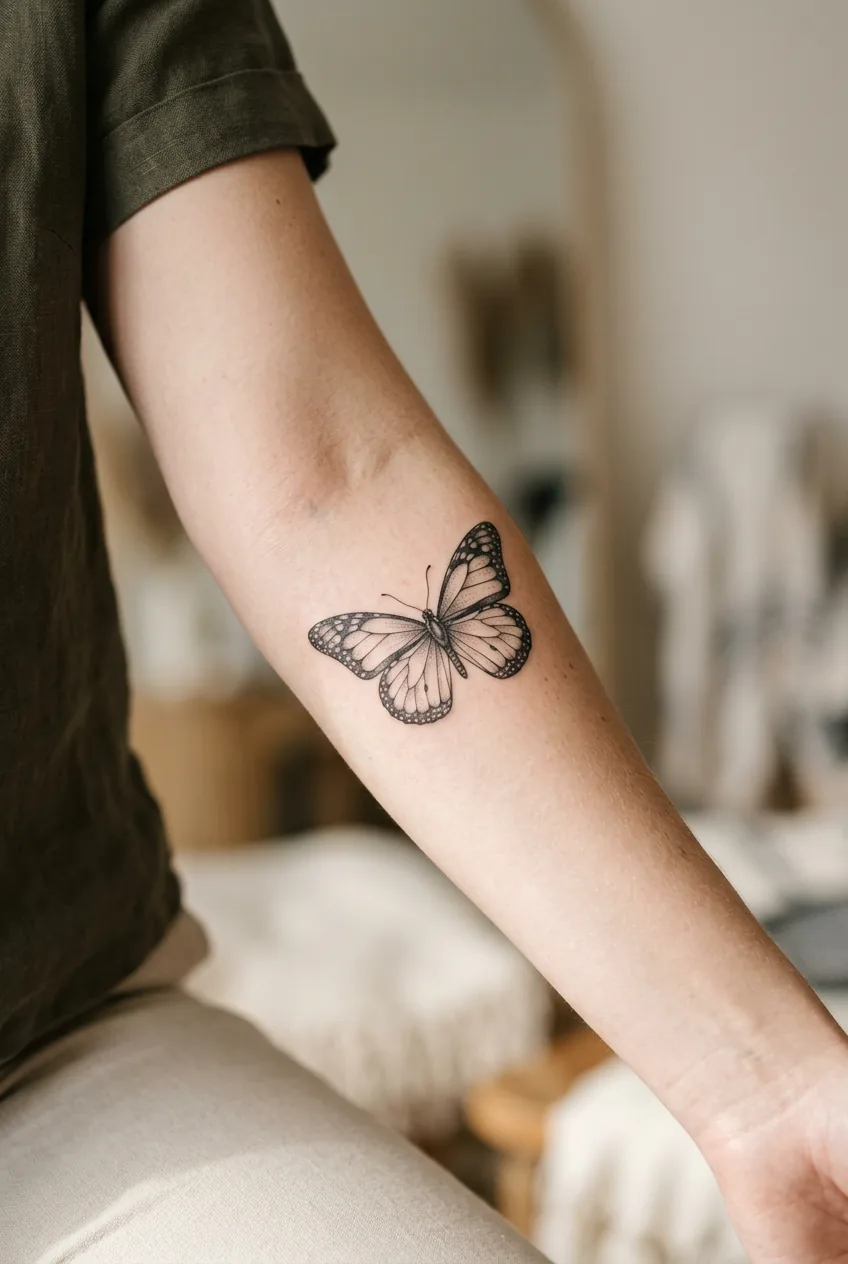
Fine line artists are absolutely killing it with butterfly work right now. Those delicate, precise lines capture something gossamer and fragile that bold traditional styles sometimes miss. There’s this artist in Portland whose butterfly work looks like botanical illustrations come to life — scientific but magical.
On the flip side, I love seeing how traditional tattoo styles handle butterflies too. Neo-traditional artists add these gorgeous color gradients and dimensional shading. Japanese-inspired pieces often incorporate butterflies into larger scenes with flowers and flowing elements.
What I appreciate most is when artists push beyond the obvious. One artist I follow does these incredible pieces where butterflies are emerging from human ribcages, or where the wings are made of breaking chains, or where multiple butterflies form constellation patterns. That’s when butterfly tattoos move from pretty to profound.
Watch This Artist’s Technique
When I Finally Got My Own Wings
I waited five years after that coffee shop moment to get my own butterfly tattoo. Not because I couldn’t decide — I knew I wanted one immediately. But because I wanted to earn it first. I wanted to have my own transformation story worth marking permanently.
The moment finally came after I left a job that had been slowly crushing my spirit. I’d spent two years in a role that felt like being trapped in a too-small cocoon, and walking away felt like breaking free into sunlight. That’s when I knew it was time.
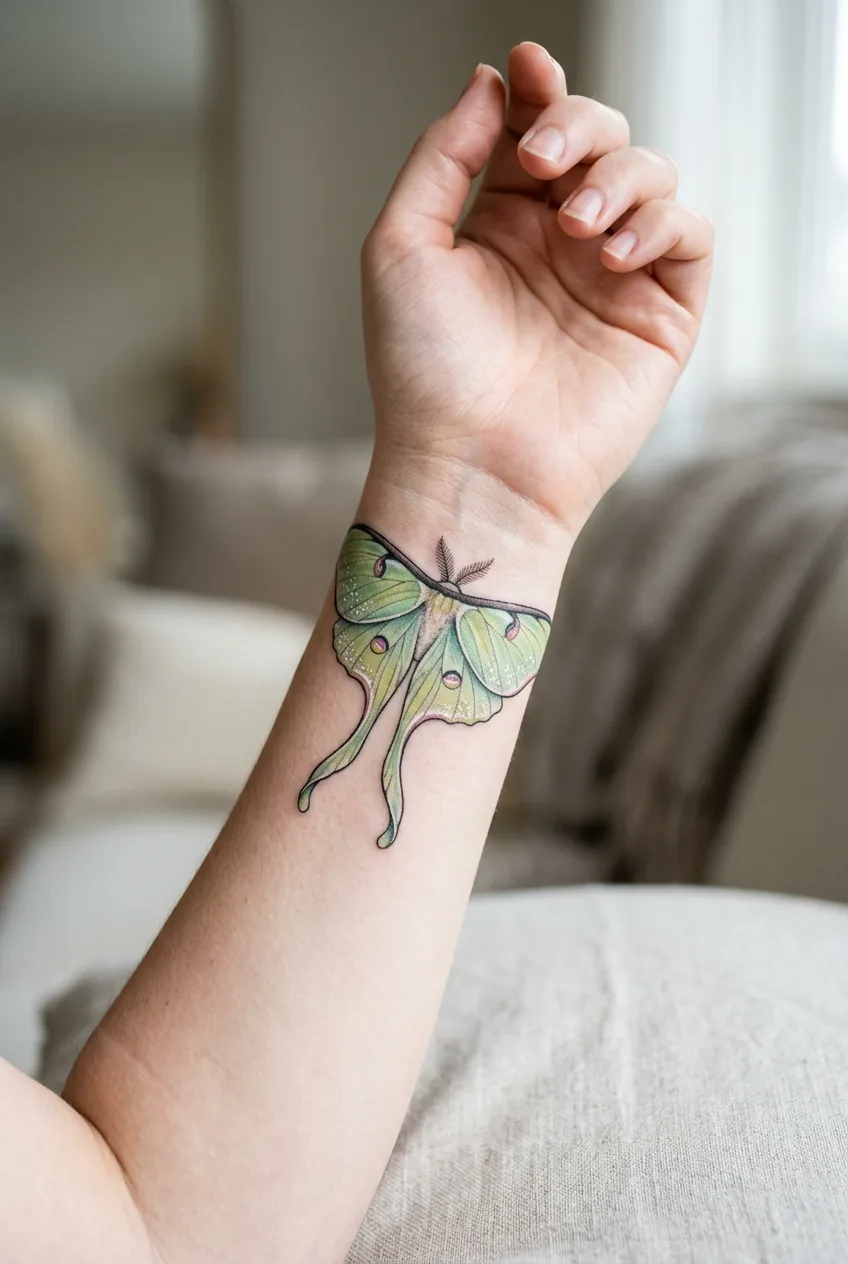
I chose a Luna moth instead of a traditional butterfly — technically different, but the symbolism felt more personal. Luna moths live for only a week once they emerge, but they’re pure magic during that time. They don’t even have mouths to eat; they just exist to fly and reproduce and experience that brief, brilliant life.
The placement took forever to decide. I wanted somewhere I could see it regularly — a daily reminder of my own capacity for transformation. But I also wanted it to feel intimate, not performative. I finally chose the inside of my left wrist, where the moth’s wings wrap around my arm like they’re mid-flight.
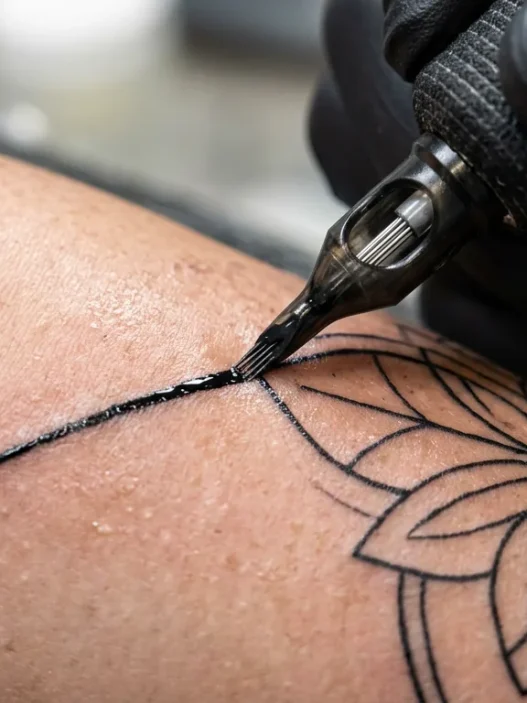
Getting it tattooed was meditative in a way I hadn’t expected. Three hours of lying still while my artist built up those pale green wings, line by careful line. It hurt in the good way — the kind of pain that feels like growth, like something important happening.
Now, two years later, I catch myself looking at it during difficult moments. Tough conversation at work? Glance at the moth. Relationship stress? There are my wings. It’s become this quiet reminder that I’ve transformed before and I can do it again.
What Each Style Actually Means
Realistic butterflies: These are for people who want scientific accuracy mixed with personal meaning. Monarchs represent endurance and migration — perfect for someone who’s traveled far (literally or metaphorically) to become themselves. Swallowtails symbolize joy and protection. Blue morphos are all about transformation and spiritual growth.
Watercolor style: The bleeding, flowing colors capture the fluid nature of change itself. These work beautifully for people whose transformation wasn’t a single moment but a gradual shift. The colors can represent different phases of growth or different emotions experienced during change.
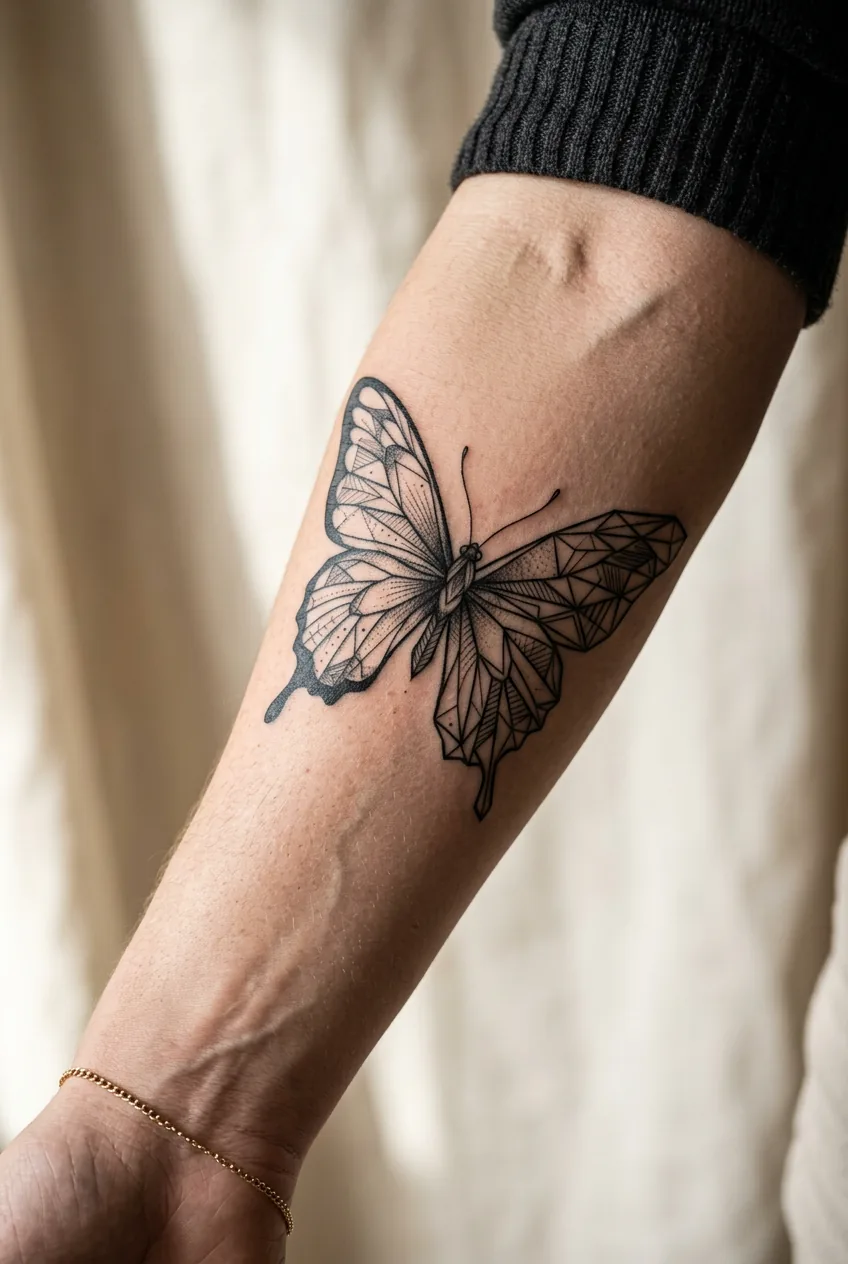
Geometric butterflies: When you combine organic butterfly shapes with precise geometric patterns, you get something that speaks to finding order within chaos. These appeal to people who’ve used structure and discipline to transform their lives.
Minimalist line work: Sometimes the most powerful statement is the simplest one. A few precise lines that suggest a butterfly without overexplaining it. These work for people who’ve learned that transformation doesn’t always need to be dramatic to be meaningful.
Blackwork butterflies: Bold, solid shapes that make a statement. These often incorporate dotwork or mandala elements. They’re for people who aren’t subtle about their transformations — who want the world to know they’ve changed and they’re proud of it.
The wrong move? Tiny, generic butterflies with no thought behind the design or placement. If you’re going to mark your transformation, make it count. Choose a style and species that actually means something to your story.
The Placement That Changed Everything
Where you put a butterfly tattoo completely changes how it lives on your body and in your life. I’ve seen the same design look playful on an ankle, powerful on a shoulder blade, and sacred on a ribcage. Location is everything.
Shoulder blade: This is classic for a reason. The natural curve mimics how wings would attach to a body. Plus, you can keep it private or reveal it strategically. Perfect for larger, more detailed pieces that need room to breathe.
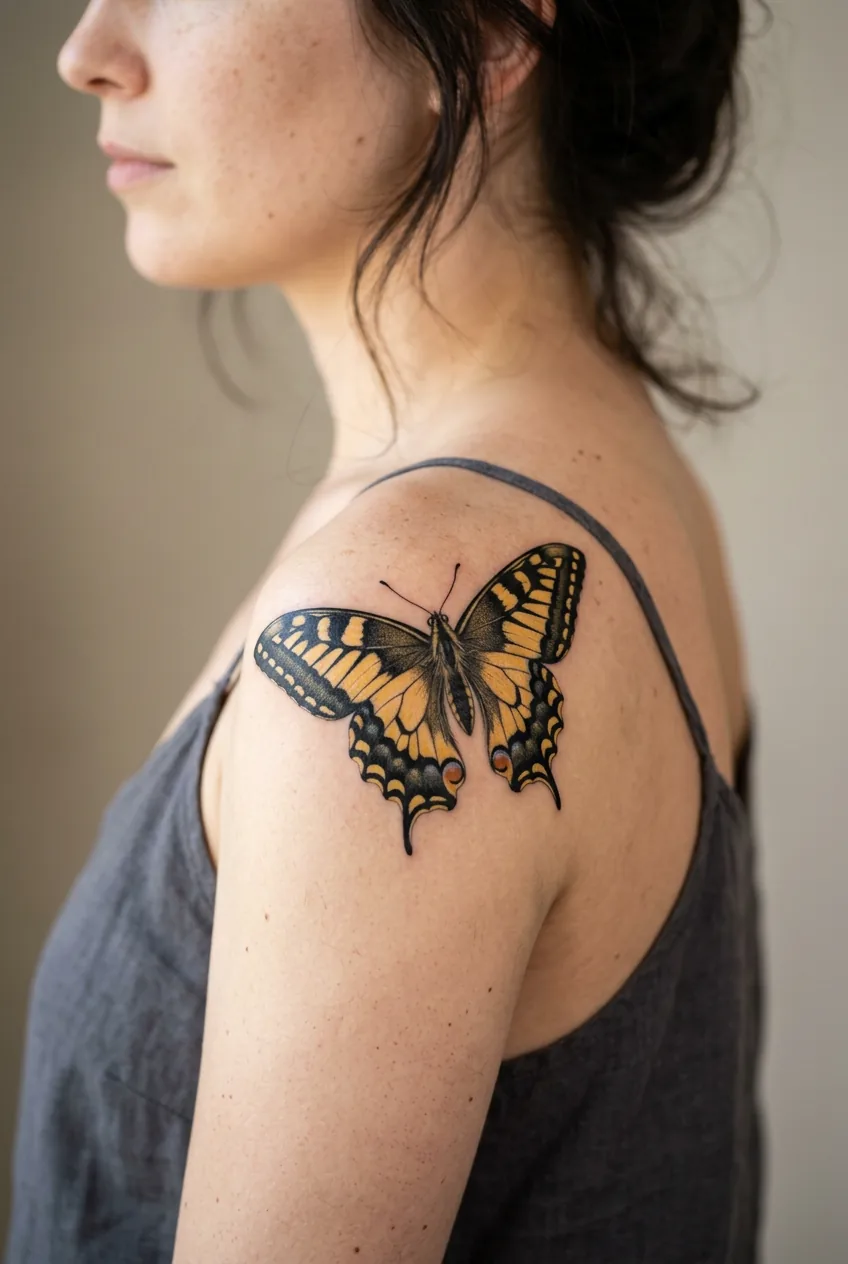
Forearm: My personal favorite for visibility. Every time you reach for something, gesture while talking, or roll up your sleeves, there’s your reminder of change. Works beautifully for butterflies in flight or landing on something.
Behind the ear: Delicate and unexpected. Perfect for small, detailed pieces. This placement whispers rather than shouts — for people whose transformation is deeply personal.
Ribcage: The most painful spot, but also the most intimate. Right over your heart and lungs — the organs that keep you alive. Butterfly tattoos here feel like they’re protecting something vital.
Ankle or foot: Suggests movement, journey, taking flight. Less common but striking when done well. The butterfly becomes part of your stride.
What I love most is seeing how different placements change the story. A butterfly emerging from between shoulder blades suggests breaking free from something. A butterfly on a wrist suggests carrying transformation with you daily. A butterfly on a foot suggests taking your new self places.
Choose based on how you want to relate to your transformation. Daily reminder? Go visible. Sacred and private? Choose somewhere only you and your closest people will see. Want it to feel like protection? Place it over something vital.
Questions I Get About Butterfly Tattoos
Aren’t butterfly tattoos overdone at this point?
The basic tribal butterflies from twenty years ago? Sure, those feel dated. But thoughtful, well-designed butterfly tattoos with personal meaning never go out of style. It’s like saying roses are overdone — the symbol is timeless, it’s all about the execution and intention behind it.
How do I choose the right butterfly species for my tattoo?
Research what different species symbolize and look for one that resonates with your story. Monarchs for endurance and migration, swallowtails for joy and protection, blue morphos for spiritual transformation. Also consider what species are native to places that matter to you personally.
Do butterfly tattoos work well in black and gray?
Absolutely. Some of the most stunning butterfly tattoos I’ve seen are monochromatic. Black and gray can emphasize texture, shading, and form in ways that color sometimes distracts from. Plus they age beautifully and never look dated.
How much should I expect to pay for a quality butterfly tattoo?
This varies wildly by location, artist reputation, and size. A small, simple butterfly might be $200-400, while a detailed, large piece could be $800-1500 or more. Remember you’re paying for the artist’s skill and time — good butterfly tattoos require precision and artistic understanding.
Can I add to a butterfly tattoo later?
Many butterfly tattoos work beautifully as part of larger compositions. You can add flowers, other butterflies, geometric elements, or incorporate it into a larger scene later. Just make sure your initial design is positioned to allow for expansion if that’s something you might want.
Every time I see a butterfly tattoo now — in line at the grocery store, at the gym, walking down the street — I wonder about the story behind it. What cocoon did that person break free from? What transformation are they celebrating or still moving through?
Because that’s the thing about butterfly tattoos. They’re never just about butterflies. They’re about becoming.