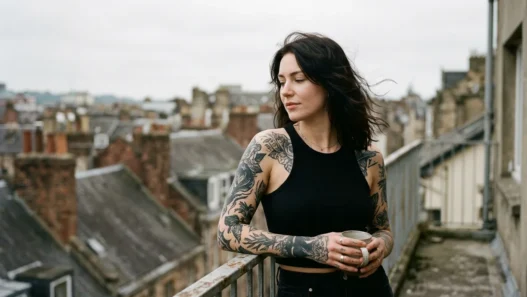




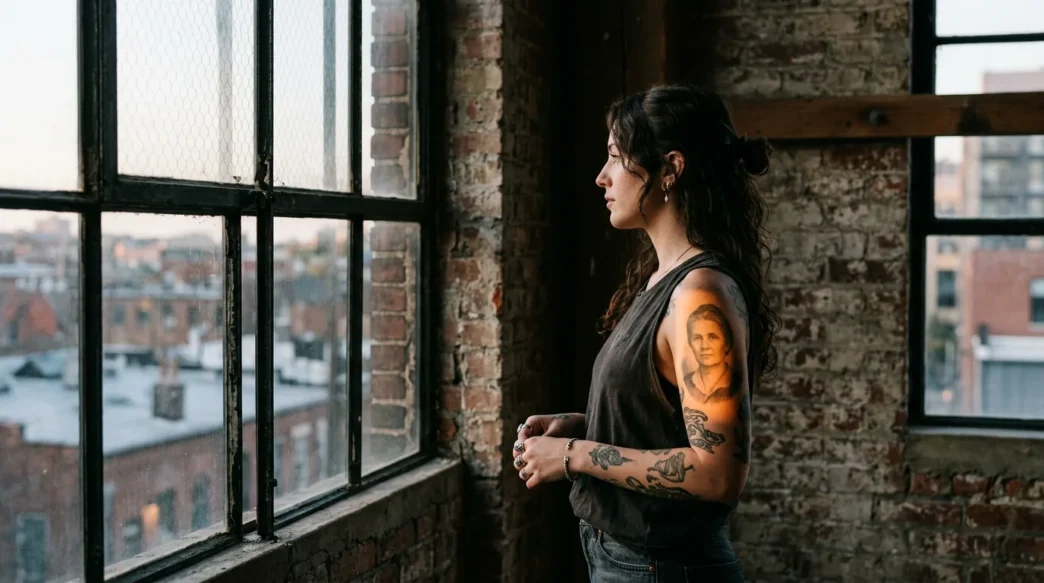
I got my first portrait tattoo when I was twenty-three and thought I absolutely knew what I was doing. I did not. It was a small, slightly off-kilter likeness of my grandmother on my upper arm, chosen from a portfolio that, in hindsight, was not portrait-specialist work at all. It healed blurry in places. I loved it anyway — or I told myself I did. That one piece started something in me I still haven’t quite finished reckoning with, twelve years later.
My Portrait Tattoo Timeline — What You’ll Find Here
The Early Days (When I Had No Clue)
Here’s the thing nobody told me about portrait tattoos when I started: they are the hardest style to execute well. Like, technically the most unforgiving. A wonky rose still looks like a rose. A wonky nose looks like a mistake. I didn’t know that. I walked into my first studio with a printed photo, pointed at it, and said something like “I want this but on my arm” — as if the transfer were just a matter of pressing paper to skin.
The artist I went to was lovely. Genuinely kind. But she was a generalist, not a realism specialist, and I didn’t know enough to understand the difference. The portrait of my grandmother came out with the right general shapes but muddy shading — the kind of result that looks fine in a dim room and slightly heartbreaking in direct sunlight. I spent the next six months overexplaining it to people. “The photo had a lot of shadow so it’s kind of supposed to look like that.”
I want to be clear that I don’t regret that tattoo at all. It just taught me things the hard way. It taught me that portrait work lives or dies on the artist, that finding the right tattoo artists who specialize in realism is non-negotiable, and that no amount of wanting something badly compensates for not doing your research first. It also taught me I was completely hooked on the idea of faces as art.
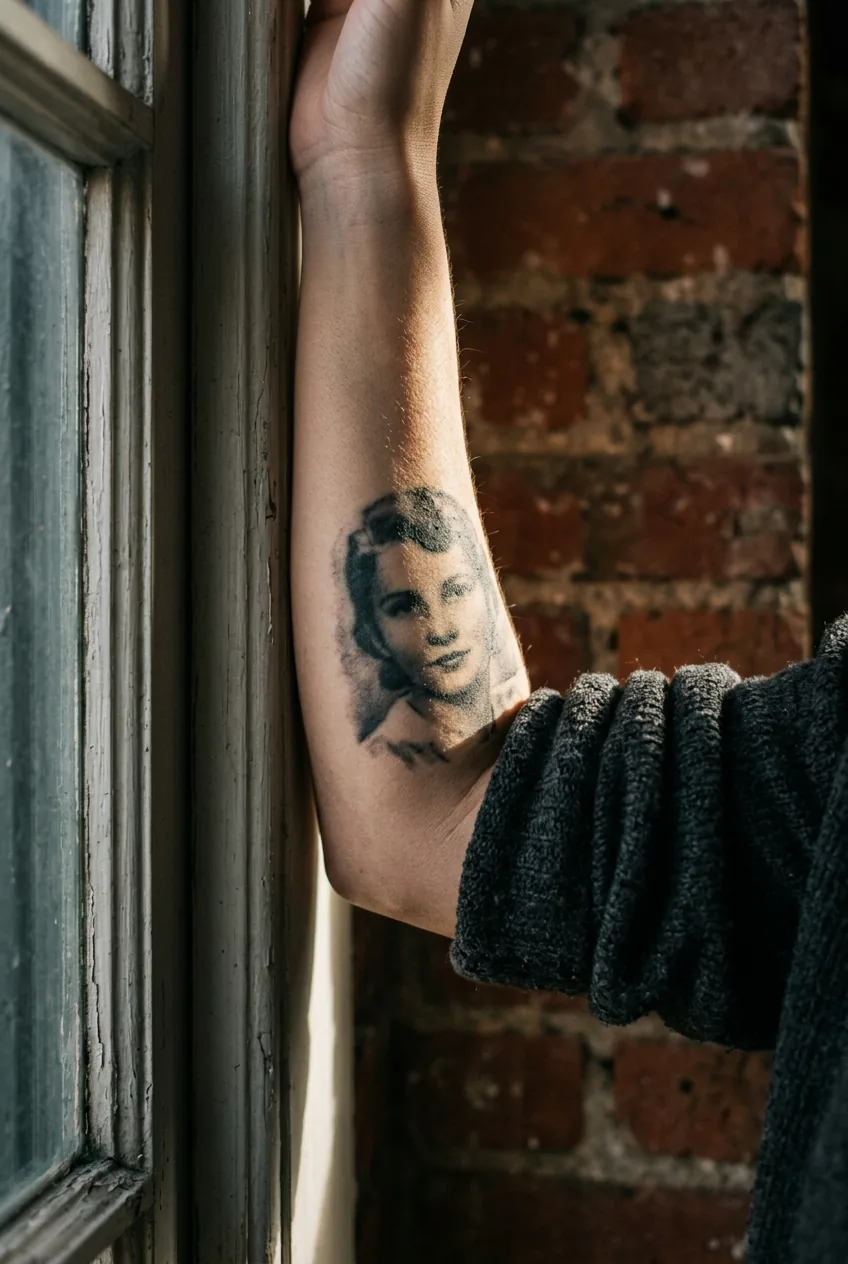
During those early years I also made the classic mistake of thinking placement didn’t matter much. I picked spots for convenience — upper arm because it seemed “safe,” inner wrist because I liked looking at it. I wasn’t thinking about how the canvas interacts with the art. Portrait tattoos need a certain flatness, a certain stillness of surface. The inner forearm? Actually great for this. The spot just behind your elbow? Not great. Learned that one the hard way too.
The Obsessive Phase
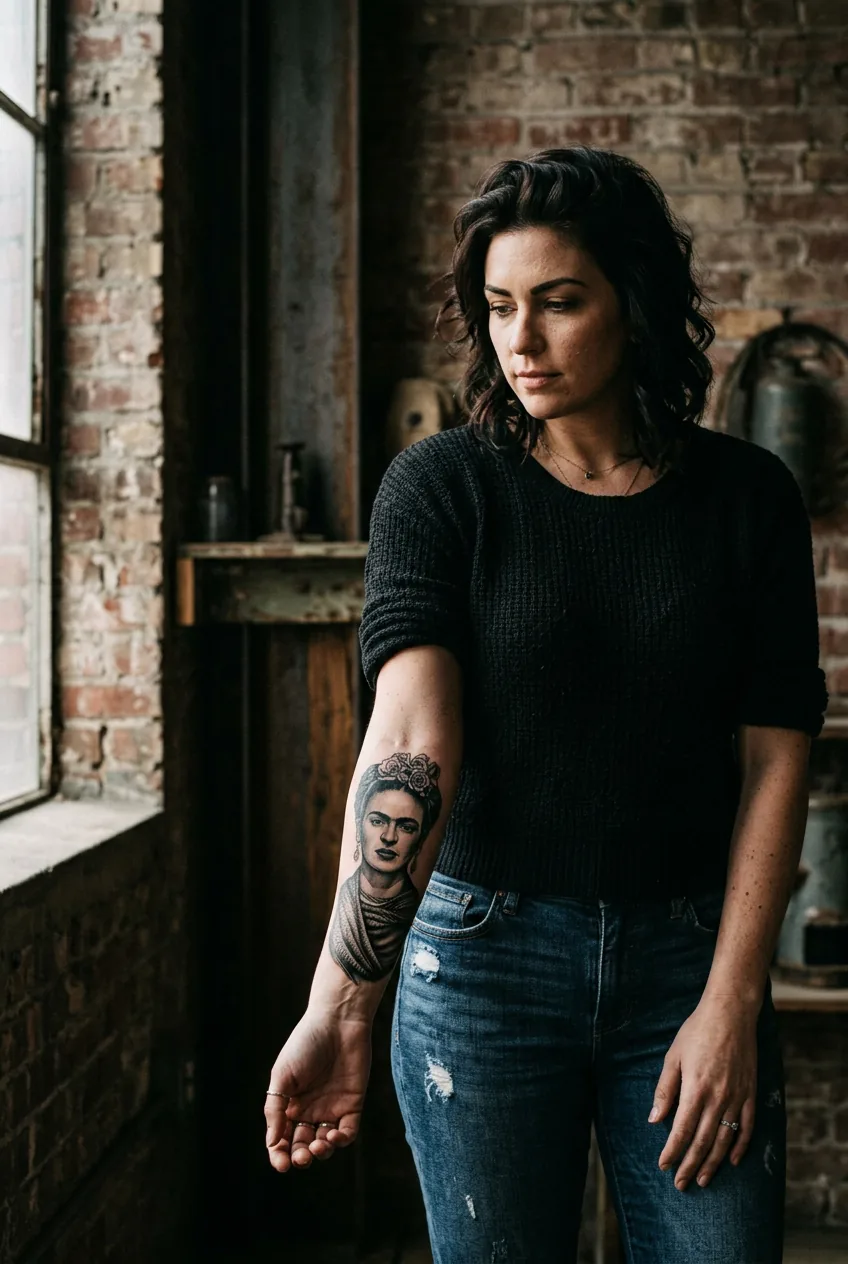
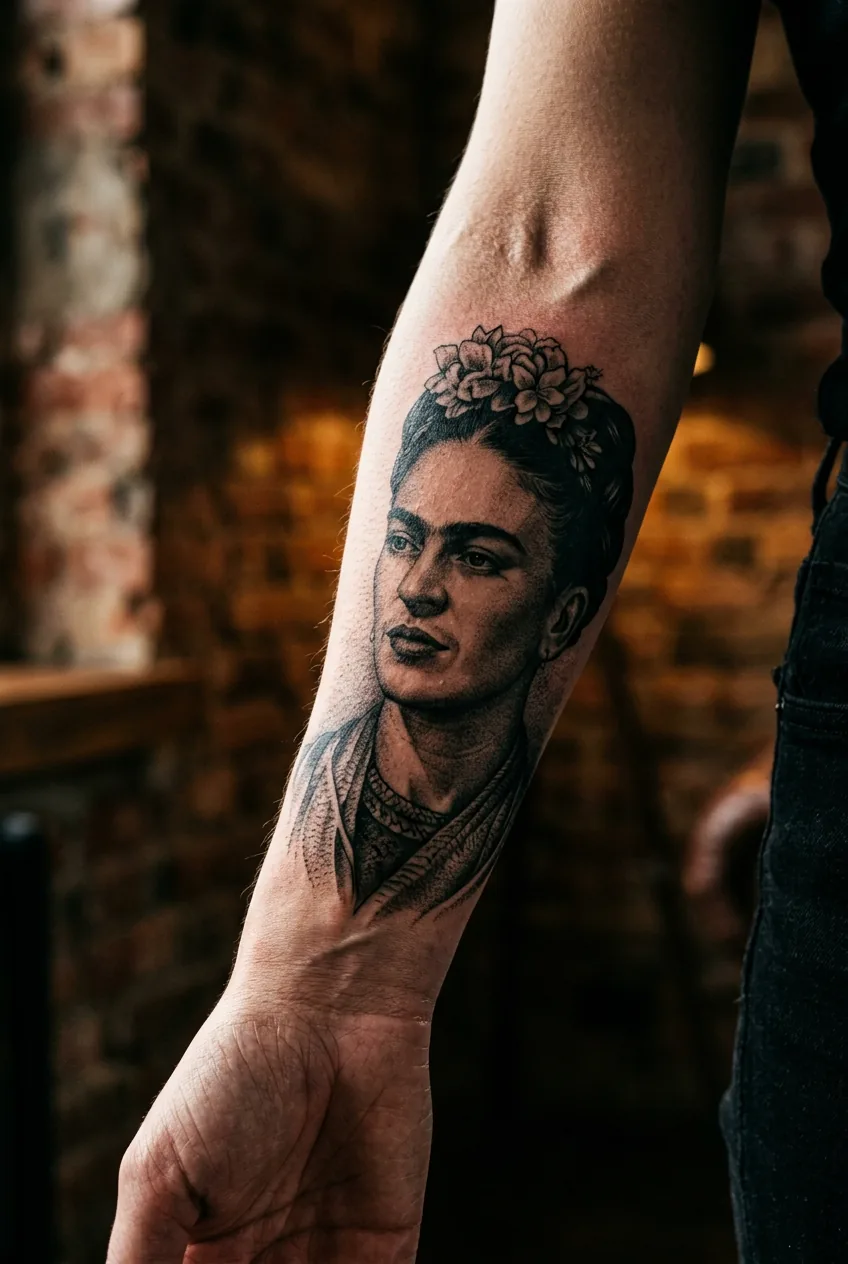
By my late twenties I had found my footing. Or what I thought was footing — it was actually a cliff edge I was sprinting toward. I had discovered proper realism artists online, spent hours trawling through portfolios on Instagram, and made my first appointment with a specialist. The result was staggering compared to anything I’d had before. A portrait of Frida Kahlo, black and grey, on my outer forearm. Sharp. Dimensional. You could see individual eyebrow hairs. I almost cried in the chair.
That piece unlocked something. Suddenly I wanted more. I started planning a whole sleeve around faces — real people, iconic women, some fictional. I had a vision for Diana Ross on my upper arm, Georgia O’Keeffe near my elbow ditch, a composite of my two best friends somewhere on the inner forearm. I was filling a notebook with reference photos and artist tags. It felt less like collecting art and more like assembling a manifesto.
The spending was, let’s say, ambitious. Good portrait realism doesn’t come cheap, and it shouldn’t — you’re paying for skill that took years to develop. I was booking trips to other cities to sit with specific artists. I had one appointment in Toronto with an artist whose black and grey portrait realism technique left me genuinely speechless. I flew there for a day. Stayed overnight. It was completely worth it and also mildly unhinged, in the best way.
I was also consuming everything I could find about tattoo styles — not just realism, but how it intersected with neo-traditional portraiture, with illustrative work, with the way some artists blend a photorealistic face into a watercolor background. That hybridity fascinated me. I started gravitating toward pieces that weren’t purely photorealistic but had this painterly quality, like the face had been imagined rather than copied.
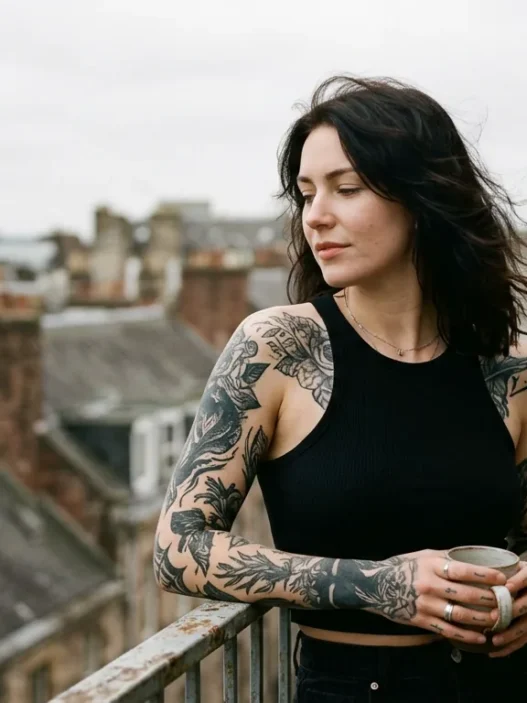
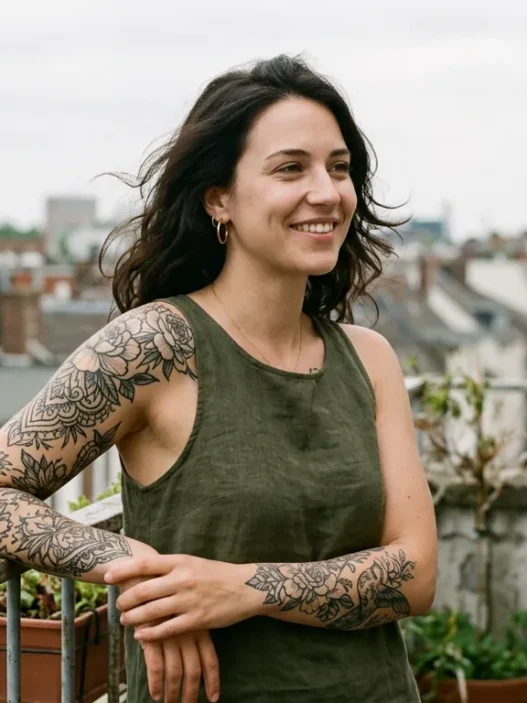
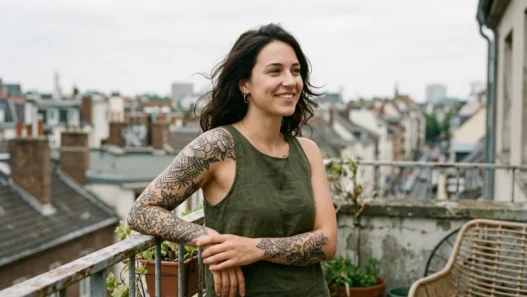
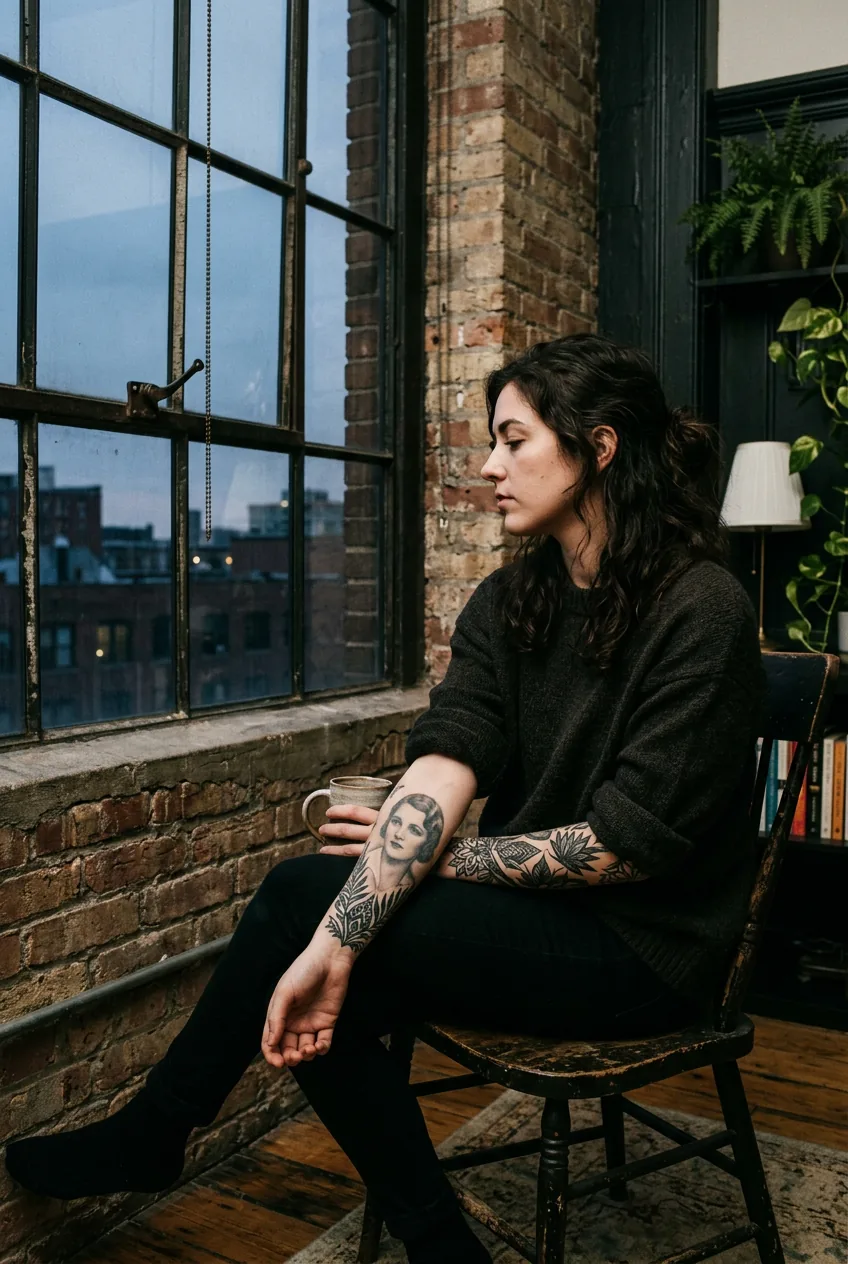
Look at how the light plays across the ink in this photo — that dramatic side-lighting is actually doing the same job that great shading does in a portrait tattoo. She’s got that Frida-era forearm coverage that I was chasing hard in this phase, and seeing it laid out like that reminds me exactly why I went so deep into collecting during those years.
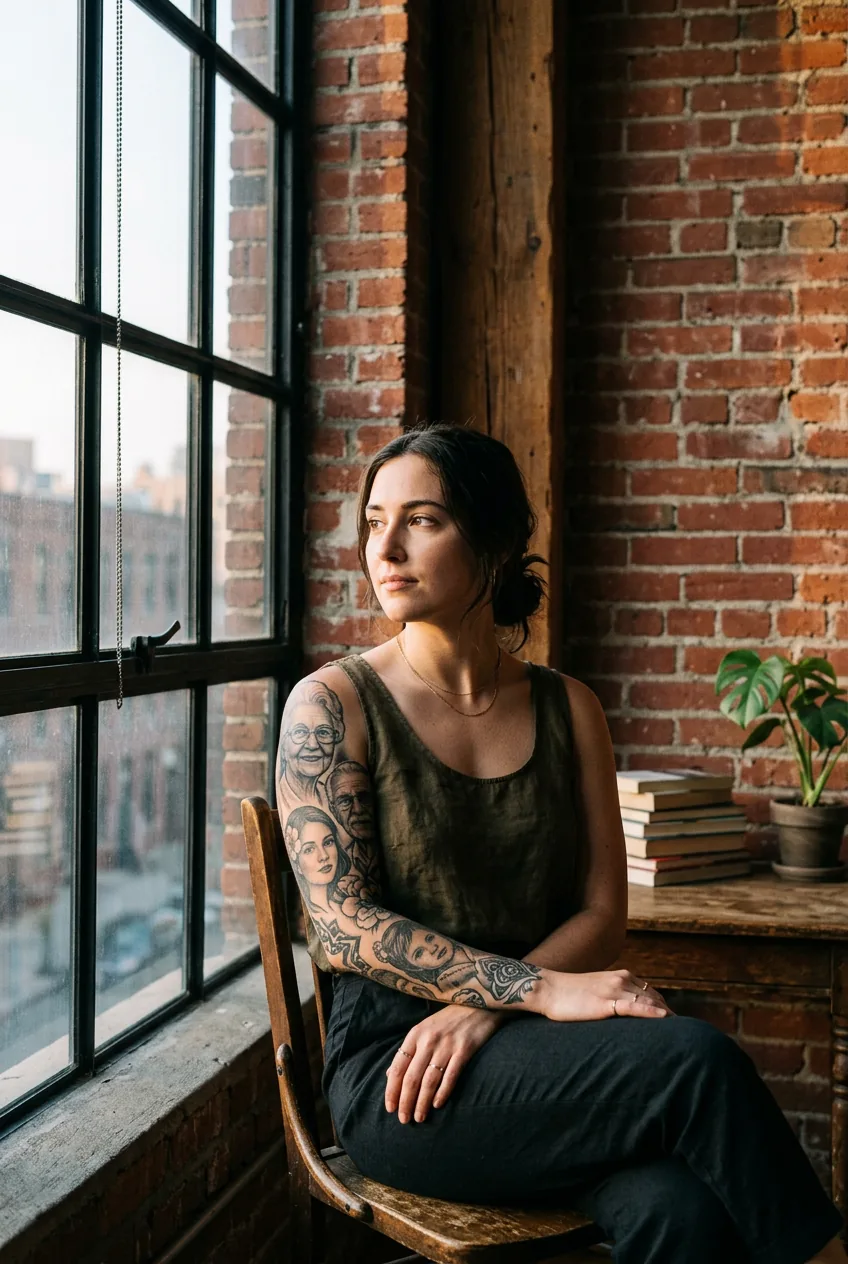
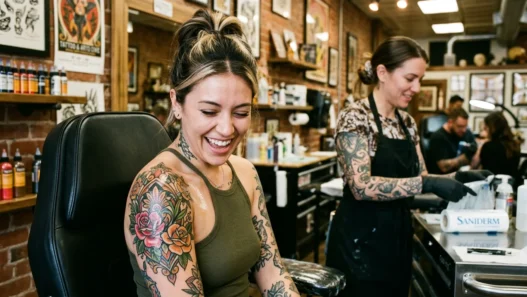
A Portrait Session That Shows the Craft Up Close
The Burnout and the Pause
Somewhere around year eight of collecting, I hit a wall. Not dramatically — there was no single moment of crisis. It was more like one morning I looked at my notebook full of reference photos and felt… nothing. Not excited. Not inspired. Just tired.
Part of it was that the space I’d been moving through online had started to feel homogenous. Every “must-have” portrait tattoo looked like the same twenty references recycled through different hands. Marilyn Monroe. Audrey Hepburn. The same vintage Hollywood faces appearing on thousands of forearms. I’d spent years trying to do something different and I was starting to feel like the whole genre had calcified around a certain aesthetic that didn’t excite me anymore.
There’s also an uncomfortable truth I haven’t said out loud much: I think a few of my earlier pieces aged in ways I wasn’t fully prepared for. Fine details in faces are beautiful when fresh and can get quite muddy over time — something worth understanding thoroughly how portrait ink ages before you commit to a large-scale face piece. This isn’t a reason not to get them. It’s just a reason to go in clear-eyed.
I took about eighteen months off from booking new tattoo appointments. I didn’t plan to. It just happened — and then I kept not booking, and eventually I realized I was giving myself space I probably needed. I spent that time looking at other art. Paintings, mostly. I became briefly obsessed with Egon Schiele and then with the way certain illustrators handle line work in faces. I was still thinking about portrait tattoos. I just wasn’t consuming them frantically.
I also started looking at adjacent subject matter during that pause — I found myself drawn to mythological portraiture, the way deities and figures from legend get rendered in tattoo form with a kind of narrative weight that straight celebrity portraits sometimes lack. There’s something different about a face that carries a story rather than just a likeness. Mythology tattoos started creeping into my mood boards in a way I hadn’t expected. And honestly? That pivot probably saved my enthusiasm for the whole genre.
Where I Am Now
It’s 2026 and my relationship with portrait tattoos is the most settled it’s ever been — which feels strange to say, because “settled” doesn’t usually describe how I feel about anything I love deeply. But it’s the right word. I’m not chasing anymore. I’m choosing.
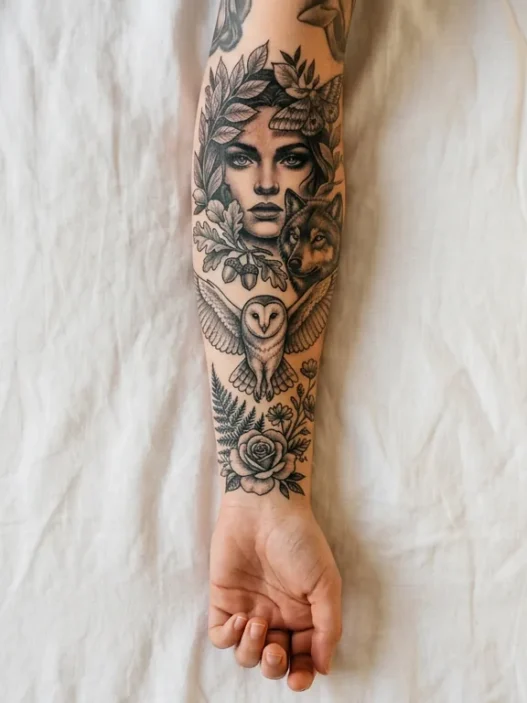
My current taste runs toward portraits with narrative context — a face that exists within a scene rather than floating against a plain background. I’m drawn to the kind of work where the artist has clearly made interpretive choices, not just technical ones. Where you can feel a point of view in the rendering. The pieces I’m looking at now blend portraiture with elements borrowed from animal tattoos — a woman’s face emerging from foliage, a figure entwined with a hawk — or with quote tattoos layered around a portrait to give it literary context. That combination of face and word feels more personal to me now than a standalone likeness ever did.
Here’s my slightly controversial opinion, the one that occasionally gets me side-eyed in tattoo communities: I think getting a portrait of a living celebrity is almost always a bad idea. Not from a technical standpoint — some of those portraits are extraordinary. But from a personal meaning standpoint. You’re committing permanent ink to someone who might embarrass you in five years, or who you might simply fall out of love with the way you fall out of love with music. Portraits of family, of loved ones, of yourself at a significant moment, of historical figures who have meant something to you across years — those hold their meaning differently. They don’t rely on a parasocial relationship staying intact.
That’s not a universal rule. I’ve seen celebrity portraits that were clearly made from a place of deep, genuine meaning. But as a default? I’d push anyone to ask themselves whether the feeling behind the choice has roots that go deeper than current admiration.

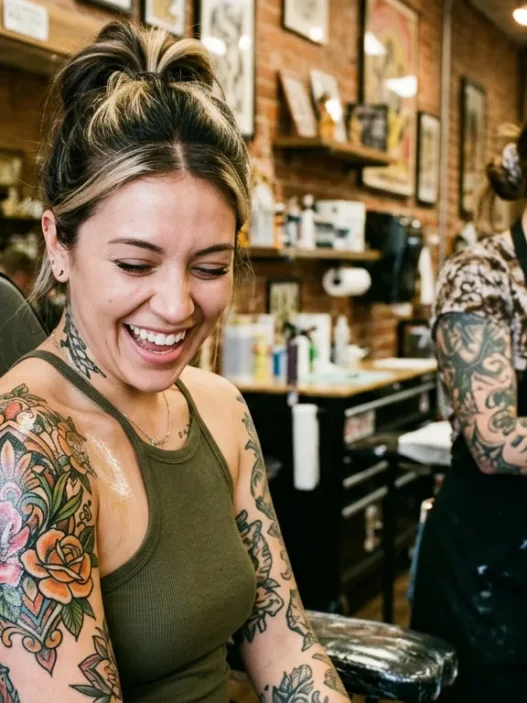
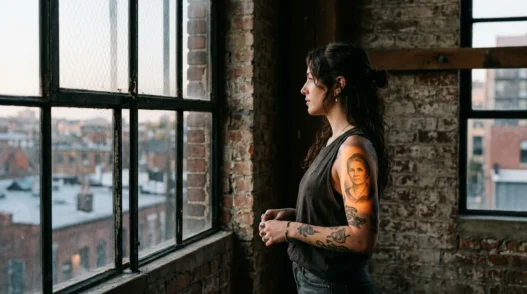
What I know for sure now is that the quality of the artist matters more with portrait work than with virtually any other style. I won’t compromise on that anymore. I’d rather wait two years on a waitlist for someone whose portrait realism genuinely moves me than get something mediocre now. Look at the detail in this woman’s ink — that’s the kind of precision that comes from an artist who has spent years doing nothing but faces. You can’t rush that kind of skill.
Questions I Get About This
How do I find a portrait tattoo specialist who’s actually good?
Look for an artist whose portfolio is almost exclusively portrait or realism work — not someone who does it occasionally alongside everything else. Check that their healed photos look as good as their fresh ones, because that’s where you see the truth of someone’s technical ability. And don’t be afraid to travel. The right artist might not be in your city.
Do portrait tattoos hurt more than other styles?
Not inherently because of the style, but portrait work tends to require longer sessions with more layering and detail-packing — which means more cumulative time in the chair. The pain level is really about placement and session length, not the style itself. Forearm portraits are generally very tolerable; ribcage or inner arm portraits are a different story.
Is black and grey better than color for portrait tattoos?
Black and grey is the classic choice for portrait realism because it mimics the tonal range of photography — and it tends to age more gracefully than color. That said, some artists do extraordinary color portrait work that holds up beautifully. It comes down to the individual artist’s strength rather than a blanket rule. Ask to see their healed color work specifically.
How do I provide the right reference photo?
High resolution, good natural lighting, and a clear view of the face — no filters, no harsh shadows cutting across features. Candid photos often work better than posed ones because the expression reads as more natural in the final tattoo. Your artist will have their own preferences, so ask before you send a folder of thirty options.
Twelve years in, I’m still not done with portrait tattoos — I don’t think I ever will be. But I’m in it differently now. Less feverish, more intentional. Which, now that I think about it, is probably how I want to be in most things. The ink just taught me that before most other things did.