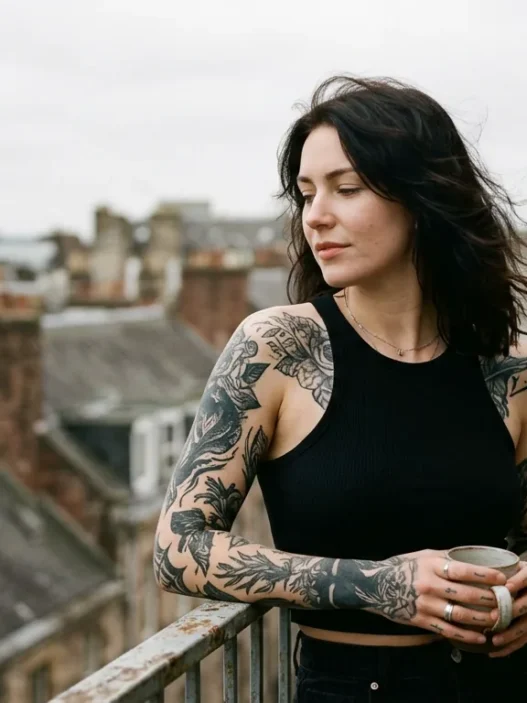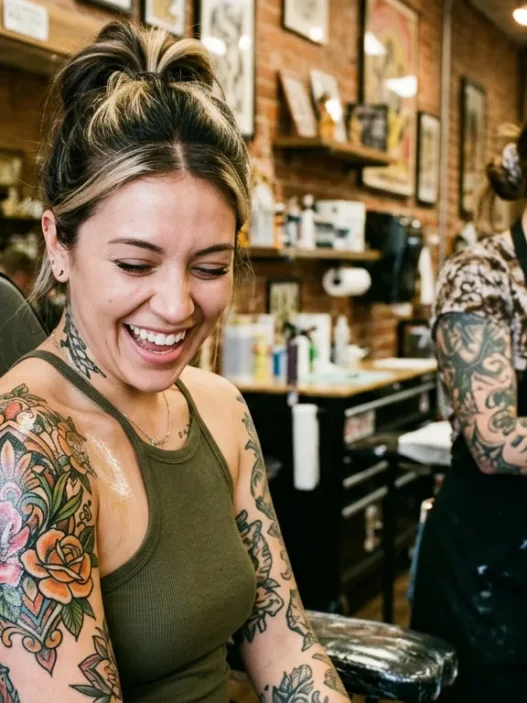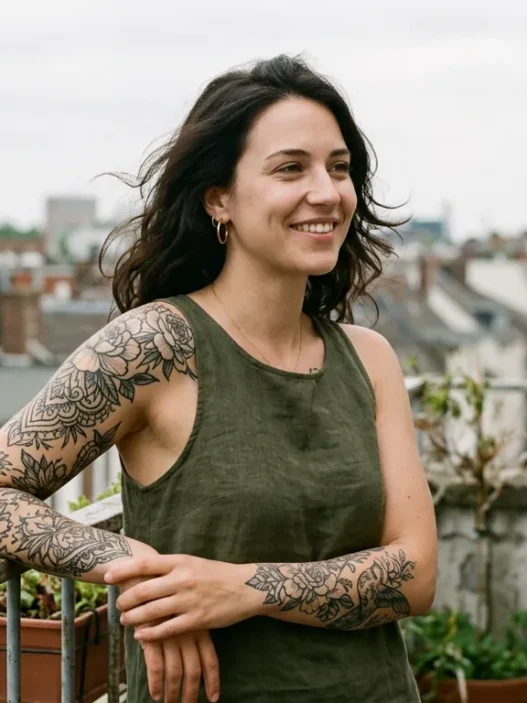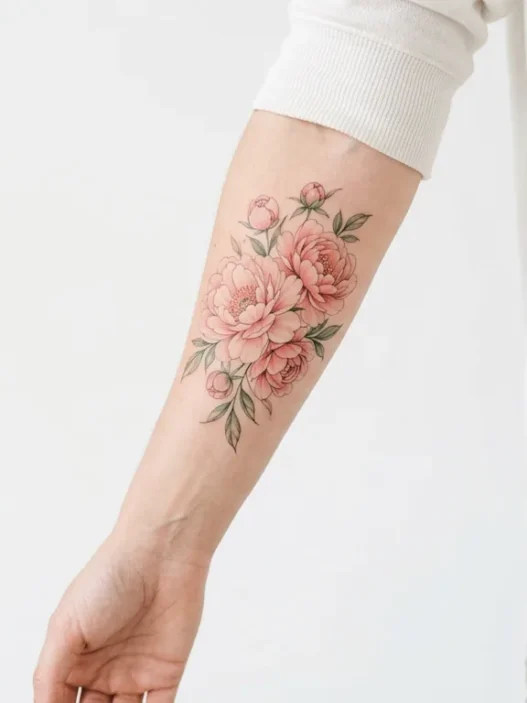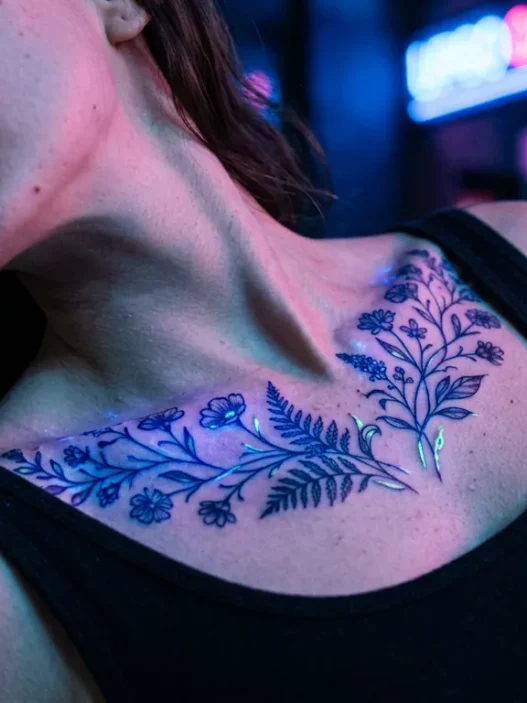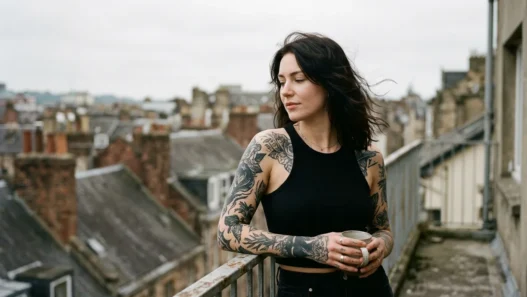




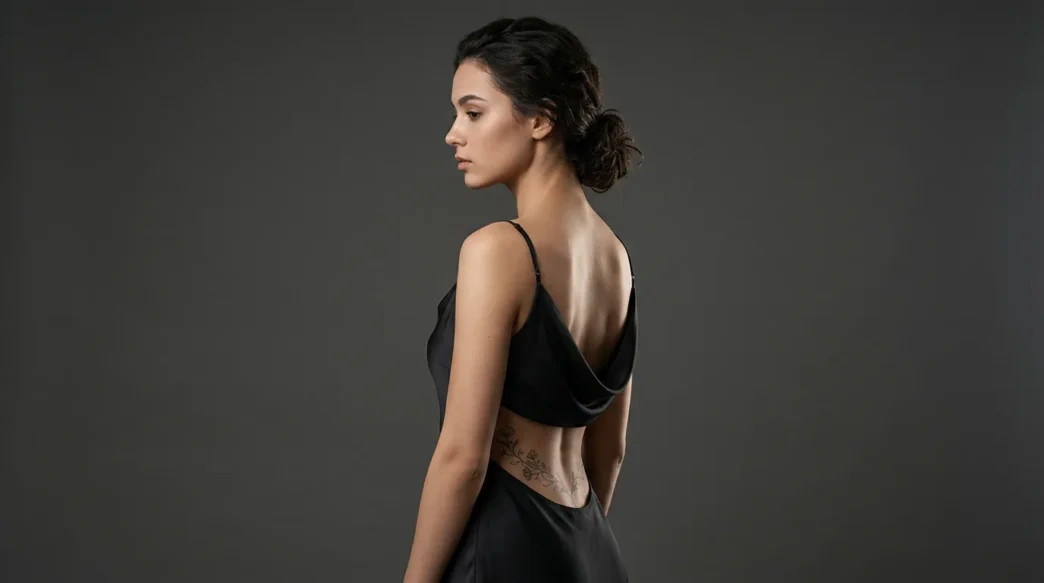
I’ve been thinking about lower back tattoos for longer than I care to admit. Not the 2003 tramp-stamp stigma version — we’re so far past that — but the real, considered, actually-beautiful kind that women are reclaiming right now in 2026. The thing nobody talks about enough, though, is that a design that looks incredible on one person can feel completely off on another. Not because either body is wrong. Because scale, placement, and proportion are doing quiet but powerful work every single time.
So this post isn’t about finding the prettiest design on Pinterest and copying it exactly. It’s about matching the idea of a design to the body you’re actually walking around in. Which, for the record, is a perfectly good body that deserves a perfectly good tattoo.
Your Body-First Tattoo Guide — Jump to Your Section
- For Petite Frames — Scale Down Without Losing Detail
- For Curvier Bodies — Designs That Follow the Curve
- For Taller, Leaner Frames — Vertical Compositions
- For Soft, Rounded Lower Backs — Lean Into the Shape
- For Short Torsos — Where Placement Really Matters
- For Athletic or Muscular Builds — Bold Lines That Hold
- For Plus-Size Bodies — Expansive Designs That Breathe
- For Asymmetrical Bodies — Intentional Off-Center Work
- For Longer Torsos — Anchoring the Design So It Doesn’t Float
- For Bodies With Existing Scars or Stretch Marks — Designing With Them
1. For Petite Frames — Scale Down Without Losing Detail
When you have a smaller frame, the lower back real estate is genuinely limited — but that’s not a problem. It’s a constraint that actually produces some of the most elegant tattoos I’ve ever seen. The key is resisting the urge to go delicate to the point of invisibility. Fine line work on a petite lower back can be stunning, but it needs to be designed for that exact size, not shrunk down from a larger composition.
Think: a single botanical sprig centered at the spine, two to three inches wide. Or a small symmetrical moth with wings that just graze the dimples. The design should feel complete at that scale — not like something got cropped out. Ask your artist how fine lines age before you commit, because tiny work requires an artist who specializes in it.
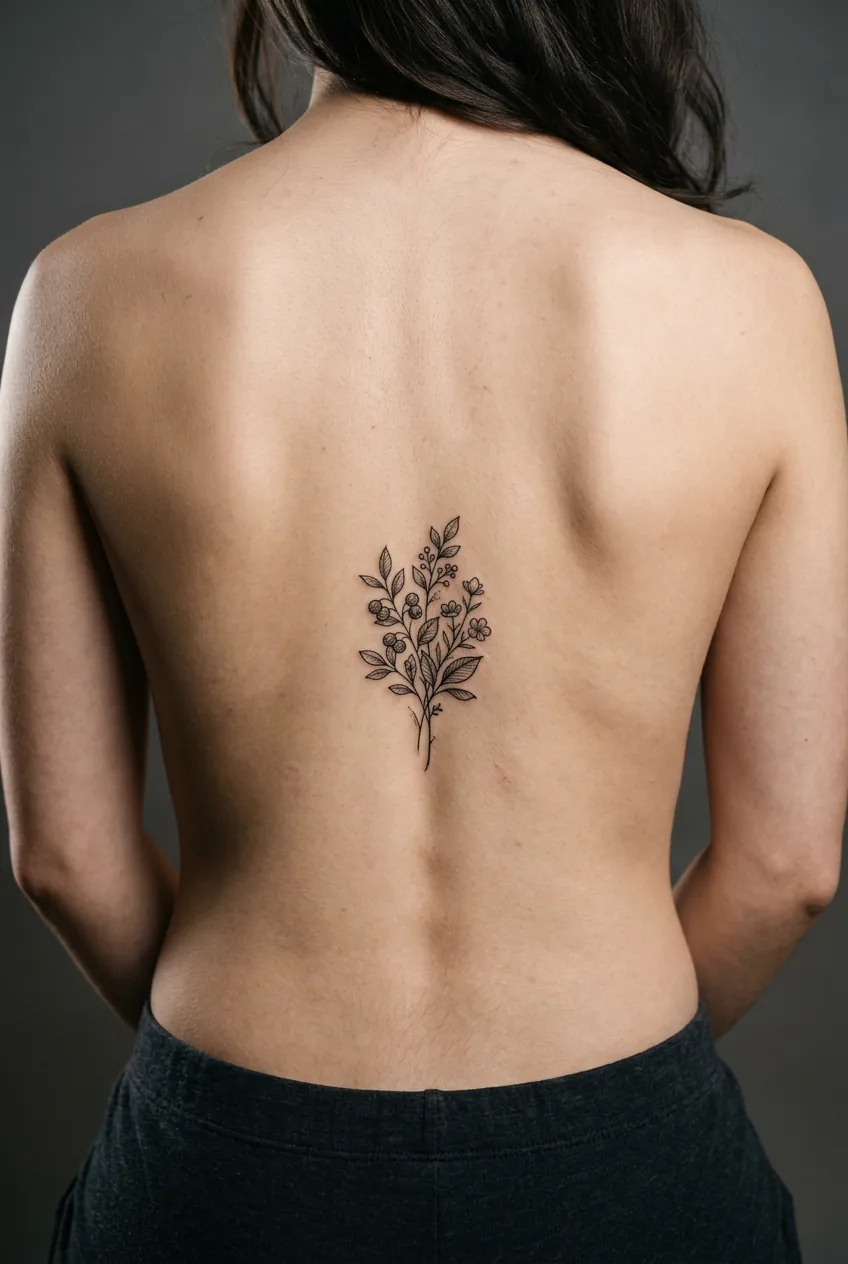
Placement tip: sitting just above the waistband, centered, with minimal horizontal spread keeps everything proportional to a smaller back width.
2. For Curvier Bodies — Designs That Follow the Curve
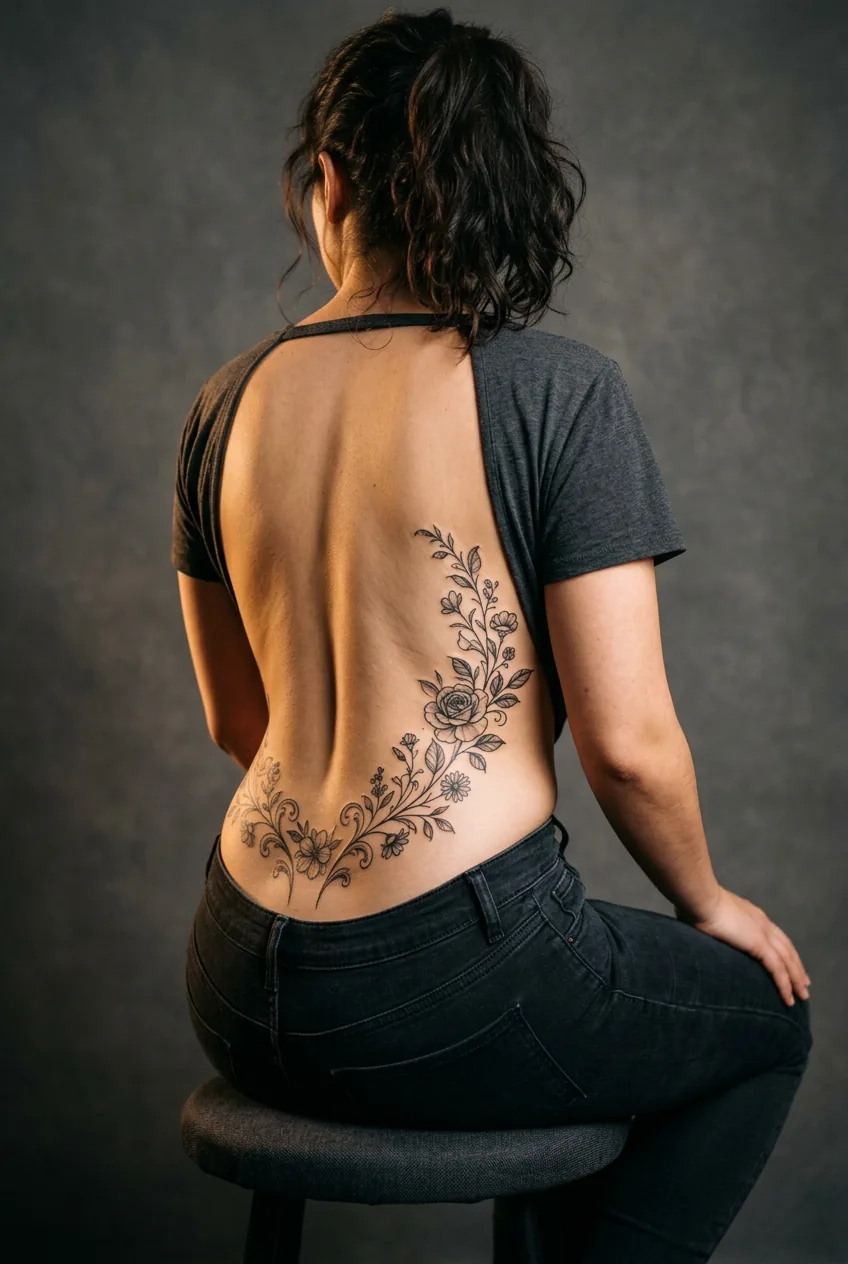
This is one of my absolute favorite categories to think about, because the lower back on a curvier body has this beautiful natural movement to it. The spine dips. The sides rise. There’s topography there that a flat design simply doesn’t account for — and that topography, when you work with it, creates something you genuinely can’t replicate on a straighter frame.
Designs that arc or curve — mandala-adjacent pieces, crescent motifs, flowing floral arrangements — follow the natural line of the body as it moves. They land differently when you bend, when you stand, when you sit. And that animation is actually gorgeous. I’d steer away from rigid geometric shapes with sharp horizontal lines here; they can read as fighting the body’s natural contour rather than celebrating it.
If you’re curious about the broader history of why back placement became so meaningful across cultures, the piece on the quiet history behind back tattoo traditions gave me a whole new appreciation for why this canvas feels so personal.
3. For Taller, Leaner Frames — Vertical Compositions
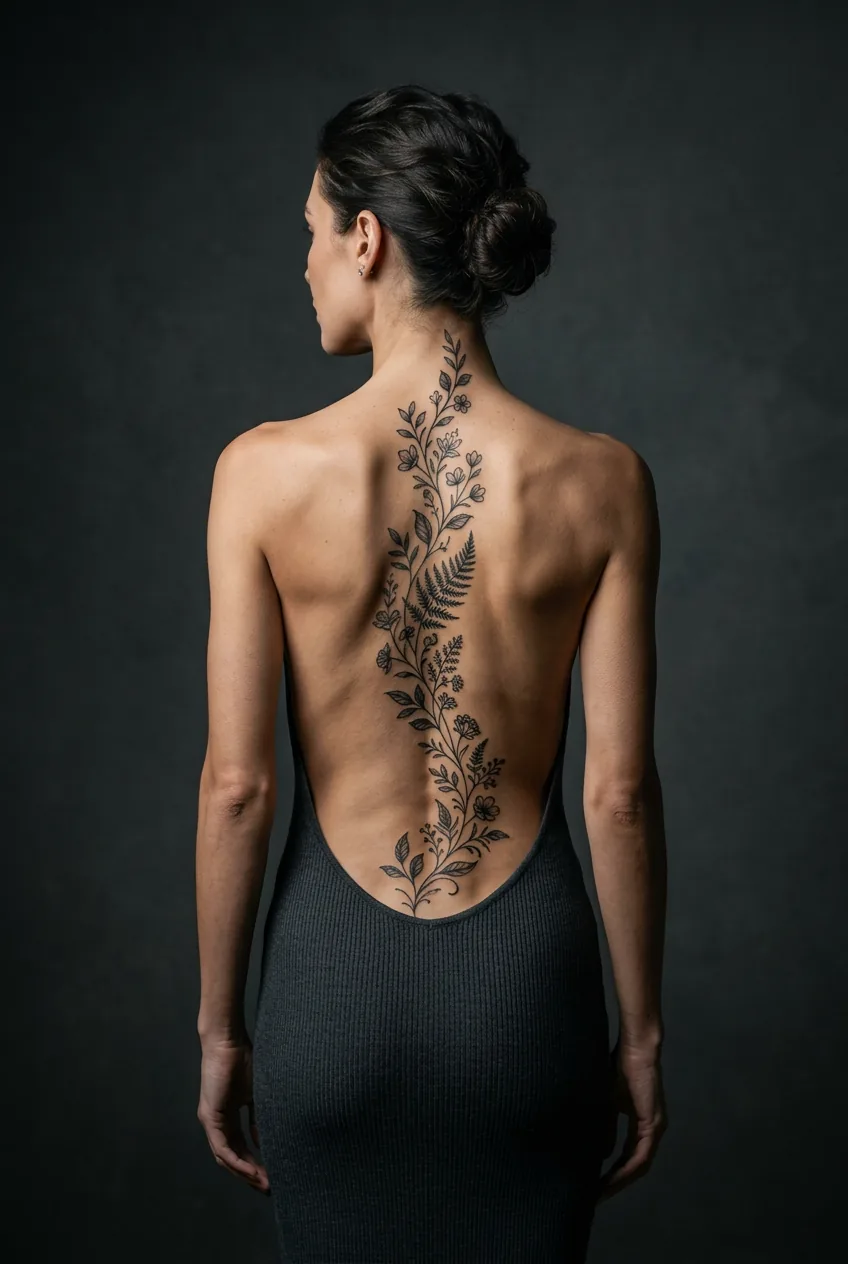
A longer, leaner back has more vertical runway to play with than almost any other frame type. Where most lower back tattoos sit in a wide, horizontal band, taller frames can afford to extend that composition upward along the spine — creating a design that bridges the lower and mid-back in a way that reads as intentional rather than sprawling.
Think vertebral column motifs, trailing vines, or a stacked botanical arrangement. Even a single elongated figure — a heron, a sword plant, a column of script — can work beautifully here. The vertical pull elongates the composition and suits the frame rather than anchoring it with horizontal weight the body doesn’t need.
Worth exploring some of the broader back tattoo placement ideas if you’re thinking about how low back work might eventually connect upward — the options for taller frames are genuinely wide open.
4. For Soft, Rounded Lower Backs — Lean Into the Shape
There’s a particular softness to some lower backs — a gentle rounding rather than a sharp inward curve — and I want to say clearly: this is not a problem to solve. It’s a canvas that suits certain styles beautifully and awkwardly resists others.
Dotwork and watercolor styles tend to sit well here. They’re not relying on crisp outlines staying perfectly taut over years — they have a softness built into the design itself that harmonizes with the body’s shape. Avoid rigid blackwork grids or anything that requires a flat plane to read correctly, because that’s just not what this lower back offers. And that’s fine. Lean into organic shapes: abstract florals, flowing ribbons of color, scattered stars or dots that don’t demand mathematical precision.
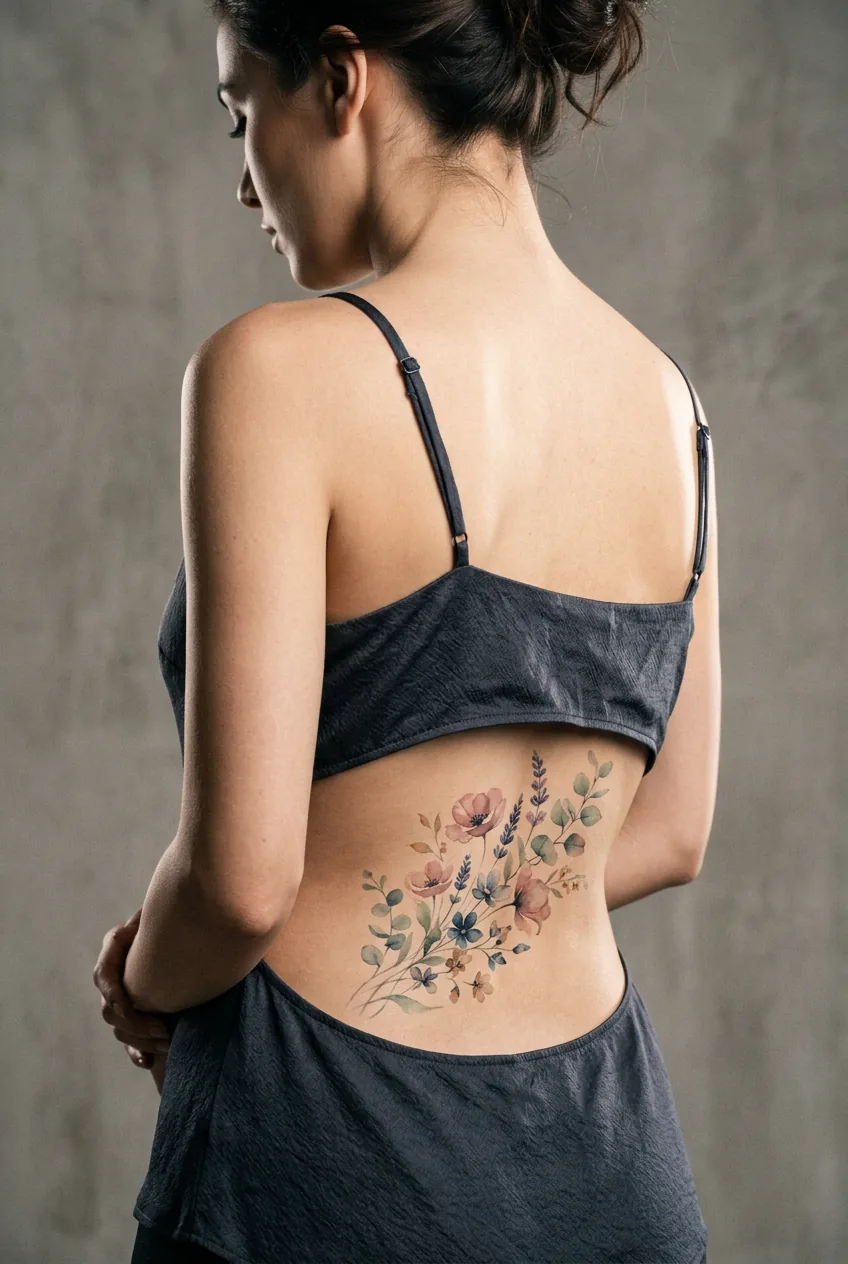
My personal pick for soft, rounded lower backs? A loose, organic floral cluster in blackwork — no hard outlines, just hand-poked or brush-style petals that move with the body. I saw this on a client in my artist’s portfolio and genuinely gasped. It looked like it had always been there.
5. For Short Torsos — Where Placement Really Matters
Short torsos come with a specific challenge: the lower back and the waistband are closer together than average, which means there’s less vertical space to work with and the tattoo is going to interact with waistbands, waistlines, and bikini tops in a more visible way. This isn’t a reason to avoid a lower back tattoo — it’s a reason to be strategic about exactly where it sits.
Placing the design slightly higher than the standard “just above the waistband” position can actually give the illusion of a slightly longer torso. And going wider rather than tall — a design that spreads horizontally across the back rather than reaching up the spine — keeps the tattoo in its own visual lane without competing with the waistband for space.
The guide to choosing the perfect placement for your back tattoo breaks down these exact vertical and horizontal placement decisions in more detail than I can cover here — genuinely useful if you’re still figuring out the sweet spot.
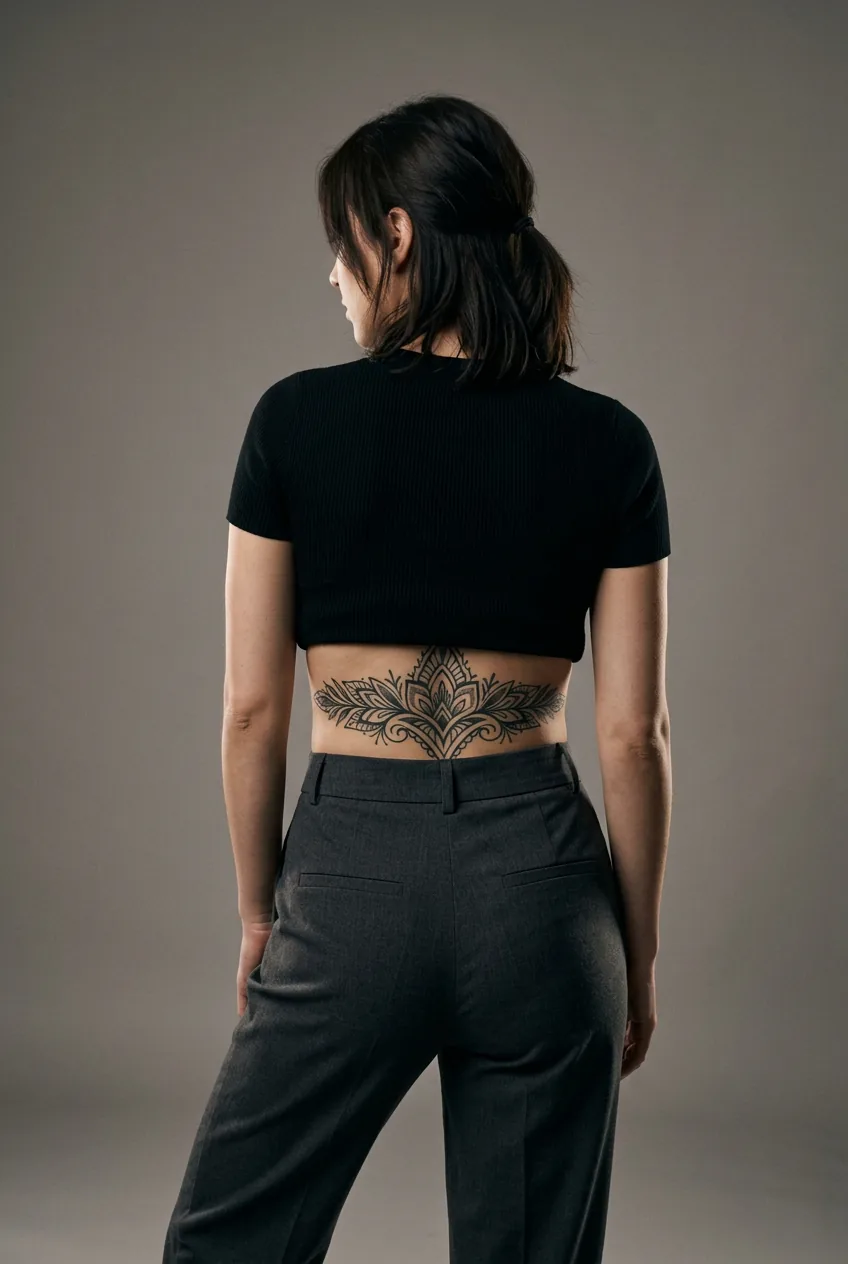
6. For Athletic or Muscular Builds — Bold Lines That Hold
Muscular backs are a gift to bold tattoo work. The definition in the erector muscles, the pronounced lumbar curve — these create natural shadows that make a strong tattoo look almost three-dimensional at the right angle. I’d absolutely lean into that.
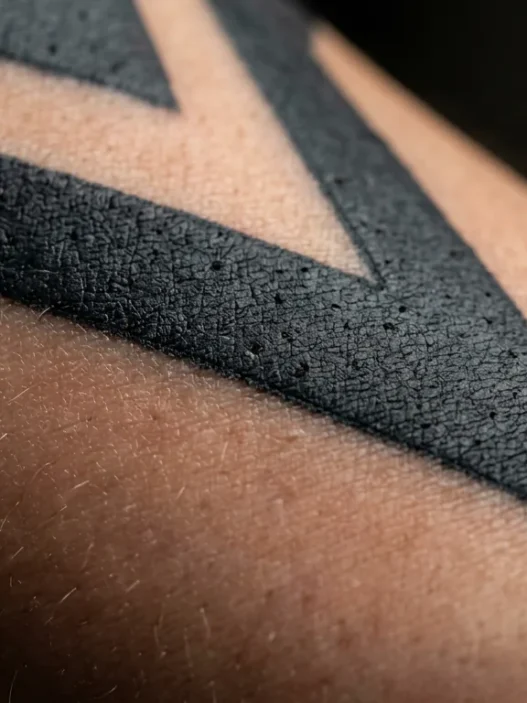
Blackwork, traditional, and neo-traditional styles read particularly well here. Bold outlines, confident fills, designs that don’t rely on subtlety to communicate. Think geometric mandalas with strong structure, or traditional florals with black outlines thick enough to hold their shape over time. Fine-line minimalism can work too, but it can get visually lost against a muscular back’s natural texture. You want the tattoo to hold its own.
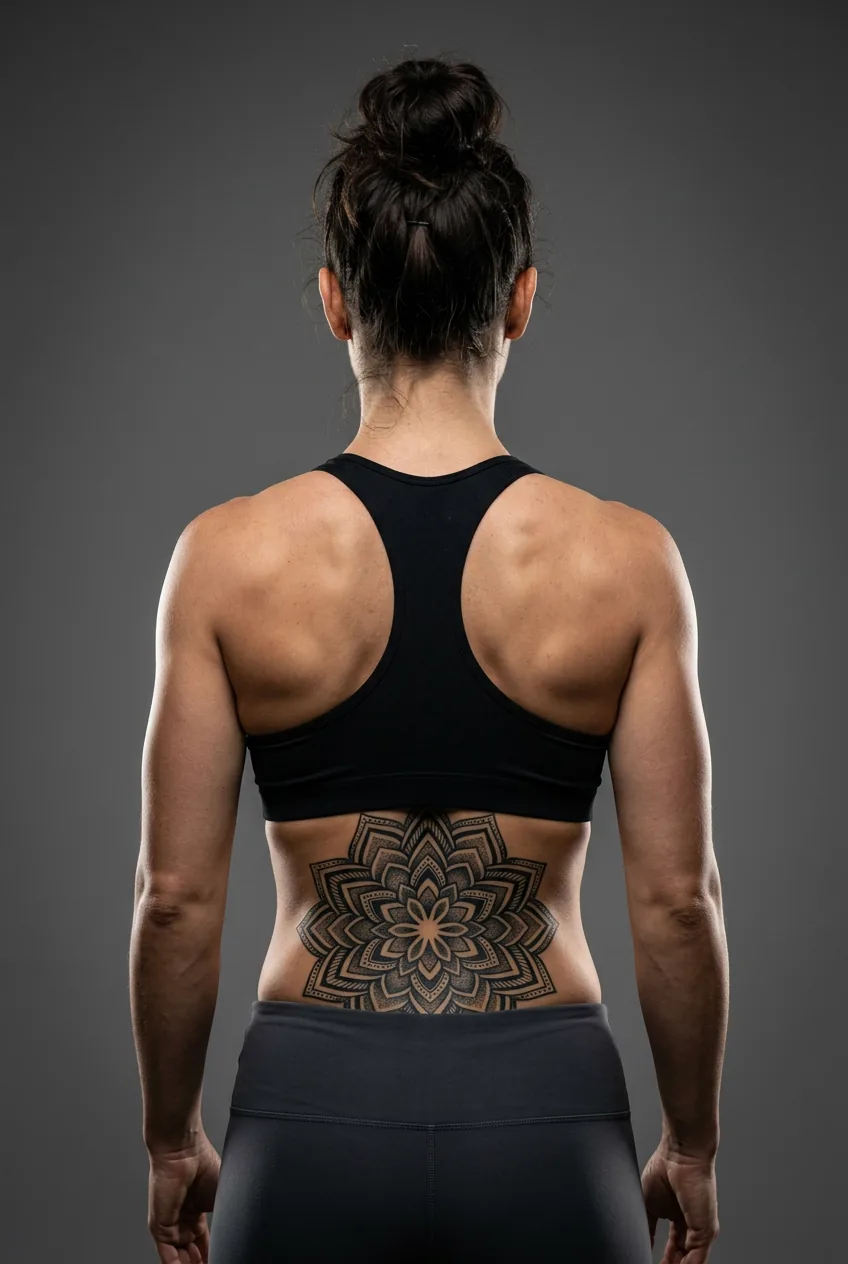
One thing worth knowing: muscular tissue can sometimes require a different needle depth approach, so make sure you’re with an artist who has experience tattooing athletic bodies. Understanding how tattoo ink heals can help you ask the right questions at your consultation.
7. For Plus-Size Bodies — Expansive Designs That Breathe
I want to start this one by being direct: every lower back is tattooable. I’m so tired of the whisper-quiet gatekeeping that implies plus-size bodies are somehow trickier or less suited to tattooing. They’re not. They’re just bigger canvases — which, honestly, means more room to do something spectacular.
The consideration here isn’t whether you can get a tattoo — it’s about choosing a design that uses the available space well. A tiny two-inch piece centered on a wider lower back can look lost. Scaling the design to suit the canvas is just good design sense, the same way you’d choose a larger artwork for a wider wall. Expansive symmetrical pieces — a full spread of wings, an elaborate mandala, a panoramic botanical scene — can be genuinely breathtaking on a wider lower back.
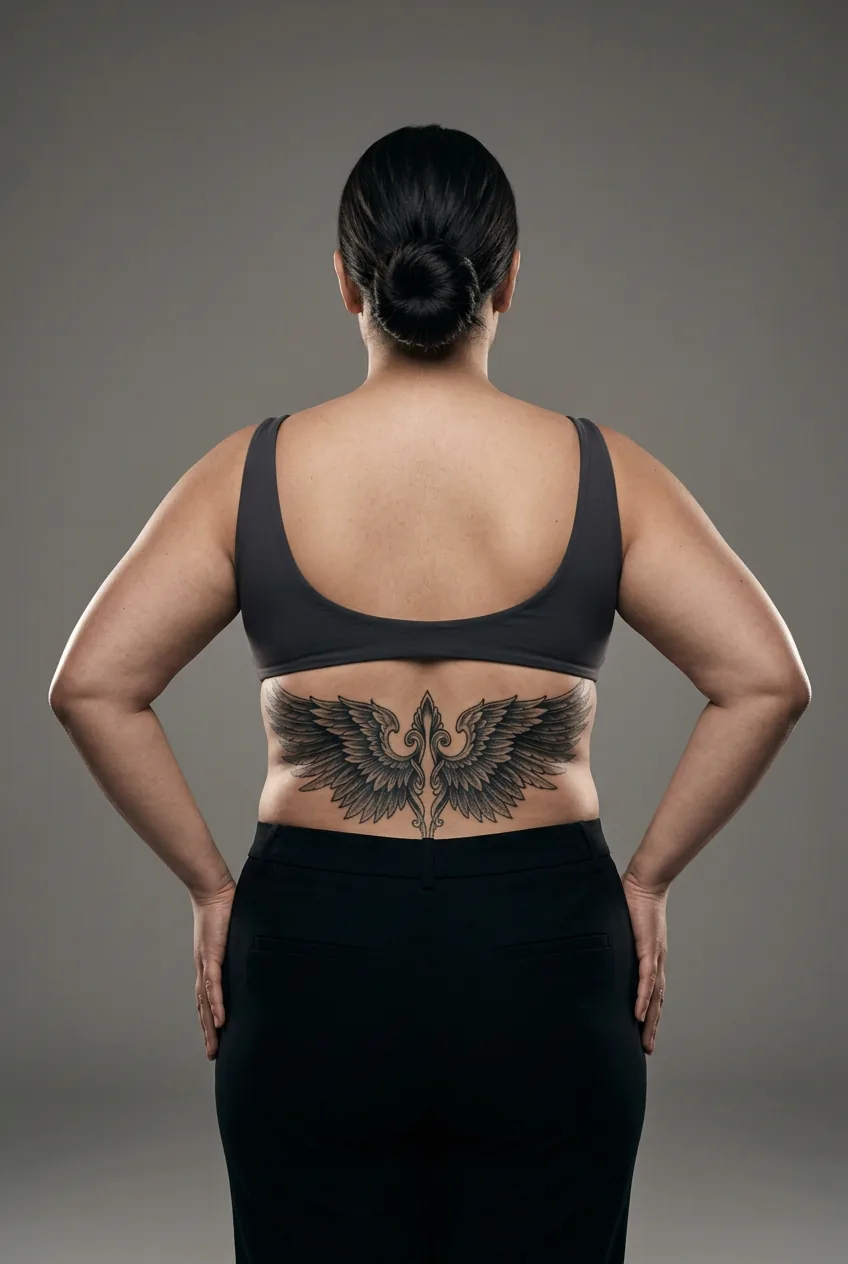
Also worth considering: the lower back can be a more comfortable tattooing position for plus-size clients than some other placements. Lying flat on a padded bench with the lower back accessible is straightforward. No awkward angles needed.
8. For Asymmetrical Bodies — Intentional Off-Center Work
Asymmetrical bodies — whether from scoliosis, past injuries, one hip sitting higher than the other, or just the natural way your skeleton developed — are more common than people think. And they interact with lower back tattoo placement in ways worth thinking through before you commit to a perfectly centered, symmetrical design.
Here’s the thing: intentionally asymmetrical designs can be a brilliant solution. A design that flows from the center toward one side — a branch reaching left, a trail of moons arcing right — doesn’t require the body beneath it to be perfectly level. It has its own asymmetry built in. Some artists actually plan around skeletal asymmetry specifically, adjusting the visual weight of a design to create optical balance even when the physical body isn’t symmetrical.
Bring reference photos and be honest with your artist about your body’s natural stance. A great tattooer will see this as a design puzzle worth solving, not a complication.
9. For Longer Torsos — Anchoring the Design So It Doesn’t Float
Longer torsos have a different challenge than short ones: the lower back can feel visually far away from everything else. A small tattoo placed on a long lower back sometimes looks like it got lost on its way somewhere. The design needs to feel anchored — like it belongs exactly where it is, not like it slipped down from somewhere else.
Width helps with this. A horizontally expansive design creates its own visual gravity. So does something that references the spine — a design centered at the lumbar with elements that reach toward the sacrum anchors itself to the body’s own central axis. The full back tattoo ideas section is worth a browse if you’re considering eventually connecting your lower back piece upward — many people with longer torsos find that a lower-back anchor piece becomes the beginning of something much bigger.
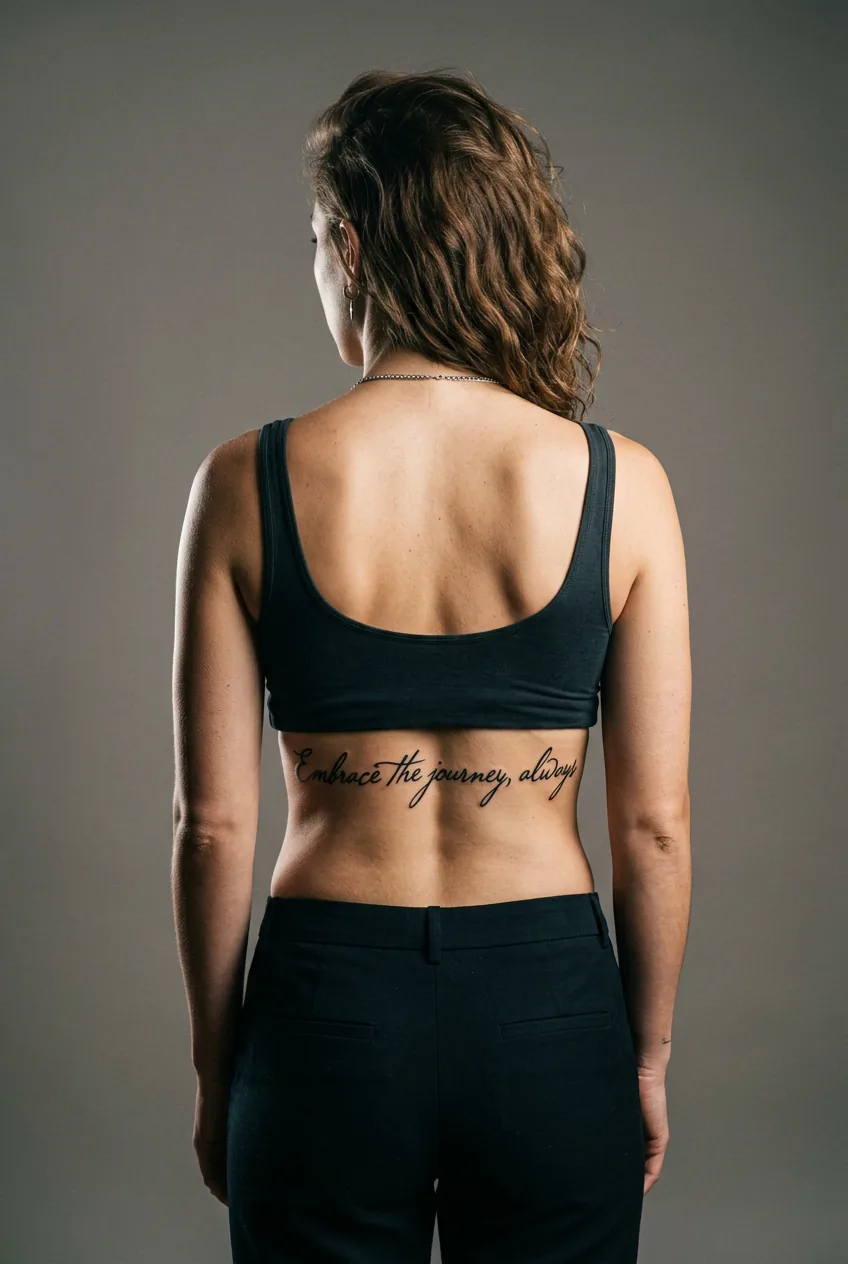
Script and quote tattoos work particularly well for longer lower backs, by the way — a line of meaningful text that runs horizontally, sitting naturally within the lumbar region, uses the width without needing vertical extension.
10. For Bodies With Existing Scars or Stretch Marks — Designing With Them
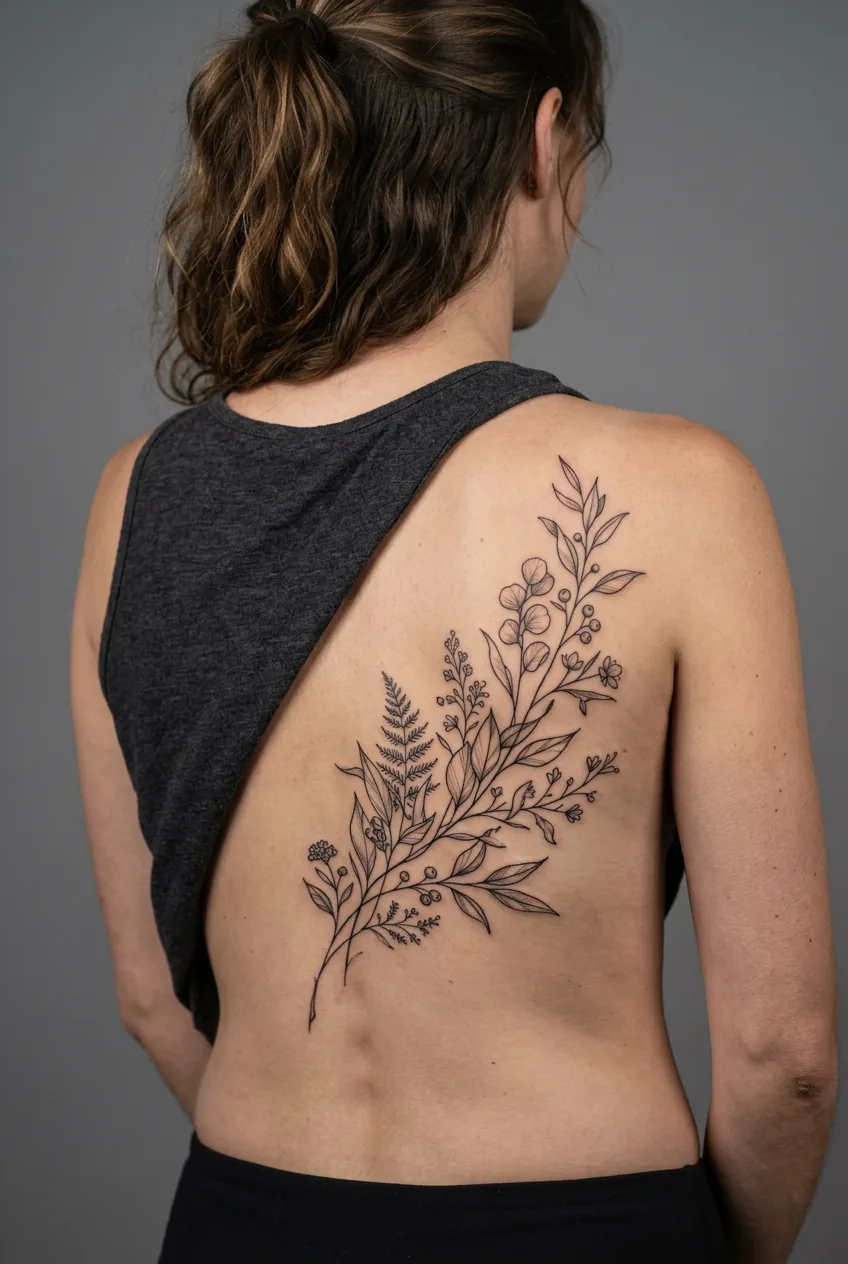
This might be the section I feel most strongly about. Scars and stretch marks on the lower back — from surgeries, pregnancies, growth spurts, weight changes, or just life — are not obstacles to a beautiful tattoo. In 2026, some of the most meaningful tattoo work I’ve come across is designed explicitly around or incorporating existing marks on the skin.
Look at how she’s chosen to place her design in this photo — the botanical vines are routed around a visible scar, and the scar actually becomes part of the composition’s negative space. That’s intentional. That’s collaborative design between the artist and the body.
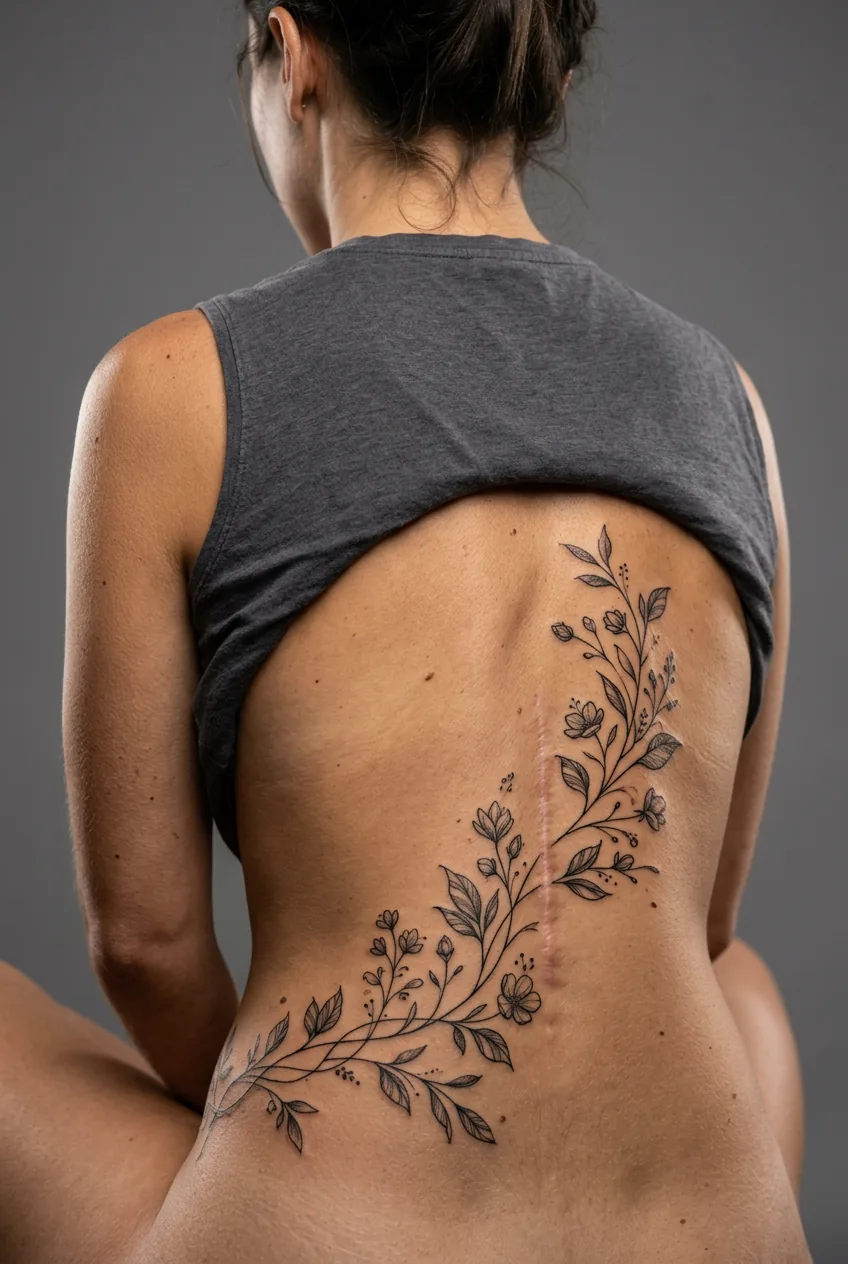
Stretch marks can take ink differently, especially if they’re raised or indented — something to discuss clearly with your artist before the session. But tattoo ink over stretch marks is absolutely possible and often beautiful, especially in styles that already embrace organic line variation, like watercolor or hand-poked dotwork. You can also read up on tattooing over stretch marks before your consult so you know exactly what questions to ask. And consider exploring leg tattoo placements alongside your lower back plans — many women with scar-based or stretch-mark considerations find that spreading the story across multiple placements creates something more cohesive than a single piece trying to do everything.
Questions I Get About This
Does a lower back tattoo hurt more on certain body types?
Pain varies more by individual pain tolerance and skin sensitivity than by body type, honestly. The lower back in general is a medium-pain area — the bony parts near the spine and sacrum tend to sting more than the fleshy outer regions. More padding in an area doesn’t automatically mean less pain, because nerve distribution is the bigger factor. Talk to your artist beforehand and take breaks as needed.
How do I know what size design is right for my lower back?
The best approach I know: have your artist create a paper stencil first and hold it against your skin in a mirror before any ink touches you. Scale that feels “too big” in the design stage often looks perfect on the body. What looks appropriately sized on screen frequently looks small on an actual lower back. Trust the stencil step — don’t skip it.
Will a lower back tattoo stretch or distort if my weight changes?
Some distortion is possible with significant weight change, but the lower back is actually more stable than the stomach or thighs in this regard. The lumbar region doesn’t expand and contract as dramatically as those areas. Designs without rigid geometric precision — organic botanicals, loose script, flowing motifs — tend to absorb minor changes more gracefully than strict symmetrical geometry.
Can I get a lower back tattoo if I’ve had an epidural?
This is a genuinely common question and the answer is: usually yes, but check with your doctor first if your epidural was recent or if there were complications. Most tattoo artists recommend waiting at least a year after an epidural before tattooing over that area. There’s ongoing discussion in the medical community about scar tissue from epidural sites, so getting a professional opinion before you book is the right call.
The whole point of this kind of thinking is that there’s no universal “best” lower back tattoo — there’s only the best one for your specific back, on your specific body, at this specific point in your life. And that’s actually more exciting than a one-size-fits-all answer. Go find an artist who gets excited about the design puzzle your body presents. That energy translates directly into the work.
If you’re still exploring placement options beyond the lower back, the full collection of back tattoo ideas is worth a long scroll. There’s a lot of beautiful territory up there too.