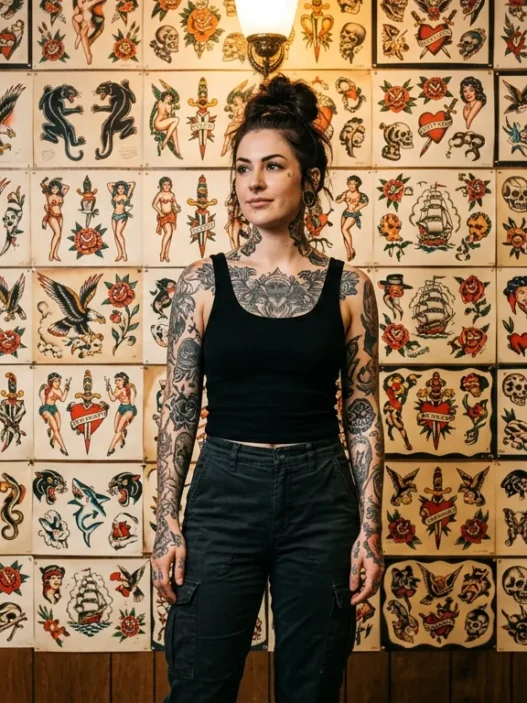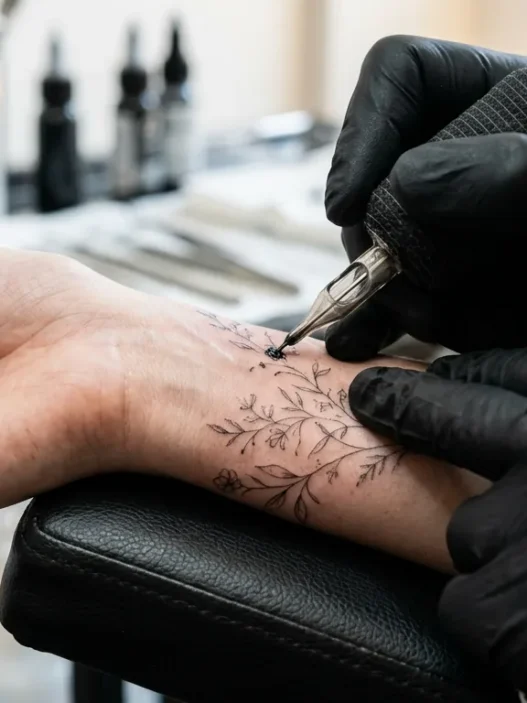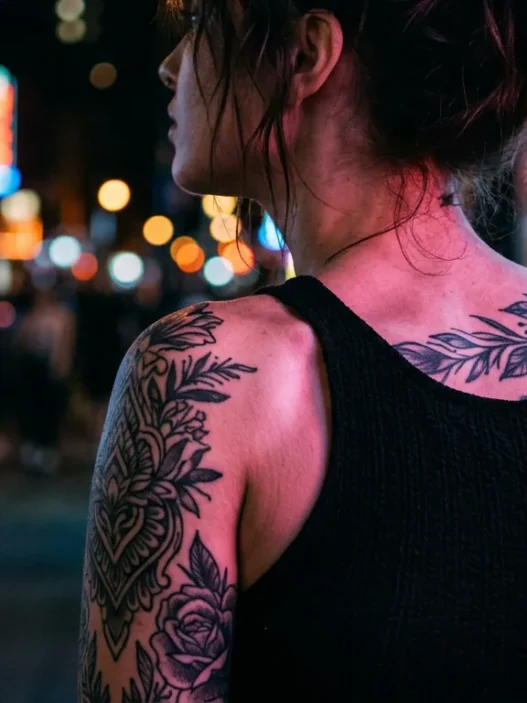





I spent months researching spine tattoo designs but barely five minutes thinking about placement. Big mistake. When I finally sat down with my artist, she asked questions I wasn’t prepared for: “How far down your spine?” “Do you want it visible in professional settings?” “Have you considered how this will look when you’re older?” I realized I’d been so focused on the art itself that I’d ignored the canvas — my actual spine and how placement would affect everything from pain to aging.

What you’ll need for this decision:
- A mirror you can angle to see your full back
- Your tattoo design sketch or reference images
- Photos of your back from different angles
- Honest assessment of your pain tolerance
- Clear idea of your lifestyle and career requirements
- Understanding of your typical clothing choices
How Your Design Dictates Perfect Placement
Your spine tattoo design isn’t just art — it’s architecture that needs to work with your body’s natural lines. I learned this the hard way when I brought a delicate floral vine design that looked stunning on paper but would have been lost on my broad upper back.
Vertical designs work brilliantly along the spine because they follow your natural column. Think script quotes, geometric patterns, or botanical elements that flow downward. These designs use your spine as a central axis, creating perfect symmetry. But here’s what I wish someone had told me: the length of your design determines everything else.
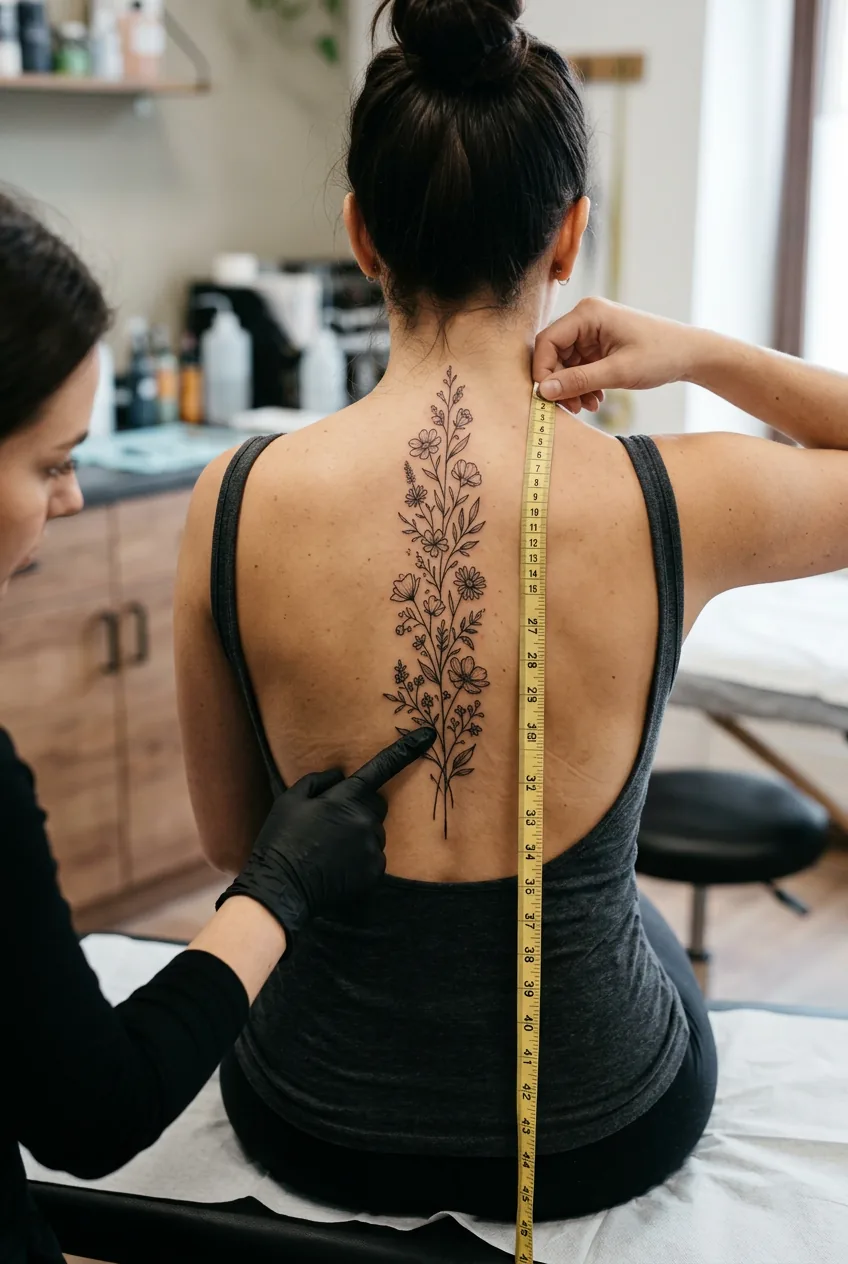
Short designs (palm-sized) can go anywhere along your spine, giving you maximum flexibility for placement. Medium pieces work best starting at the nape of your neck or sitting in the middle section between your shoulder blades. Full spine pieces? Those are commitment tattoos that require careful consideration of every factor we’ll discuss.
Width matters too. Delicate fine line designs can sit directly on the spine itself, while broader pieces need to spread slightly to either side. My artist showed me how centering a wide design exactly on the spine can look cramped — sometimes offsetting it slightly creates better visual balance.
The Pain Reality Nobody Talks About
Let’s be honest about spine tattoo pain. It’s intense, but the intensity changes dramatically depending on where exactly you place your design. The upper spine, right between your shoulder blades, is surprisingly manageable. There’s decent muscle coverage, and the bone isn’t as prominent.
But as you move down toward your lower back, things get spicy. The vertebrae become more prominent, and there’s less muscle cushioning. The absolute worst spot? Right around your tailbone. I watched my friend get a small design there and she needed three breaks in a two-hour session.
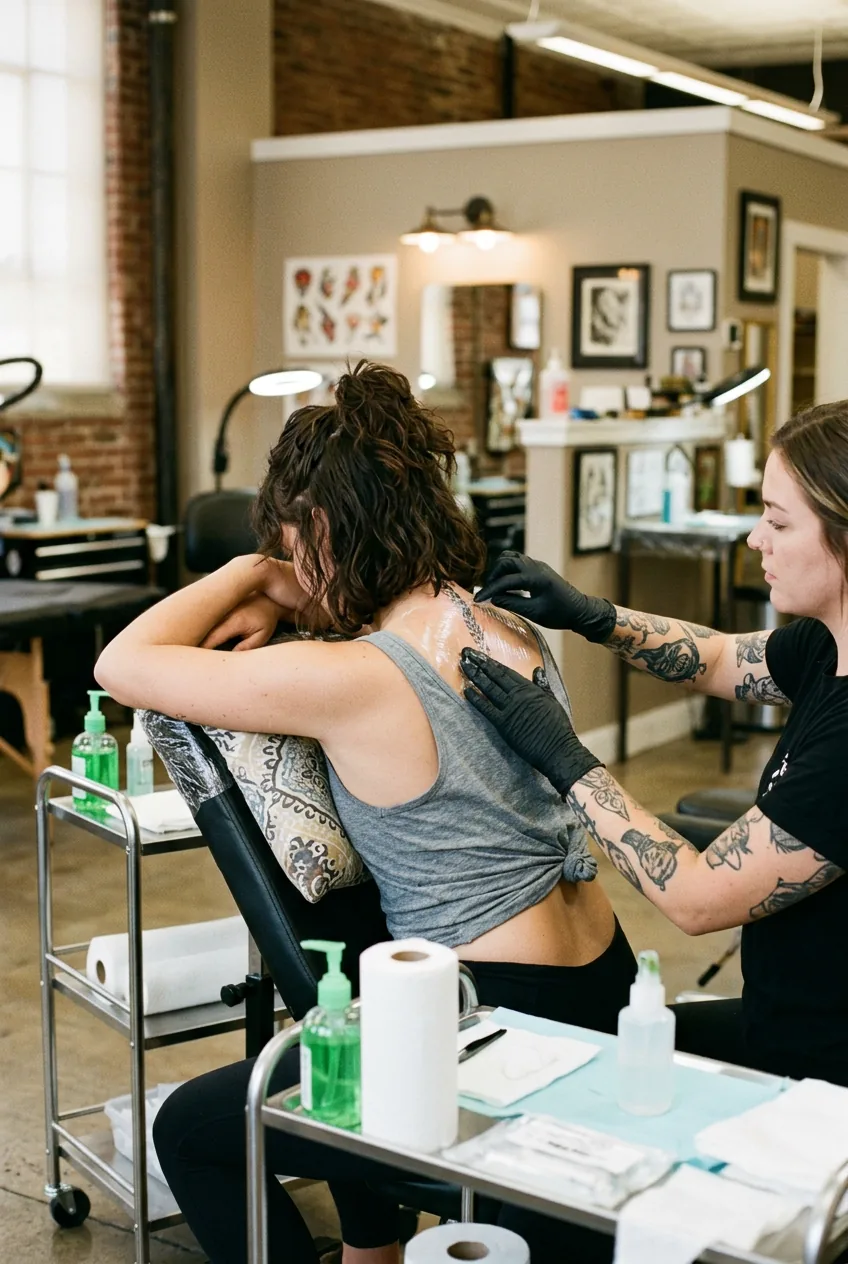
I made the mistake of scheduling my spine tattoo right before a long work week. Sitting in desk chairs for eight hours with fresh line work along my vertebrae was absolutely miserable. Schedule your session when you can avoid prolonged sitting for at least three days.
Here’s the pain breakdown by section: Upper spine (C7-T6) feels like firm pressure with occasional sharp moments. Middle spine (T7-L1) is where most people struggle — it’s right where your bra sits and every vertebra is prominent. Lower spine (L2-L5) is manageable again until you hit the very bottom near your tailbone.
Visibility vs Privacy Trade-offs
This is where placement gets strategic. Upper spine tattoos peek out of most tops — even crew necks show hints when you lean forward. I love this about my upper placement because it gives me control over visibility. Tank tops reveal it completely, but button-downs keep it professional.
Middle spine placement offers the most privacy. It’s completely hidden under normal clothing but easily shown when you want to reveal it. This is why so many women choose this zone for their first spine piece — maximum impact when revealed, complete discretion when covered.

Lower spine tattoos used to have a reputation (thanks, early 2000s), but modern lower back pieces are sophisticated and intentional. The challenge is clothing fit. Low-rise anything will show it, and even mid-rise jeans reveal hints when you sit or bend. Consider your wardrobe honestly before committing to this placement.
Think about your lifestyle scenarios. Beach days, formal events, job interviews, family gatherings — where does your tattoo need to be hidden, and where are you comfortable showing it? Your placement should align with these realities, not fight against them.
How Spine Movement Affects Your Design
Your spine isn’t a static canvas. It bends, twists, and stretches constantly, and these movements affect how your tattoo looks and ages. I never considered this until my artist had me do some basic stretches during our consultation — watching how the skin moved completely changed my design approach.
Forward bends compress the upper spine sections while stretching the lower areas. Side bends create different distortions depending on your design’s width. If you have text or geometric elements that need to stay perfectly aligned, placement becomes crucial. Too close to high-movement areas and your clean lines might look wavy over time.
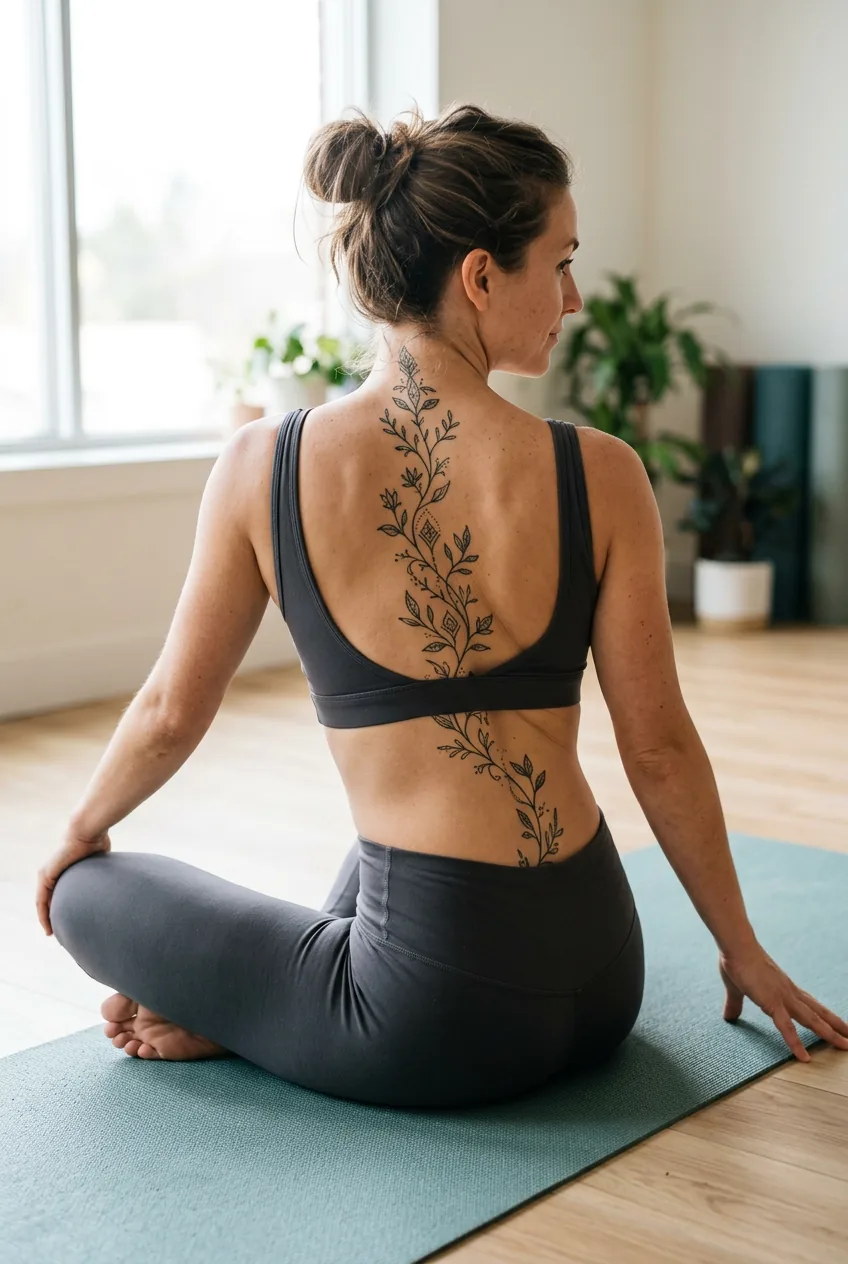
The sweet spot for minimal distortion is the middle thoracic region — roughly where your bra band sits. This area has the least dramatic movement during daily activities. It’s why so many successful spine tattoos end up placed there. The skin stays relatively stable, and the natural curve of your spine enhances rather than distorts the design.
Skin elasticity factors become more important as we age, but smart placement can minimize these concerns from day one. Avoid placing critical design elements right at the cervical-thoracic junction (base of your neck) or the lumbar curve if your design requires precise geometry.
Watch How Movement Affects Design
Clothing and Career Considerations
Professional considerations shaped my placement decision more than I expected. Even in creative industries, there are situations where visible tattoos might not be appropriate. Upper spine placement gives you the most flexibility — easily hidden under blazers and professional wear, but simple to reveal in casual settings.
Consider your daily uniform. If you wear scrubs, certain placements will show when you lean over patients. If you wear a lot of backless or low-back clothing, middle spine placement might conflict with your style. I wear a lot of racerback athletic wear, so upper placement works perfectly — it’s framed beautifully by those necklines.
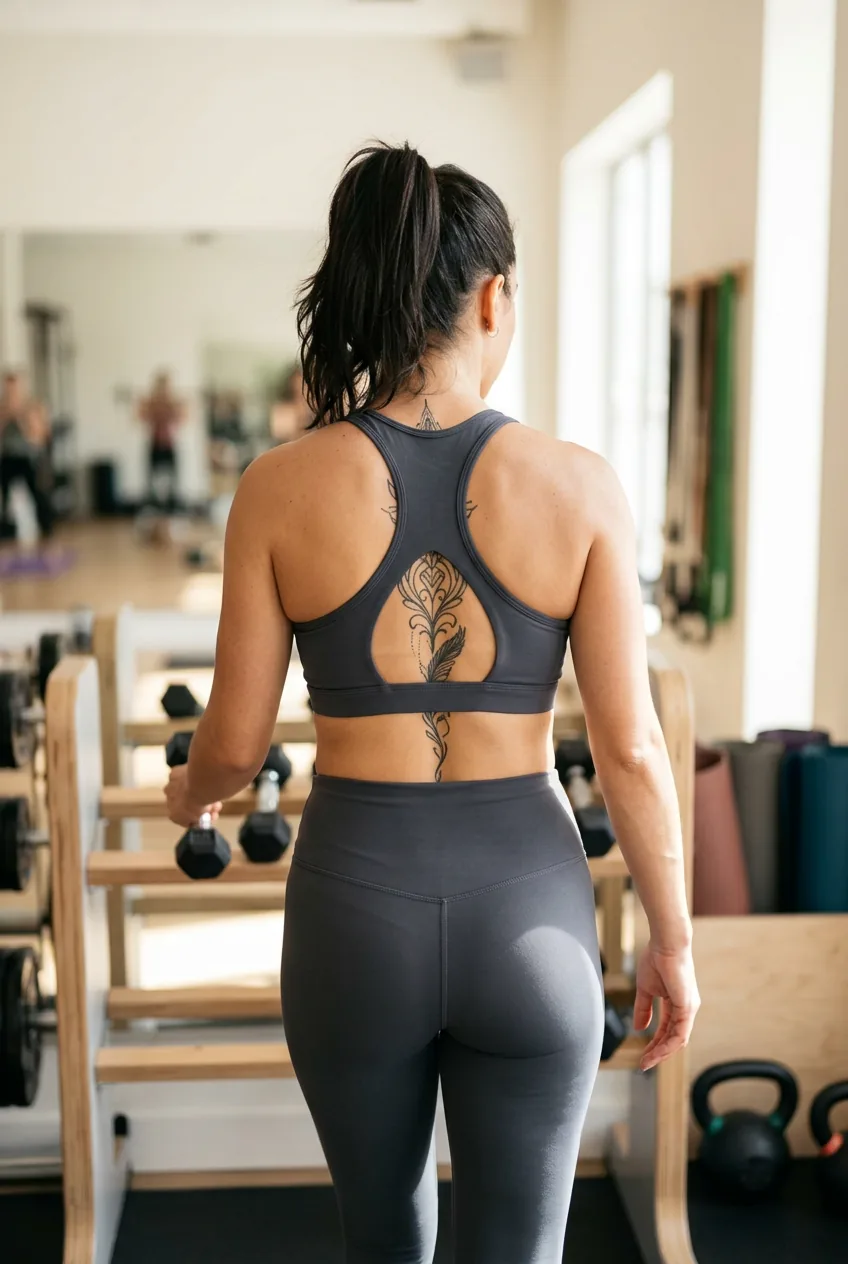
Think long-term career goals too. That promotion might come with client meetings or presentations where tattoo visibility matters. Middle spine placement offers the best of both worlds — completely professional when needed, stunning when revealed in appropriate settings.
Undergarments matter more than you might think. Bra lines, especially with detailed designs, can create wear patterns or interfere with healing. Some women adjust their placement slightly to work with their preferred bra styles. Sports bras, underwire, and racerback styles all interact differently with spine tattoos.
How Placement Changes as You Age
This conversation with my artist was eye-opening. She showed me photos of spine tattoos at five, ten, and fifteen years post-healing. The differences in aging by placement were dramatic. Upper spine tattoos tend to age the most gracefully because the skin there has good support from underlying muscle.
Lower spine placement faces unique aging challenges. This area is prone to weight fluctuations, and the skin can become looser over time. Detailed designs with fine lines might not hold up as well in this region compared to bolder, simpler elements.
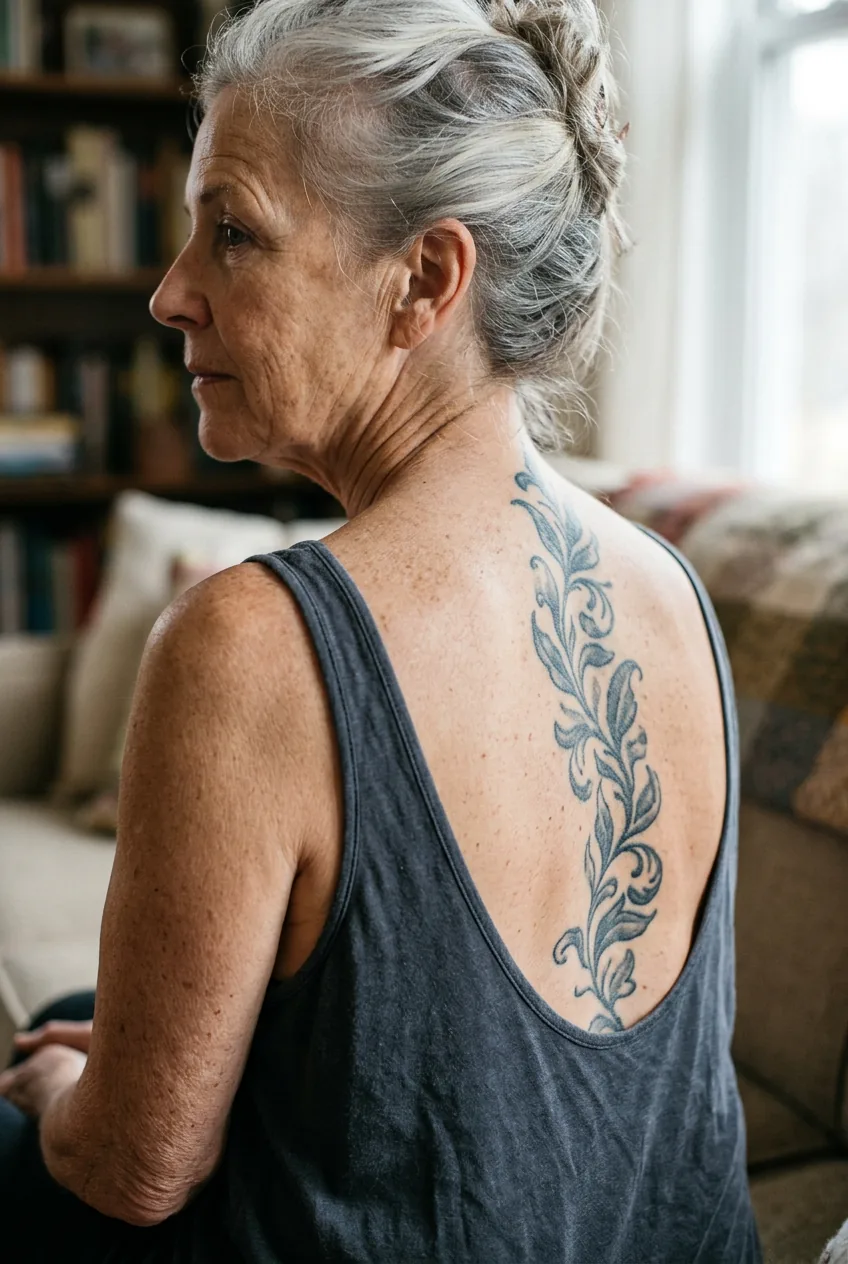
Middle spine offers the best long-term outlook. The skin stays relatively taut, it’s protected from sun exposure, and daily wear is minimal. If you’re planning a design you want to look sharp for decades, this placement gives you the best odds.
Sun exposure varies dramatically by placement. Upper spine gets hit during tank top weather, beach days, and outdoor activities. Lower back sees sun exposure in swimwear. Middle placement stays naturally protected, which helps preserve the tattoo’s vibrancy and line quality over time.
Finding Your Sweet Spot
After considering all these factors, my sweet spot ended up being the upper-middle region — starting just below my neck and extending to about mid-shoulder blade level. It hits my personal sweet spot for visibility control, manageable pain, and long-term aging prospects.
But your sweet spot might be completely different. Create a placement matrix: list your priorities (pain tolerance, visibility needs, career requirements, design type) and score different spine sections against these criteria. The highest-scoring area is probably your best choice.
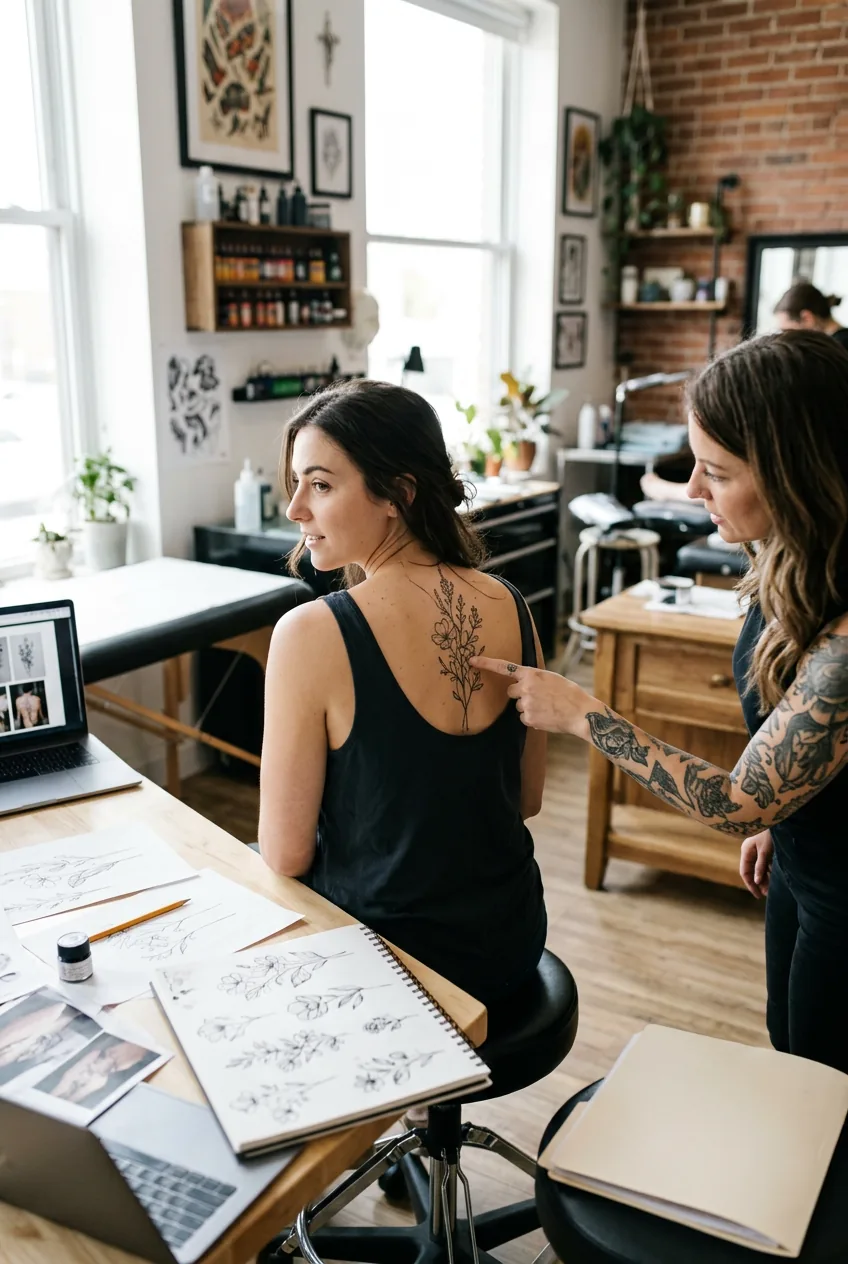
Test your preferred placement before committing. Use temporary tattoo paper or have someone draw your design on your back with washable marker. Live with it for a few days. How does it feel with different clothing? Does it show when you don’t want it to? Does it look balanced when you see it in mirrors?
Most importantly, trust your artist’s expertise. They’ve seen hundreds of spine tattoos and understand how different placements work with different body types and lifestyles. The consultation process should feel collaborative — you bring the vision, they bring the technical knowledge to make it work beautifully on your specific spine.
What People Usually Ask About Spine Placement
How do I know if my design will work on my spine shape?
Everyone’s spine curve is different. Have someone take photos of your back from straight on and profile views, then overlay your design digitally or with tracing paper. Your artist can also do this during consultation to show you exactly how it will flow with your natural curves.
Can I get a spine tattoo if I have scoliosis?
Absolutely, but placement becomes more important. Work with an experienced artist who can adapt the design to work with your spine’s natural curve. Sometimes slight asymmetry in the design actually creates better visual balance on a curved spine.
How long should I wait between spine tattoo sessions?
At least 4-6 weeks for the same area, longer if you’re doing multiple sections. Spine tattoos are tough on your nervous system, and your body needs time to fully recover between sessions. Don’t rush the process.
Will spine tattoos interfere with medical procedures like epidurals?
Generally no, but inform your healthcare providers about any spine tattoos. Most medical procedures can work around tattoos, and modern tattoo inks don’t typically interfere with medical imaging or procedures when fully healed.
My spine tattoo placement ended up being perfect for my lifestyle and aesthetic goals. Taking the time to really think through these factors before my appointment made all the difference. Now, three years later, I still love how it looks and feels — and more importantly, how it fits seamlessly into my daily life.