


I didn’t walk into the studio thinking I was doing something brave. It felt small — two tiny matching tattoos, identical placement, same artist, same afternoon. My best friend and I had been talking about it for almost a year, the way you talk about things you want but aren’t sure you deserve. And then one overcast Tuesday in February we just… went. I came out with ink on my ribs and a feeling I couldn’t name for weeks.
Before, I Wasn’t Sure What I Was Claiming
There’s a version of myself that existed before the tattoo. She was careful. She curated her skin like it was a résumé — nothing that couldn’t be explained in a job interview, nothing that claimed too much. I’d wanted ink for years, the kind of deep and quiet wanting that sits in the back of your throat, but I kept finding reasons to wait. My body didn’t feel like mine to mark yet. Or maybe I was afraid that marking it would commit me to a version of myself I’d outgrow.
The matching idea started differently than most. It wasn’t born from aesthetics or a Pinterest board. My friend and I had been through something — the particular grief of watching a shared world collapse and choosing each other in the wreckage. We didn’t talk about it in those terms. We just knew. And one night she said, quietly: I want us to have the same thing on our skin.
I think what scared me wasn’t the needle. It was the claim. Getting a matching tattoo with someone is a public declaration of a private bond, and something about that visibility felt exposing in a way I hadn’t anticipated. I’d spent a long time making myself legible only to people who already knew me well. This was different. This was putting something true on the outside.
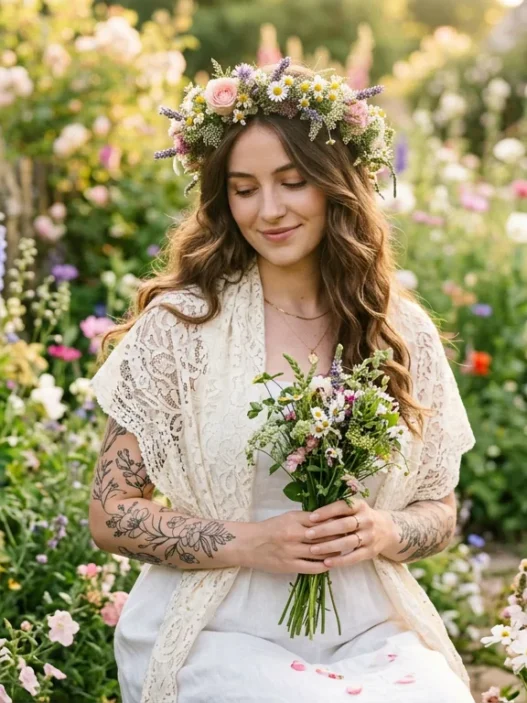
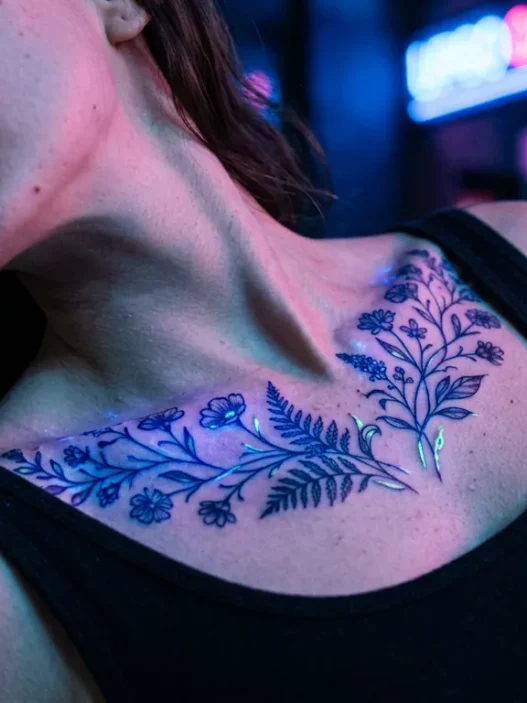
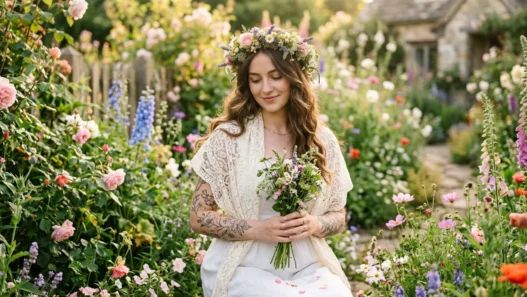
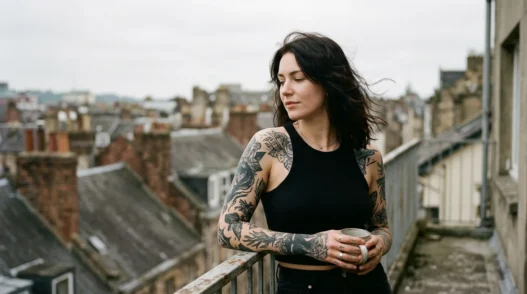
Looking at the woman in this photo — the way she holds her arm open to the light, the tattoo catching the diffused afternoon glow — I recognize something in that posture. It’s not performance. It’s more like acknowledgment. Here. This is here now.
Choosing the Mark
We spent longer choosing the design than I expected. Not because we disagreed — we almost never do — but because we both understood that this wasn’t decorative. It needed to mean something without becoming a monument. Tattoos that try too hard to be profound often end up being just that: trying. We wanted something we could live inside quietly.
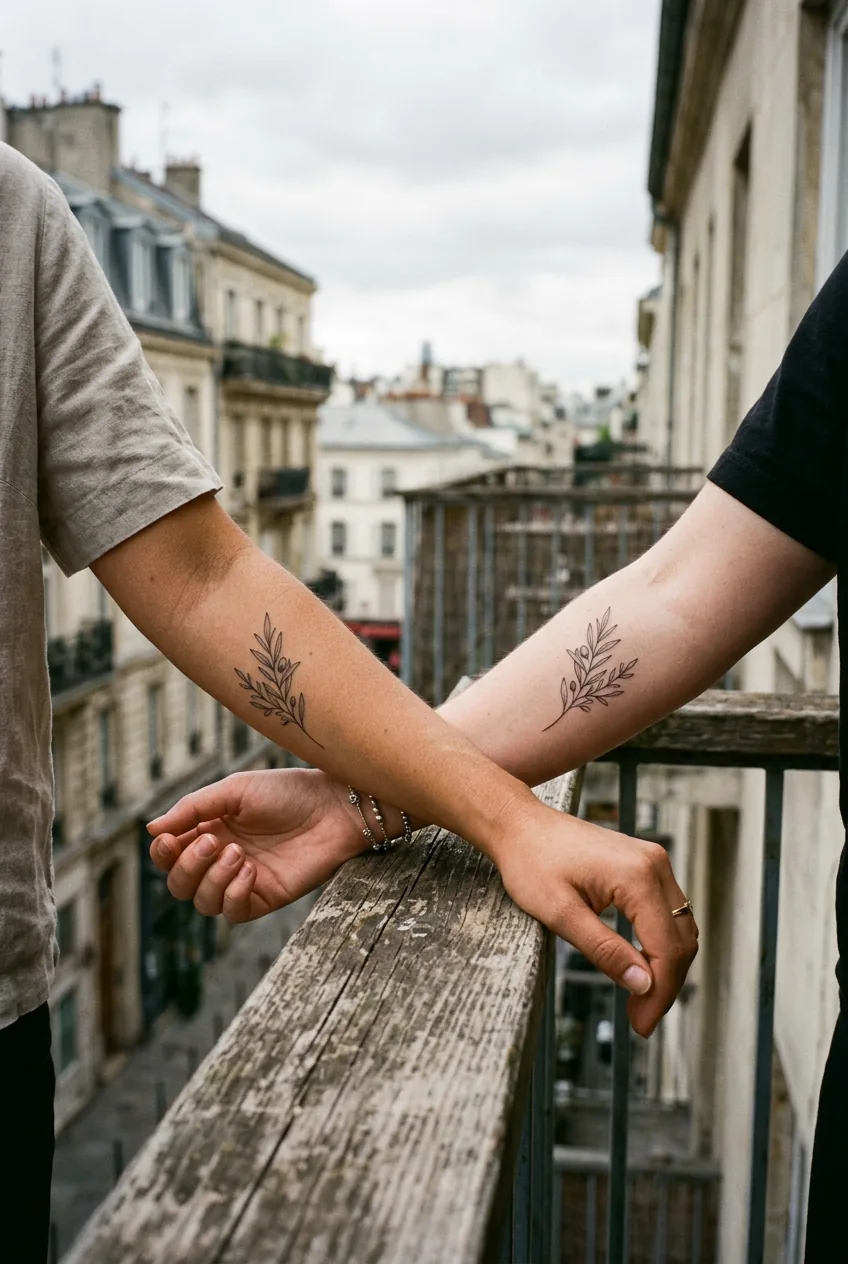
We landed on a botanical line. A single stem, minimal, fine line botanical style — no shading, no flourish. Just the essential shape of something that grows. Our artist drew it twice, freehand, slightly different on each of us, because she said: Matching doesn’t have to mean identical. That distinction mattered more than I can explain.
A lot of people choose symbolic tattoos for moments like this — imagery that carries weight across cultures or time. We considered that. A moon, an anchor, something from mythology. But we kept coming back to the plant. It was living. It could be read as grief or as survival or as stubborn ordinary continuation, and we needed all three.

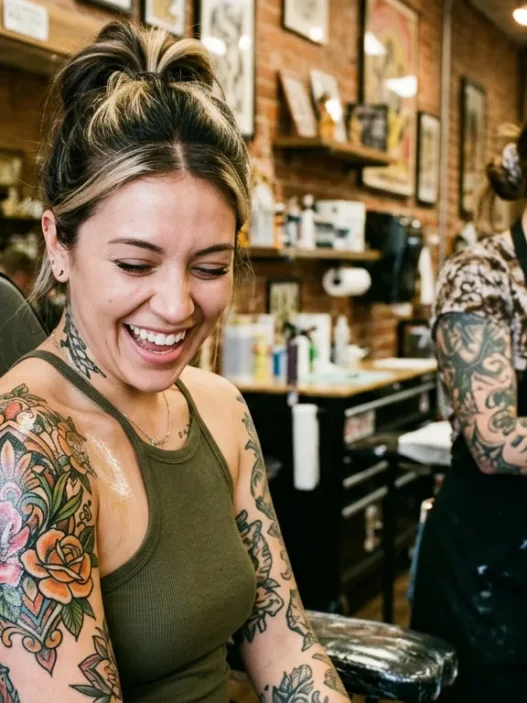
See how the ink sits on her ribcage in this shot — that placement, close to the body’s center, kept under fabric most of the time. That’s what ours looked like. Private but permanent. Something you share on your own terms.
If you’re going through this process and feeling stuck on size, don’t underestimate the quiet power of going small. The category of small tattoos contains some of the most emotionally loaded work I’ve ever seen — not despite their scale, but because of it. Restraint is its own kind of statement.
The First Time Someone Saw It and Understood
About three months after the appointment, I was at a gathering — the kind of low-lit evening that makes people braver than usual — and I’d worn something that showed the ink. A woman I’d just met caught sight of it and asked, immediately: Is that a matching one?
Yes, I said.
Who with?
And when I told her — my best friend, my person, the one who stayed — she nodded in a way that felt complete. Not curious. Not probing for a love story or a dramatic explanation. Just: oh, I understand that. She had a matching tattoo too, she said. She and her sister, after their mother died.
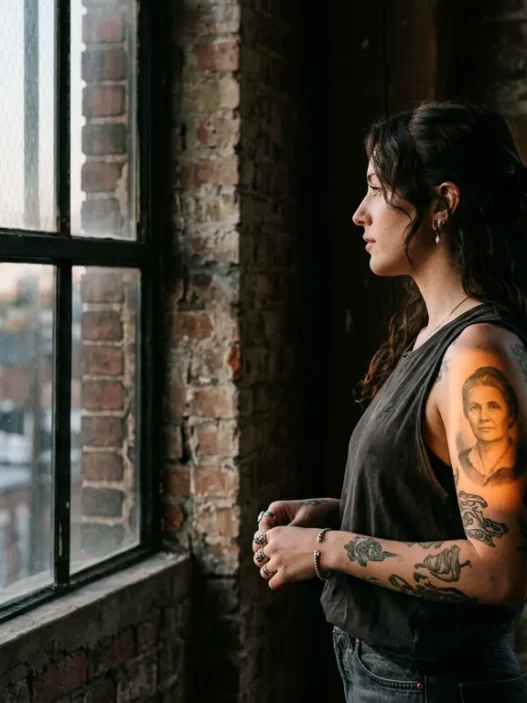
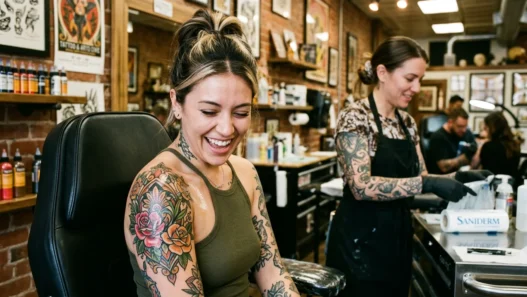
There’s a specific kind of recognition that happens between people who’ve used their skin to hold something. It doesn’t always require explanation. Look at the woman in this image — the way she’s turned toward the camera but not performing for it, the ink visible but incidental. That’s the energy of someone who marked themselves for themselves, not for the room. And other people who’ve done the same thing feel it immediately.
What I didn’t expect was how that moment would shift the tattoo’s meaning for me. Before, it felt like something between me and my friend — sealed, private, ours. After, it felt like part of a larger language. A way that certain people who have lived through things recognize each other across a room. I hadn’t known that was available to me.
This is, I think, one of the underrated reasons people are drawn to trending tattoos that carry relational meaning — not trend-chasing, but participation in a visual vocabulary that transcends individual experience. Matching ink, paired designs, coordinated imagery: it’s not just aesthetic. It’s communion.
Matching doesn’t have to mean identical. It means: you were here, and I was here, and we chose to mark it the same way.
Who I Am With It Now
Here’s my slightly controversial take, and I mean it sincerely: I think matching tattoos get unfairly dismissed as sentimental or naive. The usual warning is what if you fall out? What if the relationship ends? And I get it — the cautionary logic makes surface sense. But it misunderstands what the tattoo is actually for.
The tattoo doesn’t represent the current state of the relationship. It represents the moment you chose each other. Those are different things, and only one of them is permanent by nature — which means the ink is actually the more honest record. Friendships change. Bonds evolve. The fact that something was real at a particular point in time is not retroactively erased by what comes after.

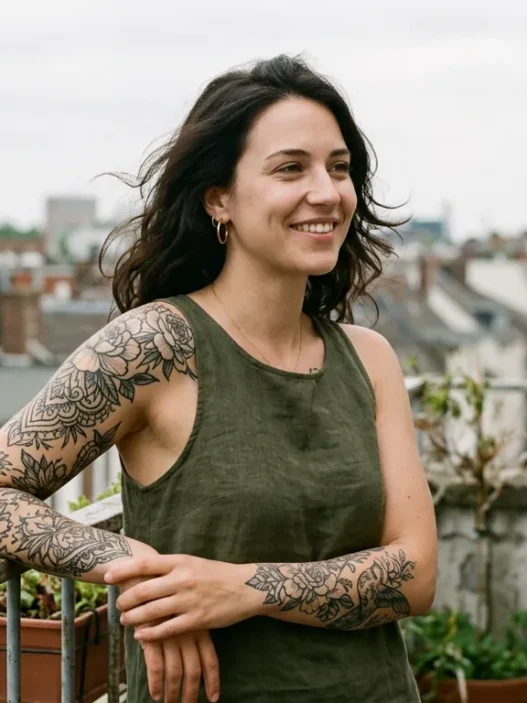
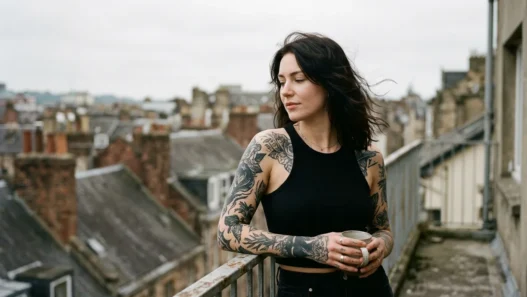
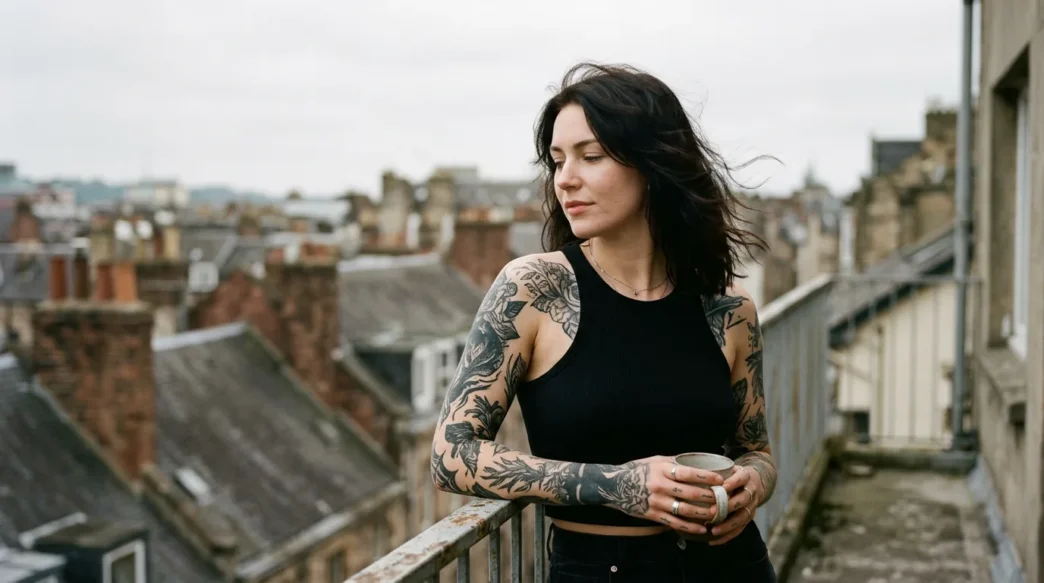
She’s not looking at the tattoo here — she’s just existing with it, hair moving in the wind, eyes somewhere else entirely. That’s what it becomes eventually. Part of the landscape of yourself. Not a statement you’re constantly making, just something that’s true.
For me specifically, the matching tattoos started something I didn’t anticipate. Once I’d put something real on my skin — something that named a bond, named a period of survival — I started seeing my body differently. Not as something to protect from commitment, but as something worth committing to. I got two more pieces in the year that followed. Neither matching, both deeply mine.
The botanical line on my ribs is what you might call a gateway — not to more tattoos necessarily, but to a different relationship with my own visibility. I stopped asking whether I deserved to take up space on my own skin. That question, which I’d been asking quietly for years, just… dissolved. I don’t think that would have happened with a solo tattoo, at least not for me. I needed someone to say I’m doing this with you before I could fully mean it myself.
If you’re still in the considering phase and drawn to imagery that feels loaded with history or archetype, it might help to look through animal tattoos or quote tattoos for language that resonates — sometimes the right image or phrase is waiting in a category you wouldn’t have thought to browse first. The design that clicks often surprises you.
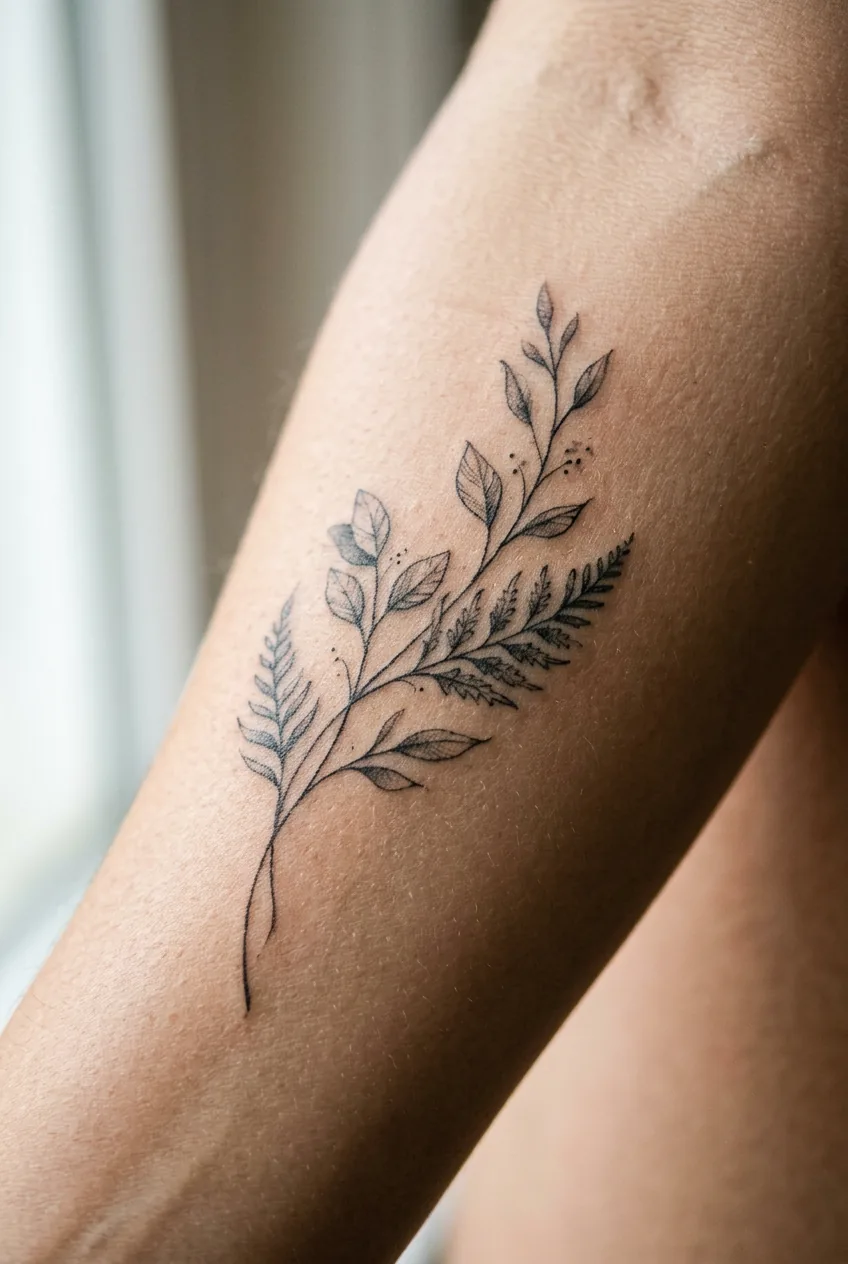
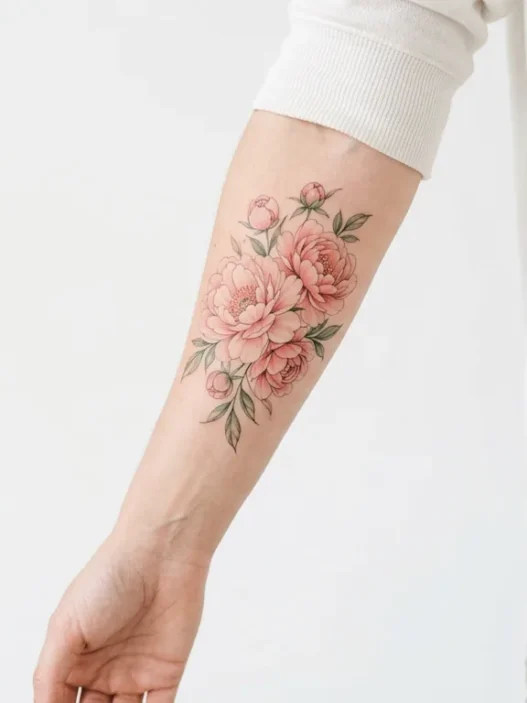
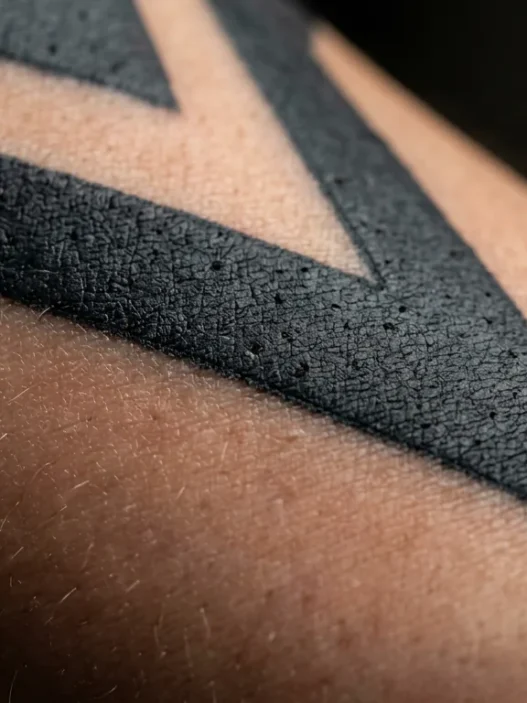
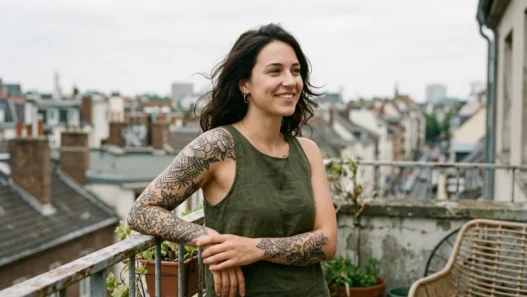
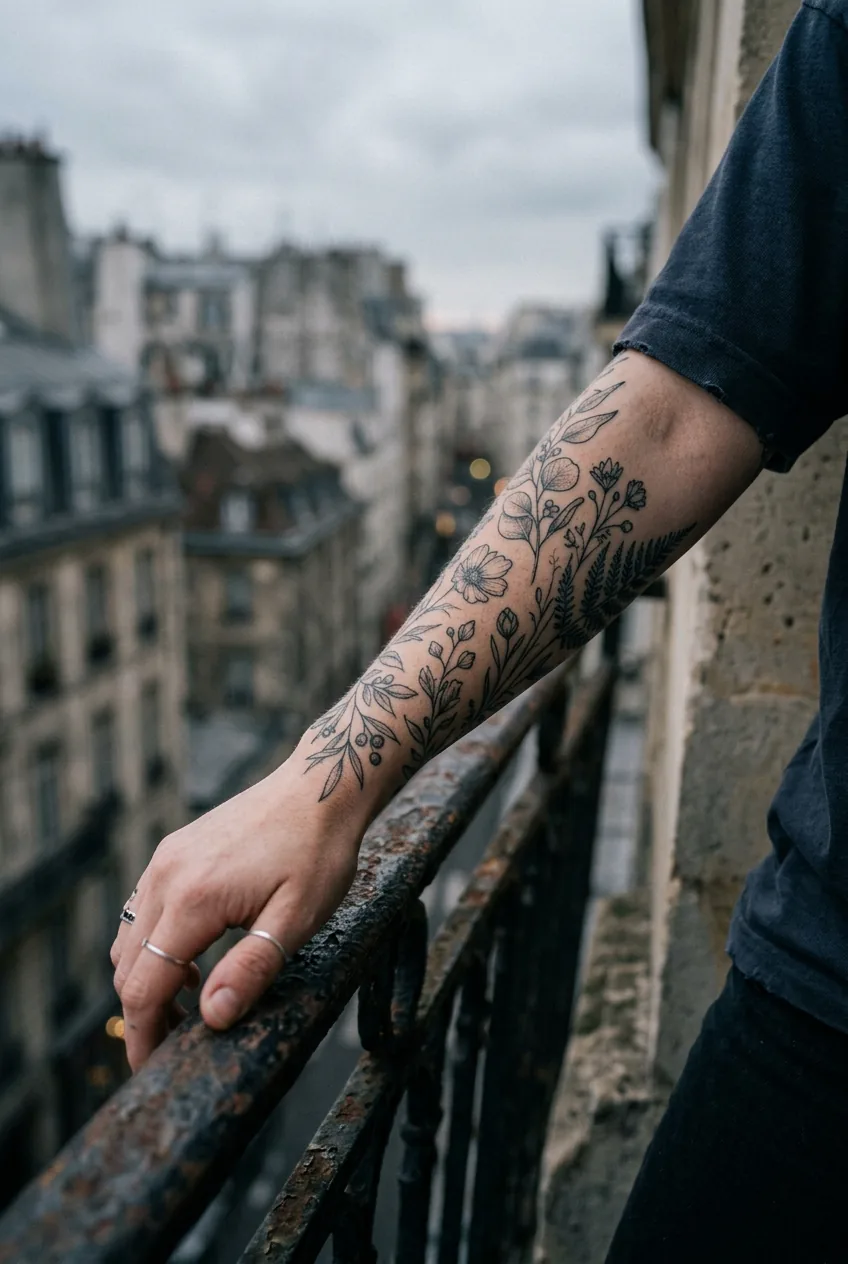
Look at the detail on her arm in this close-up — the ink’s settled fully, skin has softened around it, and it just reads as hers. That settling period is real and worth knowing about. How tattoos age and settle can vary enormously by placement and skin type, so ask your artist what to expect specifically for where you’re putting yours.
Do matching tattoos have to be exactly the same to count?
Not at all, and honestly my favorite versions are the ones that share a spirit without being carbon copies. Our artist drew each of ours slightly differently — same image, same placement, but freehand, so they breathe differently on each body. The matching is in the intention, not the precision. What you’re marking is the relationship, not a catalog number.
What if the relationship ends — won’t you regret it?
I’ve thought about this genuinely, and my honest answer is no — and I don’t think I’m being naively optimistic. The tattoo marks that the relationship was real. Even if everything between two people eventually changes or ends, the fact that something true existed at a particular moment doesn’t un-happen. Treating the tattoo as a bet on the future misunderstands what it is: it’s a record of the past, which is the one thing that can’t be taken from you.
Is there a placement that works better for matching tattoos?
It depends enormously on how visible you want the piece and what role you want it to play in your daily life. Rib placements stay private — you decide when they’re seen. Wrists and forearms are part of the conversation every day; you’ll look at them constantly. Neither is better. But think about whether you want this to be something you share or something you carry, and let that guide the placement conversation with your artist.
How do I find an artist who’s good at this kind of delicate work?
Look for artists whose healed work you can actually see — not just fresh-off-the-gun photos. Fine line botanical work in particular can look very different at six months than it does on the day, so checking how to vet a fine line artist is worth your time before you book. Ask to see healed pieces specifically, and don’t be shy about it — a good artist will appreciate the question.
There’s nothing else I feel the need to wrap up neatly here. The tattoo is on my ribs. My friend has hers. We’re still us, still changed by the same period, still choosing each other — and even if any of that ever shifted, the plant would still be there, growing in its quiet way, on both of us, in the dark.