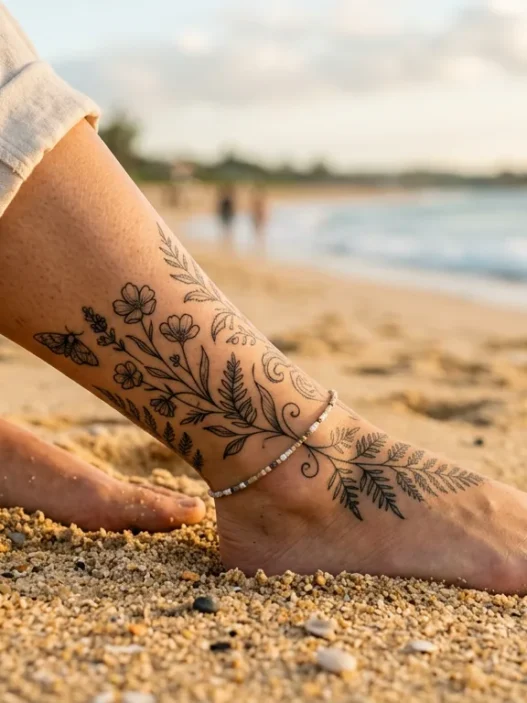




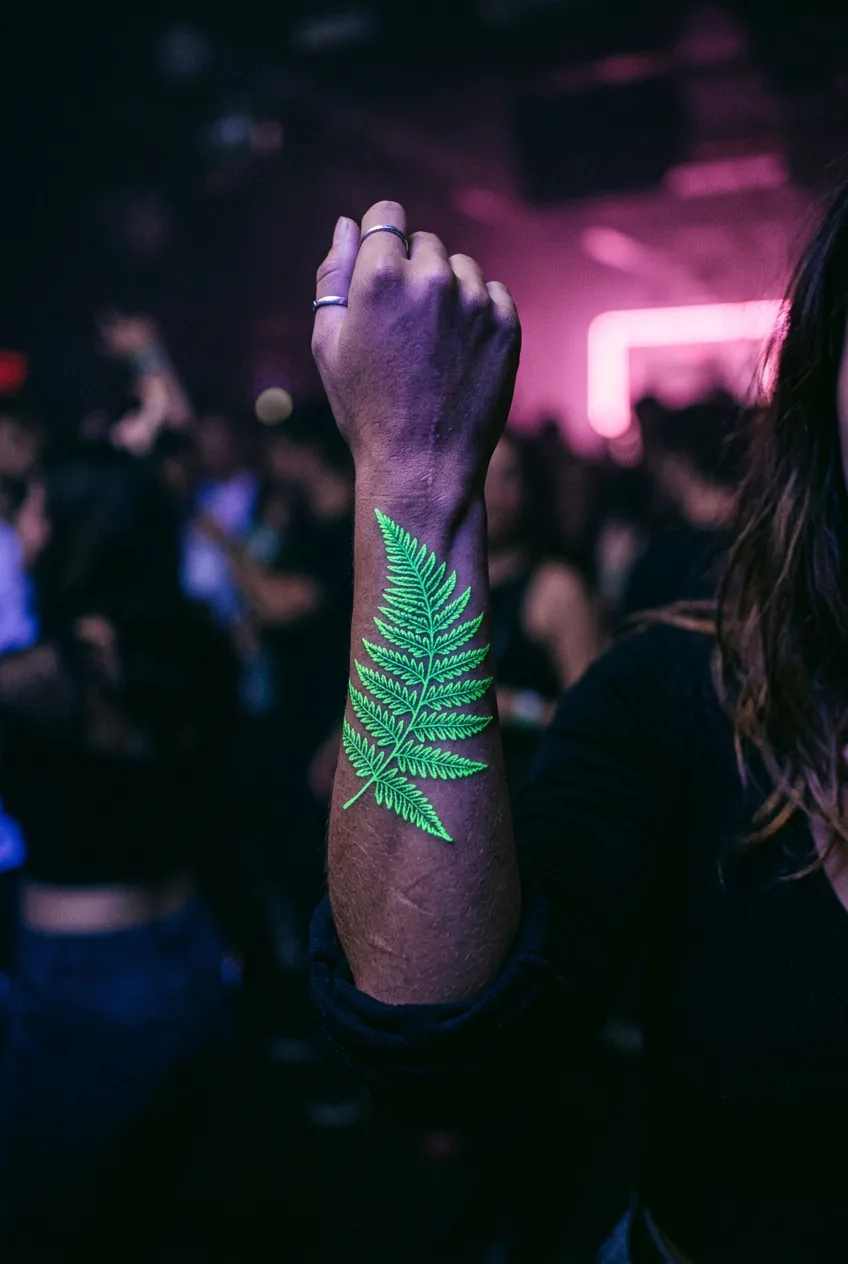
I remember the first time someone showed me a UV tattoo glowing under a blacklight in a nightclub bathroom. It was 2019, the ink was a delicate fern wrapping her forearm, and I stood there for a full embarrassing minute just staring. Then I went home and spent three hours reading every terrifying forum post I could find — allergic reactions, cancer risks, ink that turned brown and crusty after a year. I walked away convinced it was a beautiful disaster. Seven years later, I think I owe that forum rabbit hole an apology, because a lot of what I absorbed was simply wrong, or at best, wildly outdated.
What We’re Dismantling Today
The Glow Isn’t the Problem — The Ink Rumours Are
Myth: UV ink is inherently toxic and causes cancer.
Let me steelman this one properly, because it didn’t come from nowhere. In the early 2000s, the UV-reactive inks being used in commercial tattoo shops were — to put it diplomatically — not well regulated. Some contained phosphorus compounds. A handful were genuinely not formulated for dermal use. Reports of reactions, granulomas, and scarring were real, and the industry had every reason to be cautious. The fear was earned.
But here’s where the narrative calcified into myth: people stopped updating the story. The conversations that were valid in 2003 got recycled on Reddit in 2019 and then again in 2024 and are still circulating in 2026 like facts, when the regulatory landscape for tattoo ink has shifted substantially. The EU’s REACH regulations on tattoo ink — which banned several previously used UV-reactive compounds — pushed manufacturers to reformulate. Reputable brands are now producing UV inks without the compounds that caused the bulk of historical reactions.
The honest answer is that some UV inks still carry a higher sensitisation risk than standard black ink. That’s not nothing. But the blanket claim that UV tattoos are a health catastrophe waiting to happen ignores the decade of reformulation and the thousands of people walking around with glowing botanicals on their skin who are completely fine. The risk conversation has nuance now. The old talking points don’t.
What you should actually do: ask your artist specifically which brand of UV ink they use and look up its safety data sheet. A good tattoo artist will either have that information immediately or will find out before your appointment. If they shrug and say “it’s fine,” that’s the red flag — not the ink itself.
The ‘UV Tattoos Don’t Last’ Myth Needs Retiring
Myth: UV tattoos fade within two years and look terrible in daylight.
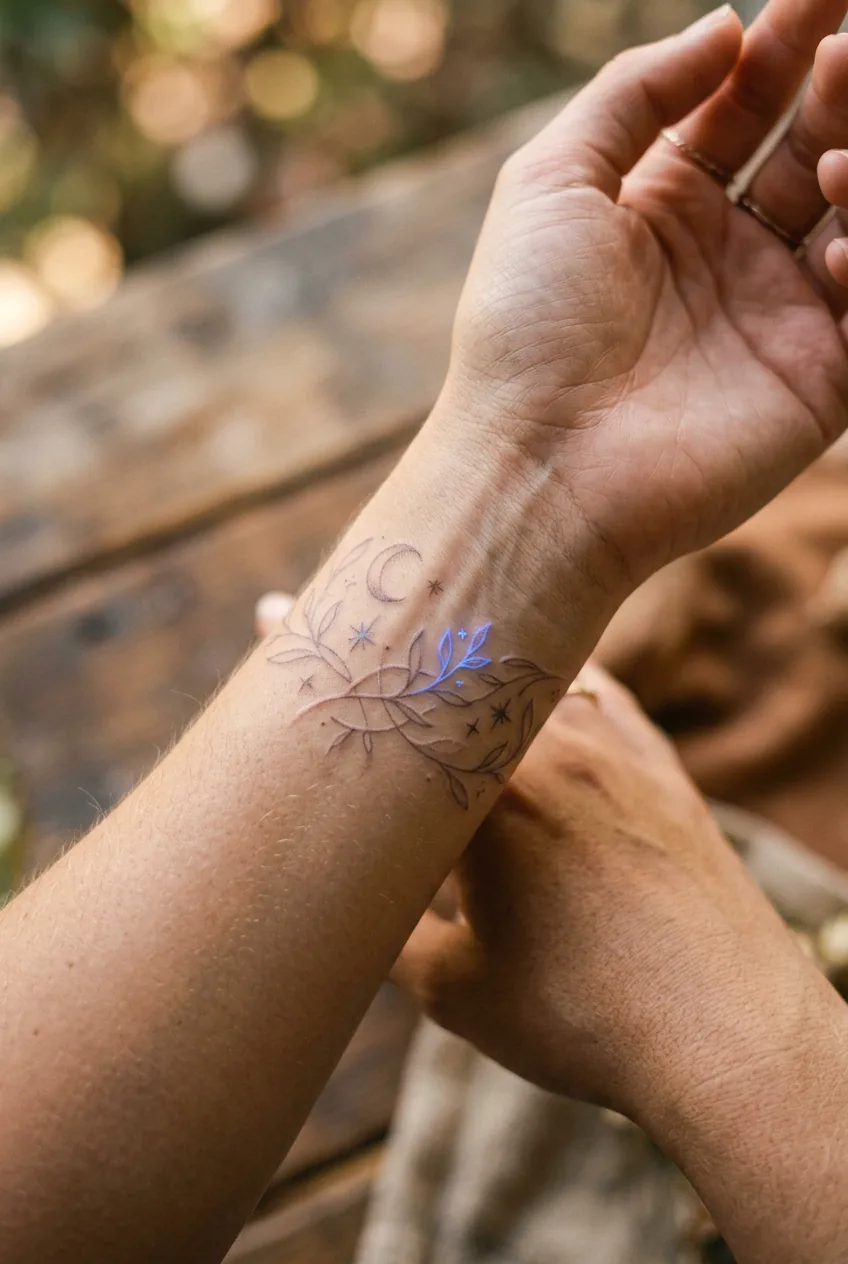
This one is more complicated, and I want to be fair to it. The fading concern is not baseless — UV-reactive pigments have historically been more prone to UV degradation (yes, the irony of that is not lost on me) and some early UV-only tattoos did turn a muddy yellowish tone under daylight within a few years. There’s a version of this criticism that holds water.
But the wholesale claim that UV tattoos “don’t last” treats the category as monolithic when it’s actually three very different approaches. First, there are fully invisible UV tattoos — no pigment visible in daylight, only glowing under blacklight. Second, there are UV ink layered over standard ink, where the UV element adds a glow to an already-visible design. Third, there are UV ink used as a highlight or accent within conventional color work. These behave completely differently in terms of longevity, and lumping them together is where the myth goes sideways.
The fully invisible variety does fade faster — that part is still true. The layered approach, on the other hand, where the UV element is essentially a secondary layer over existing ink, holds up considerably better because the primary design is still there regardless. I’ve seen women with UV-accented floral sleeves that are four and five years old, and the base work looks exactly as you’d expect any comparable tattoo to look — the glow accent has softened, but the piece itself is still stunning.
You can read more about how tattoo pigment fades to understand why this varies so much from person to person. Longevity isn’t just about the ink — it’s about placement, aftercare, and skin. That’s true for UV ink too. The myth that it’s categorically short-lived ignores all of those variables.
The Pain and Healing Are Not What the Horror Stories Suggest
Reality: Healing is harder to read — but not harder to do.
I’ve seen forum posts describing UV tattoo healing as uniquely hellish — extended redness, mysterious swelling, the ink “not settling.” And again, in some documented historical cases, there were genuine healing complications tied to the old formulations. I’m not going to pretend those didn’t happen.
What I will push back on is the idea that this is the expected experience in 2026. The healing process for a UV tattoo done with modern, properly formulated ink, by an experienced artist, with standard aftercare, is not dramatically different from any other tattoo. It’s slightly trickier to assess because you can’t easily see how the ink is settling in daylight — which can cause unnecessary anxiety — but the actual biological process isn’t a different beast.
The part that’s genuinely different: you need a blacklight handy during healing to check the ink’s progress. Most artists who specialize in UV work will tell you this upfront. Checking the glow at days 7, 14, and 21 under a UV lamp gives you a much clearer picture of how the ink is taking than just looking at the skin in normal light. That’s just a practical adjustment, not a horror story.
Placement matters enormously here too. Fine-line UV work on a wrist or collarbone heals differently than a bold UV accent on a calf. If you’re considering something subtle and delicate, exploring under-the-radar small tattoos for the subtly inked might help you think about placement strategy before you commit to a UV design — because where you put it affects everything from healing time to how the glow reads in a dark room.
The Invisible Tattoo Is Not a Party Trick Anymore
Here’s my controversial take, and I’m owning it: I think the tattoo community has been weirdly snobbish about fully invisible UV tattoos for years, dismissing them as novelties for people who want a tattoo but don’t want the commitment of actually having one visible on their body. As if choosing discretion somehow makes the art less valid.
That framing ignores entire categories of people for whom invisible ink is a genuinely meaningful choice. Women in professions where visible tattoos carry social or professional consequences. People from families where tattoos are still a point of conflict. Women who want the experience of a tattoo on their own terms, privately, without the daily performance of having to explain it to everyone who sees their wrists in a meeting. That’s not cowardice. That’s autonomy.
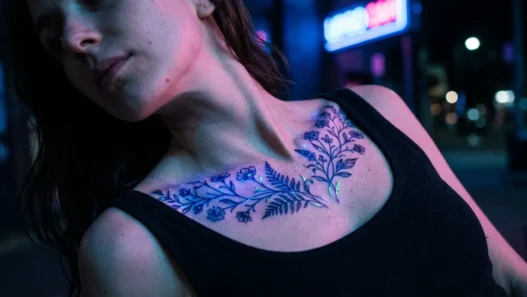
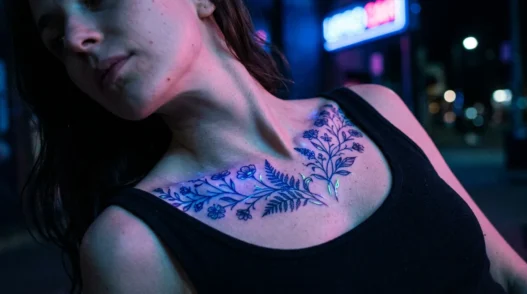
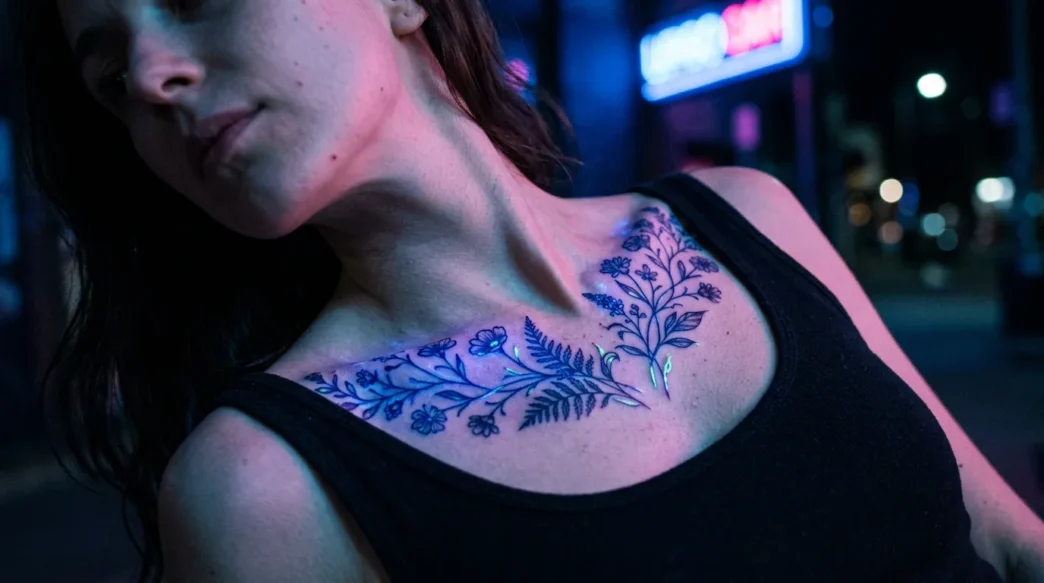
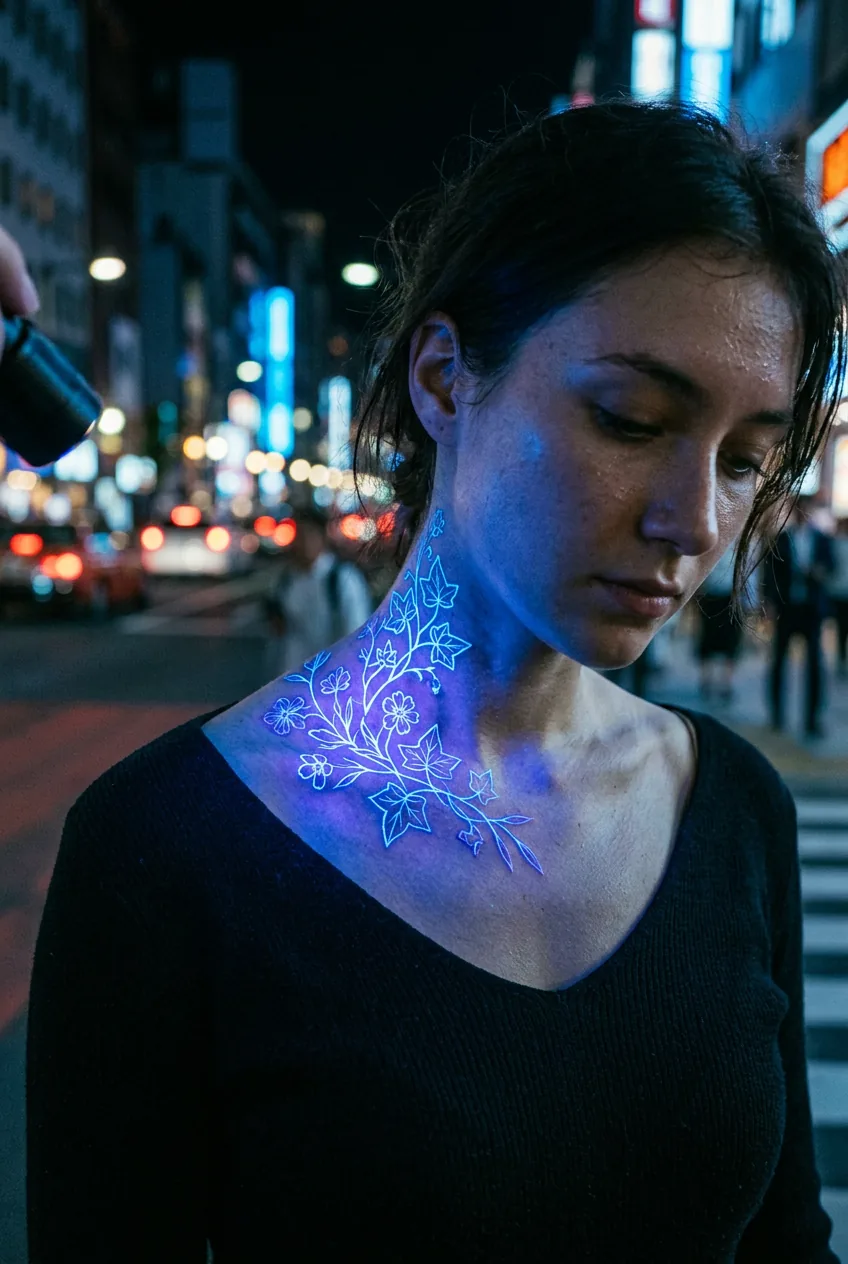
And the artistry has caught up with the intent. Look at the photo here — she’s got what appears to be clean, unmarked skin in daylight, but that collarbone piece is a full botanical illustration that comes alive under neon light. The composition required exactly as much skill from her artist as any conventional piece. The choice was intentional and considered, not a workaround.
This connects to a broader conversation happening around micro tattoos and discretion — where the demand for beautiful, subtle work has exploded precisely because people want ink that integrates with their lives rather than announces itself. UV is the logical extension of that impulse. Treating it as less-than says more about tattoo gatekeeping than it does about the work itself.
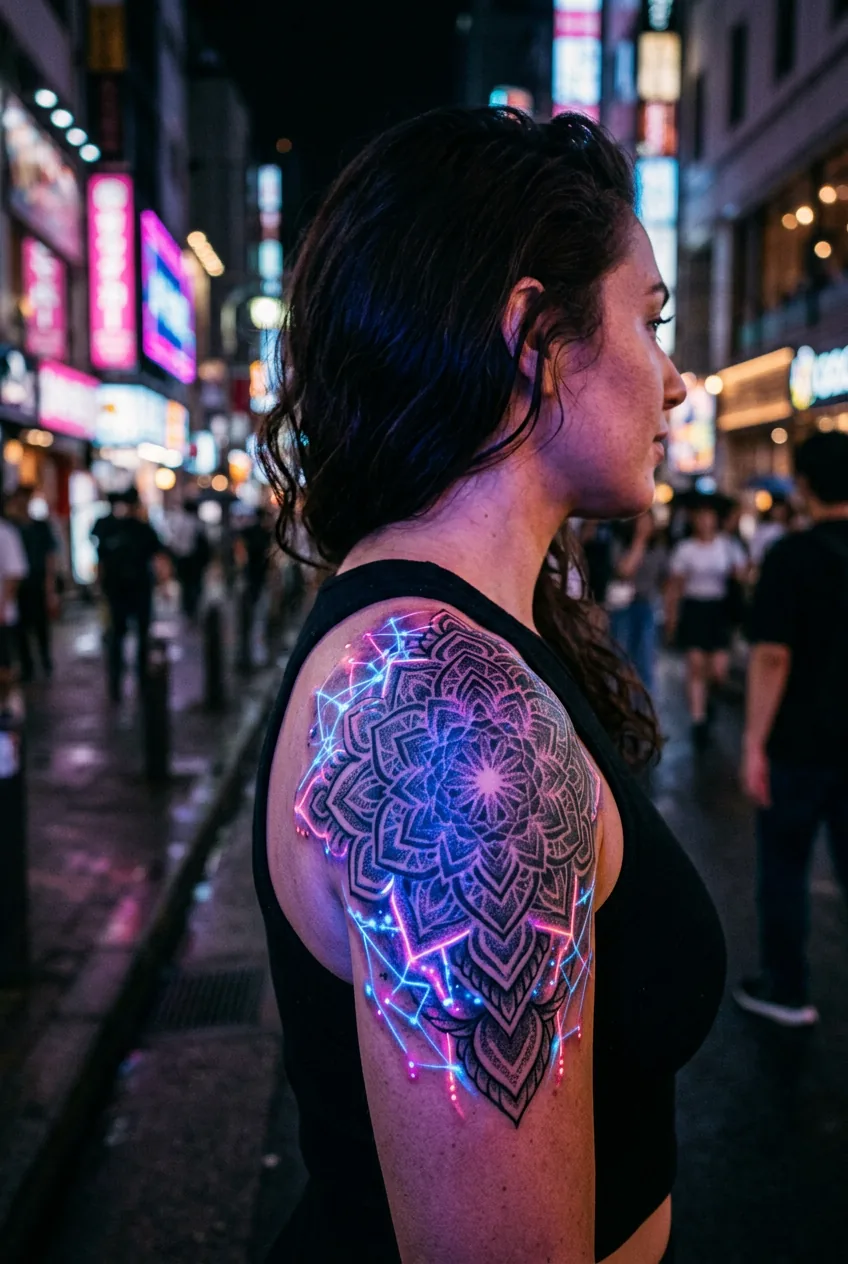
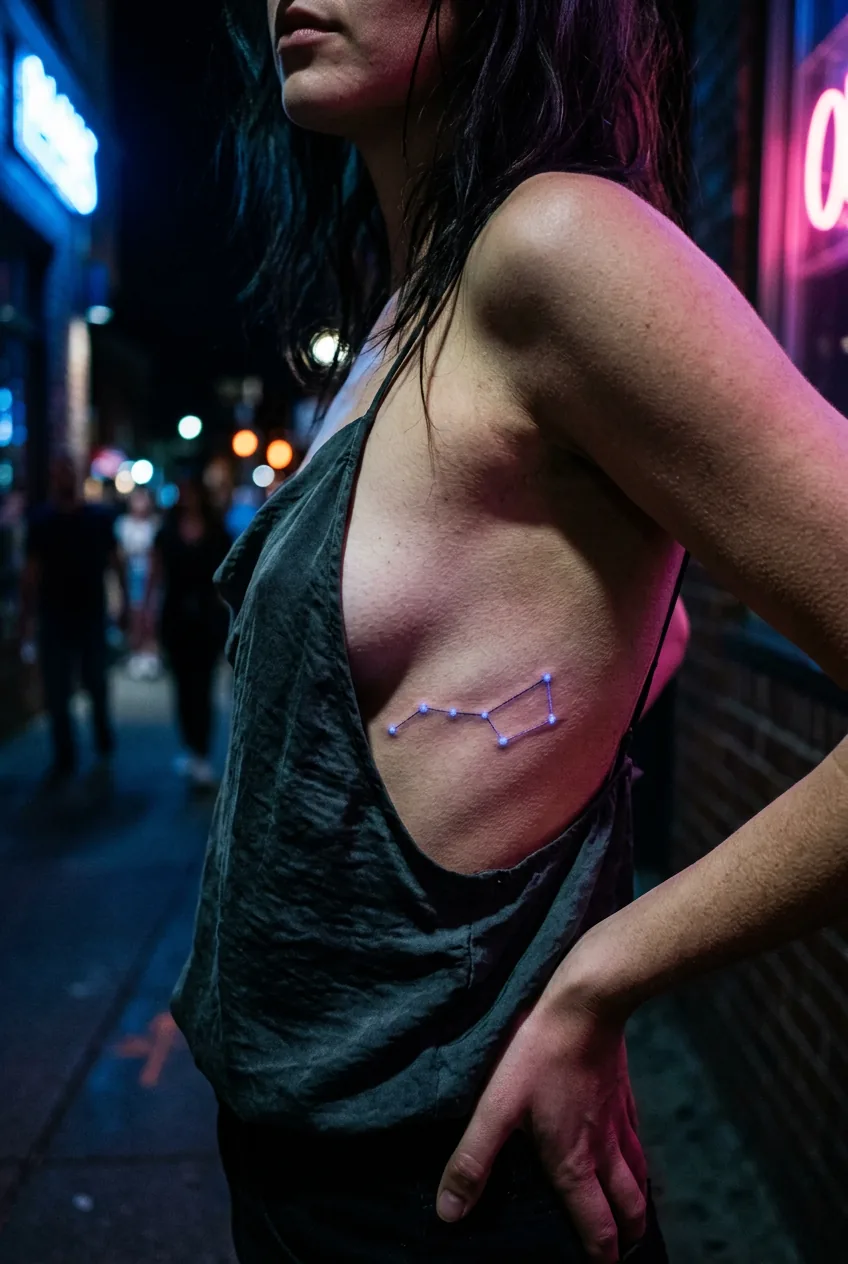
I also think the design possibilities are genuinely exciting in a way that conventional ink can’t replicate. Constellation maps that only appear at night. Geometric patterns that overlay visible work and shift the whole composition under blacklight. Floral outlines that bloom in neon. Artists who work with custom flash tattoos are increasingly incorporating UV elements into their original designs — treating the glow as a dimension of the artwork, not a gimmick on top of it. That’s a fundamentally different conversation than “party trick.”
Seeing UV Ink in Action Changed My Mind
What Blacklight Culture Gets Wrong About the Look
Myth: UV tattoos only work in club lighting and look garish everywhere else.
The association between UV tattoos and neon nightclubs has done the aesthetic a genuine disservice. Yes, UV ink was popularized in that context. Yes, early UV tattoo design leaned heavily into that energy — bright, maximalist, the kind of thing that reads well at 2am under a blacklight bar sign. But equating UV tattoos with that specific aesthetic in 2026 is like equating watercolor tattoos with festival culture because that’s where they first got mainstream traction.
The current direction is far more refined. UV ink as a subtle highlight in botanical fine-line work. Invisible UV text layered over a visible tattoo — like a hidden quote tattoo that only appears under certain light — which is honestly one of the most quietly romantic things I’ve seen done with the technique. Geometric UV accents in pieces that read as clean blackwork in daylight and gain an entirely different layer of complexity under UV light.
The garish look was a product of the design choices being made, not an inherent property of the ink. You can read up on UV-reactive ink color theory to understand how different UV pigments behave — because not all UV inks glow the same color or with the same intensity, and a skilled artist uses that variation deliberately. The palette has expanded well beyond glowing green on dark skin under a blacklight. We’re in a different era of UV tattoo design, and the aesthetics have grown up with it.
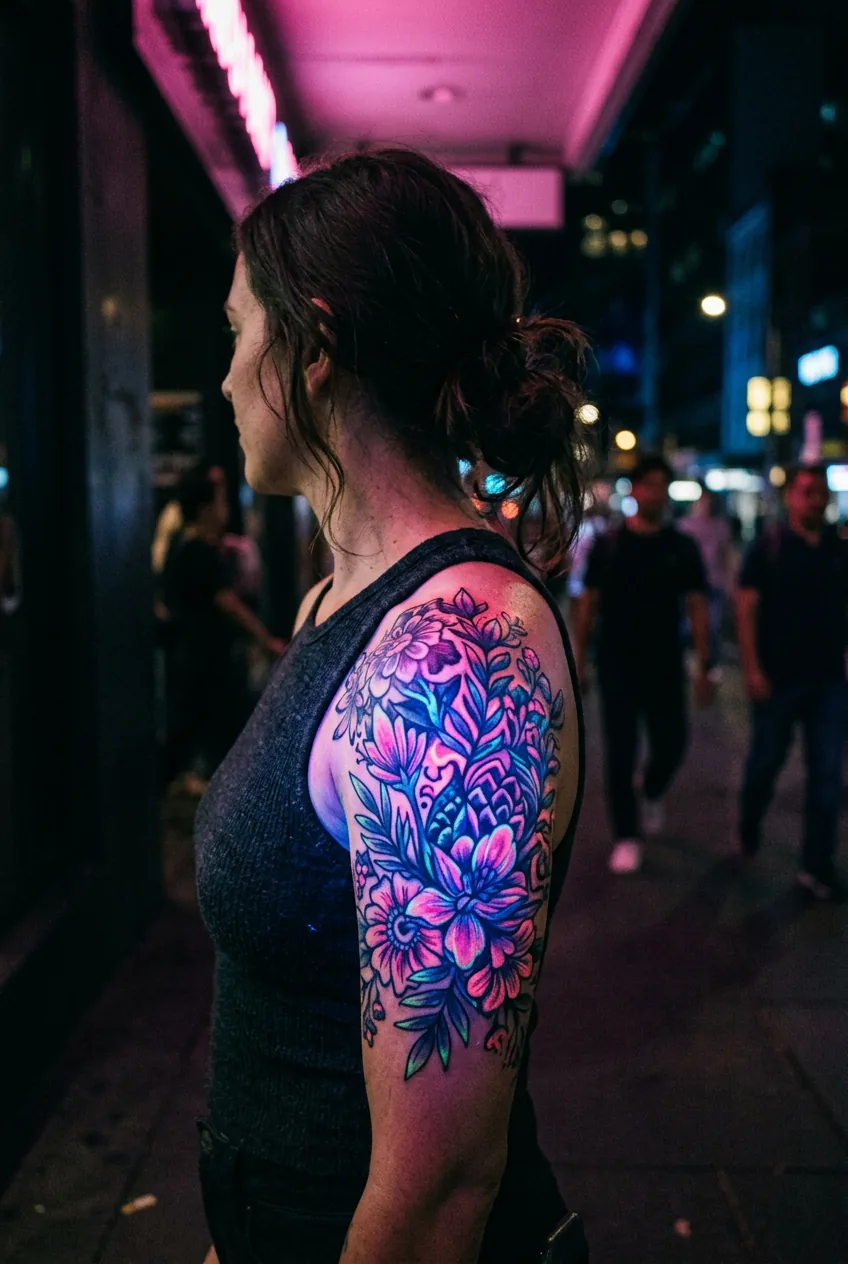
The honest version of this myth that deserves acknowledgment: UV tattoos do require intentional styling consideration in a way that standard ink doesn’t. If you get a large, bold UV piece and then find yourself under a blacklight at a work event, that’s a moment. But that’s a lifestyle consideration, not a design flaw — and frankly, most women who choose UV work have already thought it through far more carefully than the myth assumes.
Questions I Get About This
Are UV tattoos safe on all skin tones?
This is genuinely underreported. UV ink behaves very differently on darker skin tones — the glow effect can be less visible, and some UV pigments show through more clearly when layered over existing melanin. It’s not that UV tattoos don’t work on darker skin, it’s that the visual result varies significantly. The best approach is to find an artist who has documented experience with UV work across a range of skin tones, look at healed examples on skin similar to yours, and manage expectations accordingly rather than relying on photos taken exclusively on pale skin under ideal blacklight conditions.
How do I find an artist who actually specializes in UV tattoos?
Portfolio hunting is more important here than for almost any other tattoo style. You want to see healed UV work — not fresh photos taken immediately after the session. Ask explicitly for healed examples, ideally under both daylight and blacklight. Artists who genuinely specialize in UV will have these readily available and will understand why you’re asking. Anyone who shows you only fresh work and gets defensive about the question is worth being cautious about.
Can UV ink be added to an existing tattoo?
Yes, and this is actually one of the most interesting applications. UV ink can be layered over healed existing tattoos to add a glow dimension to work you already have. The key caveat is timing — the existing tattoo needs to be fully healed (typically at least three months old, ideally longer), and the UV layer needs to be placed carefully so it doesn’t interfere with the original linework or shading. It’s a technically demanding application, so this is genuinely one of those situations where artist experience makes a significant difference to the result.
Do UV tattoos require different aftercare?
The fundamentals are the same — keep it clean, moisturize, stay out of direct sun during healing, don’t pick. The one practical difference is sun protection long-term: UV-reactive pigments can degrade faster with significant sun exposure, so diligent SPF use over a UV tattoo matters more than it might for standard black ink. That’s less a special aftercare protocol and more just common sense applied with a bit more consistency.
The beliefs that have followed UV tattoos around for two decades were formed in a different era of the craft, with different inks, different regulation, and a much smaller body of long-term evidence. That context deserved caution. In 2026, carrying those same beliefs forward without updating them isn’t safety — it’s just inertia. Ask better questions, find artists who can actually answer them, and decide based on what’s true now rather than what was scary then.