





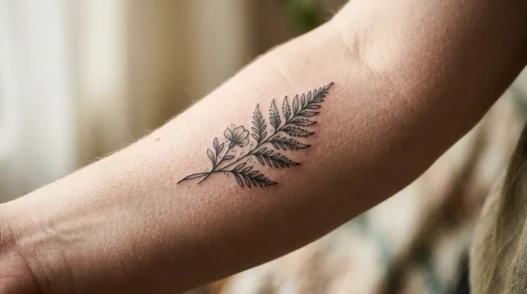
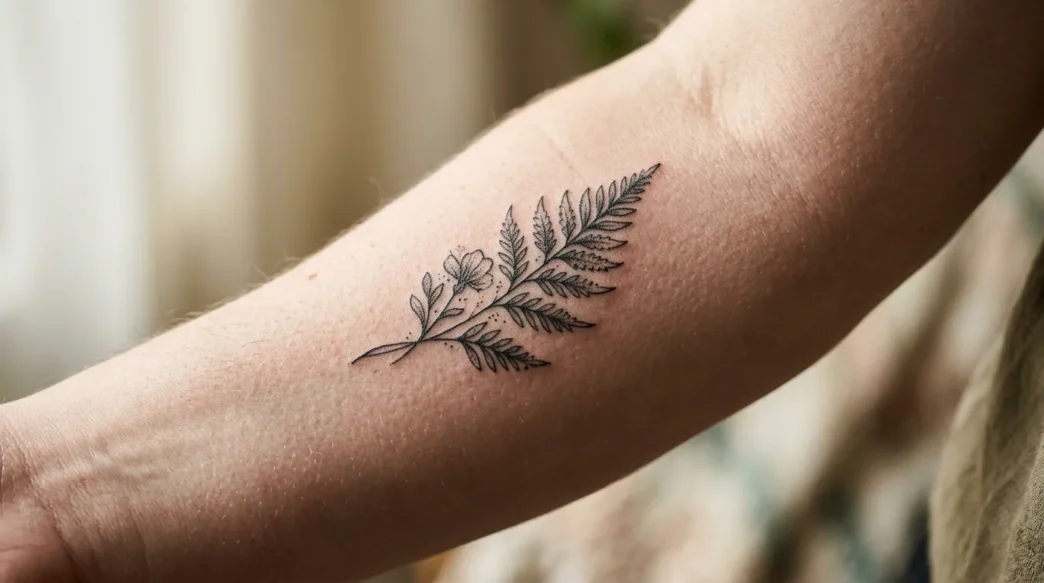
I’ve been thinking about small tattoos for a long time — not as a first step toward something bigger, but as the destination itself. There is something about a mark that fits inside a circle drawn with your thumb and index finger that feels more considered, not less. These aren’t practice runs. They’re decisions made with a quiet kind of certainty. I put together twelve that I genuinely love, each one chosen because the scale is part of the point.
Twelve Small Tattoos Worth Reading About
- No Bigger Than a Coin
- Tucked Where Only You’ll See It
- Smaller Than Your Thumbnail
- A Single Line, a Whole Meaning
- The One That Lives on Your Wrist Bone
- Hidden in the Curve of Your Ear
- Smaller Than a Postage Stamp, Heavier Than It Looks
- The One You Trace With Your Finger
- Barely There on Your Collarbone
- A Single Word, Written Once
- Tucked Along the Ribcage
- The One That Finishes the Story
1. No Bigger Than a Coin
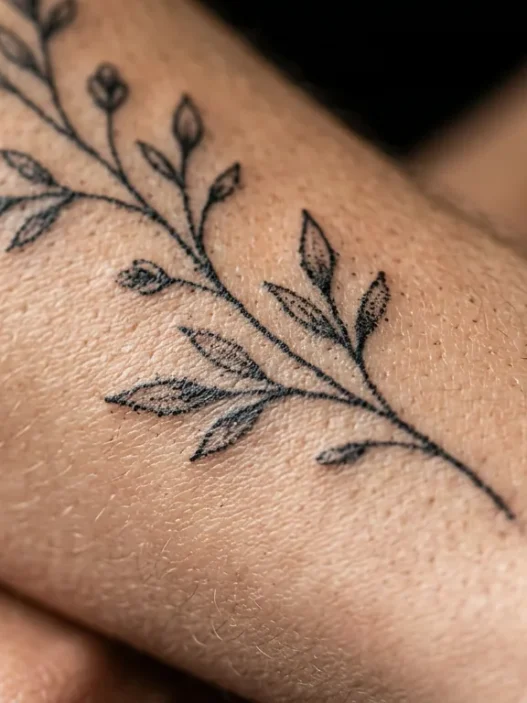
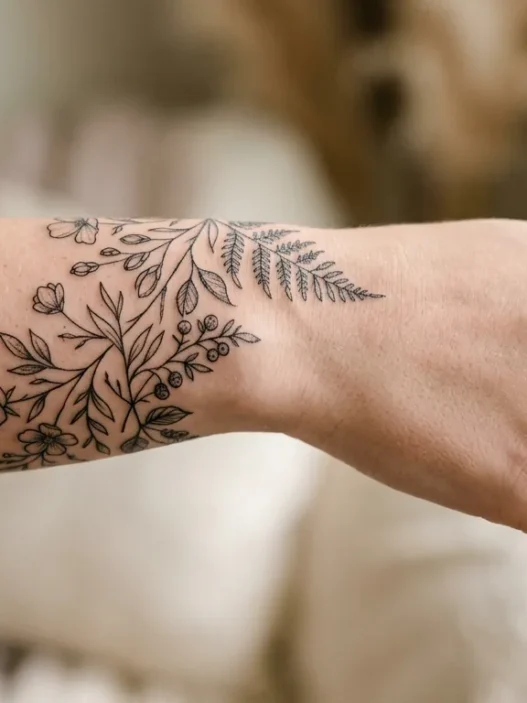
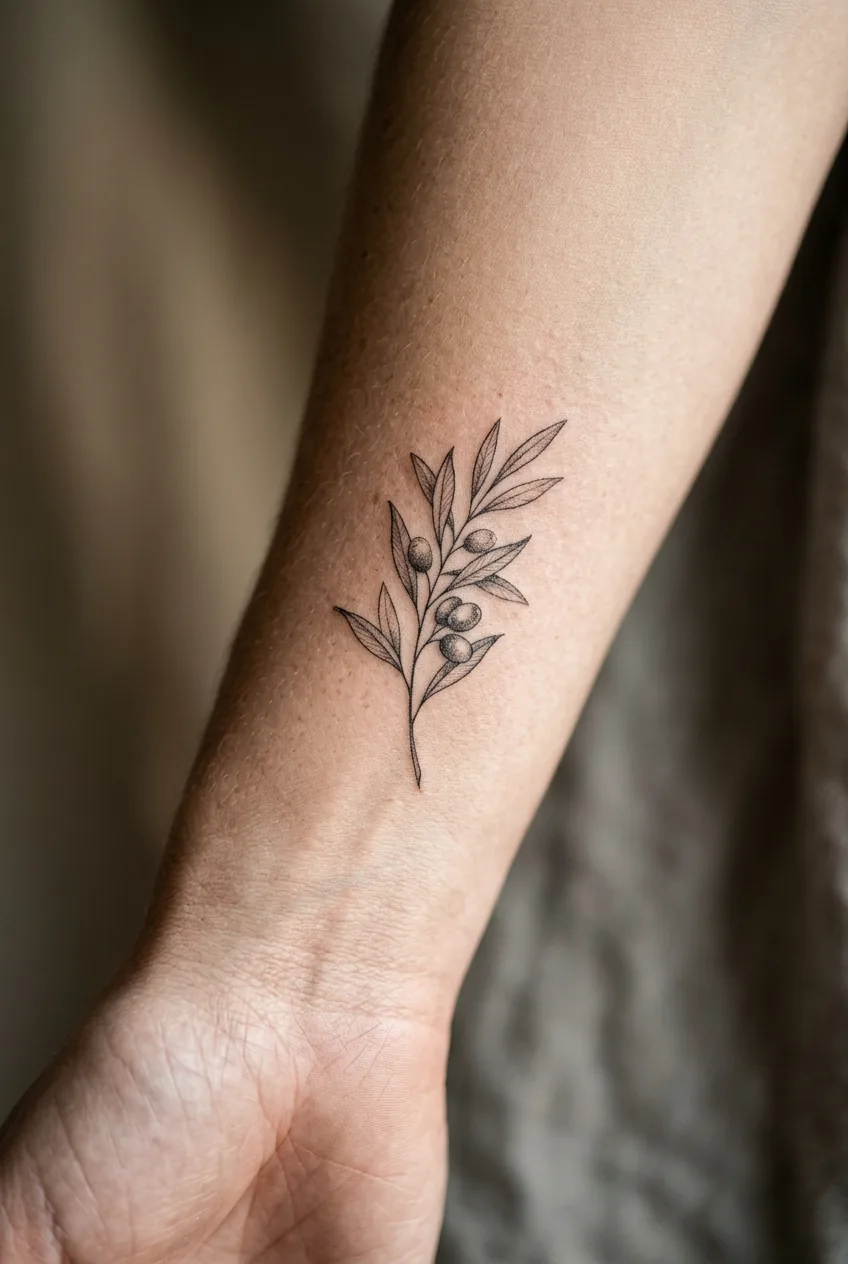
A small botanical sprig — think a single olive branch, a eucalyptus stem, two or three leaves curving off one line — fits inside a 50-cent piece and earns every millimeter. The scale is the message: restraint as intention. Placement that honors this size is the inner forearm, about three inches above the wrist, where the skin is relatively flat and the design reads cleanly without competing with anything. Fine-line work at this scale is exquisite right now. And I’ll be honest with you about aging: these delicate lines will soften over years. The gaps between leaves fill in slightly; the line loses its razor edge. That’s not failure — it’s just the nature of minimalist tattoos at this scale. What you’re left with is something that feels worn in, like a favorite piece of jewelry that’s lost its sharp polish. Still beautiful. Just different.
2. Tucked Where Only You’ll See It
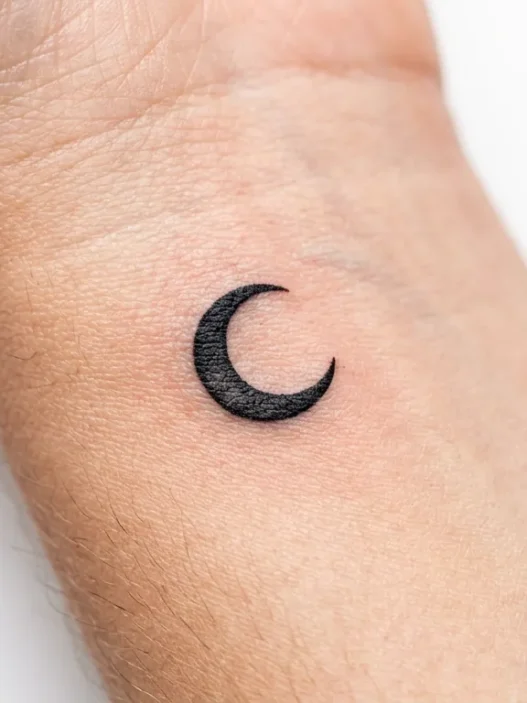
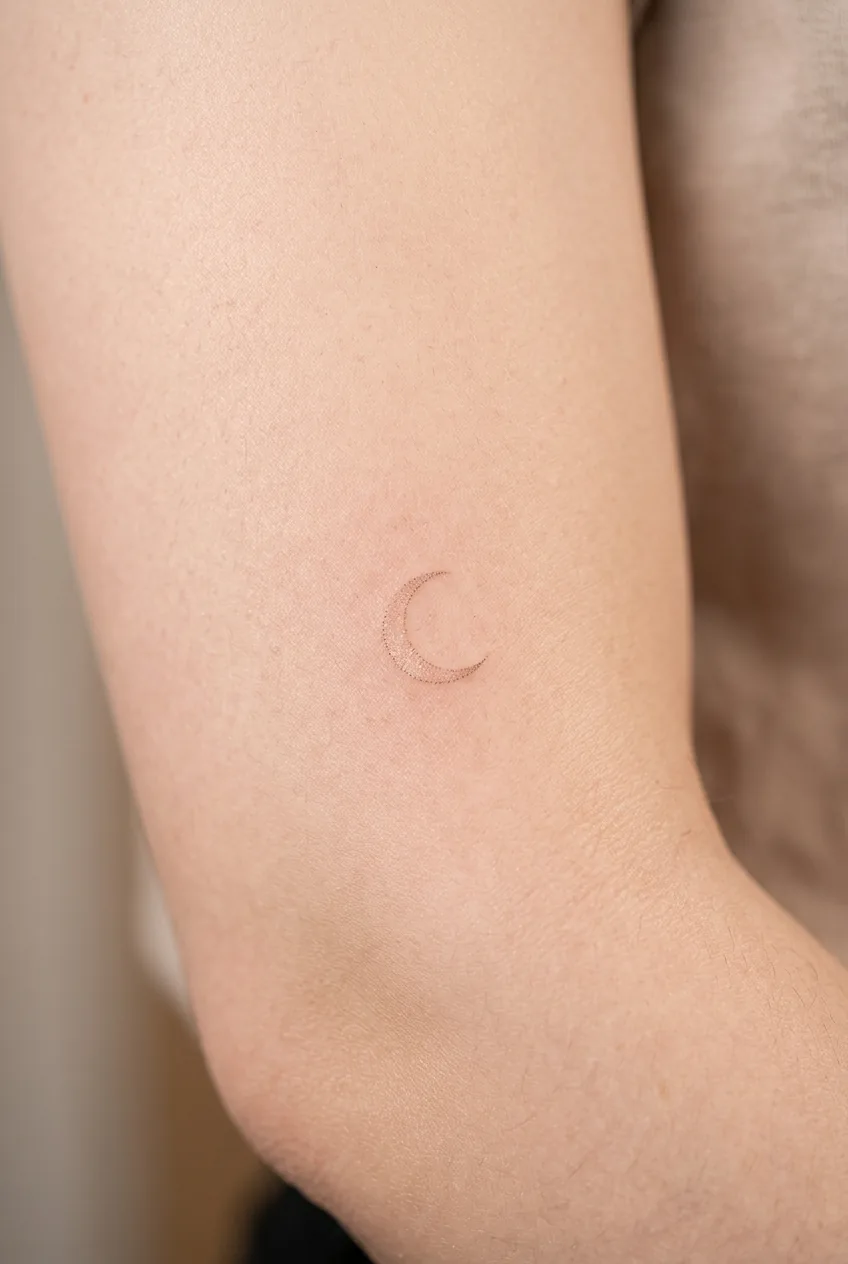
The inside of the upper arm. The soft skin just below the armpit. The underside of the wrist where you press your pulse. These are the places you put something that isn’t for anyone else. A crescent moon — not the trendy thick version, but a whisper-thin crescent, maybe an inch tall — works beautifully here. It’s a mark you’ll catch when you stretch, when you change, when you’re alone. The intimacy of that placement is the whole reason to choose it. Nobody needs to see it. It’s yours.
If you’re exploring ideas in this territory, my roundup of tiny small tattoo ideas with big impact goes deep on exactly these kinds of choices.
3. Smaller Than Your Thumbnail
Hold up your thumbnail. That’s the canvas. A single small bee, a tiny moth, a minimalist butterfly rendered in four or five clean strokes — these fit within that boundary and carry an entire atmosphere with them. The trick is finding an artist who understands negative space at this scale. Too many lines and it becomes a dark smudge within five years. The best artists working in micro tattoos know to leave breathing room. Less ink, more air. The design survives better, and it looks intentional from day one.
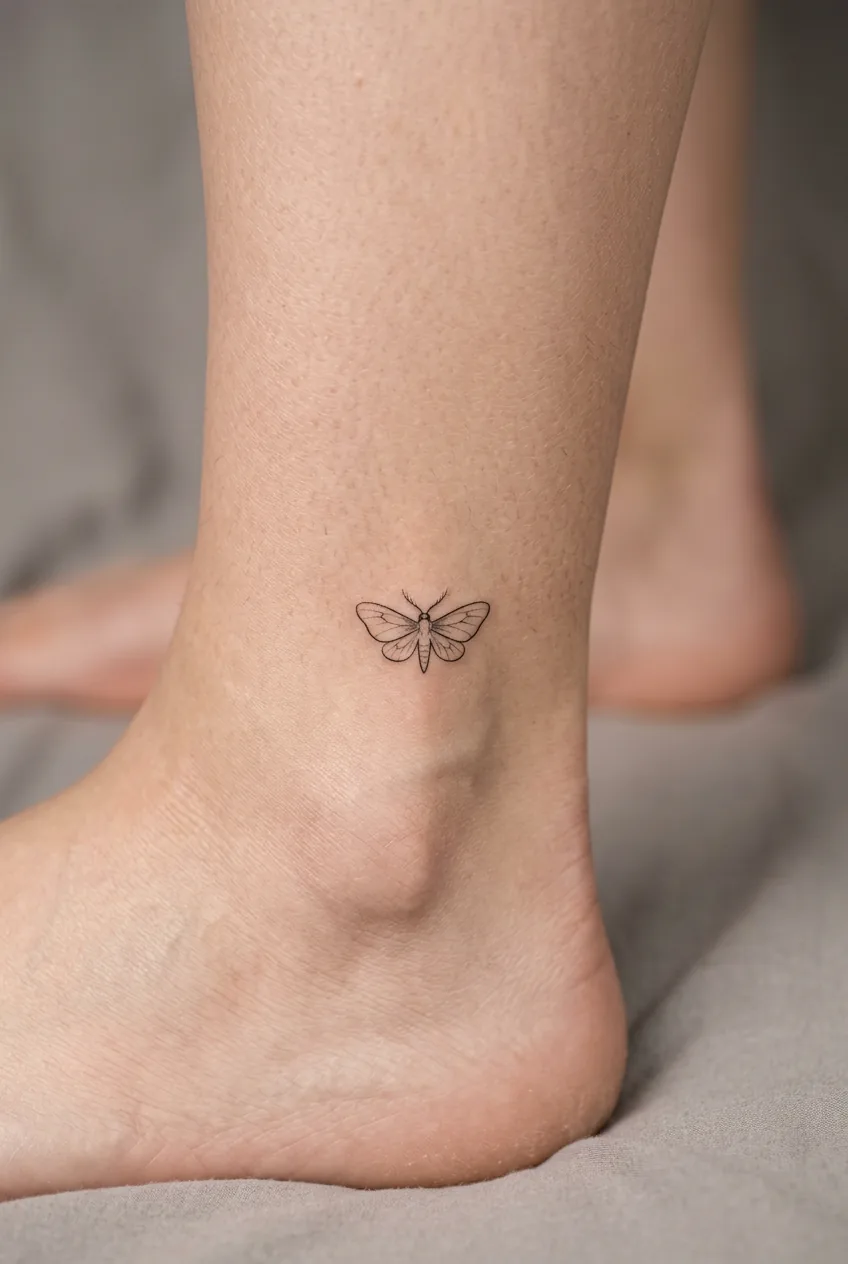
Behind the ankle is a placement I keep coming back to for something this small. It’s protected from sun, which slows fading significantly. And there’s something lovely about a tiny thing that peeks out when you wear sandals — seen by accident, never announced.
4. A Single Line, a Whole Meaning
This one stops me every time. A single continuous line — maybe it traces a mountain range, maybe it forms a face in profile, maybe it’s simply a horizon — drawn without lifting the needle. The whole tattoo might be two inches wide and a quarter inch tall. It fits on the inside of a finger, along the collarbone, or across the back of the wrist.
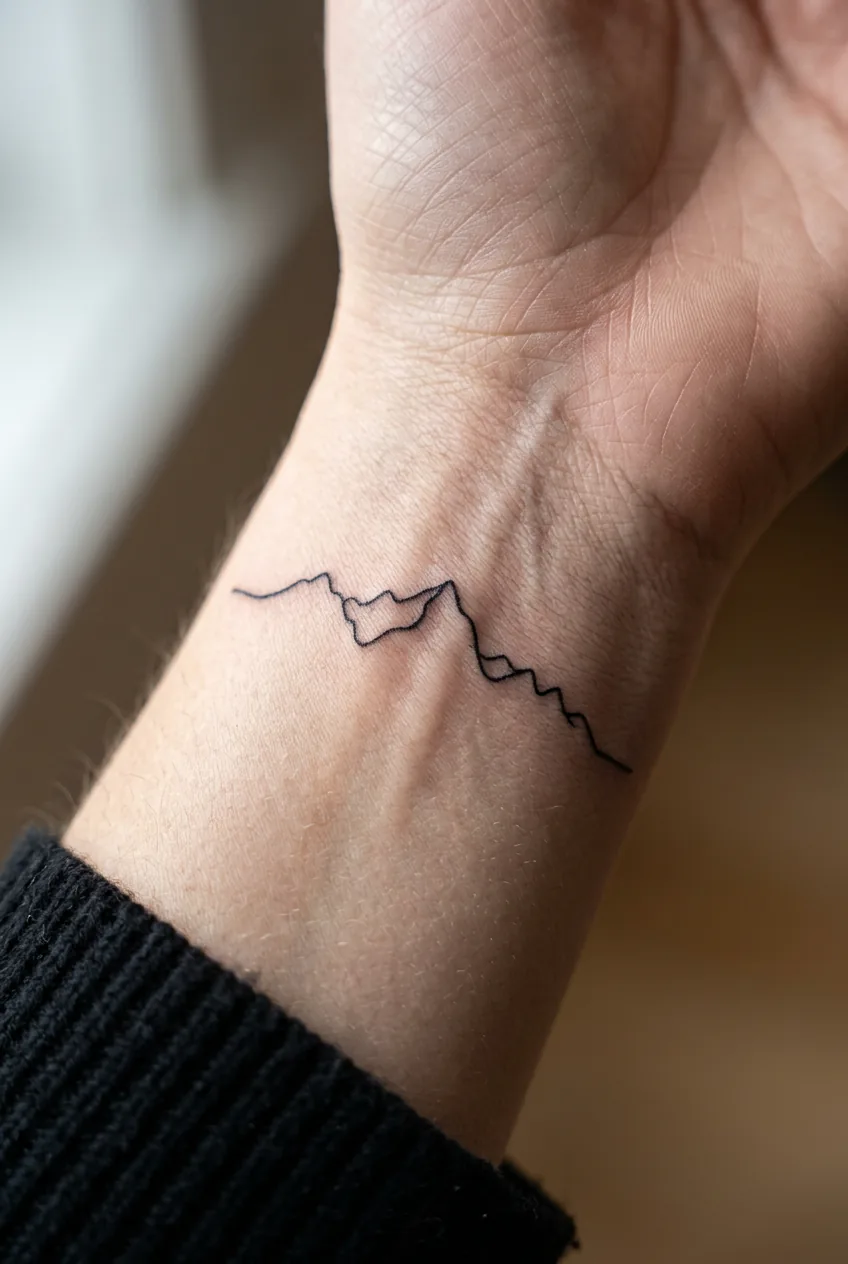
What I love about single-line work is how much it trusts the viewer. There’s no shading to fill gaps, no thick outline to anchor it. It’s just the line and whatever meaning you’ve poured into it. The aging reality here is the most honest I can be: single lines blur. That crisp edge becomes a slightly softer edge. On pale skin it remains legible for a long time; on darker skin tones the contrast matters more and a slightly bolder line weight pays off over the years. Talk to your artist about this. A good one will adapt the design before you ever sit in the chair. how fine lines age
See Single-Line Tattoos Being Made
5. The One That Lives on Your Wrist Bone
The small raised knob of the wrist — the styloid process, if you want the anatomy — is one of my favorite placements for a small tattoo. It’s oddly three-dimensional. A design placed right on that little prominence moves with the hand, catches light differently depending on angle, and has a kind of natural framing that flat skin doesn’t offer. A small star cluster here. A single geometric shape. A tiny floral. The wrist bone is a pedestal.
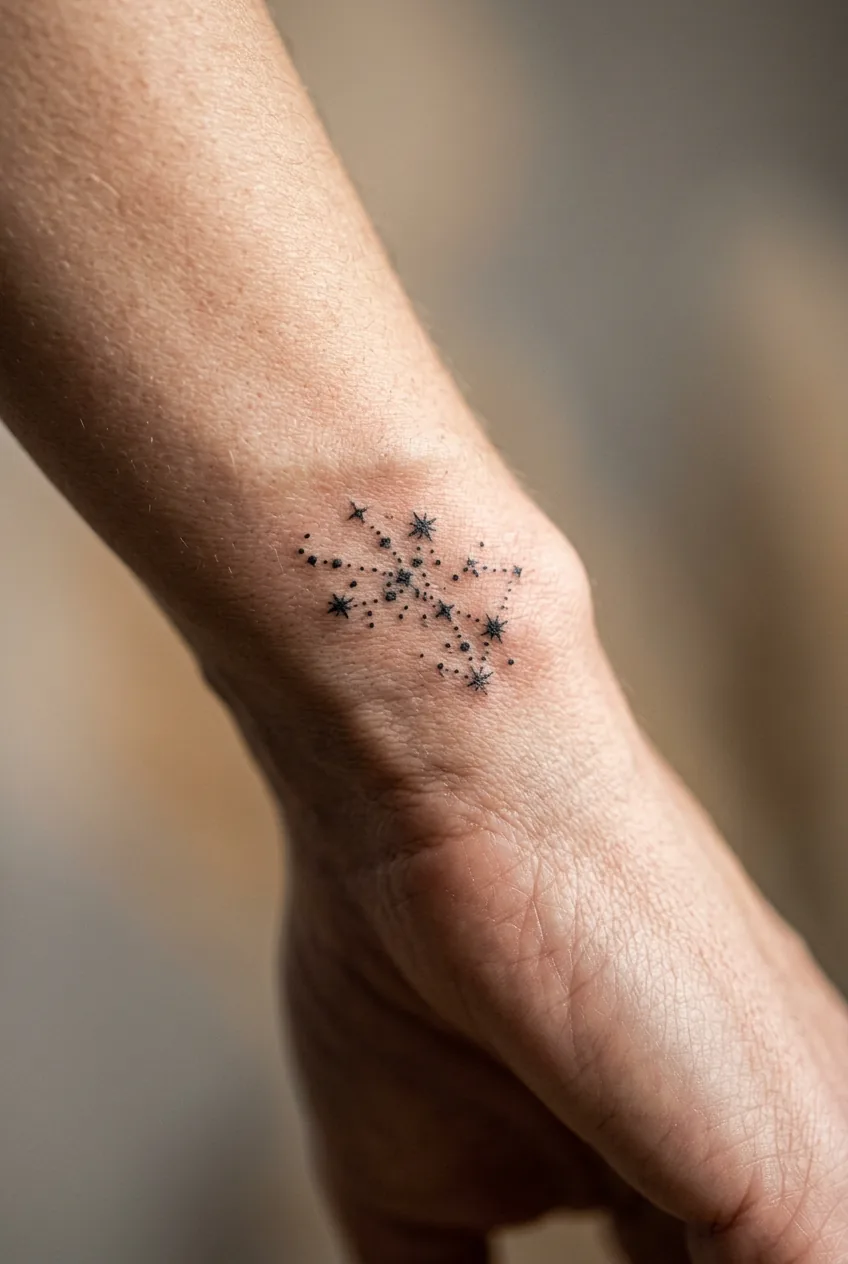
Pain-wise: this spot has a reputation. The skin is thin and the bone is close. But at this scale, you’re looking at fifteen to thirty minutes in the chair. Totally manageable.
This is my personal pick of the twelve. Something about a tiny tattoo right on the wrist bone — the way it moves, the way it catches the light when you turn your hand — feels more alive than a tattoo on flat skin. If I were getting one tomorrow, it would live here. A single small arrow, maybe. Or a crescent. I’d spend a week deciding and then know immediately the moment I sat down.
6. Hidden in the Curve of Your Ear
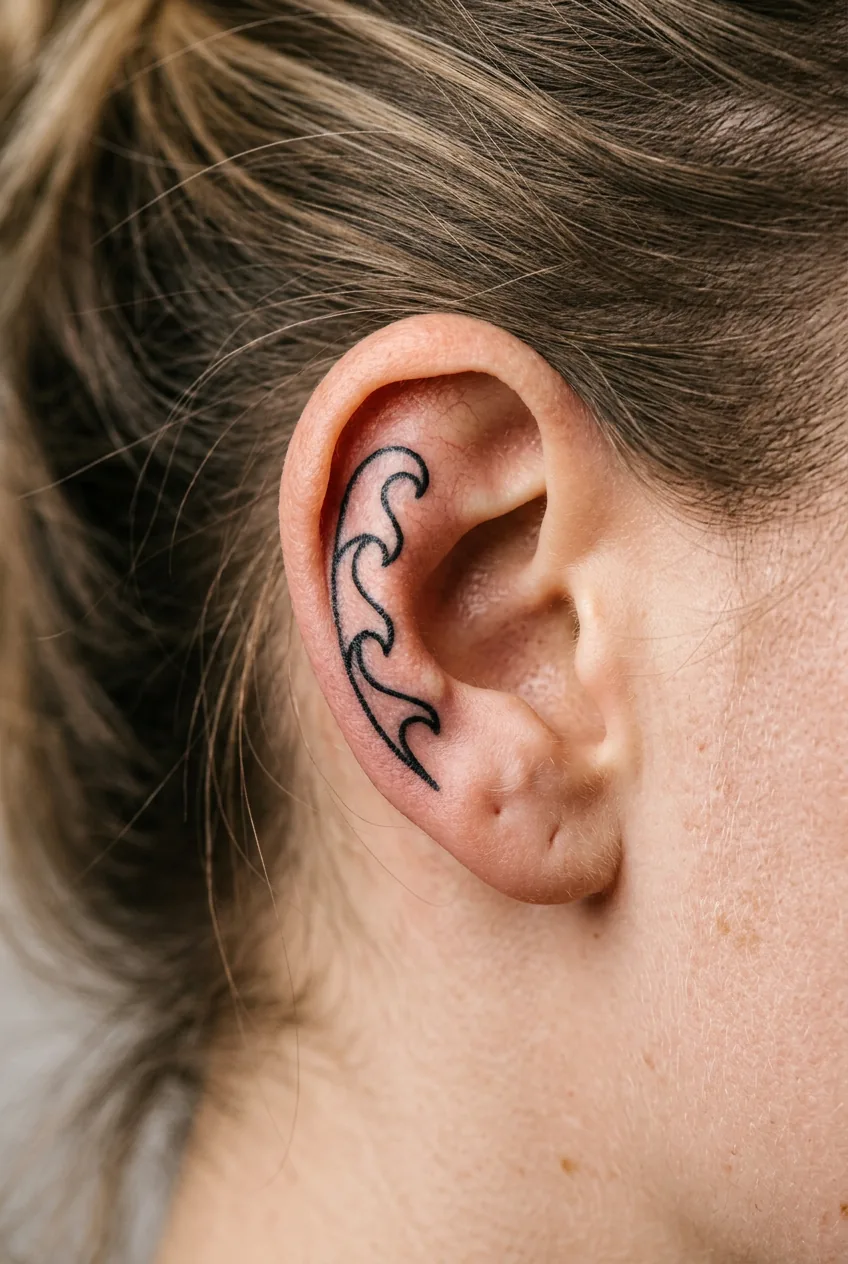
Behind the ear or along the inner helix of the cartilage — this placement has been around for a while, and I think it earns its staying power. Not because it’s trendy, but because it’s genuinely private. You need to move someone’s hair to see it. Or they catch a glimpse when you’re walking ahead of them. A small wave, a tiny lightning bolt, a single dot cluster. The design needs to be simple because the surface is uneven and small. Anything with detail will lose it within a few years in this area — sun exposure (yes, even there) and the movement of the skin around the ear conspire against fine details. Think bold-for-its-size. A shape rather than an illustration.
7. Smaller Than a Postage Stamp, Heavier Than It Looks
A small hourglass. A tiny anatomical heart. A compass rose reduced to its essential four points. These are designs that carry symbolic weight entirely disproportionate to their size. The postage stamp is the reference I always use — roughly an inch by an inch, or slightly less. That’s enough room for something with real structure, as long as the artist knows how to simplify without losing meaning.
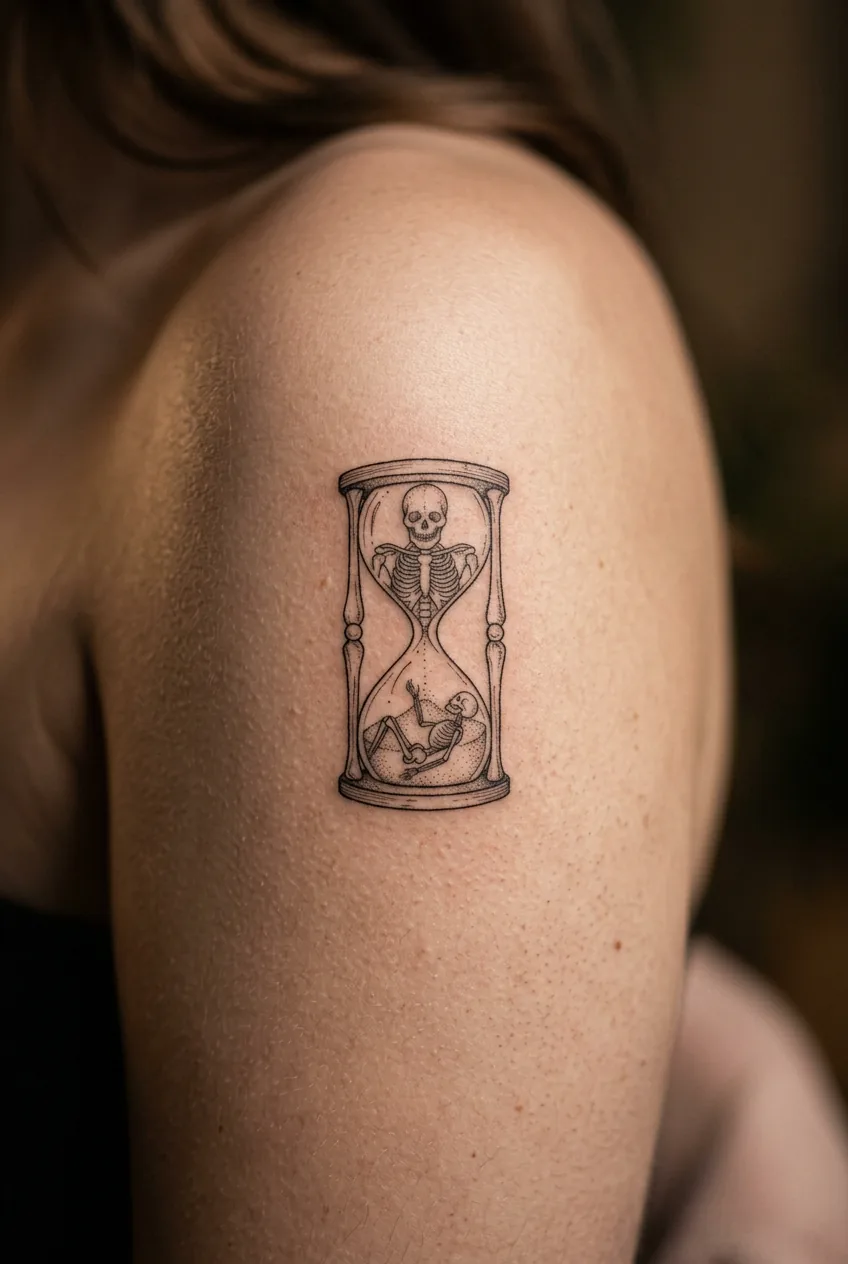
The upper arm — just below the shoulder cap — is perfect for something this size. It’s a spot that shows in a tank top and disappears under a sleeve. That flexibility is worth something. And the skin there ages well for ink; it doesn’t stretch dramatically over time the way the lower abdomen or inner arm might.
For more ideas at this scale, I put together a list of tiny minimalist tattoo ideas with big impact that covers a lot of this symbolic territory.
8. The One You Trace With Your Finger
Some tattoos you look at. Some you touch. A small wave form — the kind that’s really just a few undulating lines stacked, maybe an inch and a half wide — has a texture to it when it’s fresh, and even after healing there’s something about knowing its shape that makes you want to find it with your fingertip. Inner wrist. Inner forearm. These are the spots that invite that kind of quiet contact.
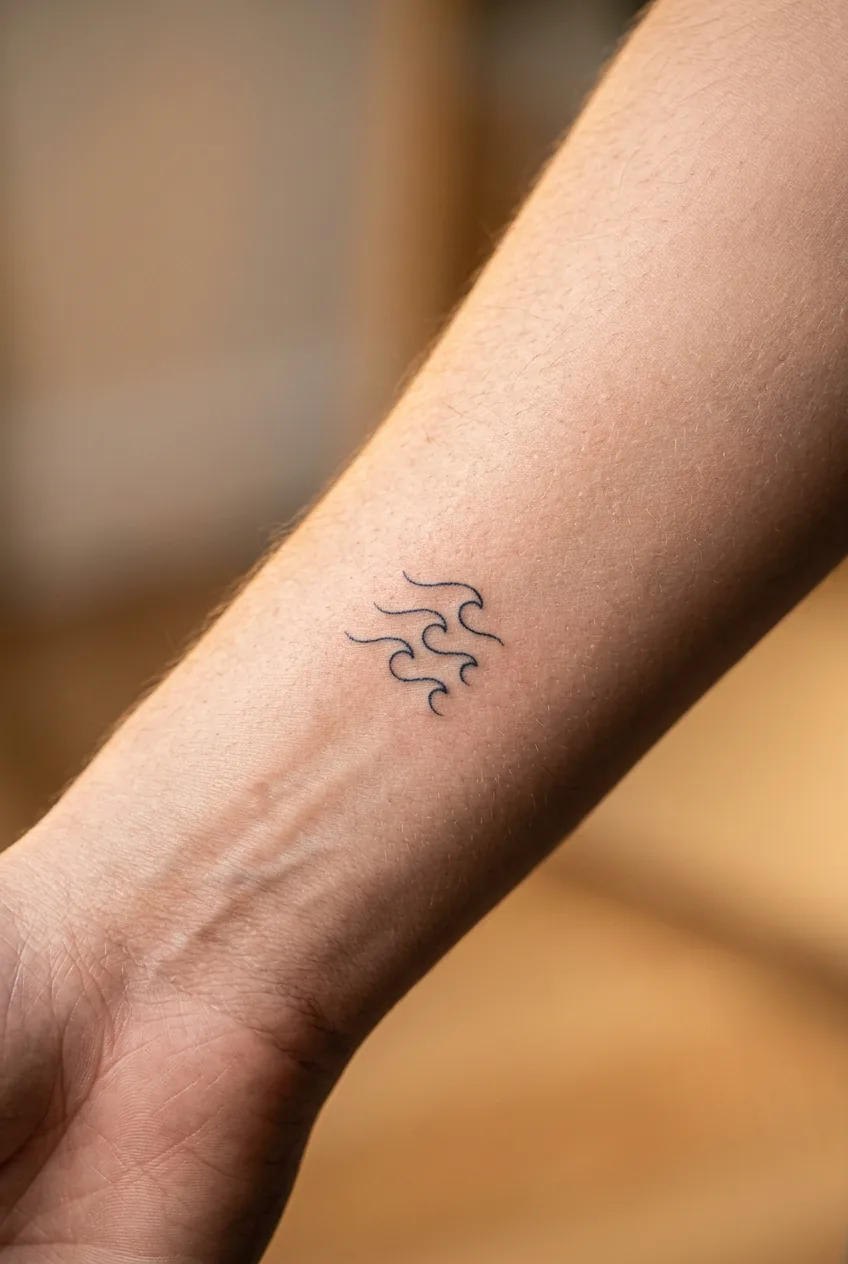
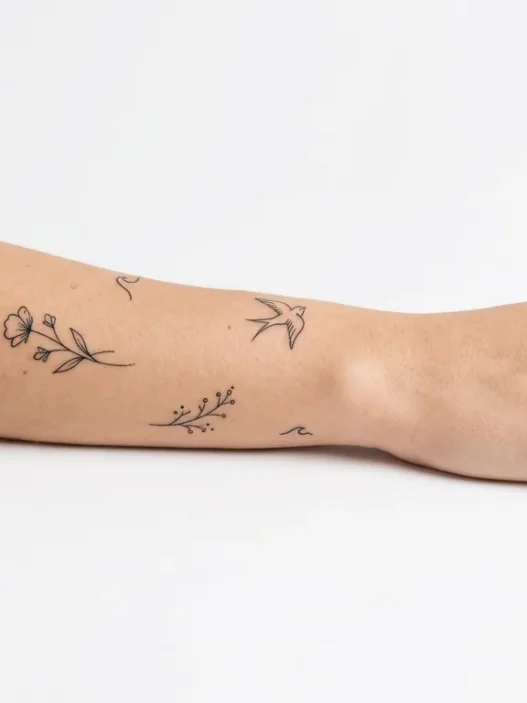
I saw a photograph of a woman with exactly this on her inner forearm — you can see how the ink settles into the texture of the skin in that image, each line distinct but soft at the edge. That’s healed fine-line work done right. Proper healing aftercare
9. Barely There on Your Collarbone
The collarbone is a runway. A small tattoo placed just below it — or right along the bone itself — has the benefit of that natural horizontal line doing half the compositional work. A single word. A tiny bird in flight (I mean tiny: think the size of a grain of rice drawn with two curved strokes). A small star. The collarbone placement reads immediately in a low neckline and disappears completely under a crewneck. It’s one of the most versatile spots on the body for something this scale.
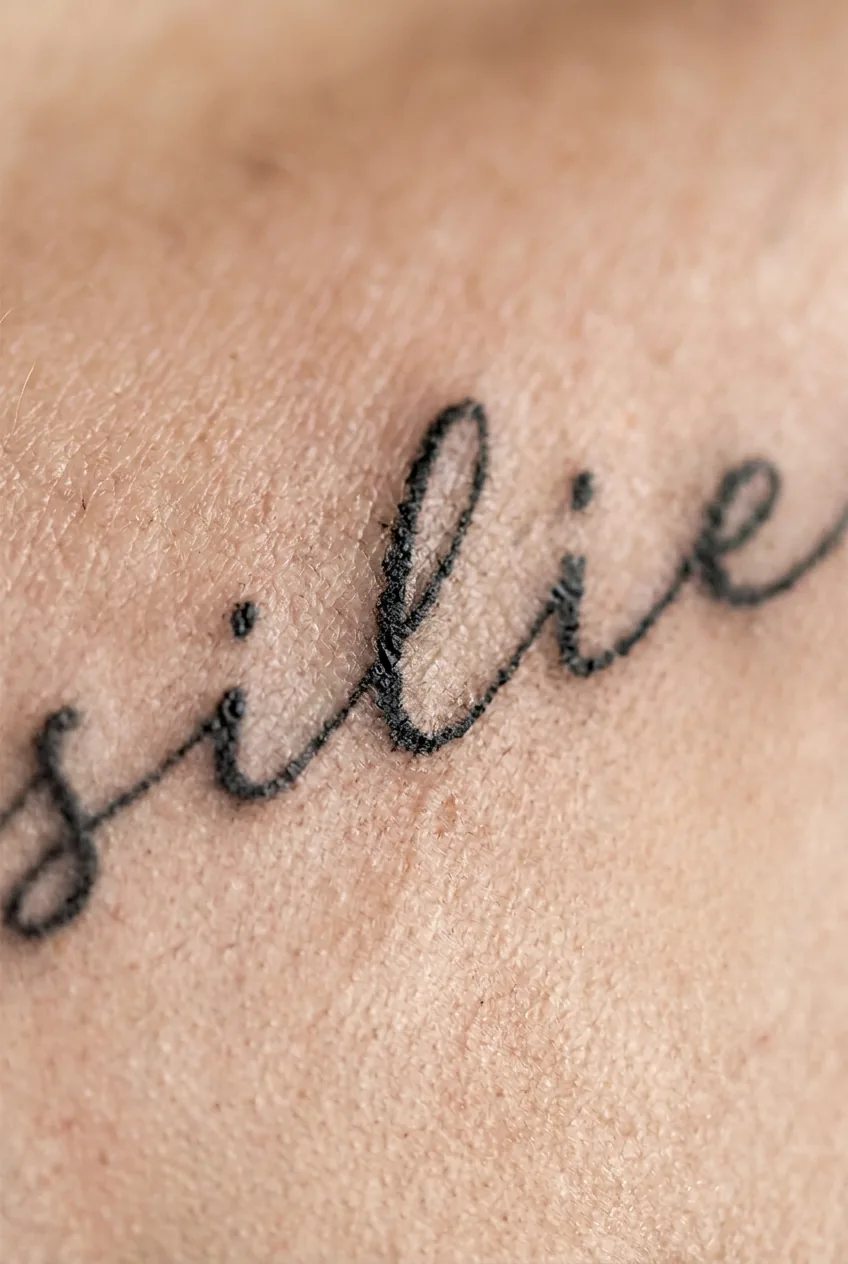
Fair warning: the collarbone hurts more than people expect. The skin is thin, the bone vibrates. But again — small tattoo, short session. You’ll be fine. I promise the result is worth the twenty minutes of discomfort.
10. A Single Word, Written Once
Not a quote. Not a phrase. One word. In a handwriting style that means something — maybe your own handwriting, maybe a font that feels like the version of yourself you’re trying to hold onto. “Enough.” “Still.” “Wild.” The word doesn’t need to be explained to anyone. It’s the word you say to yourself.
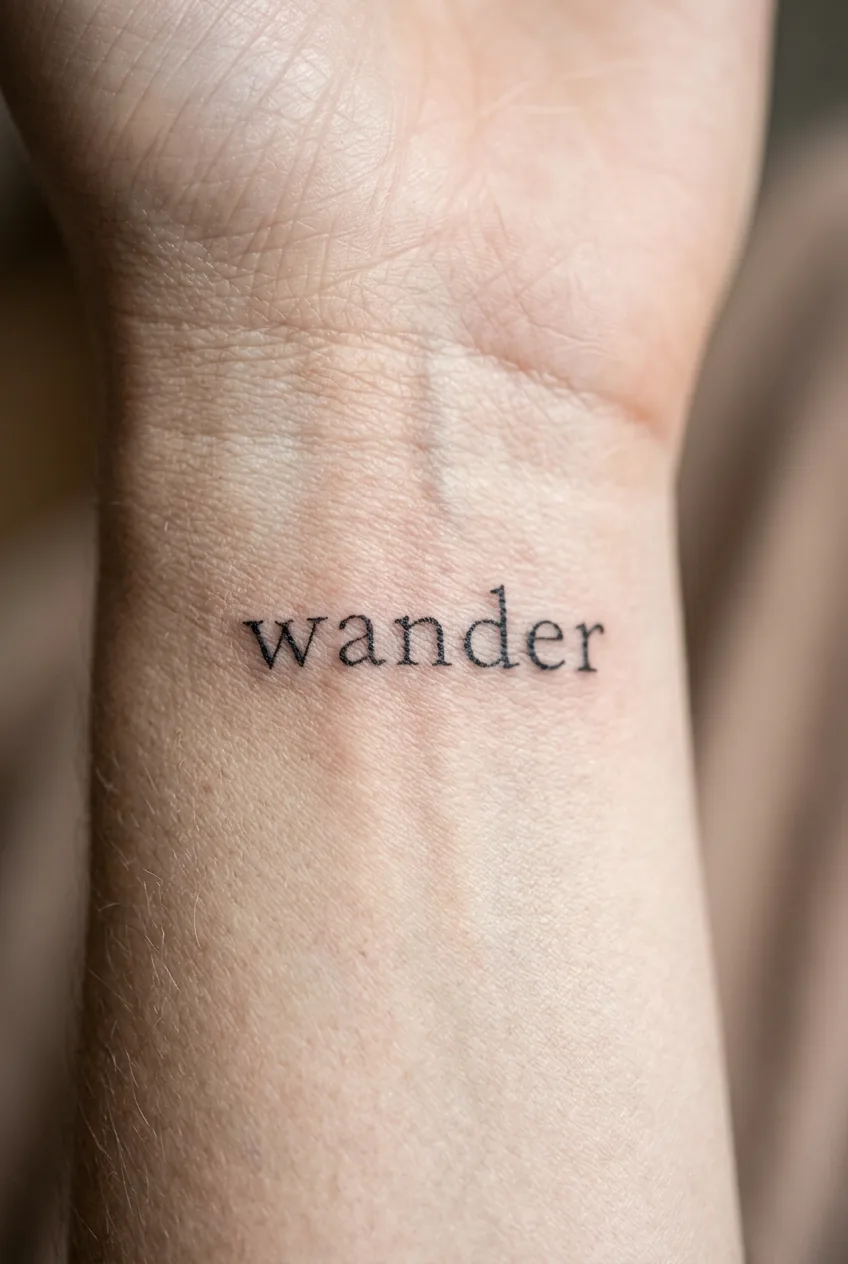
Script tattoos age faster than any other style, and single-word scripts are no exception. The ink spreads microscopically over years, and letters that start as distinct strokes can merge at the base. The solution: give the letters room to breathe. Wider spacing than you think looks right. A slightly heavier line weight than the most delicate option. Your artist will know. And check out these tiny simple tattoo ideas for women for more script inspiration done simply and well.
11. Tucked Along the Ribcage
Everyone warns you about ribcage tattoos and the pain, and they’re not wrong. But a small tattoo on the ribcage — something the size of a matchbook, tucked just under the bra line — is a completely different experience than a full side piece. We’re talking maybe twenty-five minutes. And the placement is extraordinary. It moves when you breathe. It’s visible only when you choose to show it. It feels like a secret that belongs to your body specifically.
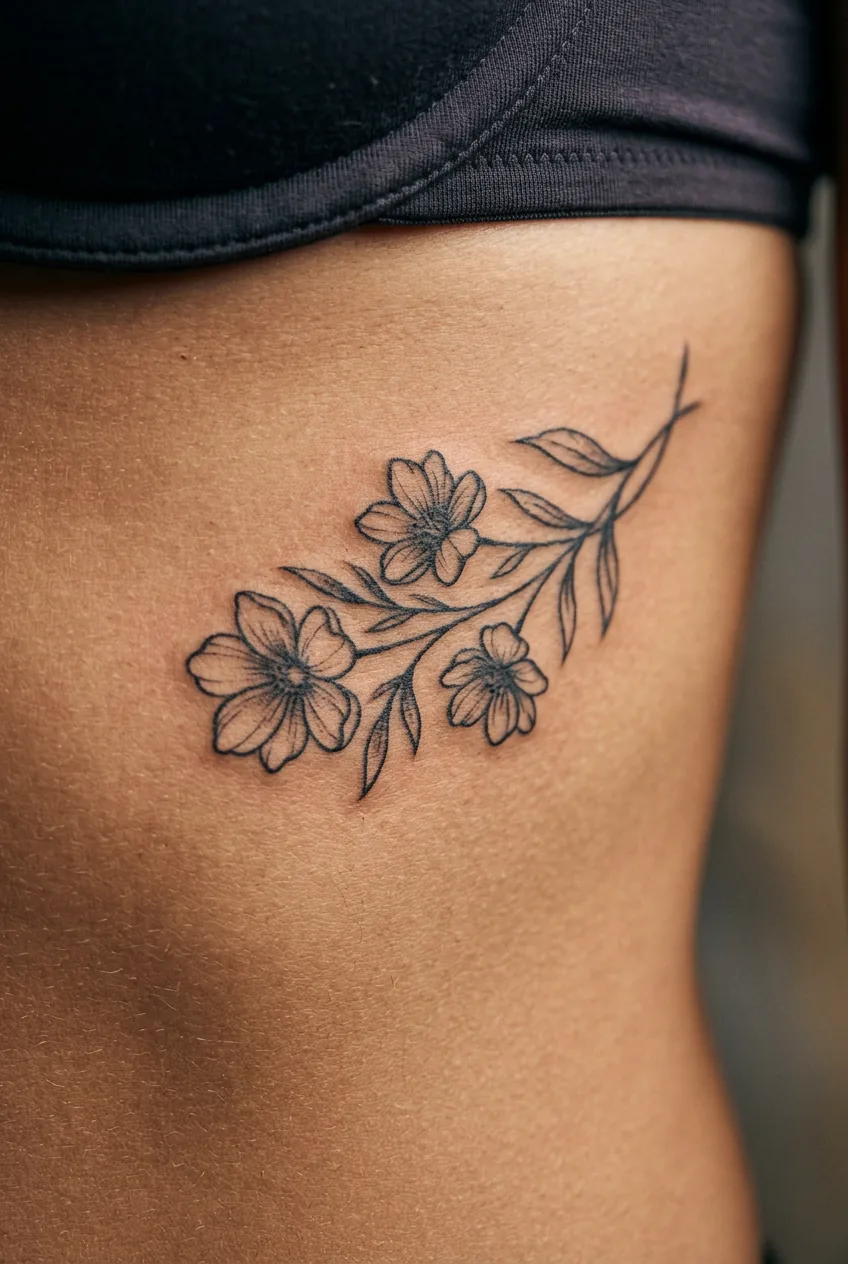
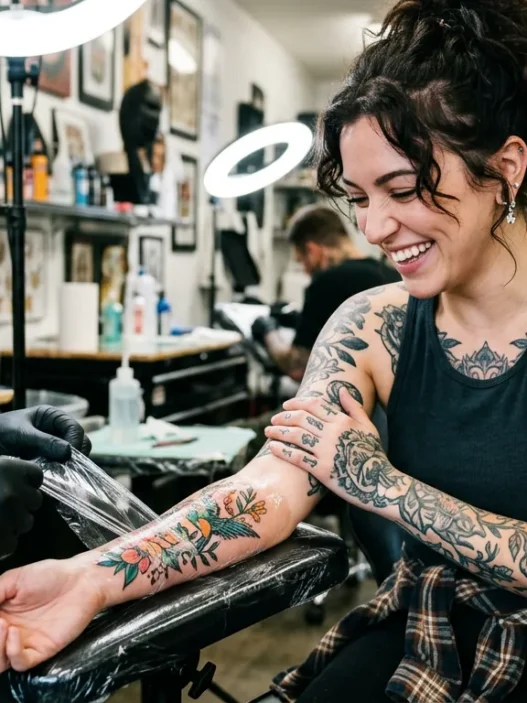
A small floral — three or four simple blooms connected by a thin stem — works beautifully here because the natural curve of the ribcage gives it dimension. She’s wearing one in the photo above, and look at how the design follows the line of her body. That’s not accidental. A good artist places it with the anatomy, not just on top of it.
12. The One That Finishes the Story
Sometimes a small tattoo isn’t the beginning of something. It’s the period at the end of a sentence you’ve been writing for years. A small semicolon if you know what that means and it belongs to you. A tiny date rendered in Roman numerals. A symbol from a language you grew up speaking. The coordinate of a place that changed everything.
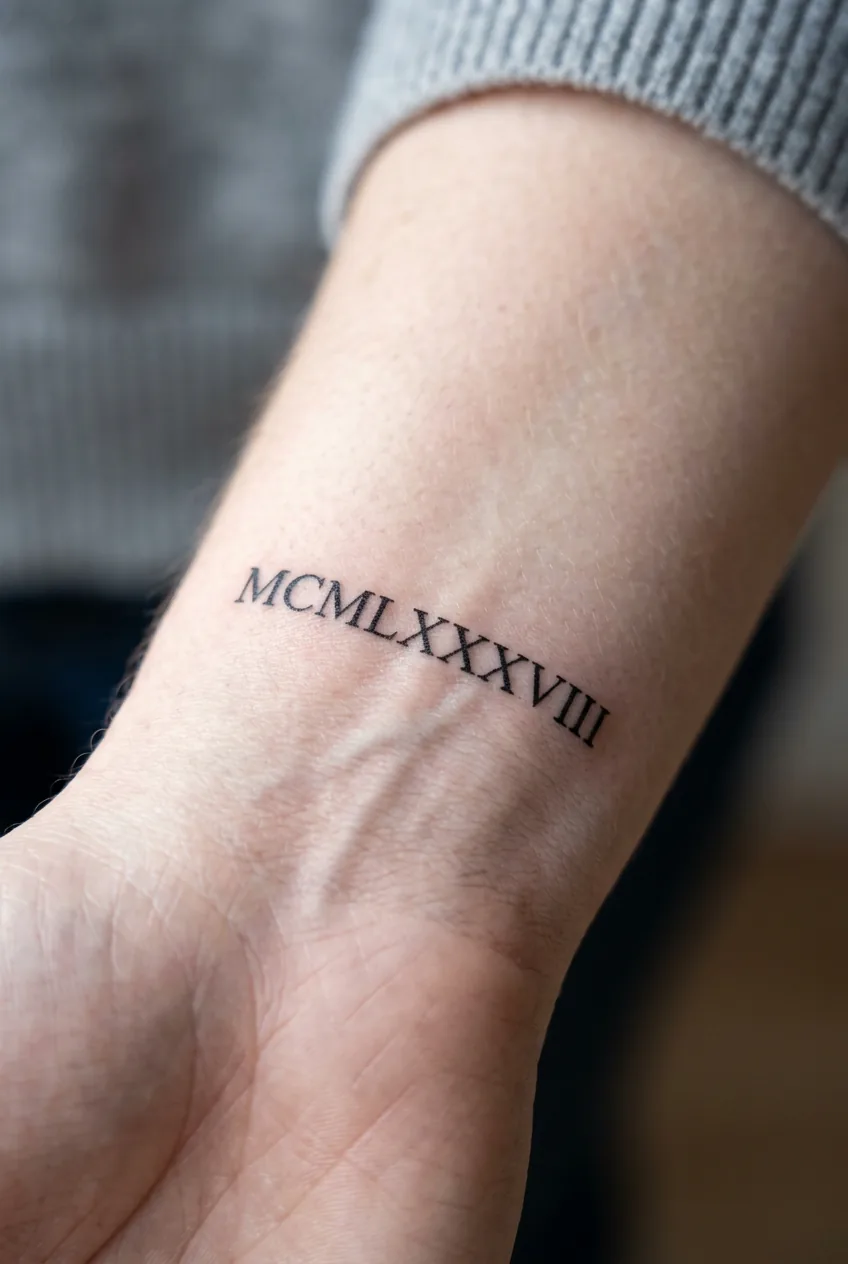
These designs work because they don’t need to be explained. They’re complete. The inner wrist, the back of the neck, the ankle — all good placements for something this final-feeling. And at this scale, even the most emotionally heavy symbol becomes quiet. Understated. Which is sometimes exactly right.
Questions I Get About Small Tattoos
Will a small fine-line tattoo still look good in ten years?
Honestly, it depends on placement, sun exposure, and how the design was drawn. Fine lines do blur over time — that’s just physics. Areas protected from sun (inner arm, ribcage, behind the ear) hold up better. A slightly heavier line weight than you think you want at the time gives the design more longevity. It won’t look identical to day one, but it can absolutely still look beautiful.
How do I find an artist who’s actually good at this scale?
Look at healed work specifically — not fresh photos. Any tattoo looks crisp the day it’s done. Ask the artist if they have photos of the same design six months to a year later. Artists who specialize in fine-line and micro work will often have these readily available because they’re proud of how their work ages. That’s the signal you want.
Is there a minimum size a tattoo has to be to hold up?
There’s no universal rule, but most experienced artists won’t go smaller than about 5–6mm for anything with interior detail. At that size, filled areas and fine lines start merging within a few years. Simple outlines and single-line designs can go slightly smaller. When in doubt, trust your artist if they suggest scaling up — they’re protecting the longevity of the work.
Do small tattoos cost less than large ones?
Usually, yes — but not always proportionally. Most artists have a shop minimum (often $80–$150 depending on the studio) that applies regardless of size. A very tiny design might hit that minimum and not go much above it. A more complex small design can still take an hour or more and cost accordingly. It’s always worth asking for a quote before you book.
If any of these twelve made you pause — made you hold your wrist or touch your collarbone and think “there” — that instinct is worth following. Small tattoos aren’t lesser. They’re just precise. And precision, in this case, is its own kind of courage.