




I walked into my first spine tattoo appointment thinking I was ready for anything. After all, I’d survived ribcage work and a full shoulder piece. But nothing — and I mean nothing — prepared me for the reality of having someone work directly on my vertebrae for four hours straight. The Instagram photos make it look so elegant and mysterious. The reality? Well, let me pull back that curtain for you.
The Awkward Consultation Dance
The consultation for a spine tattoo is unlike any other tattoo planning session I’ve had. First, there’s the positioning discussion. Your artist needs to see exactly how your spine curves, where your shoulder blades sit, how your body moves when you breathe. This means a lot of “can you bend this way?” and “let me see how that sits when you stand normally.”
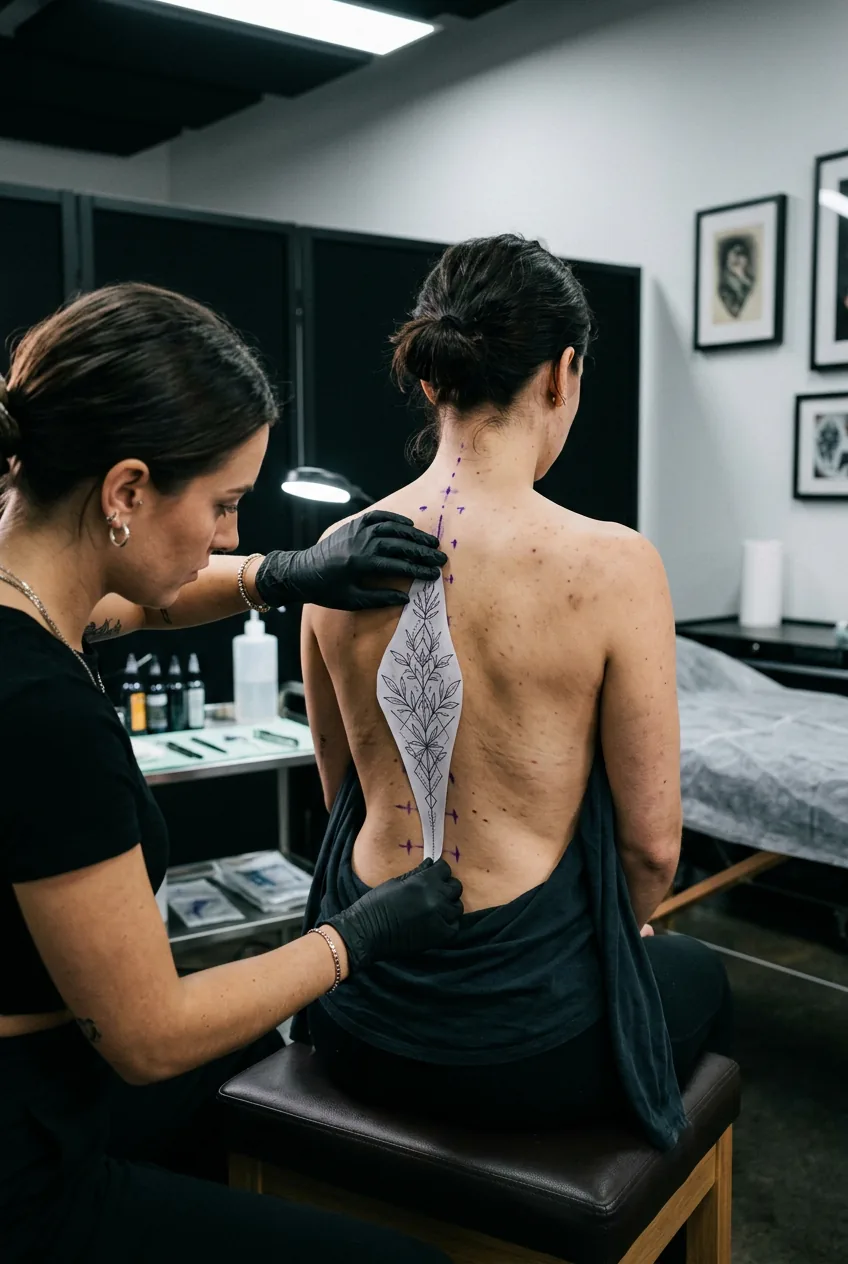
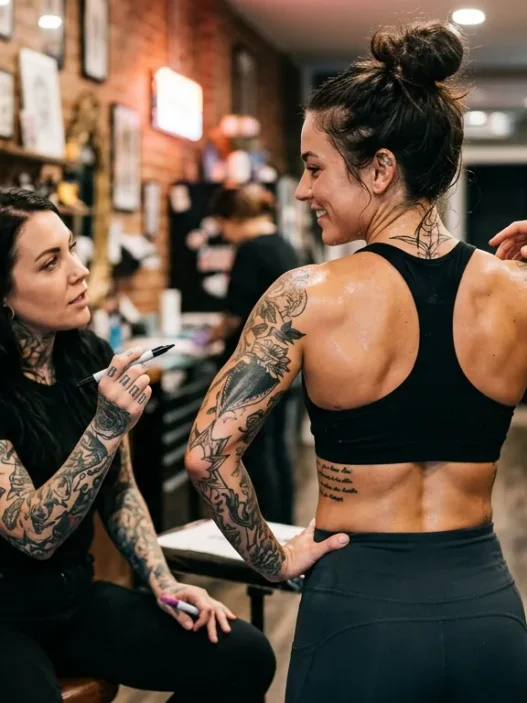
Then comes the placement dance. Unlike arm or leg tattoos where you can easily see what’s happening, spine work requires mirrors, photos, and constant repositioning. I must have turned around fifteen times while my artist held the stencil in different spots. “Higher? Lower? More centered?” It’s like trying on clothes, except the stakes are permanent.
The most awkward part? Discussing pain management. My artist was brutally honest about what I was signing up for. “The lower spine is going to feel like someone’s drilling into bone,” she said. “Because essentially, they are.” Thanks for that visual imagery. But honestly, I appreciated the heads-up more than sugar-coating.
When the Needle Actually Hits Your Spine
The first few minutes feel deceptively manageable. You’re lying face down, trying to find a comfortable position (spoiler alert: there isn’t one), and the initial lines feel like any other tattoo. But then the needle hits those vertebrae directly, and holy hell.
It’s not just the pain — though that’s intense. It’s the vibration that travels through your entire spine and somehow ends up in your teeth. I wasn’t prepared for how the sensation would radiate. My artist warned me that some people feel it in their legs or get temporary numbness in their arms. I got the full package: tingling fingertips and this weird sensation like someone was tapping on my skull from the inside.
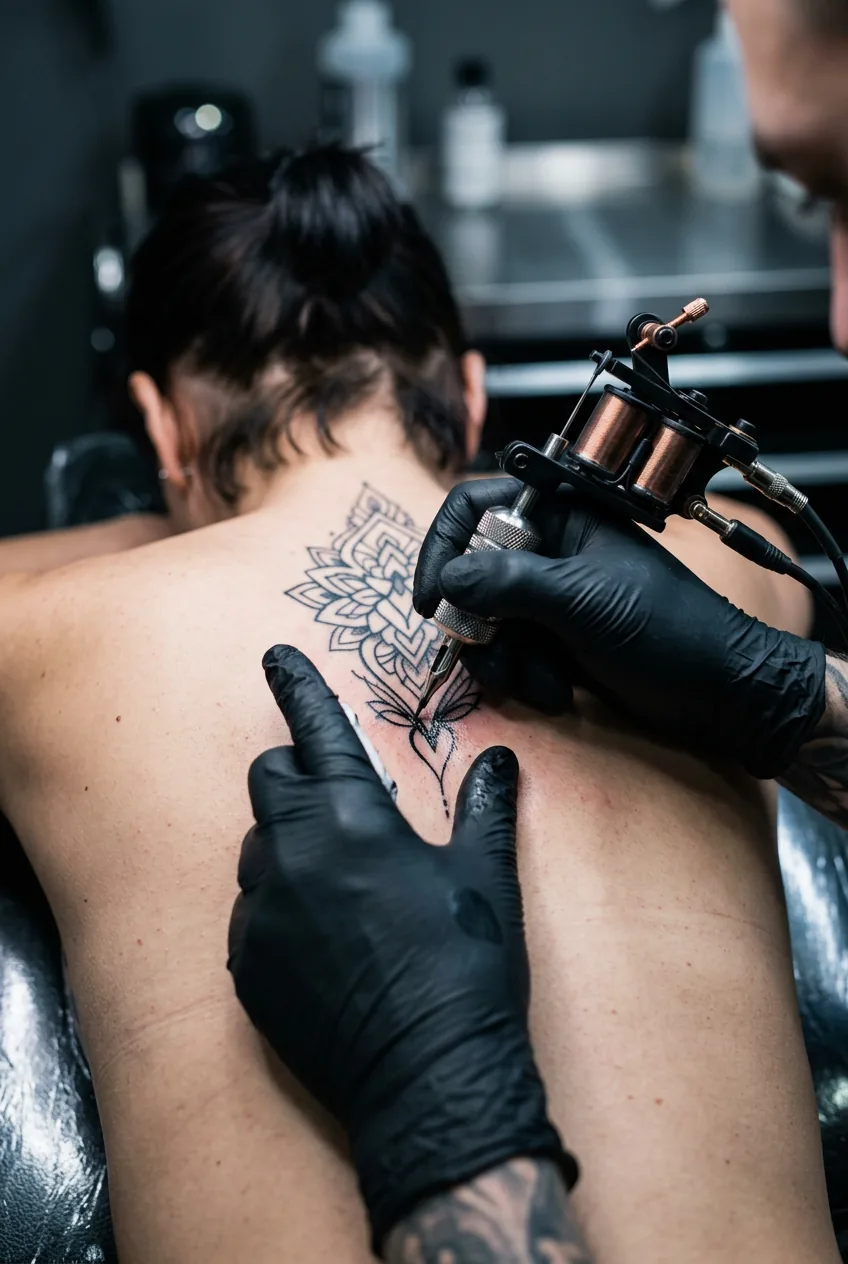
The breathing becomes critical here. Not just for pain management, but because lying face down for hours affects how your ribs expand. My artist kept reminding me to take deeper breaths. “I can see when you’re holding your breath,” she said. “Your whole back tenses up.” Learning to breathe properly while someone’s essentially engraving your skeleton is a skill I never thought I’d need.
What surprised me most was how the pain changed depending on exactly where the needle was. The upper spine, between my shoulder blades, felt sharp but manageable. The mid-spine was this deep, aching pressure. But the lower spine? That was a whole different level of “why did I think this was a good idea?”
What It Actually Feels Like
The Hour Where You Question Everything
Around hour two, reality hits hard. This is when most people start wondering if they’ve made a terrible mistake. For me, it happened right when my artist started working on the detailed shading near my tailbone. The combination of sustained pain and the awkward position makes your brain go to weird places.
I started calculating how much I was paying per minute of pain. Then I wondered if I could just stop halfway and have a partial spine tattoo. Would that look intentional or just sad? My artist must have sensed my mental spiral because she started talking more, distracting me with stories about other clients and her own tattoos.
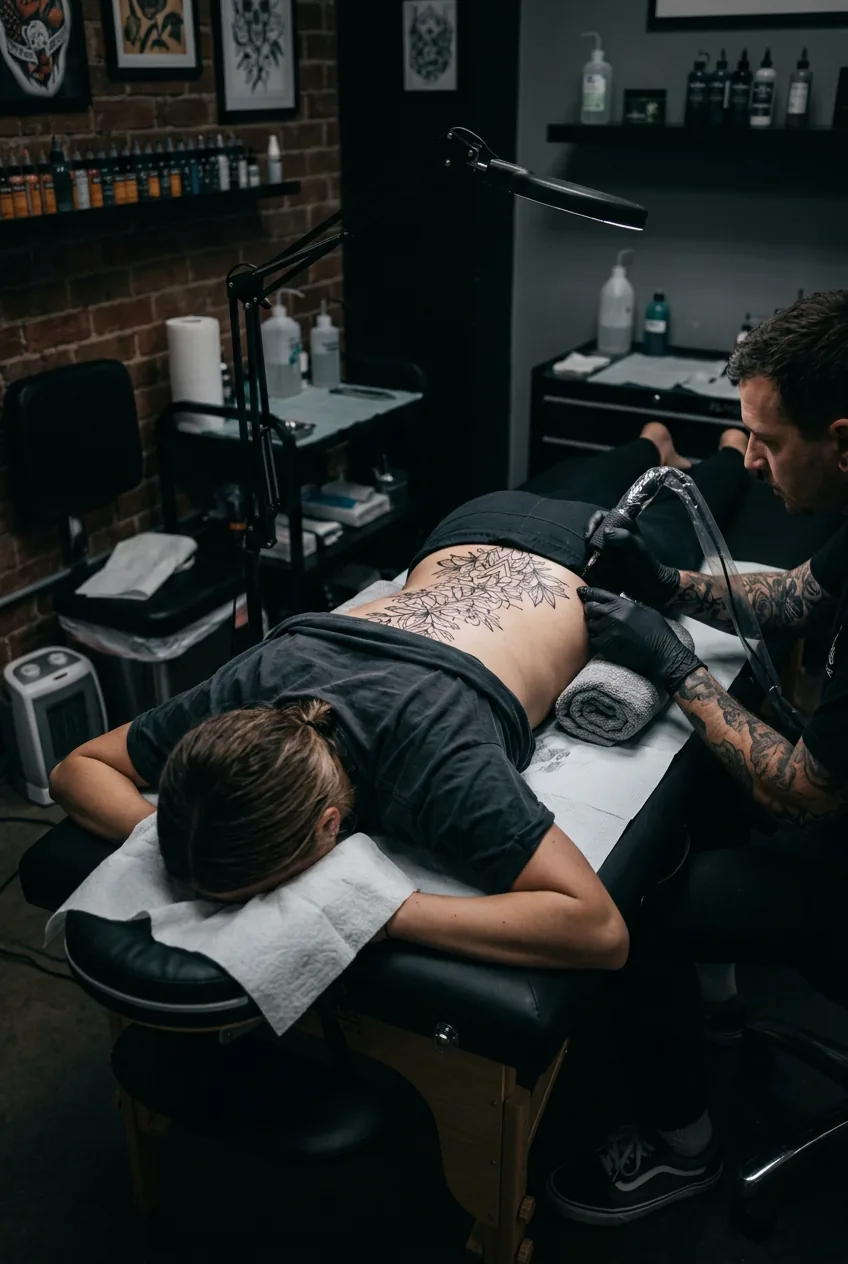
This is also when physical discomfort beyond pain kicks in. Your neck starts cramping from the weird angle. Your arms fall asleep because there’s no good place to put them. I kept shifting slightly, trying to find relief, which made my artist pause every few minutes. “I know it’s uncomfortable,” she said. “But try to stay as still as possible for this section.”
The mental game becomes everything. I started focusing on meaningful tattoos I’d seen and why this piece mattered to me. Having a strong emotional connection to your design isn’t just nice — it’s survival during the rough patches.
Why Your Artist Keeps Checking on You
If you’ve never gotten a spine tattoo, you might not realize how frequently your artist will check in. It’s not just politeness — spine work has a higher risk of clients passing out, getting nauseous, or having panic responses. My artist checked my color, asked about numbness, and made sure I was still breathing normally about every twenty minutes.
“Spine tattoos hit differently,” she explained during one break. “The proximity to your nervous system means people react unpredictably.” She told me about clients who were fine for three hours and then suddenly got dizzy. Others who felt nauseous when she worked near certain vertebrae. It’s not weakness — it’s anatomy.
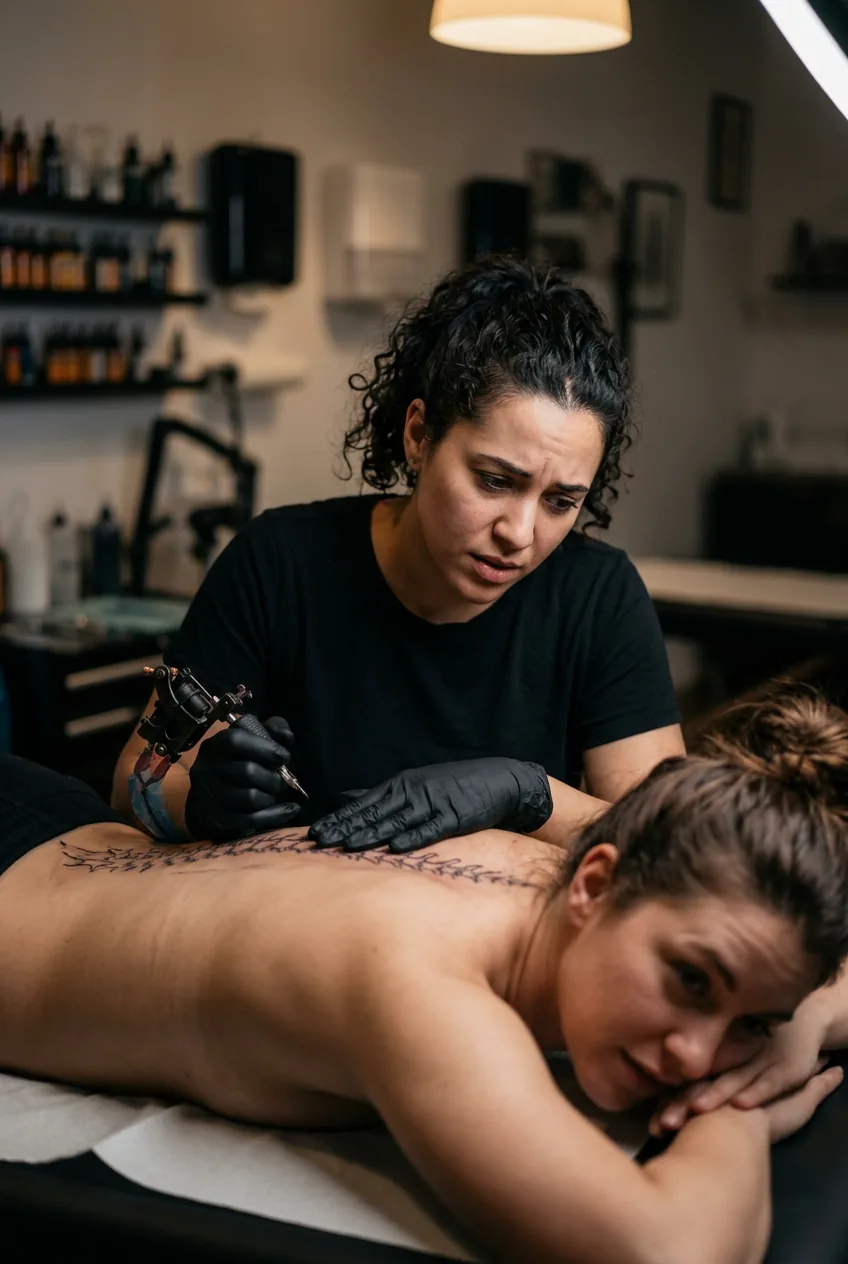
The breaks become strategic, not just for your comfort but for the quality of work. When your body is tense from pain, your skin doesn’t take ink as well. My artist would pause whenever she noticed my breathing getting shallow or my muscles tensing up. “Better to take breaks than have to touch up later,” she said.
She also kept adjusting the lighting and her position. Working on someone’s spine means constantly moving around the table, getting different angles. I heard her back cracking more during this session than any other tattoo I’d gotten. The physical toll isn’t just on the client.
The Wrap Session No One Talks About
When my artist finally said “we’re done,” I felt relief and immediate panic. Relief because the pain was over. Panic because I realized I had to get up, and my body had been locked in the same position for hours. Standing up after a long spine session is its own adventure.
Everything felt different. My back was stiff, my legs were shaky, and I was surprisingly lightheaded. My artist made me sit for ten minutes before even attempting to look at the tattoo in the mirror. “Give your blood pressure time to adjust,” she said. Smart woman.
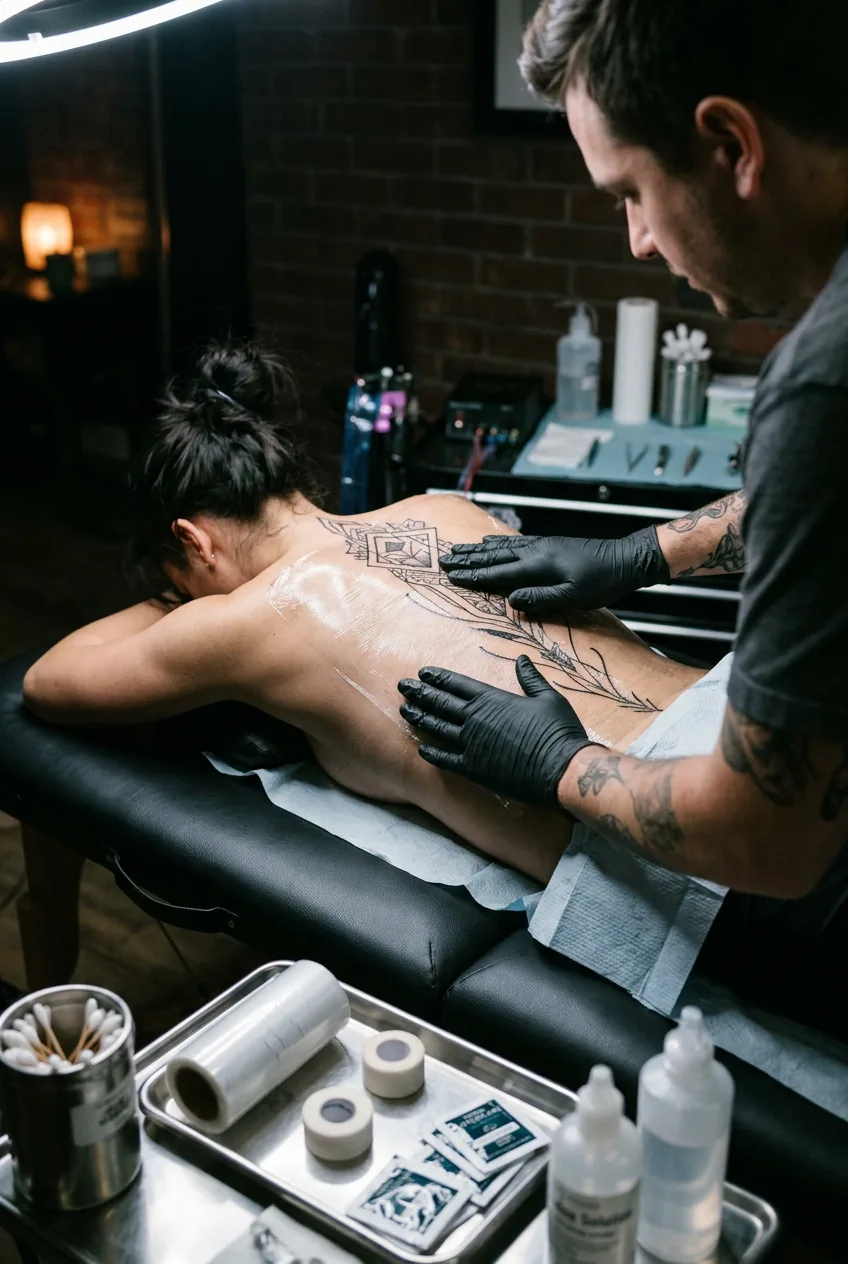
The wrapping process for spine tattoos is more involved than other locations. Because you can’t see it easily, your artist has to explain exactly how the bandage sits, where the edges are, and how to remove it without twisting your back tomorrow. She took photos so I could reference them later — genius move.
Aftercare for spine tattoos becomes crucial because you literally cannot reach most of the area. My artist walked me through the logistics: using a long-handled lotion applicator, having someone help with the initial cleaning, and positioning mirrors so I could monitor healing progress.
The drive home was interesting. Sitting in a car seat after lying on your stomach for four hours hits differently. I had to adjust my seat and add a pillow for lower back support. Note to self: plan transportation logistics beforehand.
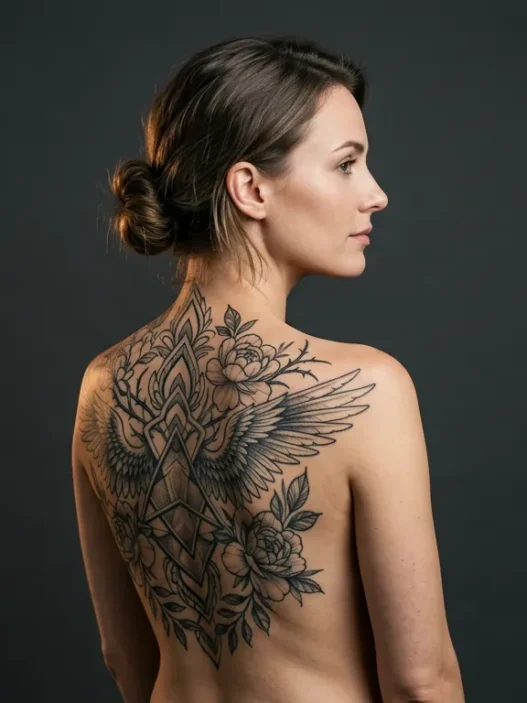
But here’s the thing — seeing the finished work in that mirror made everything worth it. Spine tattoo designs look incredible when they’re well-executed, and there’s something powerful about having art that follows your body’s natural lines. The Instagram photos don’t capture that feeling of completion, of carrying something beautiful and meaningful literally at your core.
Would I do it again? Absolutely. But now I know what I’m signing up for. The real experience includes awkward positions, unexpected sensations, strategic breaks, and a recovery process that’s more involved than you’d think. It’s not just about enduring pain — it’s about working with your artist through a challenging but ultimately rewarding process. Just maybe bring a better pillow next time.