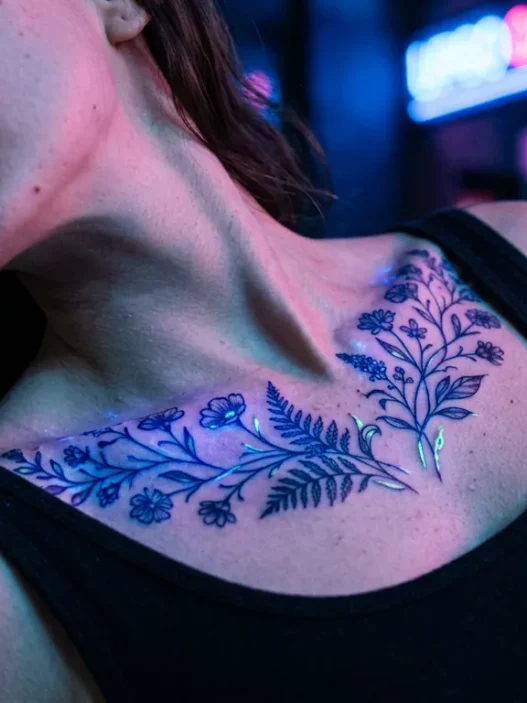





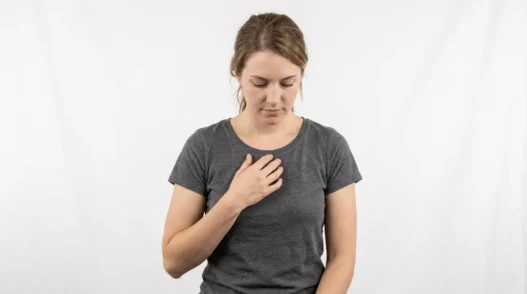
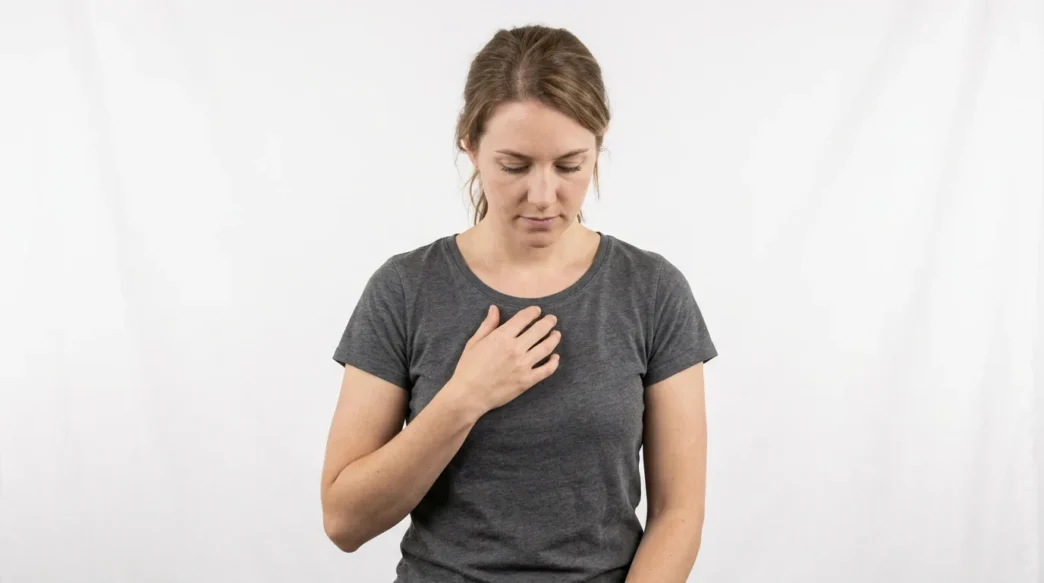
I walked into my first sternum tattoo consultation with a Pinterest board, a printed reference image, and absolutely no idea how to explain what I actually wanted. I left with a booking I wasn’t sure about and a vague anxiety that the design was going to be all wrong. It was. We had to rework half of it before the needle ever touched my skin — and that was entirely my fault for not briefing the artist properly. Since then I’ve sat in three more consultations for chest and sternum work, and I’ve learned that what you say in that room matters just as much as the reference you bring.
Your Consultation Cheat Sheet
- Why Most Consultations Go Sideways
- What to Bring (and What to Leave at Home)
- Start With the Feeling, Not the Image
- Step 1: Nail Down the Placement
- Step 2: Talk Scale Before You Talk Design
- Step 3: Describe the Energy
- Step 4: Address the Flow of Your Body
- Step 5: Ask the Questions That Actually Matter
- When to Step Back and Trust Them
- Questions I Get About This
Why Most Consultations Go Sideways
Here’s the thing nobody tells you: tattoo artists are not mind readers. They are incredibly skilled at translating a brief — but only if the brief actually communicates something useful. When someone walks in and says “I want a mandala on my sternum, kind of like this,” and holds up a photo, the artist has to guess at everything that isn’t in that photo: how ornate versus minimal, how far it should extend toward the ribs, whether the symmetry needs to be architectural or organic, whether you want it to feel delicate or bold.
And sternum placement specifically is tricky. The area between the breasts, running down the chest, curves and moves differently on every body. What reads beautifully centered on one person can look cramped or too sparse on another. The artist needs information — your information — to get it right. That’s what a consultation is actually for.
What to Bring (and What to Leave at Home)
This is genuinely the prep work that makes everything else easier. I used to bring ten references and a chaotic Google Drive folder. Now I come with much less, and the consultation goes so much better.
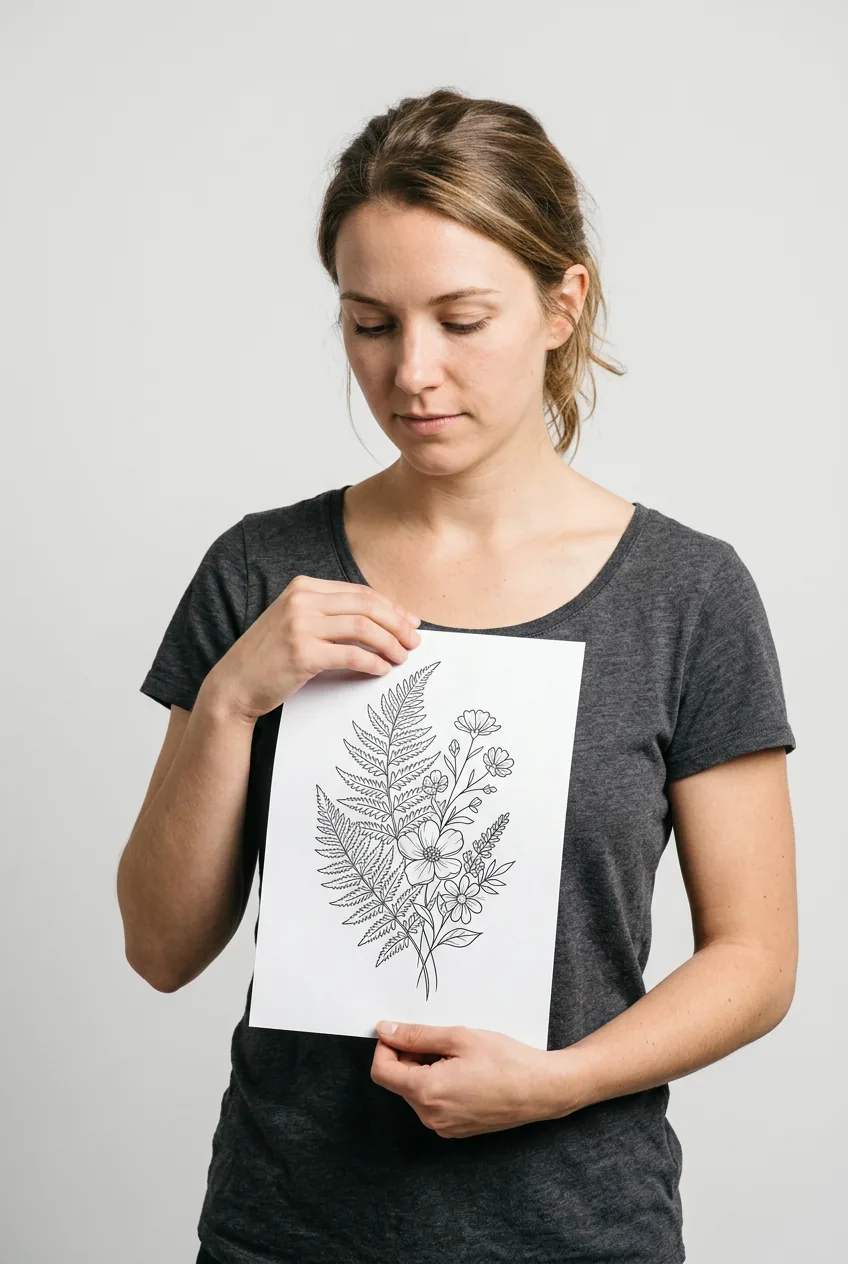
- 3–5 curated reference images — not a mood board of 40. Pick your absolute favourites and know why you chose each one.
- A note on what you love about each reference — “I like the linework density here” is far more useful than just showing the image.
- Photos of your own body in that area — taken at home in good lighting, from the front and at a slight angle. Your artist needs to see the actual canvas before the day you walk in.
- Any clothing you regularly wear that the tattoo will interact with — knowing your neckline situation affects placement hugely.
- A list of non-negotiables — one or two things you absolutely must have or absolutely don’t want.
What to leave at home: the expectation that the artist will replicate something you found online exactly. That’s not how custom work operates, and the good artists will tell you so. You can also read up on tattoo placement ideas before your consult so you already have language for describing what you want.
Start With the Feeling, Not the Image
This is the single biggest shift that changed how my consultations went. Before I showed a single reference, I started describing how I wanted the finished tattoo to feel. Not what it looked like — what it communicated. “I want it to feel like something ancient and feminine” is a brief. “I want a vine mandala like this one” is a request for a copy.
Some phrases that actually work:
- “I want this to feel structured but still organic — not too rigid.”
- “I’m drawn to things that look like they’ve always been there, not like a sticker.”
- “I want delicate but not tiny — I want presence without bulk.”
- “The vibe I’m going for is more like jewellery than a traditional tattoo.”
These kinds of statements give an artist real creative direction. They immediately narrow the possibilities without boxing the design into a corner. And honestly, most good artists’ faces light up when you talk to them this way because it means they actually get to design something rather than trace someone else’s work.

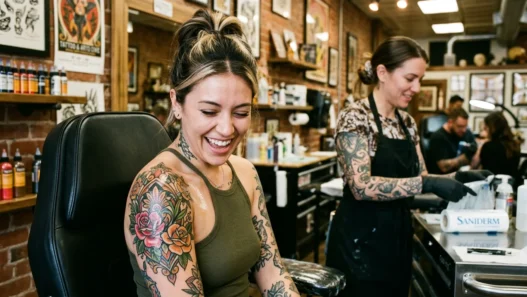
A Consultation That Shows How It’s Done
Step 1: Nail Down the Placement
Before any design conversation happens, placement has to be decided. On the sternum this means getting specific about three things: where it starts vertically, how far it extends horizontally, and whether it anchors at the top of the chest or travels down toward the stomach.
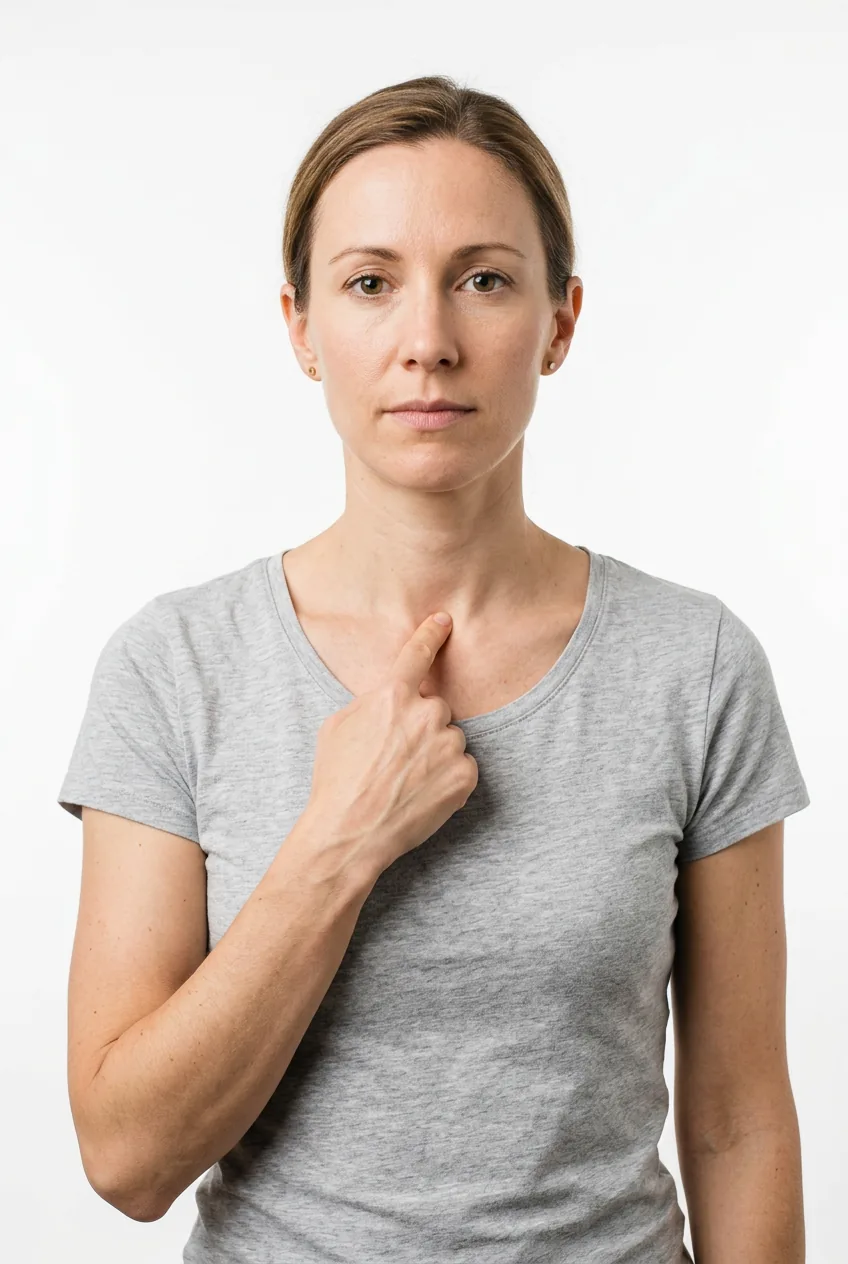
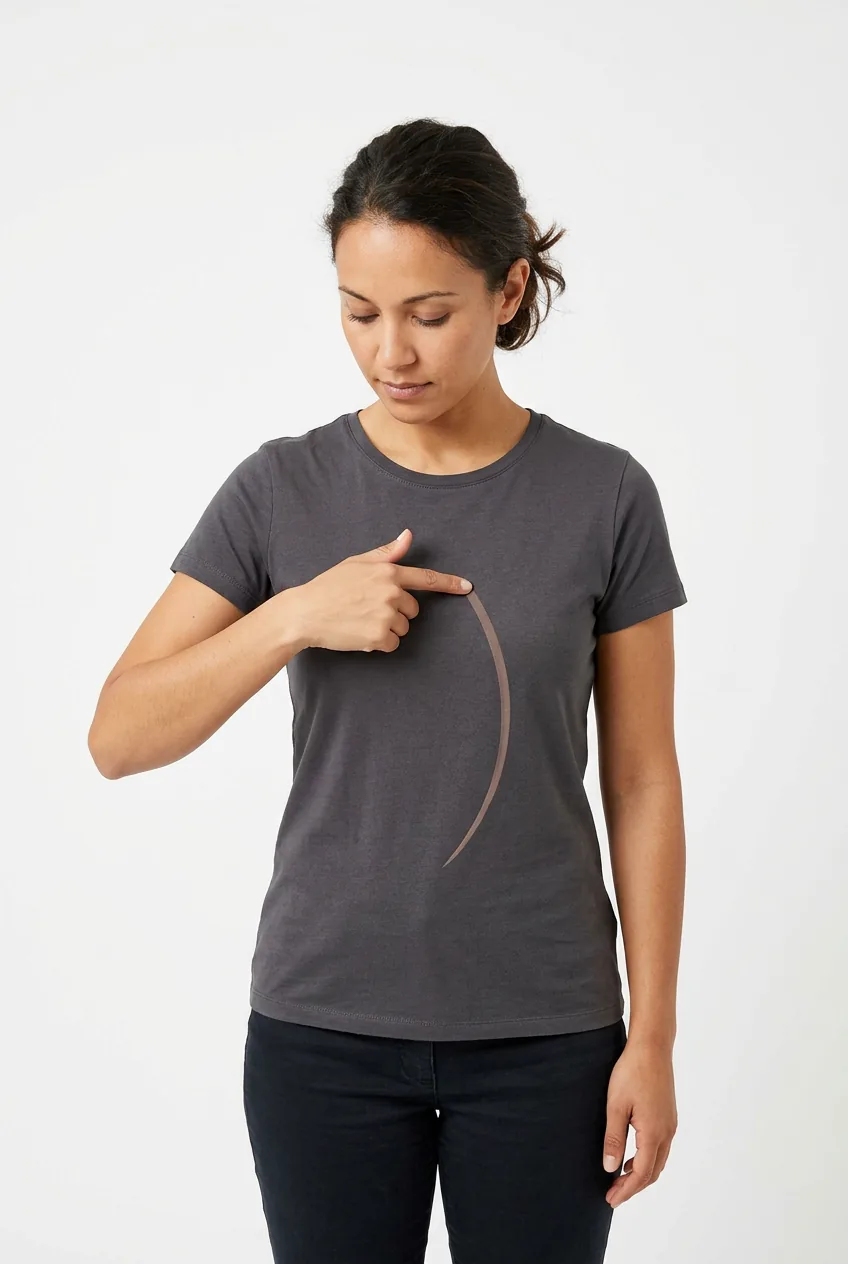
Stand in front of your artist and physically point. Not vaguely waving at your chest — actually place your finger at the top of where you want it to begin and trace the rough boundary. This is the fastest way to communicate placement, and it eliminates so much back-and-forth. Look at how she’s pointing directly to the sternum bone in this reference photo — that precise gesture tells an artist more than five sentences of description.
Some useful phrases for this stage:
- “I want it to sit here and not extend past this point on either side.”
- “I want it centred on the sternum bone itself, not drifting toward either breast.”
- “I’d like it to stop about two inches above my bra line.”
- “I want it to have trailing elements that go downward, not outward.”
If you’re also considering how the sternum piece might eventually connect to neck tattoos or flow upward onto the chest, mention that now. It will affect how the artist approaches the top of the design.
Step 2: Talk Scale Before You Talk Design
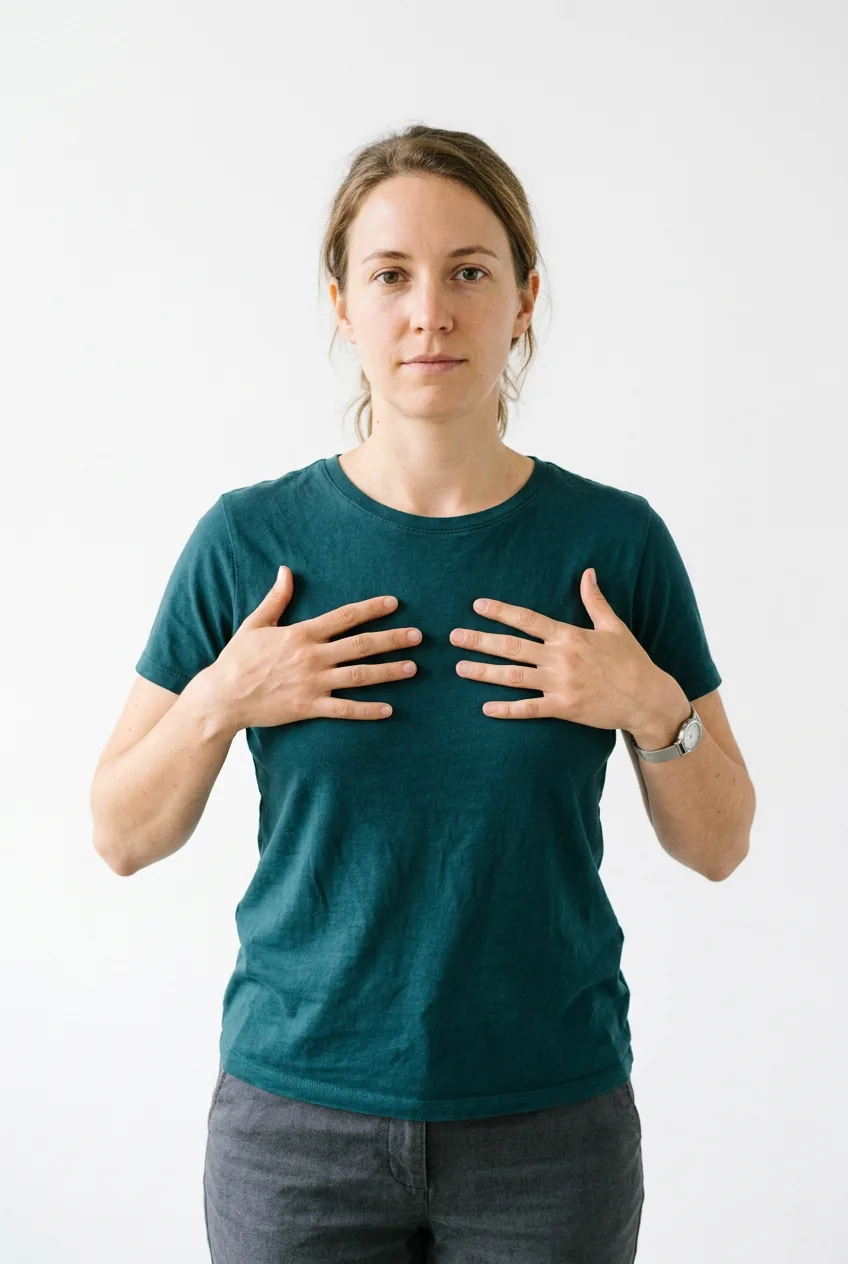
Scale is the element that most people skip in a consultation, and it creates more disappointment than anything else. “Medium” means nothing. “About the size of my hand” means something. Use your actual body to communicate size — hold your hand flat against your chest and say “I want it to span roughly this width.”
For sternum pieces specifically, there’s a spectrum that runs from a small, centred motif — think a single florals cluster or a simple geometric shape — all the way to a full under-boob piece that runs the entire length of the sternum and fans out along the rib cage. Knowing where on that spectrum you sit before the design conversation starts means the artist draws the right thing the first time.
A mistake I made: I told my artist I wanted something “not too big” without actually defining what that meant to me. She drew something beautifully proportioned for the space — but it was three times larger than I had pictured. We both had to go back to zero because I hadn’t anchored the conversation in real measurements. Now I literally use a ruler or a piece of tape on my body to mark boundaries before I walk into any consult.
Step 3: Describe the Energy
This is where the feeling-first approach from earlier gets more specific. Energy in a tattoo context means the combination of style, weight, and visual mood. It’s the difference between fine line and bold blackwork — but it’s also subtler than that. Two fine-line tattoos can have completely different energies depending on whether the lines are airy and spaced apart or tightly detailed and dense.
Words I’ve used that actually worked:
- “I want it to feel light — like it’s sitting on the skin rather than pressed into it.”
- “I want dark, heavy, intentional. Almost architectural.”
- “I want it to look like botanical illustration rather than decorative pattern.”
- “I want it to feel earned — like something with weight and history.”
Your artist will map these descriptors to specific techniques. “Light and sitting on skin” typically means fine line work with negative space. “Heavy and architectural” might lead them toward bold geometric blackwork or structured dotwork. Once they know the energy, they can make informed choices about the style — and you’ll make sense to each other. You can also ask them how fine lines age so you understand whether your chosen weight will hold up over time.
Step 4: Address the Flow of Your Body
The sternum is not a flat surface. It curves, it has a natural vertical ridge, and it interacts with the natural shape of your chest in a way that affects how a design reads when you’re standing upright versus leaning forward versus wearing a particular neckline. A good artist will already be thinking about this — but you can help by flagging any concerns.
This is the step where you might say things like:
- “I want the design to work with the natural shape of my chest, not fight it.”
- “I’m worried about symmetry because my left side sits slightly higher — can we account for that?”
- “I’d like it to look centred when I’m standing, not when I’m lying flat.”
- “I want trailing elements to follow the natural curve here, not cut across it.”
This is also a good moment to mention if you want the piece to eventually be part of something larger — like connecting to back tattoos or a larger chest composition. Flow decisions made now affect whether an expansion is possible later without the whole thing looking like it was stitched together. And if you’ve been reading about what to expect from a spine tattoo session, you’ll already know that artists approach central-body placement with a lot of care around anatomy — the same principles apply here.

Step 5: Ask the Questions That Actually Matter
Most people walk out of a consultation without asking the artist a single question. They answer questions, they nod at the sketch, and they leave. But the consultation is a two-way conversation, and the questions you ask will determine how confident you feel when you sit down for the actual session.
Here are the ones worth asking — every single time:
- “Have you done a lot of sternum work? Can I see examples specifically on this placement?” — Portfolio browsing is useful, but seeing placement-specific work is crucial.
- “What’s your recommendation on size given how this placement heals?” — An experienced artist will have opinions about what holds up at this scale.
- “Is there anything about my reference that won’t translate well to this placement or this skin tone?” — This question is gold. It invites honesty.
- “How will you handle the stencil placement — will I see it before you start?” — You have every right to check the stencil position while standing upright before a single drop of ink goes in.
- “Are there any elements in my reference that you’d personally change or simplify?” — A great artist has opinions. Let them share them.
If you have a design that includes text or meaningful words, this is also where you’d bring that up — check out choosing meaningful quote tattoos for language ideas before your consult, and see whether the artist has thoughts on font weight and legibility at your intended scale. And if lettering or symbolic elements are part of your design, it’s worth browsing quote tattoos to see how other artists have handled text in chest placements.
When to Step Back and Trust Them
There is a point in every good consultation where you need to stop directing and start listening. Once you’ve communicated placement, scale, energy, and flow — once you’ve asked your questions and gotten answers that give you confidence — the design work belongs to the artist.
The worst thing you can do at this stage is micromanage the sketch. I’ve done it. I sent three rounds of “what if we moved this element slightly left” feedback on a sternum piece and the final result looked laboured. The earlier draft — the one where the artist’s instincts were intact — was always better. A good brief gives them room to do their best work. Constant revision requests slowly erode the design.
The magic phrase here is: “I trust your judgement on the execution — I’ve told you what I need, now please do what you do.” Most artists will almost visibly relax when you say something like that. And the work they produce when they feel trusted is consistently better than the work produced under a microscope.
The difference between a client who says “I want this exact image at this exact size in this exact style” and one who says “I want this energy at this scale on this placement — here’s what I need, you handle how” is enormous. The second person almost always walks away happier.
Questions I Get About This
How long should a sternum tattoo consultation actually take?
Most artists schedule 30 to 60 minutes for a detailed placement consult. Sternum work often sits at the longer end of that because there’s a lot to discuss about anatomy and flow. If yours feels rushed under 20 minutes, it’s worth asking for a follow-up before you book the session.
Should I share my references before the consultation or wait until I’m there?
Sending two or three curated references ahead of time is genuinely helpful — it lets the artist think about your brief before you walk in. But don’t send a folder of fifty images and expect them to sift through it. Curation on your end shows respect for their time and usually results in a better first sketch.
Is it rude to ask for changes to the first sketch?
Not at all — one round of honest feedback is completely normal. The key is being specific: “the upper element feels too heavy relative to the bottom” is useful feedback. “I don’t know, can you just change it a bit” is not. Most artists appreciate when a client can articulate exactly what isn’t working.
What if I fall in love with a design I found online — can I still bring it?
You can bring it as a reference for style and energy — but not as a request to replicate it exactly. That design belongs to someone else, and any ethical artist will use it as inspiration rather than a template. Tell them what specifically draws you to it and let them create something original that captures the same feeling.
Do I need to shave or prep the area before the consultation?
For the consultation itself, no. Come as you are — the artist is assessing the canvas, not tattooing it. For the actual session, your artist will handle any necessary prep. Just wear something that gives easy access to the sternum area, like a front-opening top or a sports bra.
My most recent sternum tattoo is the best piece I own. Not because the design was the most elaborate — it’s actually one of the simpler ones. But because I walked into that consultation knowing exactly how to communicate what I needed, asked the right questions, and then got out of my artist’s way. The piece she drew was better than anything I could have sketched myself. That’s the whole point of briefing well: you create the conditions for someone else to do brilliant work. And on something as personal and visible as a sternum piece, that briefing is worth every minute of preparation.