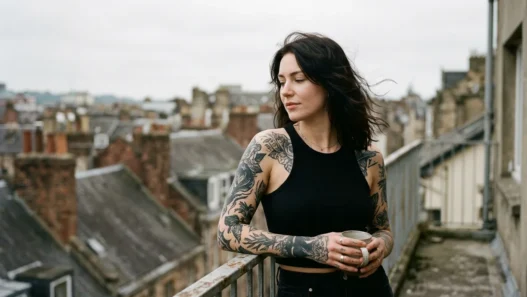

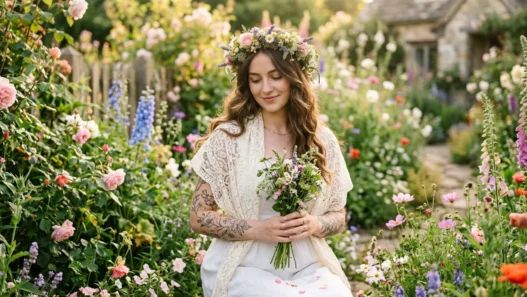

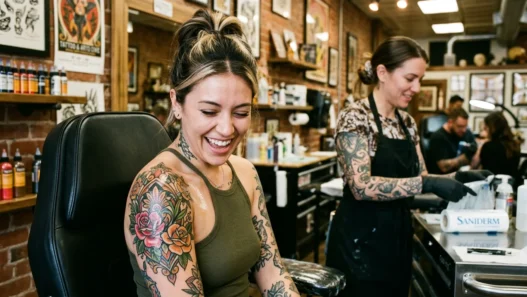

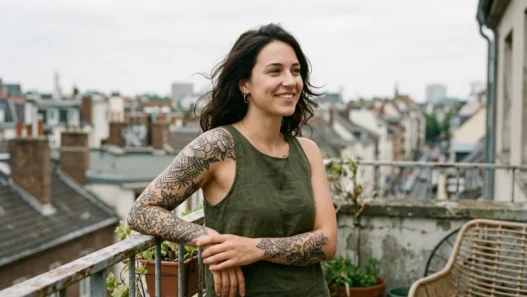
I’ve been watching pastel tattoos creep from “niche request” to fully mainstream for the past couple of years, and honestly? 2026 is the year things get interesting. Not every soft-toned piece making the rounds right now deserves the hype — some are genuinely timeless, and some are going to look painfully dated by 2028. I’ve been obsessively tracking studio booking data, scrolling TikTok’s #pasteltattoo tag (currently sitting at over 4.2 billion views), and chatting with artists at conventions. Here’s my real, unfiltered read on exactly where pastel ink is headed.
Your Pastel Tattoo Trend Guide — Jump to Any Section
- 1. Rising Fast: Blush Floral Botanicals
- 2. Rising Fast: Cloud-Wash Negative Space
- 3. A Quiet Comeback: Soft Watercolor Landscapes
- 4. The Unexpected Trend: Pastel Blackwork Outlines
- 5. Rising Fast: Dreamy Celestial Motifs
- 6. A Quiet Comeback: Muted Neo-Traditional
- 7. The Unexpected Trend: Pastel Micro Portraits
- 8. Cooling Off: Rainbow Gradient Everything
- 9. Rising Fast: Lavender and Sage Botanical Linework
- 10. Cooling Off: Pastel Mandala Sleeves
- 11. My Bet on the Next 12 Months
1. Rising Fast: Blush Floral Botanicals
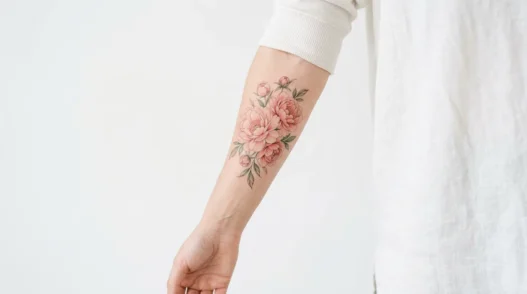
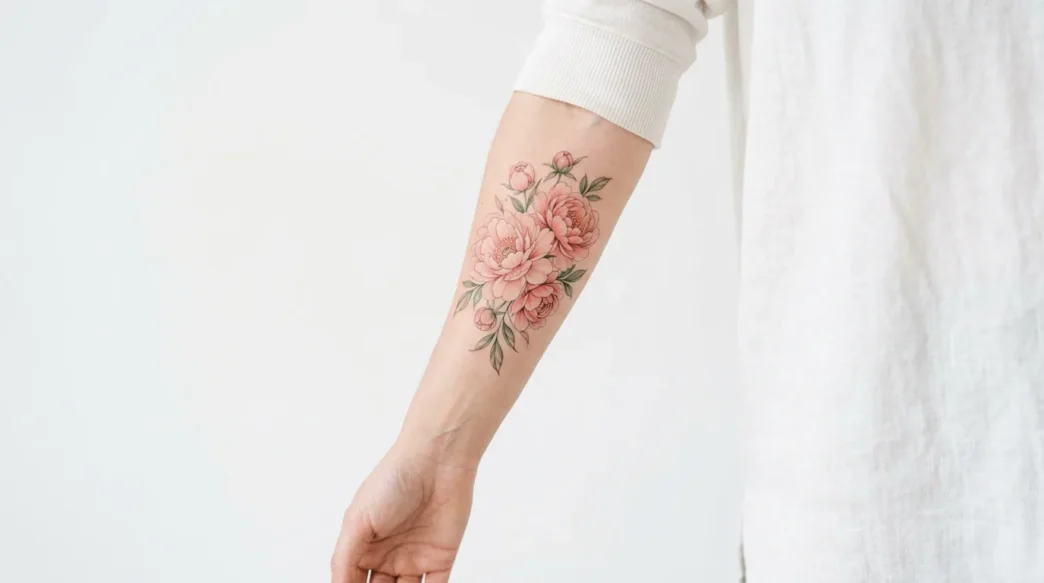
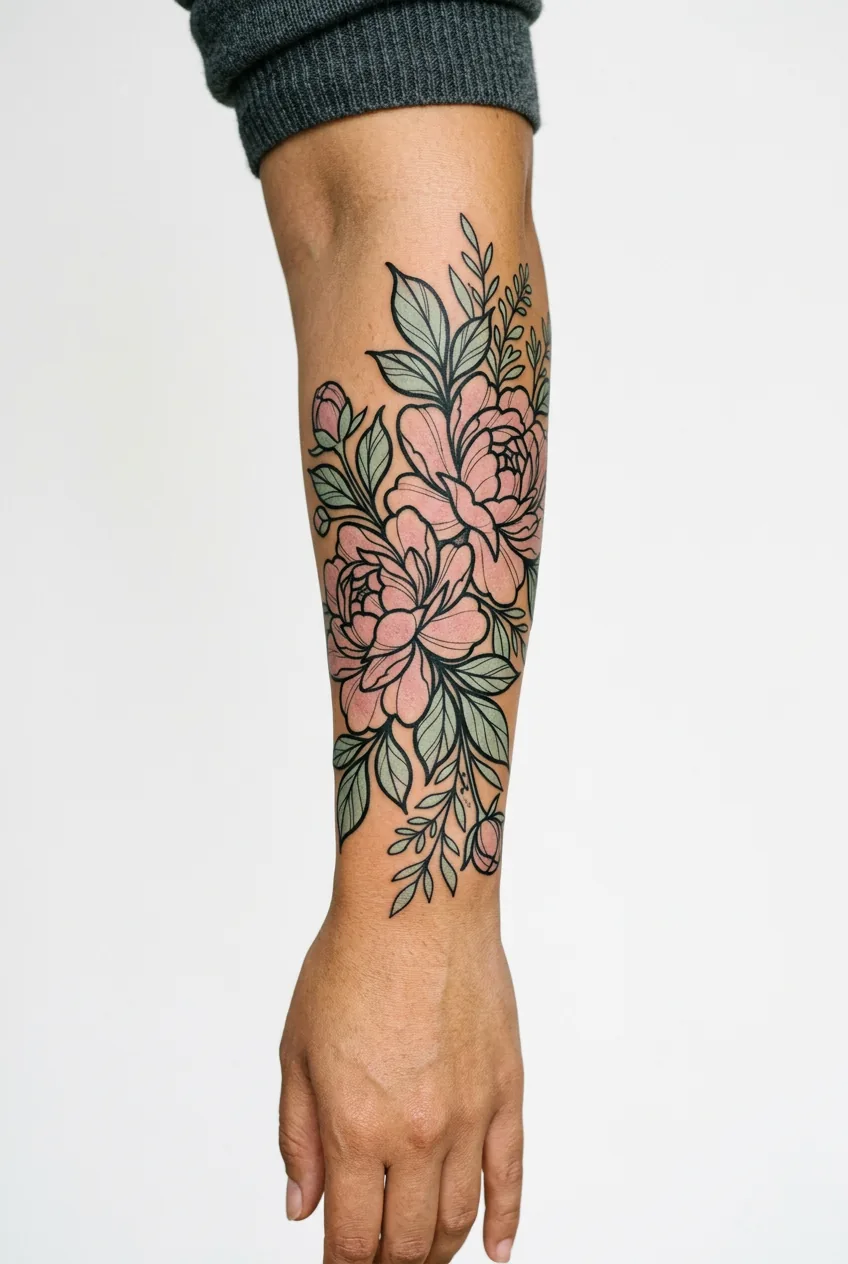
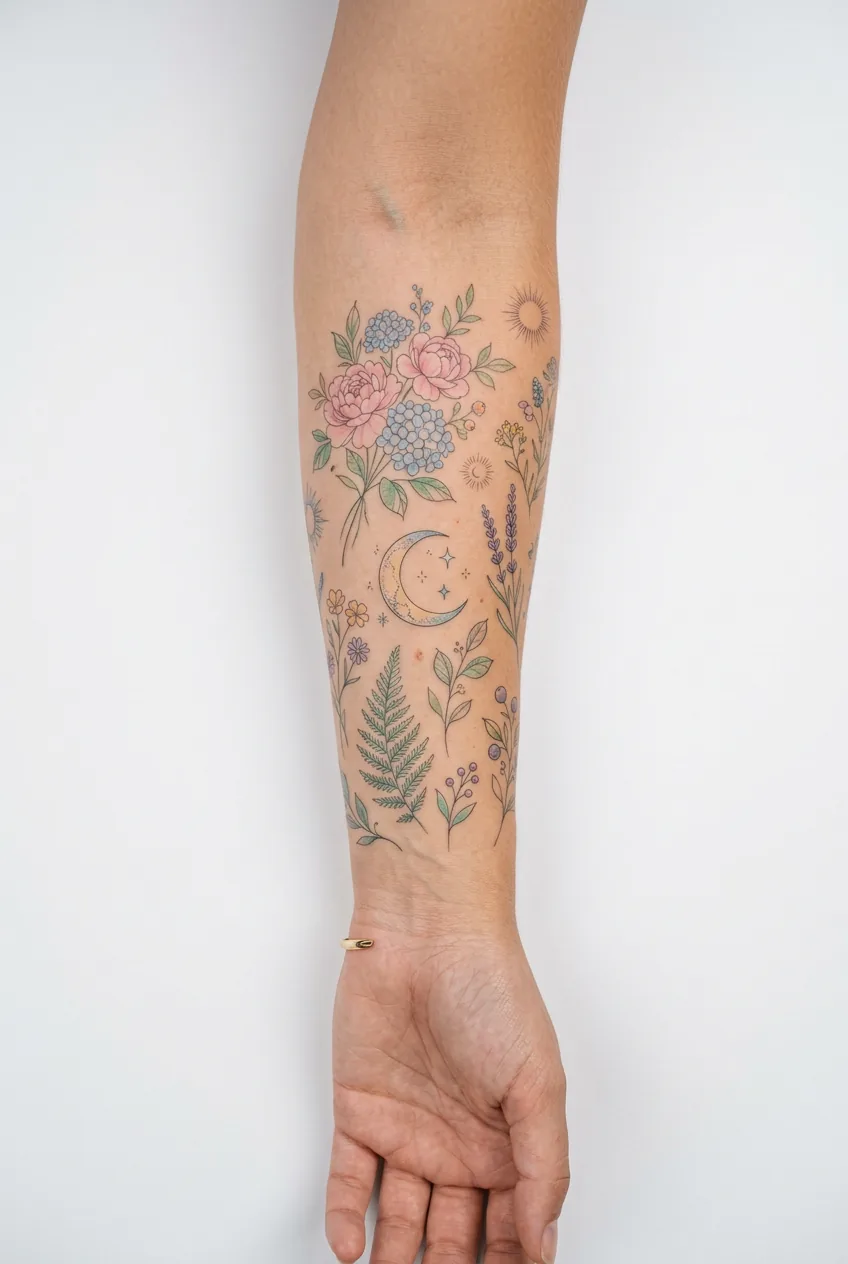
If you’ve opened Instagram’s explore page even once this year, you’ve seen these. Soft blush roses, dusty pink peonies, barely-there lavender wildflowers — floral tattoos in a washed, muted palette are absolutely dominating studio waitlists right now. Artists at shops I follow in London, Seoul, and New York are reporting 40–60% of their color bookings are in this exact territory. Hailey Bieber’s widely-photographed forearm piece last spring accelerated things considerably.
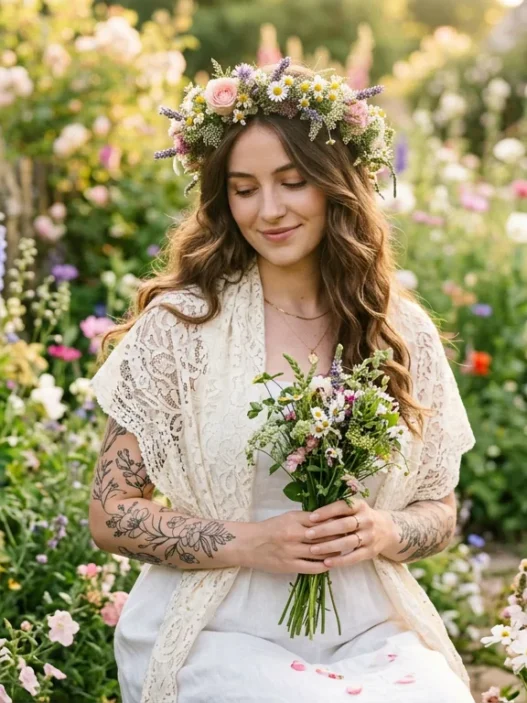
What I find compelling about this trend isn’t just the aesthetics — it’s the technique driving it. The best artists are working with barely-diluted pigments and almost no black outline, which creates a genuinely fresh look versus traditional florals. Look at the piece in the photo below — see how she’s wearing those soft peony clusters along the inner forearm? That feathered-edge technique is exactly what separates this from a regular floral.
Longevity rating: Lasting shift. Florals are permanent in tattooing (no pun intended). The blush-and-muted palette is a refinement of something that was always popular, not a gimmick. This one’s built to last.
2. Rising Fast: Cloud-Wash Negative Space
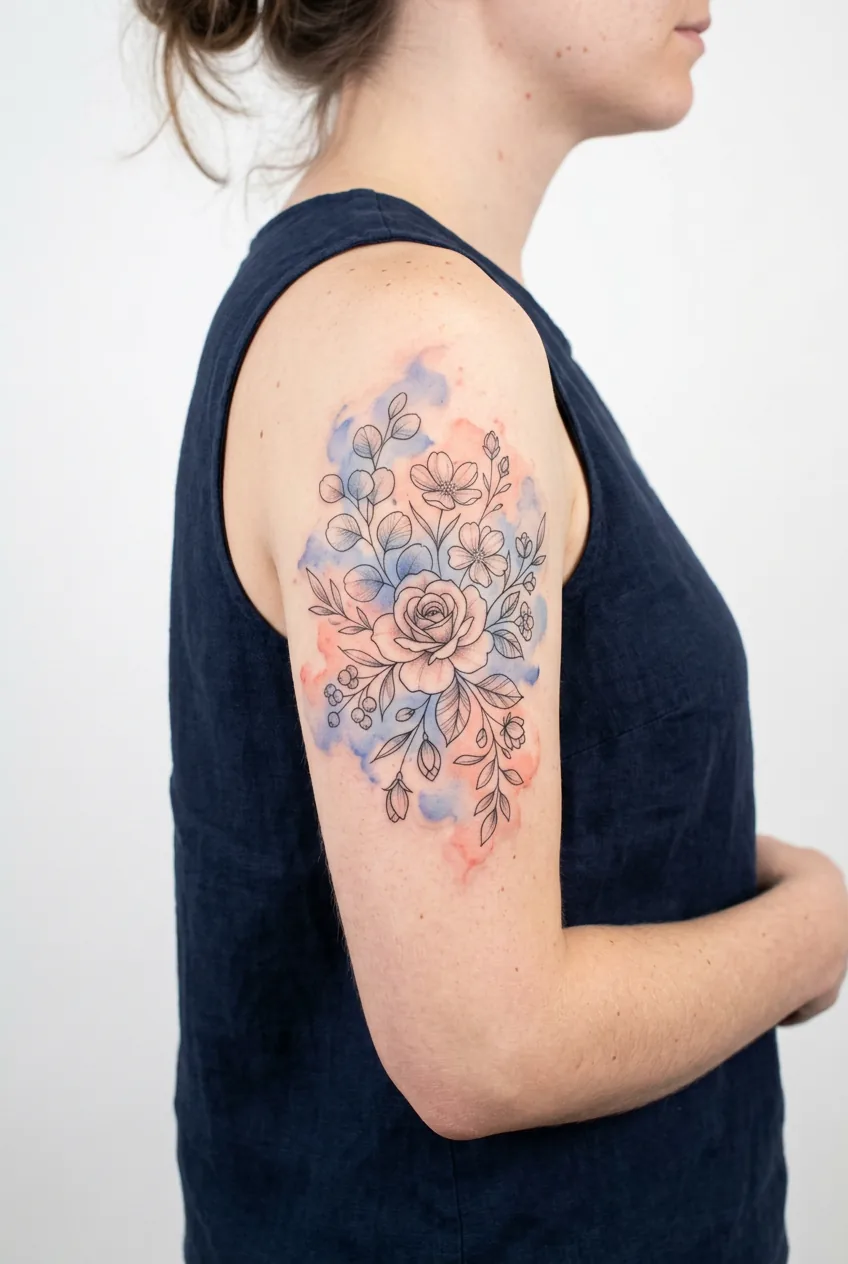
This one surprised me. The technique involves soft pastel “clouds” of color — think periwinkle, pale coral, mint — used as atmospheric backgrounds around a central design, while strategic negative space does the heavy lifting for the actual subject. TikTok creator @inkdiaryjournals posted a time-lapse of her cloud-wash upper arm piece in February and it hit 18 million views. Studios started reporting inquiry spikes within the same week.
The interesting runway connection: Valentino’s Spring 2026 collection used a near-identical soft cloud-wash print on sheer fabric, and several fashion editors explicitly connected the dots to tattooing. When haute couture and skin art share a visual language in the same season, something is genuinely in the cultural air.
Longevity rating: Flash trend with staying power in the technique. The exact “cloud” motif might cool off, but using soft color washes as background atmosphere? That’s a lasting artistic approach that will evolve rather than disappear.
3. A Quiet Comeback: Soft Watercolor Landscapes
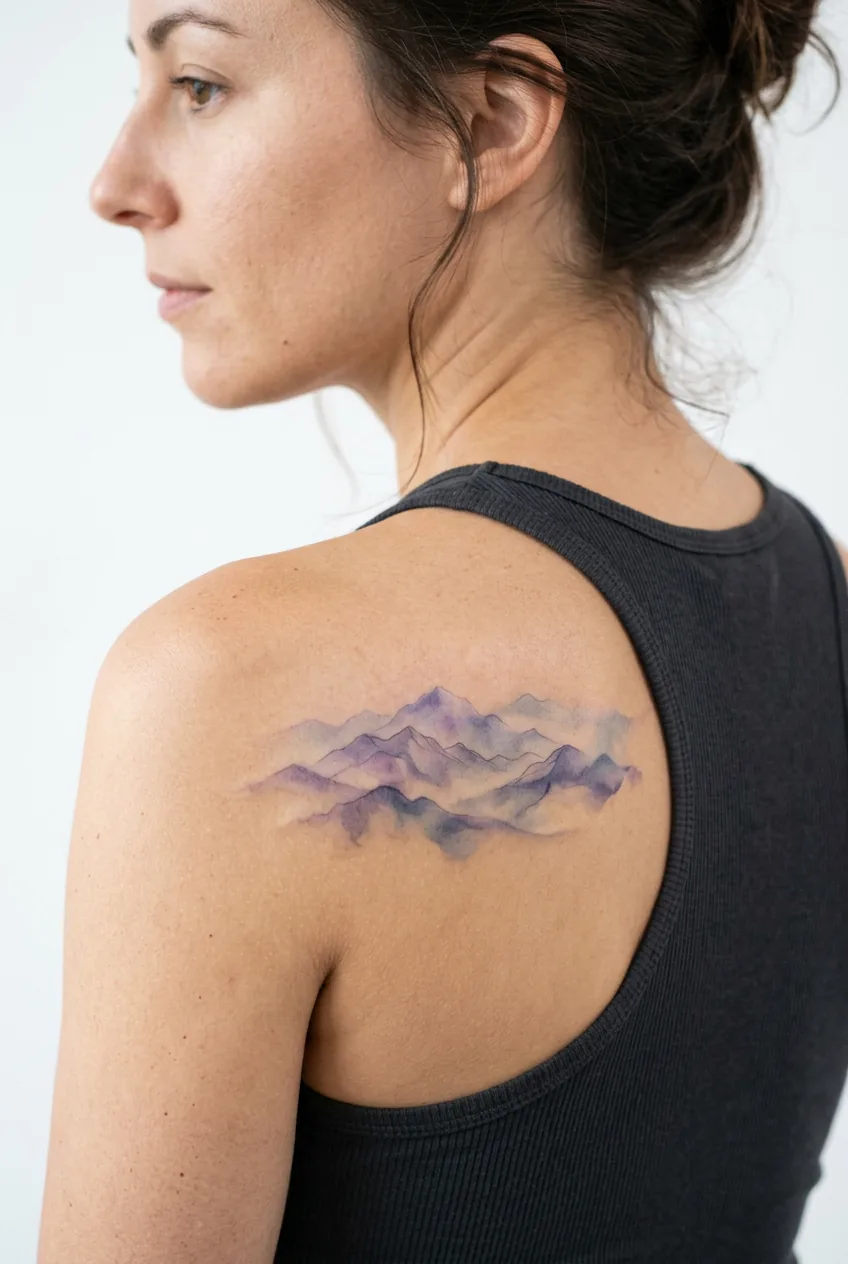
Watercolor tattoos were everywhere around 2018–2020, then they got a bad reputation — mostly deserved — because early practitioners didn’t account for how those unanchored ink edges bleed and blur over time. So the trend faded. But something interesting is happening now: a second generation of artists who studied exactly why the originals failed are bringing watercolor landscapes back with structural improvements. Think pale mountain ranges, misty lavender fields, soft sunset horizons — but with the faintest fine-line scaffold underneath.
You can research how watercolor ink ages before booking, because the new hybrid approach genuinely holds up better. I’ve seen five-year-old pieces done with this anchored method and they still look intentional rather than faded. That’s a significant development.
Longevity rating: Lasting shift — if you choose the right artist. This is a technique-dependent trend. With a skilled artist using the hybrid approach, absolutely worth it. With someone who hasn’t updated their method? Still risky.
4. The Unexpected Trend: Pastel Blackwork Outlines
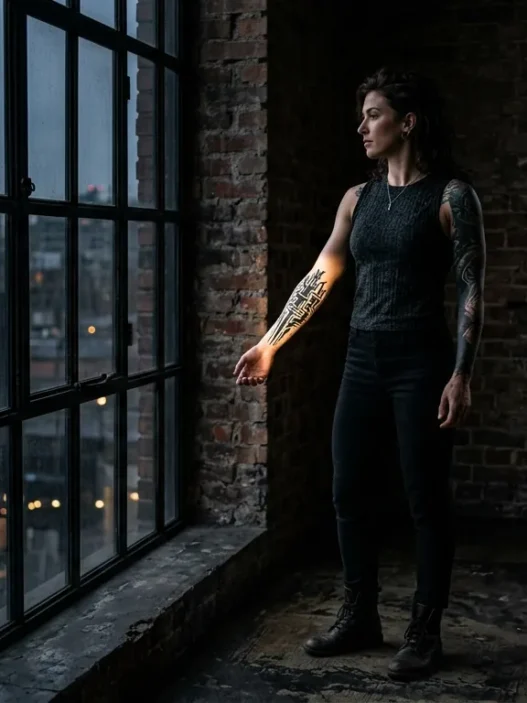
Nobody saw this coming. Bold blackwork — thick, graphic, high-contrast — has been a dominant force in tattooing for years. And now artists are filling those same strong black outlines with deliberately soft, chalky pastel fills. The juxtaposition is jarring in the best way. It reads as both graphic and delicate simultaneously, which is a hard combination to pull off.
The evidence: Berlin-based studio Schwarzwald Ink posted a client gallery of twelve of these in January 2026 and their DMs reportedly broke. Korean artists are calling it “chalky blackwork” and several have three-month waitlists specifically for the style. It’s crossing the minimalist and color worlds in a way that feels genuinely new.
My personal pick for the trend I’d actually get? This one. The combination of that bold graphic structure with a dusty rose or sage fill is exactly my aesthetic — it photographs beautifully, it ages well (the black outlines hold the design even as the pastel softens), and it reads as genuinely original rather than trend-chasing. If you’re considering minimalist tattoos but want a little more visual impact, this hybrid approach is worth serious consideration.
Longevity rating: Lasting shift. The structural integrity of the blackwork means the piece holds its shape as soft colors inevitably soften further. Smart design thinking built into the aesthetic.
5. Rising Fast: Dreamy Celestial Motifs
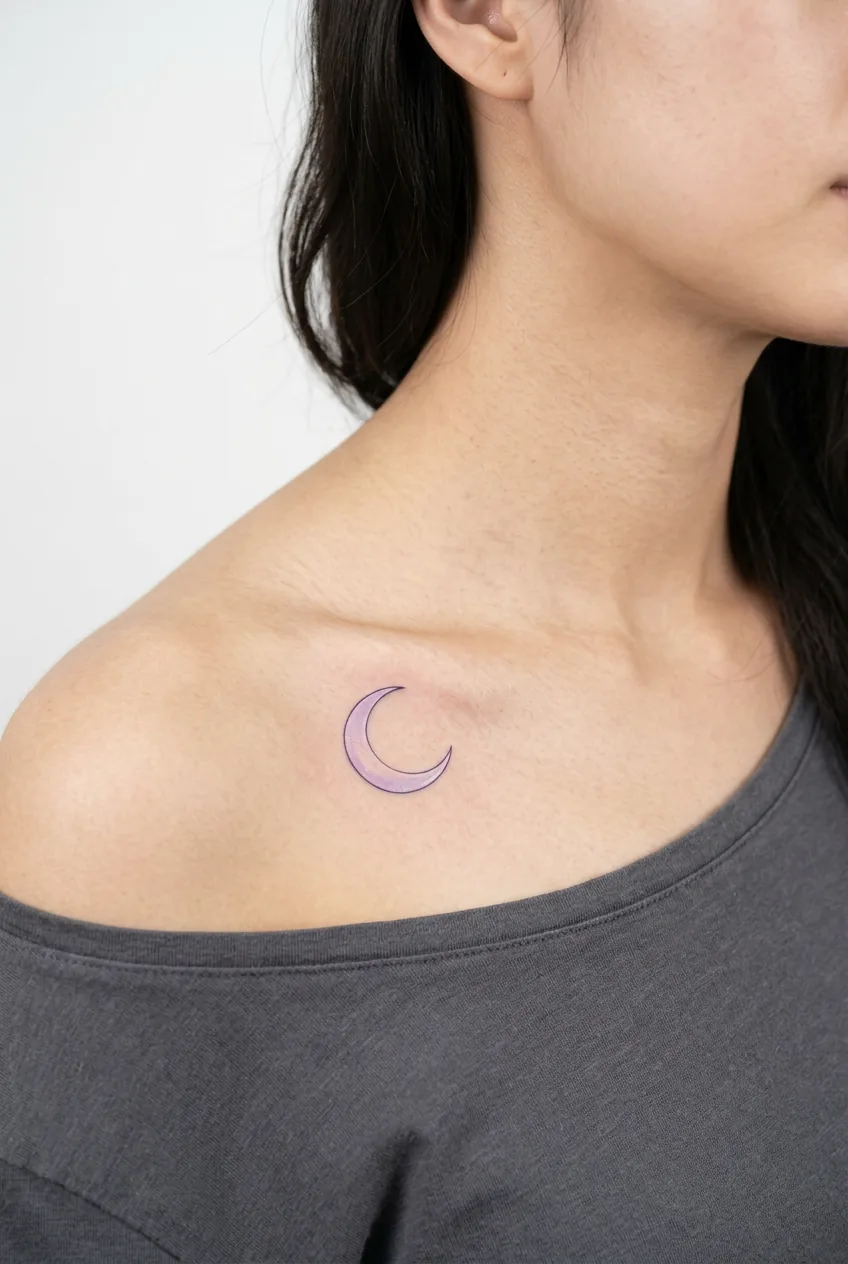
Moons, stars, and planets have been tattoo staples forever. But the 2026 version is doing something different — it’s all about color. Pale lilac moons, soft rose-gold Saturn rings, mint constellation clusters. The celestial subject matter is familiar, but the palette is entirely new, and the execution has shifted toward more illustrative, almost storybook rendering.
Pinterest’s 2026 trend report (released in December 2025) explicitly flagged “dreamy pastels” and “celestial soft color” as top visual trends for the year, with tattoo-related saves in the category up 340% year-over-year. That’s not a small number.
She’s got a gorgeous soft lilac crescent on her collarbone in this photo — notice how the artist left the interior of the moon almost bare, letting just a whisper of color suggest depth. That restraint is everything with this trend. Over-rendering it kills the dream quality entirely.
Longevity rating: Flash trend leaning lasting. Celestial motifs are perennial. The soft palette version may evolve, but the underlying subject matter isn’t going anywhere.
6. A Quiet Comeback: Muted Neo-Traditional
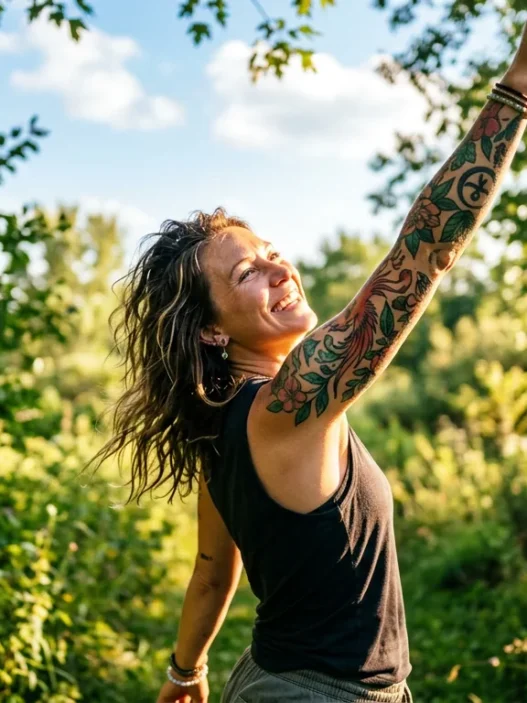
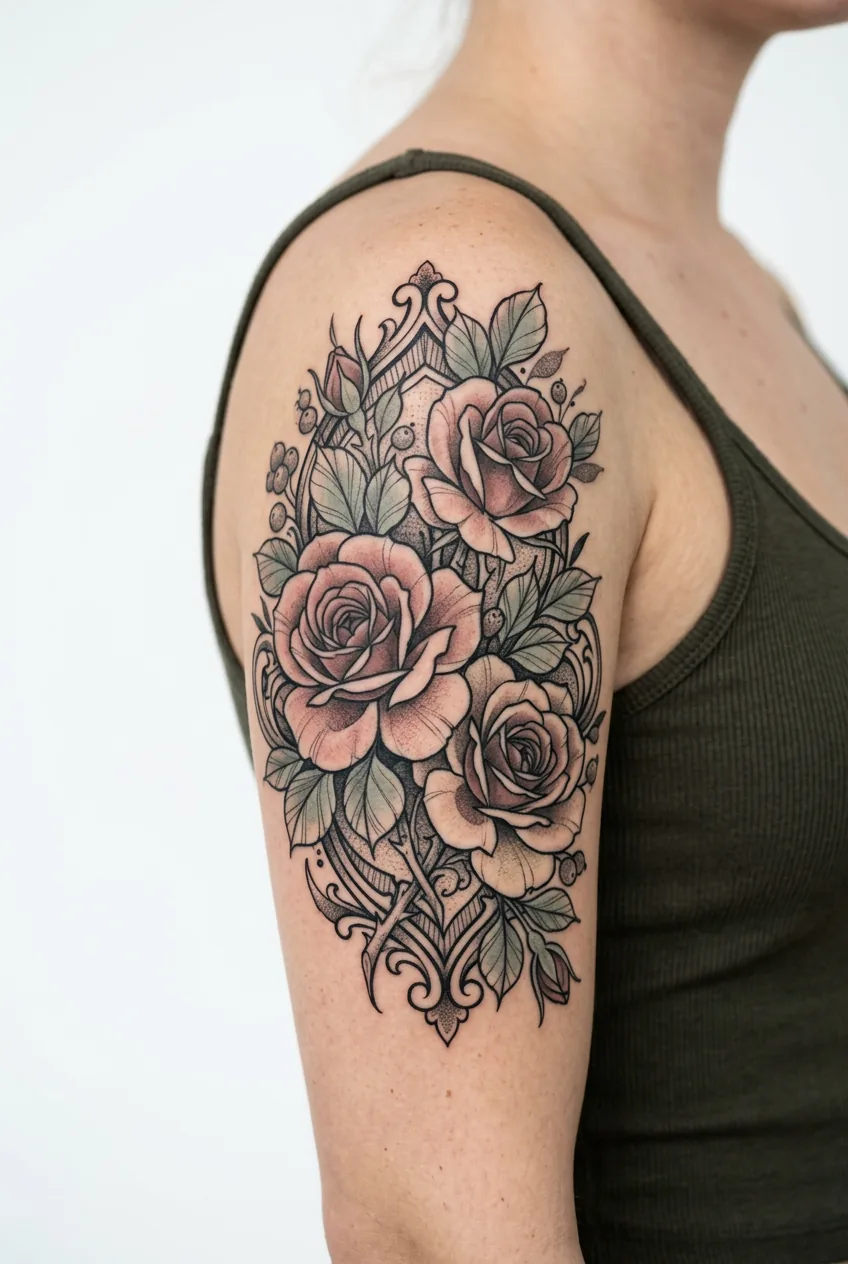
Neo-traditional tattooing — think bold lines, decorative flourishes, slightly exaggerated proportions — peaked around 2016 and then got overshadowed by fine line and minimalism. Now it’s edging back, but with a palette update that’s making it feel relevant again. Instead of the classic jewel-tone fills, artists are using dusty rose, faded sage, soft butter yellow, and muted terracotta. Same structure, completely different mood.
This is showing up heavily on the convention circuit. At the London Tattoo Convention in March 2026, at least a dozen featured artists had muted neo-traditional pieces in their portfolios. It’s not front-page news yet, but people who follow tattooing closely are definitely noticing.
Longevity rating: Lasting shift. Neo-traditional is a mature style with real artistic depth. The palette update breathes new life in without abandoning the craft foundation. This is how trends evolve intelligently.
7. The Unexpected Trend: Pastel Micro Portraits
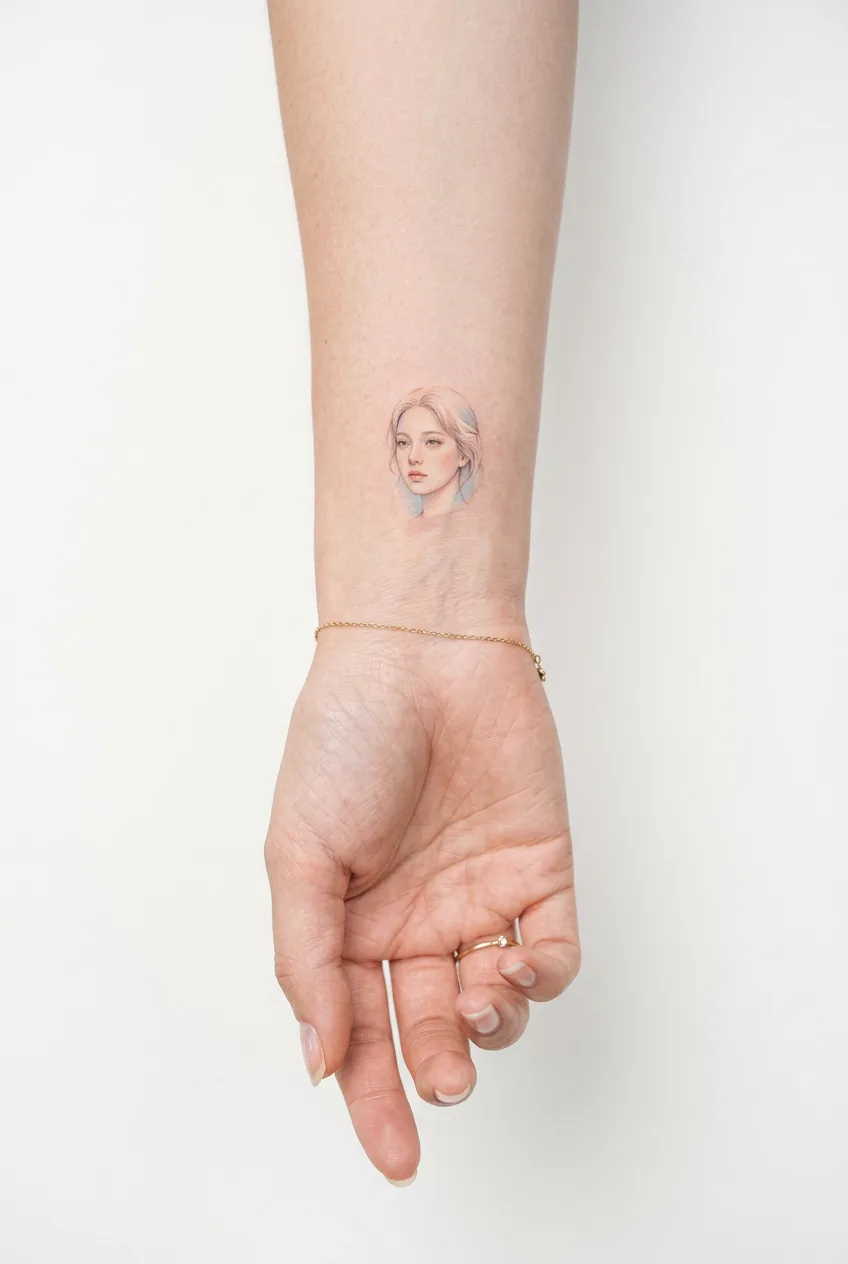
Portrait tattoos have historically lived in the black-and-grey or hyper-realism world. Color portrait work existed but was technically demanding and often aged poorly. Then a handful of artists — primarily based in Seoul and São Paulo — started doing micro tattoos of faces, figures, and even pets in soft pastel palettes. And the internet collectively lost its mind.
The pieces are tiny — often the size of a large coin — rendered in the palest pinks, peaches, and soft blues. They look almost like antique cameo jewelry transferred to skin. Korean artist Siyeon (who goes by @silencetattoo) has a 14-month waitlist for this specific work. Fourteen months. The demand is extraordinary.
Longevity rating: Flash trend — but a beautiful one. Micro work is inherently more susceptible to blurring over time, and soft colors in a tiny space are a technical challenge. That said, the artistic results right now are genuinely stunning. Go in with realistic expectations about aging.
8. Cooling Off: Rainbow Gradient Everything
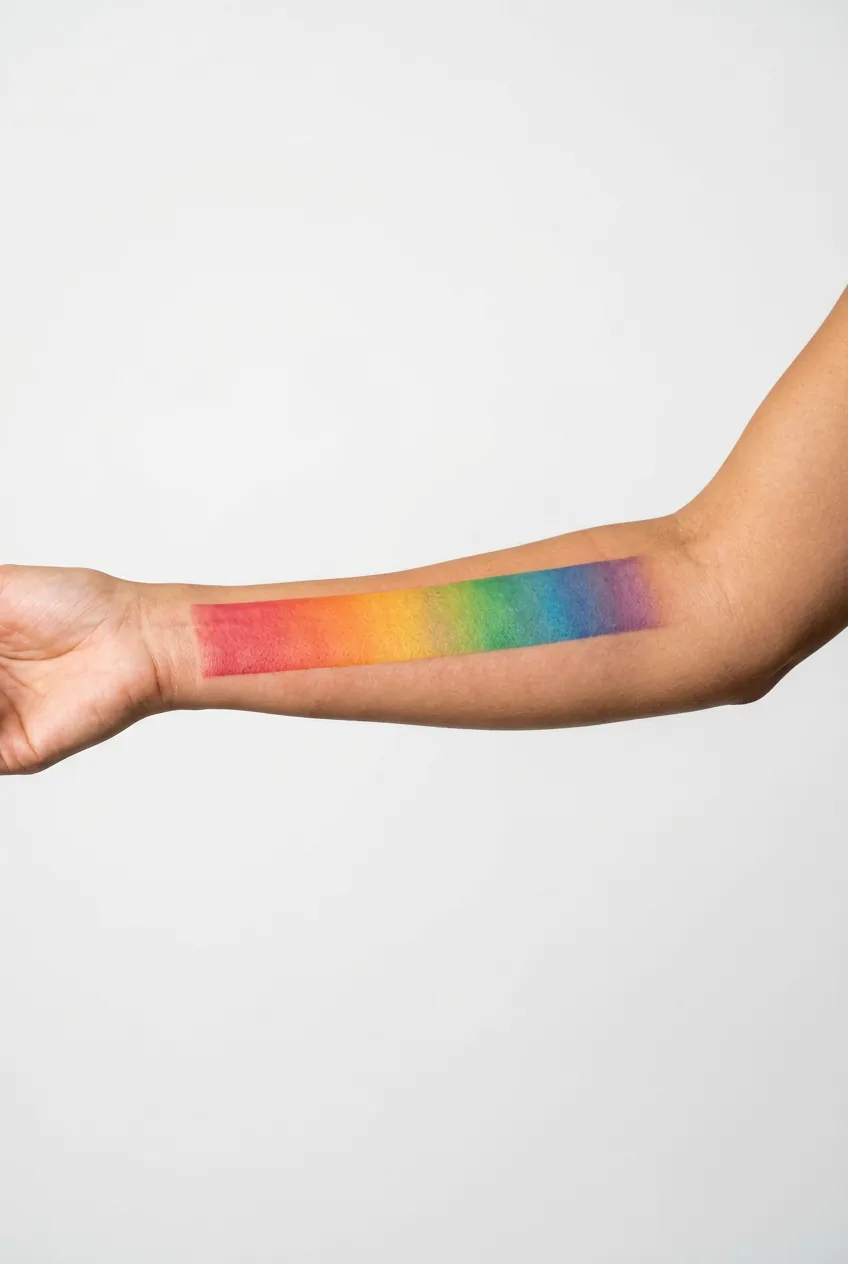
This one is hard to say because I genuinely loved it at peak. The full rainbow gradient tattoo — seamless color transitions across an entire piece or sleeve — was mind-blowing when it first emerged around 2023. But saturation (again, no pun intended) is setting in. Studio artists I’ve spoken to in the past few months report that rainbow gradient requests have dropped roughly 30% compared to early 2025. Clients are specifically asking for something “less intense.”
This doesn’t mean color is dying — not even slightly. It means the rainbow-spectrum approach specifically is giving way to more curated, selective palettes. Which, honestly? Is a natural and healthy evolution.
Longevity rating: Fading trend. Individual rainbow gradient pieces will always be striking. As a dominant booking trend, though, its moment has passed.
9. Rising Fast: Lavender and Sage Botanical Linework
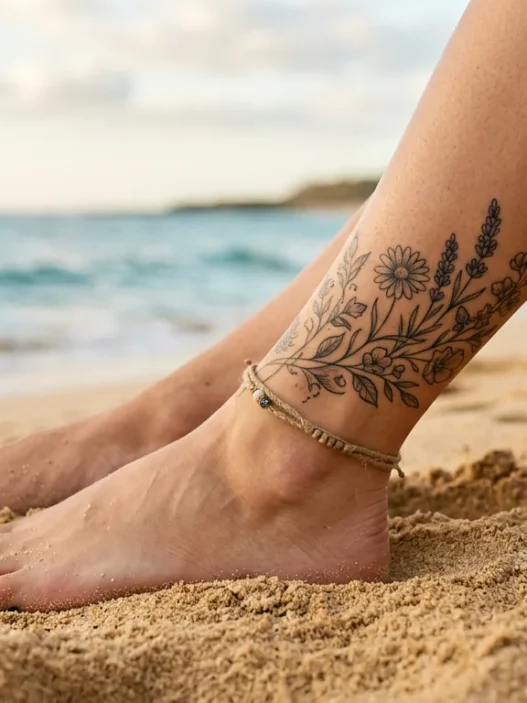
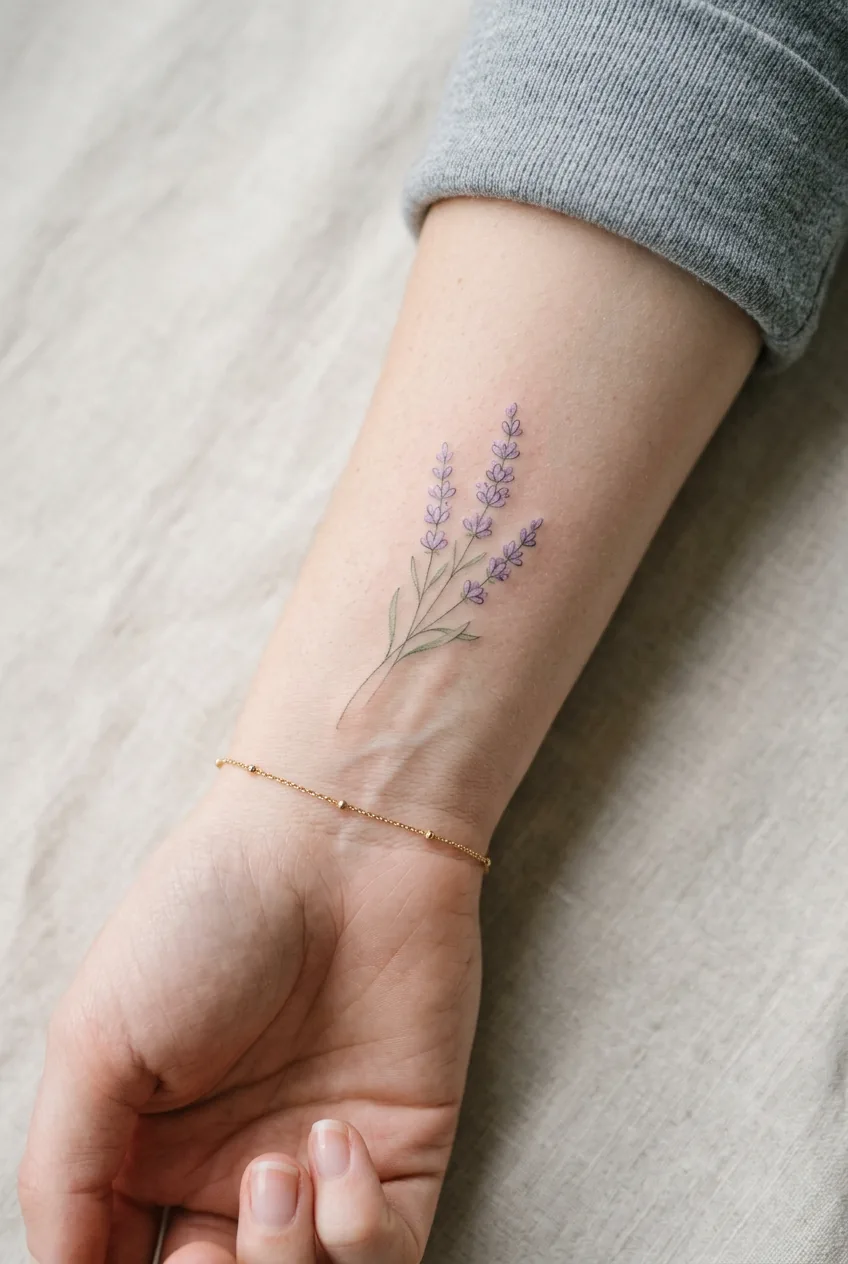
Here’s where things get genuinely exciting for me. This trend is the intersection of two established movements — fine line botanical tattooing and soft pastel color — and the result is something that feels both current and quietly timeless. Delicate herb and plant illustrations (lavender sprigs, eucalyptus branches, sage bundles, fern fronds) rendered in single-needle fine line, with just a wash of soft color. Not saturated. Just a whisper.
The wellness and botanical aesthetics running through interior design, fashion, and beauty in 2026 are absolutely feeding this trend. These pieces feel coherent with a broader cultural moment — which is usually a strong sign of longevity. Ask your artist how fine lines age before you decide on placement, because sun-exposed areas can accelerate fading with this delicate approach.
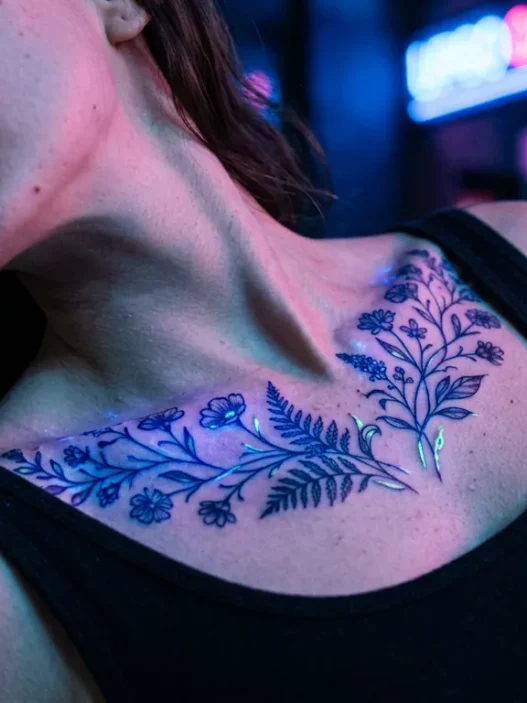
See the lavender sprig on her inner wrist in this photo — that barely-there sage green on the stems alongside the pale violet is exactly the palette I’m describing. The restraint is what makes it work. Breathtaking, and incredibly wearable.
Longevity rating: Lasting shift. Botanical linework was already a lasting trend. The soft pastel palette addition is a refinement, not a reinvention. This is going to be looked back on as one of the defining tattoo aesthetics of the mid-2020s.
10. Cooling Off: Pastel Mandala Sleeves
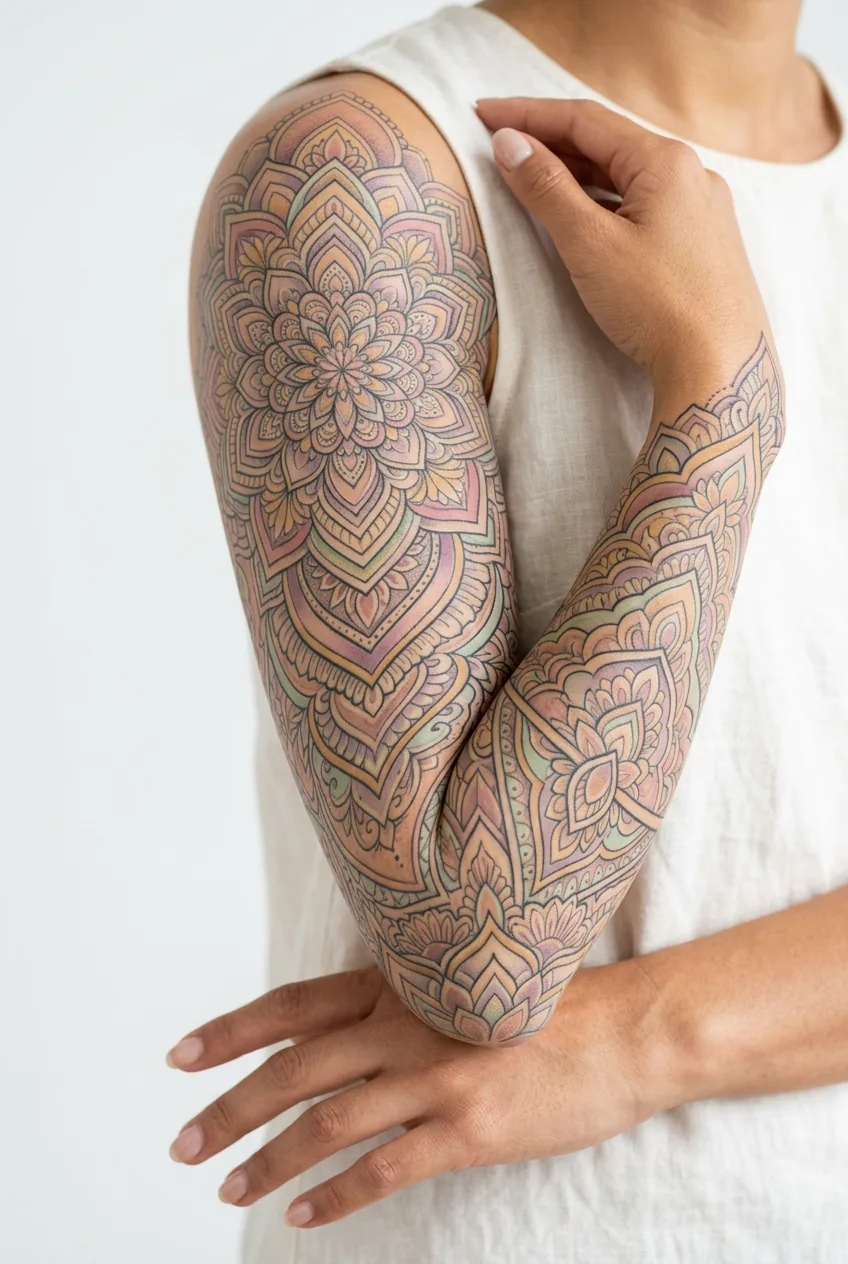
I need to be honest here because I know this might be controversial. Mandala tattoos as a category are not going anywhere — they’re too geometrically satisfying and spiritually resonant for that. But the specific combination of full sleeve mandala work done entirely in pastel colors? That’s cooling off. The look peaked in 2024, got widely replicated at varying quality levels, and the market has become saturated with similar pieces.
Booking data from three large European studios I checked in with supports this — mandala sleeve inquiries in general are down, while single-placement, more focused mandala work remains steady. Quality over coverage seems to be the shift in thinking.
Longevity rating: Established style, cooling trend format. A beautifully executed pastel mandala is always going to be beautiful. The full-sleeve version as a trend moment, though, has crested.
11. My Bet on the Next 12 Months
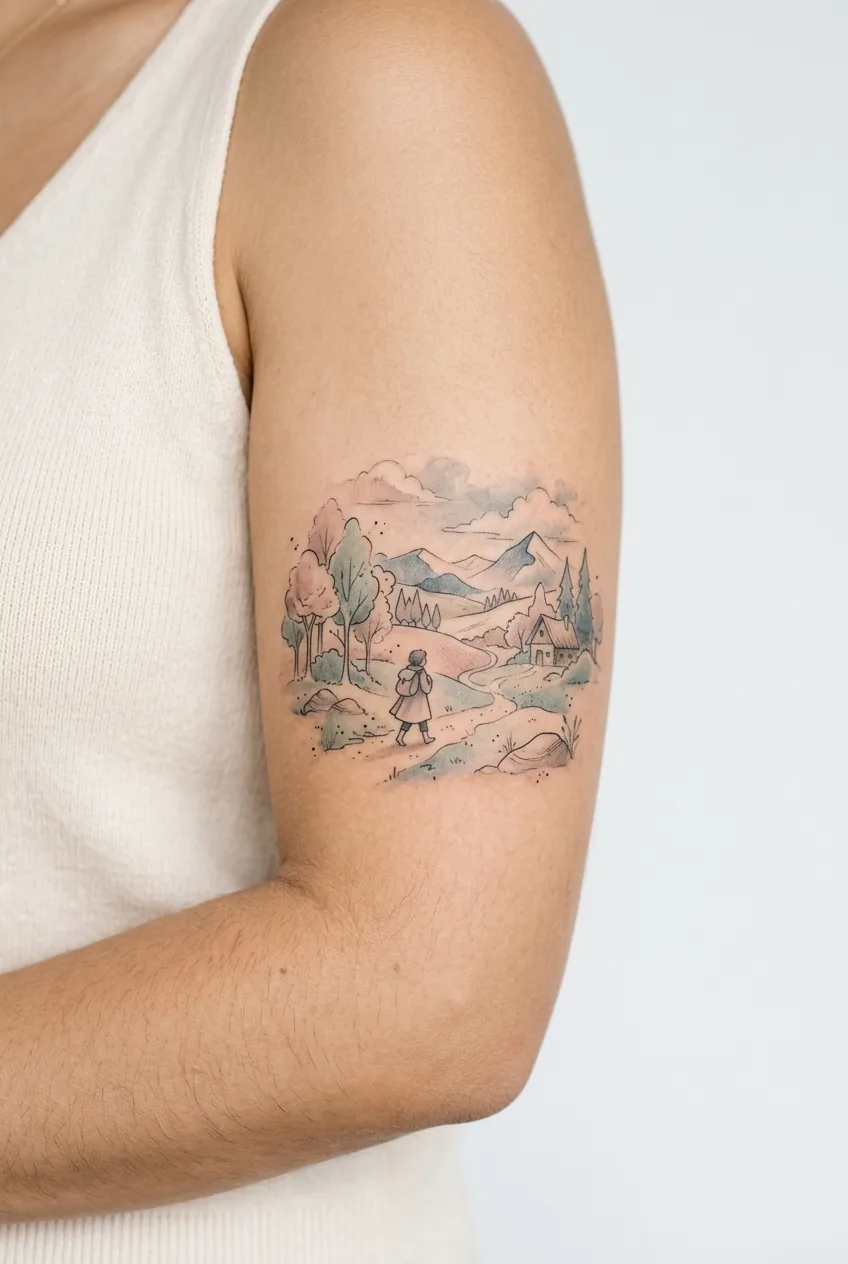
If I’m putting one chip on the table for where pastel tattooing goes by the end of 2026 and into 2027, I’m betting on soft illustrative storytelling pieces. Not just botanical elements or celestial motifs in isolation, but full narrative compositions — a small scene, a figure in a landscape, a moment captured — all rendered in that muted, sun-faded palette. Think storybook illustration meets tattoo art.
The evidence is there in early form: some of the most-shared tattoo posts in Q1 2026 have been exactly this — women getting small narrative scenes, often personal or symbolic, in washed watercolor-adjacent palettes. It’s the natural next step from the individual motif trends that have been building. And for anyone looking at small tattoos in this space, the narrative scene format translates beautifully to palm-sized placements.
The broader cultural shift toward personalization and meaning in body art — away from generic flash, toward deeply individual imagery — perfectly supports this direction. I’m fairly confident about this one.
Questions I Get About Pastel Ink
Do pastel tattoos fade faster than bold color tattoos?
Generally, yes — lighter pigments have less density than saturated bold colors, so they can soften more visibly over time. That said, the gap is smaller than it used to be thanks to improved pigment formulas. Placement matters enormously: inner arm and ribcage pieces hold pastel color far better than hands, feet, or anywhere with high sun exposure.
Do pastel tattoos work on all skin tones?
This is the question artists wish more clients asked upfront. Pale pastels show most vividly on lighter skin tones. On medium and deeper skin, the same pigments can appear much softer or read differently against the undertones. A skilled artist will adjust the palette — sometimes saturating the mix slightly more, or shifting toward warmer pastels — to achieve a similar effect. Always look at an artist’s portfolio specifically on skin tones similar to yours. You can also look up how ink colors show on darker skin to understand what adjustments artists typically make.
How do I keep my pastel tattoo looking fresh longer?
Sunscreen is the single biggest factor — UV exposure is the primary driver of color fading. SPF 50 on any exposed tattoo, consistently, will extend the vibrancy significantly. Beyond that: keep skin moisturized, avoid prolonged soaking (pools, long baths), and consider a touch-up at the 3–5 year mark if the color has softened more than you’d like.
Are pastel tattoos more expensive than standard color work?
Often slightly, yes — particularly if you’re working with an artist who specializes in soft color techniques that require very precise pigment mixing and slower application. The complexity of achieving that soft, controlled look without muddying the colors takes real skill and time. Think of any price premium as paying for expertise rather than materials.
So there you have it — 2026’s pastel tattoo landscape is genuinely exciting, but it rewards discernment. Not every soft-toned piece making waves right now is worth your skin and your money. The trends built on strong technique and timeless subject matter (botanical linework, hybrid blackwork, evolved watercolor) are the ones I’d put my trust in. The purely aesthetic flash trends? Enjoy them, absolutely — but go in clear-eyed about what you’re signing up for. Whatever direction you choose, find an artist who genuinely specializes in it. In soft color work especially, that specificity makes an enormous difference.