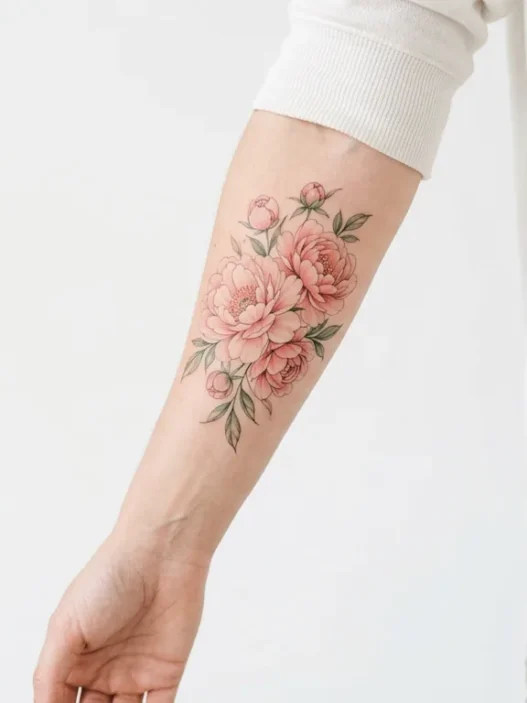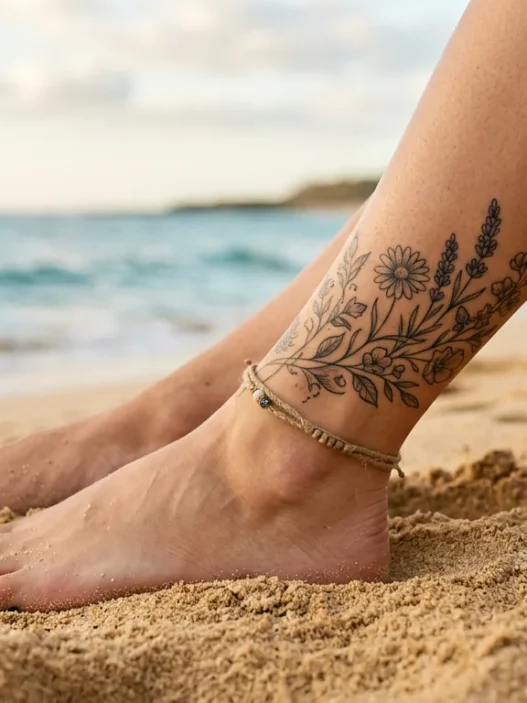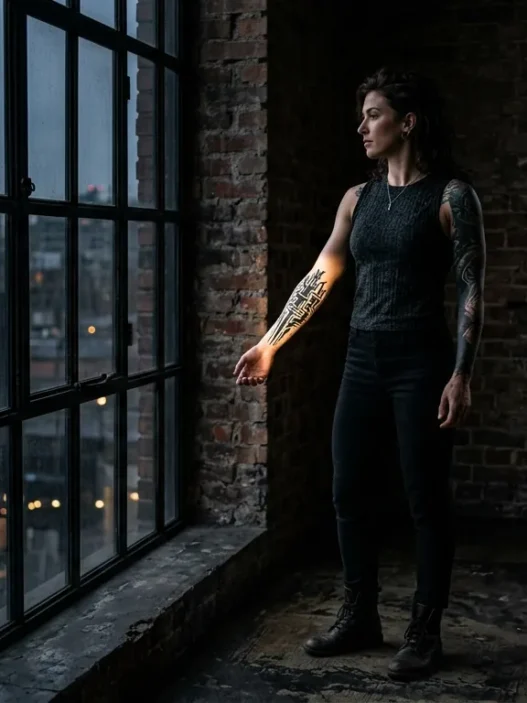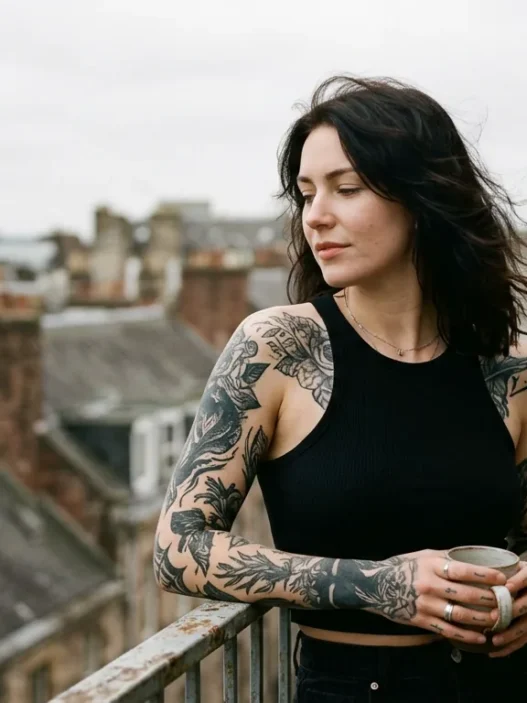




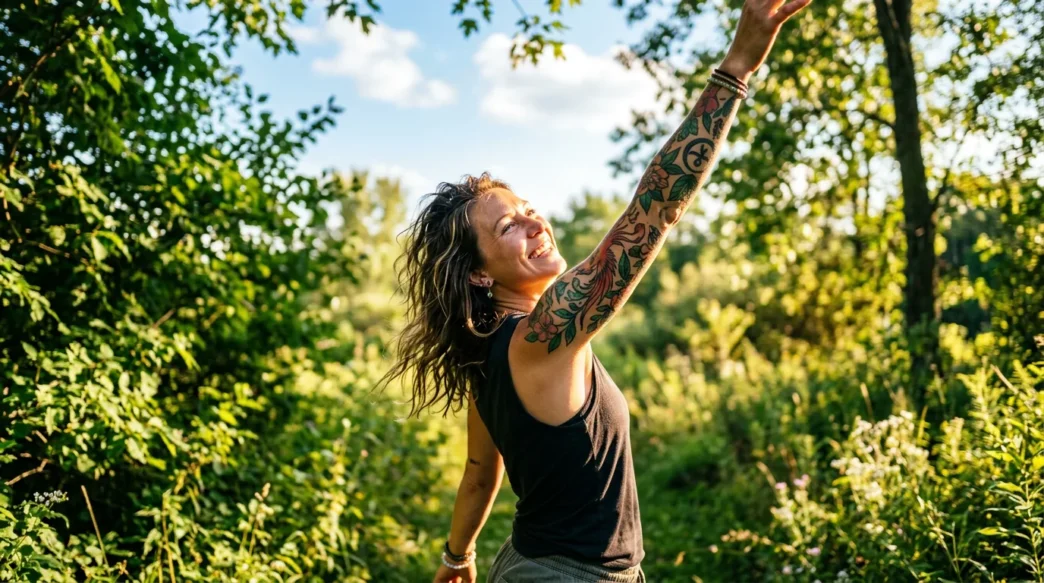
I booked my upper arm piece in late June, which — looking back — was either brave or completely naive. I told myself the warm weather would be good for healing. Reader, it was not good for healing. Two weeks of sweaty commutes, accidental sunscreen slathering, and sleeveless dresses rubbing against fresh ink later, I’d learned more about summer tattoo care than any article had ever warned me about. So if you’re sitting here in the sunshine wondering whether now is the right time to go for that arm tattoo you’ve been sketching in your notes app for six months, let me give you the honest version.
What Changes About Healing in Summer
Here’s the part nobody puts in the Instagram caption alongside their fresh ink selfie: summer is genuinely one of the harder seasons to heal a tattoo. Not impossible. But harder. And the upper arm placement specifically is right in the thick of all the seasonal drama.
Heat makes you sweat more, obviously — but what that actually means for a healing tattoo is that moisture gets trapped against the skin. Warm, damp environments are exactly where bacteria thrive, and a tattoo is essentially an open wound for the first week or two. I kept mine covered with a breathable wrap for three days straight during a heatwave and the difference compared to leaving it uncovered was significant. Less weeping, less irritation.
Then there’s the sun. This is the big one. UV exposure on a healing tattoo will wreck your ink — we’re talking fading, distortion, and uneven healing that no amount of touch-up appointments can fully fix. Even after the surface heals (around 2–3 weeks), the deeper layers are still vulnerable for up to three months. That means your gorgeous new piece needs SPF 50+ every single time you step outside, all summer long. You can check out what dermatologists recommend for tattoo SPF to make sure you’re not accidentally using a formula that breaks down colour.
Summer also means pools and the sea. Chlorine is genuinely terrible for fresh tattoos — it strips moisture and can pull pigment out during the early healing phase. Salt water is marginally gentler but still risky in the first month. My rule of thumb: if your tattoo is under six weeks old, stay out of the water. It’s cruel advice during a heatwave, I know, but the alternative is patchy colour and a disappointed conversation with your artist.
One thing summer does have going for it? The healing environment indoors tends to be warm and humidity is higher, which actually keeps skin from drying out as aggressively as it does in winter central heating. So moisturising is a little easier. Small wins.
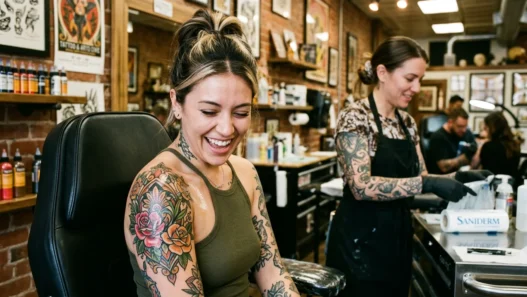
A Tattoo Artist Explains Summer Healing
The Outfits That Show It Off
This is honestly one of the best arguments for getting an upper arm tattoo done before summer fully hits. Once it’s healed? The showing-off potential is ridiculous. The upper arm is basically built for warm-weather dressing.
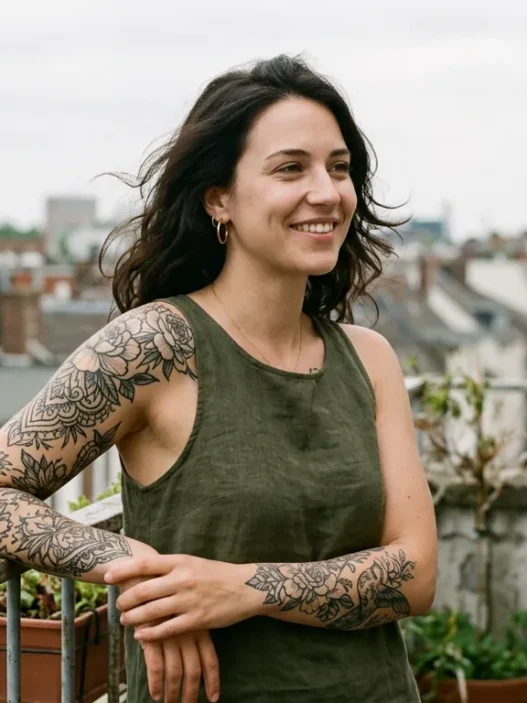
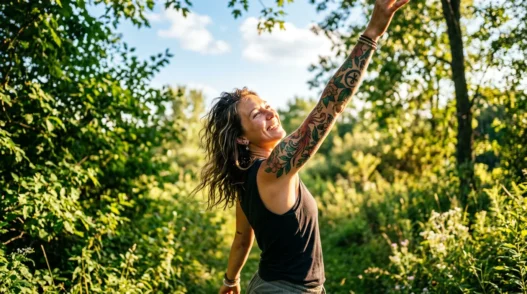
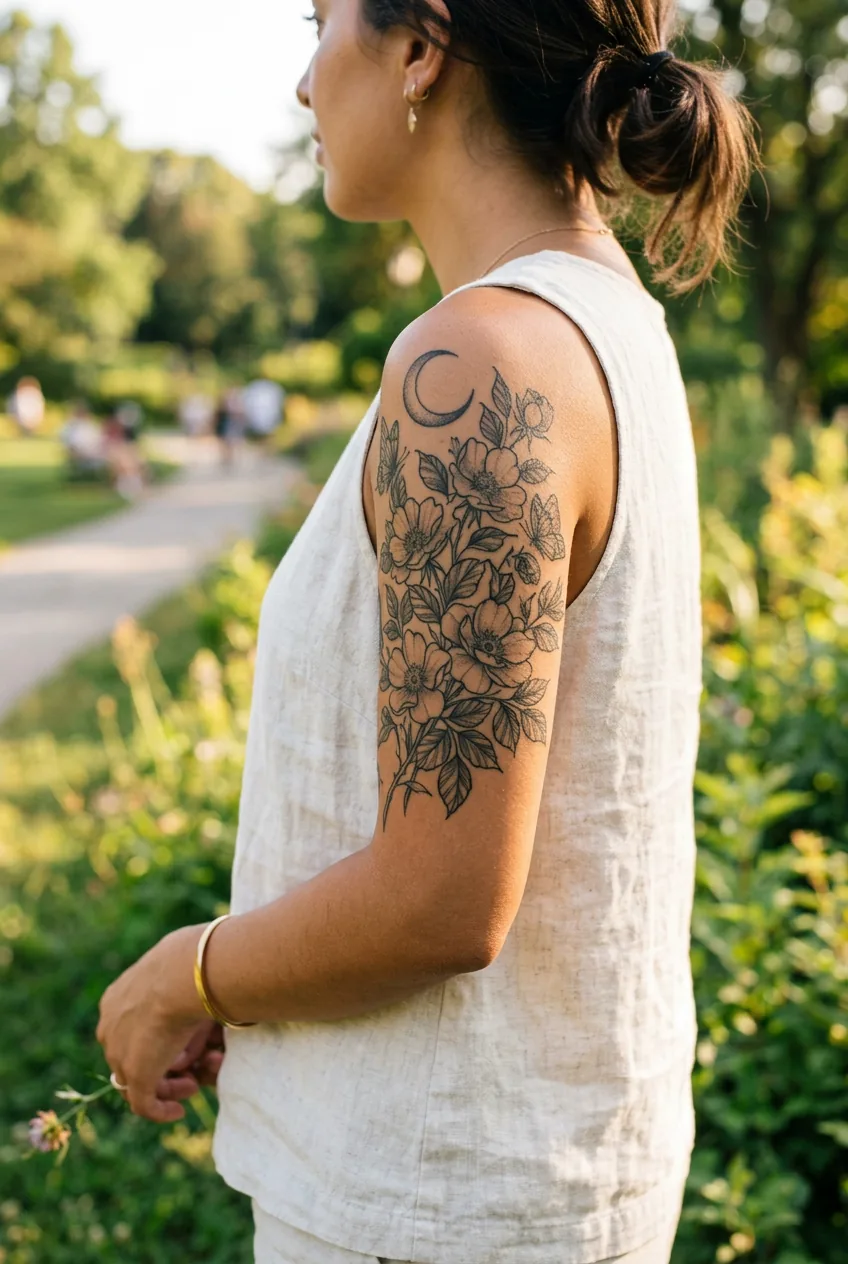
Look at her in this photo — she’s reaching upward in a sleeveless linen top and the placement of the tattoo catches the light beautifully at that angle. That’s exactly what I mean when I say the upper arm has natural movement built into it. Every time you gesture, reach for something, or push your hair back, the piece comes alive. It’s one of the few placements where daily motion actually becomes part of the design’s story.
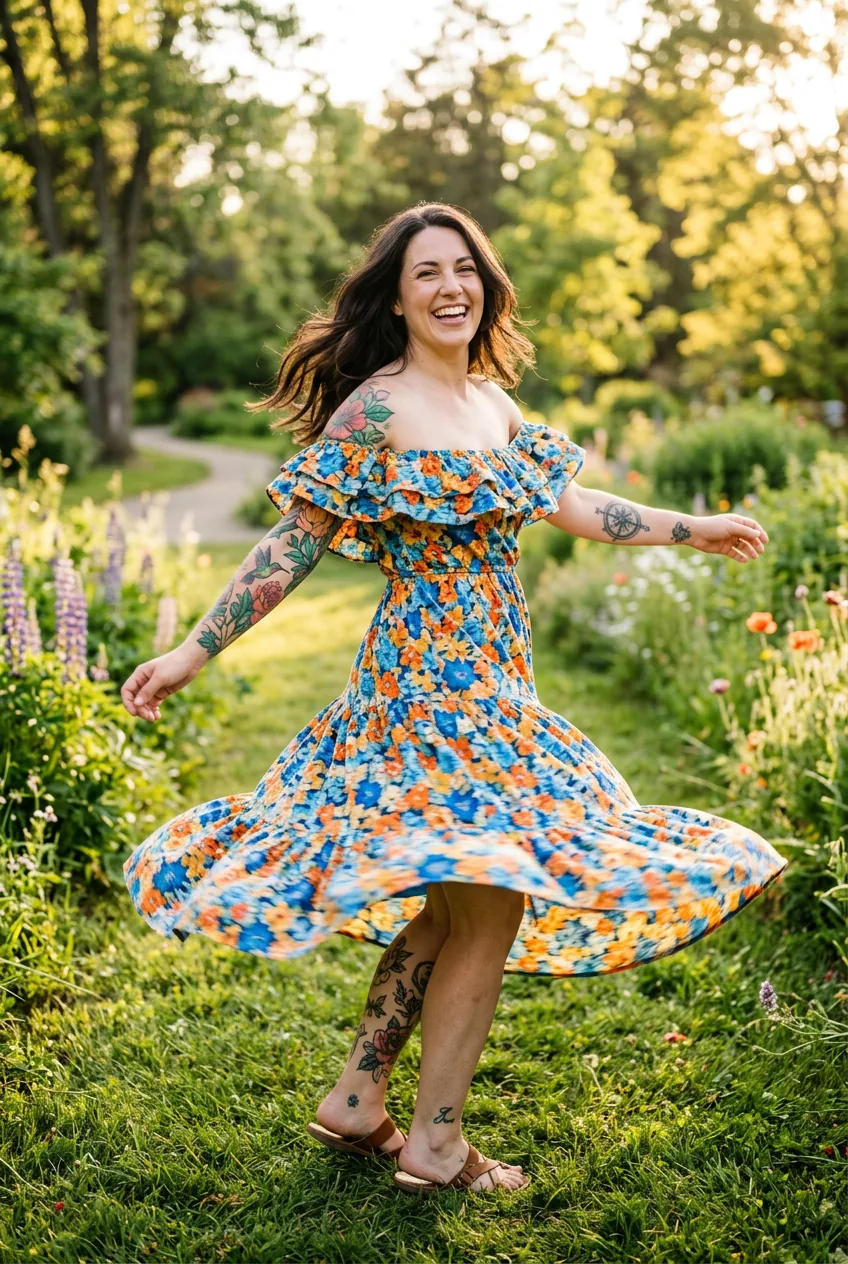
Here are the summer outfit styles that genuinely work with upper arm ink:
- Sleeveless linen shirts — the loose silhouette frames the arm without competing with the design
- Off-shoulder tops — creates a continuous visual from shoulder to arm, especially nice for pieces that wrap around the bicep
- Sundresses with thin straps — the contrast between delicate straps and bold ink is genuinely striking
- Racerback sports sets — shows off both arms symmetrically if you’re working toward a matching pair
- Kimono cardigans (half-open) — great for the transitional moments when you want to partially reveal rather than go full display
The one thing I’d push back on — and this is my slightly unpopular take — is the idea that you should plan your upper arm tattoo around what looks good in photos. I see so many people choosing placement based on how it’ll photograph from one specific angle rather than how it’ll actually look and feel as they move through their daily life. The best placement for you is the one that makes you happy when you glance in the mirror, not the one that looks best in a flat lay. That said, the upper arm does happen to photograph beautifully, so it’s a non-issue here.
If you’re browsing for more inspiration across the full arm, there’s a great range of ideas over at arm tattoos that covers everything from shoulder cap pieces to elbow-to-wrist designs. And if you’re debating between the upper arm and something lower, the forearm tattoos section is worth a look for comparison.
Why Artists Are Quieter This Time of Year (Spoiler: They’re Not)
I used to assume summer would be the slow season for tattoo studios — everyone’s away on holiday, artists are taking time off, surely I can just walk in? Absolutely not. Summer is one of the busiest booking periods of the year, and if you’re targeting a specific artist rather than whoever happens to be available, you need to be thinking about this now.
The logic makes sense when you think about it: people want to get tattooed before their summer holidays so they can show off fresh ink at the beach. Except, as we just established, fresh ink at the beach is a terrible idea. But the booking rush happens regardless of that logic. Popular artists in most cities are running 8–12 week waitlists right now, which means a July appointment needs to have been booked in April or May.

A few things worth knowing about navigating summer bookings:
“If you want a specific artist, don’t wait for a ‘good time’ to reach out. There is no good time — there’s just reaching out now, and reaching out too late.”
That’s advice I got from my own artist after I missed a window with her by about two weeks. Lesson permanently learned. Some studios open their books at the start of each month for a specific window — follow their social accounts and turn on notifications if you’re serious. Also, cancellation lists are real and genuinely work. I got my appointment through a cancellation spot after sitting on a waitlist for nearly three months.
One more thing: if you’re considering something ambitious like a full sleeve tattoo that begins on the upper arm, summer is actually a reasonable time to start the first session — because you’ll need multiple sessions across many months anyway, and beginning in summer means by the time you’re adding significant coverage, you’re into autumn and winter when healing is easier.
Planning the Autumn Appointment
If you’ve read this far and decided that actually, you’d rather wait until the heat is behind us — good instinct. Autumn is genuinely the sweet spot for tattoo healing, and I’ll argue that passionately to anyone who’ll listen.
Think about what changes in September and October: UV intensity drops significantly, you’re naturally covering your arms more with long sleeves and light layers (which protects healing skin without overheating it), you’re less likely to be sweating through the fresh ink, and you’re not heading to a pool or the sea anytime soon. The healing environment is almost ideal. Skin also tends to be in better condition coming out of summer — more hydrated, less sun-damaged — which some artists say makes for cleaner ink saturation.
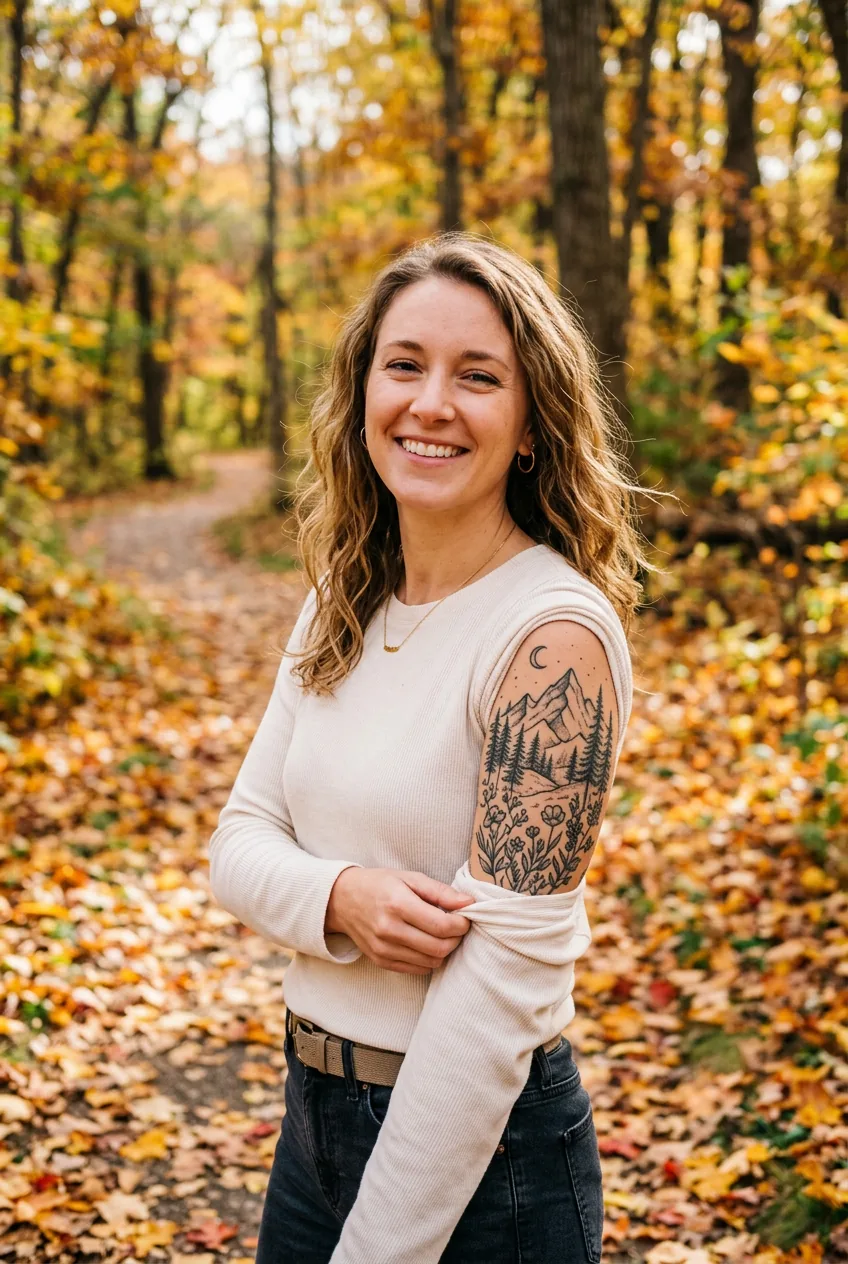
Here’s how I’d approach planning an autumn upper arm tattoo appointment right now, while it’s still summer:
- Research your artist now — spend July and August going deep on portfolios rather than rushing into a decision under summer FOMO
- Reach out in August — most artists start filling September and October slots during this window
- Finalise your design concept — autumn bookings allow more consultation time; don’t waste that by showing up vague
- Sort your aftercare supplies in advance — unscented moisturiser, a quality SPF (even in autumn, cloudy days still have UV), and breathable wrap if your artist recommends it
- Think about the full arm vision — if the upper arm piece is part of a bigger plan, now is the time to talk to your artist about how it might eventually connect to wrist tattoos or other placements lower down
There’s also something to be said for the reveal moment. A tattoo that heals through autumn and winter is perfectly settled, fully vibrant, and ready to debut the following spring and summer. That slow build is actually quite satisfying. You can read more about seasonal tattoo healing tips if you want the full picture before you commit to a timing strategy.
And if you’re still weighing placement options beyond the arm, a back tattoo is another placement that heals brilliantly in cooler months — worth knowing if the upper arm isn’t quite calling to you yet.
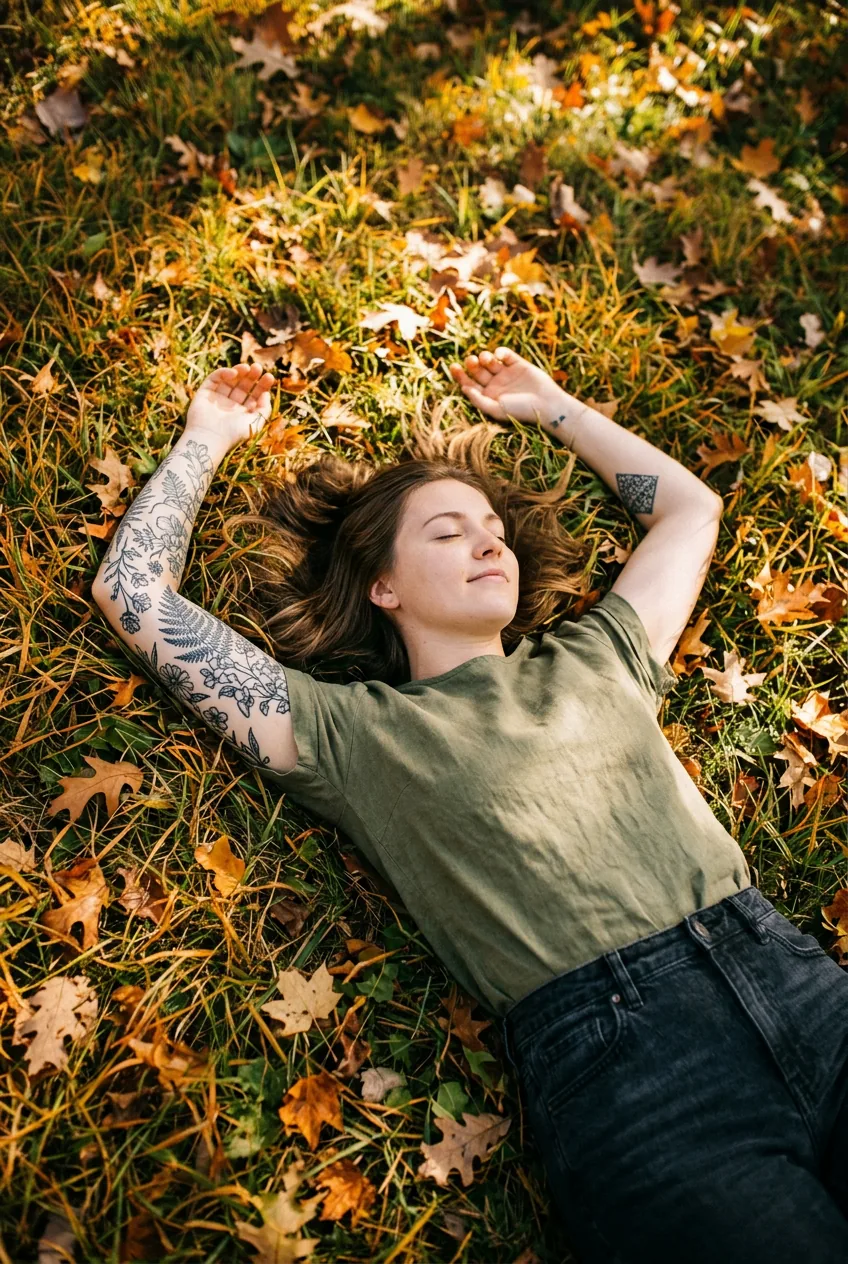
The honest truth about timing? Any season can work if you’re prepared. But autumn gives you the most room for error, the best healing conditions, and a built-in reason to show off fresh ink the moment warm weather returns. Plan for it now, while everyone else is scrambling for a last-minute summer slot.
You might also want to explore what upper arm placement for women looks best depending on arm shape and design size — it’s worth understanding the proportional options before your consultation.
Questions I Get About This
Does an upper arm tattoo hurt more in summer heat?
Not the actual sitting — the pain level of the session itself doesn’t really change with the season. What does change is how you feel walking in. Being overheated, dehydrated, or slightly sunburned before your appointment makes the whole experience feel more intense. Show up hydrated, with a meal in you, and ideally not on a day where you’ve been baking outside for hours first.
How soon can I wear sunscreen on a new upper arm tattoo?
Most artists say to wait until the tattoo is fully surface-healed — no peeling, no scabbing, smooth to the touch — before applying SPF directly on it. That’s typically around 2–4 weeks. Before that point, the best sun protection is physical coverage: a loose long sleeve or a UV-protective arm sleeve worn over the tattoo. Don’t skip the SPF after healing though — this is genuinely the number one thing that keeps colour looking sharp long-term.
Can I go swimming with a healing upper arm tattoo?
Not until it’s fully healed — ideally not for at least four to six weeks, and even then use judgment about water quality. Chlorinated pools, salt water, and natural lakes all carry bacteria and chemicals that can affect healing ink. I know it’s brutal advice in summer, but a patchy upper arm piece that needs a full touch-up is a much worse outcome than skipping a few swims.
Will my upper arm tattoo stretch or distort if I work out?
Most artists recommend avoiding intense upper body workouts for at least two weeks after getting tattooed — muscle movement under fresh ink can cause irritation and even pull at the healing skin. After that initial period, regular exercise is totally fine and won’t distort the design. The upper arm is actually a pretty stable placement over time; significant weight fluctuation or dramatic muscle gain can affect any tattoo eventually, but for most people it’s a non-issue.
If you take nothing else from this — book earlier than feels necessary, protect that fresh ink from the sun like your life depends on it, and seriously consider whether the warm, golden window of early autumn might be a better moment than the sweaty peak of July. Your future self (and your ink) will thank you. Now go find your artist. ✦